
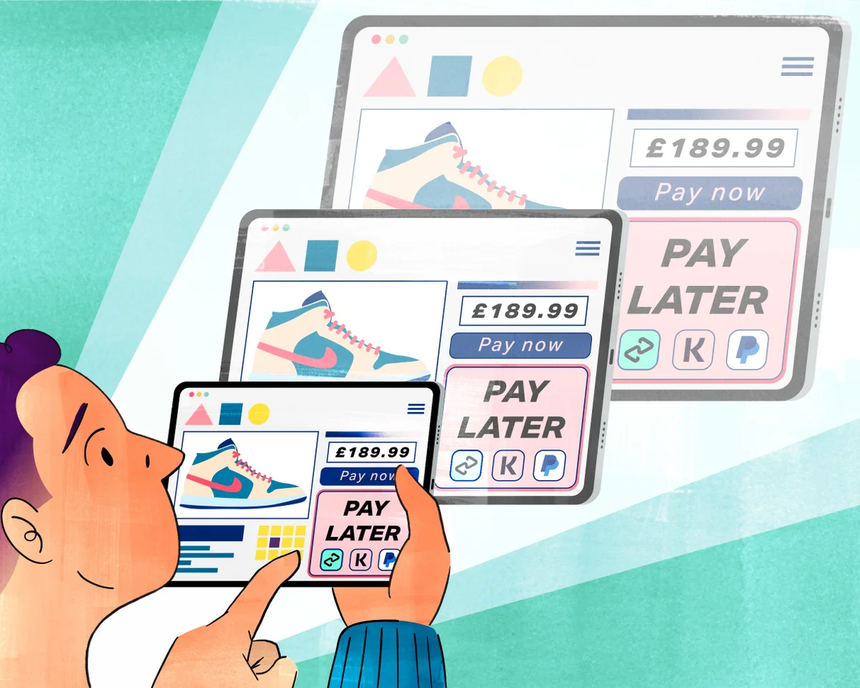

I will now cover the top Klarna competitors for Pay in 4 BNPL in 2026. Klarna is still the top provider of BNPL services. Other companies including Affirm, PayPal Pay in 4, Afterpay, Sezzle, Zip, Splitit, Apple Pay Later, Google Pay BNPL, Shopify Installments, and Amazon Monthly Payments are providing similar services.
Their offerings are differentiated by things such as the operating jurisdictions they cover, mobile and web service integration, and other value added services.
What is Klarna Rivals?
Rivals of Klarna include buy now, pay later (BNPL) companies and payment systems that provide options for financing shopping expenses or dividing purchases into payments. These businesses can offer flexible payment choices like virtual cards, pay-in-four programs, and monthly installments.
Rivals may have different interest rates, fees, repayment schedules, credit requirements, merchant networks, approval procedures, and features than Klarna. While some specialize in travel, gadgets, healthcare, or major expenditures, others concentrate on routine retail purchases.
Customers can learn about various financing solutions and choose platforms that fit their desired payment terms, merchants, and shopping demands by comparing Klarna competitors.
Benefits Of Klarna Rivals for Pay-in-4 BNPL Plans
Flexible Repayment Options: In addition to traditional four-payment plans, several competitors offer alternative installment schedules.
Greater Merchant Coverage: Different brands, retailers, and internet shops may be served by other BNPL providers.
Competitive Costs: Users may find varying interest rates, fees, or promotional periods depending on the supplier and purchase.
Different Credit Requirements: Customers have more options when applying for BNPL financing because eligibility requirements can change.
Greater or Lower Purchase Limits: Different minimum and maximum transaction amounts may be supported by rivals.
Options for Virtual Cards: Certain platforms offer virtual cards that are accepted by qualified retailers.
Specialized Financing: Some providers concentrate on areas including home remodeling, technology, vacation, and healthcare.
Simple Checkout: For quicker payment plan selection, a lot of BNPL services link straight into online checkout.
Features of Mobile Apps: Other suppliers might give purchase monitoring, payment reminders, and expenditure control.
More Options: Before choosing a plan, consumers can compare several Pay-in-4 suppliers to assess payback periods, costs, merchant availability, eligibility, and other features.
Key Points
| BNPL Provider | Core Strengths | Key Differentiator in 2026 |
|---|---|---|
| Affirm | Transparent terms, no late fees | Reports Pay‑in‑4 loans to Experian & TransUnion, boosting credit visibility |
| PayPal Pay in 4 | Global reach, zero late fees | Seamless integration with PayPal ecosystem, strong trust factor |
| Afterpay | Popular with younger shoppers | Rebranded as Cash App Afterpay in US, strongest consumer recognition |
| Sezzle | Flexible rescheduling | Focus on ethical credit building, option to reschedule payments |
| Zip | Strong in Australia & US | Offers both Pay‑in‑4 and longer terms, mid‑range fees |
| Splitit | Uses existing credit cards | No new loans — charges installments directly on card |
| Apple Pay Later | iOS ecosystem integration | Native to Apple Wallet, frictionless checkout for iPhone users |
| Google Pay BNPL | Android ecosystem reach | Expanding BNPL via Google Pay, strong merchant API support |
| Shopify Installments | Merchant‑focused | Directly embedded in Shopify checkout, competitive merchant fees |
| Amazon Monthly Payments | Huge retail footprint | Pay‑in‑4 option for Prime shoppers, tied to Amazon ecosystem |
1. Affirm
Affirm was established in 2012 and is located in San Francisco. They provide their BNPL services in the United States and Canada. Affirm charges fees between 5-6% from the merchants and does not charge their customers late-fee. From the customer’s creditworthiness,

Affirm determines the spending limit which is between $50-40,000. They also provide longer-term loans. Their mobile application allows customers to pay through BNPL for both online and in-store purchases. Like other BNPL providers, Affirm also reports payment activity to credit bureaus.
| Feature | Pros | Cons |
|---|---|---|
| Founded 2012, HQ San Francisco | Transparent terms | Limited global reach |
| Operates in US & Canada | No late fees | Higher merchant fees (~5–6%) |
| Reports loans to credit bureaus | Helps build credit | Defaults hurt credit |
| Pay‑in‑4 & longer loans | Flexible repayment | Interest on longer loans |
| Spending limits $50–$5,000 | Wide range | Approval depends on credit |
| Mobile app integration | Easy checkout | App limited outside US |
| Strong merchant partnerships | Trusted brand | Not as popular with youth |
| Consumer protections | Clear disclosures | Less flexible rescheduling |
| Focus on transparency | Builds trust | Smaller ecosystem than PayPal |
| Credit visibility | Boosts history | Risk of over‑borrowing |
2. PayPal Pay in 4
PayPal offers its BNPL (buy now, pay later) product Pay in 4 in the US, UK, and Australia, and other major countries. It charges merchants a fee of 2.9% and other fees. Pay in 4 does not charge consumers any fees.

The spending limit for Pay in 4 is between $30 to $1500. The PayPal app allows users to make payments using Pay in 4. Pay in 4 can be used to make payments at millions of merchants. Pay in 4 benefits from the global trust and security structure of PayPal. Pay in 4 competes with Klarna for the BNPL market share.
| Feature | Pros | Cons |
|---|---|---|
| Founded 1998, HQ San Jose | Global reach | Spending cap $1,500 |
| Operates in US, UK, AU, EU | No late fees | Limited flexibility |
| Merchant fee ~2.9% + fixed | Competitive | Higher than Klarna |
| Spending $30–$1,500 | Accessible | Lower limits |
| Mobile app integration | Seamless checkout | Requires PayPal account |
| Trusted brand | Strong security | Less youth appeal |
| Ecosystem integration | Works with millions | Not credit‑reporting |
| Consumer protections | Buyer protection | Limited BNPL features |
| Easy approval | Fast onboarding | Not for large purchases |
| Strong recognition | Widely accepted | Less innovative features |
3. Afterpay
AfterPay, purchased by Block (formerly Square) in 2021 and now Cash App AfterPay in the US, originally launched in its home market of Australia in 2014. It now operates in New Zealand, the US, UK and Canada. It charges merchants a fee of between 4-6% and customers are charged a late fee.

The late fees, however, are capped. Customers build a spending limit by repaying amounts on time. The spending limit is typically $2,000. The app has become more popular with younger shoppers following its integration with Cash App. After about the third sentence, provide background information on Afterpay’s recognition in the industry.
| Feature | Pros | Cons |
|---|---|---|
| Founded 2014, HQ Sydney | Popular with youth | Late fees capped but present |
| Operates in AU, NZ, US, UK, CA | Strong brand | Merchant fees ~6% |
| Rebranded as Cash App Afterpay | Cash App integration | Limited spending growth |
| Spending limits up to $2,000 | Builds with history | Small starting limits |
| Mobile app integration | Easy use | Dependent on Cash App |
| Strong recognition | Youth appeal | No credit reporting |
| Merchant partnerships | Fashion & retail | Higher merchant costs |
| Flexible repayment | Simple Pay‑in‑4 | No longer terms |
| Consumer protections | Clear terms | Defaults not reported |
| Ecosystem tie‑in | Cash App synergy | Limited global expansion |
4. Sezzle
Sezzle started in 2016 and is based out of Minneapolis, USA. Sezzle is currently operating in the US and Canada, and is starting operations in India. The average merchant fees is between 4-6%.

Late fees are capped at $10. Sezzle offers shopping limits between $50 to $1,500. Sezzle offers a mobile application, that lets users reschedule payments. Sezzle also tries to build ethical credit, and charges no fees for rescheduling. Sezzle states that Klarna charges for rescheduling.
| Feature | Pros | Cons |
|---|---|---|
| Founded 2016, HQ Minneapolis | Ethical credit building | Smaller footprint |
| Operates in US, CA, India | Flexible rescheduling | Limited global reach |
| Merchant fees 4–6% | Competitive | Higher than Klarna |
| Spending $50–$1,500 | Accessible | Lower limits |
| Mobile app integration | Reschedule payments | Less polished app |
| Consumer protections | Transparency | Late fees capped at $10 |
| Credit building | Helps users | Defaults affect credit |
| Flexible repayment | Rescheduling option | Limited merchant base |
| Youth appeal | Ethical branding | Less recognition globally |
| Growing reach | Expanding markets | Smaller ecosystem |
5. Zip
Zip launched in Australia in 2013 and has since expanded to New Zealand, the United Kingdom and the United States. The company charges its merchant partners an average of 4-6% and passes along late fees to consumers of up to $10. Zip places limits on the total dollar amount of purchases and those amounts vary by geography.
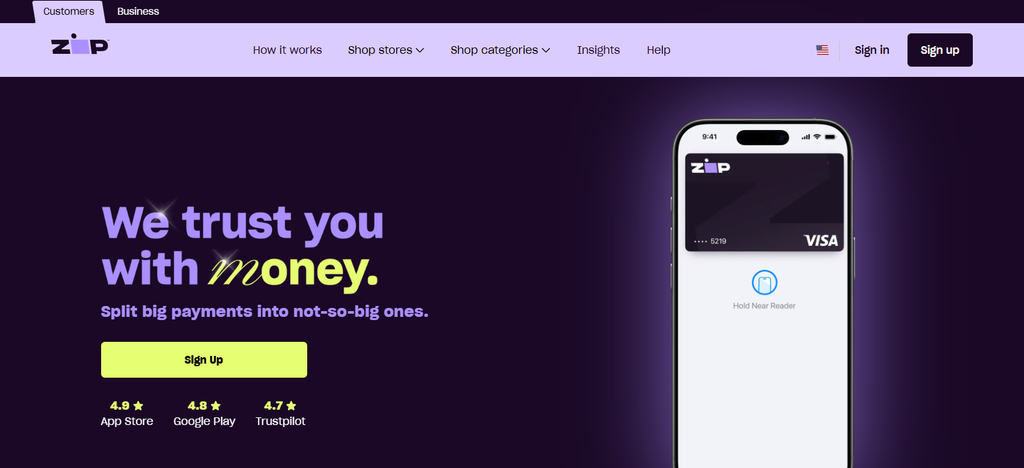
The Zip app supports payments on 4 installment plans and longer term plans. Zip offers short term payment plans and longer term payment plans. Zip’s product offers flexibility to consumer finance buyers, particularly shoppers who prefer to pay in installments.
| Feature | Pros | Cons |
|---|---|---|
| Founded 2013, HQ Sydney | Dual loan options | Merchant fees ~6% |
| Operates AU, NZ, US, UK | Global reach | Limited EU presence |
| Pay‑in‑4 & longer terms | Versatile | Interest on longer loans |
| Spending up to $3,000 | Higher limits | Approval stricter |
| Mobile app integration | Easy checkout | Less polished UX |
| Consumer protections | Clear terms | Late fees capped |
| Merchant partnerships | Strong retail | Higher costs |
| Flexible repayment | Short & long terms | Defaults affect credit |
| Ecosystem reach | Expanding | Less brand recognition |
| Global expansion | Growing footprint | Competition with Afterpay |
6. Splitit
Founded in 2012, Splitit is headquartered in New York with operations in North America, Europe and Asia. Unlike standard BNPL products, Splitit does not extend new credit to customers. Instead, Splitit uses a customer’s existing credit card limit to facilitate a payment split.
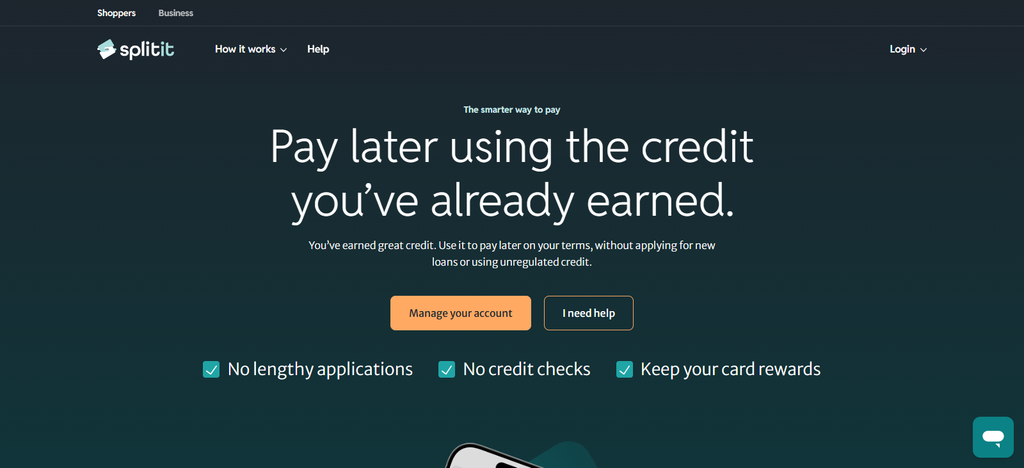
As a result, Splitit charges merchants a fee ranging from 3 to 5%. Splitit’s payment model places a limit on customer spending. Like other BNPL products, Splitit does not charge customers a standard interest rate. Instead, Splitit customers are charged a fee if a payment is not made.
As of May 2022, Splitit has a mobile app that provides customers with a virtual credit card. Splitit differentiates itself from its competition by using a card-based model. For example, in the card-based model, Splitit competes directly with Klarna.
| Feature | Pros | Cons |
|---|---|---|
| Founded 2012, HQ New York | Uses existing credit cards | Requires card availability |
| Operates globally | No new loans | Limited merchant adoption |
| Merchant fees 3–5% | Competitive | Smaller ecosystem |
| Spending tied to card limit | Flexible | Dependent on credit card |
| Mobile app integration | Seamless checkout | Less consumer recognition |
| Consumer protections | No late fees | Defaults affect card |
| Unique model | No new debt | Limited appeal |
| Flexible repayment | Card‑based | Not Pay‑in‑4 traditional |
| Global reach | Works worldwide | Less popular |
| Transparency | Clear terms | Niche product |
7. Apple Pay Later
Apple Pay Later, a BNPL solution launched in 2023, has its headquarters in Cupertino, California. It currently services only the United States. It uses Apple Wallet and provides Pay-in-4 options, and charges no interest and has capped late fees. Limits on spending are between $50 to $1000.

It charges merchant fees between 3 to 4 percent. It provides mobile transactions only with devices powered by iOS. It is seamlessly integrated at the mobile level. Apple Pay Later, later in this paragraph, provides the most seamless BNPL solution, as it is natively integrated in iPhones.
| Feature | Pros | Cons |
|---|---|---|
| Launched 2023, HQ Cupertino | Native iOS integration | US‑only rollout |
| Operates US | Seamless Apple Wallet | Limited global reach |
| Merchant fees ~3–4% | Competitive | Higher than Klarna |
| Spending $50–$1,000 | Accessible | Lower limits |
| Mobile app integration | Flawless iOS | Requires iPhone |
| Consumer protections | Clear terms | Defaults affect Apple account |
| Ecosystem tie‑in | Apple ecosystem | Limited merchant base |
| No interest | Transparent | Late fees capped |
| Trusted brand | Strong security | Not Android‑friendly |
| Easy approval | Fast onboarding | Limited expansion |
8. Google Pay BNPL
Google Pay BNPL launched in 2024 in Mountain View, California. It is operational in the U.S., India and other countries. Merchant fees are between 3 to 4%. Late fees depend on the location.
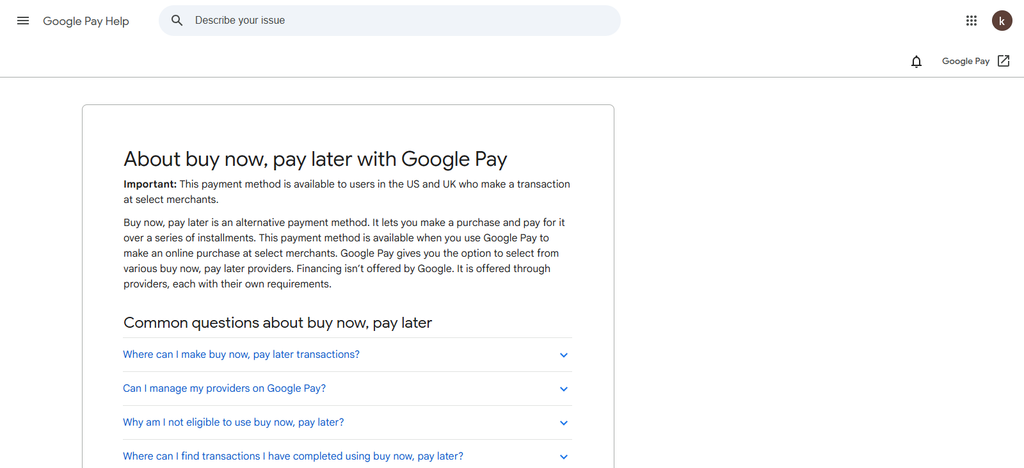
Spending limits are between $50 to $1,500. The Google Pay mobile app provides BNPL services. In addition, Google Pay BNPL uses Android’s user base, especially in developing countries, to challenge Klarna.
| Feature | Pros | Cons |
|---|---|---|
| Launched 2024, HQ Mountain View | Android ecosystem | Limited rollout |
| Operates US, India, select markets | Global reach | Not yet worldwide |
| Merchant fees ~3–4% | Competitive | Higher than Klarna |
| Spending $50–$1,500 | Accessible | Lower limits |
| Mobile app integration | Strong API support | Requires Google Pay |
| Consumer protections | Clear terms | Defaults affect Google account |
| Ecosystem tie‑in | Android reach | Limited merchant adoption |
| Flexible repayment | Pay‑in‑4 | No longer terms |
| Trusted brand | Strong recognition | Late fees vary |
| Expanding reach | Growing footprint | Still new |
9. Shopify Installments
Launched in 2021, Shopify Installments is a competitor to Afterpay, and currently operates in North America and Europe. They charge merchants a rate of 3-4%, and while there are no interest charges, consumers may face a late fee. Each merchant sets a spending limit, which is often $2,000.
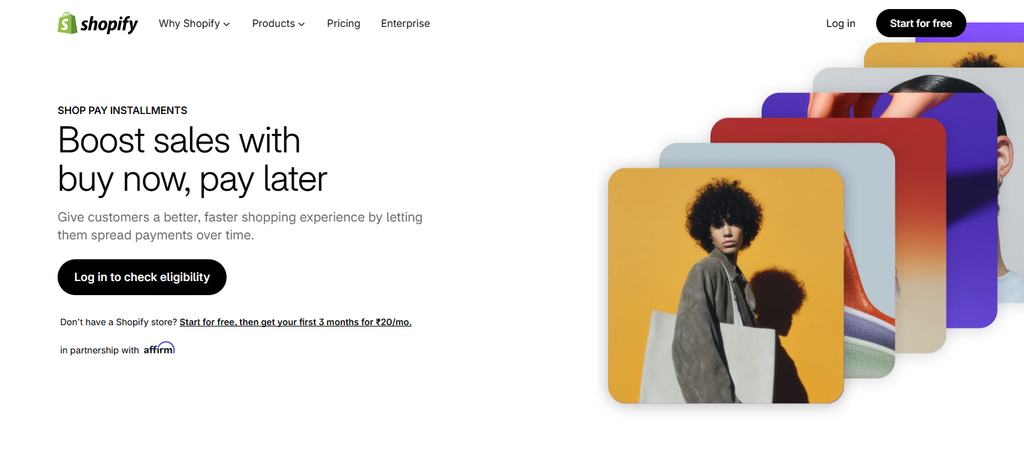
Shopify Installments provides a merchant-focused service, charging competitive rates, and providing easy integration to Shopify’s checkout process. Therefore, it is an excellent alternative to Klarna.
| Feature | Pros | Cons |
|---|---|---|
| Launched 2021, HQ Ottawa | Merchant‑focused | Limited consumer brand |
| Operates NA, EU | Seamless checkout | Limited global reach |
| Merchant fees ~3–4% | Competitive | Higher than Klarna |
| Spending up to $2,000 | Accessible | Lower limits |
| Mobile app integration | Shopify checkout | Requires Shopify merchants |
| Consumer protections | Clear terms | Defaults affect merchant |
| Ecosystem tie‑in | Shopify platform | Not standalone BNPL |
| Flexible repayment | Pay‑in‑4 | No longer terms |
| Trusted brand | Merchant trust | Less consumer recognition |
| Growing reach | Expanding | Limited outside Shopify |
10. Amazon Monthly Payments
Headquartered in Seattle, with operations in the US, UK, and elsewhere, Amazon launched Amazon Monthly Payments in 2016. It provides Pay-in-4 to Prime members in select categories. Non-Prime members are charged a late fee, which Amazon caps. The cap varies by category and is often $3,000.
Amazon’s mobile app allows users to pay using BNPL for Amazon purchases. In the paragraph, Amazon Monthly Payments positions its BNPL offering, operated by Amazon, and integrated into Amazon’s retail business, to take on Klarna and other BNPL providers.
| Feature | Pros | Cons |
|---|---|---|
| Launched 2016, HQ Seattle | Huge retail footprint | Limited to Amazon |
| Operates US, UK, select markets | Global reach | Not universal BNPL |
| Merchant fees internalized | Competitive | Hidden costs |
| Spending up to $3,000 | Higher limits | Limited categories |
| Mobile app integration | Amazon checkout | Requires Prime |
| Consumer protections | Clear terms | Defaults affect Amazon account |
| Ecosystem tie‑in | Amazon platform | Not merchant‑wide |
| Flexible repayment | Pay‑in‑4 & longer | Limited flexibility |
| Trusted brand | Strong recognition | No credit reporting |
| Expanding reach | Growing | Limited outside Amazon |
Conclusion
The Pay‑in‑4 BNPL market of 2026 will see Klarna and others, such as Affirm, PayPal Pay in 4, Afterpay, Sezzle, Zip, Splitit, Apple Pay Later, Google Pay BNPL, Shopify Installments, and Amazon Monthly Payments, battle it out for market share. Each competitor has distinctive features, like Affirm’s transparency with credit reporting, or Afterpay’s appeal with the 18–35 year old crowd.
Sezzle has an ethical approach to rescheduling payments, and Zip offers post-date loans. Splitit allows payments to be split using credit cards.
Shopify and Amazon offer merchants ways to integrate flexible installment payment options using their platforms. Other considerations will include the integration of Apple and Google payment systems, and the spending habits of consumers.
FAQ
What is BNPL?
BNPL (Buy Now, Pay Later) lets shoppers split purchases into installments, often four equal payments, with little or no interest. It’s popular for online and mobile shopping.
Which BNPL providers rival Klarna in 2026?
The strongest rivals are Affirm, PayPal Pay in 4, Afterpay, Sezzle, Zip, Splitit, Apple Pay Later, Google Pay BNPL, Shopify Installments, and Amazon Monthly Payments.
When were these companies founded?
Affirm (2012, USA)
PayPal (1998, USA)
Afterpay (2014, Australia)
Sezzle (2016, USA)
Zip (2013, Australia)
Splitit (2012, USA)
Apple Pay Later (2023, USA)
Google Pay BNPL (2024, USA)
Shopify Installments (2021, Canada)
Amazon Monthly Payments (2016, USA)
Where are their headquarters?
Most are headquartered in the US (San Francisco, San Jose, Minneapolis, New York, Cupertino, Mountain View, Seattle), with Zip and Afterpay based in Sydney, and Shopify in Ottawa.