


This article will analyze the Stablecoin Payment Gateways Cutting SWIFT Fees for Freelancers. I will look at BitPay, Circle, Coinbase Commerce, Binance Pay, Stripe Crypto, PayPal Stablecoin, Ramp Network, MoonPay Business, Transak and Paxos Payments and how their platforms are innovating ways to monetize.
- What is Stablecoin Payment Gateways?
- Why Choose Stablecoin Payment Gateways Cutting SWIFT Fees for Freelancers
- Affordable Transactions
- Quick Payment Processing
- Global Payment Accessibility
- Minimizes Currency Conversion Costs
- Anytime Payments
- Payment Clarity
- Enhanced Financial Control
- Digital Payment Integration
- Stablecoin Payment Gateways Cutting SWIFT Fees for Freelancers List
- 10 Stablecoin Payment Gateways Cutting SWIFT Fees for Freelancers
- 1. BitPay
- 2. Circle Payments
- 3. Coinbase Commerce
- 4. Binance Pay
- 5. Stripe Crypto
- 6. PayPal Stablecoin
- 7. Ramp Network
- 8. MoonPay Business
- 9. Transak
- 10. Paxos Payments
- Comparison Table
- Conclusion
- FAQ
These provide instant settlements while eliminating the burdensome costs associated with SWIFT. For freelancers, stablecoins present a desirable method to receive payment internationally, quickly, and cost-efficiently.
With the rise of the digital economy, stablecoins are likely to disrupt the independent work economy. The current state of payment systems will evolve with the use of stablecoins.
What is Stablecoin Payment Gateways?
A stablecoin payment gateway enables sending and receiving digital payments in the stablecoins ecosystem. Examples of stablecoins are USDT, USDC, and DAI. Stablecoin payment gateways seamlessly integrate the blockchain with traditional systems of payment, resulting in cross-border transactions that are rapid and economical.
Traditional systems of cross-border payments, such as SWIFT, do not measure up to the efficiency of Stablecoin payment gateways. Freelancers benefit from the direct payment feature and do not have to deal with costly conversions between currencies, delays caused by the banking systems, and can take advantage of financial services across borders. Stablecoins make financial services much easier by being backed by fiat currencies.
Why Choose Stablecoin Payment Gateways Cutting SWIFT Fees for Freelancers
Affordable Transactions
Exorbitant international transfer costs from SWIFT payments are one of the biggest challenges for freelancers. Using blockchain technology to facilitate payment processing translates to lower costs and higher earnings for freelancers.
Quick Payment Processing
Payment processing using blockchain technology is much faster than standard payment systems that can take several days to clear.
Global Payment Accessibility
Freelancers are not reliant on the payment systems of their local banking network. This effectively eliminates the challenges associated with receiving cross-border payments.
Minimizes Currency Conversion Costs
There are foreign exchange fees and currency conversion costs that can take a significant amount of the payment freelancers receive. Stablecoins help reduce the foreign exchange risks of payments because they are pegged to the US dollar.
Anytime Payments
Continuous operation of the blockchain minimizes payment processing time to seconds for freelancers. Traditional banking systems can take days to process payments.
Payment Clarity
Payment on the blockchain leaves a history of the transaction which facilitates and builds trust between the freelancer and the client.
Enhanced Financial Control
Freelancers can hold their payment in stablecoins and convert them to their local currency.
Digital Payment Integration
Stablecoin payment designs are digital and easily integrated into payment systems for freelancers.
Stablecoin Payment Gateways Cutting SWIFT Fees for Freelancers List
- BitPay
- Circle Payments
- Coinbase Commerce
- Binance Pay
- Stripe Crypto
- PayPal Stablecoin
- Ramp Network
- MoonPay Business
- Transak
- Paxos Payments
10 Stablecoin Payment Gateways Cutting SWIFT Fees for Freelancers
1. BitPay
BitPay is an Atlanta-based cryptocurrency payment processor founded in 2011. Bitpay provides methods for merchants to accept payments in Bitcoin, USDC, and stablecoins with a direct conversion to fiat for protection against price volatility.
BitPay charges 1% of a transaction when USDC and stablecoins are used, drastically lower than SWIFT’s charges which range from 3-5%. Up to 900,000 payments have been settled using BitPay, nearly half of which are stablecoin.
A solution for freelancers, BitPay, which bypasses SWIFT network payments, eliminates fraud, reduces chargebacks, and provides freelancers with a reliable and safe borderless payment processor.
| Feature | Details |
|---|---|
| Founded | 2011, Atlanta, USA |
| Supported Coins | Bitcoin, USDC, USDT, others |
| Fees | ~1% per transaction |
| Settlement | Instant fiat conversion |
| Regulation | Licensed in multiple U.S. states |
| Merchants | 100k+ globally |
| Fraud Protection | Eliminates chargebacks |
| Integration | Shopify, WooCommerce, Magento |
| Payout Options | Bank transfer or crypto |
| Strength | Early pioneer in crypto payments |
2. Circle Payments
Founded in 2013 by Jeremy Allaire and Sean Neville, Circle is the issuer of USDC – one of the largest stablecoins in the world. USDC enables seamless real-time payments across multiple blockchains without the delays of the SWIFT payment system.
Fees are less than 1% and settlement takes seconds. Circle is completely regulated by MiCA in the EU and is licensed in 49 states in the U.S. By 2025, the amount of USDC in circulation will reach $73.7B.
Circle is one of the leading digital payment solutions. Like Circle, Stablecoin Payment Gateways Cutting SWIFT Fees for Freelancers provide transparency as a result of monthly reserve attestations.
| Feature | Details |
|---|---|
| Founded | 2013, Boston, USA |
| Stablecoin | USDC issuer |
| Fees | <1% |
| Settlement | Seconds across blockchains |
| Regulation | MiCA compliant, U.S. licensed |
| Transparency | Monthly reserve attestations |
| Coverage | 190+ countries |
| Partners | Visa, Mastercard integrations |
| Security | Fully backed reserves |
| Strength | Institutional-grade reliability |
3. Coinbase Commerce
Coinbase Commerce started in 2018, rebranding as Coinbase Payments in 2025. Payments in USDC can now be made globally via its Base Layer-2 blockchain.
Merchants and freelancers can benefit from gasless transactions at fees less than card networks, usually under 1%. Shopify integration helps freelancers USDC transactions. Also, 4.1% APY offered by Coinbase on its balance, helps freelancers get passive income on their USDC.
Instant settlement over SWIFT is key for freelancers who need fast payment, and provided global payouts. Enabling compliance, Coinbase Commerce is taking dead aim at traditional Banking rails and beating them!
| Feature | Details |
|---|---|
| Founded | 2018 |
| Supported Coins | USDC, BTC, ETH |
| Fees | <1% |
| Settlement | Gasless on Base Layer-2 |
| Merchants | Shopify, WooCommerce |
| APY | 4.1% on balances |
| Regulation | U.S. licensed |
| Coverage | 100+ countries |
| Integration | API + plugins |
| Strength | Strong compliance + yield |
4. Binance Pay
Binance Pay, released in 2021, is a systems-integrated global crypto payment facilitator with a user base of 20 million merchants by 2025. Fast peer-to-peer payment systems with little to no fees account for most transactions.

Merchant payments carry a minimal fee. Users can choose from a vast selection of 300 cryptocurrencies, including USDT and USDC.
Because of its ease and accessibility, Binance Pay services a global customer base of 20 million merchants. Freelancers and Beyond the SWIFT Payment Systems are ideal for making cross border transactions less and more efficient.
| Feature | Details |
|---|---|
| Founded | 2021 |
| Supported Coins | 300+ including USDT, USDC |
| Fees | Mostly free P2P |
| Settlement | Instant QR/email transfers |
| Merchants | 20M+ |
| Volume | $250B+ processed |
| Coverage | 180+ countries |
| Security | Binance ecosystem |
| Integration | Binance app |
| Strength | Borderless, fee-free transfers |
5. Stripe Crypto
In 2024, Stripe resumed USDC payment operations, enabling instant transactions on Ethereum, Polygon, and Solana, and lowering merchant fees to a flat 1.5%.
Stripe purchased Bridge.xyz, and for $1.1B, improved stablecoin infrastructure for 2025. Stripe facilitated payouts in USD or USDC for over 150 countries in 2026.
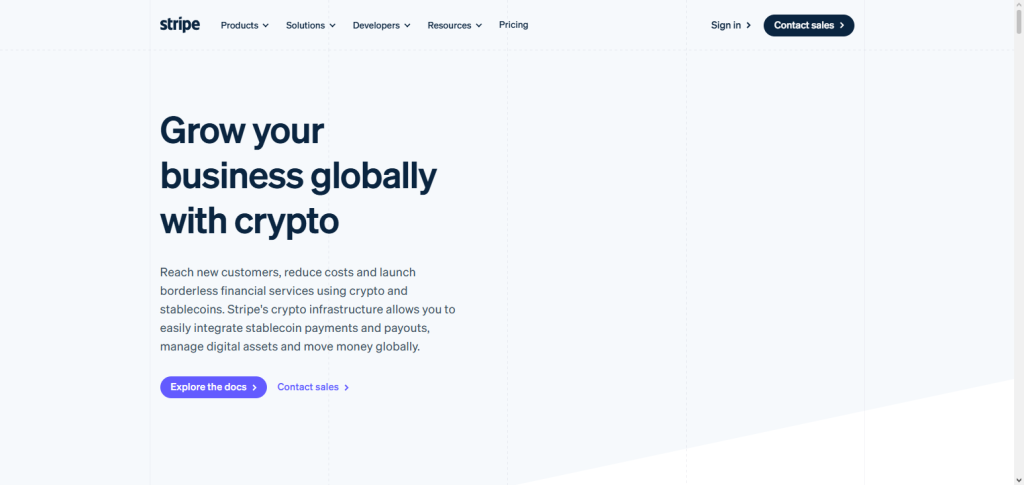
Stripe Crypto’s seamless integration of automated, reliable compliance, smart contracts, and recurring billing offers freelancers faster pay.
Stablecoin Payment Gateways, such as Stripe Crypto, further reduce SWIFT payment fees while simplifying cryptocurrency adoption by eliminating complicated blockchain operations.
| Feature | Details |
|---|---|
| Founded | Crypto re-entry 2024 |
| Supported Coins | USDC |
| Fees | 1.5% flat |
| Settlement | Instant on Ethereum, Solana |
| Coverage | 150+ countries |
| Regulation | PCI + AML compliant |
| Integration | APIs, recurring billing |
| Partners | Shopify, marketplaces |
| Security | Stripe fraud tools |
| Strength | Simplified adoption for businesses |
6. PayPal Stablecoin
In August 2023, PayPal introduced their stablecoin, PYUSD, with the Paxos Trust’s assistance. PYUSD’s market capitalization reached $4 billion and was adopted in 70 countries by 2026. It’s redeemable at a 1:1 ratio and completely backed by U.S.
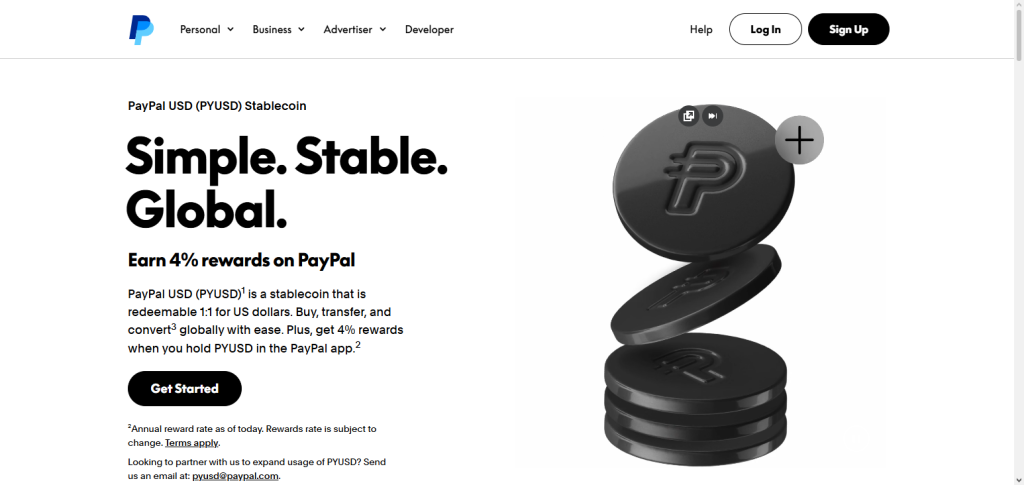
Treasuries and USD deposits. PayPal charges standard payment processing fees of 1-2%, but benefits from being the payment processor of 380 million users and 20 million merchants worldwide.
PayPal and Venmo users can send, receive and spend PY USD directly. PayPal Stablecoin epitomizes a solution for freelancers needing payment processing that eliminates SWIFT payment processing fees and offers payment processing reliant on stablecoin fast enough to meet consumer demand.
| Feature | Details |
|---|---|
| Founded | PYUSD launched 2023 |
| Issuer | Paxos Trust |
| Market Cap | $4B by 2026 |
| Fees | 1–2% |
| Settlement | Instant in PayPal/Venmo |
| Users | 380M+ |
| Merchants | 20M+ |
| Regulation | NYDFS oversight |
| Transparency | Monthly attestations |
| Strength | Mainstream adoption |
7. Ramp Network
Ramp Network, established in 2018 in London, provides a fiat-to-crypto on/off-ramp for over 150 countries. With over 100 cryptocurrencies, including USDC, USDT, and others, fees of 3.5% for card buys, and 1–1.5% for bank transfers, Ramp Network focuses on self-custody by delivering crypto purchases straight to user wallets.

Ramp Network is registered with the FCA and adheres to EU and U.S. regulations and promotes self-custody by sending crypto to user wallets. Competitors like Moonpay offer more expensive on-ramps, making Ramp Network a preferred option.
Stablecoin Payment Gateways Cutting SWIFT Payment for Freelancers like Ramp Network provide self-custody and self-custody options.
| Feature | Details |
|---|---|
| Founded | 2018, London |
| Supported Coins | 100+ including USDC, USDT |
| Fees | 1–1.5% bank, 3.5% card |
| Coverage | 150+ countries |
| Regulation | FCA registered |
| Settlement | Direct to wallets |
| Integration | APIs for apps |
| Security | AML/KYC compliance |
| Partners | MetaMask, Ledger |
| Strength | Strong fiat on/off ramp |
8. MoonPay Business
MoonPay started in Miami in 2019. They provide a way to make crypto payments around the world. They provide rails for 170+ crypto assets in 180 countries with support for fiat as well. MoonPay charges between 3-4% with card purchases but they also offer lower fees on bank transfers.

They offer enterprise solutions with NFT checkout and Stablecoin payments. MoonPay has a 3.4 billion dollar valuation with major brand partnerships and a total transaction volume over 8 billion.
MoonPay Business and other Stablecoin Payment Gateways allow for strong compliance and also reduce SWIFT fees for freelancers to make accepting global payments in stablecoins easier.
| Feature | Details |
|---|---|
| Founded | 2019, Miami |
| Supported Coins | 170+ |
| Fees | 3–4% card, lower bank |
| Coverage | 180+ countries |
| Valuation | $3.4B |
| Volume | $8B+ processed |
| Merchants | Enterprise-grade |
| Integration | NFT checkout, APIs |
| Regulation | Global compliance |
| Strength | Brand partnerships |
9. Transak
Founded in London in 2019, Transak is a Web3 payments infrastructure provider. It operates in 165+ countries and supports 170+ crypto. For card payments, fees are close to 4%, but only 1-1.5% for local rails (e.g. UPI in India and PIX in Brazil).
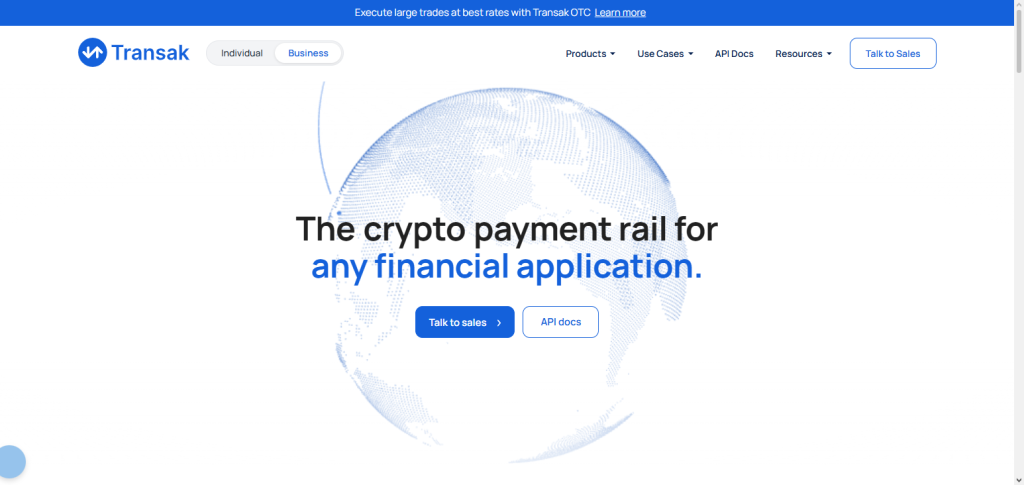
Transak is FCA-authorized and integrated into 600+ apps such as MetaMask and Trust Wallet. Instant fiat-to-crypto conversions benefit freelancers due to Transak’s coverage of strong emerging markets.
Cross-border payment solutions for freelancers such as Transak that integrate stablecoin payment gateways and reduce SWIFT fees make international payments cheaper and faster.
| Feature | Details |
|---|---|
| Founded | 2019, London |
| Supported Coins | 170+ |
| Fees | 1–4% depending on rails |
| Coverage | 165+ countries |
| Regulation | FCA authorized |
| Integration | 600+ apps |
| Settlement | Instant fiat-to-crypto |
| Security | AML/KYC |
| Partners | MetaMask, Trust Wallet |
| Strength | Emerging market coverage |
10. Paxos Payments
Founded in 2012, Paxos is a regulated blockchain company that issues USDP, PYUSD, and USDG. Paxos is regulated by the Office of the Comptroller of the Currency and the New York Department of Financial Services.
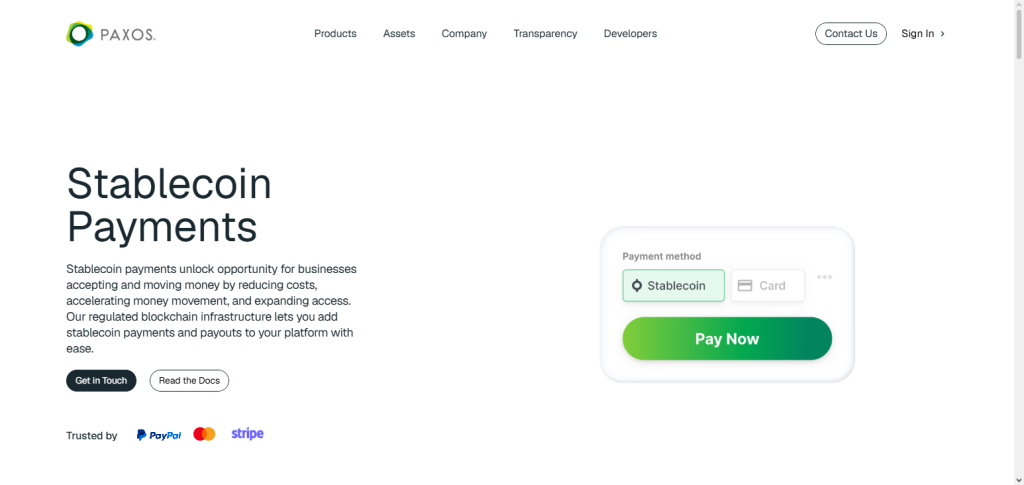
Full backing of Paxos funds is guaranteed with cash and Treasuries. Paxos’ fees are usually below 1% with monthly attestations of reserves. Paxos also powers the PayPal PYUSD and other stablecoins.
Paxos is especially beneficial for freelancers since cross border payments with stablecoins avoid the fees incurred with the SWIFT system. Paxos’ payment system, along with others providing institutional-grade reliability, reduces the costs incurred with the SWIFT system for freelancers.
| Feature | Details |
|---|---|
| Founded | 2012, New York |
| Stablecoins | USDP, PYUSD, USDG |
| Fees | <1% |
| Regulation | OCC + NYDFS |
| Transparency | Monthly attestations |
| Coverage | Global |
| Partners | PayPal, institutions |
| Security | Fully backed reserves |
| Settlement | Instant blockchain transfers |
| Strength | Institutional-grade infrastructure |
Comparison Table
| Gateway | Founded | Fees | Supported Stablecoins | Strengths |
|---|---|---|---|---|
| BitPay | 2011 | ~1% | USDC, USDT, BTC | Early pioneer, strong merchant integrations |
| Circle Payments | 2013 | <1% | USDC | Regulated issuer, transparency, global reach |
| Coinbase Commerce | 2018 | <1% | USDC, BTC, ETH | Gasless Base Layer-2, APY on balances |
| Binance Pay | 2021 | Mostly free | USDT, USDC, 300+ coins | Borderless, fee-free P2P transfers |
| Stripe Crypto | 2024 (crypto relaunch) | 1.5% | USDC | Simplified adoption, recurring billing |
| PayPal Stablecoin | 2023 (PYUSD) | 1–2% | PYUSD | Mainstream adoption, 380M+ users |
| Ramp Network | 2018 | 1–1.5% bank, 3.5% card | USDC, USDT | Strong fiat on/off ramp, FCA registered |
| MoonPay Business | 2019 | 3–4% card | USDC, USDT, 170+ coins | Enterprise-grade, NFT checkout |
| Transak | 2019 | 1–4% | USDC, USDT, 170+ coins | Emerging market coverage, 600+ app integrations |
| Paxos Payments | 2012 | <1% | USDP, PYUSD, USDG | Institutional-grade, regulated reserves |
Conclusion
Freelancers are making the switch from traditional money transfer systems to Stablecoin Payment Gateways Cutting SWIFT Fees for Freelancers. High transaction costs and slow settlement times are some of the costs that drive freelancers away from traditional payment systems.
Freelance payment systems like BitPay, Circle, Coinbase Commerce, Binance Pay, Stripe Crypto, PayPal Stablecoin, Ramp Network, MoonPay Business, Transak, and Paxos Payments have their own strengths.
These payment systems may be region friendly, low cost, and have fast settlement times. Traditional banking systems are being used less and less thanks to these payment gateways. The payment systems are proving that the borderless digital economy is becoming a reality.
FAQ
What are stablecoin payment gateways?
Stablecoin payment gateways are platforms that allow freelancers to receive payments in digital currencies pegged to fiat (like USDC or USDT). They bypass SWIFT, offering faster, cheaper, and borderless transactions.
How do they cut SWIFT fees?
Traditional SWIFT transfers can cost 3–5% in fees and take days. Stablecoin gateways settle payments instantly on blockchain networks, usually charging under 1%, saving freelancers significant costs.
Which gateways are most popular?
Top platforms include BitPay, Circle Payments, Coinbase Commerce, Binance Pay, Stripe Crypto, PayPal Stablecoin, Ramp Network, MoonPay Business, Transak, and Paxos Payments.
Are stablecoin payments secure?
Yes. Most gateways use regulated stablecoins backed by fiat reserves. Platforms like Circle and Paxos provide monthly audits, ensuring transparency and reducing risks compared to unregulated crypto.
Do freelancers need a crypto wallet?
Yes, freelancers typically need a wallet to receive stablecoins. Some gateways (like PayPal and Coinbase Commerce) provide built-in custodial wallets, while others require external wallets.