

In this article, I will discuss the Best Arbitrum Node Providers for developers building scalable Web3 apps in 2026. We’ll be judging top providers on Arbitrum support, RPC performance, price, scalability, WebSocket support, API access, reliability, developer tools and infrastructure capabilities. This comparison aids developers in selecting the appropriate Arbitrum node provider for their project needs and workload.
- What Are Arbitrum Node Providers?
- Key Points
- 1. Alchemy
- Best For Alchemy
- Alchemy — Pros & Cons
- 2. QuickNode
- Best For QuickNode
- QuickNode — Pros & Cons
- 3. Chainstack
- Best For Chainstack
- Chainstack — Pros & Cons
- 4. Infura
- Best For Infura.io
- Infura — Pros & Cons
- 5. Ankr
- Best For Ankr
- Ankr — Pros & Cons
- 6. dRPC
- Best For dRPC
- dRPC — Pros & Cons
- 7. GetBlock
- Best For GetBlock
- GetBlock — Pros & Cons
- 8. Blockdaemon (blockdaemon.com)
- Best For Blockdaemon
- Blockdaemon — Pros & Cons
- 9. Tatum
- Best For Tatum
- Tatum — Pros & Cons
- 10. Dwellir
- Best For Dwellir
- Dwellir — Pros & Cons
- Conclusion
- FAQ
What Are Arbitrum Node Providers?
Arbitrum node providers are infrastructure services that enable developers to reliably access the Arbitrum blockchain without the need to run and maintain their own nodes. They provide RPC endpoints for applications to read blockchain data, submit transactions, interact with intelligent contracts, and monitor network activity.
Node providers for Arbitrum may support Arbitrum One, Arbitrum Nova and test networks depending on their infrastructure. Services usually include HTTP RPC, WebSocket connections,
APIs, archive data, scaling options, monitoring and security features. Developers leverage these providers to create dApps, wallets, trading platforms, analytics applications, and other Web3 apps that require dependable blockchain connectivity.
Key Points
| Provider | Key Strength for Arbitrum Developers |
|---|---|
| Alchemy | Enterprise-grade Arbitrum infrastructure with advanced APIs, analytics, archive data, and developer tooling. |
| QuickNode | High-performance RPC endpoints, low-latency global infrastructure, and extensive developer add-ons. |
| Chainstack | Managed Arbitrum nodes with archive access, enterprise SLAs, and flexible deployment options. |
| Infura | Reliable Arbitrum RPC infrastructure from Consensys with WebSocket support and broad ecosystem integration. |
| Ankr | High-throughput node infrastructure with multi-chain support and archive access. |
| dRPC | Decentralized RPC network focused on redundancy, uptime, and distributed routing. |
| GetBlock | Dedicated and shared Arbitrum nodes with RPC and WebSocket connectivity. |
| Blockdaemon | Institutional-grade blockchain infrastructure supporting enterprise Arbitrum deployments. |
| Tatum | API-first blockchain platform that combines Arbitrum node access with developer tools and SDKs. |
| Dwellir | Performance-focused RPC provider recognized for Arbitrum infrastructure and developer-oriented services. |
1. Alchemy
Founded in 2017, Alchemy provides managed blockchain infrastructure with Arbitrum RPC access for developers building dApps and production applications. Its platform provides HTTP and WebSocket endpoints, JSON-RPC access, enhanced APIs, webhooks, archive data, debugging, tracing and transaction-related tools.
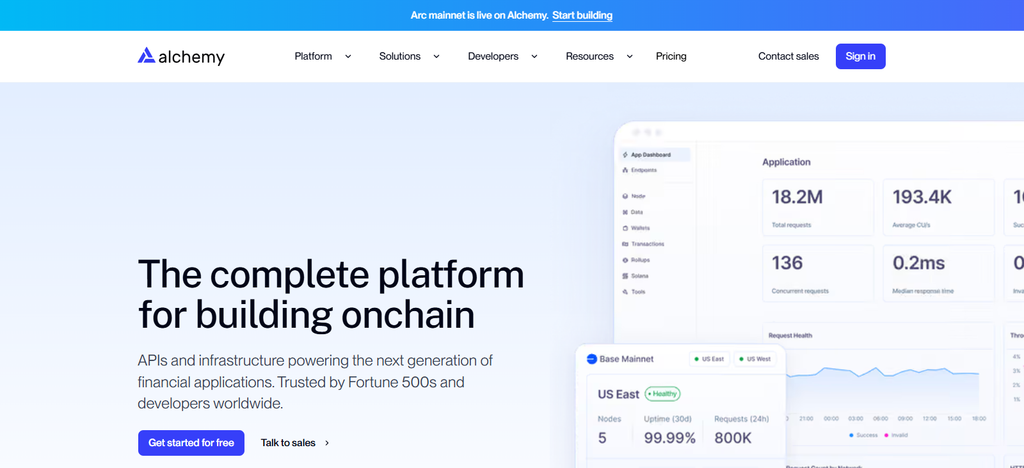
Pricing is based on compute units, and offers free, pay-as-you-go, and enterprise options. Scaling provides higher throughput and customized enterprise capacity. Distributed infrastructure and monitoring support reliability RPC performance designed for high-volume workloads.
Alchemy is particularly well suited for developers looking for broad APIs and production-ready Arbitrum infrastructure.
Best For Alchemy
- Enterprise dApps – Best for production apps that need reliable blockchain infrastructure.
- High-traffic applications – When applications are serving large RPC workloads.
- Web3 APIs – Great for developers who need APIs that go beyond standard RPC calls.
Multi-chain development – For teams building on Arbitrum & other supported networks - Developer focused projects – Great for teams who want lots of documentation and tools for developers.
Alchemy — Pros & Cons
| Pros | Cons |
|---|---|
| Strong Arbitrum and multi-chain infrastructure | Advanced usage can become expensive |
| Extensive developer APIs and tools | Pricing can be complex for beginners |
| Supports scalable production workloads | Some advanced capabilities require higher plans |
| Good documentation and developer experience | Free usage has limitations |
| Useful monitoring and application tooling | Overkill for very small projects |
2. QuickNode
QuickNode is a managed node infrastructure for developers and businesses on Arbitrum founded in 2017. It offers HTTPS and WebSocket RPC endpoints, JSON-RPC APIs, blockchain data tools, add-ons, and monitoring features.
Pricing is generally API-credit based across different plans, allowing developers to scale up as application traffic grows. Scaling is built for startups to enterprise workloads with higher throughput available on larger plans.
Reliability is about availability of distributed infrastructure. RPC performance is about low-latency access to the blockchain. Perfect for dapps, wallets, trading platforms and other high volume applications.
Best For QuickNode
- High-performance dApps – Applications that require a fast and scalable RPC infrastructure.
- Web3 startups in growth – Handy when infrastructure needs might scale with application traffic.
- Trading apps – Good for workloads where responsive access to the blockchain is important.
- Multi-chain projects – This is a good option for developers who have to work on several blockchains on one platform.
- Production use – Good for teams looking for managed infrastructure with flexible capacity.
QuickNode — Pros & Cons
| Pros | Cons |
|---|---|
| Strong RPC performance and scalability | Higher usage can increase costs |
| Supports HTTP and WebSocket connectivity | Credit-based pricing may require monitoring |
| Wide multi-chain coverage | Advanced features may require paid plans |
| Useful developer dashboard and tools | Plan limits vary by tier |
| Suitable for production applications | Enterprise features can be costly |
3. Chainstack
Founded in 2019, Chainstack offers managed Arbitrum nodes with infrastructure designed for both development and production workloads. Developers have access to Arbitrum through HTTP and WebSocket endpoints, standard JSON-RPC methods, archive data on eligible plans and infrastructure management tools.

Pricing There are free and paid plans, with usage measured via request units. Scaling increases dedicated infrastructure, nodes, requests per second in parallel with requirements. Managed infrastructure, monitoring, and enterprise SLAs provide Reliability. RPC performance is optimized for predictable application traffic. Chainstack is useful for dApps, APIs, analytics systems and enterprise Web3 projects.
Best For Chainstack
- Enterprise Web3 applications – Best for business needing managed blockchain infrastructure.
Multi-chain development – Perfect for teams building across several blockchain ecosystems. - Scalable dApps – Useful for projects that anticipate scaling their infrastructure needs.
- API-based applications – For developers that want managed RPC and access to blockchain data.
Development teams – Good for teams who want tools for infrastructure management, monitoring and deployment.
Chainstack — Pros & Cons
| Pros | Cons |
|---|---|
| Managed Arbitrum node infrastructure | Pricing can increase with higher usage |
| Strong multi-chain support | Some advanced infrastructure requires paid plans |
| Supports scalable deployments | Configuration options may seem complex initially |
| Useful infrastructure management tools | Free resources have usage limitations |
| Suitable for enterprise workloads | May provide more infrastructure than simple projects need |
4. Infura
Infura was founded in 2016 and offers managed blockchain infrastructure that supports Arbitrum, for developers who need reliable RPC access but don’t want to have to run their own nodes. Its platform provides HTTPS and WebSocket connectivity, JSON-RPC APIs, blockchain data services and developer tools.
Pricing Uses a credit-based model with free and paid options, with larger plans having more throughput and capacity. Scaling All the way from early development to enterprise workloads.
Reliability is a big focus with managed infrastructure and production grade availability. RPC performance is tuned for reliable blockchain communication. It’s good for dApps, wallets and back-end services.
Best For Infura.io
- Production dApps – Excellent for apps requiring managed blockchain connectivity.
Ethereum ecosystem developers – A solid pick if you’re building on Ethereum-centric infrastructure. - Wallet apps – Suitable for apps that require reliable blockchain data and transaction connectivity.
- Backend services – For applications that communicate with Arbitrum over RPC APIs.
- Enterprise Web3 projects – Best for teams looking for a proven managed blockchain infrastructure
Infura — Pros & Cons
| Pros | Cons |
|---|---|
| Established blockchain infrastructure provider | Pricing structure can be complex |
| Strong Ethereum ecosystem integration | Free access has usage restrictions |
| Supports Arbitrum connectivity | Advanced requirements may need higher-tier plans |
| Useful APIs and developer tools | Less infrastructure control than self-hosting |
| Suitable for production applications | Heavy workloads can become expensive |
5. Ankr
Ankr is a Web3 API platform founded in 2017 that offers Arbitrum RPC infrastructure. Developers are able to access Arbitrum on supported plans via HTTP RPC, REST APIs, gRPC, and WebSocket connections.
Pricing: API credits are consumed. Free access, pay-as-you-go or premium options based on request usage. Scaling can really ramp up throughput on premium infrastructure with higher request limits and dynamic regions.
Reliability Distributed node infrastructure, multiple options for access. RPC performance tailored for scalable Web3 applications. A good choice for developers wanting multi-chain infrastructure with Arbitrum.
Best For Ankr
- Multi-chain developers – Ideal for teams that are developing with Arbitrum and a host of other blockchains.
- Web3 APIs – For developers looking for RPC and more blockchain data services.
- Scalable applications – Perfect for projects that need more RPC power as the usage scales.
dApp infrastructure – For applications that need managed blockchain connectivity. - Cost-aware developers – Useful for teams comparing flexible usage-based infrastructure options.
Ankr — Pros & Cons
| Pros | Cons |
|---|---|
| Broad multi-chain network coverage | API-credit pricing requires usage tracking |
| Supports Arbitrum RPC access | Advanced features may require paid access |
| Multiple API and connectivity options | Features vary across services |
| Flexible infrastructure for Web3 applications | High-volume usage can increase costs |
| Useful for multi-chain developers | Documentation can require technical familiarity |
6. dRPC
2022: The year dRPC was born, a decentralized Arbitrum RPC infrastructure that routes requests through many independent node providers. Developers get JSON-RPC access over HTTP and WebSocket endpoints. Infrastructure is built to distribute workloads and increase availability. Pricing uses compute units.
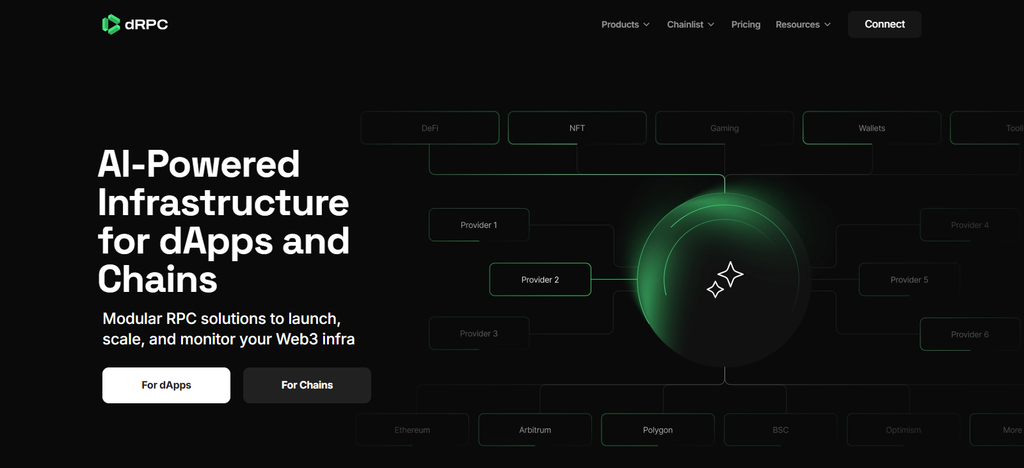
dRPC currently uses a relatively simple method-based CU model for supported networks. Scaling is intended for high-throughput applications and can scale across multiple infrastructure providers. Reliability Distributed routing, failover.
Performance RPC performance depends on the available providers and routing conditions. dRPC is especially helpful for developers looking for redundancy and a decentralized RPC infrastructure.
Best For dRPC
- High-availability applications – For projects that care not to rely on a single RPC endpoint.
- Multi-provider infrastructure – Ideal for developers who want to route requests across different node providers.
High-volume workloads – Well suited for applications that need scalable RPC access.
Infrastructure-conscious teams – For developers focused on decentralized, resilient RPC architectures.
dRPC — Pros & Cons
| Pros | Cons |
|---|---|
| Distributed RPC infrastructure | Architecture may be less familiar to beginners |
| Can provide RPC redundancy | Performance can depend on underlying providers |
| Useful for high-availability applications | Pricing requires understanding compute units |
| Supports multi-provider routing | Less traditional than a single node provider |
| Helps reduce single-provider dependency | Some enterprise capabilities may require custom arrangements |
7. GetBlock
GetBlock has been live since 2019, offering managed Arbitrum RPC infrastructure in both shared and dedicated node options. Developers are able to use HTTP and WebSocket endpoints, JSON-RPC APIs, archive data, analytics, monitoring and infrastructure management tools.
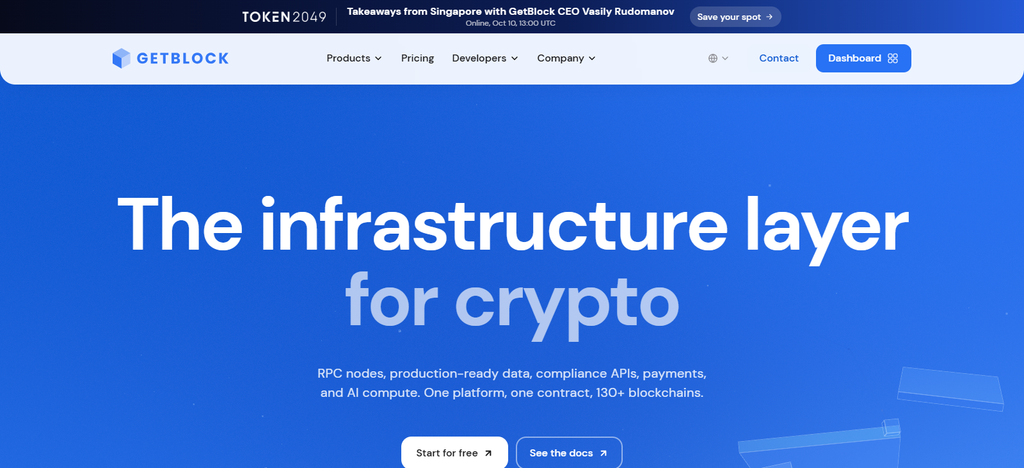
Pricing relies on compute units for free and paid plans. Higher tiers provide increased request capacity. Scaling can be from shared infrastructure to dedicated nodes for larger workloads.
Reliability is ensured through managed infrastructure, regional routing, and SLA options. RPC performance is built for production applications. GetBlock is perfect for dApps, APIs, analytics platforms and high-volume blockchain projects.
Best For GetBlock
- Dedicated RPC Requirements – for projects needing more managed blockchain infrastructure.
- High volume dApps – Suitable for apps with high amounts of RPC traffic.
- Archive-data workloads – For applications that need access to historical data from the blockchain.
- Blockchain analytics – Great for data-heavy applications and analytics platforms.
- Growing Web3 projects – Best for teams who could be moving from shared to dedicated infrastructure.
GetBlock — Pros & Cons
| Pros | Cons |
|---|---|
| Supports managed Arbitrum infrastructure | Advanced usage can become more expensive |
| Shared and dedicated infrastructure options | Pricing requires monitoring usage |
| Useful archive-data capabilities | Free access has limitations |
| Suitable for high-volume workloads | Advanced infrastructure may be unnecessary for small projects |
| Supports multiple blockchain networks | Plan differences require careful comparison |
8. Blockdaemon (blockdaemon.com)
Founded in 2017, Blockdaemon delivers enterprise-grade blockchain infrastructure, including Arbitrum connectivity for institutional and professional Web3 use cases. The infrastructure provides API and RPC access and includes WebSocket support for qualifying services and use cases.
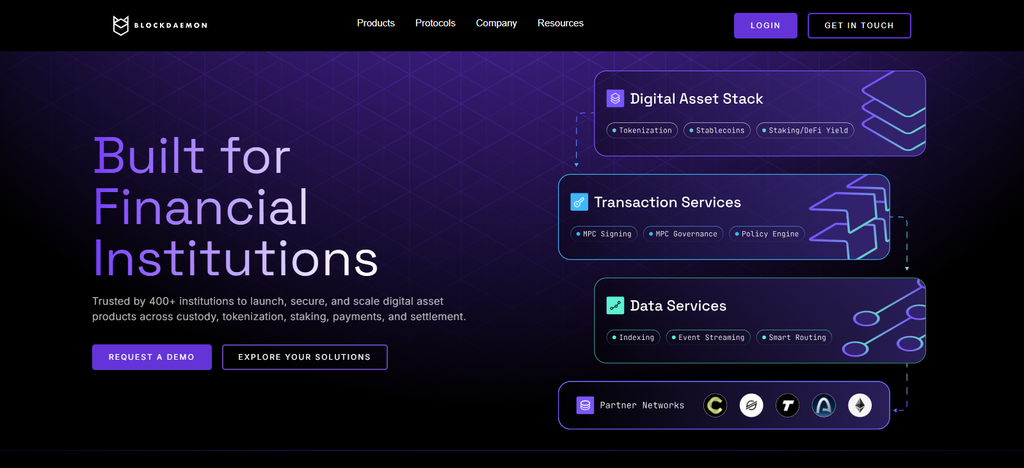
Pricing is usually focused on custom or enterprise deals, rather than straightforward self-service pricing. Scaling is designed for institutional workloads, managed nodes, high volume infrastructure needs.
Reliability is a big focus, with enterprise infrastructure, security controls, monitoring and service level options. Its RPC infrastructure is a perfect fit for financial institutions, enterprises, custodians and production-grade Web3 businesses.
Best For Blockdaemon
- Enterprise blockchain infrastructure – Suitable for companies that require a professional infrastructure.
- Financial institutions – Designed for businesses requiring managed blockchain connectivity and infrastructure.
- Institutional Web3 – Great for custody, finance and other enterprise-focused blockchain applications.
- Production workloads – Ideal for applications that need strong infrastructure and operational support.
Security-conscious organizations – A good fit for organizations that place a high value on enterprise security and infrastructure controls.
Blockdaemon — Pros & Cons
| Pros | Cons |
|---|---|
| Strong enterprise blockchain infrastructure | Pricing is less transparent for smaller users |
| Designed for institutional workloads | May be excessive for simple dApps |
| Strong focus on security and reliability | Enterprise onboarding can take more effort |
| Broad blockchain infrastructure services | Less focused on individual developers |
| Suitable for large production environments | Custom solutions can increase overall costs |
9. Tatum
Launched in 2018, Tatum offers blockchain APIs and infrastructure that make it easy to build applications, including access to supported Arbitrum networks. Instead of having to deal with the underlying node infrastructure directly, developers are able to interact with API endpoints and blockchain development tools.
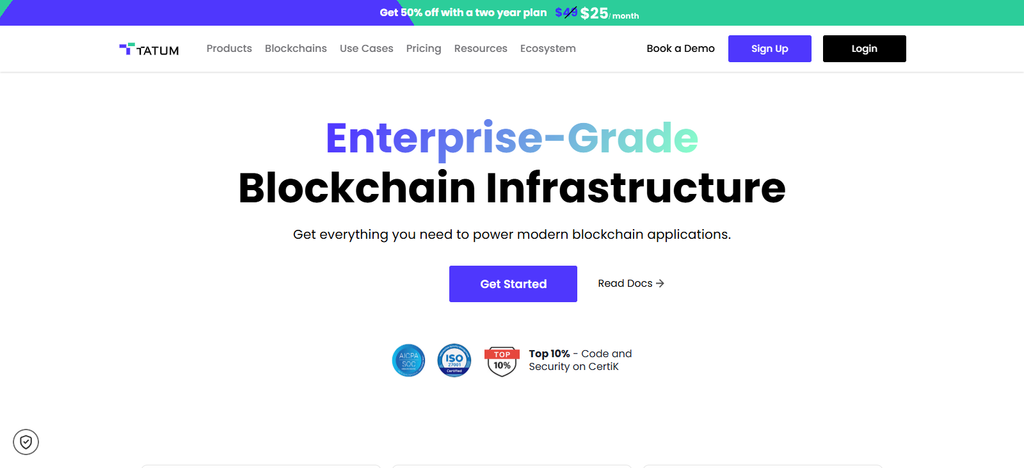
Pricing is based on the platform plans and usage requirements, with higher tiers for applications that require more capacity. Scaling allows projects to transition from development to production workloads.
Availability of WebSocket depends on the particular Tatum service and supported integration. API provides simplified operations with blockchain. Tatum is useful for developers who want to have more comprehensive blockchain APIs. Reliability is achieved via managed infrastructure.
Best For Tatum
- Multi-chain applications – Good for teams building apps on multiple supported networks.
- Backend integrations – Ideal for use cases that require blockchain functionality via API.
- Startups – Useful for teams looking to reduce the complexity of direct node management.
- Fast development – For developers who prefer blockchain features through higher level APIs.
Tatum — Pros & Cons
| Pros | Cons |
|---|---|
| Simplifies blockchain development through APIs | Less direct node-level control |
| Supports multi-chain application development | Advanced infrastructure needs may require other solutions |
| Useful for rapid application development | Pricing depends on selected usage and plan |
| Good fit for backend integrations | Some low-level blockchain functionality may be limited |
| Reduces node-management complexity | Infrastructure-focused teams may prefer dedicated node providers |
10. Dwellir
Dwellir offers managed Arbitrum infrastructure with HTTP and WebSocket endpoints, including archive access for production workloads. Its platform uses a simple response-based pricing model rather than the complex compute-unit weighting and has unlimited-node plans for applications that require predictable throughput.
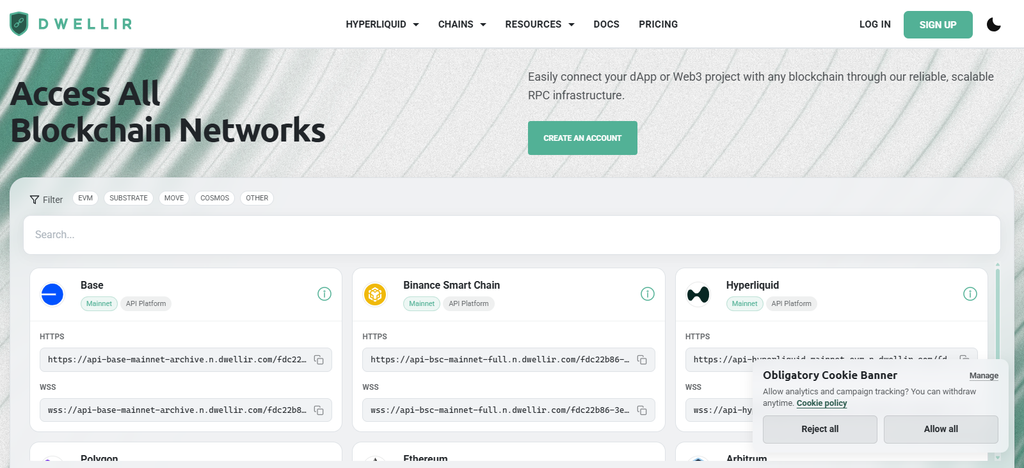
Scaling Up to thousands of requests per second, with dedicated infrastructure for larger loads. API access with RPC, trace and debug capabilities, as well as reliability with high availability infrastructure and SLA options.
RPC performance is tuned for throughput and predictable access, making Dwellir a good fit for heavy-duty Arbitrum applications, analytics and enterprise workloads.
Best For Dwellir
- High-throughput applications – Perfect for applications that need lots of RPC capacity.
- Real-time applications – Ideal for workloads that can take advantage of WebSocket connectivity.
- Archive-data users – For applications that require historical blockchain data.
- Enterprise Workloads – For teams that need dedicated infrastructure and predictable performance.
- Performance-centric dApps – Ideal for applications that require RPC throughput, reliability and scalable infrastructure.
Dwellir — Pros & Cons
| Pros | Cons |
|---|---|
| Strong focus on high-performance RPC infrastructure | Smaller ecosystem than some major providers |
| Supports WebSockets and high-throughput workloads | Pricing may be less suitable for very small projects |
| Dedicated infrastructure options available | Advanced requirements can require custom plans |
| Useful for archive and data-intensive workloads | Fewer broader developer tools than some competitors |
| Suitable for enterprise applications | Best suited to users with specific infrastructure needs |
Conclusion
The right Arbitrum node provider to choose depends on your application’s traffic, performance requirements, budget and infrastructure needs. Other providers offering various Arbitrum RPC access, APIs, scaling, WebSockets and reliability are Alchemy,
QuickNode, Chainstack, Infura, Ankr, dRPC, GetBlock, Blockdaemon, Tatum, and Dwellir. Developers should consider pricing models, request limits, supported networks, archive access, API capabilities and production requirements before making a decision.
For smaller projects, flexible or free-tier plans might be useful, whereas for high-traffic dApps and enterprises, dedicated infrastructure, higher limits, advanced APIs, and stronger reliability options may be required to ensure consistent Arbitrum performance.
FAQ
What is an Arbitrum node provider?
An Arbitrum node provider offers managed blockchain infrastructure that allows developers to connect applications to Arbitrum networks through RPC endpoints and APIs without running and maintaining their own nodes.
Which is the best Arbitrum node provider?
The best provider depends on your requirements. Alchemy, QuickNode, Chainstack, Infura, Ankr, dRPC, GetBlock, Blockdaemon, Tatum, and Dwellir each offer different combinations of pricing, RPC performance, APIs, scaling, WebSockets, and infrastructure options.
Are Arbitrum node providers free?
Some Arbitrum node providers offer free tiers with limited requests or credits. Paid plans generally provide higher limits, better scaling, additional APIs, dedicated infrastructure, and features designed for production applications.
What is an Arbitrum RPC provider?
An Arbitrum RPC provider gives applications endpoints for communicating with the Arbitrum blockchain. Developers can use RPC requests to retrieve blockchain data, submit transactions, query smart contracts, and interact with deployed applications.