

This article will discuss the Best Polygon Node Providers for developers and Web3 teams. We will compare leading providers on Polygon support, RPC performance, network coverage, pricing, WebSocket access, archive data, geographic regions, APIs, SDKs, scalability and developer tools. This guide will assist you to select a trusted Polygon infrastructure to build and scale decentralized applications.
What Is a Polygon Node Provider?
A Polygon node provider is a blockchain infrastructure service that offers developers managed access to the Polygon network through RPC endpoints, APIs, WebSockets, and hosted nodes.
Instead of running and maintaining their own Polygon node, developers are able to use these services to read blockchain data, submit transactions, interact with intelligent contracts, monitor events and build decentralized applications. Polygon node providers may also offer archive nodes, dedicated infrastructure, indexing tools, analytics APIs, rate limits and global endpoints.
They generally provide several pricing options, from free development tiers to pay-as-you-go and enterprise plans, which make deploying and scaling Polygon infrastructure easier.
How Polygon Node Providers Work
Polygon node providers are the infrastructure layer that connects Web3 applications and the Polygon blockchain. They run and maintain blockchain nodes and provide RPC endpoints for developers to connect to the network.
RPC Connection made by developer: The developer signs up for a Polygon node provider and gets an API key or RPC endpoint to connect their application to Polygon.
App sends RPC requests: When a DApp, wallet, backend, or smart-contract application wants to get information from the blockchain or perform network operations, it makes HTTP, HTTPS, or WebSocket requests to endpoints.
Request forwarded by Provider: The provider receives the request and forwards it to an available Polygon node. Load balancing can be used to distribute requests across multiple nodes, improving reliability and performance.
Polygon Node Receives Request: The connected node talks to the Polygon network and handles requests like getting blocks, transaction details, wallet balances, contract data, logs, and gas data.
Blockchain Data Is Returned: The node provider then sends the requested blockchain data back to the application via the RPC connection once the request has been processed.
Propagation of Transactions: The application sends the signed transactions from the users through the provider’s RPC endpoint to broadcast on the Polygon network for processing.
WebSocket Enables Real-Time Updates: Providers with WebSocket support can deliver live blockchain events like new blocks, transactions, smart-contract events and logs without requiring constant polling.
Polygon Node vs RPC Provider
| Comparison Point | Polygon Node | Polygon RPC Provider |
|---|---|---|
| Definition | A Polygon node is a blockchain client that stores and processes Polygon network data and communicates with the blockchain network. | A Polygon RPC provider gives developers a managed endpoint to communicate with Polygon nodes without running the infrastructure themselves. |
| Primary Role | Maintains blockchain data, validates and processes network information, and participates in blockchain operations. | Provides convenient application access to blockchain data and network functions through RPC endpoints. |
| Infrastructure | Developers or infrastructure teams are responsible for deploying, configuring, updating, and maintaining the node. | The provider manages servers, nodes, networking, scaling, monitoring, and infrastructure maintenance. |
| RPC Endpoint | A self-managed node can expose its own RPC endpoint. | The main service is usually a managed HTTP/HTTPS or WebSocket RPC endpoint. |
| Node Management | Requires technical knowledge for installation, configuration, upgrades, storage, security, and monitoring. | Most infrastructure management is handled by the provider. |
| Blockchain Data | Maintains blockchain data locally according to the node configuration. | Retrieves blockchain data from provider-managed nodes and returns it to the application. |
| Historical Data | Can support historical data depending on whether a full or archive configuration is used. | Some providers offer dedicated archive-node access for historical queries. |
| WebSocket | Can be configured to provide WebSocket access when supported by the node setup. | Many providers offer managed WebSocket endpoints for real-time events and subscriptions. |
| Scalability | Scaling requires adding resources, nodes, load balancing, and additional infrastructure. | Providers can offer load balancing, distributed infrastructure, and higher request capacity. |
| Performance Control | Gives developers greater control over hardware, configuration, networking, and node resources. | Performance depends on the provider’s infrastructure, plan, endpoint capacity, and routing. |
| Cost | Requires spending on servers, storage, bandwidth, maintenance, and engineering resources. | Usually follows free-tier, subscription, credit-based, compute-unit, or pay-as-you-go pricing. |
| Security | The infrastructure owner is responsible for securing the node and RPC endpoint. | Providers generally manage infrastructure security, authentication, access controls, and network protection. |
| Maintenance | Developers must handle software updates, synchronization issues, backups, and infrastructure problems. | The provider handles most node maintenance and operational tasks. |
| Best For | Teams that need maximum infrastructure control, dedicated resources, or custom node configurations. | DApp developers, startups, enterprises, and teams wanting fast and simple Polygon connectivity. |
| Technical Expertise | Requires stronger blockchain infrastructure and DevOps knowledge. | Generally easier for developers because integration usually requires an API key and RPC URL. |
| Flexibility | High flexibility because teams control the underlying node environment. | Flexibility depends on the provider’s supported APIs, plans, network options, and node configurations. |
| Reliability | Reliability depends on the team’s own infrastructure, redundancy, monitoring, and maintenance. | Providers can offer redundant infrastructure, multiple nodes, load balancing, and service-level commitments. |
| Setup Time | Usually longer because the node must be deployed and synchronized. | Usually much faster because developers can create an endpoint and start making RPC requests. |
| Example Use | Running a dedicated Polygon node for infrastructure, validation, or specialized blockchain workloads. | Connecting a wallet, backend, DeFi application, NFT platform, game, or DApp to Polygon through a managed RPC endpoint. |
| Recommended Choice | Choose a Polygon node when infrastructure ownership and control are priorities. | Choose an RPC provider when convenience, scalability, managed infrastructure, and faster development are priorities. |
Key Points
| Polygon Node Provider | Key Points |
|---|---|
| Blockdaemon | Enterprise-focused Polygon infrastructure with managed RPC, dedicated nodes, APIs, scalable infrastructure, and institutional-grade blockchain services. Suitable for production applications requiring reliability and dedicated infrastructure. |
| Tatum | Developer-friendly multi-chain platform offering Polygon RPC access, blockchain APIs, wallet infrastructure, transaction services, and SDKs. A strong option for developers building applications that need more than basic RPC connectivity. |
| NodeReal | Provides Polygon RPC infrastructure through its MegaNode platform, including HTTPS and WebSocket access, archive data, enhanced APIs, and scalable compute-unit-based plans for growing Web3 applications. |
| Lava Network | Decentralized RPC infrastructure that connects applications with a distributed network of blockchain data providers. Its multi-provider approach can offer an alternative to relying on a single centralized RPC provider. |
| OnFinality | Managed blockchain infrastructure with Polygon RPC, HTTP and WebSocket access, archive capabilities, Trace API, analytics, dedicated nodes, and multiple pricing tiers for developers and production teams. |
| Allnodes | Focuses on hosted and dedicated blockchain infrastructure, including Polygon full nodes, archive nodes, validator hosting, HTTP RPC, WebSocket, and GraphQL. Best suited for teams seeking greater control over node infrastructure. |
| Validation Cloud | Offers managed blockchain Node APIs with Polygon connectivity and usage-based infrastructure. Its pay-as-you-go approach and multi-chain support make it useful for developers seeking scalable RPC access without managing nodes. |
| BlockPI Network | Provides distributed Polygon RPC infrastructure with HTTPS, WebSocket, archive access, dedicated RPC options, bundler services, and additional capabilities such as MEV protection for advanced Web3 workloads. |
| Syndica | Focuses on high-performance blockchain RPC and data infrastructure for demanding Web3 applications. Its scalable API-driven infrastructure is particularly relevant to teams building data-intensive and production-grade blockchain applications. |
| Gateway.fm | Provides managed blockchain infrastructure and customizable node deployments across multiple ecosystems. It is a strong option for protocols, enterprises, and teams that need production infrastructure with greater customization. |
1. Blockdaemon
Founded in 2017 Blockdaemon is based in New Yorsk, United States. It offers institutional-grade blockchain infrastructure including Polygon RPC, dedicated Polygon nodes, REST APIs, staking and node services.
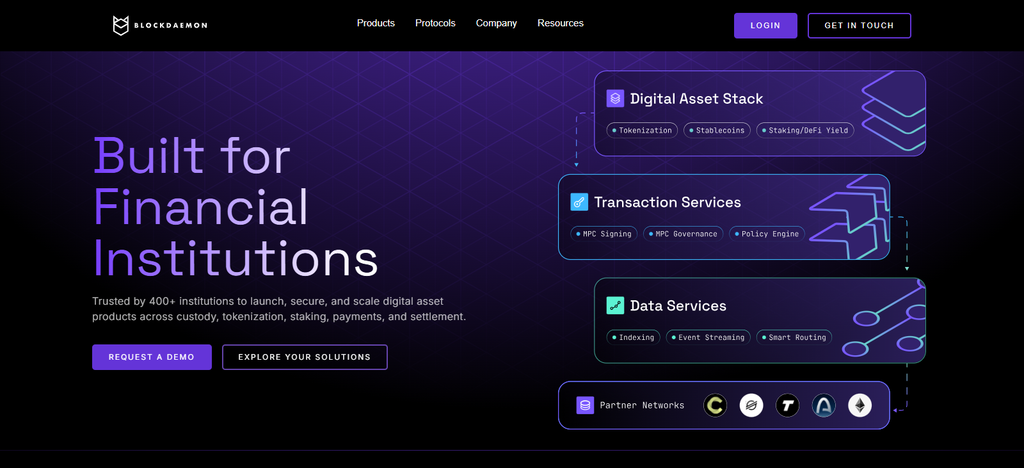
Polygon Support: Support for Polygon PoS production infrastructure and API access. Network Support: Blockdaemon supports a wide range of major networks such as Ethereum, Bitcoin, Solana, Polygon, Arbitrum, Optimism and others. Pricing: Free tier for testing; paid Starter, Growth and Enterprise plans scale using compute units and request capacity.
Geographic Regions: Global infrastructure for distributed applications SDKs: Java, Python, Go, TypeScript, and Rust clients are available. This makes it particularly well-suited for enterprise Web3 applications requiring managed, scalable infrastructure.
| Characteristics | Pros | Cons |
|---|---|---|
| Managed Polygon RPC and dedicated node infrastructure | Reduces infrastructure management | Enterprise features can be more complex |
| Polygon REST API for blockchain data | Convenient access through APIs | Advanced requirements may need paid plans |
| Dedicated Polygon nodes available | Suitable for production workloads | Dedicated infrastructure can cost more |
| RPC API with scalable request capacity | Supports growing applications | Usage-based capacity requires monitoring |
| Event streaming and historical balance data | Useful for data-driven dApps | More infrastructure-oriented than beginner-focused tools |
| Free tier available for testing | Easy way to evaluate services | Free tier is not designed for heavy production traffic |
| Starter plan supports up to 65M compute units/month | Good option for smaller applications | Higher workloads require larger plans |
| Growth plan supports higher capacity and request rates | Better for scaling teams | Pricing becomes more relevant at scale |
| Enterprise plan includes custom usage and SLA | Strong fit for institutions | Enterprise pricing is customized rather than transparent |
| Supports multiple blockchain protocols | Useful for multi-chain applications | Large feature set may be unnecessary for simple Polygon projects |
2. Tatum
Tatum was founded in 2018, is a company based in the Czech Republic, with its official headquarters in the United Kingdom, and a corporate center in Miami. Polygon support: Tatum can connect to Polygon Mainnet and Amoy thanks to dedicated RPC endpoints.
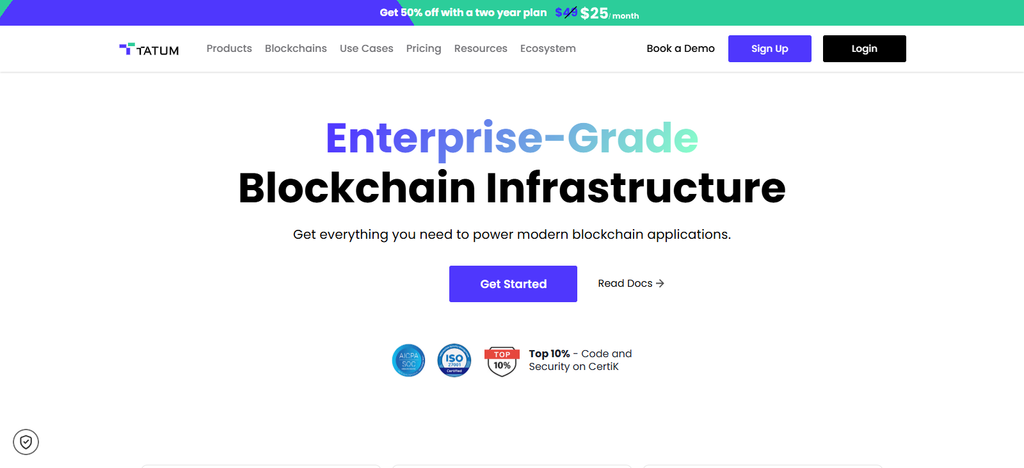
Network Assistance: It’s unified infrastructure supports 60+ blockchain protocols giving developers multi-chain access from a single platform. Pricing: Free API key and 100,000 credits for developers, dedicated Polygon API keys start at $99/month for 10 RPS with higher-throughput options.
Geographic Regions: Tatum has a global reach. SDKs: JavaScript/TypeScript, C# and PHP SDKs. Its APIs also include wallets, NFTs, transactions, DeFi, tokens, fees and notifications, which makes it useful for full Polygon applications.
| Characteristics | Pros | Cons |
|---|---|---|
| Polygon Mainnet and Amoy RPC endpoints | Easy Polygon integration | Credit-based usage requires planning |
| Unified blockchain development platform | Useful for multi-chain applications | May provide more functionality than a simple RPC-only project needs |
| JavaScript, Python, Ruby and Go examples | Developer-friendly integration | Developers still need to understand RPC concepts |
| REST APIs alongside RPC | Reduces backend development work | Advanced APIs can increase usage |
| Wallet and transaction APIs | Useful for complete Web3 applications | Broader platform can add complexity |
| Global load balancing | Helps maintain availability | Shared infrastructure may not suit every high-volume workload |
| Automatic failover | Improves resilience | Dedicated capacity costs extra |
| Free API key with 100K credits | Good for experimentation | Free allocation is limited for production |
| Dedicated API keys available | Predictable RPS for critical workloads | Dedicated keys have additional monthly costs |
| BYO-RPC functionality | Allows custom routing and failover | More useful for experienced infrastructure teams |
3. NodeReal
NodeReal was founded in 2021 and is based in Singapore with a distributed presence across Asia, Europe and other regions. Polygon Support NodeReal provides Polygon Mainnet RPC access with both HTTPS and WebSocket endpoints.
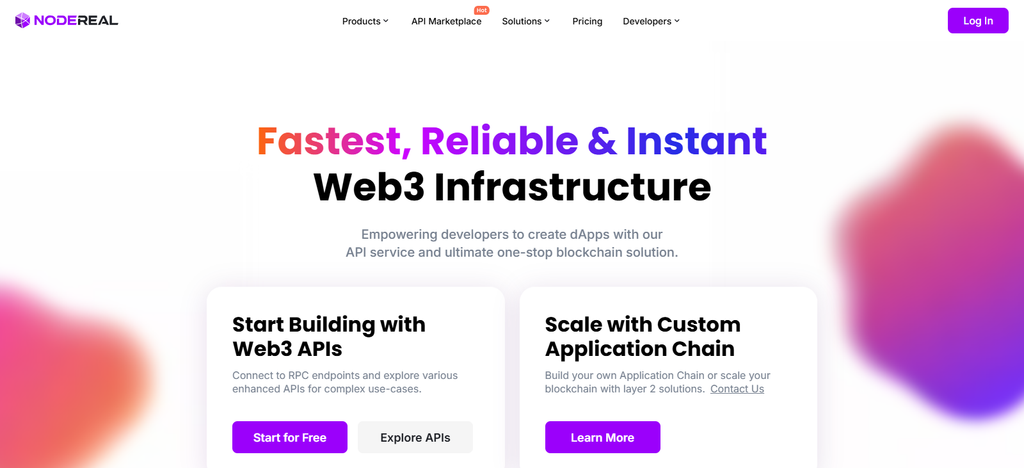
Network Support: Its infrastructure is deployed across Polygon, Ethereum, BNB Smart Chain, Optimism, Aptos and various other major networks. Cost: MegaNode platform has a Free plan and Growth, Team and Business plans, with published prices for annual billing starting at around $31/month for the Growth plan.
Geographic Regions: NodeReal has a global footprint of infrastructure and team. SDKs: Developers are able to connect via standard HTTP/WSS APIs and popular programming environments. It also offers archive data, enhanced APIs, Debug API and compute-unit based usage making it suitable for scalable Web3 applications
| Characteristics | Pros | Cons |
|---|---|---|
| MegaNode blockchain RPC infrastructure | Suitable for production Web3 applications | Pricing uses compute-unit concepts |
| Polygon and other EVM networks supported | Good multi-chain flexibility | Understanding CU consumption is important |
| Free plan available | Useful for developers starting out | Free capacity is limited |
| Growth, Team and Business plans | Clear upgrade path | Higher tiers become more expensive |
| Archive data availability | Useful for historical blockchain applications | Archive workloads consume significant resources |
| Enhanced APIs | More functionality than basic RPC | Can require additional technical understanding |
| Debug API support | Useful for advanced developers | Not necessary for simple dApps |
| CUPS-based rate limiting | Better representation of request complexity | Less intuitive than simple requests-per-second pricing |
| Multiple API keys on paid plans | Useful for teams and projects | Key limits vary by plan |
| Dedicated customer support at higher tiers | Better for professional teams | Stronger support requires paid plans |
4. Lava Network
Lava Network is a decentralized RPC infrastructure network that connects blockchain applications with independent node providers. Founded: Lava was launched as a blockchain infrastructure project in the early 2020s.
Headquarters: It functions as a globally distributed Web3 infrastructure network, rather than using the traditional data-center model. Polygon Support: Polygon is a blockchain network that is supported by its decentralized RPC infrastructure. Network Support: Lava is focused on cross-chain RPC and data availability for supported blockchain ecosystems.
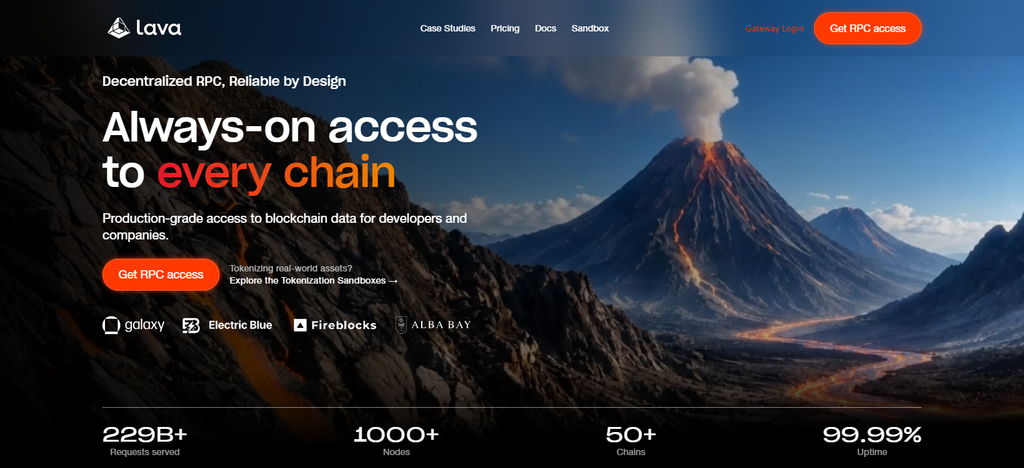
Pricing: The model is based on decentralized RPC access and usage, not on traditional single provider infrastructure pricing. Geographic Regions: It can offer geographically dispersed endpoints thanks to its distributed provider architecture.
SDKs: Developers mostly interact with RPC APIs and standard blockchain tooling. # This makes Lava especially interesting for applications seeking decentralized and resilient RPC infrastructure.
| Characteristics | Pros | Cons |
|---|---|---|
| Decentralized RPC infrastructure | Reduces dependence on one centralized provider | Architecture can be more complex |
| Multi-provider RPC model | Provides infrastructure diversity | Developer experience differs from traditional RPC platforms |
| Blockchain data access through RPC | Familiar interface for Web3 developers | Advanced features depend on supported providers |
| Focus on decentralized infrastructure | Useful for censorship-resistance goals | May not be ideal for teams wanting one centralized vendor |
| Multi-chain orientation | Suitable for cross-chain applications | Feature availability varies between networks |
| Provider-based infrastructure | Can improve infrastructure resilience | Performance can vary across providers |
| Designed for scalable blockchain access | Useful for growing Web3 applications | Requires understanding of decentralized RPC concepts |
| Open infrastructure approach | Attractive to infrastructure-focused teams | Less straightforward for beginners |
| Suitable for developers seeking RPC alternatives | Adds redundancy options | Enterprise-style support may differ from centralized vendors |
| Web3-native infrastructure model | Strong fit for decentralized applications | Not necessarily the simplest choice for basic Polygon RPC needs |
5 OnFinality
OnFinality offers managed blockchain nodes, RPC endpoints and APIs for developers and Web3 teams. Founded: OnFinality was founded as a blockchain infrastructure company in the nascent web3 infrastructure market. Headquarters: It has infrastructure spread across many regions and operates internationally.
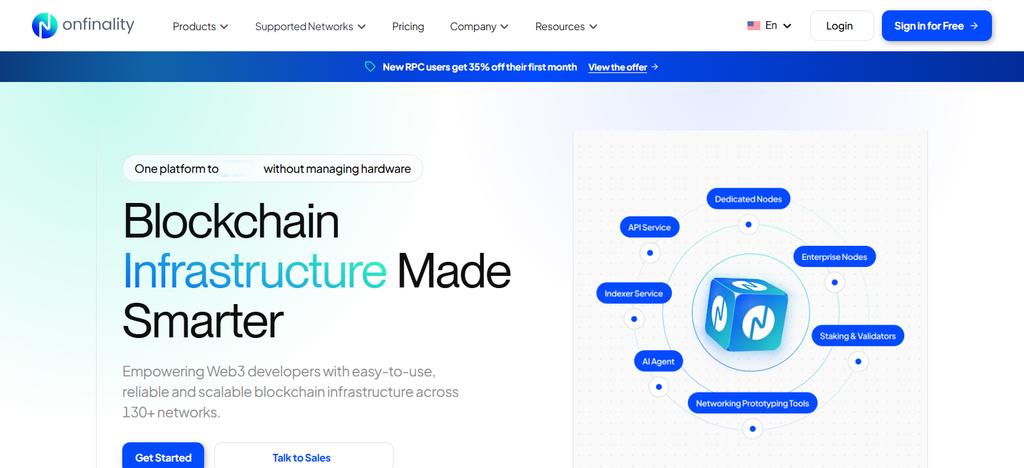
Polygon Support: Mainnet & Amoy RPCs are supported for Polygon PoS. Network Support OnFinality has infrastructure on a number of blockchain networks and ecosystems. Pricing: Developer plan is free with 400,000 RPC response units per day. Starts at $49/month for Growth and $249/month for Accelerate.
Enterprise pricing is bespoke. Geographic Regions: Infrastructure is designed for distributed workloads on a global scale. SDKs: JavaScript, Python, Go and cURL are available for integration. The archive, Trace API, analytics, and dedicated nodes for production workloads are also available to developers.
| Characteristics | Pros | Cons |
|---|---|---|
| Managed Polygon RPC infrastructure | Simplifies node management | Usage is measured through Response Units |
| HTTP and WebSocket RPC access | Supports standard and real-time applications | WebSocket consumption must be monitored |
| Free Developer plan | Good for testing and prototypes | Free plan has daily limits |
| Growth plan includes 20M response units/month | Suitable for growing applications | Monthly subscription plus usage costs can apply |
| Accelerate plan includes 100M response units/month | Higher capacity for production | More expensive than entry-level plans |
| Archive access across supported APIs | Strong for historical-data applications | Archive queries can be resource-intensive |
| Trace API | Useful for advanced debugging and analysis | Mainly valuable to advanced users |
| API usage analytics | Helps monitor infrastructure consumption | Analytics are less important for simple projects |
| Dedicated node options | Useful for predictable production traffic | Dedicated infrastructure adds cost |
| Higher rate limits on paid plans | Better for demanding workloads | Requires upgrading from free tier |
6. All nodes.
Allnodes offers hosting for blockchain nodes, validator infrastructure and RPC access for developers and node operators. Founded: Allnodes started out as a non-custodial node-hosting service with a mission to make blockchain infrastructure easy to manage. Headquarters: It functions as a globally accessible infrastructure provider.
Polygon Support Allnodes provides Polygon validator, full node and archive node hosting. Network Support The platform supports a range of blockchain networks besides Polygon. Pricing: Full-node hosting for Polygon is around $240/month, and archive-node plans start at $1,280/month — with more premium enterprise options.
Regions: European and global server location options, depending on configuration. SDKs: Developers are able to use HTTP, WebSocket RPC and GraphQL interfaces instead of a proprietary SDK. It is best for teams that want dedicated Polygon infrastructure rather than just a shared RPC endpoint.#
| Characteristics | Pros | Cons |
|---|---|---|
| Hosted Polygon full nodes | Developers avoid managing server infrastructure | More expensive than basic shared RPC |
| Polygon archive node hosting | Useful for historical blockchain data | Archive hosting has substantially higher pricing |
| Validator node hosting | Supports teams operating Polygon validators | Validator infrastructure requires more expertise |
| HTTP RPC | Standard application integration | Not all workloads need dedicated hosting |
| WebSocket RPC | Supports real-time applications | Requires appropriate client configuration |
| GraphQL access | Provides another data-query interface | May be unnecessary for basic applications |
| Basic full-node plan | Dedicated infrastructure at a defined price | Monthly cost starts higher than free RPC providers |
| Advanced and Enterprise configurations | Better infrastructure options | Costs increase with configuration |
| Standby node options | Improves operational resilience | Available configurations cost more |
| Multi-sentry connectivity on higher plans | Better for production validator infrastructure | More infrastructure complexity |
7. Validation Cloud
Validation Cloud is a web3 infrastructure provider that offers node APIs, staking, and blockchain connectivity for developers and enterprises. Founded: Validation Cloud was founded to offer scalable infrastructure for blockchain applications.
HQ: The company has global reach and infrastructure to handle distributed Web3 workloads. Polygon Support: You can obtain Polygon directly from the Node API service. Network support: Polygon, Ethereum-related ecosystems, Solana, Hedera, Optimism, BNB Chain and other major networks.
Price Its model is largely pay-as-you-go, with the first 50 million Compute Units free, then you pay for what you use. Geographic Regions: Built for global access and distributed workloads.
SDK’s: Developers are able to integrate using API endpoints, documentation and code samples instead of relying on a single proprietary SDK. This is suitable for teams that require simple usage based access to Polygon RPC.
| Characteristics | Pros | Cons |
|---|---|---|
| Managed blockchain Node API | Simplifies Polygon RPC integration | Usage-based infrastructure requires monitoring |
| Polygon network connectivity | Directly relevant to Polygon developers | Exact feature availability can vary by API |
| Pay-as-you-go pricing model | No need to commit to large fixed plans | Costs can rise with application traffic |
| Compute-unit billing | Aligns cost with resource consumption | Requires understanding of usage metrics |
| Free usage allocation | Useful for development and testing | Free allowance is limited |
| Enterprise-oriented infrastructure | Suitable for professional teams | Some advanced requirements may require sales engagement |
| Multi-chain infrastructure | Useful for cross-chain applications | Broad network coverage can add platform complexity |
| Node APIs | Good foundation for dApps and services | Less comprehensive than a full application-development suite |
| Developer-focused API access | Relatively simple integration | Developers may need separate indexing tools |
| Scalable infrastructure model | Can support growing workloads | High-volume applications should evaluate pricing carefully |
8. BlockPI Network
BlockPI Network is a distributed RPC infrastructure, designed for high-performance blockchain applications. Founded: BlockPI was founded to deliver scalable, geographically-distributed Web3 node infrastructure.
Headquarters: It is a worldwide blockchain infrastructure network. Polygon Support: Polygon is supported via its RPC infrastructure, with options suited for production applications. Network Support: BlockPI provides connectivity to several major blockchain networks.
Pricing: Pricing includes a free package, pay-as-you-go usage and subscription-style plans. Each month, registered users receive a number of free Resource Units; paid packages scale according to demand. Regions: It has a distributed architecture and supports multi-region RPC access.
*SDK’s: The standard JSON-RPC, HTTPS and WebSocket interfaces are mainly used by developers. Other features include archive data, advanced RPC methods, debug and trace APIs, bundler services, MEV protection and dedicated nodes.
| Characteristics | Pros | Cons |
|---|---|---|
| Polygon PoS RPC infrastructure | Direct Polygon development support | Advanced capabilities may require paid access |
| Polygon Mainnet and Amoy | Supports production and testnet development | Developers must select the correct endpoint |
| JSON-RPC | Standard EVM integration | Familiar RPC limitations still apply |
| HTTPS and WebSocket | Supports normal and real-time workloads | WebSocket connections have timeout considerations |
| Archive mode | Useful for historical data | Archive workloads can consume more resources |
| Bundler service | Helpful for account-abstraction applications | Not required for basic dApps |
| MEV protection | Useful for transaction-sensitive applications | Specialized feature for advanced workloads |
| Private RPC | Provides greater control over infrastructure access | Paid/private options are more expensive |
| 50M free Resource Units/month | Strong entry point for developers | Free capacity is finite |
| 99.99% reported 90-day uptime | Useful production indicator | Historical uptime does not guarantee future performance |
9. Syndica
Syndica offers blockchain RPC, data infrastructure and developer APIs for apps that require scalable Web3 connectivity. Founded: Syndica was established as a Web3 infrastructure company dedicated to high-performance blockchain data access.
HQ: Worldwide infrastructure. Polygon Support Polygon infrastructure may be used for RPC and blockchain data access where supported by its current network portfolio. Network Support: Syndica is best known for multi-chain infrastructure and high throughput blockchain APIs.
Pricing: Pricing is generally usage and capacity driven. Developer access and production plans are based on infrastructure requirements. Geographical Regions: Infrastructure that is global in nature is built to support applications that are serving users across regions.
SDKs Developers are able to integrate through APIs and standard blockchain developer tools. It’s a good fit for teams building data-intensive Web3 apps, focusing on scalable RPC, data services, and production infrastructure.
| Characteristics | Pros | Cons |
|---|---|---|
| Blockchain RPC infrastructure | Provides managed blockchain connectivity | Product selection can be more specialized |
| High-performance infrastructure focus | Suitable for demanding applications | May be excessive for small projects |
| Multi-chain capabilities | Useful for developers building across ecosystems | Feature availability differs by supported network |
| Developer APIs | Helps applications access blockchain data | Developers should evaluate Polygon-specific API coverage |
| Production-focused architecture | Designed for serious Web3 workloads | Pricing may be less attractive for hobby projects |
| Scalable infrastructure | Supports growing application traffic | Scaling can increase infrastructure costs |
| Blockchain data services | Useful for analytics and data applications | Basic dApps may need only standard RPC |
| API-driven integration | Works with standard developer workflows | Requires API management and monitoring |
| Infrastructure for data-intensive applications | Strong fit for analytics workloads | Less beginner-oriented than simple RPC dashboards |
| Enterprise-oriented capabilities | Useful for professional teams | May require higher-tier engagement for advanced requirements |
10. Gateway.fm
Gateway.fm is a decentralized and managed infrastructure for developers, protocols and enterprises built on blockchain. Founded: Gateway.fm was built to simplify the deployment of blockchain nodes and the management of infrastructure.
Headquarters: The company has a distributed infrastructure model and operates internationally. Polygon Support: Polygon infrastructure can be deployed and accessed through its node infrastructure where it is supported. Network Support: Gateway.fm is multi-blockchain infrastructure, enabling teams to operate multiple networks using a single platform.
Pricing: Pricing is dependent on the node you choose, infrastructure setup, usage and the needs of the enterprise. Custom options can be provided for larger deployments. Geographic Regions Its distributed infrastructure supports applications deployed globally.
SDKs: Developers are generally able to connect via common RPC APIs and blockchain tooling instead of being locked into a single SDK. Gateway.fm is ideal for teams who require managed, customizable and production-ready blockchain infrastructure.
| Characteristics | Pros | Cons |
|---|---|---|
| Managed blockchain node infrastructure | Reduces DevOps requirements | More infrastructure-focused than simple RPC platforms |
| Multi-chain node deployment | Useful for cross-chain teams | Network-specific configuration can vary |
| Production-grade infrastructure | Suitable for protocols and enterprises | May be unnecessary for small development projects |
| Custom node deployments | Greater infrastructure flexibility | Custom setups require technical knowledge |
| RPC access | Standard way to connect applications | Developers should confirm exact Polygon configuration |
| Infrastructure management | Reduces operational workload | Less direct control than self-hosting |
| Enterprise support | Useful for larger Web3 organizations | Pricing can be customized |
| Validator infrastructure capabilities | Useful for blockchain operators | Validator services require additional expertise |
| Geographic infrastructure options | Supports distributed applications | Exact regional availability depends on deployment |
| Customizable infrastructure approach | Strong fit for protocol teams | Less transparent pricing than simple self-service RPC providers |
Conclusion
The right Polygon node provider for you will depend on your application’s traffic and performance needs, budget, and development needs. Polygon RPC access, node infrastructure, APIs, scalability and pricing Blockdaemon, Tatum, NodeReal, Lava Network, OnFinality, Allnodes, Validation Cloud, BlockPI Network, Syndica, Gateway.fm are some of the providers offering different approaches.
Before deciding, developers should compare Polygon network support, RPC performance, WebSocket availability, archive data, geographic coverage, SDKs, rate limits and enterprise features. For production applications reliability and scalability are key while free tiers and easy to use developer tools can help beginners.
FAQ
What is a Polygon node provider?
A Polygon node provider offers managed blockchain infrastructure that lets developers connect applications to the Polygon network through RPC endpoints, APIs, WebSockets, and sometimes dedicated or archive nodes without operating their own infrastructure.
Which is the best Polygon node provider in 2026?
The best provider depends on your requirements. Blockdaemon and Gateway.fm can suit enterprise infrastructure, Tatum is useful for unified blockchain APIs, NodeReal and OnFinality focus on scalable RPC access, while Allnodes can be suitable for dedicated node hosting.
Are Polygon node providers free?
Some Polygon node providers offer free plans or free usage allowances for development and testing. However, production applications with higher request volumes, archive access, dedicated nodes, or advanced APIs may require a paid plan.
What is a Polygon RPC provider?
A Polygon RPC provider gives applications an endpoint through which they can communicate with the Polygon blockchain. Developers can use RPC requests to retrieve blocks, transactions, balances, smart-contract data, logs, and submit transactions.