


Best Embedded Wealth Management Platforms integrate APIs, compliance, and user focused technology to digitally transform investing. These platforms allow fintechs, banks, and other companies to provide integrated wealth management in their apps for convenient portfolio management and goal-based financial planning, and processing of secure transactions.
- What is Embedded Wealth Management Platforms?
- Key Points
- 1. Plaid
- Plaid Details
- 2. DriveWealth
- DriveWealth Details
- 3. Wealthfront
- Wealthfront Details
- 4. Betterment
- Betterment Details
- 5. Robinhood Embedded
- Robinhood Embedded Details
- 6. Marqeta
- Marqeta Details
- 7. FIS
- FIS Details
- 8. Temenos
- Temenos Details
- 9. Railsr
- Railsr Details
- 10. Tink
- Tink Details
- Conclusion
- FAQ
Trust in regulatory systems is combined with the tools to continuously innovate to redefine the means, through investment embedded systems, by which users are able to access investment and wealth management services in an online financial ecosystem that is more competitive, scalable, and creative.
What is Embedded Wealth Management Platforms?
Embedded wealth management systems integrate investment management systems within existing customer applications on a day-to-day basis. Instead of dedicated wealth management applications, access to robo-advisory, mutual funds, fractional ownership, and analysis of user portfolios is situated in one’s fintech, payroll, or lifestyle apps.
Integrations of these wealth management systems usually rely on an application programming interface (API) foundation in order to scale, automate compliance on a consistent basis, and improve security while maintaining low implementation costs. Investment initiation for the end user of these systems is usually a simple process and requires only minimal friction due to the use of existing KYC data.
Wealth tools have the ability to revolutionize existing digital ecosystems and improve access to user investments while allowing fintechs and traditional enterprises to add new revenue streams.
Key Points
| Platform | Core Focus | Key Features | Best For |
|---|---|---|---|
| Plaid | Financial data APIs | Embedded portfolio insights, open banking | Fintechs needing instant investment data |
| DriveWealth | Fractional investing | API‑based brokerage, global reach | Neobanks & fintech apps |
| Wealthfront | Robo‑advisory | Automated portfolios, tax‑loss harvesting | Consumer fintechs |
| Betterment | Digital wealth management | Embedded IRAs, ESG portfolios | SaaS & HR platforms |
| Robinhood Embedded | API‑driven investing | Stocks, ETFs, crypto integration | Consumer apps |
| Marqeta | Card + investment APIs | Embedded debit + investing | Fintechs building hybrid products |
| FIS | Institutional wealth APIs | Custody, compliance, portfolio tools | Banks & asset managers |
| Temenos | Core banking + wealth | Embedded advisory, digital onboarding | Global banks |
| Railsr | Banking‑as‑a‑Service | Embedded wealth + payments | Fintechs & neobanks |
| Tink | Open banking APIs | Real‑time investment aggregation | EU fintechs & banks |
1. Plaid
Plaid, founded in 2013, is an API-based technology that bridges bank accounts to Fintech applications. Plaid’s API & technology provides secure data aggregation technology to a variety of applications used by Venmo, Robinhood, and Coinbase, among others.
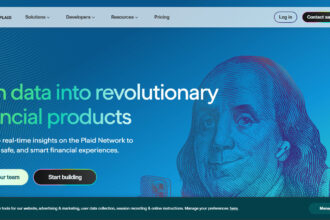
Plaid also prioritizes customer experience by providing a simplified onboarding and account link process that features a reduction of friction for the end-user. For compliance & security, Plaid relies on data encryption and multi-factor authentication, along with the GDPR and CCPA regulations.
For API & technology, Plaid’s product offerings have become an industry standard for both Fintech startups and large organizations. Plaid has linked banks and financial applications, providing ease and trust to the world of digital finance, with safe scalability built for a global audience.
Plaid Details
- Best For: Fintechs that require speed when it comes to gathering financial data
- Best Use Case: Secure bank account connectivity within apps
- Key Features: Open Banking and secure data sharing, APIs designed for developers
- Core Focus: Financial data connectivity and compliance with GDPR/CCPA
| Pros | Cons |
|---|---|
| Secure APIs with strong encryption | Limited outside U.S. and Europe |
| Easy integration for fintech apps | Dependent on bank partnerships |
| Compliance with GDPR/CCPA | Occasional data access issues |
| Developer-friendly documentation | Competitive open banking landscape |
2. DriveWealth
Founded in 2012, DriveWealth has disrupted the technology of fractional investing and is the first to provide fully functional APIs to enable global partners access to U.S. equity trading. Based on DriveWealth’s technology, fintechs, banks and brokers are able to incorporate equity trading into their offerings.
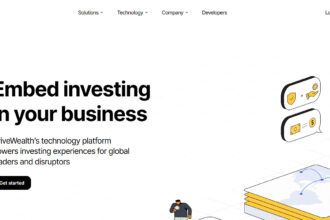
DriveWealth is providing enhanced customer experience with technology that supports real-time equity trading for fractional investing at low-cost. DriveWealth effectively mitigates risk associated with its service and clients through its adherence to regulations of the U.S. SEC and FINRA, expressly providing for the protection of clients and providing transparency.
DriveWealth has built its technology to support partners globally, fostering access to equity trading. Through DriveWealth’s API offering and robust technology, fintechs are able to build and provide innovative technology for equity trading, within a trusted environment.
DriveWealth Details
- Best For: Global fintechs thatoffer fractional investing
- Best Use Case: Including U.S. equities trading within apps
- Key Features: Fractional shares, real-time executions, scalable APIs
- Core Focus: Democratizing Wall Street trading
| Pros | Cons |
|---|---|
| Fractional investing democratizes access | Limited to U.S. equities |
| Global reach across 150+ countries | Requires strong partner infrastructure |
| SEC & FINRA compliance ensures trust | Complex regulatory environment |
| Scalable APIs for fintechs | Focused mainly on equities, not multi-asset |
3. Wealthfront
Founded in 2008, Wealthfront was one of the first automated wealth management services using API and technology to manage client portfolios. Wealthfront automates portfolio management, tax loss harvesting, financial advisory services, and more with a focus on simplicity, automation, and personalized strategies.
Wealthfront has attracted younger clientele and digital first investors. The company enables trust and security with SEC regulations. Like any digital wealth management platform, Wealthfront uses bank level encryption. Wealthfront has established trust and automation to be the leader in digital wealth management.
Wealthfront Details
- Best For: Investors that prefer automation
- Best Use Case: Goal-based investing with tax-loss harvesting
- Key Features: Automated portfolios and planning, secure APIs
- Core Focus: Automated wealth management
| Pros | Cons |
|---|---|
| Automated portfolios with AI-driven planning | Limited customization for advanced investors |
| Tax-loss harvesting built-in | U.S.-centric service |
| Strong compliance under SEC | No direct human advisory |
| User-friendly digital-first design | Limited product diversification |
4. Betterment
In 2008, Betterment also began operations as a robo-advisor to offer automated cash management and investing APIs. Betterment is streamlining portfolio rebalancing and tax efficient goal based investing and optimization available through its platform.

Simplicity and transparency along with personal financial advice are the cornerstones of the Betterment platform and have attracted a wide clientele ranging from beginners to experienced investors. Betterment has client assets held in trust and adheres to advanced encryption requirements of the SEC.
Banking and investment are combined on the same platform to provide solutions for all financial needs. Automation and trust combined with compliance have secured Betterment a reputation as a customer first fintech company focused on delivering scalable digital wealth management services.
Betterment Details
- Best For: Beginners and professionals equiped with guidance
- Best Use Case: Goal-based investing and cash management
- Key Features: Automated rebalancing and tax optimization, SEC compliance
- Core Focus: Robo-advisory and holistic financial solutions
| Pros | Cons |
|---|---|
| Goal-based investing with automation | Fees higher than some robo-advisors |
| Cash management integrated | Limited international presence |
| SEC-regulated compliance | Less flexibility for advanced traders |
| Simple onboarding | Focused mainly on ETFs and portfolios |
5. Robinhood Embedded
Robinhood Embedded is a division of Robinhood at the forefront of its expansion. It uses API and technology to allow partners the ability to build trading and investing tools directly into their applications.

Robinhood was founded in 2013 and changed the commission-free trading landscape. Innovations brought on by Robinhood’s embedded APIs allow fintech partners to further this innovation in their offerings. The customer experience focuses on ease of use and real time execution of trades, engaging many beginner to intermediate investors.
Robinhood ensures compliance with the SEC and FINRA regulations, along with strong security and fraud prevention measures. Robinhood’s inclusion of embedded APIs allows fintechs to build trading tools more quickly, and more accessible tools create more engagement with financial markets all the while retaining trust due to compliance.
Robinhood Embedded Details
- Best For: Apps looking for integration for commission-free trading
- Best Use Case: Integration for stock and crypto trading
- Key Features: Real-time executions, intuitive APIs, strong encryption
- Core Focus: Trading through embedded APIs
| Pros | Cons |
|---|---|
| Commission-free trading integration | Regulatory scrutiny in U.S. |
| Real-time APIs for partners | Limited to Robinhood ecosystem |
| Strong encryption and FINRA oversight | Customer support challenges |
| Accessible design for younger investors | Limited advanced trading tools |
6. Marqeta
Marqeta was founded in 2010 and has dominated card issuing and payment technology with its modern API offerings. Its API allows fintechs and enterprises to create unique designs for credit, debit and prepaid cards. Tools for real time card controls and instant issuance along with flexible APIs create an enhanced customer experience.
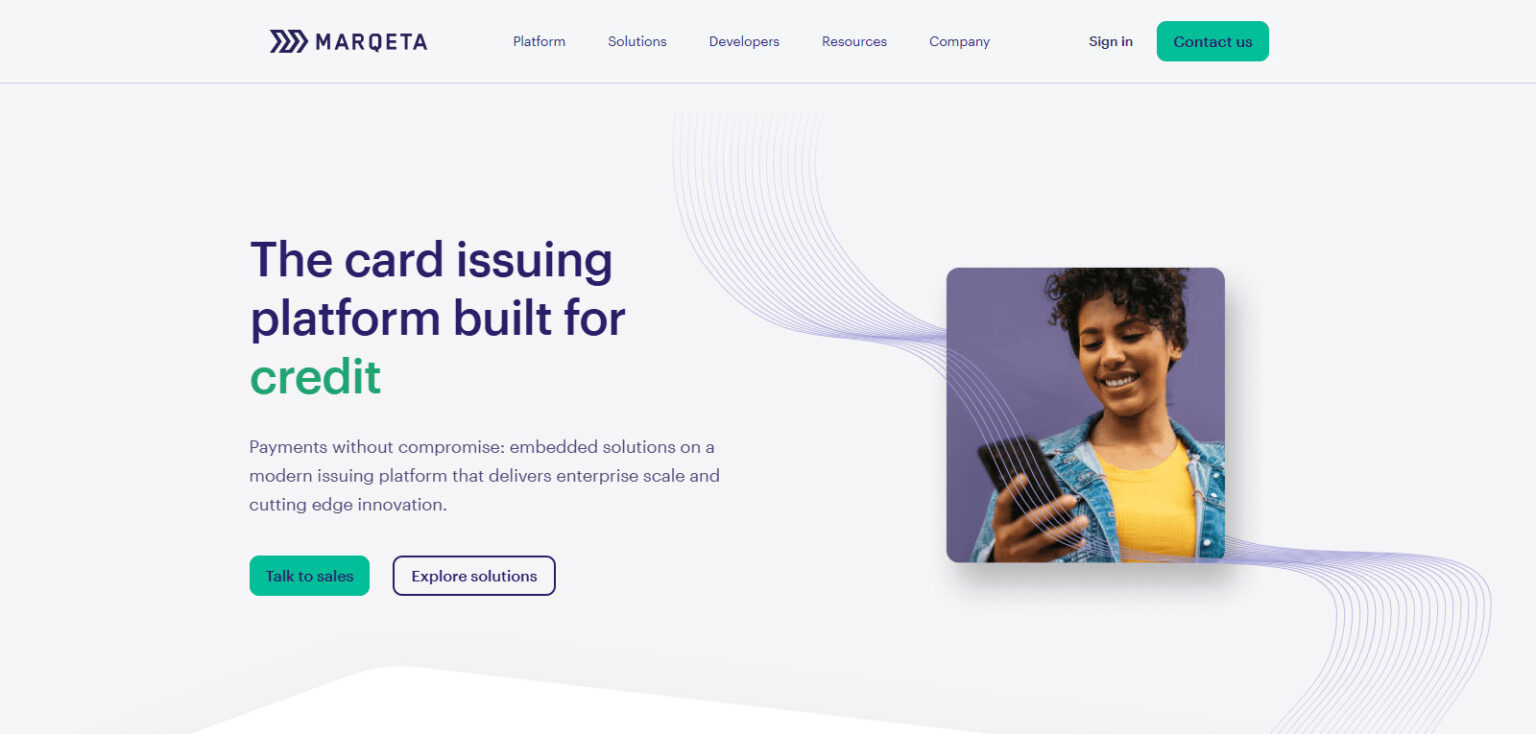
Compliance and security are prioritized with adherence to PCI DSS and other global financial regulations. An open API platform has allowed card innovations and payment solutions for companies like Square and Klarna and has allowed instant funding for DoorDash.
Marqeta has created a marketplace innovation for card issuance by combining scalability, compliance and developer-friendly APIs to provide businesses with agile payment solutions and customers with seamless payment experiences.
Marqeta Details
- Best For: Enterprises looking to create modern card programs
- Best Use Case: Real-time card issue and payment processing
- Key Features: Instant issuance and payments, flexible control and PCI DSS compliance
- Core Focus: Card payment innovations through API issuance
| Pros | Cons |
|---|---|
| Real-time card issuing APIs | Dependent on partner banks |
| PCI DSS compliance ensures security | Competitive payments market |
| Flexible controls for businesses | Limited consumer-facing brand |
| Global reach with fintechs | Requires strong integration effort |
7. FIS
Founded in 1968, FIS (Fidelity National Information Services) is a company that offers financial technology for banking, payments, and capital markets. Their services include banking and payments APIs. FIS’s APIs include omnichannel banking and digital payments. FIS has enterprise‑level reliability and scalability.
FIS offers solutions that include fraud prevention. FIS’s offerings include services that ensure compliance and security. FIS has global services that include banking, fintech, and enterprise services. FIS uses its decades of experience combined with modern technology to offer secure, compliant, and innovative financial offerings across various markets.
FIS Details
- Best For: Banks and enterprises needing enterprise‑grade APIs
- Best Use Case: Core banking, fraud prevention, and payments
- Key Features: Scalable infrastructure, omnichannel support, ISO compliance
- Core Focus: Global financial technology and secure infrastructure
| Pros | Cons |
|---|---|
| Enterprise-grade APIs for banks | Legacy system complexity |
| Global compliance with ISO, PCI DSS | High cost for smaller fintechs |
| Omnichannel support | Slower innovation compared to startups |
| Scalable infrastructure | Complexity in deployment |
8. Temenos
Temenos, founded in 1993, is a Swiss company that specializes in banking software for core banking and digital transformation. Temenos offers APIs that allow banks to implement personalization in digital banking and to integrate fintechs.
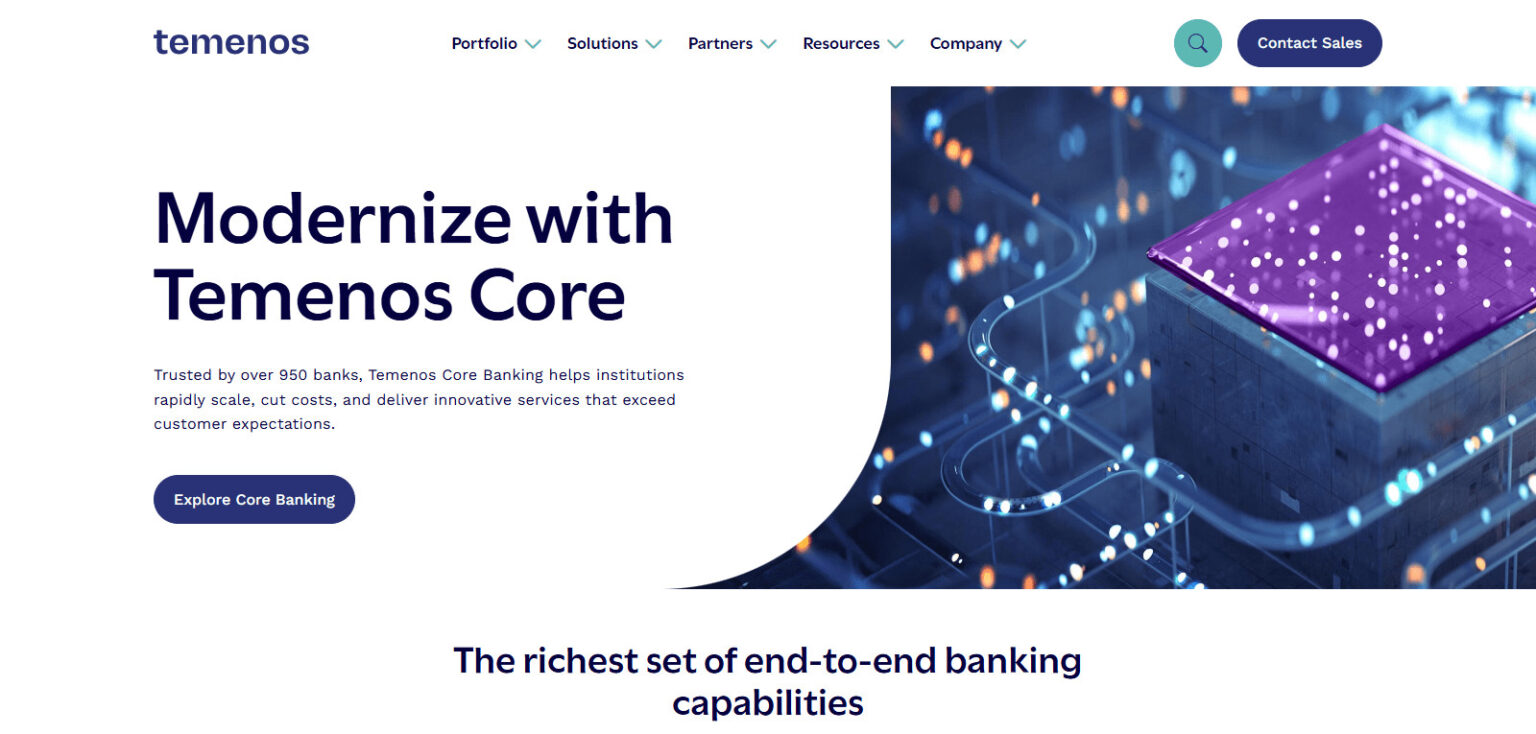
Temenos offers solutions that allow banks to maintain modern, modular architectures and offer real‑time banking services across multiple channels. Temenos offers tools that allow banks to maintain compliance and risk management frameworks.
With clients spanning over 150 countries, Temenos helps banks maintain trust with regulatory agencies while focusing on innovation. Temenos’s open banking APIs are critical for financial institutions in creating fast and flexible services that are compliant and focused on the customer.
Temenos Details
- Best For: Banks modernizing legacy systems
- Best Use Case: Core banking transformation and open banking integration
- Key Features: Modular APIs, real‑time analytics, global compliance tools
- Core Focus: Digital banking modernization and regulatory trust
| Pros | Cons |
|---|---|
| Core banking APIs modernize legacy systems | Implementation can be costly |
| Global compliance with banking regulations | Requires deep IT expertise |
| Modular architecture for flexibility | Longer deployment cycles |
| Customer-centric design | Focused mainly on banks, less fintech agility |
9. Railsr
Railsr, founded in 2016, provides a platform for embedded finance with APIs for payments, cards, and credit. APIs assist in building financial services that become embedded directly in applications to improve user experience.
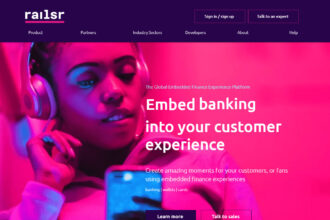
The user experience is made more efficient and productive through instant issuance, flexible integrations, and personalized financial services. Railsr focuses on compliance and security and upholds the FCA regulations and uses encryption.
They use modular APIs and thereby allow banks to embed finance without the need to build infrastructure, thus providing equal access to finance innovation. Because of their focus on compliance and security, they are a preferred partner for embedded finance for fintechs and enterprises.
Railsr Details
- Best For: Brands embedding finance into customer journeys
- Best Use Case: Instant issuance of cards, payments, and credit
- Key Features: Modular APIs, FCA compliance, encryption security
- Core Focus: Embedded finance and customer‑centric innovation
| Pros | Cons |
|---|---|
| Embedded finance APIs | Smaller scale compared to giants |
| Instant issuance of cards and payments | Limited global presence |
| FCA compliance ensures trust | Competitive embedded finance space |
| Customer-centric innovation | Still growing ecosystem |
10. Tink
Tink, founded in 2012 and based in Sweden, is a leading open banking platform with APIs for account aggregation, payments, and financial data and insights. Their APIs help banks, fintechs, and enterprises to create new customer offerings in financial services.
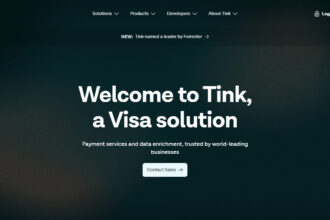
User experience is enhanced by account connectivity, real-time data, and customized recommendations. Tink focuses on compliance and security, and uses strong encryption, and adheres to PSD2. Tink, after being acquired by Visa, provides open banking in Europe.
With a focus on compliance and user-centered development of API systems, Tink has established itself as a key player of open banking in Europe, fostering innovation and customer confidence.
Tink Details
- Best for: Fintechs and banks in Europe that want to utilize open banking
- Best use case: financial insights, payments and account aggregation
- Major features: include real-time data with Visa APIs that are compliant with PSD2
- Key area of focus: secure financial innovation and open banking connectivity
| Pros | Cons |
|---|---|
| Open banking APIs | Limited outside Europe |
| PSD2 compliance ensures regulatory trust | Dependent on EU regulations |
| Visa backing adds credibility | Competition from other open banking providers |
| Real-time data for insights | Integration complexity for smaller fintechs |
Conclusion
Plaid, DriveWealth, Wealthfront, Betterment, Robinhood Embedded, Marqeta, FIS, Temenos, Railsr and Tink show us the spectrum of modern API and technology frameworks that are redefining financial services. Each company, founded in different years, put customer experience above everything else, making their products accessible, easy to use, and automated, while maintaining security and adhering to regulations.
The CX-first mentality of each company also shows the shift from legacy rigidity to modern developer friendliness of financial systems. They have proven that innovation and trust combined can create democracy in financial systems resulting in faster digital transformation globally.
They also created more transparent financial structures globally, which showed how customers of all kinds can interact with financial systems and services even when they are far away from physical financial service providers.
FAQ
What is Plaid?
Plaid is a fintech API provider founded in 2013 that connects bank accounts with financial apps, ensuring secure data aggregation and compliance with regulations like GDPR.
What services does Wealthfront provide?
Wealthfront, founded in 2008, delivers robo‑advisory services through APIs, focusing on automation, tax‑loss harvesting, and secure portfolio management.
What is Robinhood Embedded?
Robinhood Embedded extends Robinhood’s trading APIs to partners, allowing apps to integrate commission‑free trading with strong encryption and FINRA oversight.
What is Railsr?
Railsr, founded in 2016, offers APIs for embedded finance, enabling instant issuance of cards and payments with FCA‑regulated compliance.
What is Tink’s role in open banking?
Tink, founded in 2012, is a European open banking platform providing APIs for account aggregation and payments, fully compliant with PSD2 regulations.