

This article reviews the top MPC Crypto DEXs for safe trading. We’ll be analyzing MPC crypto trading platforms for their key features and trading capabilities. Custody models, pros, and cons will also be reviewed for each platform. Ecosystems integrated and security protocols will also be reviewed. Our hope is that these reviews will assist individuals and organizations in selecting MPC crypto trading solutions that best suit their secure and efficient digital asset trading needs.
- Key Point
- 1. FalconX MPC DEX
- FalconX MPC DEX Features, Pros & Cons
- 2. Fireblocks MPC Swap
- Fireblocks MPC Swap Features, Pros & Cons
- 3. Coinbase MPC DEX
- Coinbase MPC DEX Features, Pros & Cons
- 4. OKX MPC Bridge
- OKX MPC Bridge Features, Pros & Cons
- 5. Binance MPC DEX
- Binance MPC DEX Features, Pros & Cons
- 6. Copper MPC
- Copper MPC Features, Pros & Cons
- 7. Zengo MPC Swap
- Zengo MPC Swap Features, Pros & Cons
- 8. Cobo MPC DEX
- Cobo MPC DEX Features, Pros & Cons
- 9. Anchorage MPC
- Anchorage MPC Features, Pros & Cons
- 10. Matrixport MPC DEX
- Matrixport MPC DEX Features, Pros & Cons
- Comparison Table: Best MPC Crypto DEXs for Secure Trading
- Conclusion
- FAQ
Key Point
| DEX | Best For | Key Features |
|---|---|---|
| FalconX MPC DEX | Institutional traders | MPC custody, cross‑chain swaps, compliance modules |
| Fireblocks MPC Swap | Enterprise DeFi | Threshold signing, gasless MPC routing |
| Coinbase MPC DEX | Retail + institutional | MPC wallets, non‑custodial trading, deep liquidity |
| OKX MPC Bridge | Multi‑chain swaps | MPC custody, cross‑chain liquidity pools |
| Binance MPC DEX | Global retail users | MPC wallet integration, high‑volume trading |
| Copper MPC ClearLoop | Institutional custody | MPC settlement, off‑exchange liquidity routing |
| Zengo MPC Swap | Retail wallets | MPC keyless wallets, instant swaps |
| Cobo MPC DEX | Custodial institutions | MPC custody, staking + swap integration |
| Anchorage MPC Router | Regulated institutions | MPC custody, SEC‑compliant DeFi access |
| Matrixport MPC DEX | Asia‑Pacific institutions | MPC custody, structured yield + swaps |
1. FalconX MPC DEX
FalconX is an institutional digital-asset trading platform. Many retail DEXs keep user funds on-exchange and maintain custody over the funds. In contrast, FalconX uses custody, transaction controls, and execution. FalconX’s MPC-structured architecture reduces the exposure risk of users’ private keys.
As such, institutional clients can manage and transfer the supported cryptocurrencies across different networks. For the Best MPC Crypto DEXs for Secure Trading, FalconX offers operational controls, compliance, and access to liquidity because of its focus on institutional traders.
This makes FalconX suitable for funds and trading firms particularly for securing workflows in digital-asset transactions and treasury management in different markets around the world.
FalconX MPC DEX Features, Pros & Cons
Features
- An MPC custody solution eliminating a single point of failure, built for the institutional market.
- Discretion to set transaction policies and approvals.
- Integrated custody, trading, and financing services.
- Extensive digital assets and networks.
- Built for institutional trading and treasury.
Pros
- Robust security architecture for institutions.
- Access to extensive liquidity in digital assets.
- Transaction approvals can be customized.
- Custody and trading services tightly integrated.
- Validated for professional and institutional use.
Cons
- Not a traditional permissionless DEX.
- Institutional focus.
- Access to the product may depend on jurisdiction and user eligibility.
- Complex trading environment in comparison to wallets.
- Services catering to institutions generally have higher operational costs.
2. Fireblocks MPC Swap
Fireblocks offers security-friendly MPC-based digital asset infrastructure which includes capital controls, self custody, settlement, and authorized asset transfers. Fireblocks allows users to distribute cryptographic keys while keeping the system’s private key away.
In the Best MPC Crypto DEXs for Secure Trading, Fireblocks is unique in that it combines MPC technology with institutional trading and DeFi. Fireblocks’ infrastructure offers users the ability to manage digital-asset wallets, interact with decentralized applications, and transact supported tokens while maintaining configurable control policies.
For institutions concerned with safety and compliance, as well as governance, Fireblocks’ infrastructure is a viable digital-asset technology solution.
Fireblocks MPC Swap Features, Pros & Cons
Features
- With MPC-CMP, shares of keys are distributed across multiple environments.
- Supports hot, warm and cold wallet integrations.
- Policy engine offers transaction and approval controls.
- Supports over 150 blockchains and thousands of assets.
- Built for institutional custody, transfers, and Web3 integration.
Pros
- A complete private key never exists in one place.
- Strong protection against both internal and external attacks.
- Broad blockchain and asset coverage
- Highly customizable governance controls
- Designed for high-volume institutional operations
Cons
- Mainly institutional infrastructure over a DEX.
- Can be difficult for less experienced users.
- Designed for enterprise.
- Less focus on retail users for pricing.
- MPC infrastructure adds extra operational complexity.
3. Coinbase MPC DEX
Coinbase builds secure crypto infrastructure products for both institutions and consumers. Coinbase’s custodial infrastructure includes technologies for securely managing cryptographic keys and access control. Coinbase’s trading infrastructure provides its customers access to a number of digital assets and services to plug into various blockchains.
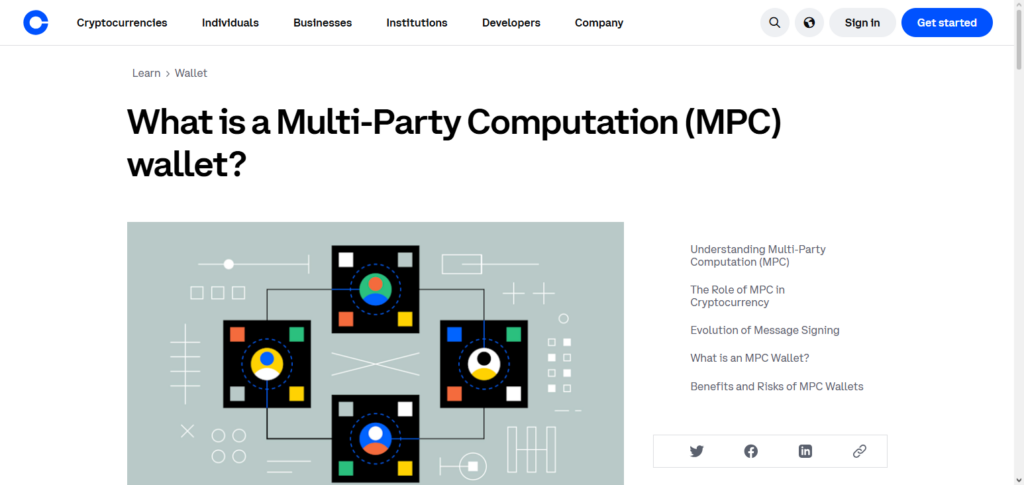
For Best MPC Crypto DEXs for Secure Trading, Coinbase enters the list as it focuses on security, compliance, custody, and transaction management from an institutional standpoint.
That said, Coinbase’s MPC technology and its focus on wallet security should be differentiated from permissionless MPC-based decentralized exchanges. Coinbase is best suited for regulated infrastructure and services for secure crypto management, trading and connectivity to blockchain services.
Coinbase MPC DEX Features, Pros & Cons
Features
- Coinbase Web3 Wallet has a split-key design.
- Half the key is held by Coinbase, and the user’s device holds the other half.
- Allows users to interact with decentralized applications.
- Provides wallet recovery.
- Helps users interact with the greater Coinbase crypto ecosystem.
Pros
- Easy to use for previous Coinbase users.
- Lower risk than having a key stored in one location.
- Easy access to decentralized Web3 applications.
- Good integration with Coinbase’s tools.
- Offers an easy recovery option compared to some self-custody solutions.
Cons
- Not an MPC DEX on its own.
- Coinbase holds part of the key in the key management system.
- Enables users to interact with Web3, but risks of interacting with smart contracts are present.
- Availability varies based on product, location, and other factors.
- Users must recognize the difference between custody on Coinbase.com and Coinbase Wallet.
4. OKX MPC Bridge
OKX has a decent Web3 Infrastructure which includes, wallets, applications, swaps, and bridge infrastructure. MPC technology was recently integrated into OKX’s Web3 wallet and thus eliminates the burden of a single private key on users.
For Best MPC Crypto DEXs for Secure Trading, OKX is relevant because its wallet ecosystem bridges users to several decentralized applications and systems for swaps and cross-chain applications.
MPC based access significantly reduces the threat associated with losing a seed phrase while also providing a convenient means for transaction validation. Users should still conduct necessary due diligence on supported networks, assets, fees, and if a swap is executed through a DEX or other liquidity source.
OKX MPC Bridge Features, Pros & Cons
Features
- Distributes private key control across multiple shares with MPC.
- Supports Web3 with a focus on multiple chains.
- Enables interaction with DeFi applications and decentralized applications.
- Provides recovery options for certain MPC wallets.
- Focuses on providing a key management solution without the need for conventional seed phrases.
Pros
- Reduces the risk of the single key being compromised.
- Offers a simple multiple chains Web3 experience.
- Good integration with the OKX ecosystem.
- For DeFi and cross-chain use cases.
- Wallet recovery is easier with MPC.
Cons
- The keyless MPC wallet new user creation flow was removed in 2025.
- *Keyless wallets have dedicated recovery processes.
- Not fully a self-contained DEX.
- Cross-chain transactions may require bridging and may be exposed to the risks of smart contracts.
- Services offered may depend on where you are located.
5. Binance MPC DEX
Binance offers the world’s largest cryptocurrency ecosystem, and Binance Web3 Wallet provides self-custody solutions that integrate security and multi-chain access. The wallet infrastructure uses MPC-based technology to strengthen key management and transaction authorization.

Comparing the Best MPC Crypto DEXs for Secure Trading, Binance has a broad selection of asset availability as well as blockchain connectivity, liquidity, and integrated Web3 functioning.
It should be noted that Binance is not a pure MPC DEX. Having a centralized exchange and Web3 services that have completely different architectural structures should be taken into consideration when evaluating all products. Before using any Binance wallet or swap product, the custody model, networks, transaction fees, and security control should be of the highest priority.
Binance MPC DEX Features, Pros & Cons
Features
- The mobile wallet of the Binance ecosystem uses MPC.
- As per Binance’s latest documentation, it supports 60+ blockchains.
- Allows you to swap tokens on all supported networks.
- Allows you to use DeFi and DApps.
- Uses a concept of multiple key shares to ensure that a complete private key is not stored in one location.
Pros
- Extensive multi-chain support.
- Part of the integrated Binance ecosystem.
- No seed-phrase MPC.
- Easy cross-chain token swaps.
- High accessibility for all Binance users.
Cons
- The Binance Wallet is not a self-contained DEX.
- Cross-chain swaps may expose the user to the risks of bridge and smart contract.
- Some services may be geo-restricted.
- Users need to safeguard recovery credentials.
- Large ecosystems may compromise simplicity.
6. Copper MPC
Copper is an infrastructure service and custody provider that focuses on digital asset collateral management, settlement, custody, and trading services. Their product is designed for the needs of digital asset investors and financial institutions. In terms of the Best MPC Crypto DEXs for Secure Trading, Copper should not be considered a traditional decentralized market exchange.

Their solution has the potential to decrease banking operational risk, and provide institutions access to trading and settlement services while maintaining an infrastructure for risk management. Copper is specific to funds, brokers, and other entities that need digital asset custody, control, and settlement with an institutional infrastructure.
Copper MPC Features, Pros & Cons
Features
- Custody infrastructure for digital assets with an institutional-grade MPC security layer.
- Designed to support trading with digital assets and settlement for institutional asset management.
- Designed to support custody and governance of transactions.
Pros
- Strong focus on security for institutional clients.
- Designed for professional investors.
- Controlled transaction custody workflows are supported for institutions.
- Beneficial to enterprises managing large crypto assets.
Cons
- Not a typical decentralized exchange.
- Mainly focused on institutions.
- May not serve casual retail traders well.
- May be cumbersome to use due to the complex enterprise infrastructure.
- Availability and features of the product may depend on what the institution needs.
7. Zengo MPC Swap
Zengo is a well-known player in the keyless security multiparty computation (MPC) space. While most wallets require users to generate a seed phrase and manage a private key, Zengo’s system employs cryptographic shares to facilitate transactions.

Zengo allows users to access MPC security to a certain degree. However, the think that users lack control over merchant swap rates and should be cautious of the network fees. As mentioned in the Best MPC Crypto DEXs for Secure Trading, wallets offer management of crypto-assets and swaps based on supported regions.
Zengo MPC Swap Features, Pros & Cons
Features
- Offers keyless self-custody via MPC.
- Employs separate personal and remote secret shares.
- Eliminates traditional seed phrases.
- Offers crypto management with swap functionality.
- Built for self-custody designed for the consumer.
Pros
- Wallet experience designed for beginners.
- No seed phrase to deal with.
- Less exposure to single key.
- Designed for consumers.
- Easy access to crypto and Web3.
Cons
- Not a DEX on its own.
- Built around Zengo’s recovery and remote share system.
- User asset and swap route restrictions apply.
- Users are exposed to blockchain risks.
- Not ideal for managing institutional treasuries.
8. Cobo MPC DEX
Cobo builds digital-asset custody, wallets, and Web3 solutions for institutional users, focused around MPC in private key and transaction security. Cobo’s offering focuses on blockchain assets and their custody for institutions, businesses, and other professional digital asset users.
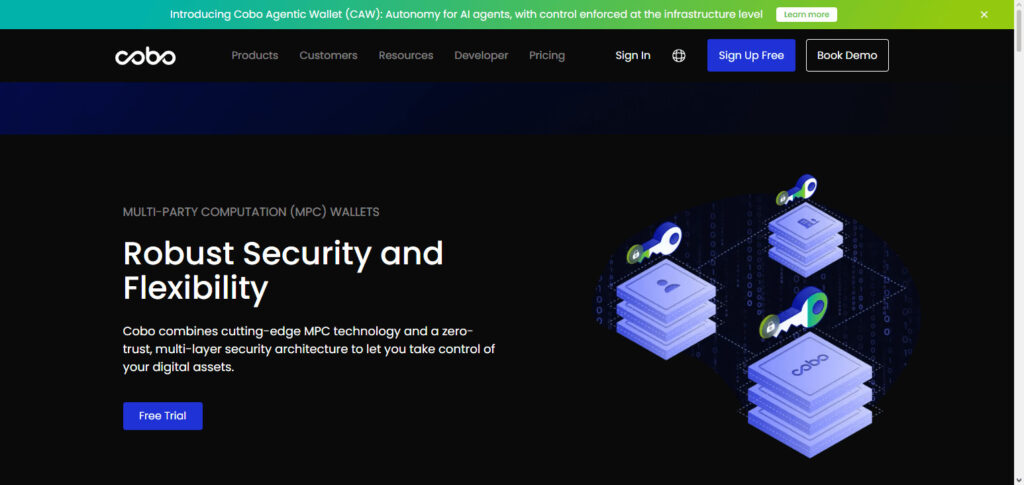
Compared to the other offerings in the Best MPC Crypto DEXs for Secure Trading, Cobo’s offering is more of an MPC-focused wallet and custody than an MPC-focused standalone DEX. The offering provides security for crypto assets and Web3 transactions as well as the approval framework.
For potential clients, the policy controls and the integrations should also be evaluated along with the other traditional requirements of offered custody models, fees, and regulations.
Cobo MPC DEX Features, Pros & Cons
Features
- Wallet infrastructure for MPC-based digital assets.
- Institutional custody and wallet management.
- Designed to authorize secure transactions.
- Offers use of Web3 and digital asset infrastructure.
- Offers a wide range of controls for professional organizations.
Pros
- Stronger focus on institutional security.
- Good for organizations with multiple wallets.
- Using MPC offers less exposure to single private key.
- Good for professional digital asset operations.
- Good for use in Web3 infrastructure.
Cons
- Better described as custody infrastructure of MPC than a DEX.
- Designed for enterprises.
- May require some technical skills.
- Can be over the top for some traders.
- Users must assess supported chains and integrations separately.
9. Anchorage MPC
Anchorage Digital is an institutional digital asset platform, with offerings in custody, trading, settlement, and more. Strong digital asset controls and institutional custody requirements drive the construct of its security architecture.

Anchorage is best utilized as an institutional custody and trading infrastructure provider among the others in the decentralized exchange space, rather than a permissionless DEX. Anchorage, among its competitors, offers regulated custody and operability among the strongest controls of the digital asset economy.
Anchorage is preferred by institutions that need secure custody with trading and settlement infrastructure. However, users must distinguish Anchorage’s institutional offerings from that of a MPC-enabled decentralized exchange.
Anchorage MPC Features, Pros & Cons
Features
- Infrastructure for institutional custody of digital assets.
- Emphasis on security and governance.
- Facilitates institutional crypto trading and settlement.
- Aimed at professional managers of assets.
- Offers regulated services for institutional digital assets.
Pros
- Emphasis on custody for institutions.
- Fit for financial services firms.
- High-quality security and governance.
- Tailored for massive digital assets.
- Integrates custody with comprehensive services for institutions.
Cons
- Not a permissionless DEX in the standard sense.
- Mostly for institutions.
- Not really designed for retail trading.
- Access and offerings may vary based on regulatory qualifications.
- Might require more prerequisites for institutions to use.
10. Matrixport MPC DEX
Matrixport is a digital asset financial services firm offering a suite of products including trading, custody, structured finance, and institutional crypto.

Its infrastructure prioritizes the professional digital asset user’s access to financial services and digital asset trading. When considering the Best MPC Crypto DEXs for Secure Trading, Matrixport should be positioned as a crypto financial services and institutional infrastructure provider rather than as an MPC DEX.
Matrixport offers a secure custody and trading environment and institutional market connectivity. Liquidity, custody structure, supported assets, fees, and transaction infrastructure should be thoroughly analysed prior to offering a Matrixport MPC DEX comparison.
Matrixport MPC DEX Features, Pros & Cons
Features
- Financial infrastructure of digital assets for professional users.
- Services for trading and investing in crypto.
- Asset management for institutions.
- Custody infrastructure with focus on security.
- Access to a wide range of financial products of digital assets.
Pros
- Expansive services for crypto finance.
- Fit for professional users.
- Offers a number of services in digital assets.
- Security and operational controls are focus areas.
- Adequate for institutions to use for trading.
Cons
- Not really a DEX in the MPC sense.
- Services for institutions may be complicated.
- Services may be limited in a given jurisdiction.
- Verify the implementations of the MPC that you are using.
- Trading, custody, and DeFi services have different risk levels.
Comparison Table: Best MPC Crypto DEXs for Secure Trading
| Platform | MPC Security | Primary Use | Multi-Chain Support | Trading/Swap | Best For | Key Advantage |
|---|---|---|---|---|---|---|
| FalconX MPC | Yes | Institutional custody & trading | Yes | Yes | Institutions & funds | Institutional-grade security |
| Fireblocks MPC | Yes | Custody & Web3 infrastructure | Yes | Yes | Institutions & enterprises | Advanced policy controls |
| Coinbase MPC | Yes | Wallet & Web3 access | Yes | Yes | Retail & institutional users | User-friendly ecosystem |
| OKX MPC | Yes* | Wallet & cross-chain Web3 | Yes | Yes | Web3 users | Multi-chain functionality |
| Binance MPC | Yes | Web3 wallet & swaps | Yes | Yes | Crypto traders | Broad ecosystem access |
| Copper MPC | Yes | Institutional custody | Yes | Limited/Integrated | Institutions | Secure settlement infrastructure |
| Zengo MPC | Yes | Self-custody & swaps | Yes | Yes | Retail users | Seedless wallet security |
| Cobo MPC | Yes | Custody & Web3 infrastructure | Yes | Integrated | Institutions & businesses | Flexible custody controls |
| Anchorage | Security-focused institutional custody | Custody & trading | Yes | Yes | Regulated institutions | Institutional custody |
| Matrixport | Security-focused | Crypto financial services | Yes | Yes | Professional investors | Broad crypto services |
Conclusion
The Best MPC Crypto DEXs combine multiple advantages of cross-chain crypto trading, convenience in crypto custody, swaps, and multiparty computation (MPC) security. Exchanges like FalconX, Fireblocks, Zengo, Cobo, Copper, and Anchorage have the advantage of improved control of keys and the presence of certain institutional features.
Not all of the exchanges mentioned are strictly decentralized; some are MPC custody, wallet, or trading infrastructure providers. Potential users should consider factors like MPC architecture, custody model, asset support, and chains, liquidity, transaction cost, regulatory coverage, controls, and recovery. Security and governance should be of utmost concern for institutions. Individual users should think of ease of use, self custody, and control too.
FAQ
What are MPC Crypto DEXs?
MPC Crypto DEXs use Multi-Party Computation (MPC) technology to protect cryptographic keys by distributing signing authority across multiple parties or devices. This can reduce the risks associated with exposing or losing a single private key.
Why use MPC for crypto trading?
MPC can improve wallet security by avoiding a single point of failure. It can also support transaction approvals, institutional controls, key recovery, and secure access without requiring users to store a traditional private key in one location.
Which are the Best MPC Crypto DEXs for Secure Trading?
Platforms and infrastructures commonly associated with MPC-based crypto security include Fireblocks, Zengo, Cobo, Copper, Anchorage, FalconX, Coinbase, OKX, Binance, and Matrixport. Their products differ, and several are MPC-enabled custody or trading platforms rather than pure decentralized exchanges.
Are MPC Crypto DEXs safer than traditional crypto exchanges?
MPC can provide stronger key-management security, but it does not automatically make a platform safer in every respect. Users should also evaluate smart-contract risks, custody arrangements, authentication, liquidity, compliance, audits, and transaction policies.