



This article looks at the Best Passkey-Native Account Abstraction DEXs. These DEXs offer safe, passwordless authentication and other advanced features for decentralized trading.
- Key Points
- 1. 1inch Fusion AA
- Features
- Pros
- Cons
- 2. CoW Protocol AA
- Features
- Pros
- Cons
- 3. Curve AA Pools
- Features
- Pros
- Cons
- 4. Jupiter AA
- Features
- Pros
- Cons
- 5. Hyperliquid AA
- Features
- Pros
- Cons
- 6. dYdX v4 AA
- Features
- Pros
- Cons
- 7. GMX v2 AA
- Features
- Pros
- Cons
- 8. PancakeSwap v4 AA
- Features
- Pros
- Cons
- 9. Matcha (0x AA)
- Features
- Pros
- Cons
- 10. ParaSwap AA
- Features
- Pros
- Cons
- Conclusion
- FAQ
Access to Web3 becomes more streamlined with passkeys, smart contract wallets, and account abstraction technology to enhance security and ease of use and enhance transaction speed.
We will review the main elements of these DEXs, their benefits, and how they are shaping the path for decentralized exchanges in the future.
Key Points
| DEX | Key Point |
|---|---|
| 1inch Fusion AA | Offers gasless swaps with account abstraction, improving UX and reducing transaction complexity. |
| CoW Protocol AA | Uses batch auctions with account abstraction for MEV protection and efficient trade execution. |
| Curve AA Pools | Integrates AA for stablecoin liquidity pools, enabling seamless passkey‑based interactions. |
| Jupiter AA | Solana’s leading aggregator with AA support for passkey authentication and routing efficiency. |
| Hyperliquid AA | Implements AA for derivatives trading, enhancing security and reducing onboarding friction. |
| dYdX v4 AA | Decentralized order book exchange with AA for passkey‑native accounts, boosting non‑custodial trading. |
| GMX v2 AA | Perpetual DEX integrating AA for simplified margin trading and passkey‑secured accounts. |
| PancakeSwap v4 AA | Adds AA to its v4 upgrade, enabling passkey‑based swaps and improved DeFi accessibility. |
| Matcha (0x AA) | Aggregator powered by 0x, now supporting AA for passkey‑native decentralized trading. |
| ParaSwap AA | Multi‑chain aggregator with AA integration, offering passkey‑secured cross‑chain swaps. |
1. 1inch Fusion AA
1inch Fusion AA combines intent‑based swaps and Dutch auctions to provide gasless trades that are protected from MEV. Users place orders, which are then executed by resolvers at the best price. This account abstraction model eliminates required maker participation, resulting in a more streamlined user experience and native support for passkey authentication.
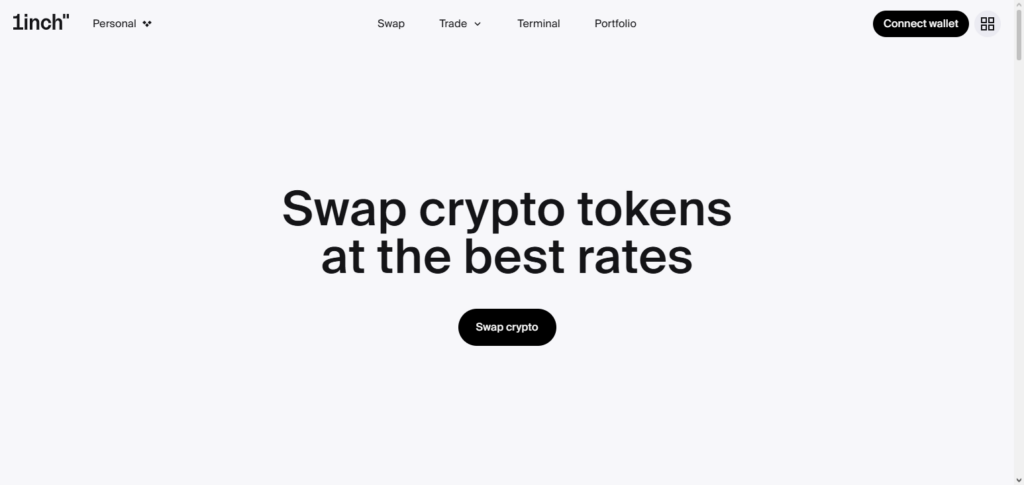
Fusion+ also includes cross‑chain swaps with escrow contracts for fully atomic and secured swaps. Among the top passkey‑native account abstraction DEXs, 1inch Fusion AA shines for its combination of decentralization, efficiency, and a smooth user onboarding process.
Features
- Intent-based swapping system that allows users to set desired trade conditions instead of executing traditional swaps.
- Gasless transactions where resolvers pay network fees on behalf of users.
- MEV protection by preventing front-running and sandwich attacks.
- Dutch auction mechanism where resolvers compete to provide better execution prices.
- Supports efficient liquidity routing across multiple DeFi sources.
Pros
- Reduces gas costs for traders.
- Provides better protection against MEV attacks.
- Can deliver competitive swap rates.
- Improves user experience with simplified trading.
- Suitable for large-volume swaps.
Cons
- Order execution may take longer than instant swaps.
- Depends on resolver participation and liquidity.
- Limited availability for some tokens.
- Complex mechanism for beginner users.
- Failed or expired orders may require resubmission.
2. CoW Protocol AA
CoW Protocol AA places account abstraction within the CowShed system, allowing smart contracts to behave like EOAs. It employs EIP-1271 signatures, deterministic CREATE2 deployment, and hooks to control pre- and post-swap functionality.
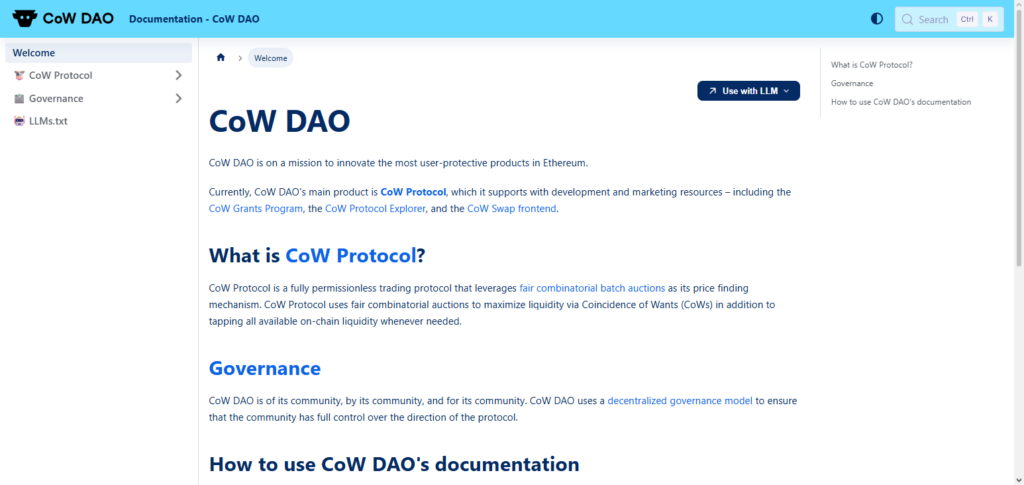
This supports advanced functions like flash loans, bridges, and dynamic collateral systems. User experience is enhanced through batch auctions, which defend against MEV by inviting solvers to compete for the best trade execution. CoW Protocol AA is one of the top passkey-based account abstraction DEXs available, with great composability and safe, intent-driven trading capabilities.
Features
- Uses batch auctions to match user intents instead of direct AMM execution.
- Provides MEV protection through solver competition.
- Enables gasless trading with solvers covering transaction fees.
- Supports peer-to-peer order matching.
- Optimizes execution prices through multiple liquidity sources.
Pros
- Strong protection against sandwich attacks.
- Lower trading costs through batch settlements.
- No need to manage gas tokens.
- Transparent solver competition.
- Good for institutional trading.
Cons
- Execution depends on solver availability.
- Some smaller tokens may have limited liquidity.
- Orders may not execute immediately.
- More complex architecture than standard DEXs.
- Limited support compared with traditional swaps.
3. Curve AA Pools
Curve AA Pools uses account abstraction for stablecoin and crypto liquidity pools. When AA is connected, users control pools with passkeys and can pay gas and perform batch transactions.

Curve’s stableswap and cryptoswap pools have changing fees and non‑custodial liquidity offering. Account abstraction adds better recovery methods and usability, making Curve AA Pools one of the best passkey-compatible account abstraction DEXs for stablecoin trading and DeFi liquidity.
Features
- Designed in an automated market maker fashion for stable assets.
- Uses specialized bonding curves for slippage.
- Assists swaps for stablecoins and related assets.
- Uses CRV rewards to offer liquidity.
- Built for high-volume low volatility trades.
Pros
- Greatly reduced slippage for stable assets.
- Large has large pool size.
- Better capital efficiency.
- Cheaper trades.
- Widely uSd among DeFi users.
Cons
- Has a focus on related assets.
- Still has IL risk for LPs.
- Liquidity and thus pool performance is variable.
- Not good for volatile asset swaps.
- Smart contract risk is still there.
4. Jupiter AA
Jupiter AA, the main aggregator for Solana, connects account abstraction for passkey-based authentication and routing. Its AMM interface simplifies interaction with over 120 DEXs for quick transactions.

AA enhances user experience by cutting down approvals and making swaps gasless. With good customer adoption and security audits, Jupiter AA is one of the best passkey-native account abstraction DEXs, particularly for Solana’s multi-DEX environment.
Features
- A Solana Intent trader and lattice based liquidity aggregator.
- Provides optimal routes for liquidity on Solana.
- Has limit orders and more complex trade strategies.
- Uses its own blockchain to close swaps quickly.
- Integrates DeFi on Solana.
Pros
- Rapid trade executions.
- Liquidity aggregation is strong.
- Trading on its own blockchain has cheap SOL transactions.
- Swaps can be customized.
Cons
- Mainly exists on Solana.
- Depends on Solana’s network.
- Less liquidity than Defi on Ethereum.
- Confusing to those with not strong background in trading.
- Not many features for swaps across chains.
5. Hyperliquid AA
Hyperliquid AA brings together spot and perpetual balances with unified accounts and portfolio margin modes. This makes collateral management easier with reduced friction and supports efficient margin trading.
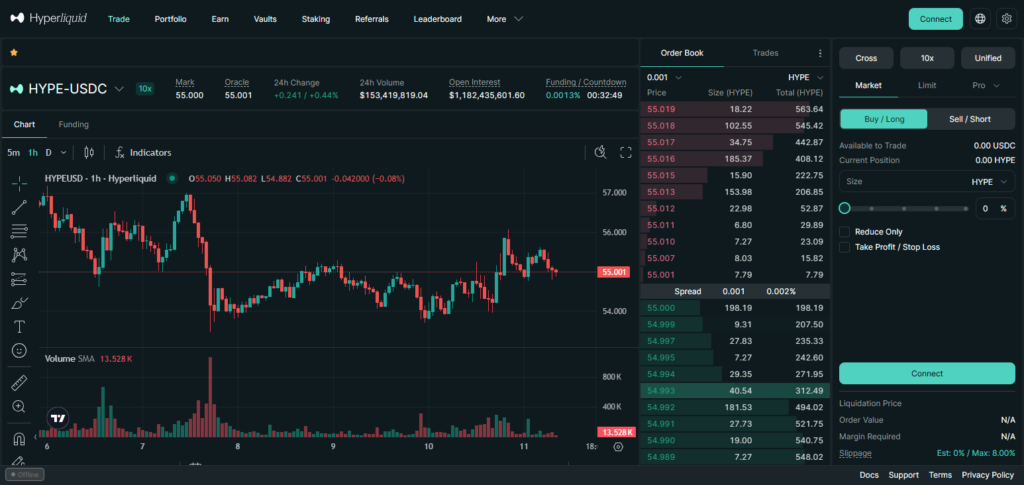
With unified accounts, users can trade both perps and spot assets from a single margin pool. Hyperliquid AA is one of the best passkey-native account abstraction DEXs catering to derivatives traders looking for better capital efficiency.
Features
- Designed for quick and easy perpetual trading.
- Blockchain designed for fast order execution.
- Supports decentralized derivatives trading.
- Has advanced trading features and offers leverage.
- Has an efficient order book architecture.
Pros
- Fast trade settlement.
- Low trading fees.
- A good trading experience.
- High-quality derivatives infrastructure.
- Good execution for traders.
Cons
- Focuses on perpetual markets.
- Trading with leverage creates a higher risk.
- Newer than most DEXs.
- Limited spot markets.
- Understanding of derivatives is required.
6. dYdX v4 AA
dYdX v4 AA uses account abstraction from the Cosmos SDK with subaccounts for both cross-margin and isolated margin trading. Account abstraction means better passkey-based authentication, easier deposits and withdrawals, and better order execution.

The decentralized design of its order book guarantees non-custodial trading with effective risk management. Being one of the best passkey-native account abstraction DEXs, dYdX v4 AA is a top choice for decentralized derivatives.
Features
- Fully decentralized perpetual exchange architecture.
- Uses an order book model instead of AMM pools.
- Runs on a dedicated blockchain.
- Provides advanced trading functionality.
- Supports high-throughput trading operations.
Pros
- Professional-grade trading experience.
- High transaction speed.
- Lower fees than Ethereum-based versions.
- Better liquidity management.
- Fully decentralized governance model.
Cons
- Mainly focused on derivatives.
- Not ideal for beginners.
- Requires understanding of perpetual contracts.
- Smaller ecosystem than centralized exchanges.
- Network migration complexity.
7. GMX v2 AA
GMX v2 AA offers multi-asset vaults and isolated liquidity pools to boost capital efficiency and risk management. Account abstraction lets users trade on margin and transact without gas using passkey-secured accounts.

Dynamic liquidity pools and decentralized keepers make GMX v2 AA more stable and decentralized. As one of the best DEXs that use passkey natively for account abstraction, GMX v2 AA is a major player in perpetual trading.
Features
- Decentralized perpetual and spot trading platform.
- Uses liquidity pools for leveraged trading.
- Supports multi-asset markets.
- Provides oracle-based pricing.
- Enables permissionless trading.
Pros
- No traditional order book dependency.
- Supports leveraged positions.
- Offers deep liquidity pools.
- Lower execution complexity.
- Available on multiple chains.
Cons
- Liquidity providers face market risks.
- Oracle failures can affect trading.
- Limited compared with centralized derivatives platforms.
- High leverage increases user risk.
- Trading pairs are fewer than major exchanges.
8. PancakeSwap v4 AA
PancakeSwap v4 AA has been rebranded to Infinity and uses hooks and singleton structures. With account abstraction, users can avoid swaps using passkeys and modify fees and liquidity in a programmable way.

Flash accounting reduces gas fees, and hooks let users make custom oracles and liquidity strategies. PancakeSwap v4 AA is one of the best passkey‑native account abstraction DEXs, making access to DeFi easier on the BNB Chain and in multi‑chain environments.
Features
- Innovative AMM design.
- Creates adjustable liquidity pools.
- Adds hooks for advanced trading strategies.
- Boosts capital usage efficiency.
- Works on multiple chains.
Pros
- Customizable pools.
- Less expensive trades.
- Excellent BNB Chain ecosystem.
- Better liquidity.
- Large user base.
Cons
- Smart contract danger remains.
- Almost solely AMM trading focused.
- Liquidity splitting can happen.
- Technical skills are needed for advanced features.
- Intense competition from other DEXs.
9. Matcha (0x AA)
Using 0x, Matcha includes account abstraction for passkey‑enabled swaps. Matcha offers gasless transactions, RFQ liquidity, and MEV‑conscious execution.

Matcha’s smart routing provides the best price across multiple venues. With passkey authentication, Matcha simplifies onboarding and increased security. For retail users looking for a user-friendly DEX with quality execution, Matcha (0x AA) is one of the best passkey‑native account abstraction DEXs.
Features
- Constructed on 0x, Matcha is a DEX aggregation platform so users get the best possible pricing across all the liquidity sourced DEXs.
- Supports RFQ and limit orders.
- Offers swaps with a simple developer integrated UI.
- Removes the need to search for the routes users previously had to do.
Pros
- Gets better trade prices.
- Has more liquidity.
- Easy to use UI.
- Swaps tokens almost instantly.
- Retail and developer use.
Cons
- External liquidity.
- Tokens can be limited.
- Quality of execution is dependent on the market.
- Less control than DEX trading.
- Depends on the 0x ecosystem.
10. ParaSwap AA
ParaSwap AA includes support for ERC-4337 and EIP-7702, bringing programmable smart accounts with sponsored gas, batched transactions, and session keys. The Augustus V6 router in ParaSwap aggregates liquidity across more than 100 DEXs to improve swaps.

The upgraded security and usability of Passkey-native AA makes ParaSwap one of the best passkey-native account abstraction DEXs for cross-chain swaps and institutional-grade integrations.
Features
- Multi-chain DEX aggregation protocol.
- Uses routing algorithms for optimized swaps.
- Supports liquidity from multiple exchanges.
- Provides developer APIs.
- Enables efficient token exchange execution.
Pros
- Finds competitive swap rates.
- Supports multiple blockchains.
- Reduces manual trading complexity.
- Useful for DeFi applications.
- Provides integration tools for developers.
Cons
- Dependent on connected liquidity sources.
- Execution may vary during high volatility.
- Limited control over routing.
- Smart contract dependency risks.
- Competition from newer aggregators.
Conclusion
The merging of security, usability and efficiency is changing decentralized trading with Passkey-native account abstraction. Leading the way are 1inch Fusion AA and CoW Protocol AA with intent-based swaps and MEV protection.
Curve AA Pools and Jupiter AA simplify both liquidity and routing. Non-custodial margin trading plus capital efficiency characterize the derivatives-focused exchanges Hyperliquid AA, dYdX v4 AA and GMX v2 AA. PancakeSwap v4 AA, Matcha (0x AA) and ParaSwap AA offer cross-chain aggregation and improved liquidity.
These 10 DEXs are the first to offer true Passkey-native account abstraction and set the standard for a more scalable, user-centric and secure DeFi environment.
FAQ
What is account abstraction (AA)?
Account abstraction allows smart contract wallets to function like EOAs (Externally Owned Accounts). It simplifies user experience with gasless transactions, passkey authentication, and programmable logic.
Why are passkeys important in DEXs?
Passkeys replace traditional seed phrases with secure, device‑native authentication. This reduces phishing risks, improves recovery options, and makes onboarding more user‑friendly.
Which DEXs support passkey‑native AA?
Top platforms include 1inch Fusion AA, CoW Protocol AA, Curve AA Pools, Jupiter AA, Hyperliquid AA, dYdX v4 AA, GMX v2 AA, PancakeSwap v4 AA, Matcha (0x AA), and ParaSwap AA.
How does AA improve trading security?
AA enables features like session keys, gas sponsorship, and MEV protection. This ensures safer execution, reduces front‑running, and enhances non‑custodial control.
Are AA DEXs suitable for beginners?
Yes. Passkey‑native AA removes the complexity of seed phrases and gas fees, making platforms like Matcha (0x AA) and PancakeSwap v4 AA beginner‑friendly.