



In this article, we will go over the Best Crypto Audit Preparation Tools for Businesses that assist businesses in managing digital asset transactions, verifying wallet records, reconciling financial data, and preparing audit documentation. We will talk about their main features, how they manage financial reporting, custody verification, compliance, and integrations to help businesses make the right choice for their crypto accounting and audit needs.
- Key Points
- 1. Cryptio – Enterprise Crypto Audit Preparation
- Best For
- 2. Bitwave – Crypto Financial Reporting and Reconciliation
- Best For
- 3. Lukka – Institutional Electronic Assets Audit Ready
- Best For
- 4. TaxBit – Crypto Tax Compliance and Financial Reporting
- Best For
- 5. Ledgible – Cryptocurrency Accounting and Audit Documentation
- Best For
- 6. CoinTracking – Cryptocurrency Transaction History and Reporting
- Best For
- 7. Koinly – Crypto Transaction Reconciliation and Tax Records
- Best For
- 8. CoinLedger – Crypto Tax Reporting and Audit Records
- Best For
- 9. Cryptoworth – Digital Asset Accounting and Reconciliation
- Best For
- 10. SoftLedger – General Ledger & Crypto Financial Reporting
- Best For
- Conclusion
- FAQ
Key Points
| Tool | Key Point |
|---|---|
| Cryptio | Built for businesses and institutions, Cryptio provides crypto accounting, wallet reconciliation, audit trails, and ERP integrations, helping finance teams produce audit-ready financial records. |
| Bitwave | Bitwave specializes in crypto accounting and subledger automation, offering transaction reconciliation, cost-basis tracking, and financial reporting workflows designed for audit preparedness. |
| Lukka | Lukka delivers institutional-grade crypto data management, valuation, accounting, and reporting solutions used by funds, enterprises, and auditors for digital asset verification. |
| TaxBit | TaxBit provides enterprise crypto tax and accounting infrastructure with transaction classification, audit-support reporting, and compliance-focused recordk |
| Ledgible | Ledgible helps businesses prepare for audits through digital asset reconciliation, accounting integrations, tax reporting, and ledger-ready transaction records. |
| CoinTracking | CoinTracking offers detailed transaction histories, portfolio analytics, gain/loss calculations, and exportable reports that assist businesses during tax and financial audits. |
| Koinly | Koinly automates wallet and exchange data aggregation, cost-basis calculations, transaction review, and tax reporting, making audit documentation easier to maintain. |
| CoinLedger | CoinLedger provides crypto transaction tracking, tax calculations, account reconciliation, and reporting tools that help businesses organize records for audit reviews. |
| Cryptoworth | Cryptoworth focuses on enterprise crypto accounting, transaction reconciliation, audit trails, and financial reporting for organizations managing large digital asset operations. |
| SoftLedger | SoftLedger combines traditional accounting with crypto asset management, offering reconciled ledgers, reporting automation, and audit-ready bookkeeping workflows. |
1. Cryptio – Enterprise Crypto Audit Preparation
Cryptio is an enterprise digital asset accounting platform that helps companies organize blockchain transactions and get their financial records audit-ready. Cryptio supports wallet and exchange data connectors, transaction classification, automated reconciliation and historical balance tracking .
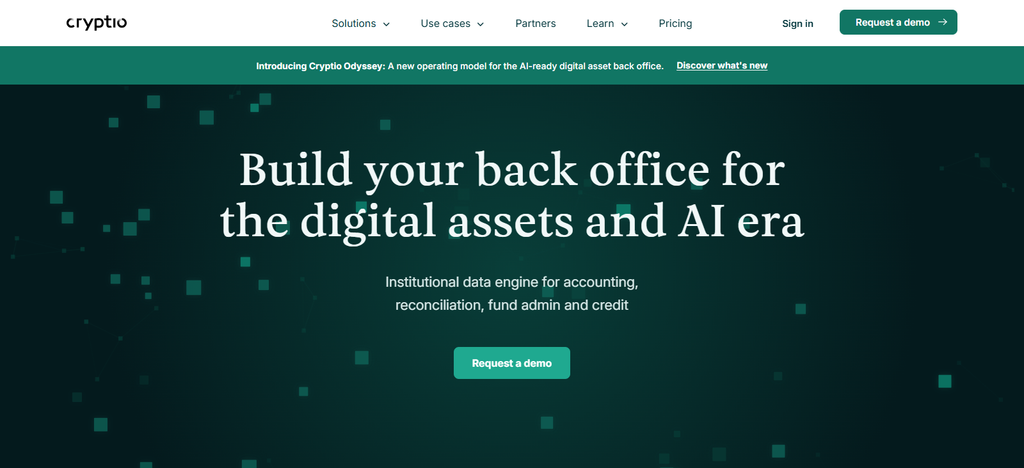
It also has wallet verification capabilities that allow finance teams to review wallet activity and keep the supporting transaction evidence, although separate verification is required for legal ownership and private-key control. For financial reporting, it provides trial balances, ledger entries, asset roll-forwards and GAAP/IFRS-oriented reports.
Integrations with custody data, compliance documents and ERP systems such as NetSuite, SAP, QuickBooks and Xero simplify the process of keeping financial records organized and provide support for auditors.
Best For
- Firms that handle large cryptocurrency portfolios and digital asset transactions.
- Businesses that need automated blockchain-to-ledger reconciliation.
- Finance departments producing structured financial statements and audit documentation.
- Organizations with multiple wallets, exchanges and custody providers.
- Companies requiring digital asset accounting with ERP integration.
| Where It’s Strong | Where It’s Weaker |
|---|---|
| Provides enterprise-focused crypto accounting, transaction reconciliation, and structured financial reporting for digital asset businesses. | Implementation and configuration may require additional time for businesses with complex accounting structures. |
| Supports blockchain, wallet, and exchange data consolidation for better transaction visibility. | Some specialized wallet ownership and custody verification procedures require separate evidence. |
| Helps organize historical balances, accounting entries, and audit-supporting documentation. | Smaller businesses may find its enterprise-oriented capabilities more extensive than necessary. |
| Offers accounting and ERP integration capabilities for established finance teams. | Pricing and advanced functionality may require a customized business arrangement. |
2. Bitwave – Crypto Financial Reporting and Reconciliation
Bitwave offers digital asset accounting and financial operations software for companies dealing with crypto transactions across various blockchains, exchanges and wallets. Bitwave helps businesses match wallet records, classify transactions, reconcile blockchain activity and produce accounting reports.
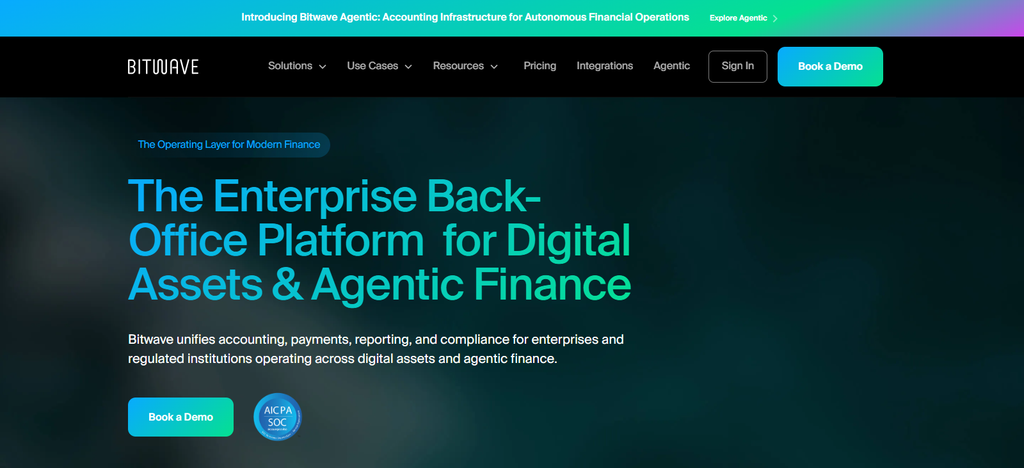
With wallet management features it can monitor activity of connected wallets and financial reporting that covers balance reports, journal entries, ledger reports and DeFi-related reporting. Connected custodians and wallet integrations allow businesses to review custody-related transaction information, but independent ownership verification is a separate control.
Compliance support includes accounting workflows, transaction documentation and financial reporting. ERP integrations with NetSuite, Oracle, Sage Intacct, QuickBooks and Xero support accounting operations.
Best For
- Businesses that require automated crypto accounting and reconciliation.
- Web3 companies processing blockchain and DeFi transactions;
- Finance teams connecting digital asset activity to general ledgers.
- Companies requiring crypto financial reporting and accounting automation.
- Companies that have embedded digital asset accounting into their existing ERP systems.
| Where It’s Strong | Where It’s Weaker |
|---|---|
| Provides crypto accounting automation, transaction categorization, and reconciliation for businesses. | Initial setup can be complicated for organizations managing multiple accounting systems. |
| Supports digital asset financial reporting and general ledger workflows. | Certain advanced reporting capabilities may depend on integrations and configuration. |
| Helps finance teams organize DeFi, wallet, and exchange transaction records. | It does not independently establish legal ownership of every connected wallet. |
| Offers ERP integrations that support enterprise accounting operations. | Smaller companies with limited crypto activity may not need its complete feature set. |
3. Lukka – Institutional Electronic Assets Audit Ready
Lukka provides institutional digital asset data, accounting and financial reporting solutions for business, investment funds and financial service providers. Lukka’s focus is on structuring complex blockchain and exchange data into usable financial records for accounting and audit preparation.

It gives finance teams the ability to analyze wallet transactions, historical asset information and transaction-level records for reconciliation purposes. Financial reporting and data management facilitate institutional accounting requirements and custody-related information may be incorporated from the respective digital asset service provider.
Businesses can ensure consistent transaction documentation and reporting workflows with its compliance-oriented data solutions. Integrations to ERP and financial platforms enable the flow of digital asset data into existing accounting systems.
Best For
- Institutional investors with complex digital asset portfolios.
- Financial institutions that need structured blockchain transaction data.
- Investment managers preparing financial statements for electronic assets
Businesses needing institutional-grade crypto data management. - Companies with complex accounting and digital asset valuation needs.
| Where It’s Strong | Where It’s Weaker |
|---|---|
| Provides institutional-grade digital asset data management and accounting support. | Its institutional focus may be less suitable for small businesses with basic reporting needs. |
| Helps organize complex blockchain transaction information for financial analysis and reporting. | Implementation may require technical expertise and integration planning. |
| Supports structured digital asset data for accounting and audit preparation. | Some audit evidence and custody verification processes require additional documentation. |
| Offers solutions for financial institutions, investment managers, and digital asset businesses. | Pricing and product capabilities may vary according to enterprise requirements. |
4. TaxBit – Crypto Tax Compliance and Financial Reporting
TaxBit specializes in providing digital asset tax and accounting technology to businesses, financial institutions, exchanges and compliance teams. TaxBit helps organizations aggregate cryptocurrency transaction data, compute digital asset tax positions, and structure financial data for reporting purposes.
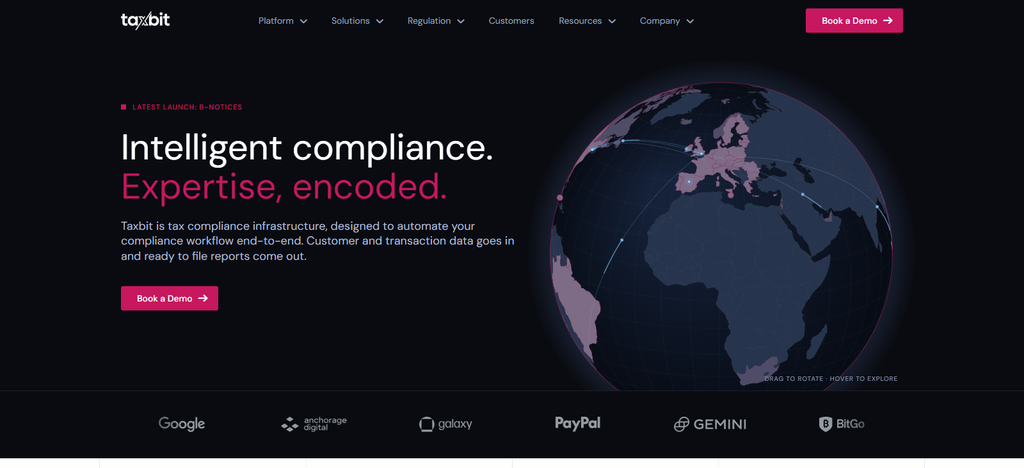
The transaction tracking features enable users to see wallet and exchange activity, and the tax reporting helps businesses track gains, losses and relevant taxable events. While financial reporting and compliance workflows can assist with documentation requirements, wallet ownership and custody verification should be supported by separate evidence and controls.
Its enterprise solutions focus on tax information reporting, regulatory compliance and digital asset accounting and are relevant to organizations with large reporting obligations.
Best For
- Companies that are involved in cryptocurrency tax reporting and compliance.
- Exchanges of electronic assets with large turnovers.
- Financial institutions that need to report tax information automatically.
- Compliance teams managing digital asset transaction records.- Companies automating cryptocurrency tax calculation and regulatory reporting processes.
| Where It’s Strong | Where It’s Weaker |
|---|---|
| Provides digital asset tax reporting and compliance-focused technology for businesses. | Its tax reporting emphasis does not replace a complete financial statement audit platform. |
| Helps organize cryptocurrency transactions and calculate taxable gains and losses. | Complex wallet ownership verification requires additional controls and supporting evidence. |
| Supports enterprise reporting workflows and digital asset transaction documentation. | Advanced accounting requirements may need complementary financial management software. |
| Offers solutions for exchanges, financial institutions, and compliance teams. | Some enterprise capabilities may require specialized implementation and integration. |
5. Ledgible – Cryptocurrency Accounting and Audit Documentation
Ledgible helps businesses, accounting professionals and institutional clients with cryptocurrency accounting, tax reporting and financial management of digital currencies. Ledgible enables finance teams to organize transaction histories, compute the value of digital property, and generate structured reports for accounting and tax documentation.
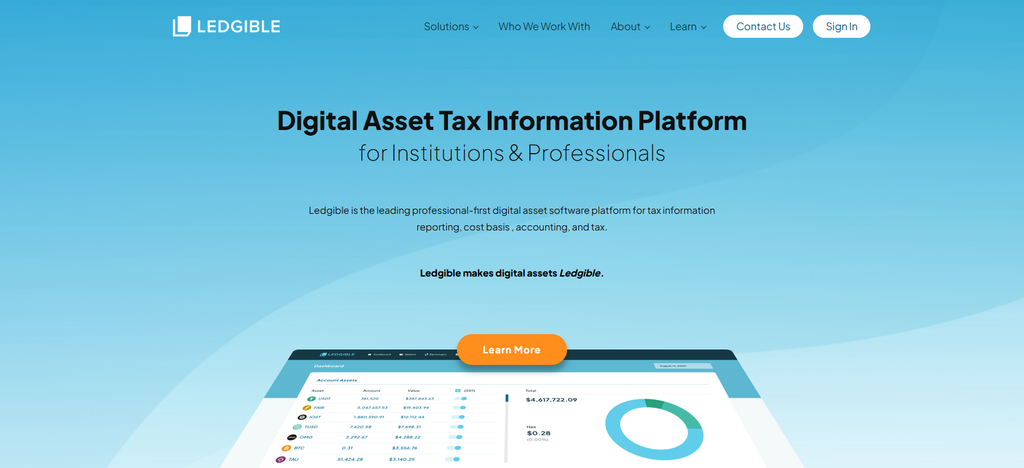
Its wallet and exchange connectivity gives visibility into transactions, and financial reporting assists in reconciling crypto activity with traditional accounting records. Its reporting features allow businesses to catalog historical transactions and supporting documents for audit preparedness.
External evidence needed for custody verification & proof of legal wallet ownership Its compliance-focused reporting and accounting integrations streamline professional workflows with connections to the accounting and tax preparation systems used by financial teams.
Best For
- Accounting firms that service cryptocurrency clients.- Businesses that need digital asset accounting and tax reporting.
- Financial professionals producing cryptocurrency financial documentation.
- Wallet and exchange transaction history tracking organizations.
- Institutional clients who require structured crypto accounting workflows.
| Where It’s Strong | Where It’s Weaker |
|---|---|
| Combines cryptocurrency accounting, tax reporting, and professional financial documentation. | Its capabilities are more focused on accounting and tax workflows than complete audit management. |
| Helps organize wallet and exchange transactions for financial recordkeeping. | Wallet visibility alone does not prove legal ownership or custody control. |
| Provides reporting capabilities useful for accountants and institutional finance teams. | Complex enterprise reconciliation may require additional accounting infrastructure. |
| Supports professional accounting and tax preparation workflows. | Advanced ERP and custody integrations should be checked against the selected product offering. |
6. CoinTracking – Cryptocurrency Transaction History and Reporting
CoinTracking is a cryptocurrency portfolio tracking and tax reporting platform that helps accounting and business users to organize their digital asset transaction history. CoinTracking supports importing exchange transactions, tracking wallet activity, analyzing historical balances and calculating cryptocurrency gains and losses.

These capabilities can help finance teams gather transaction-level information prior to creating accounting records for an audit. Financial reports contain portfolio summaries, realized and unrealized gains, and transaction data that can assist documentation workflows.
While wallet connections provide visibility into digital asset holdings, they do not themselves confer legal ownership or custody control. Businesses should be keeping separate custodian statements, evidence of wallet control, reconciliations of the accounts and compliance documentation.
Best For
- Companies that require large volumes of cryptocurrency transaction records.
- Investors with multiple exchange and wallet accounts.
- Accountants assessing crypto gains and losses.
- Users looking for historical performance and tax reports on their portfolios.
- Entities collecting records of cryptocurrency transactions for financial reporting.
| Where It’s Strong | Where It’s Weaker |
|---|---|
| Provides extensive cryptocurrency transaction tracking and historical portfolio reporting. | It is primarily designed for portfolio tracking and tax reporting rather than enterprise audit management. |
| Supports exchange imports and wallet transaction monitoring. | Complex business accounting reconciliation may require external software. |
| Helps calculate realized gains, losses, and cryptocurrency cost basis. | Dedicated custody verification and internal control documentation are limited. |
| Offers downloadable transaction and tax reports for financial documentation. | ERP integration and multi-entity accounting capabilities may not meet complex enterprise requirements. |
7. Koinly – Crypto Transaction Reconciliation and Tax Records
Koinly is a crypto accounting and tax reporting platform that helps users organize digital asset transactions across wallets, exchanges, and blockchain networks. Koinly automatically imports transaction information for supported wallets, detects transfers, calculates capital gains and produces tax reports for your financial records.
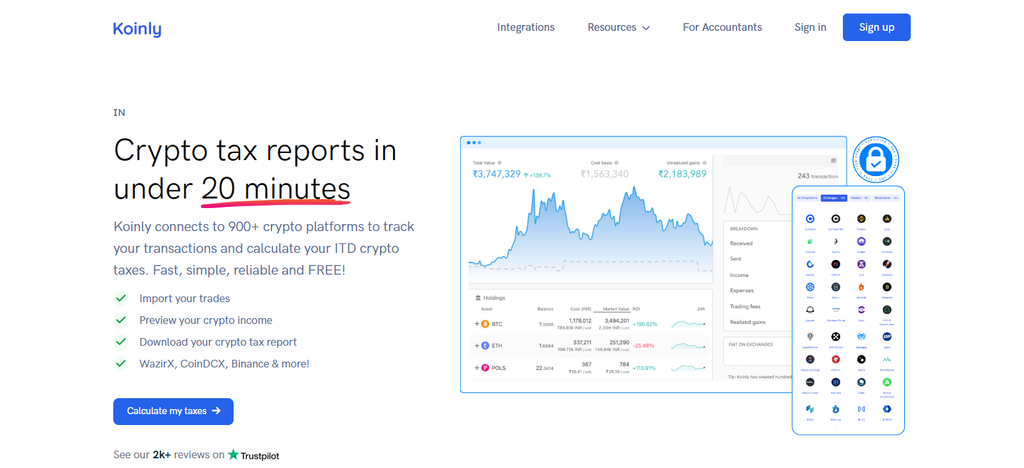
The wallet integrations provide insight into cryptocurrency holdings as well as historical activity to help businesses review transaction records in advance of an audit. Financial reporting capabilities include cost-basis calculations and transaction summaries, while reconciliation workflows assist in detecting missing or misclassified records.
However Koinly is more of a crypto tax reporting solution than a full-blown enterprise audit management platform Businesses should separately arrange custody verification, ERP integration and formal audit evidence management.
Best For
- Businesses and investors preparing tax records for cryptocurrency.- Users tracking their transactions across multiple wallets and exchanges.
- Finance teams calculating gains and losses on electronic assets.
- Historical transaction reports by cryptocurrency holders.
- Organizations requiring accessible crypto tax documentation and transaction summaries.
| Where It’s Strong | Where It’s Weaker |
|---|---|
| Simplifies cryptocurrency transaction imports and tax calculations across supported wallets and exchanges. | It is not a complete enterprise crypto audit preparation or financial reporting platform. |
| Helps identify transfers and organize transaction histories. | Formal wallet ownership and custody verification require separate evidence. |
| Generates tax reports and historical transaction summaries. | Advanced general ledger and ERP functionality is not its primary focus. |
| Provides a relatively accessible workflow for organizing crypto tax records. | Complex DeFi accounting and business-specific reconciliation may require additional review. |
8. CoinLedger – Crypto Tax Reporting and Audit Records
CoinLedger is a crypto tax software that allows businesses, investors and accounting professionals organize digital asset transactions and generate financial tax documentation. CoinLedger lets you import your transaction history from supported wallets and exchanges, calculates gains and losses and generates reports for download.
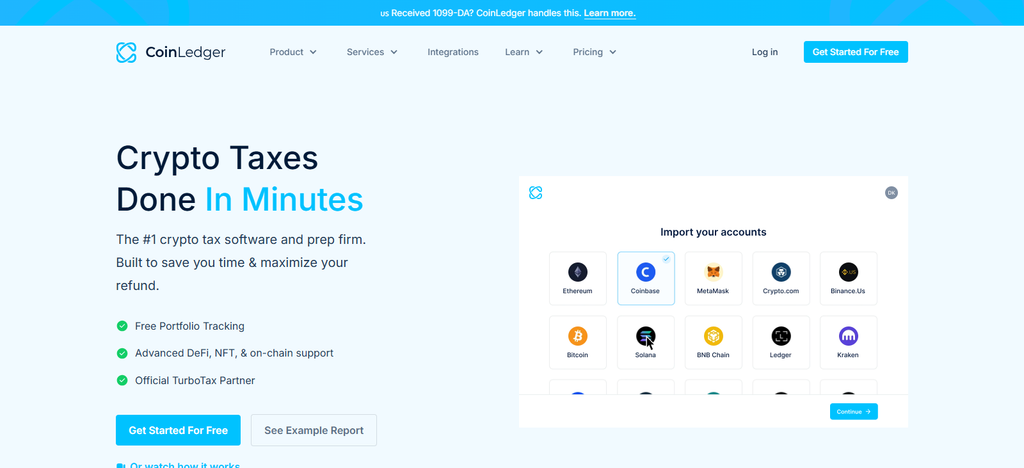
These records can help finance teams review historical cryptocurrency activity and get supporting documentation ready for an audit. Its wallet connections offer visibility into transactions and its financial reporting focuses on cost basis, taxable events and portfolio calculations.
For custody verification, the business needs further proofs of wallet ownership and confirmations by the custodian. Its compliance capabilities are mainly focused on tax reporting, so organizations that need enterprise ERP integration and advanced financial reconciliation might want to look at other accounting software options.
Best For
- Small businesses tracking their cryptocurrency transactions.- Investors counting the cost of losses and gains on electronic assets.
- Crypto tax report preparation by tax accountants.- Users import transaction histories from supported wallets and exchanges.
- Organizations that need to download cryptocurrency tax documents.
| Where It’s Strong | Where It’s Weaker |
|---|---|
| Makes cryptocurrency transaction importing and tax reporting more accessible. | Its primary focus is tax reporting rather than comprehensive corporate audit preparation. |
| Helps calculate capital gains, losses, and digital asset cost basis. | Advanced financial statement reporting may require external accounting software. |
| Supports wallet and exchange transaction imports for record organization. | Custody verification and independent wallet-control evidence are not its core functions. |
| Provides downloadable tax reports and transaction summaries. | Complex ERP integrations and multi-entity accounting workflows may be limited. |
9. Cryptoworth – Digital Asset Accounting and Reconciliation
Cryptoworth is a digital asset accounting platform that helps businesses, Web3 organizations, and finance teams manage cryptocurrency transactions and financial records. Cryptoworth lets you consolidate transaction information by linking blockchain wallets, exchanges and digital asset data sources.

The reconciliation features help businesses match on-chain activity to accounting records, find discrepancies and organize supporting financial documentation. Financial reporting workflows can allow for ledger entries, transaction classification, and management of electronic assets balance.
“With wallets, you get better visibility on how assets move, and records around custody can help finance teams review holdings across providers.” Its accounting integrations and reporting exports can support ERP workflows and audit preparation, although independent verification of ownership and formal compliance reviews may require additional evidence.
Best For
- Web3 companies’ digital property accounting operations.
- businesses needing to reconcile blockchain transactions
- Aggregating exchange & wallet data for finance teams.
- Companies that are making financial reports on electronic assets.
- Companies that deal with complex crypto accounting processes.
| Where It’s Strong | Where It’s Weaker |
|---|---|
| Focuses on digital asset accounting, transaction reconciliation, and financial data organization. | Initial implementation may require technical knowledge for complex blockchain environments. |
| Helps consolidate information from supported wallets, exchanges, and blockchain networks. | Unsupported networks or integrations may require alternative data collection methods. |
| Supports accounting workflows and structured digital asset financial reporting. | Independent custody verification and legal ownership evidence may require additional procedures. |
| Offers capabilities relevant to Web3 companies and digital asset finance teams. | Smaller businesses may find some enterprise accounting features unnecessary. |
10. SoftLedger – General Ledger & Crypto Financial Reporting
SoftLedger is a cloud accounting and general ledger software. It provides digital asset accounting for businesses that deal with cryptocurrency transactions. SoftLedger helps finance teams record digital asset activity, manage accounting entries, and organize financial information in a centralized ledger environment.

It has crypto accounting features that let you track transactions, reconcile assets, and generate financial reports throughout business operations. Supported connections allow businesses to integrate wallet and exchange data, keeping track of transaction histories and viewing digital asset balances.
Wallet administrators or third-party custodians must provide appropriate supporting records for custody verification. Its accounting infrastructure supports financial documentation, compliance workflows, and digital asset reporting, making it relevant for businesses looking to integrate crypto accounting into their broader financial management processes.
Best For
- Companies that merge the cryptocurrency bookkeeping with the general ledger.
Companies that facilitate financial transactions of electronic assets. - Finance teams needing a central accounting and reconciliation.
- Organizations that prepare structured financial statements and reports.- Businesses needing an accounting infrastructure for digital asset activities.
| Where It’s Strong | Where It’s Weaker |
|---|---|
| Combines general ledger accounting with digital asset financial management capabilities. | Businesses seeking specialized crypto tax reporting may need additional software. |
| Supports transaction recording, financial reconciliation, and accounting documentation. | Blockchain-specific audit evidence may require supplementary verification procedures. |
| Helps businesses organize financial reporting within a centralized accounting environment. | Advanced wallet ownership verification is not equivalent to a dedicated cryptographic proof process. |
| Provides accounting infrastructure and integration capabilities for business finance teams. | Implementation and customization may require additional effort for complex organizations. |
Conclusion
The choice of the best crypto audit preparation tools for companies is based on several aspects, such as transaction volume, accounting requirements, wallet management, and compliance needs. Platforms like Cryptio, Bitwave, Lukka, TaxBit and Cryptoworth provide useful capabilities for digital asset accounting, financial reporting and transaction reconciliation.
Meanwhile, Koinly, CoinTracking and CoinLedger manage cryptocurrency transactions and tax records. When choosing a solution that enables accurate financial records and simple audit preparation, businesses have to think about audit documentation, custody verification, ERP integrations, security, and reporting capabilities.
FAQ
What are crypto audit preparation tools?
Crypto audit preparation tools are software solutions that help businesses organize digital asset transactions, verify wallet records, reconcile financial data, and prepare supporting documentation for internal and external audits.
Why do businesses need crypto audit preparation tools?
Businesses use these tools to maintain accurate cryptocurrency records, identify transaction discrepancies, monitor digital asset balances, organize audit evidence, and improve financial reporting processes.
Which are the best crypto audit preparation tools in 2026?
Some popular options include Cryptio, Bitwave, Lukka, TaxBit, Ledgible, CoinTracking, Koinly, CoinLedger, Cryptoworth, and SoftLedger.
Can crypto audit preparation tools verify wallet ownership?
Some platforms provide wallet transaction visibility and support ownership-related evidence collection. However, businesses may need cryptographic signatures, custodian confirmations, or additional documentation to establish wallet control.
Do crypto audit tools support financial reporting?
Yes, several platforms support transaction reconciliation, accounting records, historical balance tracking, general ledger entries, and financial reports that help businesses prepare for audits.