

In this article, I will talk about the Best Dedicated Crypto Node Providers for developers, enterprises, dApps, DeFi platforms, and Web3 projects. I’ll compare their blockchain coverage, node types, WebSocket support, deployment options, pricing models, scalability, reliability, security, and enterprise support to help you find the right dedicated infrastructure provider for your specific blockchain workload and requirements.
- What is a dedicated crypto node?
- How to Choose a Dedicated Crypto Node Provider
- Are Dedicated Crypto Nodes Worth the Cost?
- Key Points
- 1. Zeeve
- Best Use Cases of Zeeve,
- 2. Blockdaemon
- Best Use Cases of Blockdaemon
- 3. GetBlock
- Best Use Cases of GetBlock
- 4. Tatum
- Best Use Cases of Tatum
- 5. 1RPC
- Best Use Cases of 1RPC
- 6. Gateway.fm
- Best Use Cases of Gateway. fm
- 7. SubQuery Network
- Best Use Cases of SubQuery Network
- 8. BlockPI Network
- Best Use Cases of BlockPI Network
- 9. Uniblock
- Best Use Cases of Uniblock
- 10. Pocket Network
- Best Use Cases of Pocket Network (POKT)
- Conclusion
- FAQ
What is a dedicated crypto node?
A dedicated crypto node is a blockchain node that is set aside for a specific customer, application or organization, instead of sharing infrastructure with lots of users. It offers direct access to blockchain networks to read on-chain data, submit transactions, run applications, and support APIs or RPC endpoints.
Dedicated nodes provide more consistent performance, more capacity to handle requests, better isolation, configurability, and greater reliability. They are widely adopted by exchanges, wallets, DeFi protocols, Web3 applications, analytics platforms and enterprises that require consistent blockchain connectivity and more control over their infrastructure.
How to Choose a Dedicated Crypto Node Provider
Blockchain Support – Pick a provider that can support the exact networks your app needs, especially if you plan to run on multiple ecosystems or add more chains later.
Node types – See if the provider offers full, archive, validator, RPC, or dedicated nodes. Choose the node type that matches the data and infrastructure needs of your application.
Performance & Reliability – infrastructure capacity, uptime guaranties, request handling, synchronization, redundancy, and overall reliability to ensure consistent blockchain access during peak load periods.
WebSocket & API Support – If your application needs real-time blockchain events, transaction tracking, or constant access to on-chain data, then opt for one that offers HTTP, WebSocket, JSON-RPC, and developer APIs.
Pricing Compare subscription, usage based and custom enterprise pricing. Don’t just look at the advertized starting price. Look at the requests, bandwidth, storage, archive access, dedicated resources, and other infrastructure costs.
Scalability – Choose a provider that can scale node resources, add more nodes, support multiple regions, or provide load balancing as your application’s blockchain traffic increases.
Security & Access Control – Before deploying sensitive production workloads, review authentication, private endpoints, IP allowlisting, encryption, infrastructure isolation, monitoring, and other security controls.
Deployment Options – Determine if you require managed cloud infrastructure, dedicated servers, private environments, or decentralized infrastructure. The right deployment model is a matter of how much operational control you want to have.
Enterprise Support & SLA – Mission-critical application companies should opt for providers having defined SLAs, technical support, monitoring, incident response, and dedicated assistance.
Developer Experience – Good documentation, simple APIs, dashboards, monitoring tools, SDKs and clear configuration options can help reduce the time to deploy and maintain blockchain infrastructure.
Are Dedicated Crypto Nodes Worth the Cost?
For businesses and applications that need uninterrupted blockchain performance, more ability to service requests, reliable RPC access, and more control over their infrastructure, dedicated crypto nodes can be worth the cost.
Shared endpoints are less resource contention and more predictable experience for high-traffic dApps, exchanges, wallets, DeFi protocols, gaming platforms and analytics systems than dedicated nodes.
They also enable support for custom configurations, data archiving, WebSocket access, monitoring and scaling and enterprise support. Shared RPC plans however might be more cost effective for smaller projects with limited traffic.
Ultimately the right choice is determined by workload, supported chains, performance requirements, security needs, scalability, SLA expectations and overall infrastructure budget.
Key Points
| Provider | Founded | Headquarters | Node Type | Blockchain Coverage | WebSocket | Deployment | Pricing Model | Enterprise Support | Scaling | Key Strength |
|---|---|---|---|---|---|---|---|---|---|---|
| Zeeve | 2021 | Singapore | Dedicated, Full, Validator, RPC | Multi-chain, including EVM and other major ecosystems | Yes, where supported | Managed Cloud | Subscription / Custom | Yes | High | Managed dedicated infrastructure |
| Blockdaemon | 2017 | New York, USA | Dedicated, Full, Validator, Archive | Broad multi-chain coverage | Yes, where supported | Managed Cloud / Enterprise | Custom / Usage-based | Yes | High | Institutional-grade infrastructure |
| GetBlock | 2019 | Global / Remote | Dedicated, Full, Archive, RPC | 130+ networks | Yes | Managed / Private | Usage-based / Custom | Yes | High | Dedicated high-load RPC |
| Tatum | 2018 | Prague, Czech Republic | Managed Node / API Infrastructure | Multi-chain | Available for supported services | Managed Cloud | Usage / Subscription | Yes | High | Unified blockchain APIs |
| 1RPC | — | — | Privacy-focused RPC | Multi-chain | Network-dependent | Managed RPC | Usage / Service-based | Limited / Custom | Distributed | Privacy-focused RPC access |
| Gateway.fm | 2021 | Global / Europe-focused | Full, Validator, RPC, Dedicated | Multi-chain | Yes, where supported | Managed / Cloud | Custom / Enterprise | Yes | High | Managed protocol infrastructure |
| SubQuery Network | 2021 | Global | Indexing / RPC / Data Infrastructure | Multi-chain, strong Web3 data focus | Network-dependent | Decentralized / Cloud | Usage / Network-based | Yes | Distributed | Blockchain indexing and data |
| BlockPI Network | 2021 | Global | Distributed RPC | Multi-chain | Supported on selected networks | Distributed Network | Usage-based | Custom | High | Distributed low-latency RPC |
| Uniblock | 2022 | Global | RPC / API Infrastructure | Multi-chain | Network-dependent | Managed Cloud | Usage-based / Subscription | Custom | High | Simplified multi-chain access |
| Pocket Network | 2017 | Decentralized / Global | Decentralized RPC Nodes | Multi-chain | Network-dependent | Decentralized Network | Network-based | Community / Enterprise options | Distributed | Decentralized RPC infrastructure |
1. Zeeve
Zeeve is a blockchain infrastructure and node management platform that offers managed RPC, full-node and dedicated-node deployments. Its infrastructure supports major EVM chains and rollups as well as Cosmos SDK and Substrate-based networks like Ethereum, Bitcoin, Polygon, Arbitrum, Avalanche, Binance, Optimism, NEAR and Solana.
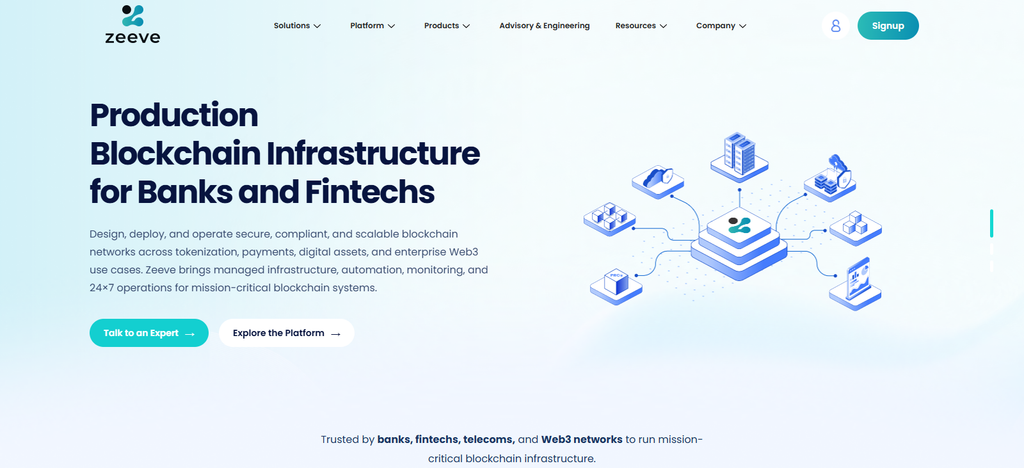
Zeeve provides dedicated RPC infrastructure with the ability to customize regions, bandwidth and request limits. For higher tiers, stronger SLA options, high availability setups, priority support, IP whitelisting and custom domains are available.
It has a managed deployment model, making it a good choice for dApps, enterprises and teams that want dedicated infrastructure but don’t want to run nodes themselves.
Best Use Cases of Zeeve,
- Enterprise Blockchain Infrastructure: Perfect for enterprises looking for managed and production ready blockchain node infrastructure.
- Multi-Chain dApps: Useful for apps that want to access multiple blockchain networks via managed infrastructure.
- Dedicated RPC workloads: Great for applications that require dedicated RPC capacity rather than shared endpoints.
Validator Infrastructure: Ideal for projects requiring expertly managed validator and node deployments. - Scaling Web3 Infrastructure: Perfect for scaling applications that need scalable node resources and operational support.
| Pros | Cons |
|---|---|
| Managed blockchain node infrastructure | Advanced deployments may require custom plans |
| Broad blockchain ecosystem support | Pricing can vary by infrastructure configuration |
| Dedicated RPC and node deployment options | Some features are aimed primarily at professional users |
| Enterprise-focused infrastructure and support | May be more infrastructure than small projects need |
| Useful scaling and deployment options | Platform complexity can increase with larger deployments |
2. Blockdaemon
Blockdaemon operates a Nodes-as-a-Service platform providing managed dedicated blockchain nodes with infrastructure tailored for applications requiring exclusive node access, predictable connectivity and managed operations.
Users can pick from supported blockchain protocols and configure network, node type and hosting options with its dedicated model. Deployments may span multiple cloud providers and geographic regions.
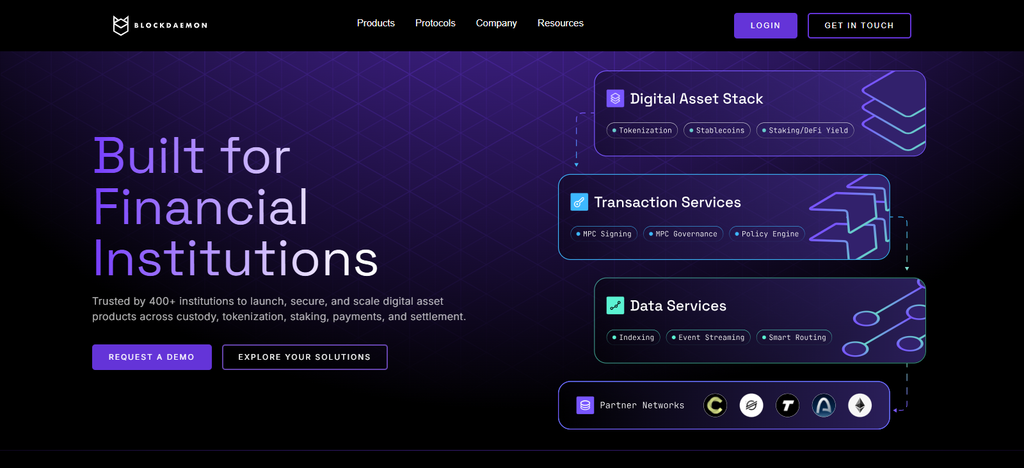
Blockdaemon supports a wide range of protocols such as Ethereum, Bitcoin, Solana related infrastructure, Arbitrum, Avalanche, Base, BNB Chain, Cardano, Cosmos and others. It supports individual dedicated nodes as well as high availability node clusters and is very relevant to enterprise and production workloads that require scalable infrastructure.
Best Use Cases of Blockdaemon
- Staking Infrastructure: A compelling use case for organizations seeking managed validator and staking infrastructure.
- Institutional Blockchain Infrastructure Perfect for financial institutions and enterprises that need a professional managed blockchain infrastructure.
- High-Availability Applications A good fit for production applications where reliability and infrastructure redundancy are important.
- Multi-Protocol Deployments: Ideal for organizations with infrastructure in different blockchain ecosystems.
- Enterprise Web3 Apps: Good for apps that require infrastructure management, support and scaling.
| Pros | Cons |
|---|---|
| Strong enterprise blockchain infrastructure | Enterprise-oriented features can be costly |
| Wide protocol coverage | May be more complex for individual developers |
| Managed node and validator infrastructure | Pricing is not always straightforward |
| High-availability infrastructure options | Best value is generally for larger workloads |
| Institutional-grade infrastructure approach | Smaller projects may not need the full platform |
3. GetBlock
GetBlock offers private, single-tenant RPC infrastructure for high-load applications and enterprise workloads with dedicated blockchain nodes.
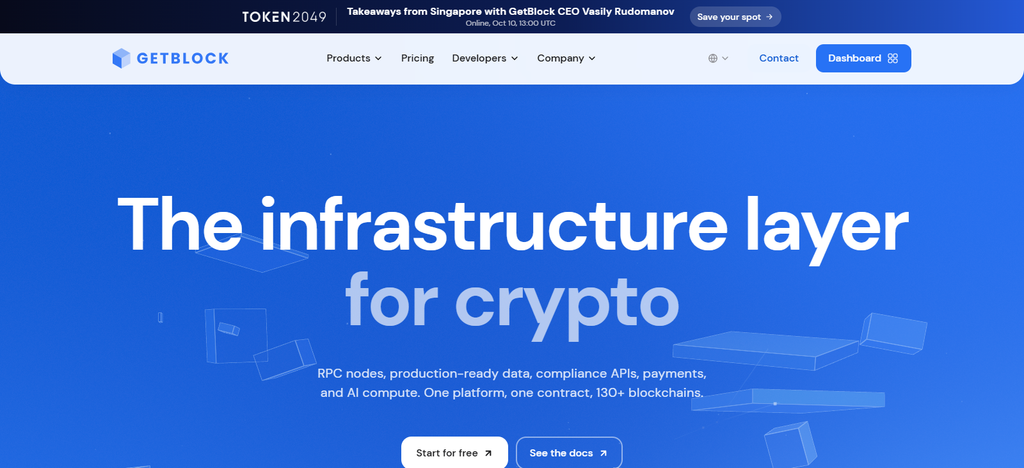
The platform supports 130+ blockchain networks including EVM networks, Solana and Bitcoin and offers full and archive node options. Dedicated infrastructure can include unlimited requests and RPS, custom node configurations, private networking, monitoring, custom alerts and scalable multi-node clusters .
RPC access includes HTTP APIs and WebSockets, and enterprise deployments can use private connections to AWS, GCP or Azure environments. There is not one universal price, but the price depends on the blockchain, network, client, region and the configuration chosen.
Best Use Cases of GetBlock
- High-Traffic dApps: Ideal for apps that generate high amounts of blockchain RPC traffic.
- Dicated RPC Infrastructure: Good for projects who need private or dedicated node access with more resources available.
- Archive Data Workloads: Best for applications that need historical blockchain data and archive-node capabilities.
- Multi-Chain Development: Good for developers who build applications on multiple blockchain chains.
- Enterprise Blockchain Projects: For enterprises that need custom node setups, monitoring, scalability and production infrastructure.
| Pros | Cons |
|---|---|
| Large multi-chain network coverage | Large feature sets can require careful plan selection |
| Dedicated and private node options | Dedicated infrastructure can cost more than shared RPC |
| Full and archive node availability | Pricing varies by network and configuration |
| WebSocket and RPC connectivity | Advanced requirements may need custom arrangements |
| Suitable for high-volume applications | Smaller projects may find basic plans more appropriate |
4. Tatum
Tatum is a multi-chain blockchain development infrastructure platform providing APIs and managed access to blockchains for developers building wallets, payment apps, exchanges, fintech products and Web3 apps.
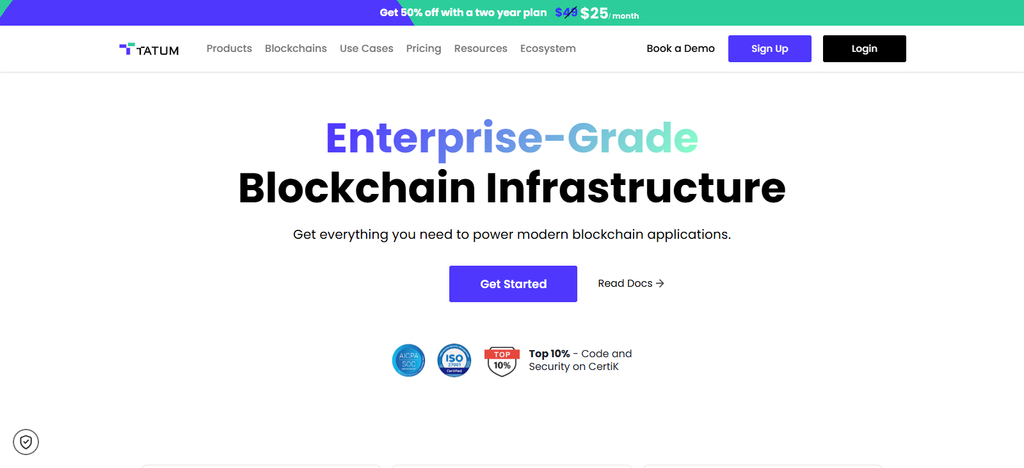
The infrastructure approach is built around simplifying the connectivity to blockchain through a single development layer, instead of having teams run their own nodes. API access, transaction operations, wallet functionality and developer tooling make up core parts of its platform, while blockchain coverage is across multiple major networks.
The deployment is mainly on Tatum’s infrastructure. The pricing is based on the usage of the platform and plan features. Higher-capacity infrastructure and support options are available for enterprise-focused users running production applications that require reliable blockchain connectivity.
Best Use Cases of Tatum
- Blockchain Application Development: Useful for developers who are building applications that require simplified access to blockchain functionality.
- Crypto Wallets: For wallet apps needing multi-chain blockchain access and transactions.
Crypto Payments: A good use case for payment apps which can connect to multiple blockchain networks.
Exchange Development: For projects that are building exchange infrastructure with needs for blockchain transactions and asset management. - Financial Technology Applications: Ideal for companies that are integrating blockchain elements into their financial and digital-asset services.
| Pros | Cons |
|---|---|
| Unified blockchain development infrastructure | Not primarily positioned as a traditional dedicated-node vendor |
| Multi-chain development capabilities | Advanced usage can increase overall costs |
| Useful APIs for blockchain applications | Developers may rely heavily on Tatum’s abstraction layer |
| Strong wallet and payment use cases | Less infrastructure control than self-managed nodes |
| Suitable for fintech and Web3 applications | Exact capabilities vary across supported networks |
5. 1RPC
Rather than charting the route of typical dedicated-node vendors, 1RPC pursues a different approach, emphasizing privacy-preserving RPC access and transaction security. Its infrastructure is built to offer blockchain RPC connectivity, while reducing exposure of user activity to the minimum and allowing secure interaction with decentralized applications.
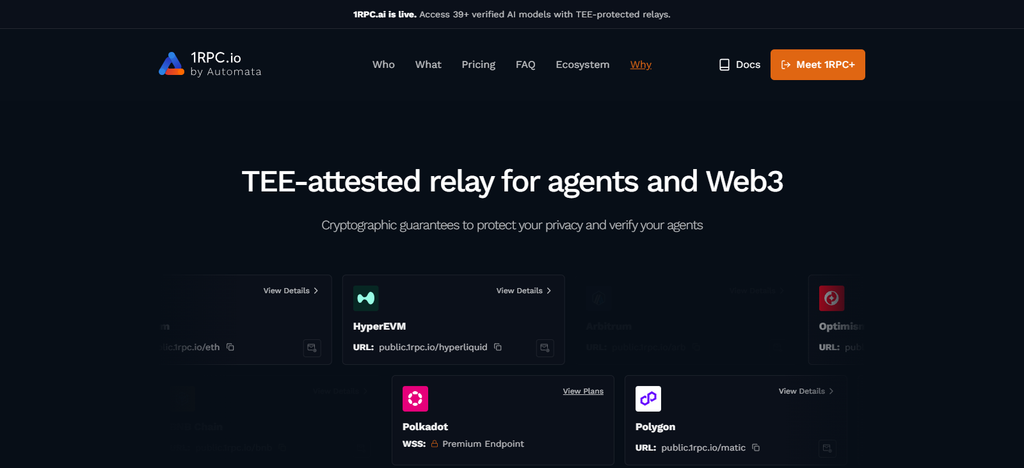
The service spans several blockchain networks and is especially relevant for users who prioritize RPC privacy, transaction metadata, and secure Web3 access.
It’s an RPC-based model of deployment (not the traditional customer-managed dedicated-server model). Users considering 1RPC should understand the difference between privacy-oriented RPC access and a fully dedicated node. Pricing and enterprise arrangements may vary depending on required infrastructure and level of use.
Best Use Cases of 1RPC
- Privacy-First dApps: Suitable for users and applications that need extra privacy while connecting to blockchain RPC infrastructure.
- Protected Web3 Access: Useful for applications that are looking for RPC connectivity, with greater emphasis on protecting request related information.
DeFi Users: Potentially relevant for decentralized finance users worried about their blockchain activity being leaked through traditional RPC endpoints. - Web3 Wallet Connectivity: Useful where privacy-centric RPC access is foundational to wallet infrastructure.
- Decentralized Application Access: Ideal for projects looking to move away from traditional centralized rpc access models.
| Pros | Cons |
|---|---|
| Privacy-focused RPC infrastructure | Not a conventional dedicated-node provider |
| Designed to reduce unnecessary RPC exposure | Dedicated infrastructure options are more limited |
| Useful for privacy-conscious Web3 users | Less suitable for organizations seeking full node ownership |
| Alternative to conventional centralized RPC access | Enterprise infrastructure capabilities are narrower |
| Simple approach to privacy-oriented RPC access | Blockchain and feature coverage can vary |
6. Gateway.fm
Gateway.fm is a blockchain infrastructure provider specializing in managed node deployments, RPC services and infrastructure for protocols, institutions and Web3 applications.
The platform supports multiple blockchain ecosystems and is built on professionally operated infrastructure, rather than requiring customers to manage node software, updates and infrastructure operations themselves.
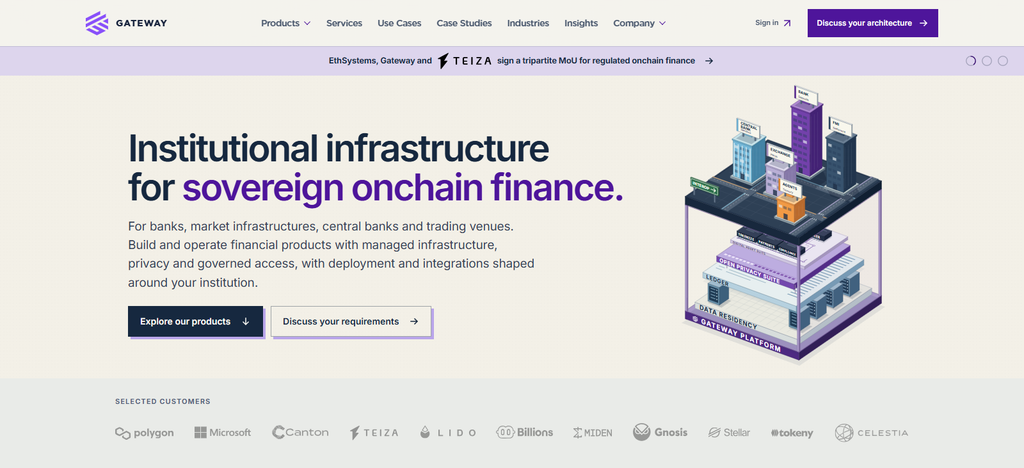
Deployment is customizable to blockchain, network and infrastructure needs, making it relevant for teams needing dedicated or customized node environments.
Production-focused support, infrastructure management and scalable deployments are benefits for enterprise customers. Gateway.fm is worth considering particularly if a project needs more control and operational support than a basic shared RPC endpoint.
Best Use Cases of Gateway. fm
- Managed Blockchain Nodes: For teams that want professionally managed node infrastructure, but don’t want to manage the full infrastructure stack themselves.
Enterprise Web3 Infrastructure For organizations that require production-grade blockchain infrastructure and operational support. - Protocol Infrastructure: Great for blockchain protocols requiring managed infrastructure for their networks.
- Dedicated RPC Requirements: Good for applications that need dedicated or custom blockchain access.
- Web3 applications that scale: For projects that require infrastructure to scale with application demand.
| Pros | Cons |
|---|---|
| Managed blockchain infrastructure | Enterprise deployments may require custom pricing |
| Suitable for protocol infrastructure | Less focused on consumer-level use cases |
| Professional node management | Advanced infrastructure can require technical knowledge |
| Production-oriented deployment options | Public pricing may not cover every configuration |
| Useful for growing Web3 projects | Smaller applications may not need its broader infrastructure |
7. SubQuery Network
SubQuery Network is not a provider that just provides standard RPC endpoints. SubQuery is a combination of blockchain infrastructure and indexing and data-access capabilities.

The ecosystem is designed to provide developers access to blockchain data via decentralized infrastructure and indexing services and is highly relevant for applications that require structured blockchain information, not just simple transaction submission. Its technology has historically powered ecosystems such as Polkadot, Substrate, Cosmos and other blockchain networks.
Deployment can involve decentralized infrastructure and indexing services, and scaling is related to network demand and data workloads. # Pricing depends on the particular SubQuery services and infrastructure needs, making it especially interesting for data-intensive Web3 applications.
Best Use Cases of SubQuery Network
- Indexing Blockchain Data: Especially helpful for apps that require data organized for querying on the blockchain.
Data-Intensive dApps: For applications that need more than basic RPC access to get blockchain information. - Web3 Analytics: Useful for analytics platforms that require indexed blockchain information for applications and dashboards.
- Multi-Chain Data Apps: For developers working across multiple blockchain ecosystems.
Decentralized data infrastructure: Great for projects interested in decentralized approaches to blockchain indexing and data access.
| Pros | Cons |
|---|---|
| Strong blockchain indexing capabilities | More specialized than a basic RPC provider |
| Useful for structured blockchain data | Indexing can require additional configuration |
| Supports data-intensive Web3 applications | Not primarily designed around dedicated physical nodes |
| Relevant for blockchain analytics | Best suited to data-focused workloads |
| Decentralized infrastructure approach | Users seeking simple RPC access may prefer another provider |
8. BlockPI Network
BlockPI Network is a provider of blockchain infrastructure specializing in high performance RPC connectivity and distributed blockchain access. Its infrastructure is built to improve RPC performance by distributing requests over geographically distributed infrastructure and suitable for applications where latency and reliability matter.
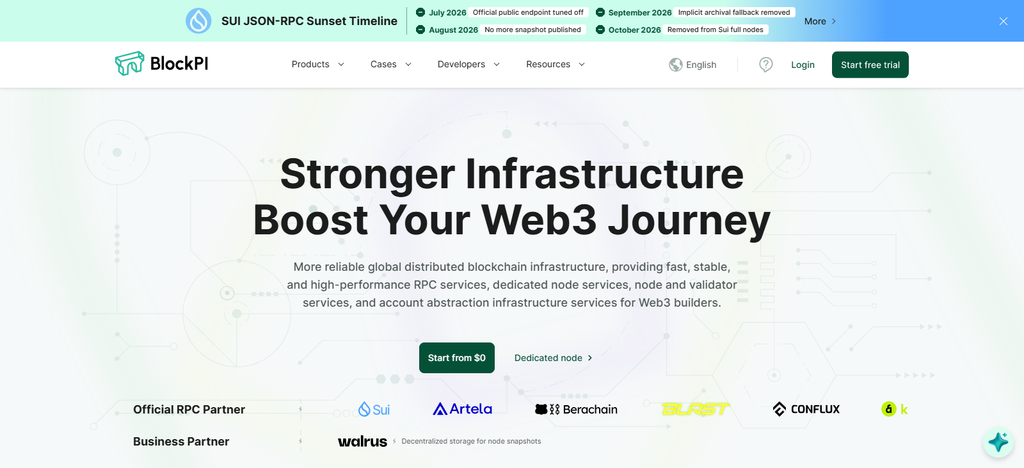
BlockPI supports multiple blockchain networks and offers RPC access in a developer-friendly way. Its distributed architecture can help applications to cope with increasing request volumes.
Its deployment model is not similar to traditional single-server dedicated node as the focus is on distributed RPC infrastructure and network-level performance. Pricing will generally depend on the selected service and usage, and larger applications may opt for custom infrastructure to match traffic demands.
Best Use Cases of BlockPI Network
- Low-Latency dApps: Good for applications where fast, reliable RPC connectivity matters.
- High Volume RPC Traffic: Useful for applications that serve large numbers of blockchain requests.
- Multi-Chain Applications: For developers who need to interact with multiple blockchain networks.
DeFi Infrastructure: Great for trading and DeFi apps that need quick access to blockchain data.
Globally Distributed Applications: Suitable for applications which can take advantage of distributed RPC infrastructure and geographically distributed access.
| Pros | Cons |
|---|---|
| Focus on distributed RPC infrastructure | Not equivalent to a traditional single dedicated node |
| Designed for high-performance RPC access | Infrastructure model can be harder to compare directly |
| Multi-chain support | Feature availability varies by network |
| Useful for high-volume applications | Pricing depends on usage and service requirements |
| Distributed architecture can improve resilience | Less direct infrastructure control than self-hosting |
9. Uniblock
Uniblock is a multi-chain Web3 infrastructure platform to unlock easier access to blockchain RPCs, APIs and development services across different networks.
It provides developers with the infrastructure to connect applications to blockchain data and transactions without deploying and maintaining every underlying node themselves. Its multi-chain approach is useful for teams building applications that interact with several blockchain ecosystems. Availability of WebSocket and RPC depends on supported network and chosen service.
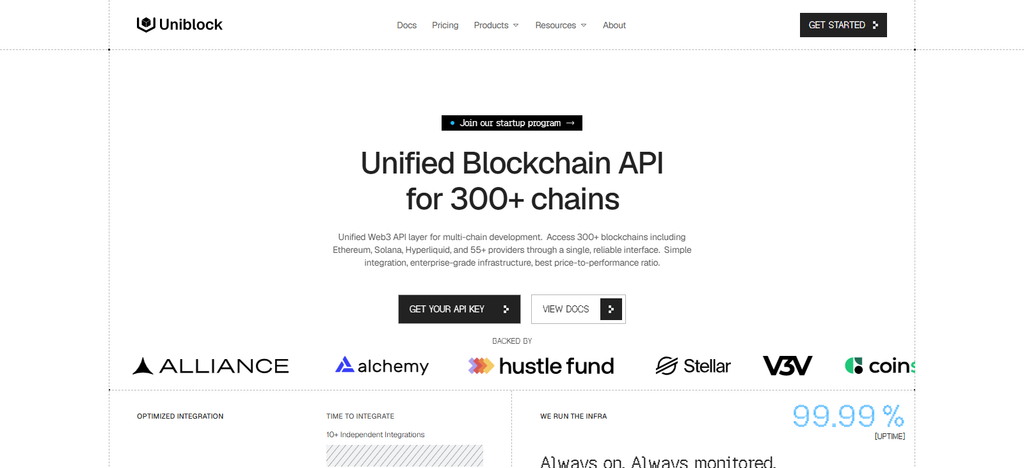
Deployment is mainly done through platform. Pricing is generally influenced by usage and infrastructure needs, with higher-volume projects able to look into larger capacity or bespoke setups for production workloads.
Best Use Cases of Uniblock
- Multi-Chain dApps: For developers who need to connect to multiple blockchains using a single infrastructure layer.
- Web3 Development: Ideal for teams looking to streamline their blockchain integration and infrastructure management.
- Wallet apps: Useful for apps that need access to blockchain data and the ability to make transactions.
DeFi Applications: Useful for decentralized applications that communicate with multiple blockchain networks.
Rapid Prototyping: Great for development teams that want to add blockchain functionality without having to run infrastructure for each supported network.
| Pros | Cons |
|---|---|
| Simplifies multi-chain blockchain access | Less focused on dedicated physical infrastructure |
| Developer-friendly Web3 infrastructure | Advanced requirements may need higher-tier arrangements |
| Useful for multi-chain applications | Infrastructure control is lower than self-hosting |
| Helps reduce node-management overhead | Exact capabilities vary between networks |
| Suitable for wallets and dApps | Less specialized for large enterprise node operations |
10. Pocket Network
Pocket Network is a decentralized blockchain infrastructure network that offers RPC access through a distributed network of node operators, instead of relying on a single centralized infrastructure provider.
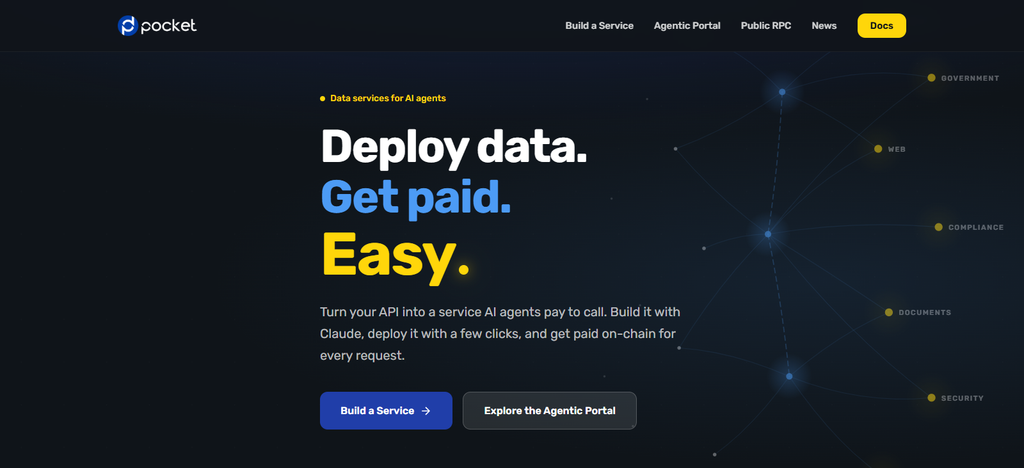
It’s designed to distribute blockchain requests across independent node operators and give applications access to a variety of supported networks in the Pocket ecosystem. This fundamentally changes its model from that of a traditional dedicated server provider, as infrastructure resources are delivered through a decentralized network.
The scaling is made possible by the distributed nature of the underlying node network and the pricing reflects the decentralized infrastructure model of the network. This makes Pocket Network particularly relevant for projects that value decentralized RPC infrastructure, resilience and less reliance on a single infrastructure operator.
Best Use Cases of Pocket Network (POKT)
- Decentralized RPC Infrastructure: For projects that want to access blockchain via a decentralized network of node operators.
- Multi-Chain dApps: Useful for applications that need to access supported blockchain networks through decentralized RPC infrastructure.
RPC Resilience: Good for projects that want to reduce the dependence on one central infrastructure operator. - Web3 Infrastructure Decentralization: Ideal for apps that view decentralized infrastructure as an integral part of their tech stack.
- Scalable Blockchain Access: Perfect for apps that require RPC capacity from a distributed network of infrastructure providers.
| Pros | Cons |
|---|---|
| Decentralized RPC infrastructure model | Different from conventional dedicated-node hosting |
| Reduces dependence on one infrastructure operator | Users have less direct control over individual nodes |
| Distributed node-operator ecosystem | Performance can vary across network conditions |
| Strong fit for decentralized Web3 infrastructure | Not ideal when exclusive server resources are required |
| Supports multi-chain blockchain access | Provider comparison is less direct because of its decentralized model |
Conclusion
There is more to choosing the right dedicated crypto node provider than just blockchain coverage or pricing. Zeeve and Blockdaemon are particularly notable for managed enterprise infrastructure, and GetBlock is more dedicated to dedicated nodes and high-load RPC requirements.
Tatum is good for multi-chain development. Gateway.fm and SubQuery Network provide more infrastructure and data capabilities. BlockPI, 1RPC, Uniblock and Pocket Network offer different solutions for scalable and distributed blockchain access. Compare node types,
WebSocket support, deployment options, pricing, scalability, security, uptime, and enterprise support before choosing a provider to find infrastructure that fits your application’s workload and long-term Web3 needs.
FAQ
What is a dedicated crypto node provider?
A dedicated crypto node provider offers blockchain node infrastructure reserved or specifically configured for an individual application or organization. It provides more predictable resources, performance, control, and scalability than shared RPC infrastructure.
Why use a dedicated crypto node?
Dedicated nodes are useful for high-traffic dApps, DeFi protocols, exchanges, wallets, gaming applications, and enterprise projects that need reliable blockchain connectivity, higher request capacity, and greater infrastructure control.
Are dedicated crypto nodes better than shared RPCs?
For production workloads, dedicated nodes can provide more predictable performance and resource availability. Shared RPCs are generally more suitable for development, testing, and applications with lower or variable traffic requirements.
Which provider is best for enterprise blockchain infrastructure?
Blockdaemon, Zeeve, GetBlock, and Gateway.fm are strong options to evaluate for enterprise workloads because they provide managed infrastructure, scalability, production support, and options suited to larger blockchain applications.