


This article will cover the Best Ethereum Node Providers for developers and Web3 projects. I will look at the top providers on Ethereum node support, RPC and API support, performance, pricing, scalability, archive access, WebSocket support and developer tools.
- What Are Ethereum Node Providers?
- Key Points
- 1. Pocket Network
- Best Use Cases of Pocket Network
- Pocket Network — Pros & Cons
- 2. LavaNet
- Best Use Cases of Lava Network
- Lava Network — Pros & Cons
- 3. dRPC
- Best Use Cases of dRPC (Distributed Remote Procedure Call)
- dRPC — Pros & Cons
- 4. Blast API
- Best Use Cases of Blast API
- Blast API — Pros & Cons
- 5. Tenderly Node
- Best Use Cases of Node Tenderly
- Tenderly Node — Pros & Cons
- 6. Chainnodes
- Best Use Cases of Chainnodes
- Chainnodes — Pros & Cons
- 7. GetBlock
- Best Use Cases of GetBlock API
- GetBlock — Pros & Cons
- 8. Chainstack
- Best Use Cases of Chainstack
- Chainstack — Pros & Cons
- 9. Infura
- Best Use Cases of Infura
- Infura — Pros & Cons
- 10 Alchemy
- Best Use Cases of Alchemie
- Alchemy — Pros & Cons
- Conclusion
- FAQ
This guide will assist you to understand the key differences and help you select the right infrastructure for your project needs, workload and budget.
What Are Ethereum Node Providers?
Ethereum node providers are infrastructure services that provide developers with managed access to the Ethereum blockchain via remote nodes and RPC endpoints. Instead of running, updating, securing and scaling Ethereum nodes themselves, developers are able to hook up applications, wallets, DeFi protocols, games and other Web3 platforms to provider APIs.
Typically these services offer Ethereum Mainnet access, JSON-RPC methods, WebSocket connections, blockchain data, transaction broadcasting and sometimes archive, trace, debugging and analytics capabilities. Providers can use shared, dedicated or decentralized node infrastructure, usually charging on a per-request, compute unit, subscription or custom enterprise capacity basis.
Key Points
| Provider | Ethereum Node Support | RPC & API Capabilities | Performance | Pricing |
|---|---|---|---|---|
| Pocket Network | Ethereum RPC through decentralized node infrastructure | JSON-RPC, HTTP access, multi-chain API connectivity | Distributed routing, redundancy, geographic node coverage | Public RPC access available; paid capacity depends on usage model |
| Lava Network | Ethereum and other supported chains | RPC access, WebSockets, multi-provider routing | Provider routing, redundancy, availability-focused architecture | Usage/provider configuration based; varies by service |
| dRPC | Ethereum RPC and supported EVM networks | JSON-RPC, WebSockets, trace/debug methods, routing | Multi-provider routing, fallback, configurable throughput | Compute Unit model; pricing depends on CU consumption |
| Blast API | Ethereum Mainnet and other supported networks | JSON-RPC, API access, Web3 infrastructure services | Multi-region infrastructure and distributed routing | Free and paid plans; pricing depends on capacity and usage |
| Tenderly Node | Ethereum-focused node and RPC infrastructure | RPC, transaction simulation, forks, debugging, trace and development APIs | Optimized for Ethereum development and transaction workflows | Free tier plus usage-based and paid plans |
| Chainnodes | Ethereum Mainnet and historical/archive infrastructure | Ethereum JSON-RPC, blockchain data APIs | Plans offer different request limits and throughput | Free and paid plans based on usage and capacity |
| GetBlock | Ethereum shared, archive and dedicated nodes | JSON-RPC, WebSockets, archive access, API endpoints | Shared and dedicated infrastructure with scalable capacity | Free tier plus paid shared and dedicated-node plans |
| Chainstack | Ethereum full, archive, regional and dedicated nodes | RPC, WebSockets, archive access, node APIs | Up to different RPS levels by plan; dedicated infrastructure available | Free Developer tier, paid plans and customized enterprise pricing |
| Infura | Ethereum RPC, archive and specialized APIs | JSON-RPC, Archive, Gas, Debug and Trace APIs | Production-oriented infrastructure with scalable API access | Free tier plus paid credit-based plans and enterprise pricing |
| Alchemy | Ethereum Mainnet, testnets and archive infrastructure | RPC, WebSockets, NFT, Token, Transfers, Debug, Trace and Webhooks | High-throughput infrastructure with scalable RPS options | Free tier, Pay As You Go and Enterprise plans |
1. Pocket Network
Pocket Network was founded in 2020 and is based in George Town, Cayman Islands, operating through the Pocket Network Foundation. It provides decentralized blockchain RPC infrastructure including access to Ethereum via its public API portal.
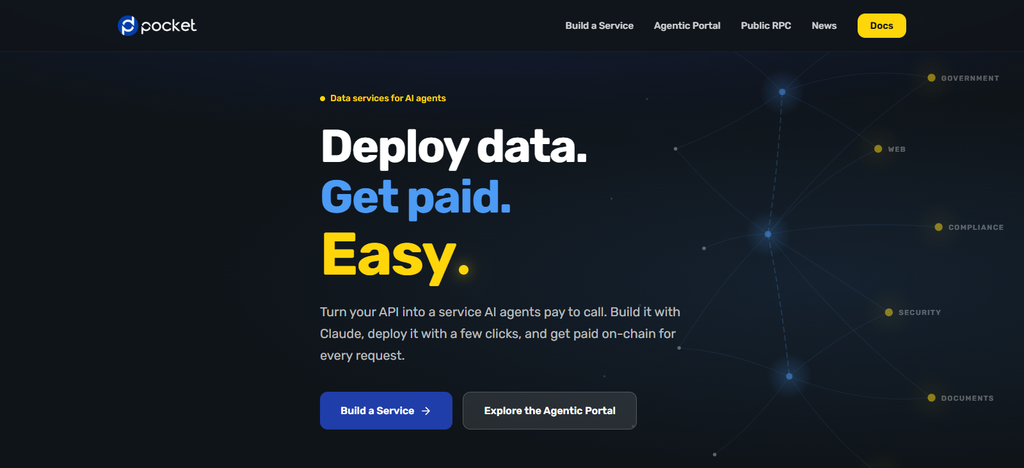
Through the use of HTTP based RPC endpoints, Ethereum developers are able to access blockchain data and application connectivity. Pocket routes requests across independent network providers.
Its architecture is based on geographic distribution, automatic routing, redundancy and self-healing behavior rather than a single operator of a node. The Foundation currently provides free public RPC access, no API key required, and higher volume applications can take advantage of application staking and paid relay capacity.
Best Use Cases of Pocket Network
- Decentralized dApps: Good for applications that want to take advantage of distributed RPC infrastructure instead of relying on a centralized provider.
- Multi-Chain Apps: Ideal for projects that require access to blockchain across many supported networks.
- Web3 Startups: Good for teams that want easy access RPC infrastructure early in the build.
- Distributed Architecture for High-Availability Applications: The architecture supports applications that require redundancy.
RPC Infrastructure Experiments: Useful for developers testing decentralized ways to get the blockchain’s data.
Pocket Network — Pros & Cons
| Pros | Cons |
|---|---|
| Decentralized RPC architecture reduces dependence on a single infrastructure operator. | Public RPC endpoints are not designed to replace every enterprise-grade dedicated deployment. |
| Free, keyless Ethereum RPC access is available through the public API portal. | Public access has request limits, including 2,000 requests per IP per minute. |
| Standard JSON-RPC works with common Ethereum development tools such as ethers.js and web3.py. | Developers needing customized gateways or high-volume production traffic may need additional infrastructure. |
| Global supplier distribution provides redundancy and automatic routing around problematic nodes. | The decentralized architecture can be less straightforward to evaluate than a single-provider node setup. |
| Supports Ethereum alongside multiple blockchain networks. | Advanced production requirements may require configuration beyond the basic public endpoint. |
2. LavaNet
Lava Network is a decentralized RPC and blockchain-data infrastructure protocol launched in 2022. Its network coordinates a number of providers allowing developers to access the blockchain without reliance on one centralized RPC vendor.
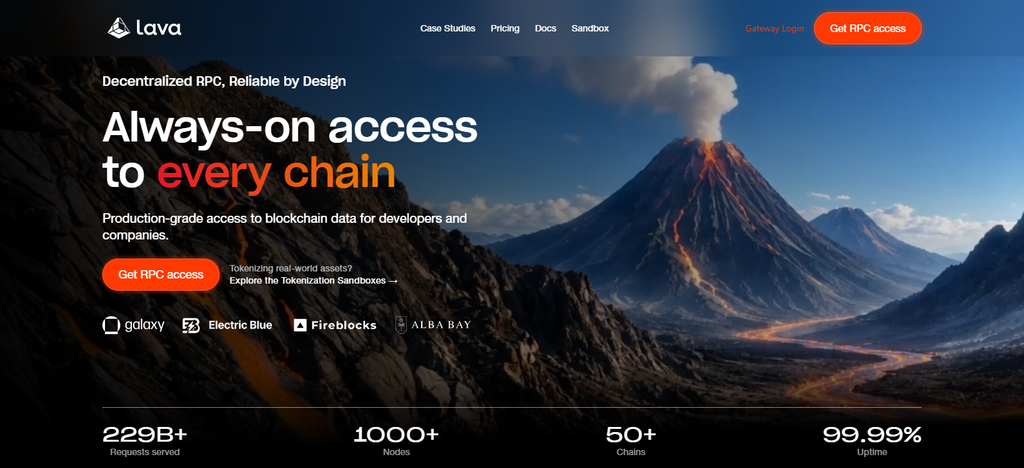
Ethereum is one of the supported ecosystems via Lava’s RPC infrastructure with routing based on availability, data quality, and provider performance. It supports standard RPC access and WebSocket subscriptions for supported chains, and its Smart Router can route traffic between providers .
Unlike traditional node hosting, Lava uses a decentralized infrastructure model. There is no one monthly plan and pricing is based on the access model, provider configuration and usage requirements.
Best Use Cases of Lava Network
- Multi-Provider RPC: For apps that want to route RPC requests across multiple infrastructure providers.
- Multi-Chain dApps: Best for projects that work with multiple supported blockchain networks.
- RPC Reliability: Suitable for applications where provider redundancy and routing are important.
- Web3 Infrastructure: Useful for teams building applications requiring flexible access to blockchain data.
- Decentralized RPC Projects: Excellent for developers interested in decentralized node infrastructure.
Lava Network — Pros & Cons
| Pros | Cons |
|---|---|
| Decentralized RPC model can reduce reliance on a single node provider. | The decentralized provider model can require more understanding of routing and provider infrastructure. |
| Designed to connect applications with multiple RPC providers. | Pricing and capacity can vary according to the selected access and provider configuration. |
| Useful for multi-chain applications requiring blockchain RPC access. | It may be more infrastructure-oriented than a simple traditional managed-node dashboard. |
| Provider routing can help applications access alternative infrastructure when individual providers have issues. | Developers seeking one fixed infrastructure vendor may find the architecture less familiar. |
| Suitable for projects exploring decentralized blockchain infrastructure. | Feature availability can differ by supported network and provider. |
3. dRPC
dRPC is a decentralized RPC aggregation and routing platform, that was born as an RPC infrastructure work at P2P.org, around 2022. Its Ethereum infrastructure offers JSON-RPC access with support for standard ethereum methods, trace methods, API keys, fallback providers, provider selection, rate limits, IP allowlisting, and WebSocket connectivity.
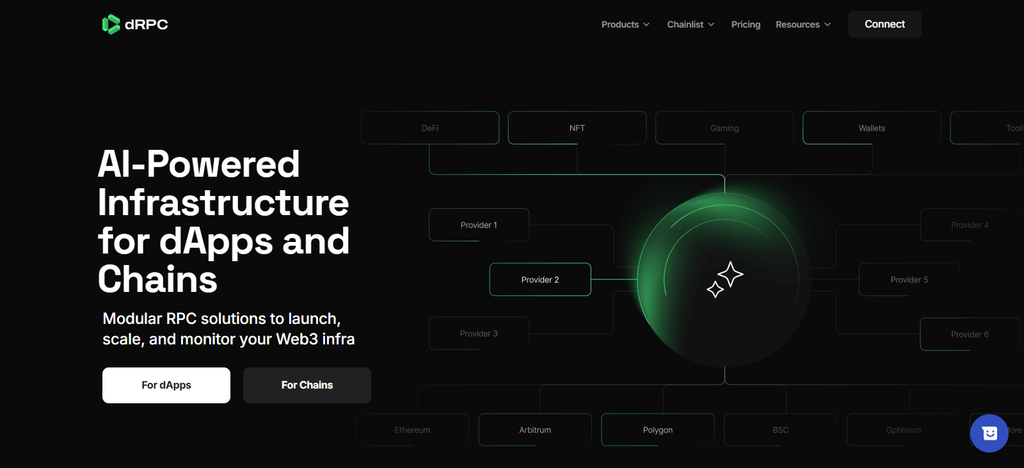
Performance is based on routing requests between multiple underlying providers. Applications can configure fallback and provider preferences. dRPC bills in Compute Units . Its docs currently list a flat cost of 20 CUs for supported RPC methods and $0.30 per 1 million CUs .
Best Use Cases of dRPC (Distributed Remote Procedure Call)
- Production dApps: Good for apps that need configurable RPC routing and infrastructure redundancy.
- High-Traffic Web3 Apps: Ideal for workloads that require scalable RPC capacity and multiple providers.
- DeFi Apps: Ideal for frequent contract calls, transactions data and blockchain queries.
- RPC Aggregation: Great for teams looking to manage a lot of RPC providers under one layer of infrastructure.
- Enterprise Web3: For projects needing configurable control of access, routing, and production infrastructure.
dRPC — Pros & Cons
| Pros | Cons |
|---|---|
| Uses a unified Compute Unit model, with supported RPC methods currently costing 20 CUs. | Usage-based billing requires developers to monitor Compute Unit consumption. |
| The published price is $0.30 per 1 million CUs. | Actual monthly cost depends on request volume and workload. |
| Supports Ethereum and EVM methods including trace and debug methods. | Comparing its CU pricing directly with providers using different billing units can be difficult. |
| Multi-provider infrastructure can provide routing and redundancy options. | Provider selection and routing configurations can add operational complexity. |
| Suitable for applications that want an RPC aggregation layer. | Advanced requirements may require more configuration than a basic single-endpoint setup. |
4. Blast API
Bware Labs has announced Blast API, a multi-region Web3 API infrastructure platform offering Ethereum RPC connectivity and more with other blockchain networks. Its infrastructure consists of geographically distributed third party nodes.
It uses clustering and location-aware routing, which directs requests to appropriate infrastructure. The platform itself is built around reliability, latency optimization and access to distributed nodes and ethereum developers have the same standard JSON RPC functionality as other blockchain applications.
We ran a series of Ethereum RPC method benchmarks on the Historical Blast API at loads from 10 to 10,000 requests per second, showing competitive latency at low loads. Pricing is based on usage and subscription, plan details vary by capacity and service configuration.
Best Use Cases of Blast API
- High-Performance dApps: Suitable for apps requiring scalable Ethereum RPC access.
- DeFi Platforms: Optimized for blockchain queries and transaction workloads that must be executed frequently.
- Multi-Region Applications: Great for projects that need to serve users in different geographic regions.
Web3 Gaming: Can support applications that require frequent data requests from the blockchain. - Production APIs: Best for teams that want managed blockchain API infrastructure
Blast API — Pros & Cons
| Pros | Cons |
|---|---|
| Provides managed Web3 API and RPC infrastructure for Ethereum applications. | Pricing and plan structures can vary according to infrastructure requirements. |
| Distributed infrastructure can support geographically diverse applications. | Developers should verify current Ethereum-specific limits before choosing a plan. |
| Suitable for applications requiring scalable RPC connectivity. | Feature availability can differ between supported networks. |
| Designed for production-oriented blockchain API workloads. | Smaller projects may not need its broader infrastructure capabilities. |
| Can be useful for developers building multi-chain applications. | Comparing performance requires looking at workload-specific benchmarks rather than generic speed claims. |
5. Tenderly Node
Tenderly was founded in 2018 and is based in San Francisco, California. It offers Ethereum-centric infrastructure based on RPC access, transaction simulation, debugging, development environments and onchain operations.
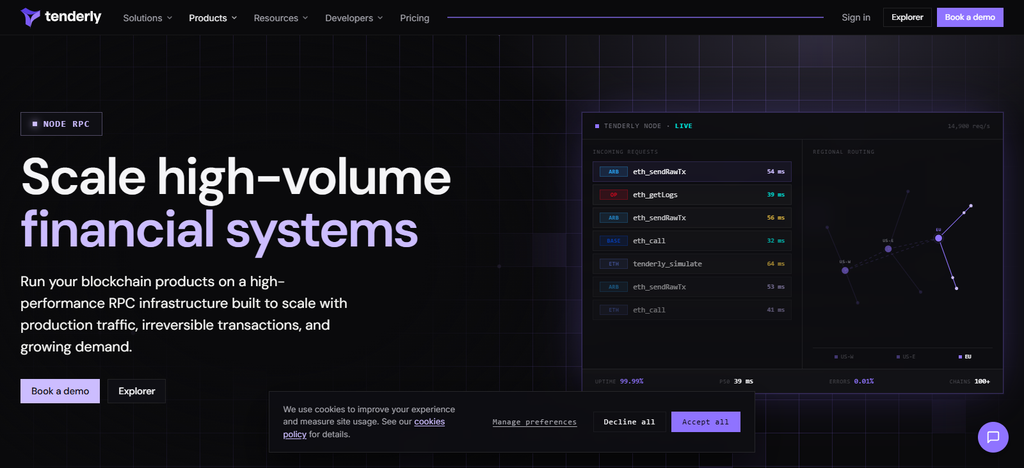
Its node infrastructure connects applications to live blockchain state, and its wider platform adds features including forks, simulations, debugging, stack traces and transaction analysis. Tenderly is especially a good fit for development and testing workflows where developers want to reproduce and inspect Ethereum transactions, not just get blocks.
Pricing is plan-based, based on usage and product needs. Advanced infrastructure and enterprise capabilities are available in higher tier arrangements or custom plans.
Best Use Cases of Node Tenderly
- Debugging Transactions: Helps debug failed or complex transactions.
- DeFi Development: Excellent for testing DeFi transactions and contract interactions before deployment.
- Fork-based testing: Good for developers that need to simulate blockchain-state to conduct development workflows.
- RPC-heavy applications: Ideal for teams that require RPC access but also need transaction simulation and debugging tools.
Tenderly Node — Pros & Cons
| Pros | Cons |
|---|---|
| Strong integration between Ethereum RPC access and Tenderly’s development environment. | Its broader feature set can be more than a developer needs for basic RPC access. |
| Provides transaction simulation and debugging capabilities alongside node access. | Developers primarily seeking inexpensive high-volume RPC may need to compare other infrastructure-focused providers. |
| Offers historical data access and JSON-RPC endpoints. | Pricing can become more relevant as simulation, debugging, and infrastructure usage increases. |
| Includes usage analytics and RPC request tooling. | The platform is particularly oriented toward Ethereum development workflows rather than being a minimal RPC endpoint. |
| Free tier includes 25 million Tenderly Units per month according to Ethereum.org’s provider listing. | Advanced enterprise requirements may require a paid plan or additional support. |
6. Chainnodes
Chainnodes was founded in 2022 as a Web3 blockchain infrastructure provider focused on JSON-RPC connectivity. Ethereum service provides access to Ethereum RPC methods for decentralized applications, wallets, games and other Web3 projects.
It supports the usual Ethereum API calls and recommends archival access for historical blockchain queries. The published infrastructure info highlights low latency connectivity, high request throughput and rate limits up to 500 requests per second on applicable plans.
Chainnodes also promises 99.99% uptime and the ability to pay in crypto. Pricing is per plan, free and paid access depending on request volume, archival usage and performance capacity you need.
Best Use Cases of Chainnodes
- Web3 dApps: For apps that need simple Ethereum RPC connectivity.
- Wallet Infrastructure Useful for apps that fetch balances, transactions, blocks and other Ethereum data.
- Blockchain Data Access: Good for projects that make a lot of JSON-RPC requests.
- Workloads with High Requests: Excellent for applications that require a higher number of requests / throughput, based on the plan you pick.
- Archive Data Uses: Useful for projects that require access to historical Ethereum blockchain data.
Chainnodes — Pros & Cons
| Pros | Cons |
|---|---|
| Provides straightforward Ethereum JSON-RPC infrastructure for developers. | Developers should verify current plan limits because capacity varies by subscription. |
| Suitable for applications requiring standard blockchain data access. | Smaller free-tier workloads may not be sufficient for production applications. |
| Supports production-oriented RPC workloads. | Advanced enterprise features may be less extensive than those of larger infrastructure platforms. |
| Can be useful for applications requiring historical blockchain access. | Pricing should be evaluated against actual request volume and API-method usage. |
| Focused infrastructure can provide a simpler experience for teams that primarily need RPC access. | Developers building complex data products may require additional APIs beyond basic RPC. |
7. GetBlock
GetBlock was founded in 2019 and is headquartered in Singapore. It provides managed blockchain infrastructure with shared and dedicated Ethereum nodes, enabling developers to tap into Ethereum without having to run node hardware themselves. It has its own Ethereum API for JSON-RPC connectivity.
Infrastructure available includes archive data, WebSockets, regional routing, monitoring and production-oriented endpoints. Performance is dependent on the plan you select, with published shared plans ranging from 20 RPS on the free tier to 500 RPS on the Pro tier, and dedicated infrastructure delivering a significantly higher customized capacity. Pricing starts with a free plan, followed by paid shared-node subscriptions and dedicated-node configurations for higher-volume workloads.
Best Use Cases of GetBlock API
- Blockchain dApps: For developers who need managed Ethereum node infrastructure.
- Wallet Applications: Good for balance, transaction, block and smart contract interaction.
- Blockchain Explorers: Archive and historical infrastructure can support data-intensive applications.
- High-Volume APIs: If you have higher traffic needs, dedicated infrastructure might be relevant.
- Web3 Startups – Great for teams that want managed nodes instead of having to deal with Ethereum infrastructure themselves.
GetBlock — Pros & Cons
| Pros | Cons |
|---|---|
| Offers shared, dedicated, and enterprise node infrastructure. | Higher-performance dedicated infrastructure can cost considerably more than shared access. |
| Shared plans use Compute Units, allowing usage to scale with workload. | CU-based billing means expensive RPC methods can consume more of the allocation. |
| Current plans include options ranging from free access to high-volume infrastructure. | Free access has substantially lower RPS and CU limits than paid plans. |
| Supports archive data, WebSockets, and geo-routing on applicable plans. | Developers must select the appropriate plan carefully for archive and high-throughput workloads. |
| Dedicated nodes are available for higher-performance applications. | Enterprise requirements may require customized pricing and engineering support. |
8. Chainstack
Chainstack was founded in 2018 and is headquartered in Singapore, with operations in the United States. It provides managed Ethereum nodes and RPC infrastructure for developers, startups and enterprise.
Depending on the plan, Ethereum deployments can include standard RPC connectivity, WebSockets, archive data, dedicated nodes, and scalable infrastructure.
Published plans currently show limits from 25 requests per second on the entry level to 600 requests per second on higher plans, with enterprise customers able to request custom RPS and infrastructure. Pricing is subscription, usage-based, with published paid plans and enterprise pricing starting at $990/month for qualified teams.
Best Use Cases of Chainstack
- Enterprise dapps: For teams that need scalable and managed blockchain infrastructure.
- DeFi Apps: Useful for apps that need to access Ethereum RPC, WebSocket and blockchain data.
Blockchain Analytics: Historical data workloads can be supported by archive infrastructure. - High Traffic Applications: Great for high scale traffic applications that require a higher RPC capacity and scalable infrastructure.
- Multi-Chain Development: Perfect for teams developing apps on Ethereum and other supported chains.
Chainstack — Pros & Cons
| Pros | Cons |
|---|---|
| Provides managed Ethereum nodes with full, archive, regional, and dedicated infrastructure options. | Higher-capacity plans become more expensive as request volume increases. |
| Free Developer plan includes 3 million requests and 25 RPS. | The free plan has significantly lower throughput than paid plans. |
| Growth, Pro, and Business plans increase capacity to 250, 400, and 600 RPS respectively. | Archive requests consume more Request Units than standard regional/global requests. |
| Dedicated nodes provide isolated infrastructure for production workloads. | Dedicated infrastructure starts from the Pro plan rather than the free tier. |
| Enterprise plan includes custom RPS, volume discounts, and uptime SLA options. | Enterprise pricing is substantially higher and intended for larger teams. |
9. Infura
Infura was founded in 2016 and joined Consensys, offering managed blockchain infrastructure initially built around Ethereum access. Its Ethereum service provides RPC APIs for application development, archive data, Gas API functions and higher tier Debug and Trace APIs.
Infura’s existing platform also includes Consensys ecosystem integrations, and focuses on high availability infrastructure, throughput and developer-focused API access.
Currently it offers a free Core tier with 3 million daily credits, a Developer plan at $50 per month with 15 million daily credits and a Team plan at $225 per month with 75 million daily credits. Pricing for enterprise is customized.
Best Use Cases of Infura
- Ethereum dApps: For developers requiring a well-established Ethereum RPC infrastructure.
DeFi Platforms: Handy for engaging with smart contract functionality, querying the blockchain and submitting transactions. - Wallets: Use these for apps that need reliable access to Ethereum account and transaction data.
- Enterprise Web3: Ideal for teams that need scalable infrastructure and services for enterprises.
- Blockchain APIs: Great for apps that require Ethereum RPC and other data and API services.
Infura — Pros & Cons
| Pros | Cons |
|---|---|
| Provides established Ethereum RPC infrastructure and broader Web3 APIs. | Credit-based billing requires developers to understand method-specific consumption. |
| Ethereum API pricing assigns different credit costs to different RPC methods. | More complex requests can consume substantially more credits than basic calls. |
| 429 and 402 errors do not consume credits, according to current documentation. | Applications exceeding throughput or daily credit limits can experience request failures. |
| Suitable for developers building production Ethereum applications. | Advanced usage may require higher plans or customized enterprise arrangements. |
| Supports a broad Ethereum development ecosystem. | Comparing Infura credits directly with CUs or request units from competitors is not straightforward. |
10 Alchemy
Founded in 2017, Alchemy is headquartered in San Francisco, California. It provides Ethereum RPC infrastructure and APIs for NFTs, tokens, transfers, WebSockets, webhooks, bundling, and other blockchain development workloads.
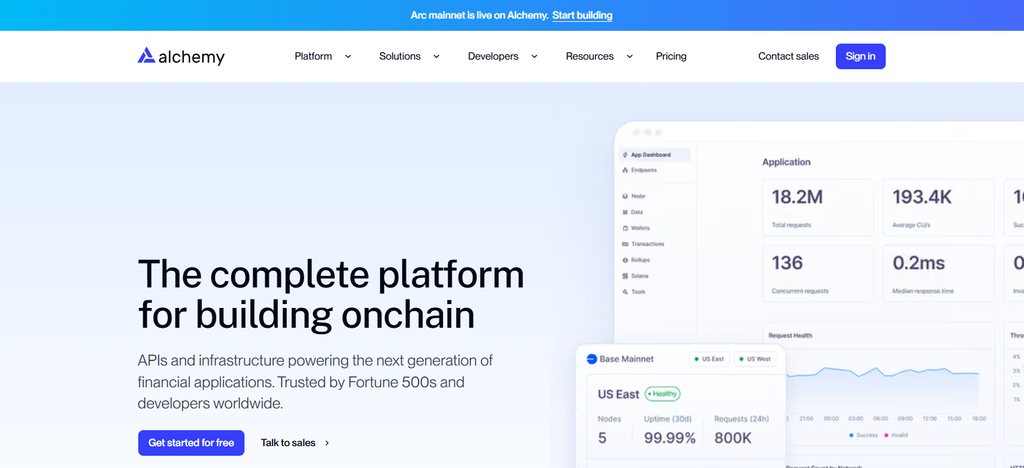
Alchemy’s developer platform provides Ethereum developers with mainnet and testnet infrastructure, with higher tiers offering more throughput and enterprise capabilities.
Its free plan now offers 30 million Compute Units per month and 25 requests per second, while Pay As You Go begins at $0.525 per million CUs with 300 RPS included. Enterprise plans start at around 1,000 RPS with custom capacity, security features, support, SLA options.
Best Use Cases of Alchemie
- DeFi Apps: Perfect for Ethereum apps that need RPC connectivity and other blockchain APIs.
- NFT Platforms: Best suited for projects including NFT data, ownership information, metadata, and associated APIs.
- Wallets: Ideal for apps that require balances, transactions, token info and interaction with the blockchain.
- High-Traffic dApps: Ideal for applications requiring scalable RPC infrastructure and increased request capacity.
- Web3 Developer Platforms: Best for teams that need Ethereum RPC, WebSockets, webhooks, token APIs, and other developer tools.
Alchemy — Pros & Cons
| Pros | Cons |
|---|---|
| Free tier currently includes 30 million Compute Units per month. | Free tier has a 25 RPS request limit. |
| Supports Ethereum RPC, archive data, WebSockets, NFT, Token, Transfers, Debug, and Trace APIs. | Debug and Trace APIs are not included in the Free tier. |
| Pay As You Go pricing is currently $0.525 per 1 million CUs. | Additional throughput can create separate capacity costs beyond basic compute usage. |
| PAYG includes 300 RPS base throughput, while Enterprise starts at 1,000 RPS. | Enterprise features such as custom SLAs and dedicated support require higher-tier arrangements. |
| Broad developer APIs make it useful beyond basic Ethereum RPC. | The broad feature set can be unnecessary for projects that only need simple JSON-RPC access. |
Conclusion
By 2026, your choice of Ethereum node provider will depend on your application’s RPC needs, traffic volume, historical data needs, performance expectations and budget. Pocket Network and Lava Network are decentralized protocols.
dRPC is multi-provider RPC routing. Blast API, Chainnodes, GetBlock and Chainstack offer managed infrastructure with different scalability and pricing options. Tenderly Node offers robust development and transaction-debugging features, whereas Infura and Alchemy offer mature Ethereum RPC infrastructure with more extensive developer APIs.
Be sure to compare supported node types, RPC methods, rate limits, archive access, WebSocket support, pricing models, reliability and scaling options against your project’s actual workload and growth requirements before choosing a provider.
FAQ
What is an Ethereum node provider?
An Ethereum node provider offers managed infrastructure that lets developers connect applications to the Ethereum blockchain through RPC endpoints without running and maintaining their own nodes.
Why use an Ethereum node provider?
Developers use node providers to simplify blockchain connectivity, access scalable RPC infrastructure, retrieve on-chain data, broadcast transactions, and reduce the operational work involved in running Ethereum nodes.
What is an Ethereum RPC endpoint?
An Ethereum RPC endpoint is an API connection through which applications communicate with Ethereum nodes. Developers can use RPC methods to read blockchain data, submit transactions, query balances, and interact with smart contracts.
Do Ethereum node providers support archive nodes?
Many providers offer archive-node access, but availability and pricing differ. Archive nodes are useful for applications requiring historical blockchain state and deeper historical data queries.
Which Ethereum node provider is suitable for developers?
The suitable provider depends on the project’s requirements. Developers should compare RPC methods, free-tier availability, request limits, WebSocket support, documentation, pricing, archive access, and scaling options.