

In this article, I will be discussing the Best Xero Competitors for Business Accounting and the best accounting platforms for different business needs. We will compare their accounting features, pricing, invoicing, payroll, integrations, deployment options, automation, and scalability to help businesses understand how these alternatives differ and to identify suitable solutions for efficiently managing their financial operations.
- What Are Xero Competitors?
- Benefits Of Xero Competitors for Business Accounting
- Features Specific to Your Industry
- Adaptive Accounting Capabilities
- Intelligent Automation
- Enhanced Integration Options
- Support for Regional Taxes
- Financial Management at Scale
- Various Deployment Options
- Enhanced Reporting Capabilities
- Key Points
- 1. QuickBooks On-line
- Best For QuickBooks On-line
- Key Strengths QuickBooks On-line
- 2. NewBooks
- Best For FreshBooks
- Key Strengths FreshBooks
- 3. Zoho Books
- Best For Zoho Books:
- Key Strengths Zoho Books
- 4. Sage Bookkeeping
- Best For Sage Accounting
- Key Strengths Sage Accounting®
- 5. Wave
- Best For Wave
- Key Strengths Wave
- 6. FreeAgent
- Best For Free Agent
- Key Strengths Free Agent
- 7. Oracle NetSuite
- Best For Oracle NetSuite (NYSE:ORCL)
- Key Strengths NetSuite Oracle
- 8. Sage Intacct
- Best For Sage Intacct
- Key Strengths Sage Intacct
- 9. Kashoo or Truly Small
- Best For Kashoo (TrueSmall)
- Key Strengths KASHOO (Truly Small)
- 10. Manager.io
- Best For Manager.io
- Key Strengths Manager
- Xero Competitors Comparison Table
- Conclusion
- FAQ
What Are Xero Competitors?
Xero competitors are accounting and finance management solutions that offer alternatives to Xero for managing the daily financial operations of businesses. Solutions include bookkeeping, invoicing, expense tracking, bank reconciliation, payroll, reporting, inventory management, payments, tax workflows, and business integrations.
Competitors include small-business accounting software like QuickBooks Online, FreshBooks, Zoho Books and Wave, as well as advanced accounting systems such as Oracle NetSuite and Sage Intacct.
Pricing, accounting complexity, industry requirements, automation, integrations, regional tax support, scalability and deployment options are some of the factors businesses may look for alternatives. This comparison helps companies find the right software for their specific financial processes and operational needs.
Benefits Of Xero Competitors for Business Accounting
Features Specific to Your Industry
Freelancers, agencies, retailers, ecommerce companies, contractors and larger organizations are all made for different competitors. This enables companies to choose accounting software with features that match their particular industry workflows.
Adaptive Accounting Capabilities
Xero competitors can provide different combinations of invoicing, expense management, bank reconciliation, inventory, reporting, payroll and financial management tools, allowing businesses to create workflows around their operational needs.
Intelligent Automation
Contemporary accounting platforms are capable of automating transaction categorization, bank reconciliation, invoice reminders, receipt capture, bill processing and other repetitive financial tasks, which could reduce the reliance on manual bookkeeping.
Enhanced Integration Options
Depending on their existing CRM, ecommerce, payment, payroll, banking, inventory and productivity applications, businesses may opt for alternatives. Powerful integrations reduce or eliminate duplicate data entry between systems.
Support for Regional Taxes
Some accounting platforms are very specific to certain markets and include tools for local tax requirements, VAT, GST, sales tax, payroll regulations and electronic invoicing depending on the country.
Financial Management at Scale
Companies can choose platforms according to their current size and expected growth. Some alternatives are simple bookkeeping, others offer multi-entity accounting, advanced reporting, consolidation, procurement and broader ERP capabilities.
Various Deployment Options
Most competitors today offer cloud-based accounting, and there are a few solutions that offer a desktop deployment as well. This gives companies more flexibility in access, data management, collaboration and technology choices.
Enhanced Reporting Capabilities
Depending on the platform, businesses can access financial statements, cash-flow reports, profitability analysis, dashboards, management reporting, and other tools for monitoring financial performance.
Key Points
| Competitor | Best For | Key Strength Over Xero |
|---|---|---|
| QuickBooks Online | Small & medium businesses | Largest accountant ecosystem, advanced reporting, strong inventory management. |
| FreshBooks | Freelancers & service businesses | Superior invoicing, time tracking, and client management tools. |
| Zoho Books | Businesses using Zoho ecosystem | Deep integration with Zoho apps, competitive pricing, automation features. |
| Sage Accounting | Growing and established companies | Broad accounting suite with scalable solutions from SMB to enterprise. |
| Wave | Startups and solopreneurs | Free accounting plan with invoicing and bookkeeping features. |
| FreeAgent | Self-employed professionals | Easy tax management and streamlined bookkeeping workflows. |
| Oracle NetSuite | Mid-market and enterprise firms | Full ERP capabilities including accounting, CRM, and inventory. |
| Sage Intacct | Multi-entity businesses | Advanced financial management and real-time reporting. |
| Kashoo (TrulySmall) | Micro-businesses | Simple bookkeeping with minimal learning curve. |
| Manager.io | Budget-conscious businesses | Free desktop accounting with comprehensive core accounting tools. |
1. QuickBooks On-line
Intuit is an American software company founded in 1983 and based in Mountain View, California. QuickBooks Online is a cloud accounting platform. It helps small to midsize businesses with double-entry accounting, invoicing, expense tracking, bank reconciliation, financial reporting, payments and inventory capabilities.

Monthly paid plan. Price varies by market and feature. Payroll is available as an add-on in the markets we support. QuickBooks connects with payroll, payment, ecommerce and business applications. Deployment is online with access from web and mobile.
Best For QuickBooks On-line
- Small and medium business
Scalable accounting for growing companies - Companies that need payroll and payment software
- Extensive third-party integrations required by companies
- Cloud-based accounting and mobile access for businesses
Key Strengths QuickBooks On-line
- Invoicing and payment management, strong
- Detailed small business accounting
- Big ecosystem of third party integrations
- Flexible plans for growing businesses
- Good reporting and financial management tools
2. NewBooks
Founded in 2003 and based in Toronto, Canada, FreshBooks is a cloud accounting software platform that caters heavily to freelancers, consultants and service businesses. Its accounting tools include invoicing, estimates, expenses, payments, financial reports, projects and receipts scanning.

Introductory prices vary with each promotion, and regular plans are pricier than promotional ones. Eligible US businesses can pay employees with payroll through FreshBooks Payroll powered by Gusto.
Payments and business workflows are supported by integrations. We are cloud based and work through web and mobile apps so it works for remote businesses .
Best For FreshBooks
- Self-employed and independent professionals
- Service-based and consulting businesses
- Agencies handling projects and clients
- Business specialized in professional billing
- Expense management and time tracking for teams
Key Strengths FreshBooks
- Easy-to-use invoicing features
- Strong support for freelancers & service businesses
- Time & expense tracking integrated
- Tools for managing projects and clients
Experience with cloud accounting mobile friendly
3. Zoho Books
Zoho Books is Zoho’s web-based accounting software for small and growing businesses. Founded in 1996, Zoho is based in Chennai, India, with offices in multiple countries. The platform offers invoicing, expenses, bills, banking, reconciliation, inventory, purchase orders, reporting, tax tools and multi-currency accounting.
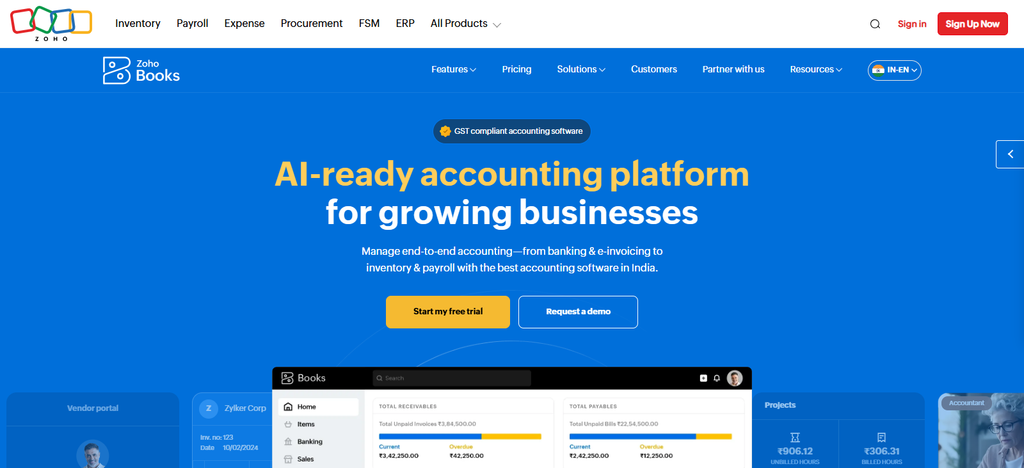
In some markets there is a free plan and paid pricing is country-specific. Payroll is available in supported locations on certain higher-tier plans. Integrations connect you with the wider Zoho ecosystem and third-party apps. It’s a cloud deployment with web and mobile access.
Best For Zoho Books:
- Businesses already in the Zoho ecosystem
- *Small businesses that are growing
- Businesses requiring inventory and purchase control
- Businesses needing multi-currency accounting
Integrated tax and accounting workflows for businesses
Key Strengths Zoho Books
- Comprehensive accounting features
- Integrates with Zoho apps
- Multi-currency and tax management features
- Tools for inventory and purchase management
- Flexible plans for growing businesses
4. Sage Bookkeeping
Sage Accounting is cloud accounting software from Sage. Sage was founded in 1981 and is based in Newcastle upon Tyne, United Kingdom. Its functions include bookkeeping, invoicing, expenses, cash-flow management, bank feeds, reconciliation and financial reporting, and it is aimed at small businesses.
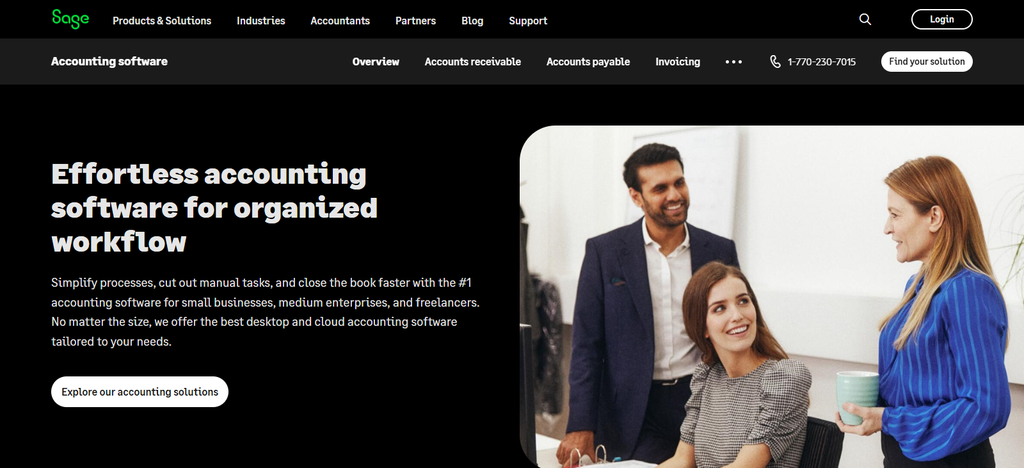
Pricing varies by country, plan and promotional offers. Most accounting plans do not come with Sage payroll. Instead, Sage offers dedicated or integrated payroll products.
Sage Accounting integrates with banking, payments and some business apps. Deployment is primarily cloud-based, with businesses and accountants having access to financial records on supported devices and online services.
Best For Sage Accounting
- Cloud accounting for small businesses
- UK companies based
- Expense and invoice tracking for companies
- Companies requiring bank feeds and reconciliation
- Companies looking to access the wider Sage ecosystem
Key Strengths Sage Accounting®
- Robust invoicing and expense management
- *Easy cloud accounting
- Bank feeds & reconciliation
- Integration with the broader Sage ecosystem
- Useful tools for small business financial management
5. Wave
Wave is a cloud accounting platform based in Toronto, Canada, launched in 2009 and targeted at freelancers, entrepreneurs and small businesses. Its main features are: accounting, invoicing, expense tracking, financial reports and collection of payments.
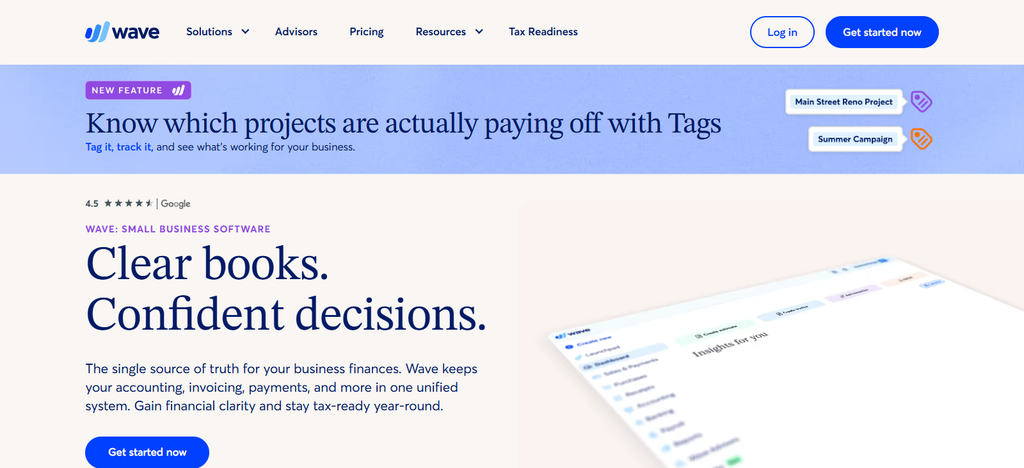
Wave offers a free accounting option, but other payment and payroll services may cost extra. Payroll is subject to location and service coverage availability. We have integrations for banking, payments and certain business workflows.
Wave is a cloud-based solution that includes a mobile app and a web platform. It’s a perfect solution for small businesses that need simple invoicing and bookkeeping software.
Best For Wave
- Freelancers & Solopreneurs
- Small business
- Basic accounting for startups
Companies that handle invoicing and payments - Users who want a free accounting option
Key Strengths Wave
- Core free accounting option
- Easy invoicing and accounting processes
- Suitable for sole traders and micro businesses
- Payment collection options integrated
- User-friendly financial management interface
6. FreeAgent
FreeAgent is a cloud accounting software company based in Edinburgh, Scotland, launched in 2007. It is designed mainly for freelancers, contractors, small businesses and accountants and includes invoicing, expenses, banking, projects, time tracking, cash-flow forecasting, tax management and financial reporting.
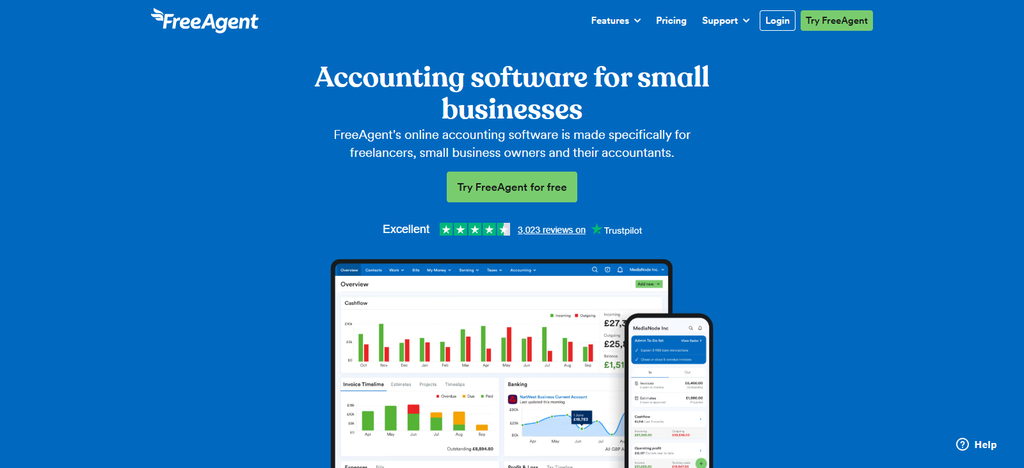
Cost is dependent on the type of business and the country. Paid plans and special offers are available. Payroll support for eligible businesses including UK payroll processing. The integrations include banking, payments and some e-commerce services.
Deployments are cloud based with online access and mobile support. FreeAgent also has Making Tax Digital and UK-specific tax features.
Best For Free Agent
- Small service companies
- Contractors and Free Lances
- British companies
- Companies dealing with projects and time
- Companies needing tax and cash flow management
Key Strengths Free Agent
- Significant focus on freelancers and contractors
Built-in invoicing and expense management - Skills in project and time management
- Cash flow projection tools
Handy UK tax and compliance features
7. Oracle NetSuite
Oracle NetSuite is an ERP platform based in the cloud for enterprises. NetSuite was founded in 1998 and is headquartered in Austin, Texas after being acquired by Oracle. It integrates accounting with financial management, order management, inventory, procurement, CRM, ecommerce and business analytics.

There is no set public entry cost, however a quote is provided for pricing. Payroll availability is based on country and implementation requirements. NetSuite offers a wide range of integrations through APIs, SuiteCloud tools and partner applications.
The deployment is primarily cloud-based and designed for growing and larger organizations that need centralized financial management, multiple entities, currencies and operational workflows.
Best For Oracle NetSuite (NYSE:ORCL)
- Growing and big businesses
- Organizations with several organizations
For companies needing ERP functionality - Companies processing inventory and procurement
- Centralized financial and operational management for organizations
Key Strengths NetSuite Oracle
- Multi-entity accounting that is robust
- End-to-end ERP & Financial Management
- Integrated management of inventory and purchasing
- Wide range of customization and integration capabilities
- Most suitable for complex business operations
8. Sage Intacct
Sage Intacct is a cloud-based financial management platform for growing and midsize organizations. Sage bought Intacct in 2017. Founded in 1999, the company was based in San Jose, California.

The platform provides multi-entity capabilities, general ledger accounting, accounts payable and receivable, cash management, purchasing and financial reporting. Pricing is typically quote based and depends on modules, users and implementation requirements. Payroll may require Sage solutions and integrations.
Sage Intacct supports APIs, partner apps and connected business systems. Deployment is cloud based and is geared toward organizations that require deeper financial controls and reporting.
Best For Sage Intacct
- Medium-sized businesses
Multi-entity organizations - Finance teams that require advanced reporting
- Companies that need improved financial controls
- Businesses that need scalable cloud financial management
Key Strengths Sage Intacct
- Cloud financial management matured
- Robust multi-entity accounting
- Comprehensive financial reporting capabilities
- Strong financial controls and procedures
- Architecture scalable for growing organizations
9. Kashoo or Truly Small
Kashoo is now part of the TrulySmall family of accounting products and focuses on simple accounting for small business and entrepreneurs. The platform provides invoicing, estimates, expenses, receipt capture, sales-tax tracking, double-entry accounting, bank sync, reconciliation and financial reporting.

TrulySmall’s Invoices product starts at $8.99 per month, with other plans including accounting features. Payroll is not featured as a core part of the accounting packages. With higher plans, you can get integrations and add-ons. Cloud deployment with online and mobile access targets small businesses that need basic accounting workflows.
Best For Kashoo (TrueSmall)
- Free lancers & entrepreneurs
- Very small businesses
- Simple bookkeeping for business
Users who need to track invoices and expenses - Small business owners who need basic accounting software
Key Strengths KASHOO (Truly Small)
- Basic accounting flows
- Simple invoicing and expense tracking
- Created for entrepreneurs and small business
- Basic bookkeeping features
- Access to cloud
10. Manager.io
Manager.io is accounting software for small business owners who need desktop or cloud-based accounting flexibility. The platform has invoicing, accounts payable, accounts receivable, cash management, inventory, fixed assets, financial reporting, bank reconciliation and double-entry accounting.
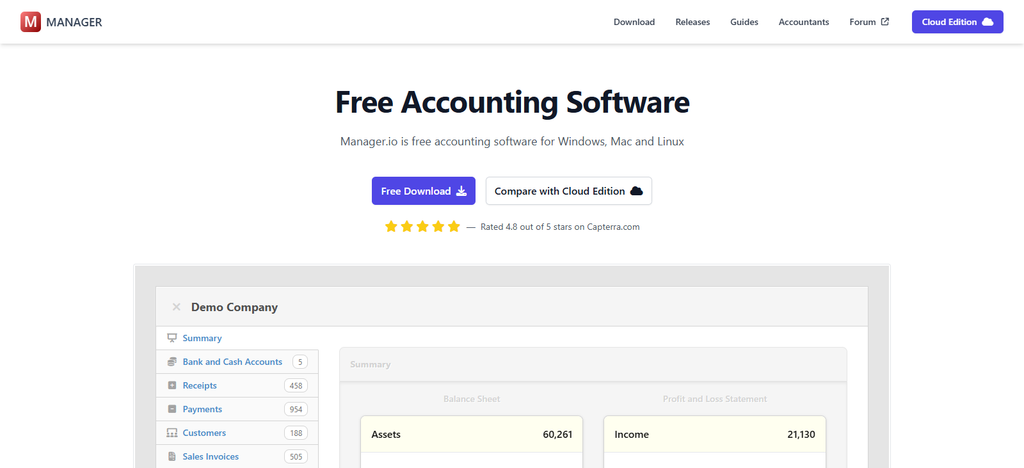
You can download and use the desktop edition for free, with no need for a recurring subscription. The cloud edition requires paid hosting plans. Payroll features depend on the modules available and the regional needs.
Manager.io supports integration and data exchange with supported tools and formats. Greater control for businesses over where accounting data is processed. Can be deployed via desktop applications or cloud hosting.
Best For Manager.io
- Businesses that need desktop accounting software
Users seeking flexible deployment options - Businesses requiring core double-entry accounting
- Companies looking for an accounting solution without the recurring desktop subscription costs
Key Strengths Manager
- Basic double-entry accounting features
- *Deployable flexibly on desktop and in the cloud
- Integrated billing and financial reporting
- Useful inventory and fixed asset features
- Desktop version available with no recurring subscription
Xero Competitors Comparison Table
| Xero Competitor | Best For | Accounting Type | Starting Price | Invoicing | Payroll | Integrations | Deployment |
|---|---|---|---|---|---|---|---|
| QuickBooks Online | Small & midsize businesses | Cloud accounting | Paid plans | Yes | Available in supported markets | Extensive ecosystem | Cloud + mobile |
| FreshBooks | Freelancers & service businesses | Cloud accounting | Paid plans | Yes | Gusto integration in eligible markets | Business & payment integrations | Cloud + mobile |
| Zoho Books | Small & growing businesses | Cloud accounting | Free plan in some markets | Yes | Available through Zoho Payroll in supported regions | Zoho + third-party apps | Cloud + mobile |
| Sage Accounting | Small businesses | Cloud accounting | Paid plans | Yes | Through Sage payroll solutions | Banking & business integrations | Cloud |
| Wave | Freelancers & micro-businesses | Cloud accounting | Free accounting option | Yes | Location dependent | Banking & payment integrations | Cloud |
| FreeAgent | Freelancers & contractors | Cloud accounting | Paid plans | Yes | Available for eligible businesses | Banking & payment integrations | Cloud + mobile |
| Oracle NetSuite | Growing & large companies | ERP + financial management | Quote-based | Yes | Regional/connected solutions | Extensive APIs & integrations | Cloud |
| Sage Intacct | Midsize organizations | Cloud financial management | Quote-based | Yes | Through Sage/third-party solutions | APIs + partner applications | Cloud |
| Kashoo / TrulySmall | Entrepreneurs & small businesses | Cloud accounting | Product-dependent | Yes | Not a core feature | Selected integrations | Cloud |
| Manager.io | Small businesses | Desktop + cloud accounting | Free desktop option | Yes | Depends on available functionality | Data exchange & selected integrations | Desktop + cloud |
Conclusion
The best Xero competitor in 2026 will depend on your business size, accounting needs, budget, automation needs, payroll support, integrations, and preferred deployment model.
QuickBooks Online and FreshBooks are a good fit for many small businesses and service professionals, while Zoho Books and Wave offer options for businesses looking for more simple accounting workflows.
Sage Accounting and FreeAgent provide solutions for specific regions, while Oracle NetSuite and Sage Intacct address the needs of organizations with more advanced financial management requirements.
Smaller businesses that want simpler accounting methods can look at Kashoo or TrulySmall and Manager.io. Before switching from Xero, carefully compare pricing, invoicing, reporting, integrations, scalability, tax support and migration needs.
FAQ
What are the top Xero competitors in 2026?
The top Xero competitors include QuickBooks Online, FreshBooks, Zoho Books, Sage Accounting, Wave, FreeAgent, Oracle NetSuite, Sage Intacct, Kashoo or TrulySmall, and Manager.io. Each platform offers different accounting features, pricing structures, integrations, automation capabilities, and scalability options.
Which Xero alternative is best for small businesses?
QuickBooks Online, FreshBooks, Zoho Books, Wave, FreeAgent, and TrulySmall are commonly positioned for small businesses. The right choice depends on invoicing, expenses, payroll, tax requirements, integrations, budget, and the complexity of the business.
Is QuickBooks Online a Xero alternative?
Yes. QuickBooks Online is a major cloud accounting alternative to Xero. It provides bookkeeping, invoicing, expenses, bank reconciliation, reporting, payments, payroll options, integrations, and mobile access.
Is Zoho Books cheaper than Xero?
Zoho Books offers different pricing tiers and, in some markets, a free plan. Whether it is cheaper than Xero depends on the country, plan, features, users, and additional services required.
Which Xero competitor is suitable for freelancers?
FreshBooks, FreeAgent, Wave, and TrulySmall are designed to support many freelancer and self-employed workflows. Important features to compare include invoicing, expense tracking, payment collection, tax management, project tracking, and client management.