

In this article, I will be discussing the Best Blockchain API & Node Providers for Web3 and how they help developers build scalable blockchain applications. To help you find the right solution for your Web3 project, we will evaluate the top providers on supported networks, API coverage, node access, performance, pricing, scalability, developer tools, and infrastructure features.
What Are Blockchain API & Node Providers?
Blockchain API and node providers are infrastructure platforms that allow Web3 applications to connect to blockchain networks, without requiring developers to build and run their own node infrastructure.
Node providers run nodes of the blockchain and provide RPC endpoints to read on-chain data, submit transactions, and interact with intelligent contracts. Most blockchain API providers offer more advanced tools to access transactions, wallets, tokens, NFTs, balances and other blockchain data through simplified APIs.
Most modern platforms provide both, allowing developers to choose between shared or dedicated nodes, APIs, WebSockets, archive data and scalable infrastructure, depending on their application’s needs.
Why Choose Blockchain API & Node Providers for Web3
Faster Development: RPC endpoints and managed APIs allow developers to connect applications to blockchain networks without weeks of configuring, syncing, monitoring and maintaining individual nodes.
Reduced Infrastructure Overhead: Providers manage node operations, software upgrades, synchronization, infrastructure monitoring, and maintenance, enabling development teams to focus on application features and user experience.
Multichain Interoperability: With one provider giving you access to multiple blockchain networks, it becomes easier to build wallets, DeFi platforms, NFT apps, games and other multichain Web3 products.
Scalable Infrastructure: Growing applications can scale request capacity, API usage, or migrate to dedicated infrastructure without a full rewrite of their blockchain connectivity layer.
RPC Access is reliable: Managed infrastructure can provide load balancing, redundant nodes, geographic distribution and other mechanisms to help applications maintain consistent blockchain connectivity.
Improved Blockchain Data: Many providers go beyond simple RPC calls, and have APIs for tokens, NFTs, transactions, balances, historical data, intelligent contracts, and other application-ready blockchain info.
Developer-Friendly Tools SDKs, WebSockets, webhooks, dashboards, debugging tools, documentation and testing environments make blockchain development easier and reduce complexity of integration.
Cost Flexibility: With free tiers, usage-based pricing, subscriptions, and enterprise plans, projects can choose infrastructure that matches their traffic, features, and budget, instead of carrying expensive infrastructure from day one.
Key Points
| Provider | Key Point |
|---|---|
| Infura | Strong choice for Ethereum-centric Web3 infrastructure and managed RPC access. |
| Chainstack | Stands out for broad multichain coverage and flexible node deployment. |
| Ankr | Combines RPC infrastructure with higher-level token, NFT and blockchain data APIs. |
| Blockdaemon | More focused on institutional-grade infrastructure, staking and enterprise use cases. |
| GetBlock | Useful for developers seeking managed access to multiple blockchain nodes. |
| NOWNodes | Attractive for applications requiring broad blockchain and managed-node coverage. |
| Tenderly | Best differentiated by smart-contract simulation, debugging and Virtual TestNets. |
| dRPC | Uses a decentralized RPC model to provide redundancy across infrastructure providers. |
| Validation Cloud | Focuses on managed Web3 infrastructure, nodes, staking and data services. |
| Tatum | Provides a unified API approach for developers building applications across multiple chains. |
1. Infura
Infura is a blockchain infrastructure platform launched in 2016 and is now part of MetaMask Developer. It also provides managed node access and APIs for Ethereum and several major networks including Polygon, Arbitrum, Optimism, Avalanche, Starknet, and others. It includes API coverage for JSON-RPC, WebSockets, IPFS, Filecoin, gas APIs, account-abstraction/bundler capabilities.
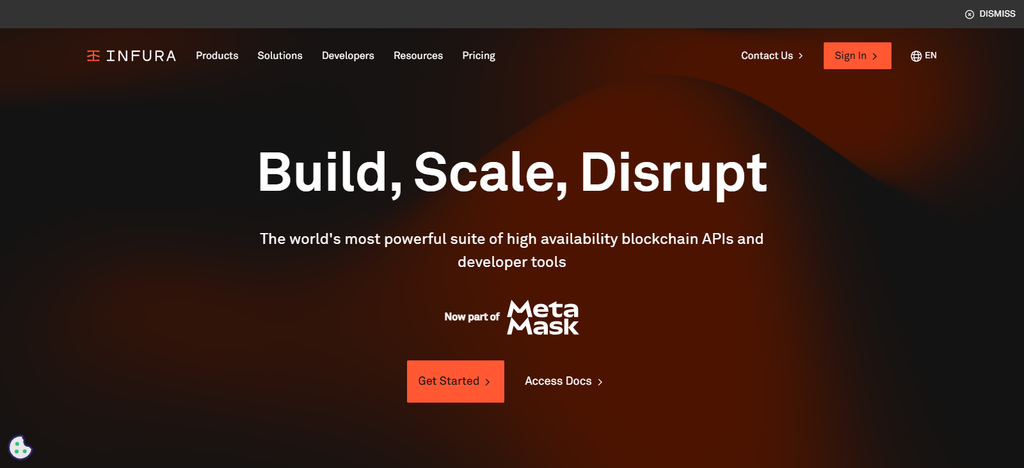
Performance means high availability, throughput and scalable RPC access. It has a pricing model based on credits for request methods and networks. It has a free Core option and paid usage. Node access is handled, not self hosted.
| Attribute | Details |
|---|---|
| Founded | 2016 |
| Provider Type | Managed blockchain infrastructure and API platform |
| Core Strength | Ethereum-focused RPC and Web3 infrastructure |
| Supported Networks | Ethereum and multiple EVM/L2 networks, including Polygon, Arbitrum, Optimism and others |
| API Coverage | JSON-RPC, WebSockets, IPFS, Filecoin, gas-related APIs, transaction services and account-abstraction tools |
| Node Access | Managed RPC, full/archive infrastructure and dedicated enterprise options |
| Performance | Designed for scalable production RPC workloads with configurable throughput depending on plan |
| Pricing Model | Credit-based pricing with free and paid plans; enterprise pricing is customized |
| Scalability | Scales from development workloads to enterprise infrastructure |
| Developer Tools | Dashboard, API access, documentation and MetaMask/Consensys ecosystem integrations |
| Best For | Ethereum-focused dApps, wallets and developers seeking established managed infrastructure |
2. Chainstack
Chainstack was founded in 2018 and provides managed blockchain infrastructure to developers and enterprises. It supports over 70 blockchain networks like Ethereum, Solana, Base, Polygon, BNB Smart Chain, Arbitrum, Optimism, Linea, Berachain, and Hyperliquid. It has API support for RPC, WebSockets, archive data, debugging, tracing, and platform APIs.
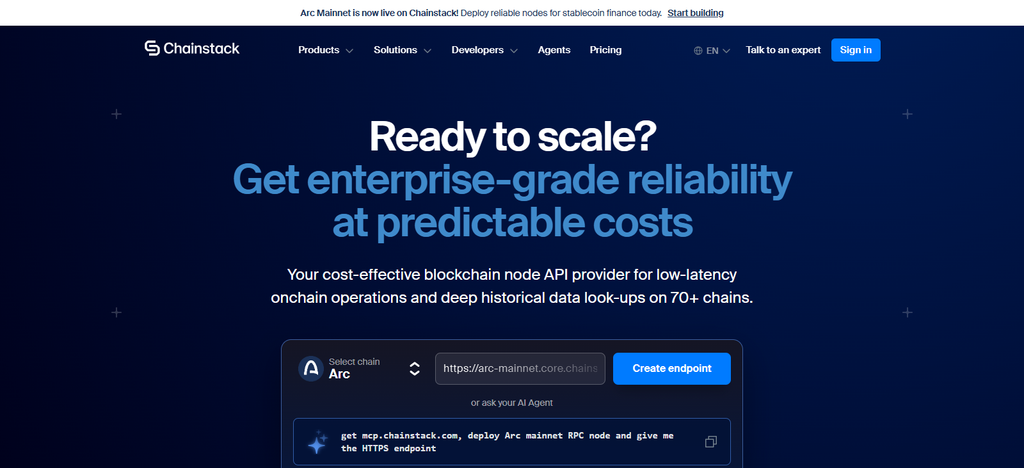
Performance is backed by global routing, multiple regions, load balancing and dedicated infrastructure. Pricing Free developer plan, paid Growth, Pro, Business and Enterprise plans. Node access global, archive, unlimited, dedicated, and self-hosted.
| Attribute | Details |
|---|---|
| Founded | 2018 |
| Provider Type | Managed blockchain node and API infrastructure |
| Network Coverage | 70+ blockchain protocols |
| Supported Networks | Ethereum, Solana, Base, Polygon, BNB Smart Chain, Arbitrum, Optimism, Hyperliquid and others |
| API Coverage | RPC, WebSockets, archive data, debugging, tracing and blockchain data access |
| Node Access | Global Nodes, dedicated nodes, archive nodes, unlimited nodes and self-hosted deployment |
| Performance | Geo-balanced routing, low-latency infrastructure and high-throughput RPC |
| Pricing Model | Free Developer plan plus Growth, Pro, Business and Enterprise options |
| Scalability | RPS-based scaling, dedicated infrastructure and enterprise customization |
| Security | SOC 2 Type II and ISO/IEC 27001 certifications |
| Best For | Multichain dApps, DeFi, analytics, wallets and production Web3 applications |
3. Ankr
Founded in 2017, Ankr provides globally distributed blockchain node infrastructure through its Web3 API platform. It supports 80+ networks including Ethereum, Solana, BNB Smart Chain, Arbitrum, Base, Bitcoin, TRON, TON, Sui and other ecosystems.
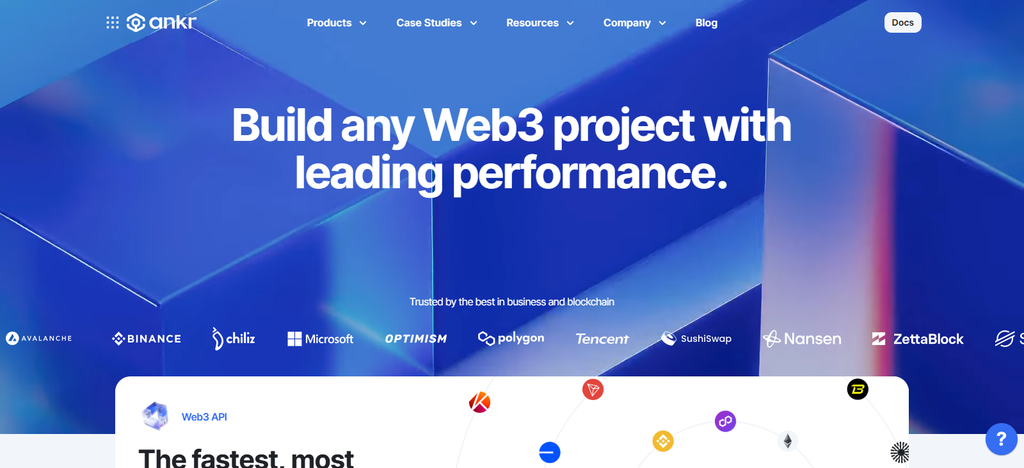
It offers API coverage with standard JSON-RPC through Node API and indexed Token, NFT, Query, and multichain Advanced APIs.
Performance Depending on the plan, with the Premium Node API throughput around 1,500 requests per second and higher Solana limits. Pricing is based on API credits using Public, Freemium, Premium PAYG, Deal and Enterprise models.
| Attribute | Details |
|---|---|
| Founded | 2017 |
| Provider Type | Distributed Web3 infrastructure and API provider |
| Supported Networks | 80+ networks across EVM and non-EVM ecosystems |
| Major Networks | Ethereum, Solana, BNB Smart Chain, Arbitrum, Base, Bitcoin, TRON, TON, Sui and others |
| API Coverage | Chain RPC API, Advanced API, Token API, NFT API, Query API and transaction data |
| Node Access | Public RPC, Premium RPC, managed nodes and specialized infrastructure |
| Performance | Published Premium throughput reaches up to 1,500 RPS and 4,000 RPS on Solana |
| Pricing Model | Free/Freemium, pay-as-you-go API credits and customized Enterprise plans |
| Scalability | Geo-distributed load balancing and high-throughput infrastructure |
| Developer Tools | JavaScript/Python SDKs, React Hooks, dashboards and API testing |
| Best For | Multichain applications, high-volume RPC, token/NFT data and AI/Web3 workloads |
4. Blockdaemon
Blockdaemon was founded in 2017 and builds institutional-grade blockchain infrastructure, including node access, APIs, staking, wallet infrastructure, and developer services. Its ecosystem supports major networks like =Ethereum, Bitcoin, Solana, Polygon, Avalanche, Arbitrum, Optimism, BNB Smart Chain, Polkadot, Stellar, Tron, and XRP.
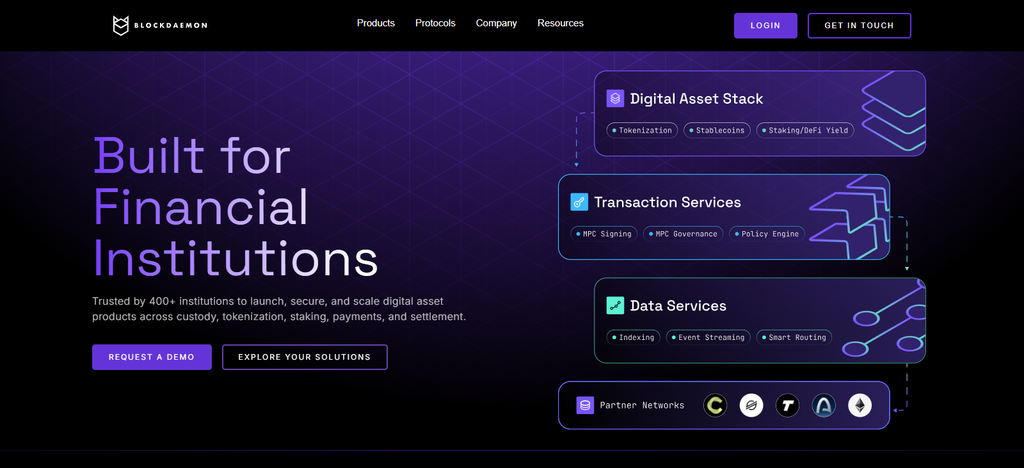
API coverage: Blockchain data, transaction services, token pricing, staking, wallet and node infrastructure. Performance and scalability Designed for production and institutional workloads. Pricing Usually usage-based or customized by service and volume. Node access via managed infrastructure instead of teams running everything themselves.
| Attribute | Details |
|---|---|
| Founded | 2017 |
| Provider Type | Institutional blockchain infrastructure |
| Core Services | Nodes, APIs, staking, wallets, data and infrastructure |
| Supported Networks | Major networks including Bitcoin, Ethereum, Avalanche, Arbitrum, Base and others |
| API Coverage | Blockchain data, node APIs, staking, wallet and transaction infrastructure |
| Node Access | Managed nodes with flexible cloud and infrastructure deployment |
| Performance | Designed for institutional and production-grade workloads |
| Pricing Model | Primarily customized and enterprise-oriented |
| Scalability | Enterprise infrastructure with regional deployment options |
| Security | SOC 2 compliant and ISO 27001 certified |
| Deployment | Major cloud providers and geographically distributed infrastructure |
| Best For | Institutions, exchanges, custodians, staking businesses and large Web3 applications |
5. GetBlock
GetBlock is a managed blockchain node and API provider that allows developers to connect to multiple blockchain networks without the hassle of managing their own node infrastructure. Network coverage includes major EVM and non-EVM ecosystems, with services and plans differing between blockchains.
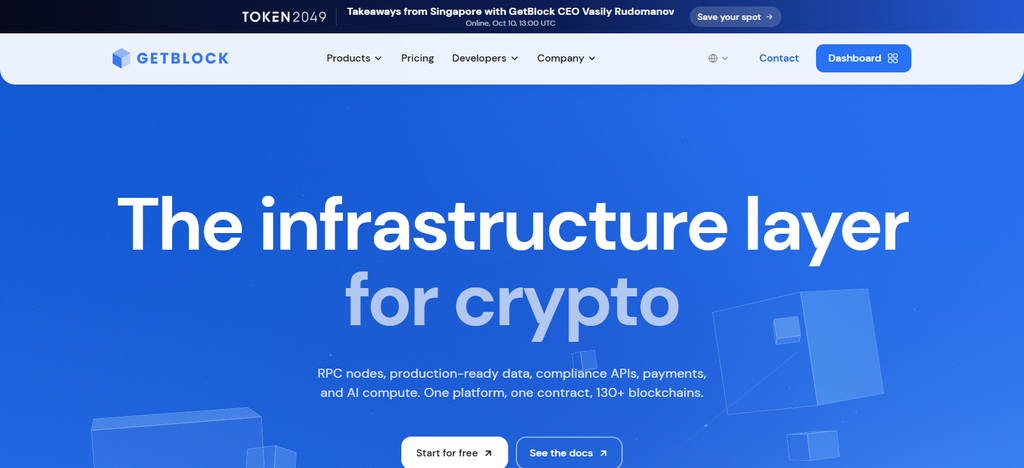
API coverage is about RPC endpoints, JSON-RPC access, WebSockets and blockchain data connectivity. Performance is built on distributed node infrastructure, scalable request capacity and dedicated options for higher-demand applications.
Pricing is usually based on usage and plan, with node access offering shared and dedicated infrastructure. Perfect for dApps, wallets, exchanges, analytics, and Web3 development.
| Attribute | Details |
|---|---|
| Founded | 2019 |
| Provider Type | Blockchain RPC and node infrastructure provider |
| Network Coverage | Broad multichain coverage |
| Supported Networks | EVM and non-EVM networks, including Ethereum, Bitcoin, Polygon, Solana and others |
| API Coverage | JSON-RPC, WebSockets, archive access and blockchain data APIs |
| Node Access | Shared, dedicated and archive node options |
| Performance | Distributed node infrastructure designed for scalable RPC requests |
| Pricing Model | Usage-based plans, credits and paid infrastructure options |
| Scalability | Supports scaling request capacity and dedicated infrastructure |
| Developer Tools | RPC endpoints, dashboard, monitoring and developer documentation |
| Best For | dApps, wallets, exchanges, blockchain analytics and multichain development |
6. NOWNodes
NOWNodes, established in 2019, delivers node infrastructure and API access for blockchain applications that require a direct connection to multiple networks. Supported networks include Bitcoin, Ethereum, Litecoin, Dogecoin, XRP Ledger, Polygon, BNB Smart Chain, Solana, and other supported chains.
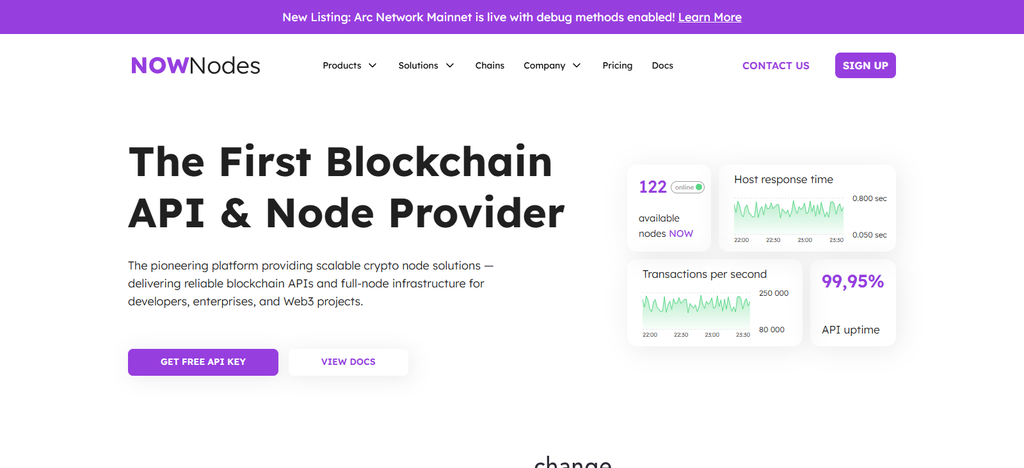
API coverage covers node APIs, blockchain data, RPC access, explorer like information. Performance Built on dedicated infrastructure with scalable API access for enterprises.
Pricing offers subscription-based plans with various node and request limits, and node access is handled by NOWNodes, removing the hassle of hosting infrastructure on your own.
| Attribute | Details |
|---|---|
| Founded | 2019 |
| Provider Type | Managed blockchain node and API provider |
| Network Coverage | 120+ networks according to current published comparison material |
| Supported Networks | Bitcoin, Ethereum, Litecoin, Dogecoin, XRP Ledger, Polygon, BNB Chain, Solana and others |
| API Coverage | Node APIs, blockchain data, RPC connectivity and transaction information |
| Node Access | Managed full-node infrastructure |
| Performance | Designed for production applications with scalable RPC/API access |
| Pricing Model | Subscription and usage-based options depending on requirements |
| Scalability | Paid plans designed for larger request volumes |
| Developer Support | API documentation and direct technical support |
| Best For | Multichain applications needing broad blockchain coverage |
7. Tenderly
Tenderly was created in 2018 as a smart contract development and transaction infrastructure platform, not as a traditional multichain node provider. It also supports major EVM networks so it is especially useful for Ethereum-compatible development environments. It has API coverage for transaction simulation, debugging, monitoring, virtual testnets, development tooling and RPC.
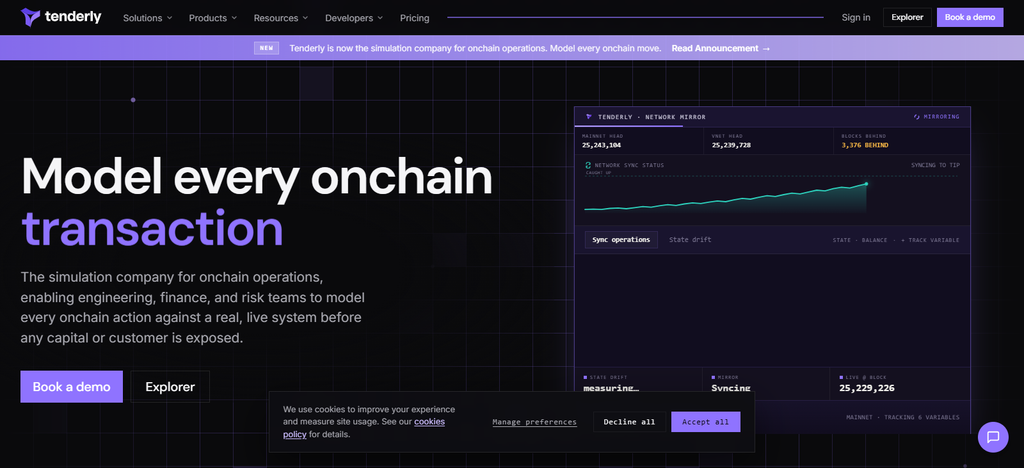
Performance is about fast transaction simulation and developer feedback, not just about maximizing RPC throughput. Pricing is adjusted according to platform usage and team needs. There is a free plan for development and paid plans for higher workloads. The Node access has the highest value in its Virtual TestNet and development infrastructure.
| Attribute | Details |
|---|---|
| Founded | 2018 |
| Provider Type | EVM development, simulation and infrastructure platform |
| Network Focus | Ethereum-compatible EVM networks |
| Core Strength | Smart-contract simulation and debugging |
| API Coverage | JSON-RPC, transaction simulation, debugging, monitoring and development APIs |
| Node Access | RPC endpoints and Virtual TestNet infrastructure |
| Performance | Optimized for transaction simulation and development workflows |
| Pricing Model | Free tier plus usage-based/paid plans |
| Scalability | Supports development through production-scale application workloads |
| Developer Tools | Debugger, simulator, transaction trace, monitoring and Virtual TestNets |
| Best For | Smart-contract developers, DeFi teams and testing/debugging workflows |
8. dRPC
dRPC is a decentralized RPC infrastructure provider that distributes blockchain requests to multiple independent node operators. Its model supports multichain RPC access across major networks and is built specifically to maximize redundancy and minimize reliance on a single infrastructure provider.
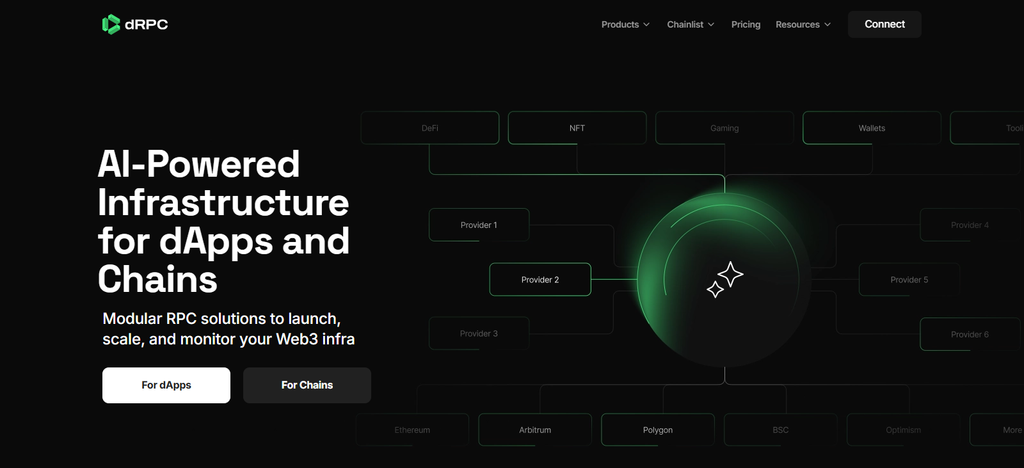
API coverage ** is mostly around JSON-RPC and WebSocket connectivity. Network-specific capabilities vary per chain. Performance – distributed routing and provider redundancy.
Pricing ** Usage-based infrastructure models are possible and enterprise customers can have custom arrangements. Node access is decentralized infrastructure, not individual nodes managed by the developers underneath.
| Attribute | Details |
|---|---|
| Founded | 2022 |
| Provider Type | Decentralized RPC infrastructure |
| Core Model | Distributed network of independent RPC providers |
| Network Coverage | 185 networks through its current NodeCloud offering |
| API Coverage | JSON-RPC and WebSocket access |
| Node Access | Distributed RPC node pool rather than a single centralized node provider |
| Performance | AI-powered routing and geographic clusters for request optimization |
| Pricing Model | Pay-as-you-go flat pricing |
| Scalability | Distributed provider pool and multiple geographic clusters |
| Security Features | Granular API keys, access controls and front-end protection |
| Architecture | 40+ providers and nine geographic clusters |
| Best For | Multichain dApps seeking redundancy and decentralized RPC infrastructure |
9. Validation Cloud
Validation Cloud provides Web3 infrastructure, with a focus on nodes, staking, data, and network connectivity, and was founded in 2022. It supports major blockchain ecosystems and offers infrastructure for institutional and developer workloads.
API coverage includes RPC access, staking infrastructure, blockchain data and network-specific services. Performance is defined by scalable infrastructure, reliable connectivity and high-throughput blockchain operations.
Pricing is based on the infrastructure service selected, usage and enterprise requirements, not a one-size-fits-all plan. Node Access provides managed blockchain nodes and infrastructure services for Web3 applications, enterprises, staking operations, and blockchain developers.
| Attribute | Details |
|---|---|
| Founded | 2022 |
| Provider Type | Web3 infrastructure, node, staking and data platform |
| Core Services | Nodes, RPC, staking and blockchain data |
| Network Coverage | Multiple major blockchain ecosystems |
| API Coverage | RPC APIs, blockchain data and staking-related infrastructure |
| Node Access | Managed blockchain node infrastructure |
| Performance | Designed for scalable enterprise and production workloads |
| Pricing Model | Service-dependent pricing with enterprise/custom options |
| Scalability | Supports growing Web3 applications and institutional workloads |
| Deployment | Managed cloud-based infrastructure |
| Enterprise Focus | High availability, infrastructure management and operational support |
| Best For | Enterprises, staking operators, institutions and Web3 infrastructure teams |
10. Tatum
Tatum, launched in 2018, is an API-first blockchain development platform designed to enable applications to interact with multiple networks using unified APIs and SDKs. Supports major networks like Ethereum, Bitcoin, Solana, Polygon, Arbitrum, Avalanche, Base, BNB Smart Chain, Optimism, XRP, Stellar, Tron, ZKsync and more.
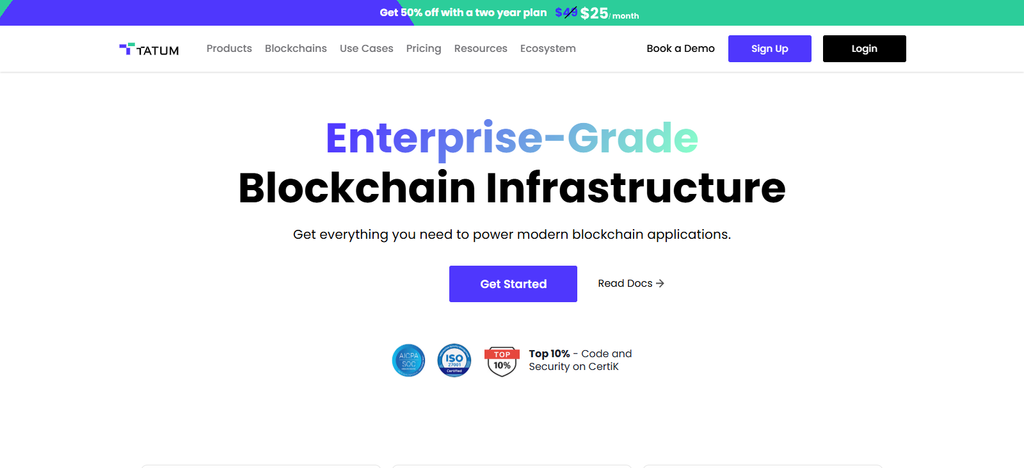
API coverage : wallets, transactions, tokens, NFTs, DeFi, blockchain data, fee estimation, security, prediction-market data Performance varies with tier of blockchain support, with high-availability infrastructure for Tier 1 networks. The pricing is subscription and usage-based, and managed RPC eliminates the need to independently run nodes.
| Attribute | Details |
|---|---|
| Founded | 2018 |
| Provider Type | Unified blockchain API and development platform |
| Core Strength | API-first multichain development |
| Supported Networks | Ethereum, Bitcoin, Solana, Polygon, Arbitrum, Avalanche, Base, BNB Chain, Optimism, XRP, Stellar, Tron and others |
| API Coverage | Wallets, transactions, tokens, NFTs, DeFi, blockchain data and fee services |
| Node Access | Managed blockchain connectivity and RPC infrastructure |
| Performance | Tier-based infrastructure with higher availability for major networks |
| Pricing Model | Subscription and usage-based models |
| Scalability | Designed to scale API-based applications across multiple chains |
| Developer Tools | APIs, SDKs, documentation and wallet infrastructure |
| Best For | Developers wanting unified APIs instead of building separate blockchain integrations |
Comparison Table
| Provider | Founded | Supported Networks | API Coverage | Node Access | Performance | Pricing Model | Scalability | Best For |
|---|---|---|---|---|---|---|---|---|
| Infura | 2016 | Ethereum, Polygon, Arbitrum, Optimism, Avalanche and other supported networks | JSON-RPC, WebSockets, IPFS, Filecoin, data and account-abstraction services | Managed RPC and node infrastructure | High-availability production RPC | Credit-based; free and paid options | High | Ethereum and EVM dApps |
| Chainstack | 2018 | 70+ blockchain protocols | RPC, WebSockets, archive data, tracing, debugging and data APIs | Shared, archive, dedicated and self-hosted nodes | Global routing and high-throughput infrastructure | Free, usage-based and enterprise plans | Very High | Multichain Web3 applications |
| Ankr | 2017 | 80+ blockchain networks | RPC, Token, NFT, Query and Advanced APIs | Public, premium and managed nodes | High-throughput distributed RPC | API credits, PAYG and Enterprise | Very High | Multichain dApps and data access |
| Blockdaemon | 2017 | Ethereum, Bitcoin, Solana, Avalanche, Polygon and other major networks | Node, blockchain data, staking, wallet and transaction APIs | Managed institutional nodes | Enterprise-grade infrastructure | Custom/enterprise pricing | Very High | Institutions and large Web3 businesses |
| GetBlock | 2019 | EVM and non-EVM networks | JSON-RPC, WebSockets, archive and blockchain data access | Shared, dedicated and archive nodes | Distributed RPC infrastructure | Usage-based and paid plans | High | dApps, wallets and exchanges |
| NOWNodes | 2019 | 120+ supported networks | Node APIs, RPC, blockchain and transaction data | Managed full nodes | Production-focused API infrastructure | Subscription-based plans | High | Multichain applications |
| Tenderly | 2018 | Major EVM-compatible networks | RPC, simulation, debugging, monitoring and development APIs | RPC and Virtual TestNets | Fast simulation and development workflows | Free and paid usage-based plans | High | Smart-contract development and testing |
| dRPC | 2022 | 185 networks through NodeCloud | JSON-RPC and WebSockets | Decentralized node/provider network | Distributed routing and provider redundancy | Pay-as-you-go | Very High | Decentralized and multichain RPC |
| Validation Cloud | 2022 | Multiple major blockchain ecosystems | RPC, blockchain data and staking infrastructure | Managed blockchain nodes | Enterprise-oriented infrastructure | Service-based/custom pricing | High | Enterprise and staking infrastructure |
| Tatum | 2018 | Ethereum, Bitcoin, Solana, Polygon, Arbitrum, Avalanche, Base, BNB Chain and others | Wallet, transaction, token, NFT, DeFi and blockchain APIs | Managed blockchain connectivity/RPC | Tier-based production infrastructure | Subscription and usage-based | High | Unified multichain API development |
Conclusion
To conclude, the top 10 blockchain API and node providers for Web3 in 2026 provide varied approaches to the blockchain infrastructure. Infura, Chainstack, Ankr, Blockdaemon, GetBlock, NOWNodes, Tenderly, dRPC, Validation Cloud, and Tatum provide services for RPC connectivity, managed nodes, APIs, development tools, staking, and blockchain data.
The correct choice depends on supported networks, API requirements, performance, pricing, scalability, and node access. Developers should consider these factors in relation to their application’s traffic, architecture and long-term infrastructure needs when choosing a provider.
FAQ
What is a blockchain API provider?
A blockchain API provider gives developers ready-to-use interfaces for accessing blockchain data and functionality without building and maintaining every infrastructure component themselves. APIs can provide transaction data, balances, token information, smart-contract interactions, RPC requests, and other blockchain services.
What is a blockchain node provider?
A blockchain node provider operates blockchain nodes and gives applications remote access to them. Instead of running and maintaining nodes internally, developers can use managed RPC endpoints, archive nodes, dedicated nodes, or other infrastructure according to their application requirements.
Which blockchain API provider is best for Web3 apps in 2026?
There is no single best provider for every Web3 application. Infura and Chainstack are strong general-purpose options, Ankr offers broad multichain access, Blockdaemon targets institutional infrastructure, Tenderly focuses heavily on development and simulation, while Tatum emphasizes unified blockchain APIs.
What is the difference between RPC and a blockchain API?
RPC provides a communication method for sending requests directly to blockchain nodes, while blockchain APIs can provide higher-level functionality such as token balances, NFT data, transaction services, wallet operations, indexing, and other application-ready information.