

In this article, I will talk about the Best Web3 Games With AI NPCs & AI Agents, specifically games that combine smart characters, autonomous agents, blockchain technology and player-owned assets. You’ll learn how AI impacts gameplay, what makes each game unique, its Web3 features, token utility, entry requirements, and why these projects stand out in the evolving Web3 gaming space.
What Are Web3 Games With AI NPCs & AI Agents?
Web3 games with AI NPCs and AI Agents represent a fusion of blockchain-based gaming with intelligent, interactive characters that can react to players, learn from interactions, make decisions, or perform certain tasks autonomously.
Instead of scripted NPCs, AI-driven characters provide richer dialog, adaptive quests, combat approaches, trading and individual experiences.
Ownership of NFTs, digital resources, token economies and decentralized game ecosystems can be added to the Web3 layer giving players more control of items in the game. AI NPCs usually react to what the player does . AI agents can be more autonomous , working toward goals in the game world .
Why Use Web3 Games With AI NPCs & AI Agents
More Dynamic Gameplay: AI NPCs can react to players’ actions, not just follow predefined dialog and scripted behaviors.
Smarter Game Characters AI agents can make decisions and change their strategies and do some things without the player controlling them.
Personalized Player Experiences: AI is able to tailor conversations, challenges, quests and character behavior to how players interact with the game.
Long-term Digital Ownership: Web3 technology can enable players to hold NFTs like characters, weapons, land, collectibles, or other in-game assets.
Autonomous Game Economies: AI agents may be able to participate in trading, resource management, missions, or other economic activities within supported game ecosystems.
Player-Controlled Assets: Blockchain ownership can enable certain digital items to be transferred or used outside a developer-controlled database.
New AI Gameplay Mechanics: Artificial intelligence can be used to train agents, create adaptive opponents, intelligent companions, procedural content, and decision making systems.
Transparent Transactions: Blockchain networks can log transfers and transactions of supported assets, providing publicly verifiable ownership or transaction history.
Creator Features: In some Web3 gaming platforms, players and creators can build worlds, characters, experiences or AI agents, and potentially participate in their economies.
More Experimentation in Gameplay: The combination of AI agents with programmable blockchain systems opens up new avenues for autonomous characters, player-driven economies and evolving virtual worlds.
Long-Term Character Growth: Where available, persistent AI memory allows characters to remember important history of interactions, and to grow richer ongoing relationships with players.
New Ways to Play Games: Instead of just traditional controls and menus, players can speak to AI characters naturally, giving instructions or having conversations.
Key Points
| Web3 Game | AI NPC / Agent Use | What Makes It Different | Web3 / Blockchain Element | AI Depth* |
|---|---|---|---|---|
| Parallel: Colony | Autonomous AI-powered Colonists with personalities, motivations and conversational interaction | AI characters can develop their own behaviour and continue interacting with the game world; players guide them through natural-language interaction | Parallel/Echelon Prime ecosystem; blockchain-enabled assets and economy | 10/10 |
| AI Arena | Players train AI fighters through imitation learning and send them into battles | The player teaches the AI rather than directly controlling every combat action | NFT-based fighters and $NRN utility ecosystem | 9/10 |
| Altered State Machine (ASM) / AIFA | Autonomous AI agents are trained through “Brains,” “Forms” and learned “Memories” | AI agents can compete autonomously and are represented through NFTs | Agent NFTs + ASTO token + on-chain ownership/training | 9/10 |
| Palio: Craft & Trade | AI Agents power shops, NPCs and customers; agents have memories, moods and autonomous decision-making | Combines AI relationships, simulation and an on-chain emotional economy | Blockchain-backed assets and $PAL ecosystem | 9/10 |
| Nifty Island | User-created and platform AI agents can appear as in-game NPCs and interact with players | Players can bring external AI agents directly into a persistent game world | User-owned agents, token-gated deployment and Web3 island ecosystem | 8.5/10 |
| Love Terminal | Four AI characters act as interactive NPCs with distinct personalities and memories | Combines farming, trading and relationship-building with AI characters | Built on Kaia, with $KAIA rewards and on-chain game elements | 8.5/10 |
| SophiaVerse | AI-NPC companions and opponents are integrated into the metaverse experience | Connects AI interaction, quests, learning and metaverse gameplay around Sophia | NFTs, player-owned land and $SOPH ecosystem | 8/10 |
| Rebel Cars | AI-powered Pit Girl characters are designed as interactive AI/character assets within the racing ecosystem | Adds AI personalities and character progression to a blockchain racing environment | Elysium blockchain, car/track NFTs and $RC utility | 7.5/10 |
| EVE Frontier | AI/rogue-AI elements are part of the game’s setting, while programmable systems allow players to build autonomous game logic | Much stronger emphasis on a programmable, player-built world than conventional AI NPCs | Blockchain-native game data, Smart Assemblies and programmable on-chain entities | 7/10 |
| Grand Nouns Auto | AI-powered NPCs interact with players during missions | Combines AI NPCs with actual DeFi actions and educational gameplay | Gnosis Chain, NFTs and on-chain DeFi interactions | 7/10 |
1. Parallel: Colony
Parallel: Colony is a 4X colony-building, strategy and survival game featuring conversational Colonists, generative challenges and AI-created equipment, all driven by AI to alter gameplay.

AI Memory is a huge part of the overall Colony design, giving AI avatars experiences and histories. Players interact naturally, giving directives and shaping challenges. The game is free to download with purchases optional.
Its Web3 layer utilizes blockchain-based assets and the broader Parallel ecosystem while PRIME supports the ecosystem. NFT/player-owned assets Avatars and generated equipment. **Web3 Depth Score: 9/10.
| Feature | Details |
|---|---|
| Game Type | 4X colony-building, strategy and survival |
| AI Colonists | Players can interact with AI-powered Colonists through natural-language conversations |
| AI Gameplay | Players can give advice and directives that influence how Colonists handle challenges |
| Generative AI | Generates custom cosmetic 3D weapons and helmets |
| Dilemma System | Players can enter their own responses instead of relying only on preset choices |
| Combat | PvE lane battles and PvP colony attacks |
| Resource Management | Players build colonies, recruit Colonists and manage resources |
| Platforms | iOS and Android |
| Entry | Free to download with optional in-app purchases |
| Web3 Element | Part of the broader Parallel ecosystem |
| Key Feature | Natural-language AI interaction directly connected to colony gameplay |
2. AI Arena
AI Arena is a competitive AI fighting game. Instead of controlling fighters manually during battles, players train AI controlled fighters. Its AI Memory is mostly expressed through learned behavior: fighters learn to improve by copying player demonstrations via imitation learning.
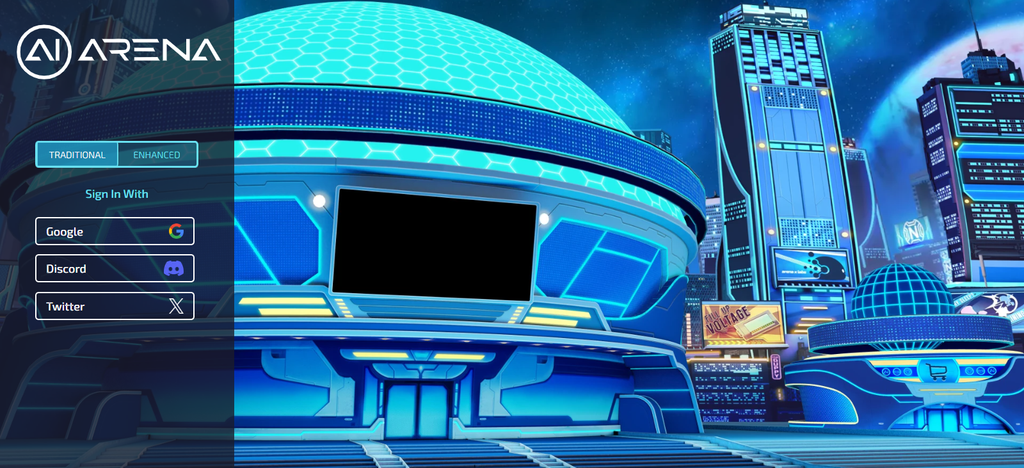
After training, the fighters fight autonomously in ranked fights. NFT fighters give player owned digital characters and $NRN (Neuron) supports the AI gaming ecosystem and reward system.
Entry may be an AI Arena fighter NFT depending on the current access model. The quality of training affects combat performance, so the AI actually has an effect on gameplay. Web3 Depth Score: 9/10.
| Feature | Details |
|---|---|
| Game Type | Competitive AI fighting game |
| Core AI Mechanic | Players train AI fighters rather than directly controlling every combat decision |
| AI Training | Fighters learn from player-provided examples and demonstrations |
| Autonomous Combat | Trained fighters perform battles based on their learned behaviour |
| Competitive Element | Players compete using trained AI fighters |
| Learning Focus | Strategy and behaviour can be shaped through training |
| Player Role | Trainer and strategist |
| NFT Element | AI fighters have been designed around player-owned digital assets |
| Token Ecosystem | Associated with the $NRN/Neuron ecosystem |
| Key Feature | AI training itself is part of the gameplay loop |
3. Altered State Machine (ASM) / AIFA
Altered State Machine (ASM) / AIFA is not a traditional single game, it is a AI-agent gaming and intelligent-NFT framework. Each AI agent has a Brain, Form and Memories allowing it to apply behavior it has learned to future performance.

AIFA Football: Autonomous AI agents play 4v4 football matches against each other. AI Memory stores learned behavioral strategies and training can augment agent capabilities. NFTs are Brains and All-Stars.
This creates ownership of AI assets by players. ASTO was built for agent training, NFT creation, governance and game utility. The AI has a big impact on gameplay, because the agents play themselves. Web3 Depth Score: 9/10.
| Feature | Details |
|---|---|
| Game Type | AI-agent gaming ecosystem / competitive AI football |
| AI Agents | Autonomous AI characters compete in gameplay |
| AI Architecture | ASM uses components such as Brains, Forms and Memories |
| AI Memory | Learned behaviour can be retained through the agent’s Memory component |
| Training | Agents can be trained to improve their behaviour |
| AIFA | AI agents compete in football matches |
| NFTs | AI Brains and related digital assets are represented as NFTs |
| Token | ASTO is associated with the ASM ecosystem |
| Gameplay Impact | AI agents themselves perform the competitive actions |
| Key Feature | Combines AI-agent training with blockchain-based ownership |
4. Palio: Craft & Trade
Palio: Craft & Trade is a AI-agent-driven sandbox simulation and trading game, featuring shops, NPCs and customers powered by autonomous AI Agents. The standout innovation is AI Memory – agents maintain their own individual memory streams, and can draw on past interactions to inform their decision making.
AI characters can negotiate prices, evaluate goods, exhibit personalities and take autonomous economic decisions. Players Build Shops Make Goods and Trade with $PAL and GOLD With blockchain integration you have ownership of your created assets and accomplishments, and $PAL fuels the greater emotional economy. Entry requirements may change as the game evolves. ** Web3 Depth Score: 9/10.
| Feature | Details |
|---|---|
| Game Type | AI-agent-driven sandbox simulation and trading game |
| AI NPCs | Shops, NPCs and customers are powered by AI Agents |
| AI Memory | Agents have memories that influence interactions |
| AI Personality | Agents can have moods and individual behavioural characteristics |
| Autonomy | AI Agents make autonomous decisions |
| Gameplay | Players build shops, craft goods and trade |
| Social Interaction | Players can trade with AI characters and other players |
| Blockchain | Blockchain ownership is integrated into the ecosystem |
| Token | $PAL powers the broader Emotional Layer |
| Key Feature | Connects AI memory, emotions, autonomous decisions and an on-chain economy |
5. Nifty Island
Nifty Island is a user-generated virtual world and social gaming platform in which AI agents can be deployed as interactive NPCs. Its AI architecture includes knowledge injection, an Action Interpreter Engine and a Goal-Oriented Action Planner, so agents can receive player interactions and perform actions.
AI Memory is not a static permanent NPC-memory system. Agents can use injected knowledge and external agent logic.
NFT islands, objects, avatars and wearables can be owned and used by players. The $ISLAND token offers creator-economy utility, rewards, and staking benefits. Regular players have the option to use blockchain. Web3 Depth Score: 8.5/10.
| Feature | Details |
|---|---|
| Game Type | User-generated virtual world and social gaming platform |
| AI Agents | Creators can deploy AI agents as NPC objects on islands |
| Agent Ownership | User agents can be created and controlled by their owners |
| AI Architecture | Knowledge Injection, Action Interpreter Engine and Goal-Oriented Action Planner |
| Interaction | Players can talk to deployed agents |
| Actions | Current agent actions include chat, emotes and hosting lobbies |
| Token Integration | Agents can have token-based deployment/access conditions |
| Creator Tools | Agents can be placed through the island build system |
| Platform Agents | Agents from supported agent platforms can also be deployed |
| Key Feature | Brings external AI agents into a persistent multiplayer world |
6. Love Terminal
Love Terminal is a AI-based town-management and social simulation game centered around farming, trading, and relationships with AI NPCs. The game features four AI characters with different personalities, backgrounds and evolving relationships.
AI Memory is especially important as characters can remember player choices and respond to previous interactions. Players can buy land, plant crops, trade with AI characters, restore the town and compete for rewards.
The game runs on Kaia Chain and is connected to LINE’s gaming platform, while $KAIA is used for rewards. Instead of expensive NFT ownership, the entry is based on accessible mini-app gameplay. Web3 Depth Score: 7.5/10.
| Feature | Details |
|---|---|
| Game Type | AI-powered social and simulation game |
| AI Characters | Features AI characters with individual personalities |
| Relationships | Players interact with AI characters and develop relationships |
| AI Memory | Character interactions can contribute to continuing relationship experiences |
| Gameplay | Combines social interaction, farming and trading |
| Town Building | Players participate in restoring and developing the game environment |
| Web3 | Integrated with blockchain-based rewards and assets |
| Blockchain | Kaia ecosystem |
| Token | $KAIA is associated with the ecosystem |
| Key Feature | Combines AI character relationships with social and economic gameplay |
7. SophiaVerse
SophiaVerse is a AI-metaverse gaming ecosystem with AI-NPC companions and opponents, quests, puzzles, customization and educational experiences. Its AI-NPC framework connects large language models to personalities and game environments, making AI interaction part of the experience, not scripted dialog.

AI Memory is related to the larger idea of personalized Sophia companions and user generated AI experiences, but memory functionality varies by product. $SOPH is used for ecosystem and gameplay utility, including staking and access functions.
NFTs may be characters, assets, and participation in the AI-human ecosystem. The requirements for entry vary depending on the SophiaVerse experience. Web3 Depth Score: 8/10.
| Feature | Details |
|---|---|
| Game Type | AI-driven metaverse gaming experience |
| AI NPCs | AI NPCs act as companions and opponents |
| Customization | Players can customize characters, laboratories and AI companions |
| Gameplay | Quests, puzzles, exploration and interactive experiences |
| AI Learning | Game experiences are connected with broader AI-learning objectives |
| Blockchain | Integrated with the wider SophiaVerse/SingularityNET ecosystem |
| Token | $SOPH provides ecosystem-related utility |
| Staking | $SOPH staking can provide daily bonus multipliers |
| Metaverse | Expanding AI-focused virtual environment |
| Key Feature | Combines AI companions, gaming, education and metaverse experiences |
8. Rebel Cars
Rebel Cars is a Web3 racing simulation game based on NFT cars, parts, skins, and racetrack assets. Its AI component includes Pit-Girls, virtual AI Metahuman characters that interact with players and provide help and information.

But for now, its AI impact on core racing gameplay is less far-reaching than games built around autonomous agents. AI Memory is not a core mechanic that is explicitly documented.
Players will be able to buy cars, parts, skins and shares of the racetrack as blockchain assets. $RC supports NFT buying, race participation, trading, rentals and staking. The game is in development and there is more AI integration to come. Web3 Depth Score: 8/10.
| Feature | Details |
|---|---|
| Game Type | Web3 racing game |
| AI Characters | Includes AI-oriented Pit Girl characters |
| Racing | Competitive blockchain-based racing gameplay |
| NFT Cars | Cars can be represented as player-owned digital assets |
| Parts & Customization | Vehicles can be enhanced and customized |
| Track Assets | Blockchain-based track-related assets form part of the ecosystem |
| Token | $RC supports the game’s economy |
| Trading | Web3 assets can participate in the game’s marketplace/economy |
| AI Impact | AI characters add interaction and personality rather than being the entire racing mechanic |
| Key Feature | Combines racing, NFT ownership and AI character experiences |
9. EVE Frontier
EVE Frontier is a space survival sandbox and programmable Web3 game where players explore, fight, build infrastructure and create economic systems. Its AI role is different from traditional AI-NPC games, in that the universe contains feral or rogue AI, while players can build programmable systems that create autonomous behaviors.

AI Memory is not a big advertized gameplay mechanic. The game is fundamentally built on blockchain, with programmable storage, gates, turrets, markets and other systems – Smart Assemblies. Its blockchain architecture has moved to Sui and its programmable ecosystem allows for player ownership and open economies. Entry price depends on access phase. Web3 Depth Score: 10/10.
| Feature | Details |
|---|---|
| Game Type | Space-survival sandbox |
| World | Persistent, player-driven science-fiction universe |
| AI | Players encounter feral AI alongside other threats |
| Smart Assemblies | Programmable structures that players can configure |
| Automation | Players can create automated infrastructure and systems |
| Economy | Players can create currencies and markets |
| Programmability | Structures can become trading posts, quest systems, defences and more |
| Blockchain | Uses MUD and the Redstone L2 infrastructure |
| Player Creativity | Players can build systems that change how infrastructure behaves |
| Key Feature | Turns the game world itself into a programmable sandbox |
10. Grand Nouns Auto
Grand Nouns Auto is a gangster-themed action and DeFi-education game with AI-powered NPCs and real blockchain interactions. Players engage in DeFi-related missions and answer educational questions, guided and challenged by AI characters.
AI Memory is not a major persistent mechanic, with the AI impacting players primarily through assistance and adaptive guidance based on player progress. The game is built on Gnosis Chain and Nouns NFT characters define its Web3 identity.
Players will experience real DeFi functions, not just collecting NFTs. The original implementation required a connected Ledger wallet to perform the transactions. **Web3 Depth Score: 8/10.
| Feature | Details |
|---|---|
| Game Type | Web3 action/mission and DeFi-focused game |
| AI NPCs | AI-powered characters are used to guide and interact with players |
| Missions | Players complete game missions involving blockchain/DeFi concepts |
| Educational Element | Gameplay introduces players to DeFi activities |
| Blockchain | Gnosis Chain |
| Web3 Interaction | Gameplay connects to actual blockchain functionality |
| NFT Connection | Nouns-related characters and assets form part of its Web3 identity |
| AI Role | AI primarily supports character interaction and mission guidance |
| DeFi Element | Uses game mechanics to introduce on-chain financial concepts |
| Key Feature | Combines AI NPC interaction with blockchain and DeFi education |
Conclusion
Web3 gaming is moving beyond scripted characters, with AI NPCs and autonomous AI agents beginning to change how players interact, compete, trade and explore digital worlds.
The games in this list demonstrate different approaches like intelligent Colonists in Parallel: Colony, trainable fighters in AI Arena, autonomous agents in ASM and AI-powered economy in Palio. But not all games use AI to the same degree. The strongest projects fuse meaningful AI gameplay with real blockchain utility, player owned assets and accessible entry requirements.
Ultimately, players entering AI-enabled Web3 gaming in 2026 will need to choose between intelligent NPC interaction, autonomous agents, competitive gaming or deeper digital ownership.
FAQ
What are Web3 games with AI NPCs and AI agents?
Web3 games with AI NPCs and AI agents combine blockchain-based ownership with intelligent characters that can interact with players, adapt to situations, learn behaviours, or perform certain actions autonomously.
What is the difference between an AI NPC and an AI agent?
An AI NPC generally reacts to player actions, conversations or game events. An AI agent can go further by making decisions, pursuing objectives and performing actions with less direct player control.
Which Web3 game has the most advanced AI agents?
There is no single objective winner, but Parallel: Colony, AI Arena, Altered State Machine (ASM), and Palio: Craft & Trade stand out for making AI a central part of their gameplay or agent systems.
Can AI NPCs remember players in Web3 games?
Some games and AI systems support memory or persistent player context, allowing characters to use previous interactions. However, AI memory is not a standard feature across every Web3 game, so it should be checked individually.
Do AI agents actually affect gameplay?
Yes, in some games. AI can control combatants, influence NPC behaviour, generate challenges, make decisions, manage activities or respond dynamically to players. In other games, AI is primarily used for characters, dialogue or supporting features.