

In this article, I will explore the Top Blockchain Games With the Best Economies, their tokens, utility, marketplaces, player spending, reward systems, sources of value, and sustainability.
- What Are Blockchain Games With Strong In-Game Economies?
- How We Ranked These Blockchain Game Economies
- Key Points
- 1. World of Dypians
- World of Dypians Characteristics
- 2. Decentraland
- Decentraland Characteristics
- 3. Aavegotchi
- Aavegotchi Characteristics
- 4. Star Atlas
- Atlas of Stars Characteristics
- 5. Splinterlands
- Splinterlands Characteristics
- 6. Alien Worlds
- Alien Planets Characteristics
- 7. The Sandbox
- The Sandbox Characteristics
- 8. Gala Games Ecosystem
- Gala Games Ecosystem Characteristics
- 9. Champions Tactics
- Champions Tactics Characteristics
- 10. Axie Infinity
- Axie Infinity Characteristics
- Conclusion
- FAQ
These games offer different economic models for players to explore digital ownership, trading, rewards, governance, and in-game spending, and to understand how each blockchain gaming economy creates and sustains value.
What Are Blockchain Games With Strong In-Game Economies?
Blockchain games with strong economies are games that use blockchain technology to develop sustainable systems for tokens, NFTs, player rewards, marketplaces, and digital ownership.
These games generate value not just by awarding in-game rewards but also via a variety of economic activities like trading, crafting, upgrading, staking, breeding, land ownership, and player spending.
A good economy has useful NFTs, a good token supply, good sinks of value, activity in the marketplace, and real player demand. The objective is to establish an ecosystem where players have real incentives to earn, spend, trade and hold digital resources for the long run.
How We Ranked These Blockchain Game Economies
| Ranking Factor | What We Evaluated | Why It Matters |
|---|---|---|
| Token Utility | Use of native tokens for purchases, upgrades, governance, staking, or gameplay | Shows whether tokens have genuine in-game demand |
| Token Supply | Maximum supply, emissions, circulation, and inflation controls | Helps assess long-term economic stability |
| Value Sources | Gameplay, quests, trading, crafting, staking, mining, and other activities | Shows how economic value enters the ecosystem |
| Value Sinks | Upgrades, crafting, breeding, fees, purchases, and other spending mechanisms | Helps control excessive token circulation |
| Burn Mechanism | Token burns, NFT burns, fees, or other supply-reduction mechanisms | Can reduce supply pressure when properly designed |
| NFT Utility | Gameplay functionality and practical uses of NFTs | Separates useful digital assets from purely collectible NFTs |
| Marketplace Activity | Buying, selling, renting, and trading of game assets | Indicates the strength of the player-owned economy |
| Player Spending | Land, characters, cards, upgrades, cosmetics, and other purchases | Creates economic demand beyond rewards |
| Reward Model | Gameplay rewards, tournaments, missions, staking, and competitions | Determines how players earn value |
| Economic Balance | Relationship between rewards, spending, supply, and demand | Helps identify inflationary or sustainable economies |
| Player Demand | Reasons for players to acquire and use tokens or NFTs | Supports long-term economic activity |
| Governance | Player or token-holder participation in economic decisions | Adds community control to the ecosystem |
| Long-Term Sustainability | Ability to maintain activity without excessive token emissions | Measures the overall resilience of the game economy |
| Overall Economy Score | Combined assessment of the above factors | Provides a consistent basis for ranking the 10 games |
Key Points
| Blockchain Game | Key Point |
|---|---|
| World of Dypians | Open-world metaverse with WOD token, NFTs, quests, rewards, staking, and player-driven digital economy |
| Decentraland | Virtual-world economy focused on MANA, LAND ownership, creator content, wearables, and marketplace trading |
| Aavegotchi | NFT-based gaming economy combining GHST, playable Gotchis, wearables, DeFi features, trading, and governance |
| Star Atlas | Solana-based space economy using ATLAS and POLIS with tradable ships, land, resources, and equipment |
| Splinterlands | Trading-card economy built around playable NFT cards, SPS, DEC, battles, rentals, rewards, and marketplace activity |
| Alien Worlds | Mining-focused economy using TLM, NFT tools, land, resources, missions, and Planet DAO governance |
| The Sandbox | Creator-driven metaverse economy built around SAND, LAND, user-generated assets, experiences, and NFT trading |
| Gala Games Ecosystem | Multi-game blockchain ecosystem connecting GALA, NFTs, games, nodes, digital ownership, and GalaChain |
| Champions Tactics | Tactical RPG economy centered on collectible Champion NFTs and their competitive gameplay utility |
| Axie Infinity | Established NFT gaming economy combining AXS, SLP, Ax |
1. World of Dypians
Best for: Integrated Metaverse Economy World of Dypians is a metaverse based on blockchain and built on the WOD token and digital currency. Its economy employs WOD as an in-game currency for virtual goods, upgrades, rewards, staking and NFT trade.
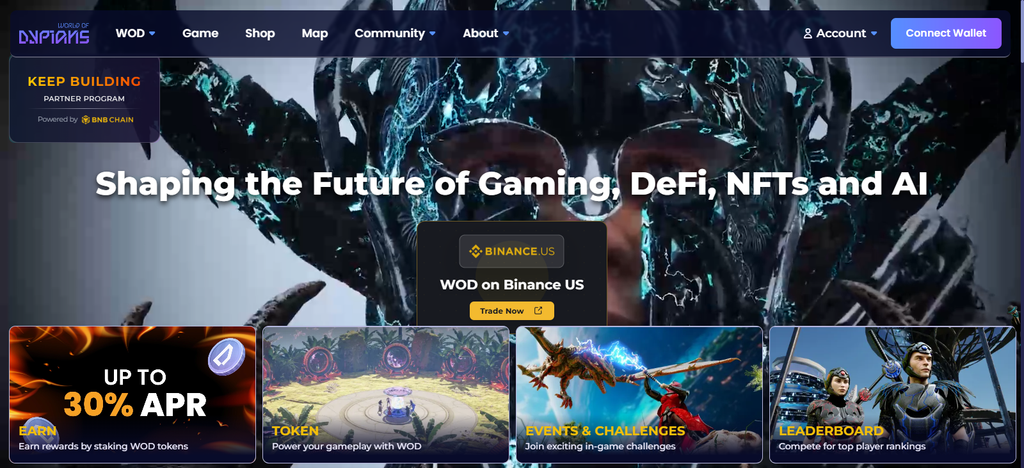
Within the ecosystem, the NFT shop serves as a marketplace layer where players can purchase, sell and trade assets. Value is created through gameplay, achievements, staking, and player purchases, not through one activity.
The supply and economic mechanics of WOD should be considered along with its utility and ecosystem growth. NFT utility is based on gameplay and ownership, and player spending drives demand for virtual goods and upgrades.
World of Dypians Characteristics
- Open-World MMORPG: A blend of exploration, quests, PvP/PvE, events and a persistent virtual world.
- Multi-Chain Economy: Supports multiple blockchain networks, broadening access to its digital economy.
- WOD Token: The WOD token is the centerpiece of the game’s economic and reward model.
- NFT Ownership: digital resources offer ownership and utility in the metaverse.
AI Integration: With AI-powered NPCs and assistants, gameplay becomes more interactive. - Reward Economy: Players are rewarded with tokens and digital currency for completing quests, activities and events.
- Virtual Asset Usage: Players may use economic assets to make purchases, upgrades and to participate in ecosystem activities.
- Player-Driven Economy: An economic ecosystem that combines gameplay, digital ownership, rewards and trading.
2. Decentraland
Best for: Creator & Virtual-Land Economy Decentraland was launched in 2017, creating an economy based on Ethereum digital ownership, with MANA as its native utility token. MANA is used for transactions and purchasing virtual assets, while LAND, Estates, Wearables, Emotes and Names make up the NFT economy.
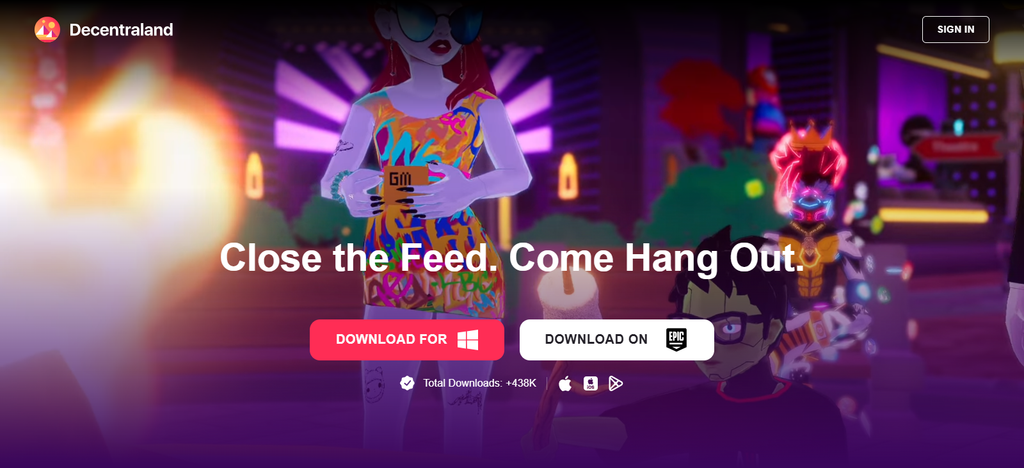
Its Marketplace allows users to buy, sell, transfer and list these assets, creating value from user created material and virtual property. Players spend money on LAND, collectibles, wearables and other digital experiences. Decentraland’s economy is based on ownership, creation, trading and user-driven virtual-world activity, not gameplay rewards.
Decentraland Characteristics
- Virtual World: A persistent 3D environment where people can socialize, create, explore and have experiences.
Ethereum-Based Economy: Leverages Ethereum infrastructure for ownership and transactions of digital goods.
MANA Token: MANA is the primary currency of the ecosystem.
LAND NFTs: Virtual plots are blockchain assets that users can own and develop.
Creator Economy: Users can create experiences, wearables, and other digital content. - Marketplace Trading: Buy, sell and trade electronic assets.
- User Ownership: Blockchain enables users to have ownership of virtual assets.
- Virtual Commerce: Players spend on LAND, wearables, collectibles, experiences and other digital resources.
3. Aavegotchi
Best for: Deflationary token and NFT utility Aavegotchi, which launched on Ethereum in 2020, has a GHST-powered economy that feeds its governance and primary marketplace.
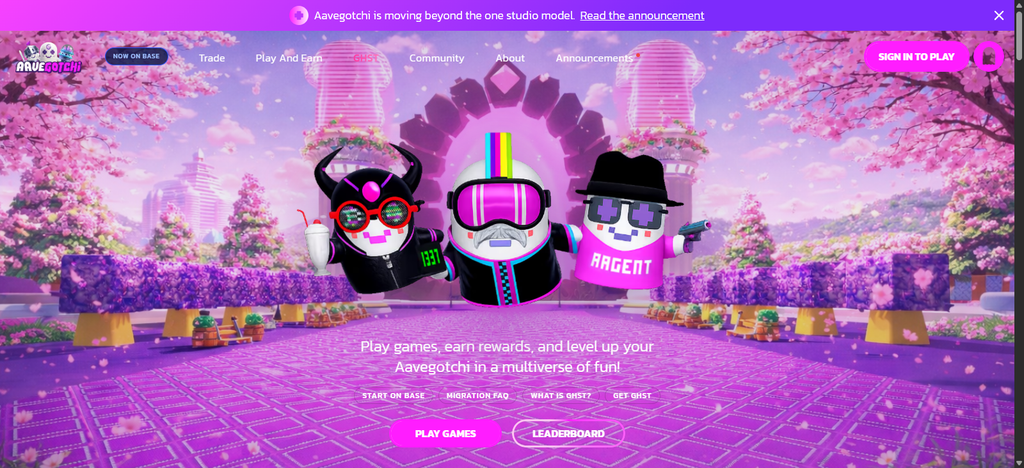
After the closure of its bonding curve, GHST has a fixed stated supply of 52,747,802. The token is used for governance and for trading NFTs on the Baazaar marketplace. Wearables and other assets provide additional options for players to spend, and Aavegotchi NFTs have utility in-game.
The economy also involves token-burning mechanics like burns associated with marketplace listings and primary sales. Players create value through gaming, trading, tournaments, and engagement with the ecosystem.
Aavegotchi Characteristics
- Gotchi NFTs: Aavegotchis are playable, collectible digital characters.
- NFT Gaming Protocol: Aavegotchi merges collectible NFTs with gameplay and an open economic system.
- GHST Token: GHST is utilized within the Aavegotchi ecosystem for transactions and governance.
- Wearable Economy: Wearables can alter Gotchi traits, adding extra collectible utility.
Marketplace: Buy and sell Gotchis and other ecosystem assets in the marketplace. - DeFi Link: The project combines gaming concepts with decentralized-finance elements.
- Community Governance: Token holders can participate in the governance of the ecosystem.
- Player-Owned Economy: Collecting, upgrading, trading and using NFTs has many economic activities.
4. Star Atlas
Best for: Dual Token Game Economy Star Atlas launched on Solana in 2021 and has a dual-token design of ATLAS and POLIS. ATLAS is the in-game utility and payment currency and POLIS provides governance and control over key ecosystem decisions.
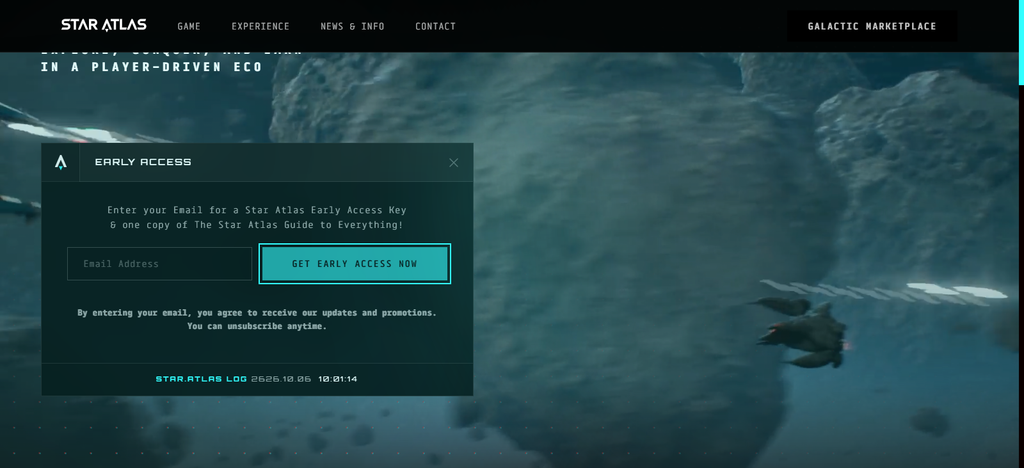
ATLAS’s monetary supply is intentionally inflationary to support expansion of the in-game economy, with minting and burning tied to adoption and growth via DAO decisions.
NFTs are game assets such as spaceships, land, and equipment, which create a player-owned marketplace economy. Players use funds for asset purchases and gameplay, while ATLAS rewards also provide economic incentives to play.
Atlas of Stars Characteristics
- Solana Blockchain: The ecosystem is based on the Solana infrastructure.
- Space Exploration: Provides a vast sci-fi universe for exploration, combat, resources and strategy.
- Two-token Model: ATLAS is the economic token, and POLIS is the governance token.
- NFT Assets Ships, crew, resources, mining equipment, and other assets can be NFTs.
Galactic Marketplace: Purchase and sell game assets using ATLAS or USDC. [Star Atlas][4] - Fleet Economy: Players can form fleets and engage in fleet-rental activities.
- Asset Utility NFTs can be used for flying, crafting, upgrading, mining, staking.
- DAO Governance: Players can engage in decentralized governance via the Star Atlas DAO.
5. Splinterlands
Best for: Trading-Card Economy. Launched in 2018, Splinterlands created a blockchain trading-card economy where collectible cards serve as playable NFTs. Its economy is built on the governance token SPS and in-game currencies such as DEC.
Players generate value by collecting, renting, trading and battling with cards, and marketplace activity gives NFTs economic utility beyond simple ownership. Player spending can mean buying cards, renting assets, and playing in the wider economy of the game. Cards directly affect game play, so the utility of NFTs is especially high.
Its economic model connects competitive activity, collectible ownership, marketplace trading, rewards and player demand rather than treating the NFTs as digital collectibles.
Splinterlands Characteristics
- NFT Cards: Cards are player-owned digital resources with gameplay utility.
- Trading Card Game: Incorporates a unique gameplay driven by collectible blockchain cards.
- SPS Governance: SPS is an important governance component of the ecosystem.
- DEC Economy: DEC is one of the main currencies of the game.
- Collectible Card Trading: Players are able to trade collectible cards and other game assets
- Rental Economy: Players will be able to rent cards, adding more utility to NFT ownership.
- Competitive Rewards: Connect gameplay to rewards through battles, rankings, tournaments etc.
- Long Term Asset Utility: Cards can have economic value, as they can be collectible, competitive, and tradable all at the same time.
6. Alien Worlds
Best for: Resource Based Virtual Economy Alien Worlds launched in 2020 and is available on a number of blockchain networks, with TLM being the main ecosystem token.
The economic structure of the game is the combination of planetary exploration, mining, land ownership, tools & NFTs. Sources of value are gameplay rewards, resource extraction, ownership of NFTs, land activity and player-to-player trading.
NFTs do have functional utility as tools and land and other assets can influence the ability to participate in the game’s activities.
Players can spend by buying or trading valuable assets and the marketplace activity provides liquidity to the player-owned economy. Its unique feature is the link between resource production, NFTs, governance and gameplay incentives.
Alien Planets Characteristics
- Mining Gameplay: Players engage in resource-mining activities within a blockchain-based virtual universe.
- TLM Token: Trilium (TLM) is the primary economic token.
NFT Tools: Tools for mining are helpful, and influence involvement in the mining economy. - Land NFTs: Land ownership adds another dimension of player-controlled economic activity.
- Planet DAOs: Players can engage in planetary governance within the game’s DAO structure.
- Resource Economy: Mining links gameplay activity to resource generation.
- NFT Trading: Trade land, tools and other digital resources within the game economy.
Governance Utility: TLM offers economic and governance utility, tying gameplay rewards to Planet DAO participation.
7. The Sandbox
Best for: Creator-Driven Economy. The Sandbox has been building a blockchain-based ecosystem since 2019 and uses SAND as its primary utility token within its virtual world. SAND has a supply cap of 3 billion tokens and is used as a medium of exchange, and also supports governance.
The ecosystem consists of NFTs for LAND, avatars, equipment and creator assets. Players and creators spend value on virtual property, assets, experiences and other digital items. Creators are able to create and monetize experiences.
Its marketplace links ownership and trade to give NFTs a practical economic utility. So the economy mixes spending by players, creator activity, digital ownership, marketplace trading and governance.
The Sandbox Characteristics
- Playable Creator Metaverse: Players can create experiences, games, environments and digital resources .
- SAND Token: SAND is used to fuel key economic activities in the ecosystem.
- LAND NFTs: LAND offers blockchain-backed ownership of virtual spaces.
- ** Content created by users: Creators can generate voxel assets and interactive experiences.
- VoxEdit Economy: Users create digital resources that can be converted into blockchain-based NFTs.
Asset Marketplace: Creators can sell and trade their digital creations. - Avatar Economy: Avatars and other digital resources are the basis for ownership in the ecosystem.
Creator Monetization: The economy links creation, ownership, trading, LAND, and player experiences instead of just providing gameplay rewards.
8. Gala Games Ecosystem
Best for: Multi-Game Blockchain Environment. Gala Games was founded in 2019 and has built more of an ecosystem of games rather than a single title. GALA is the utility token of the Gala ecosystem used for transactions, buying NFTs, node incentives, and GalaChain network fees.
Gala has a maximum supply of 50 billion with a dynamic emission model. The ecosystem has also utilized substantial token burns including gas usage related burns and NFT related activity.
Depending on the title, NFTs might be used to represent characters, equipment, collectibles, and other game assets. Player spending drives NFT ownership and gameplay, and GalaChain provides the infrastructure that connects the ecosystem.
Gala Games Ecosystem Characteristics
- Gaming Ecosystem: Gala Games is not only one game, but a whole gaming ecosystem.
- GALA Token: GALA serves as a key utility asset throughout the ecosystem.
- Blockchain Gaming: Blockchain infrastructure is linked to digital resources and transactions.
NFT Ownership: NFTs in the game can be characters, items, collectibles and other assets. - Unique Game Economies: Each Gala game can feature its own gameplay and economic systems.
Node Ecosystem: Gala has a decentralized infrastructure that includes node participation.
Player Spending: Players can buy NFTs and other digital resources for supported games. - Interconnected Economy: Tokens, NFTs, games and blockchain infrastructure are combined in a larger player owned gaming ecosystem.
9. Champions Tactics
Best for Tactical ownership of NFTs. Champions Tactics: Grimoria Chronicles is a blockchain-based tactical RPG from Ubisoft that focuses on collectible Champions as its core digital currency.
NFTs in the game are assets with direct gameplay relevance, not purely speculative collectibles and the game’s NFT economy is based around owning, collecting and using Champions. Players are able to buy and trade Champions, each with varying attributes and skills that can affect their place in tactical combat.
As such, its economic model is strongly tied to collectible ownership and competitive utility. Champions Tactics is different from economies mainly relying on continuous token rewards, but rather on the relation of the player-owned characters, the participation of gameplay, scarcity, collection and the value driven by the marketplace.
Champions Tactics Characteristics
- Tactical RPG: Collectible Champions battle strategically.
- Champion NFTs: Digital Champions can be player-owned blockchain assets.
- Gameplay Utility: Champions are directly linked to tactical gameplay, not just collectibles.
Collection System: Players can acquire Champions with diverse traits and strategic possibilities. - Competitive Gameplay: Tactical combat system gives owned characters real in-game utility.
Digital Asset Ownership: Supported digital resources can be owned and transferred using blockchain technology. - Scarcity: Limited Champion collections can introduce scarcity to the game’s collectible economy.
- Economics of Strategic Assets: The core economic argument connects ownership of collectibles to gameplay, competition, and trading.
10. Axie Infinity
Best for: Established Play-to-Earn Economy. Launched in 2018, Axie Infinity is one of the most well-known blockchain gaming economies thanks to its Axies, land and dual-token structure.
AXS is the governance token and SLP has been the utility token for playing the game. Players create economic value through battling, breeding, owning assets and marketplace activity, with Axie NFTs providing direct utility in gameplay. Player spending is broken down into: purchasing Axies and other digital resources, breeding, and interacting with the ecosystem.
Its economy illustrates the need for meaningful spending sinks, controlled rewards, NFT utility, and sustained player demand in sustainable game design, rather than dependence on token emissions alone.
Axie Infinity Characteristics
- Digital Pet Game: Collect, breed, develop and battle Axies.
- Ronin Network: Axie Infinity is largely developed on Ronin, a gaming network associated with Ethereum.
- AXS Token: AXS is the governance token of the ecosystem.
SLP Currency: Historically, SLP has been the backbone of critical gameplay and breeding mechanisms. - Axie NFTs: Unique collectible NFTs with varying traits and gameplay properties.
Lunacia Land: Lunacia land is another type of digital asset that can be traded. - Marketplace: Players are able to buy and sell Axies and other in-game assets.
- Play-and-Earn Economy: Gameplay elements including battles, breeding, asset ownership, and rewards are woven into a larger player economy.
Conclusion
To summarize, the 10 blockchain games discussed in this article employ different approaches to create sustainable in-game economies.
World of Dypians, Decentraland, Aavegotchi, Star Atlas, Splinterlands, Alien Worlds, The Sandbox, Gala Games, Champions Tactics and Axie Infinity all feature tokens, NFTs, marketplaces, player spending and gameplay rewards, but each in different ways.
The strongest economies depend on more than token rewards, but also meaningful utility of NFTs, active marketplaces, useful spending mechanisms, controlled token supply, and consistent demand by players.
Players need to assess the economic design, reward structure, utility, and long-term balance of each game to decide which blockchain game is most appropriate for their goals.
FAQ
What makes a blockchain game economy sustainable?
A sustainable blockchain game economy balances token emissions with meaningful spending sinks. Strong NFT utility, active marketplaces, player demand, controlled supply, and useful in-game purchases can help maintain economic balance over time.
Which blockchain games have strong in-game economies?
World of Dypians, Decentraland, Aavegotchi, Star Atlas, Splinterlands, Alien Worlds, The Sandbox, Gala Games, Champions Tactics, and Axie Infinity each use different combinations of tokens, NFTs, marketplaces, rewards, and player spending.
What are value sources in blockchain games?
Value sources are activities that create economic demand or rewards within a game. These can include gameplay, NFT trading, crafting, land ownership, tournaments, staking, resource collection, breeding, and creator-generated content.
What are value sinks in blockchain game economies?
Value sinks are activities where players spend tokens or other assets. Common examples include crafting, upgrades, breeding, marketplace fees, NFT purchases, character creation, repairs, land development, and tournament entry costs.
Why are NFTs important in blockchain game economies?
NFTs can provide verifiable ownership of game assets such as characters, cards, land, weapons, equipment, and collectibles. Their economic value is stronger when they also provide meaningful gameplay or marketplace utility.