

In this article, we will examine the Best Solana RPC Providers for Developers and compare their pricing, free tiers, Solana support, performance, archive access, security, developer tools, and dedicated node options. We help developers assess the top providers for reliability, scalability, API capability, infrastructure, and various project requirements to build and launch high-performance Solana apps in 2026.
- What Is a Solana RPC Provider?
- Why Solana RPC Infrastructure Matters for Developers
- How We Selected the Best Solana RPC Providers
- Key Points
- 1. InfStones
- Attributes
- Advantages
- Disadvantages
- 2. On Finality
- Attributes
- Advantages
- Disadvantages
- 3. Blast API
- Attributes
- Advantages
- Disadvantages
- 4. Network Pocket
- Attributes
- Advantages
- Disadvantages
- 5. Lava Network
- Attributes
- Advantages
- Disadvantages
- 6. NodeReal
- Attributes
- Advantages
- Disadvantages
- 7. Allnodes
- Attributes
- Advantages
- Disadvantages
- 8 Chainbase
- Attributes
- Advantages
- Disadvantages
- 9. GenesysGo (SHDW)
- Attributes
- Advantages
- Disadvantages
- 10. Syndica
- Attributes
- Advantages
- Disadvantages
- Are Solana RPC providers free?
- Conclusion
- FAQ
What Is a Solana RPC Provider?
Solana RPC Provider A Solana RPC provider is an infrastructure service that provides developers and applications with a way to communicate with the Solana blockchain without having to run and maintain their own node.
It offers API endpoints for fetching blockchain data, querying account balances, transactions, programs, and submitting transactions. Solana RPC providers may provide websocket connections for real-time updates, archive data for historical queries, monitoring dashboards, advanced APIs and dedicated nodes.
When choosing a provider, developers need to consider performance, reliability, pricing, request limits, geographic coverage, security, scalability and their application needs.
Why Solana RPC Infrastructure Matters for Developers
Fast Blockchain Data Access: Developers get fast access to Solana account, transaction, block, program, and token data with RPC infrastructure without running their own nodes.
Dependable Application Performance: A reliable RPC provider ensures dApps have consistent response times and are not affected by overloaded or unavailable endpoints.
High volume of requests: Production applications may issue thousands or millions of RPC requests. Scalable infrastructure means you can handle growth in traffic without running into rate-limit issues as often.
WebSocket Support: Applications can subscribe to receive real-time updates of account changes, transactions, logs, slots, and other blockchain events.
Transaction Submission: RPC infrastructure allows developers to submit transactions to the Solana network and obtain confirmation information, via managed endpoints.
Less Complex Infrastructure: By using an RPC provider you’re avoiding a lot of the hardware, networking, node maintenance, upgrades, monitoring and operational work that comes with running Solana nodes.
Historical Data Access: Archive-enabled providers enable developers to query historical blockchain data for analytics, indexing, reporting, and historical application features.
Improved Scalability: Dedicated nodes, higher limits, load balancing, and scalable infrastructure allow applications to handle increasing numbers of users and transaction volumes more effectively.
Developer Tools: Dashboards, API keys, usage analytics, logs, documentation, and specialized APIs to help build, monitor, and troubleshoot Solana applications.
Better Production Reliability: The impact of outages, traffic spikes, maintenance and endpoint failures on production applications can be reduced by using reliable RPC infrastructure and potentially multiple providers.
How We Selected the Best Solana RPC Providers
| Evaluation Factor | What We Compared | Why It Matters for Developers |
|---|---|---|
| Solana Support | Mainnet, Devnet, Testnet, and Solana-specific infrastructure | Ensures the provider matches the development and production environment |
| RPC Performance | Response speed, consistency, and infrastructure capacity | Faster responses can improve dApp performance and user experience |
| Pricing | Free tiers, monthly plans, usage-based pricing, and overage costs | Helps developers estimate infrastructure costs as usage grows |
| Free Tier | Free requests, credits, limits, and trial access | Useful for testing, prototypes, and early-stage applications |
| Request Capacity | RPS, rate limits, credits, or compute-unit limits | Determines how much application traffic the RPC can handle |
| WebSocket Support | Real-time subscriptions and connection stability | Important for applications requiring live blockchain updates |
| Archive Access | Availability of historical Solana blockchain data | Useful for analytics, indexing, research, and historical queries |
| Developer Tools | APIs, SDKs, dashboards, logs, documentation, and monitoring | Makes development, debugging, and infrastructure management easier |
| Security | Authentication, access controls, monitoring, and infrastructure protection | Helps protect production applications and RPC endpoints |
| Dedicated Nodes | Dedicated RPC nodes, private infrastructure, and custom capacity | Provides better control and predictable performance for high-volume workloads |
| Scalability | Ability to handle increasing traffic and application growth | Helps prevent infrastructure bottlenecks as users increase |
| Reliability | Uptime, redundancy, failover, and infrastructure availability | Reduces downtime and RPC-related application failures |
| Data Services | Enhanced APIs, indexed data, streaming, and specialized blockchain data | Helps developers build advanced analytics and Web3 applications |
| Best Use Case | DeFi, NFTs, wallets, trading, indexers, dApps, and enterprise applications | Helps developers choose a provider based on their actual workload |
| Overall Developer Value | Performance, features, cost, reliability, and ease of integration | Provides a balanced basis for selecting the most suitable Solana RPC provider |
Key Points
| Solana RPC Provider | Key Points |
|---|---|
| InfStones | Enterprise blockchain infrastructure, Solana RPC and node services, managed infrastructure, API access, monitoring tools, scalable deployments, and dedicated infrastructure for production workloads. |
| OnFinality | Managed Solana RPC, HTTP and WebSocket access, free developer tier, usage-based plans, analytics, API management, archive capabilities, dedicated nodes, and multi-chain infrastructure. |
| Blast API | Managed blockchain RPC infrastructure, API-based access, multi-chain support, scalable endpoints, developer-focused integration, usage-based infrastructure, monitoring, and production-ready RPC services. |
| Pocket Network | Decentralized RPC infrastructure, distributed node operators, multi-chain access, decentralized routing, provider redundancy, blockchain data access, and an alternative to centralized RPC infrastructure. |
| Lava Network | Decentralized RPC protocol, provider marketplace, RPC routing, multi-chain infrastructure, provider redundancy, flexible access, blockchain data connectivity, and reliability-focused architecture. |
| NodeReal | Solana RPC and blockchain data services, HTTP and WebSocket access, free tier, usage monitoring, API keys, scalable plans, multi-chain support, and infrastructure for production applications. |
| Allnodes | Managed blockchain node hosting, non-custodial infrastructure, staking services, hosted nodes, monitoring, multi-chain support, infrastructure management, and resources for developers requiring greater node control. |
| Chainbase | Blockchain data APIs, indexed and structured data, Solana data support, multi-chain infrastructure, developer APIs, dashboards, free plan, analytics capabilities, and enterprise data solutions. |
| GenesysGo (SHDW) | Solana-focused infrastructure, Solana RPC services, SHDW decentralized storage, Shadow Drive, Solana-native developer tools, decentralized data infrastructure, APIs, and Web3-focused services. |
| Syndica | Solana-specialized RPC infrastructure, high-performance endpoints, WebSocket support, developer APIs, blockchain data services, monitoring tools, scalable infrastructure, and solutions for demanding production workloads. |
1. InfStones
Founded in 2018, InfStones provides enterprise-grade blockchain infrastructure with Solana RPC support for developers building dApps, wallets, DeFi and Web3 applications. Pricing is usage based, with enterprise plans available and free or trial access possibly available depending on current program.
Access to Solana includes RPC endpoints and developer APIs, with availability of historical data depending on the chosen service. Security is managed infrastructure, authentication, monitoring and reliability.
Developer tools include APIs, dashboards, documentation and node management. There is dedicated infrastructure available for production workloads that require higher performance, isolation and predictable capacity.
Attributes
- Enterprise blockchain infrastructure platform
- Supports Solana RPC & node infrastructure.
- Managed API and node deployment options
- Dashboard and monitoring features
- Built for Web3 application workloads
Advantages
- Enterprise-grade deployment ready
- Infrastructure management reduces operational complexity
- Compatible with multiple blockchain ecosystems
- Developer API access
- Dedicated infrastructure can handle larger workloads
Disadvantages
- Less transparent pricing for some workloads
- Enterprise features may only be available on higher-tier plans
- Advanced infrastructure may be too much for small projects
- Free access may be subject to usage restrictions
- tooling specific to Solana is probably less extensive than providers native to Solana
2. On Finality
Founded in 2019, OnFinality provides managed blockchain RPC infrastructure with Solana support for developers and production applications. Its Developer plan is free with a limited number of daily RPC response units. Paid plans start at $49 per month and scale up to higher-capacity tiers.
Solana services are HTTP and WebSocket RPC, Archival Access on supported APIs, Analytics and Dedicated Nodes. Security includes infrastructure monitoring, managed node operations and authenticated endpoints.
The tools for developers on the paid plan include API dashboards, usage analytics, documentation and the Trace API. Dedicated Solana nodes are available for workloads that require predictable throughput and higher limits.
Attributes
- Operated RPC and blockchain infrastructure provider
- Provides HTTP and WebSocket access to Solana
- Includes usage monitoring and API management
- Provides archival infrastructure on supported services
- Offers dedicated infrastructure choices
Advantages
- Multiple tiers of pricing for various workloads
- Good developer dashboard and monitoring
- *Development free tier
- Supports production grade infrastructure;
- Useful for developers who work across multiple chains
Disadvantages
- Some advanced features may be behind paid plans
- More use can lead to higher monthly costs
- Pricing is based on usage
- Some features vary by blockchain
Small applications may not require dedicated infrastructure
3. Blast API
Blast API is a blockchain infrastructure platform that provides managed RPC access to developers building on the networks it supports, including Solana. Pricing is based on usage-based infrastructure plans, with free access or trial capacity depending on the current offering.

Solana developers are able to utilize RPC endpoints to connect applications, submit transactions and retrieve blockchain data. Archive availability depends on the network and service configuration selected.
Security focus is authenticated API access, infrastructure monitoring and managed endpoints. Developer tools include API keys, dashboards, documentation and usage monitoring Dedicated infrastructure might be available for high-volume production workloads that need higher capacity and reliability.
Attributes
- Managed Blockchain RPC infrastructure *
API-based blockchain connectivity support - Supports multiple blockchain networks.
- Built for dApps and Web3 apps
- Provides scalable infrastructure for production workloads
Advantages
- Easily integrated via API
- Supports development on multiple chains
- For scalable applications
- Reduced node management requirements
- Good for developers that want managed infrastructure
Disadvantages
- Advanced requirements may require higher plans.
- Pricing may differ depending on usage
- Solana specific features may be narrower than specialist providers
- Limited free usage
- Careful capacity planning is required for high volume applications
4. Network Pocket
Pocket Network is a decentralized RPC infrastructure network founded in 2017 to provide blockchain access through a distributed network of node operators. Currently Solana availability is limited to networks supported by its decentralized infrastructure and gateway services.
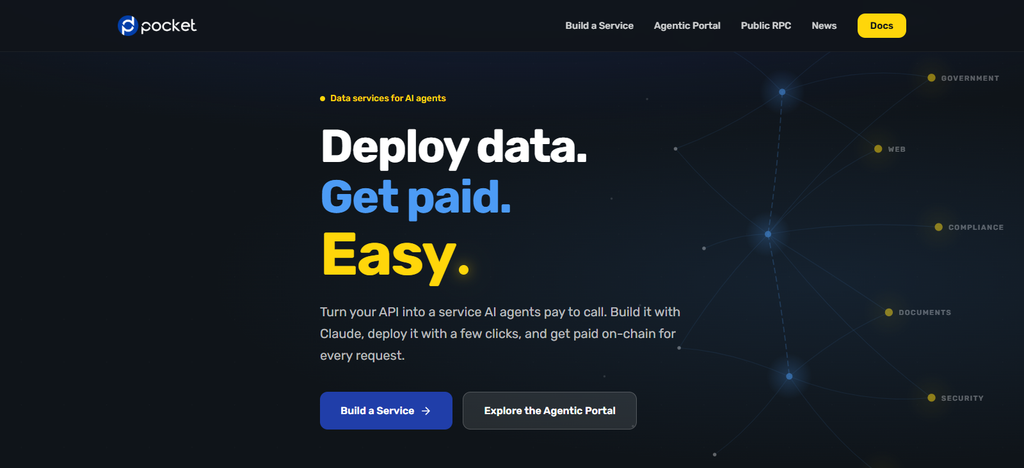
Its model is different from traditional centralized RPC providers because the infrastructure is distributed among independent operators. Usually, pricing is based on decentralized network usage, not a simple traditional monthly RPC plan.
Developers are able to use gateways, APIs and network endpoints but the ability to access historical or archive data depends on the individual infrastructure provider. Infrastructure is distributed, which is good for security . Dedicated capacity is a function of the chosen gateway or provider setup .
Attributes
- Network of Distributed RPC infrastructure
- Distributed node operators
Optimized for blockchain data access - Supports decentralized infrastructure model
- Reduces reliance on one supplier
Advantages
- Strategy for decentralized infrastructure
- Node network distributed
- Can offer provider redundancy
- Good for censorship-resistant infrastructure*
- Different model than traditional centralized RPC providers
Disadvantages
- Different performance between Infrastructure Providers
- Decentralized architecture may increase complexity.
- Availability of service is subject to supported networks and gateways
- Further configuration can be needed to meet enterprise requirements
- Pricing and access may not be as transparent as traditional RPC services
5. Lava Network
Lava Network is a decentralized RPC and data infrastructure protocol, launched in 2022, that serves as a marketplace for developers to connect with blockchain RPC providers through a marketplace-style architecture.
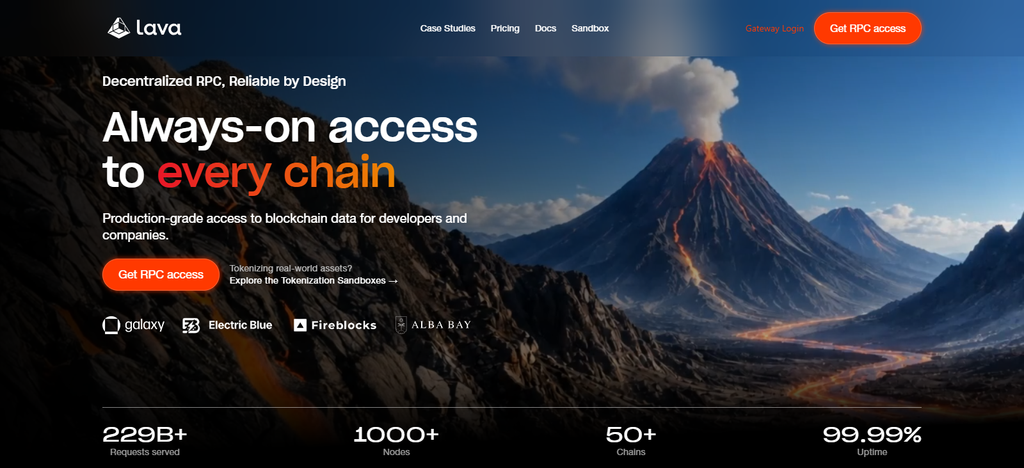
Solana is supported by the existing RPC infrastructure of the network that enables developers to query the data on the blockchain independently of a single centralized provider. Pricing is based on the usage of RPCs and the infrastructure setup selected. Some gateways provide free access for development purposes.
Developer tools include RPC endpoints, APIs, routing and provider selection mechanisms. Archive availability is dependent on the underlying provider. Security is supported by decentralized infrastructure, provider redundancy and authenticated RPC access.
Attributes
- Decentralized RPC and blockchain data protocol
- Connects developers with RPC providers
- Supports provider routing and selection
- Designed for multi-chain infrastructure access
- Focuses on RPC reliability and availability
Advantages
- Reduces dependence on a single RPC provider
- Decentralized infrastructure model
- Provider redundancy can improve resilience
- Useful for multi-chain developers
- Flexible infrastructure marketplace approach
Disadvantages
- Architecture can be more complex for beginners
- Provider performance may vary
- Pricing can be harder to compare directly
- Features depend partly on underlying providers
- May require additional integration considerations
6. NodeReal
NodeReal, founded in 2021, is providing blockchain RPC and data infrastructure via its MegaNode platform, with Solana now being supported alongside other supported networks. It has a free tier and paid Growth, Team and Business options, with pricing and included compute capacity depending on the plan.
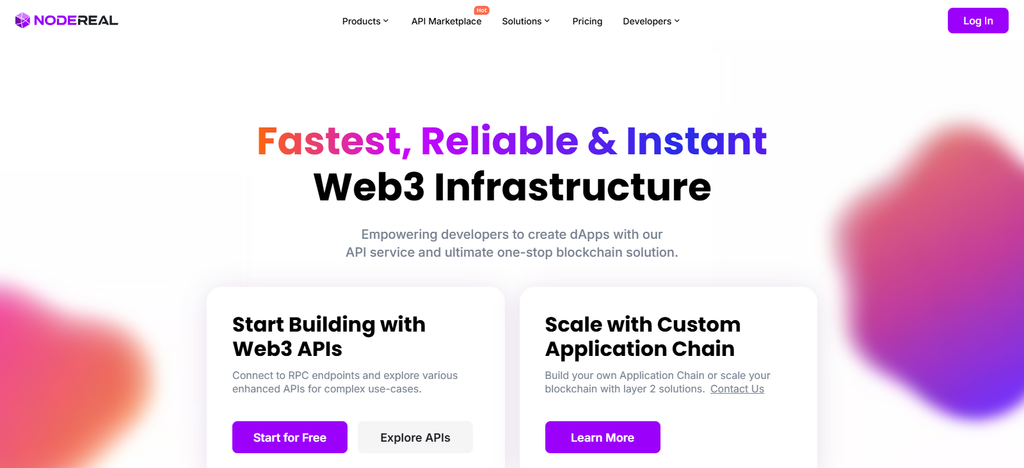
Developers get access to HTTPS and WebSocket, dashboards, API keys, usage statistics and blockchain data services. Supported networks and services are provided with archive access.
Security includes managed infrastructure, API authentication, monitoring and enterprise support. Dedicated or custom infrastructure can support larger workloads that need higher capacity, stronger performance, and production-level reliability.
Attributes
- Blockchain RPC & Data Infrastructure Service
- Solana infrastructure and API access included
- Connection to HTTP and WebSocket
- Includes usage monitoring and dashboards
- Provides scalable infrastructure for production applications
Advantages
- Free tier available
- Multiple paid plans for increasing workloads
API infrastructure developers will love - Supports multiple blockchains
- Enterprise options for larger apps
Disadvantages
- Usage limits differ per plan
- More traffic means more costs
- Paid tiers may be required for advanced features
- Choosing a plan can be complicated for novices
- Features differ between supported networks
7. Allnodes
Founded in 2019, Allnodes provides non-custodial blockchain infrastructure including node hosting, staking and RPC-related services on supported networks. The availability of Solana depends on the infrastructure services that are available on the platform at this time.
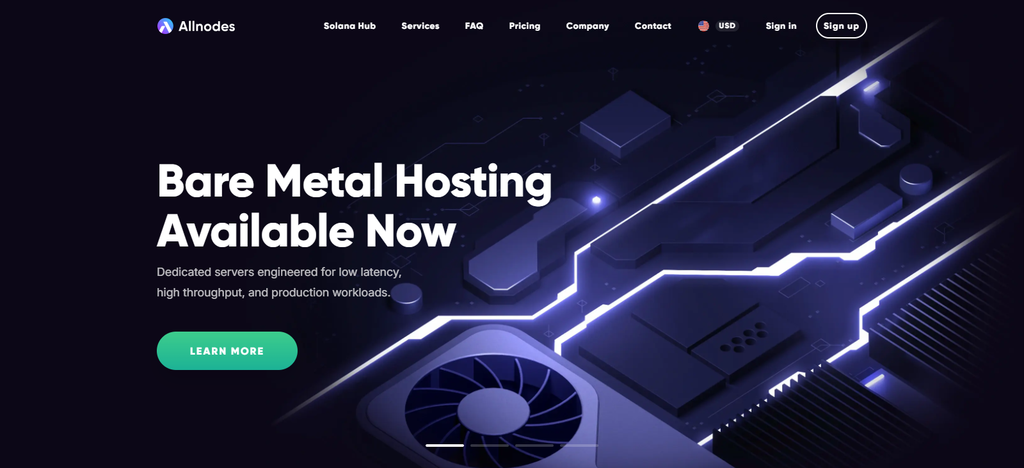
The price depends on the node, hosting, and the infrastructure setup, not a single RPC subscription for all. For applications that need managed node access, hosted infrastructure and blockchain endpoints are available to developers. The availability of the archive depends on the node configuration and network you choose.
Security is focused on non-custodial architecture, infrastructure monitoring, account protection, and managed hosting. Dedicated node resources are especially important for developers who require more control over the blockchain infrastructure and performance.
Attributes
- Node operation management
- Host and provider of infrastructure for blockchain nodes
- Provides staking and infrastructure services
- *Emphasis on infrastructure not in custodial care
- For developers who need hosted node resources
Advantages
- Node hosting management
- Non-custodial method
- Good for infrastructure operators
- Reduces the need for hardware management
- Supports multiple blockchain ecosystems
Disadvantages
- Services availability depends on the blockchain
- Not developer API focused
- Infrastructure configuration based pricing
- May require additional solutions for advanced RPC requirements
- Less developer friendly for large data apis
8 Chainbase
Chainbase is a Web3 data infrastructure provider, focusing on APIs, indexed blockchain data and data services for developers. Pricing: Free plan with 200,000 monthly credits, Developer plan starting at $99/month, custom Enterprise pricing.
Solana provides support via its supported data infrastructure, and developers are able to access APIs, datasets and multi-chain archived data. Security is handled through cloud infrastructure, API authentication, and enterprise controls.
Developer tools include data APIs, projects, dashboards, and developer docs. The dedicated infrastructure and the customized throughput go hand in hand with Enterprise requirements mainly, which makes Chainbase particularly suited for applications requiring indexed data instead of raw RPC data only.
Attributes
- Web3 data infrastructure platform
- Provides blockchain data APIs
- Supports indexed and structured blockchain data
- Offers multi-chain data infrastructure
- Includes developer dashboards and API tools
Advantages
- Strong focus on blockchain data
- Useful for analytics and data-driven applications
- Provides developer APIs
- Free plan available
- Supports multi-chain development
Disadvantages
- More data-focused than traditional RPC providers
- Advanced usage can become expensive
- Credit-based pricing requires monitoring
- Some infrastructure capabilities depend on the selected service
- May be excessive for applications needing only basic RPC access
9. GenesysGo (SHDW)
Founded in 2020, GenesysGo is a Solana-focused infrastructure company best known for its SHDW decentralized storage ecosystem and Solana RPC infrastructure. Its Shadow Drive and related infrastructure are meant for Solana-native applications that need decentralized data services.
The pricing is based on how much storage, RPC and infrastructure you use, not a single monthly subscription for RPC. Solana support is foundational to its ecosystem, so it’s especially relevant to Solana developers.
Developer tools include RPC access, storage API, dashboards and documentation. Specific service conditions apply to archive and historical capabilities. Security is decentralized infrastructure, authentication, monitoring and distributed storage architecture.
Attributes
- Runs Solana RPC infrastructure
- Solana-focused Web3 infrastructure ecosystem
- Runs the SHDW decentralized storage ecosystem
- Supports Solana-based applications
- Offers blockchain and decentralized storage services
Advantages
- Heavy focus on Solana ecosystem *
- Native Solana infrastructure experience
- Good for dApps and Web3 applications
- Decentralized storage complements RPC infrastructure
- Suitable for Solana-oriented developers
Disadvantages
- Mostly focused on the Solana ecosystem
- Not as suitable for developers looking for broad multi-chain infrastructure
- Service capabilities may vary by product
- Pricing subject to assessment of individual services.
*Smaller ecosystem coverage than large multi-chain infrastructure providers
10. Syndica
Syndica is a blockchain infrastructure company that focuses heavily on Solana RPC, APIs, data services and developer infrastructure. Pricing is largely based on usage and what you want to produce . Free or trial access depends on the current offering and your account eligibility .
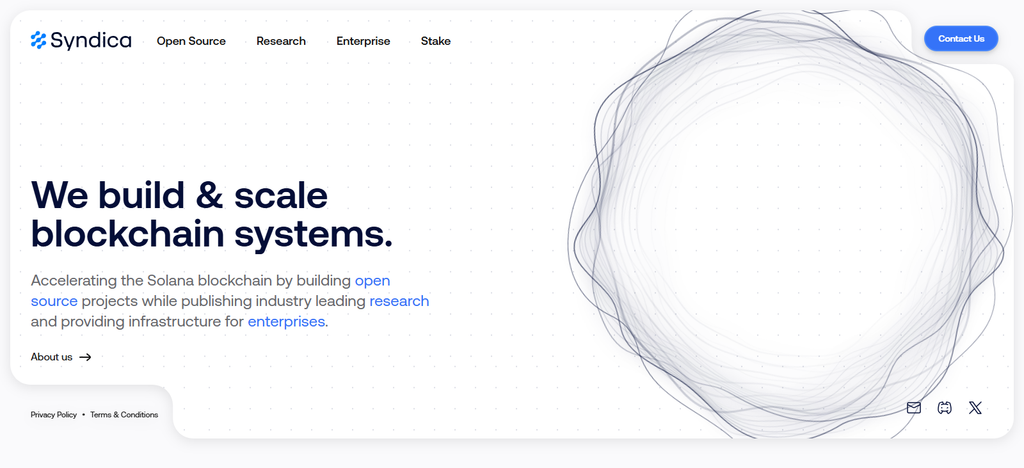
Solana support features include high-performance RPC, WebSocket connectivity, developer APIs, and infrastructure for demanding applications. Archive and historical data capabilities depend on the Syndica service selected. Security includes managed infrastructure, monitoring, production controls, and API access with authentication.
Developer tools include RPC APIs, dashboards, data services, documentation & analytics. Dedicated, high capacity infrastructure targets applications that require scalable and predictable Solana performance.
Attributes
- Specialist in blockchain infrastructure
- Heavy focus on Solana infrastructure
- High performance remote procedure call services
- WebSocket and Developer APIs supported
- Provides tooling and infrastructure for production workloads
Advantages
- Heavy Solana focus
- Optimized for high performance applications
- Good for demanding production workloads
- Offers infrastructure tools that developers will love
- Good for defi, trading, and data heavy apps
Disadvantages
- Primarily about advanced Web3 infrastructure
Beginners may not require the more expensive features - Production usage can get costly at scale
- Certain features are designed for specific workloads
- Developers might require technical knowledge to use advanced infrastructure effectively
Are Solana RPC providers free?
Some Solana RPC providers have free tiers, but free access is usually limited in terms of requests, credits, rate limits, bandwidth, WebSocket usage or advanced features. Free RPC plans are usually good enough for learning, testing, prototyping and low-traffic applications.
Providers may also offer paid plans that provide more requests, higher speed, access to archives, better APIs, dedicated nodes and improved support.
Developers should look at actual limits of usage, not just the advertized monthly price. Paid or dedicated Solana RPC plans provide more reliable and predictable infrastructure for production dApps, DeFi platforms, wallets, trading apps and high-traffic services.
Conclusion
Picking the best Solana RPC provider in 2026 isn’t just about price. Developers should compare the available Solana support, request capacity, latency, WebSocket availability, archive access, security, developer tools, scalability and dedicated infrastructure options. Providers such as InfStones, OnFinality, Blast API, Pocket Network, Lava Network, NodeReal, Allnodes, Chainbase, GenesysGo and Syndica offer various ways to access Solana infrastructure.
Ultimately, the right choice depends on your application’s workload, traffic, data needs, and production goals. Test performance, check usage limits, assess pricing at expected scale, and consider backup RPC infrastructure for better reliability and uninterrupted access to your application before choosing a provider.
FAQ
What is a Solana RPC provider?
A Solana RPC provider gives developers infrastructure and API endpoints for communicating with the Solana blockchain. Applications use RPC services to retrieve account data, query transactions, read program information, submit transactions, and subscribe to real-time blockchain events.
Which Solana RPC provider is best for developers in 2026?
The best provider depends on your workload. Developers should compare latency, request limits, WebSocket support, archive access, pricing, reliability, security, API capabilities, and dedicated infrastructure before selecting a provider.
Are Solana RPC providers free?
Some Solana RPC providers offer free tiers or limited development access. Free plans are generally suitable for testing and smaller applications, while production applications with higher traffic usually require paid plans or dedicated infrastructure.
What should developers compare when choosing a Solana RPC provider?
Important factors include RPC performance, request capacity, pricing model, rate limits, WebSocket support, archive data, API features, geographic coverage, security, uptime, developer tools, and dedicated-node availability.