




In this article, I will discuss the Best Ethereum RPC Providers for Web3 Developers, which includes reliable platforms for accessing Ethereum nodes, blockchain data, and APIs. I will compare their pricing, Ethereum compatibility, RPC features, node access, performance, scalability, WebSocket support, developer tools, and key features to help developers choose the right infrastructure for building and scaling Web3 apps.
What Is Ethereum RPC Providers?
Ethereum RPC providers are infrastructure services that allow Web3 applications to access Ethereum blockchain nodes remotely via Remote Procedure Call (RPC) endpoints. Developers no longer have to run and maintain their own Ethereum nodes, but can use these providers to get blockchain data, read smart contract data, check balances, monitor transactions and submit transactions to the network.
Most providers will have JSON-RPC and WebSocket connections with more advanced platforms providing archive nodes, Trace and Debug APIs, analytics and enhanced blockchain data. Ethereum RPC providers also help applications handle increased traffic via scalable infrastructure, load balancing, rate limits and dedicated node choices.
How To Choose Ethereum RPC Providers for Web3 Developers
Powered by the Ethereum Network: Verify that the provider supports Ethereum Mainnet and testnets needed for your development workflow like Sepolia and Hoodi.
RPC & APIs Coverage: Compare supported JSON-RPC methods, WebSocket connections, REST or GraphQL APIs and advanced APIs for transactions, tokens, NFTs and blockchain data.
Performance & Latency: Consistent response times, high request throughput, low and consistent latency and infrastructure designed for real-time Web3 applications.
Node Access: Select from shared RPC endpoints, full nodes, archive nodes, dedicated nodes or specialized Trace and Debug access.
Pricing & Free Tier: Don’t just look at the advertized starting price but also look at the monthly credits, requests, compute units, pay-as-you-go rates and overage costs.
Rate Limits: Look for things like requests per second limits, daily or monthly quotas, burst capacity, and what happens when your app hits its usage limit.
Scalability: Select infrastructure that can handle increasing traffic with higher limits, dedicated nodes, load balancing, geographic routing, or enterprise scaling.
WebSocket Support: WebSocket access is crucial for applications that need real-time updates for transactions, smart contract events, pending transactions and blockchain monitoring.
Archive Data: If you need historical blockchain states, analytics, DeFi research, or older contract data to power your application, archive nodes are helpful.
**Availability and Reliability: ** Review production application uptime commitments, infrastructure redundancy, failover mechanisms, monitoring, and service level agreements documented.
Developer Tools: Dashboards, API-key management, logs, analytics, debugging tools, SDKs, transaction simulation and monitoring features that can make development easier.
Security: Review API-key protection, access control, IP restrictions, authentication, DDoS protection and other security controls before hooking up RPC endpoints to production applications.
Multi-Chain Support: If you plan to scale outside of Ethereum, a provider with multiple blockchain network support can help you reduce infrastructure complexity and ease future development.
Use Case Match: Choose according to your workload. DeFi, wallets, NFT platforms, trading apps, blockchain analytics, gaming, and enterprise dApps may need different RPC capabilities.
Backup & Failover: For critical applications, consider providers or architectures that offer multiple endpoints, automatic failover and redundancy to reduce dependency on a single RPC service.
Benefits Of Ethereum RPC Providers for Web3 Developers
You Don’t Need to Run Your Own Nodes: Developers are able to interact with Ethereum infrastructure without purchasing servers, configuring nodes, managing storage, or maintaining nodes.
Quicker access to the blockchain: Managed RPC infrastructure allows to expose optimized endpoints and geographically distributed servers so that applications can fetch Ethereum data with lower and more consistent latency.
Easy to Use: Developers are able to easily connect dApps, wallets, exchanges, games and backend services to Ethereum using standard JSON-RPC and WebSocket endpoints.
Better Scalability: RPC providers offer higher rate limits, dedicated infrastructure, load balancing and scalable plans to handle increased traffic for your application.
Reliable Infrastructure: Redundant nodes, geographic distribution, monitoring and failover capabilities can help keep applications connected and minimize downtime.
Archive Data Access: Developers are able to access historical blockchain states and data to build analytics, conduct research, create DeFi applications, and develop complex Web3 services through archive node providers.
Real-Time Blockchain Data: Follow blocks, transactions, smart-contract events and other blockchain activity in near real-time with WebSocket support.
Developer APIs: Many providers have improved APIs for tokens, NFTs, transactions, transfers, logs, traces, debugging and other data that can help reduce development work.
Better Development Experience: Dashboards, API-key management, usage analytics, documentation, monitoring, and debugging tools improve the tools for building and managing blockchain applications.
Cost-Effective: Running independent Ethereum infrastructure isn’t always practical, especially for startups and apps with variable workloads – a managed RPC service can be a better option.
Expansion to Several Chains: Also, many Ethereum RPC providers offer support for other networks, allowing developers to build multi-chain applications without having to maintain separate infrastructure for each blockchain.
Production-Ready Infrastructure: For applications that will be serving larger numbers of users, higher-tier plans can offer dedicated nodes, more throughput, better security, support, and service-level agreements.
Easier Traffic Management: Developers are able to more easily manage large volumes of blockchain requests with scalable endpoints, load balancing, usage tracking, and rate limits.
Support for Smart Contract Development: Some providers also offer transaction simulation, debugging, tracing, testing environments, and gas-analysis tools that help developers find issues before they deploy their contracts.
Infrastructure Made Easy: By outsourcing node operations to a dedicated provider, development teams can spend more time building application features and less time maintaining infrastructure for Ethereum.
Key Points
| Ethereum RPC Provider | Key Strength for Web3 Developers |
|---|---|
| Alchemy | Enterprise-grade Ethereum infrastructure with advanced APIs, analytics, webhooks, archive data, and high-performance RPC endpoints. |
| Infura | One of the most established Ethereum RPC providers, offering reliable node access, WebSocket support, and deep Ethereum ecosystem integration. |
| QuickNode | Known for low-latency RPC performance, global infrastructure, extensive chain support, and developer-focused add-ons. |
| Chainstack | Provides scalable Ethereum nodes, archive access, enterprise SLAs, and flexible deployment options across cloud providers. |
| Ankr | Multi-chain RPC platform offering Ethereum endpoints, high request capacity, global distribution, and affordable pay-as-you-go pricing. |
| dRPC | Decentralized RPC network designed for high availability, provider redundancy, and broad blockchain coverage. |
| Tenderly | Combines Ethereum RPC services with transaction simulation, debugging, monitoring, and developer observability tools. |
| GetBlock | Offers dedicated and shared Ethereum nodes with JSON-RPC and WebSocket access across numerous blockchain networks. |
| NOWNodes | Multi-chain node provider featuring Ethereum RPC access, archive nodes, API tools, and simplified infrastructure management. |
| OnFinality | High-performance blockchain infrastructure provider offering scalable Ethereum RPC endpoints and enterprise-grade services. |
1. Alchemy
Founded in 2017, Alchemy is a developer-focused Web3 infrastructure platform that provides Ethereum RPC, APIs, WebSockets, archive data and application-level services. Supports Ethereum Mainnet and testnets like Sepolia and Hoodi with complete archive access and APIs for Node, NFT, Token, Transfers, Webhook, and Simulation. Its free plan gives you 30M Compute Units monthly.
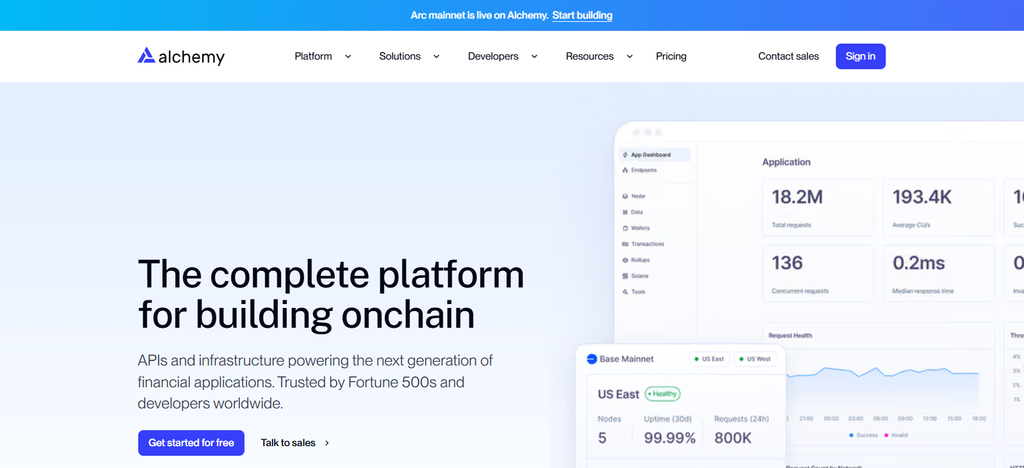
Pay-As-You-Go starts at $0.525 per 1M CU. Alchemy lists 25 RPS on its free plan and higher throughput on paid plans up to a baseline of 300 RPS. The scaling and better APIs makes it a perfect fit for consumer dApps, wallets, NFTs and production apps.
Alchemy – Features
| Feature | Details |
|---|---|
| Ethereum RPC | Ethereum Mainnet and testnet RPC access |
| API Capabilities | JSON-RPC, enhanced APIs, NFT, Token, Transfers and data APIs |
| WebSocket | Supported for real-time blockchain data |
| Node Access | Full and archive infrastructure |
| Performance | Intelligent routing, globally distributed infrastructure and low-latency RPC |
| Scaling | Elastic throughput and multi-region infrastructure |
| Developer Tools | Dashboard, debugging, monitoring and application analytics |
| Historical Data | Archive and historical blockchain access |
| Reliability | Multi-region infrastructure and automatic failover |
| Best For | dApps, DeFi, wallets, NFTs and high-traffic Web3 applications |
Alchemy currently highlights contextual smart routing, elastic throughput, global availability and 99.99% recent RPC success rates on its platform.
2. Infura
Founded in 2015 , Infura is a well-established blockchain infrastructure provider, with a strong focus on Ethereum and EVM networks. It offers Ethereum JSON-RPC over HTTPS and WebSocket connections, archive access, and APIs for blockchain applications. It is currently priced on a daily credits basis .
The free plan gives ** 3M credits per day and 500 credits/second ** . The developer plan gives you 15M credits per day and 4,000 credits/second .
Supports standard Ethereum RPC operations, Websockets, archive queries, and development integrations across the Consensys ecosystem. Its managed infrastructure removes the need for node operation, making it a good fit for wallets, dApps, and enterprise Web3 applications.
Infura – Features
| Feature | Details |
|---|---|
| Ethereum RPC | Ethereum Mainnet and testnet connectivity |
| API Capabilities | Ethereum JSON-RPC APIs over HTTPS and WebSockets |
| WebSocket | WSS support for real-time applications |
| Node Access | Managed Ethereum node infrastructure |
| Performance | High-availability infrastructure with dynamically scaling architecture |
| Scaling | Infrastructure designed to scale with application demand |
| Developer Tools | Developer dashboard, usage analytics and documentation |
| Archive Data | Ethereum archive data available as an add-on |
| Transaction Tools | Infura Transactions for transaction and gas management |
| Reliability | Minimum 99.9% uptime guarantee |
| Best For | dApps, wallets, DeFi and production Ethereum applications |
Infura provides Ethereum access through HTTPS and WebSockets, adjustable limits, archive access, dashboards and custom plans for growing workloads.
3. QuickNode
Founded in 2017, QuickNode is a provider of managed Ethereum RPC infrastructure for developers and high-volume Web3 applications. Ethereum Access – Mainnet, Sepolia and Hoodi via HTTPS and WebSocket with archive data, Debug and Trace APIs, Beacon API access and real-time Streams.
QuickNode is a global routing and low latency access provider with operations in multiple regions and a 99.99% uptime SLA. It extends infrastructure for enterprise deployments and prices on API credits and throughput per plan.
The platform also features endpoint security, add-ons, analytics, and developer tooling, making it well suited to trading applications, wallets, DeFi platforms, and production dApps.
QuickNode – Features
| Feature | Details |
|---|---|
| Ethereum RPC | Ethereum Mainnet and supported testnets |
| API Capabilities | Ethereum JSON-RPC, Beacon, Debug, Trace and Erigon APIs |
| WebSocket | Supported |
| Node Access | Managed RPC and archive infrastructure |
| Performance | Optimized RPC endpoints and global infrastructure |
| Scaling | High-throughput infrastructure and scalable plans |
| Developer Tools | Dashboard, endpoint management and add-ons |
| Archive Data | Supported through archive infrastructure |
| Debugging | Debug API for transaction and execution analysis |
| Tracing | Trace API for internal transaction flows |
| Best For | DeFi, wallets, trading applications, analytics and high-volume dApps |
QuickNode’s Ethereum API suite includes Core JSON-RPC, Beacon, Debug, Trace and Erigon JSON-RPC APIs, providing both standard blockchain interaction and advanced analysis capabilities.
4. Chainstack
Chainstack: Managed RPC infrastructure, dedicated nodes, archive nodes, WebSockets & deployment tools for Ethereum and other networks Founded in 2019 in Singapore.
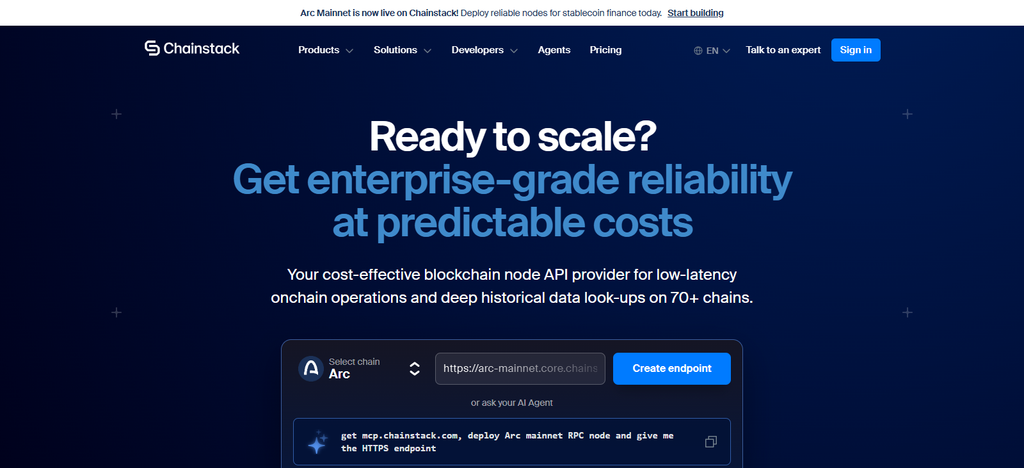
Its Developer plan is free with 3M request units per month and 25 RPS, and Growth starts at $49/month with 20M request units and 250 RPS. Pro provides 80M units and 400 RPS, Business provides 200M units and 600 RPS. Ethereum workloads can use dedicated infrastructure, monitoring and API management, full or archive nodes.
Chainstack also provides global deployments and enterprise controls, making it particularly useful for high-volume dApps, DeFi teams and organizations in need of predictable infrastructure.
Chainstack – Features
| Feature | Details |
|---|---|
| Ethereum RPC | Ethereum Mainnet and testnet nodes |
| API Capabilities | JSON-RPC, WebSocket, GraphQL and extended APIs |
| WebSocket | Supported |
| Node Access | Full, archive and dedicated Ethereum nodes |
| Performance | Geo-balanced infrastructure and low-latency endpoints |
| Scaling | Dedicated nodes, high RPS plans and enterprise scaling |
| Developer Tools | Console, monitoring and API management |
| Archive Data | Available on qualifying plans |
| Debugging | Debug and Trace APIs available on supported infrastructure |
| Dedicated Infrastructure | Dedicated Ethereum RPC nodes |
| Best For | Enterprise dApps, DeFi, analytics and high-volume applications |
Chainstack provides full and archive Ethereum nodes, dedicated infrastructure, geo-balanced endpoints, WebSockets, Debug/Trace APIs and GraphQL capabilities. Its current plans range from a free Developer tier to enterprise infrastructure.
5. Ankr
Founded in 2017, Ankr supplies Ethereum RPC infrastructure with its Web3 API platform that supports RPC, REST, gRPC, WebSockets, and advanced APIs.
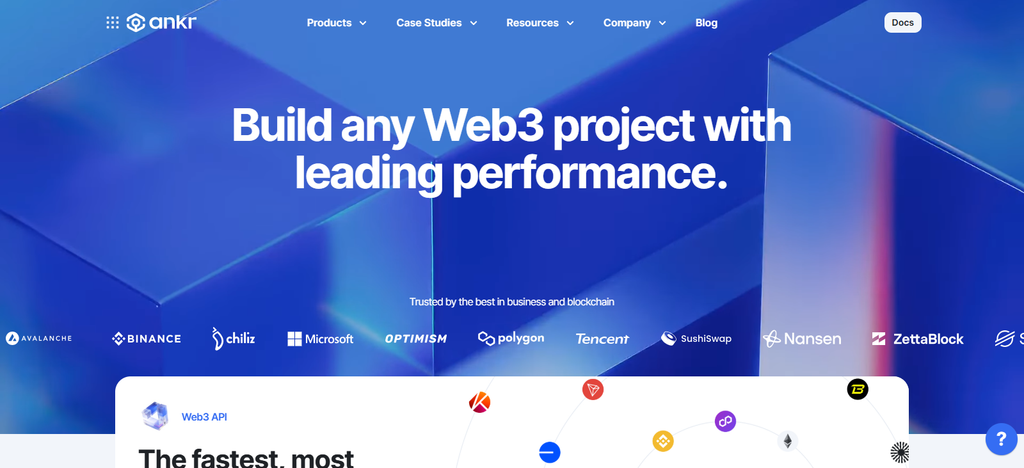
It has Ethereum service that provides Free/Freemium, while Premium starts at $10 per 100M API Credits with a subscription Deal from $500. Free and Freemium Node API access allows for ~1,800 requests per minute. Premium endpoints can handle ~1,500 requests per second.
Ankr charges API Credits based on the request method and resource consumption. Its broad multi-chain infrastructure, dynamic regions, scaling options and developer APIs are useful for applications that need Ethereum and lots of other blockchain networks.
Ankr – Features
| Feature | Details |
|---|---|
| Ethereum RPC | Ethereum blockchain RPC access |
| API Capabilities | JSON-RPC and advanced Web3 APIs |
| WebSocket | Supported |
| Node Access | Public, Freemium and Premium RPC infrastructure |
| Performance | Multiple service tiers with different rate limits |
| Scaling | Premium and enterprise infrastructure for higher workloads |
| Developer Tools | API dashboard, usage statistics and RPC testing |
| Archive Data | Available for supported advanced requirements |
| Trace & Debug | Available on Ethereum archive nodes on Premium and Enterprise |
| Advanced APIs | Token, NFT, transaction and multichain data APIs |
| Best For | Multi-chain dApps, DeFi, gaming and Web3 applications |
Ankr currently offers RPC and WebSocket access across 80+ chains, plus advanced APIs and Ethereum archive-node support for Trace and Debug methods on Premium and Enterprise plans.
6. dRPC
Founded in 2022, dRPC is a multi-provider architecture that routes Ethereum RPC requests to multiple node providers instead of a single source of infrastructure. It supports ethereum JSON-RPC over HTTPS and WebSocket with standard methods and advanced Debug/Trace operations.
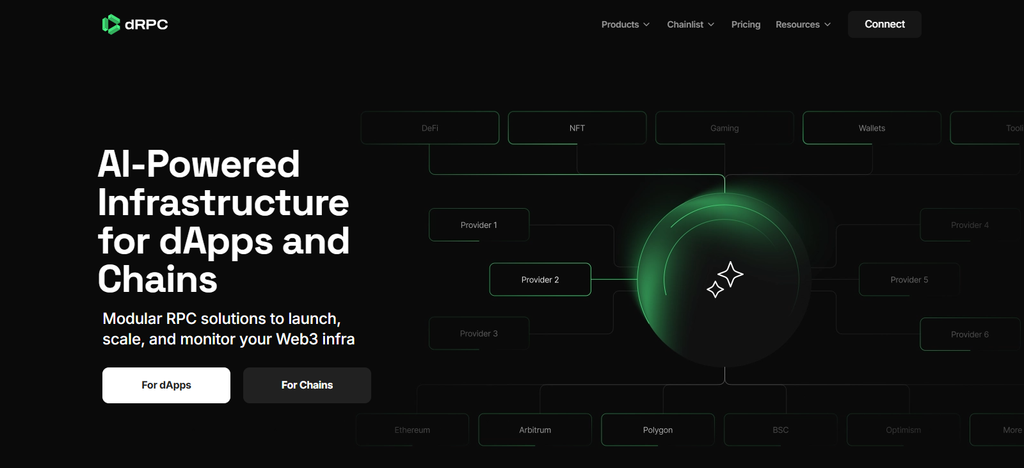
The Free tier provides you with 210M Compute Units for 30 days, after which it is pay-as-you-go. dRPC prices supported RPC methods at 20 CU per request or $0.30 per 1M CU.
The paid infrastructure offers provider routing, load balancing, fallback, and verification capabilities. dRPC will be particularly useful for developers focused on redundancy, availability and multi-provider RPC routing.
dRPC – Features
| Feature | Details |
|---|---|
| Ethereum RPC | Ethereum and EVM RPC connectivity |
| API Capabilities | JSON-RPC methods for blockchain data and transactions |
| WebSocket | Supported for applicable endpoints |
| Node Architecture | Distributed network of independent infrastructure providers |
| Performance | Intelligent routing based on node state, location and availability |
| Scaling | Distributed provider network and workload routing |
| Failover | Routes requests between multiple available nodes |
| Transaction Handling | Transactions can be broadcast across available nodes |
| Debugging | Ethereum Debug and Trace methods supported |
| Pricing Model | Compute Unit-based RPC usage |
| Best For | High availability, redundancy and multi-provider RPC access |
dRPC differs from traditional single-provider RPC infrastructure by routing requests across independent node providers. Its routing layer considers node location, synchronization state, current height and RPC method requirements.
7. Tenderly
Founded in 2018 Tenderly is a blend of Ethereum RPC infrastructure with smart-contract simulation, debugging, testing, and monitoring tools. Tenderly Node provides production-ready JSON-RPC endpoints and developers are able to connect wallets, backends and indexers through managed endpoints.
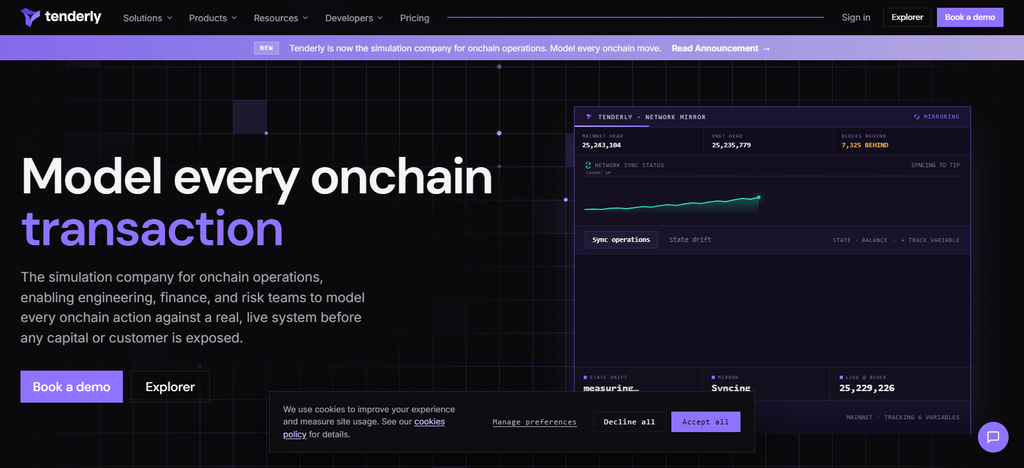
Tenderly’s main differentiator is the development environment: Virtual TestNets, transaction simulations, Debugger, Gas Profiler, and monitoring work in conjunction with Node RPC. Historically, it has included 350M Tenderly Units per month in its Pro plan (usage includes Node and other platform services); custom pricing may apply today.
That makes Tenderly especially useful for DeFi and smart-contract teams who need RPC access and also transaction simulation, debugging, testing and operational visibility.
Tenderly – Features
| Feature | Details |
|---|---|
| Ethereum RPC | Production-grade Ethereum JSON-RPC endpoints |
| API Capabilities | JSON-RPC connectivity for wallets, backends and indexers |
| WebSocket | Available depending on infrastructure configuration |
| Node Access | Tenderly-hosted RPC endpoints |
| Performance | Production-oriented infrastructure with usage monitoring |
| Scaling | Infrastructure designed for production workloads |
| Developer Tools | Debugger, Simulator, Gas Profiler and monitoring |
| Smart Contract Testing | Virtual TestNets and transaction simulations |
| Access Control | Fine-grained access tokens and URL controls |
| Monitoring | RPC call and throughput visibility |
| Best For | DeFi developers, smart-contract teams and testing workflows |
Tenderly combines RPC infrastructure with development and debugging tools. Its Node service provides hosted JSON-RPC endpoints with authentication, access controls and operational visibility, making it particularly useful when RPC and smart-contract tooling are needed together.
8. GetBlock
Founded in 2019, GetBlock is a managed blockchain RPC infrastructure offering shared, unlimited and dedicated node plans. Its Ethereum service provides developers with access to hosted nodes without having to run infrastructure themselves, with higher-level plans built for high-load applications, fintech platforms and enterprises.
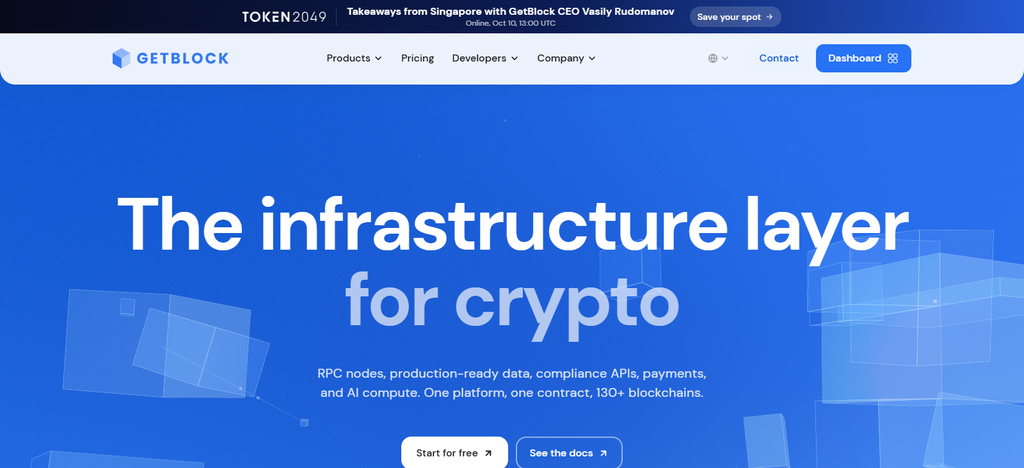
RPC usage is billed using Compute Units. Pro pricing is available starting from $399/month when billed annually, CU allocation depends on the plan, up to 800 RPS on the configuration shown, and 24/7 support.
Supporting over 130 blockchain networks, the service provides Ethereum developers with the ability to use a single provider for multi-chain infrastructure and scale endpoints as traffic grows.
GetBlock – Features
| Feature | Details |
|---|---|
| Ethereum RPC | Ethereum Mainnet, Hoodi and Sepolia |
| API Capabilities | JSON-RPC, GraphQL, WebSockets and Beacon API |
| WebSocket | Supported |
| Node Access | Shared, dedicated and limitless infrastructure |
| Performance | Globally distributed endpoints with low-latency routing |
| Scaling | Dedicated nodes, clusters and high-throughput infrastructure |
| Archive Data | Supported |
| Advanced Features | EIP-4337, MEV protection and advanced analytics |
| Reliability | Automatic RPC failover and geo-redundant infrastructure |
| Security | IP allowlists and dedicated ingress options |
| Best For | DeFi, exchanges, wallets, analytics and enterprise applications |
GetBlock provides Ethereum RPC through JSON-RPC, WebSockets, GraphQL and Beacon APIs, with shared and dedicated nodes, archive data, automatic failover, geo-routing and enterprise infrastructure.
9. NOWNodes
Founded in 2019, NOWNodes offers Ethereum RPC infrastructure and access to over 120 blockchain networks via a single API-key model. Ethereum developers have the choice of shared and dedicated node options for JSON-RPC, WebSocket, Blockbook, Trace/Debug, and archive interfaces.
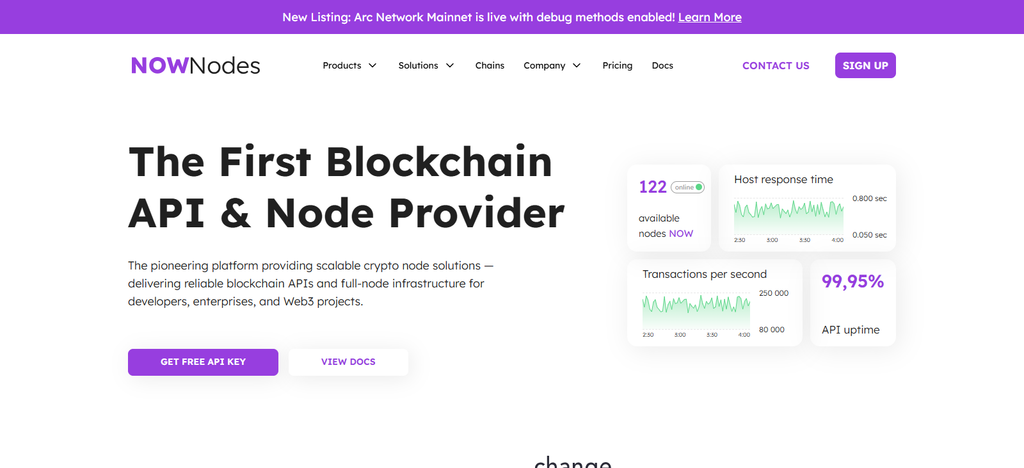
The current Start plan offers 100,000 requests per month while Pro has 1M, Pro Plus 10M, Business 30M, Business Plus 50M, and Enterprise 100M requests per month. Dedicated infrastructure can achieve higher throughput without fixed shared-tier request limits.
NOWNodes also introduced gRPC streaming and MCP capabilities in 2026, which makes it particularly well-suited for multi-chain applications, wallets, exchanges, and AI-assisted blockchain development.
NOWNodes – Features
| Feature | Details |
|---|---|
| Ethereum RPC | Ethereum Mainnet and testnet access |
| API Capabilities | RPC, BlockBook, Archive, Trace and Debug APIs |
| WebSocket | WSS support |
| Node Access | Shared and dedicated Ethereum nodes |
| Performance | Geo-balanced, load-balanced infrastructure |
| Scaling | Dynamic throughput on paid infrastructure |
| Archive Data | Full blockchain history on supported infrastructure |
| Debugging | Debug and Trace APIs |
| Failover | Automatic failover between infrastructure nodes |
| Multi-Chain | 120+ blockchain networks |
| Best For | Wallets, exchanges, dApps and multi-chain applications |
NOWNodes provides Ethereum RPC alongside WSS, BlockBook, Archive, Debug and Trace APIs. Its infrastructure uses geo-distributed node clusters and automatic failover, while paid plans are designed to scale throughput without predefined RPS limits.
10. OnFinality
OnFinality, founded in 2019 and headquartered in Auckland, New Zealand, offers managed blockchain infrastructure, Ethereum RPC endpoints, dedicated nodes, archive access, and Trace API capabilities.
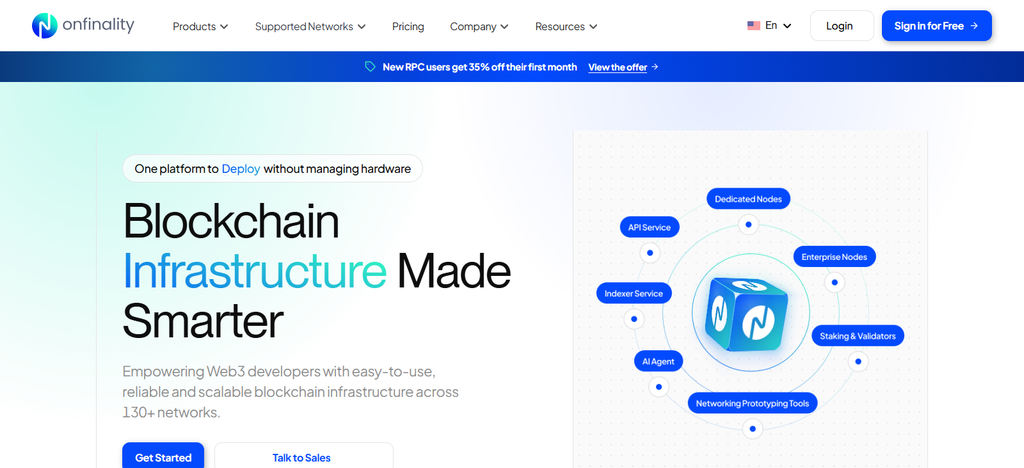
Its ethereum service supports HTTPS and WebSocket , with access to Mainnet and Sepolia. The public Ethereum endpoint is throttled to 5 RPS while authenticated access can be up to 500 RPS depending on the plan.
The Developer plan is free and has 400,000 RPC response units per day, the Growth plan is $49/month and has 20M response units and the Accelerate plan is $249/month and has 100M units.
OnFinality is useful for production workloads and data intensive applications with dedicated nodes, higher throughput, archive infrastructure, and monitoring.
OnFinality – Features
| Feature | Details |
|---|---|
| Ethereum RPC | Ethereum Mainnet and Sepolia |
| API Capabilities | Ethereum RPC APIs and Trace API |
| WebSocket | Supported |
| Node Access | Shared RPC endpoints and dedicated nodes |
| Performance | Globally distributed RPC infrastructure |
| Scaling | Authenticated endpoints and dedicated infrastructure |
| Archive Data | Full archive access available |
| Analytics | RPC request and usage analytics |
| Rate Limits | Public and authenticated throughput tiers |
| Regions | Infrastructure includes Hong Kong and North Virginia |
| Best For | dApps, wallets, DeFi, analytics and production applications |
OnFinality provides Ethereum RPC through HTTPS and WebSocket, with public and authenticated rate limits, archive access, Trace API capabilities, request analytics and dedicated-node options for production workloads.
Conclusion
The right Ethereum RPC provider for you depends on your application’s traffic, performance requirements, budget and development needs. Alchemy, Infura, QuickNode and Chainstack offer strong all-round infrastructure for production Web3 apps, while Ankr and dRPC are good for flexible, scalable multi-chain access.
Tenderly is also the best one for smart-contract debugging and simulation. GetBlock, NOWNodes, and OnFinality offer managed node infrastructure with different pricing and scaling options.
Before selecting a provider, consider Ethereum network coverage, RPC and WebSocket support, archive access, rate limits, pricing, reliability, APIs and scaling capabilities. Ultimately, the best choice depends on your workload and your long-term growth.
FAQ
What is an Ethereum RPC provider?
An Ethereum RPC provider gives developers remote access to Ethereum nodes through APIs and RPC endpoints. It allows applications to read blockchain data, submit transactions, query smart contracts, retrieve blocks, and interact with Ethereum without running and maintaining their own nodes.
Which is the best Ethereum RPC provider in 2026?
The best provider depends on your requirements. Alchemy, Infura, QuickNode, and Chainstack are strong general-purpose options, while Tenderly is particularly useful for smart-contract testing and debugging. Developers should compare pricing, performance, rate limits, archive access, WebSocket support, and scalability before choosing.
Are Ethereum RPC providers free?
Many Ethereum RPC providers offer free tiers with monthly credits, requests, or usage limits. Free plans are generally suitable for development, testing, and smaller applications. Production applications with higher traffic typically require paid plans or dedicated infrastructure.
What should developers compare when choosing an Ethereum RPC provider?
Important factors include Ethereum network support, RPC methods, WebSocket availability, latency, uptime, rate limits, archive-node access, pricing, API capabilities, security, monitoring, and scaling options. Developers should also check whether the provider supports their expected traffic volume.
Do Ethereum RPC providers support WebSockets?
Yes. Many major Ethereum RPC providers, including Alchemy, Infura, QuickNode, Chainstack, Ankr, and others, provide WebSocket connectivity. WebSockets are useful for applications requiring real-time blockchain events, transaction monitoring, and smart-contract event subscriptions.