




In this article, I will talk about the Best Multi-Chain Node Providers for developers and Web3 businesses in 2026. I’ll review their supported blockchain networks, RPC & node infrastructure, API capabilities, performance, scalability, pricing, developer tools, security, reliability and key use cases to help you understand how each provider supports multi-chain blockchain applications and infrastructure requirements.
What Is Multi-Chain Node Providers?
Multi-chain node providers are blockchain infrastructure platforms that let developers connect applications to multiple blockchains through managed nodes, RPC endpoints, APIs and data services.
Developers don’t have to run a separate node for each network anymore and can use one infrastructure provider to access supported chains such as Ethereum, Bitcoin, Solana, Polygon, Arbitrum, Avalanche and other ecosystems.
These providers could offer features like WebSocket connections, archive data, dedicated nodes, indexing, transaction APIs, monitoring, scalability, and developer tools. Multi-chain infrastructure is widely adopted by wallets, DeFi apps, exchanges, NFT platforms, blockchain analytics, gaming, and other Web3 applications that need to access multiple networks.
How To Choose Multi-Chain Node Providers
Test Supported Networks: Make sure that the provider supports all the blockchain networks that your app is currently using and may need in the future.
RPC Features Comparison: Check out the HTTP, WebSocket, JSON-RPC options, transaction sending, debug, trace, and other RPC features available on each network.
Evaluate Chain Depth: Don’t determine vendors exclusively on the number of supported chains. Test each chain for key features like archive access, WebSocket and advanced APIs.
Performance Review: Assess latency, throughput, requests/second, rate limits, response times and the capacity of the infrastructure you will need to support your anticipated application traffic.
Compare pricing models: Are you billed per request, Compute Units, Response Units, credits, bandwidth, dedicated infrastructure? What are the overage charges?
Check archive data: If your application requires historical blockchain state, transactions or analytics or research data, check availability and cost of archive nodes.
Scalability : Look for infrastructure that can scale to more traffic with higher limits, dedicated nodes, more endpoints, load balancing or enterprise scaling.
Test Reliability: Check the uptime guaranties, SLAs, geographic infrastructure, redundancy, failover capabilities, monitoring and network health management.
Check for Security Features: For production apps, look for API-key controls, IP restrictions, rate limiting, access management, monitoring, and other protections.
API & Data Services Basic RPC access is one thing, but think wallet, token, NFT, DeFi, transaction, price, indexing, and streaming APIs for structured blockchain info.
Dedicated nodes: High-volume applications may benefit from dedicated nodes to gain more resource control, consistent performance, and tailor-made infrastructure.
Evaluate Developer and Enterprise Support: Evaluate documentation, community channels, technical support, response times, account management and enterprise support.
Verify Integration Requirements: Make sure the provider is compatible with your programming languages, frameworks, wallets, SDKs, deployment environment and your current Web3 infrastructure.
Plan for Redundancy: For production applications, consider whether the provider supports multiple endpoints, health checks, routing or failover to reduce dependence on a single RPC infrastructure source.
Key Points
| Provider | Key Points |
|---|---|
| Bware Labs (Blast) | Decentralized RPC infrastructure, multi-chain blockchain access, managed endpoints, API connectivity, distributed node providers, enterprise infrastructure options, developer-focused tools, and support for EVM and selected non-EVM networks. |
| Zeeve | Enterprise-grade managed nodes, dedicated RPC infrastructure, full and archive nodes, multi-chain support, high-availability configurations, bandwidth controls, IP whitelisting, node monitoring, validator infrastructure, and enterprise support. |
| OnFinality | Broad multi-chain coverage, managed RPC endpoints, dedicated nodes, WebSocket access, archive nodes, Trace API, usage analytics, Response Unit-based billing, scalable infrastructure, and support for EVM, Substrate, Polkadot, Cosmos, and other ecosystems. |
| NodeReal | High-performance RPC infrastructure, MegaNode service, EVM and selected non-EVM coverage, HTTP and WebSocket endpoints, archive access, Debug API, enhanced blockchain APIs, Compute Unit billing, scalable throughput, API keys, and developer tools. |
| Tenderly Node RPC | EVM-focused RPC infrastructure, extensive mainnet and testnet access, RPC endpoints, transaction submission, smart-contract development tools, transaction simulation, debugging, gas analysis, Virtual TestNets, monitoring, and integration with the wider Tenderly development platform. |
| Pocket Network (POKT) | Decentralized RPC architecture, distributed node operators, multi-chain blockchain access, full-node RPC, archive RPC, usage-based pricing, endpoint management, analytics, team controls, decentralized infrastructure model, and support for Web3 and AI-agent workloads. |
| Lava Network | Decentralized RPC marketplace, multi-chain and rollup access, provider routing, archive capabilities, debug and trace support on selected networks, Smart Router, health checks, failover, caching, observability, provider diversity, and infrastructure redundancy. |
| Moralis | Multi-chain RPC, Wallet APIs, Token APIs, NFT APIs, DeFi APIs, Price APIs, Streams, blockchain data services, archive data, Compute Unit-based pricing, scalable RPC capacity, developer SDKs, documentation, and support for data-intensive Web3 applications. |
| InfStones | Managed blockchain nodes, broad protocol coverage, RPC infrastructure, staking and validator services, node deployment, infrastructure management, monitoring, enterprise-oriented support, scalable blockchain infrastructure, and services designed for Web3 applications and institutional workloads. |
| Infura | Established blockchain RPC infrastructure, multi-network support, managed endpoints, archive data, Streaming, Gas API, Debug/Trace API, expansion APIs, usage-based credits, scalable throughput, API-key management, developer documentation, monitoring, and enterprise infrastructure options. |
1. Bware Labs (Blast)
Bware Labs, founded in 2021, is the company behind Blast, a decentralized blockchain API platform. It is currently operating under Bware Labs AG in Vaduz, Liechtenstein. Blast supports around 30 networks including Ethereum, BNB Chain, Avalanche, Polygon, Arbitrum, Optimism, Base, Sui, Aptos, Starknet and zkSync.
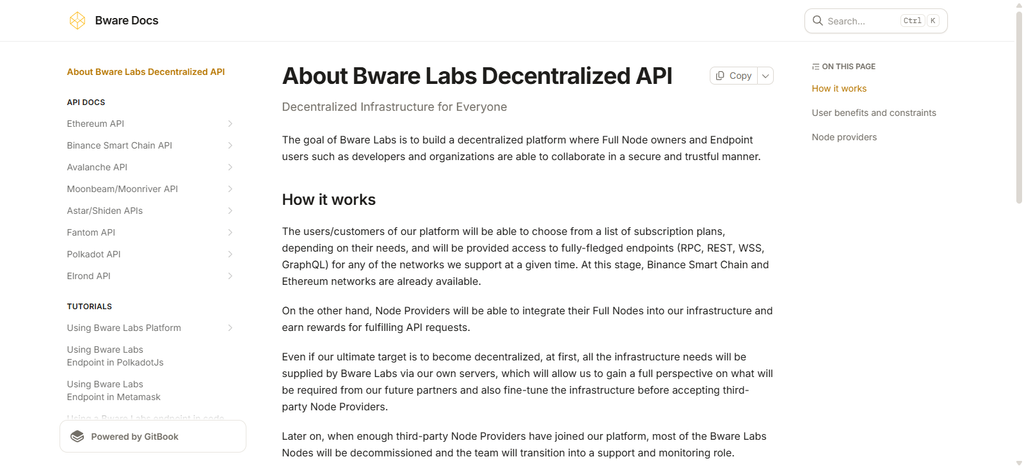
Its infrastructure offers RPC endpoints, public APIs, SDKs, indexing services and dedicated endpoints. Blast is based on decentralized infrastructure with multiple node providers.
For enterprise customers, it provides custom SLAs, volume discounts, dedicated support and consultancy. Pricing varies by subscription and workload, with free access available for initial development.
| Characteristic | Details |
|---|---|
| Provider Type | Decentralized blockchain infrastructure and RPC provider |
| Multi-Chain Coverage | Supports multiple EVM and non-EVM ecosystems, with coverage including major networks and newer Web3 chains |
| RPC Infrastructure | Provides managed RPC endpoints and blockchain access through its Blast infrastructure |
| Node Model | Uses a decentralized infrastructure model involving multiple node providers |
| API Features | RPC APIs, developer access tools, blockchain connectivity and infrastructure services |
| Performance | Designed to distribute requests across infrastructure providers to improve availability and service delivery |
| Scalability | Suitable for applications that need to expand blockchain access without independently operating nodes |
| Pricing | Offers development access, with paid and enterprise arrangements depending on usage and infrastructure requirements |
| Developer Support | Documentation, developer tooling and infrastructure support are available for integrating blockchain endpoints |
| Security | Uses decentralized infrastructure rather than relying exclusively on a single node operator |
| Best Use Cases | dApps, wallets, DeFi applications, Web3 platforms and projects requiring decentralized RPC infrastructure |
2. Zeeve
Zeeve is a corporate blockchain infrastructure automation platform with offices in the United States, India and United Kingdom. Its current corporate site lists its U.S. office in Irvine, California.
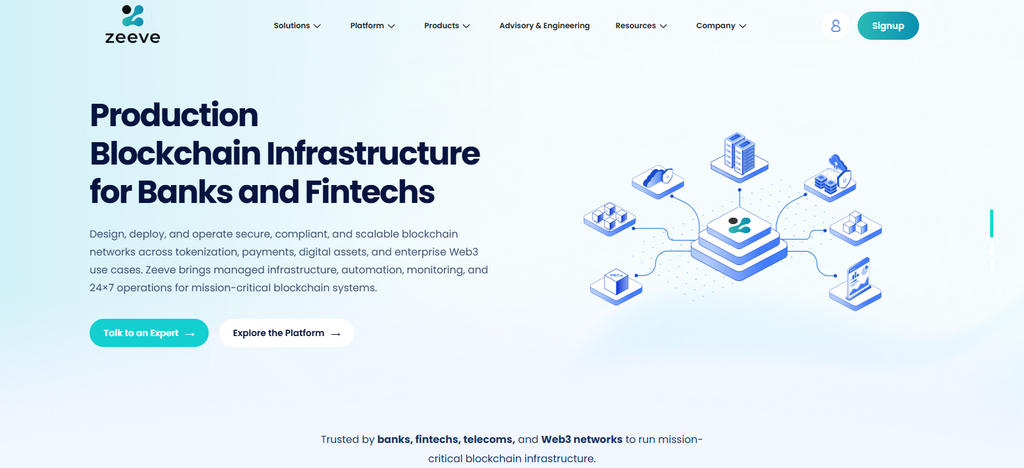
The platform offers managed RPC and full-node infrastructure across major EVM networks, rollups, Cosmos SDK and Substrate ecosystems, including Ethereum, Bitcoin, Polygon, Arbitrum, Optimism, Avalanche, Near, Solana and more. Infrastructure options include RPC nodes, archive nodes, validator nodes, regional deployment, IP whitelisting, bandwidth controls, and high availability setups.
RPC pricing for dedicated use starts around $149 per month on listed networks, with enterprise plans offering more bandwidth, unmetered usage and dedicated account management.
| Characteristic | Details |
|---|---|
| Provider Type | Enterprise blockchain infrastructure and node-management platform |
| Multi-Chain Coverage | Supports major EVM chains, rollups, Cosmos SDK and Substrate ecosystems, with networks including Ethereum, Bitcoin, Polygon, Arbitrum, Avalanche, Optimism, NEAR and others |
| RPC Infrastructure | Managed dedicated RPC and full-node infrastructure |
| Node Options | Dedicated nodes, full nodes, archive infrastructure and managed blockchain nodes |
| Performance | Plans provide different bandwidth and request capacities, including options reaching 1 Gbps bandwidth and 2B monthly requests |
| High Availability | Advanced plans support high-availability configurations with higher SLA levels |
| Security | Includes IP whitelisting, domain customization and controlled infrastructure access |
| Pricing | Listed RPC plans start at $149/month, with Advance at $299/month and Enterprise at $599/month for applicable networks |
| Developer Support | Dedicated infrastructure support, priority communication on higher tiers and enterprise account management |
| Best Use Cases | Enterprise dApps, exchanges, wallets, validators and applications requiring dedicated RPC infrastructure |
3. OnFinality
OnFinality originally started as an internal infrastructure project in 2018 and launched its API service in 2020, before expanding to multi-chain infrastructure.
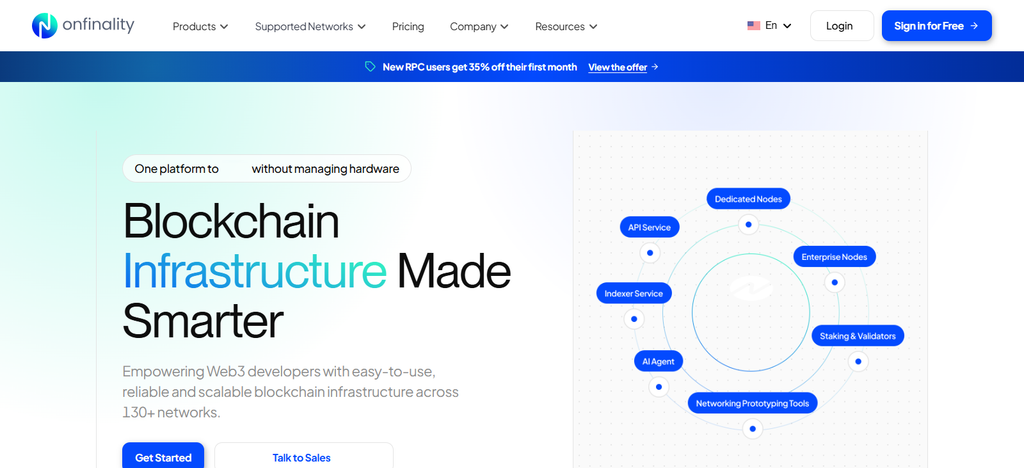
Its existing network directory includes over 130 mainnet and testnet RPC networks across Ethereum, Polkadot, Substrate, Bitcoin, Solana, Cosmos, Avalanche, Aptos, Sui, TON and other ecosystems. It provides shared RPC endpoints, websocket access on supported networks, dedicated nodes, access to archive, Trace API functionality and usage analytics.
Developer is free and includes 400,000 response units per day. Growth begins at $49/month and Accelerate begins at $249/month with higher limits and production features.
| Characteristic | Details |
|---|---|
| Provider Type | Managed blockchain RPC, node and data infrastructure provider |
| Multi-Chain Coverage | Supports a broad range of networks across EVM, Substrate, Polkadot, Cosmos, Solana and other ecosystems |
| RPC Infrastructure | Shared RPC endpoints, dedicated nodes and WebSocket access on supported networks |
| Archive Support | Archive access is available across plans for supported APIs |
| Advanced APIs | Includes Trace API on paid plans and analytics for monitoring API usage |
| Performance | Rate limits range from up to 40 Response Units/second on Developer to 200/s on Growth and 500/s on Accelerate |
| Scalability | Dedicated nodes, higher response-unit allocations and automatic storage expansion support growing workloads |
| Pricing | Developer is free; Growth is $49/month; Accelerate is $249/month; Ultimate uses custom pricing |
| Developer Support | API dashboard, analytics, support channels and infrastructure consultation |
| Reliability | Globally distributed managed nodes, intelligent routing, archive access and node restoration capabilities |
4. NodeReal
NodeReal is a Web3 infrastructure provider with a strong focus on high-performance RPC and enhanced blockchain APIs. Supported ecosystem includes BNB Smart Chain, Ethereum, Aptos, Optimism, Polygon, Arbitrum, Avalanche, NEAR, Solana, Fantom, Klaytn, zkSync, Base, Bitcoin, TRON and other networks.
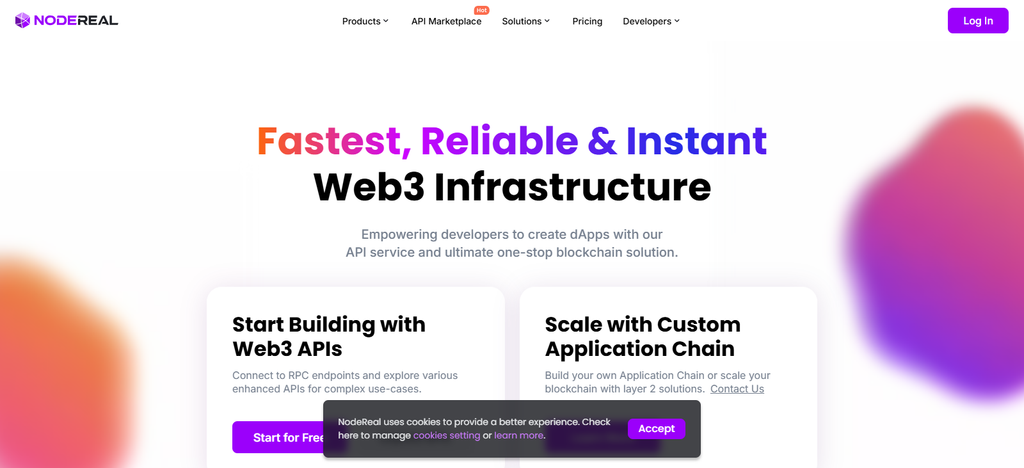
Developers have access to HTTP and WebSocket endpoints, archive nodes, debug and trace methods, and an API marketplace on DeFi, wallet, token, NFT, transaction, security and other data categories. Usage is measured in compute units and CUPS.
There are tiers of Free, Growth, Team and Business. The platform processes more than one billion API calls a day, and is available 24/7.
| Characteristic | Details |
|---|---|
| Provider Type | Blockchain RPC, API and Web3 infrastructure provider |
| Multi-Chain Coverage | Supports major networks across EVM and selected non-EVM ecosystems, including Ethereum, BNB Chain, Polygon, Arbitrum and others |
| RPC Infrastructure | MegaNode provides managed RPC endpoints with mainnet, testnet and archive access |
| API Features | Enhanced APIs, Debug API, blockchain data services and specialized Web3 APIs |
| Performance | Uses Compute Units and CUPS rather than treating every RPC request as identical |
| Scalability | Paid plans increase monthly CUs and CUPS limits, reaching billions of monthly CUs on Business |
| Pricing | Current listed plans include Free, Growth, Team and Business, with Growth listed at $31/month and higher plans at $159 and $399/month |
| Developer Support | API keys, documentation, Discord support and higher-tier dedicated/VIP support |
| Security | API-key based access and controlled endpoint usage |
| Best Use Cases | dApps, DeFi, analytics, wallets, exchanges and high-volume blockchain applications |
5. Tenderly Node RPC
Tenderly is a San Francisco-based company founded in 2018 and provides Node RPC as part of a full blockchain development and simulation platform. The infrastructure is mainly built for EVM compatible networks with more than 100 mainnets and testnets across Ethereum based ecosystems.
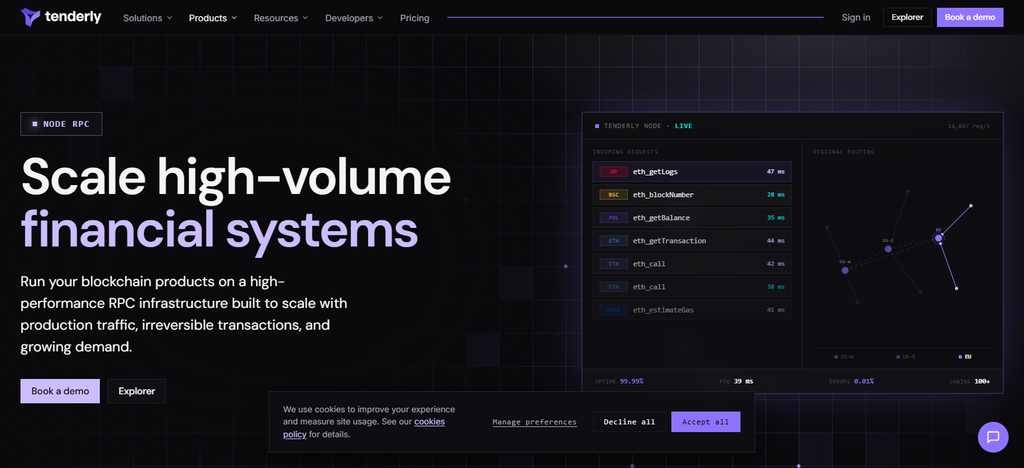
With Tenderly Node, developers are able to create multiple RPC links for specific networks and use them to read data from the blockchain, send transactions and deploy contracts.
Its broader platform also provides simulation, debugging, gas profiling, alerts, virtual testnets and transaction analysis, creating a more robust development workflow than simple RPC access. Pricing is based on the Tenderly plan and usage. Enterprise customers have access to expanded infrastructure and support.
| Characteristic | Details |
|---|---|
| Provider Type | EVM-focused RPC and blockchain development infrastructure |
| Multi-Chain Coverage | Primarily focused on Ethereum-compatible networks and their mainnets/testnets |
| RPC Infrastructure | Provides RPC endpoints that developers can use for blockchain reads, transaction submission and application connectivity |
| Development Integration | Closely integrated with Tenderly’s debugging, simulation and development environment |
| Simulation Features | Tenderly ecosystem adds transaction simulation, debugging, gas analysis and virtual testing environments |
| Performance | Designed for development and production workloads with infrastructure managed through the Tenderly platform |
| Scalability | Plan-dependent infrastructure and usage capacity |
| Pricing | Node RPC access is integrated with Tenderly’s broader subscription structure; exact costs depend on selected plan and usage |
| Developer Support | Strong development tooling, transaction debugging, simulation, monitoring and documentation |
| Security | Controlled RPC access and developer-oriented infrastructure management |
| Best Use Cases | Smart-contract development, testing, debugging, DeFi development and EVM production applications |
6. Pocket Network (POKT)
Pocket Network is an open and decentralized data-service network, where independent node operators serve application requests. The Pocket Network Foundation is located in George Town, Cayman Islands.
The Foundation also runs public RPC access for dozens of blockchains and its infrastructure started with blockchain RPC and now supports a broader decentralized service model.
It uses distributed providers instead of a single centralized node operator and allows apps to query blockchain data in a decentralized architecture. Today, POKT.ai prices full-node RPC at $3/million and archive RPC at $6/million requests. Developers also get billing, MCP oriented access, endpoint management, team controls and usage analytics.
| Characteristic | Details |
|---|---|
| Provider Type | Decentralized blockchain data and RPC infrastructure network |
| Multi-Chain Coverage | Supports EVM and non-EVM blockchain networks through its decentralized infrastructure ecosystem |
| RPC Infrastructure | Uses distributed node operators and gateway infrastructure to deliver blockchain RPC |
| Architecture | Rather than depending on one centralized node provider, the network coordinates independent infrastructure operators |
| RPC Options | Full-node RPC and archive RPC access are available through POKT.ai |
| Performance | Distributed infrastructure provides a model designed for availability and decentralized routing |
| Pricing | Current POKT.ai pricing lists full-node RPC at $3 per 1M requests and archive RPC at $6 per 1M requests |
| Developer Tools | Endpoint management, usage analytics, billing and team controls |
| AI Support | POKT.ai also provides MCP access designed for AI-agent workloads |
| Best Use Cases | Decentralized applications, multi-chain infrastructure, RPC gateways and applications seeking distributed blockchain access |
7. Lava Network
Lava Network is a decentralized RPC and API infrastructure protocol that currently provides access to over 30 blockchains and rollups via permissionless RPC providers. Its ecosystem includes networks such as Ethereum, Arbitrum, Polygon, Base, Solana, Avalanche, Cosmos, NEAR, Bitcoin and others.
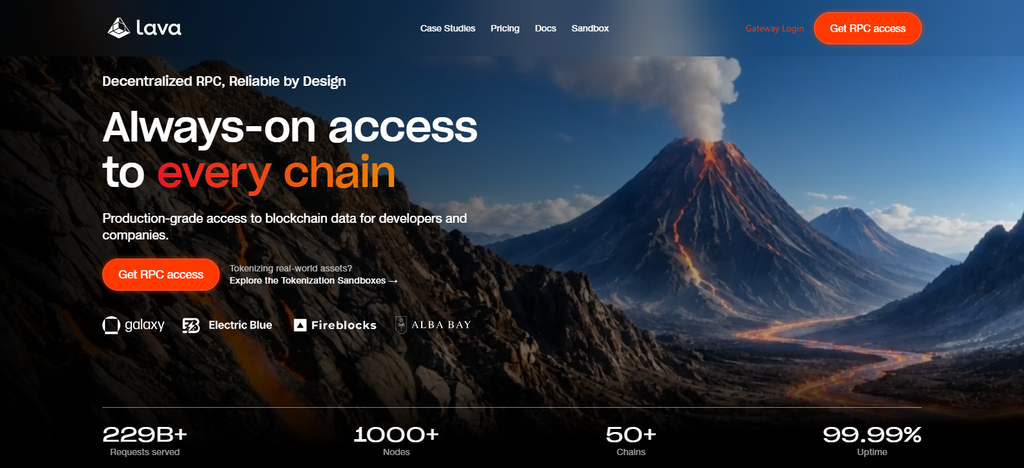
The exact provider and features available depend on the chain. Lava supports basic RPC and archive requests, along with advanced debug and trace features on supported networks.
Its architecture uses provider pairing, compute units, routing and multiple infrastructure operators to improve availability. Enterprise users get unified control, health-based routing, failover, caching, cross-validation, and observability with the RPC Smart Router.
| Characteristic | Details |
|---|---|
| Provider Type | Decentralized RPC and blockchain data infrastructure protocol |
| Multi-Chain Coverage | Provides RPC access across multiple blockchain networks and rollups |
| RPC Infrastructure | Uses a decentralized marketplace of RPC providers rather than relying on one infrastructure operator |
| Routing | Provider selection and routing are designed around network performance and service requirements |
| Advanced Access | Supports standard RPC plus archive, debug and trace functionality on supported networks |
| Performance | Multiple providers can be used to improve availability and distribute infrastructure workloads |
| Scalability | Designed to scale RPC infrastructure as application traffic and supported networks increase |
| Enterprise Features | Smart Router can provide routing, health checks, failover, caching and observability |
| Developer Support | Documentation, RPC endpoints and infrastructure tooling |
| Best Use Cases | Multi-chain dApps, infrastructure providers, wallets, DeFi and applications needing RPC redundancy |
8. Moralis
Moralis is a Web3 data and dev platform based in Stockholm, Sweden, that provides multi-chain APIs and RPC infrastructure. Currently it supports Ethereum, Base, Solana, BNB Smart Chain, Polygon, Avalanche, Arbitrum, Optimism, Linea, Fantom, Cronos, Gnosis, Mantle, Blast, zkSync and other supported chains. RPC, Data APIs and Streams may have different coverage.
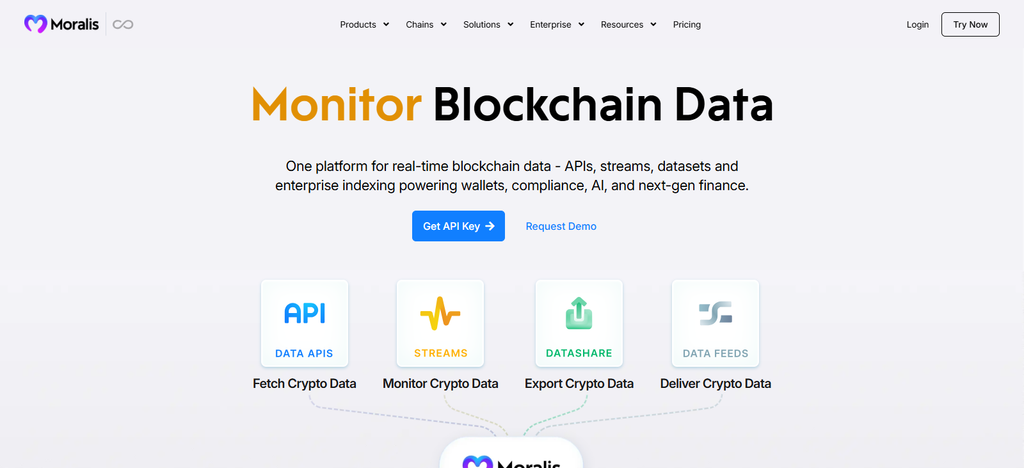
Its product suite includes Wallet, Token, NFT, Price, Blockchain, DeFi and Streams APIs, as well as RPC nodes and archive data. Current paid pricing lists Starter at $149/month, Pro at $249 and Business at $749 with higher throughput and RPC capacity at larger tiers.
| Characteristic | Details |
|---|---|
| Provider Type | Web3 data API and RPC infrastructure platform |
| Multi-Chain Coverage | Provides access across supported EVM networks and Solana, with network availability depending on the individual API or product |
| RPC Infrastructure | Managed RPC nodes with full archive data and configurable capacity on higher plans |
| API Features | Wallet, Token, NFT, Price, Blockchain, DeFi and Streams APIs |
| Performance | Current plans range from 40 RPS on Starter to 80 RPS on Pro and 200 RPS on Business |
| Scalability | Higher plans provide larger Compute Unit allocations, more RPC nodes and increased throughput |
| Pricing | Current listed annual-billing prices are $149/month Starter, $249/month Pro and $749/month Business, with Enterprise custom pricing |
| Developer Support | Documentation, community support, Discord/email and higher-tier communication channels |
| Security & Reliability | Managed infrastructure, usage controls, premium endpoints and custom SLA options on Enterprise |
| Best Use Cases | Wallets, DeFi, NFT applications, portfolio tools, blockchain analytics and data-driven dApps |
9. InfStones
Founded in 2018 by Dr. Zhenwu Shi, InfStones offers blockchain infrastructure for node management, staking, development and Web3 applications. It supports a wide variety of blockchain protocols and offers managed node infrastructure, rather than having developers run their own servers.
Services include blockchain nodes, RPC access, staking infrastructure, node deployment, monitoring and enterprise infrastructure management. It is architected to make blockchain operations easier while catering to production workloads and scale requirements.
InfStones is based in Plano, Texas and its current public materials emphasize a broad protocol portfolio, infrastructure control hub, customer support and enterprise-focused blockchain infrastructure services.
| Characteristic | Details |
|---|---|
| Provider Type | Enterprise blockchain infrastructure and node-management provider |
| Multi-Chain Coverage | Supports a broad portfolio of blockchain protocols for node infrastructure, staking and Web3 applications |
| Node Infrastructure | Provides managed blockchain nodes and infrastructure deployment without requiring customers to operate servers themselves |
| RPC Access | Provides blockchain connectivity through managed node infrastructure and API access for supported networks |
| Staking Infrastructure | Supports validator and staking-related infrastructure alongside node services |
| Performance | Infrastructure is designed for production workloads requiring managed deployment and operational monitoring |
| Scalability | Supports deployment across different blockchain networks and infrastructure configurations |
| Developer Support | Documentation, infrastructure management tools and enterprise-oriented technical support |
| Security | Managed infrastructure, node monitoring and operational controls |
| Best Use Cases | Enterprise Web3 applications, validators, staking projects, blockchain development and institutional infrastructure |
10. Infura
Infura is a well-established Web3 infrastructure platform that specializes in blockchain APIs, RPC access, and developer infrastructure. The Infura ecosystem has grown beyond Ethereum to provide access to other Layer 1 and Layer 2 networks.
Current network materials detail support across the Ethereum, EVM and non-EVM ecosystems, including networks like Polygon, Optimism, Arbitrum, Avalanche, Starknet, Linea, Mantle and ZKsync. Services include RPC access, archive data, streaming, expansion APIs, Gas API, Debug/Trace API capabilities.
Currently, Infura has a free plan called Core, a Developer plan at $50/month, a Team plan at $225/month, and custom Enterprise pricing. Higher plans offer more throughput, support, and scaling controls.
| Characteristic | Details |
|---|---|
| Provider Type | Blockchain RPC, API and Web3 infrastructure provider |
| Multi-Chain Coverage | Supports 40+ networks through its current Core offering, covering major EVM and selected additional ecosystems |
| RPC Infrastructure | Managed RPC endpoints with archive data, streaming and production infrastructure |
| API Features | Expansion APIs, Gas API, Debug/Trace API and blockchain data access |
| Performance | Current plans provide guaranteed throughput from 500 credits/second on Core to 40K credits/second on Team, with custom enterprise capacity |
| Scalability | Developer, Team and Enterprise plans progressively increase daily credits and throughput |
| Pricing | Core is free; Developer is $50/month; Team is $225/month; Enterprise uses custom pricing |
| Developer Support | Community forums on Core, ticketed support on Developer and prioritized support on Team |
| Security & Control | API-key management, usage notifications, request visibility and customizable scaling options |
| Best Use Cases | Ethereum dApps, wallets, DeFi, enterprise applications, smart-contract infrastructure and high-volume Web3 services |
Multi-Chain Node Providers Comparison
| Provider | Multi-Chain Coverage | RPC & Nodes | APIs & Data | Performance & Scalability | Pricing Model | Developer Support | Security & Reliability |
|---|---|---|---|---|---|---|---|
| Bware Labs (Blast) | EVM and selected non-EVM networks | RPC endpoints, managed infrastructure | RPC and blockchain APIs | Distributed infrastructure and scalable endpoints | Free and paid options; enterprise plans | Documentation and developer tools | Decentralized infrastructure model |
| Zeeve | EVM, Cosmos, Substrate and other ecosystems | Dedicated RPC, full and archive nodes | Blockchain infrastructure services | High bandwidth, dedicated resources, HA options | Subscription-based plans and enterprise pricing | Technical and enterprise support | IP whitelisting, monitoring, SLA options |
| OnFinality | EVM, Substrate, Polkadot, Cosmos, Solana and others | Shared, dedicated, archive and WebSocket nodes | Trace API and blockchain access | Response-unit limits, dedicated nodes, scalable infrastructure | Free tier plus paid subscriptions | Dashboard, documentation and support | Managed infrastructure and monitoring |
| NodeReal | EVM and selected non-EVM networks | HTTP, WebSocket, archive and managed RPC | Enhanced APIs, Debug API and data services | Compute Units, CUPS and scalable plans | Free, Growth, Team and Business | Documentation, API tools and support | API-key controls and managed infrastructure |
| Tenderly Node RPC | Primarily EVM-compatible networks | Managed RPC endpoints | RPC plus simulation and debugging ecosystem | Production and development-oriented infrastructure | Tenderly plan-based pricing | Strong debugging, simulation and development tools | Controlled access and managed infrastructure |
| Pocket Network (POKT) | Multiple EVM and non-EVM networks | Decentralized RPC and distributed nodes | Full-node and archive RPC | Distributed provider architecture | Usage-based RPC pricing | Endpoint management, analytics and team tools | Decentralized infrastructure and provider diversity |
| Lava Network | Multiple blockchains and rollups | Decentralized RPC marketplace | RPC, archive, debug and trace on supported chains | Routing, failover, caching and provider diversity | Infrastructure/use-based options | Documentation and RPC tooling | Health checks, routing and redundancy |
| Moralis | EVM networks and Solana | Managed RPC and archive infrastructure | Wallet, Token, NFT, DeFi, Price and Streams APIs | RPS and Compute Unit-based scaling | Subscription and custom enterprise plans | SDKs, documentation and support | Managed infrastructure and access controls |
| InfStones | Broad blockchain protocol coverage | Managed nodes and RPC infrastructure | Blockchain connectivity and infrastructure services | Managed deployment and scalable infrastructure | Custom/plan-dependent pricing | Infrastructure management and enterprise support | Node monitoring and managed operations |
| Infura | Multiple major blockchain networks | Managed RPC, archive and node infrastructure | Gas, Debug/Trace, Streaming and expansion APIs | Credit-based throughput and scalable plans | Free, subscription and enterprise pricing | Documentation, support and developer resources | API controls, monitoring and enterprise options |
Conclusion
Multi-chain node providers simplify blockchain infrastructure by offering developers unified access to multiple networks through RPC endpoints, APIs, managed nodes and data services. The providers on this list vary in chain coverage, infrastructure models, pricing, performance options, developer tools, and enterprise capabilities.
Some focus on decentralized RPC delivery, while others combine node infrastructure with advanced blockchain data, debugging, indexing, staking or development tools.
When choosing a provider, consider the networks you need, RPC and API capabilities, scalability, pricing model, archive needs, security controls, reliability, and technical support. This approach is helpful for aligning infrastructure with the specific needs of your application for development and production.
FAQ
What Are Multi-Chain Node Providers?
Multi-chain node providers offer infrastructure that lets developers connect applications to multiple blockchain networks through RPC endpoints, APIs, managed nodes, and blockchain data services.
Why Use a Multi-Chain Node Provider?
They reduce the need to deploy and maintain individual nodes for every blockchain. Developers can access multiple networks through centralized dashboards, APIs, and standardized RPC endpoints.
What Should I Check Before Choosing a Multi-Chain Node Provider?
Check supported networks, RPC methods, WebSocket availability, archive data, pricing, request limits, scalability, security features, documentation, API capabilities, and customer support.
Do Multi-Chain Node Providers Support Both EVM and Non-EVM Chains?
Some providers support both. However, coverage and available features can vary by blockchain, so developers should verify RPC, archive, WebSocket, and API support for each required network.
Do Multi-Chain Node Providers Offer Free Plans?
Several providers offer free tiers or limited free access for development and testing. Limits may apply to requests, compute units, throughput, supported features, or API usage.