


In this article, I will cover the Best Institutional DeFi Liquidity Aggregators. These aggregators help organizations, crypto funds, and professional traders obtain the most decentralized liquidity, all while providing optimized execution.
- Key Point & Best Institutional DeFi Liquidity Aggregators
- 1. CowSwap
- Features:
- Pros:
- Cons:
- 2. 1inch Pro
- Features:
- Pros:
- Cons:
- 3. Matcha (0x Pro)
- Features:
- Pros:
- Cons:
- 4. Paraswap
- Features:
- Pros:
- Cons:
- 5. OpenOcean Pro
- Features:
- Pros:
- Cons:
- 6. Odos Institutional Router
- Features:
- Pros:
- Cons:
- 7. Fireblocks DeFi Gateway
- Features:
- Pros:
- Cons:
- 8. Copper ClearLoop DeFi
- Features:
- Pros:
- Cons:
- 9. Balancer Institutional Pools
- Features:
- Pros:
- Cons:
- 10. Unizen Institutional Hub
- Features
- Pros
- Cons
- Conclusion
- FAQ
By merging disparate liquidity sources, they reduce slippage and enhance trade optimization and effectiveness. In this article, we will analyze features, benefits, and the challenges faced by each of these aggregators.
Key Point & Best Institutional DeFi Liquidity Aggregators
| Aggregator | Best For | Key Features |
|---|---|---|
| CowSwap | Institutional order flow | MEV‑resistant batch auctions, deep liquidity routing |
| 1inch Pro | Hedge funds & banks | Institutional API, compliance‑ready liquidity aggregation |
| Matcha (0x Pro) | Cross‑chain liquidity | Smart order routing, institutional dashboards |
| Paraswap Institutional | High‑volume traders | Gas‑optimized routing, compliance modules |
| OpenOcean Pro | Multi‑chain execution | Aggregates CEX + DEX liquidity, institutional API |
| Odos Institutional Router | Complex trades | Pathfinding algorithms, multi‑asset swaps |
| Fireblocks DeFi Gateway | Custodial institutions | Secure MPC wallets, DeFi liquidity access |
| Copper ClearLoop DeFi | Asset managers | Institutional custody + liquidity aggregation |
| Balancer Institutional Pools | Yield optimization | Custom liquidity pools, audited smart contracts |
| Unizen Institutional Hub | CeDeFi liquidity | Aggregates centralized + decentralized liquidity |
1. CowSwap
CowSwap is an enterprise-focused DeFi liquidity aggregator that relies on batch auction and solver competitions to improve the efficiency of large trade orders. Rather than other DEX aggregators that execute orders through multiple liquidity pools, CowSwap collects orders and allows professional solvers to compete for the best settlement path.

This eliminates the MEV risk and minimizes slippage for large trade orders. Hedge Funds, DAOs, and institutions are the preferred customer market for Cow Swap and its secure trading, transparent settlements, and seamless access to primary DeFi liquidity markets.
Features:
- Batch Auction Trading: Grouping together sequential orders optimizes execution. It reduces excessive price impact.
- CoW Protocol: It provides MEV protection to institutions.
- Order Execution – Solver Competition: Professional solvers discover the most optimal order execution paths.
- Multi-Token Support: Trade across various ERC20 tokens with optimized liquidity.
- Gasless Trading Experience: Supports signing of orders off-chain.
Pros:
- MEV trading risks are eliminated,
- Pricing transparency is improved,
- it is made suitable for larger transactions,
- It is not dependent on DEX liquidity pools.
Cons:
- Asset variety is limited.
- Relies on solver participation for trade execution.
- Primarily used in the Ethereum ecosystem.
- Trade execution speed may be slow.
- Less suitable for high frequency trading strategies.
2. 1inch Pro
1inch Pro is 1inch’s institutional enterprise solution for liquidity aggregation. It employs Pathfinder, 1inch’s proprietary routing engine, to analyze multiple DEXs, liquidity pools, and market sources to find the best trading routes. It improves order executions through better prices, and minimizes slippage and trade execution costs by splitting large orders across multiple venues.
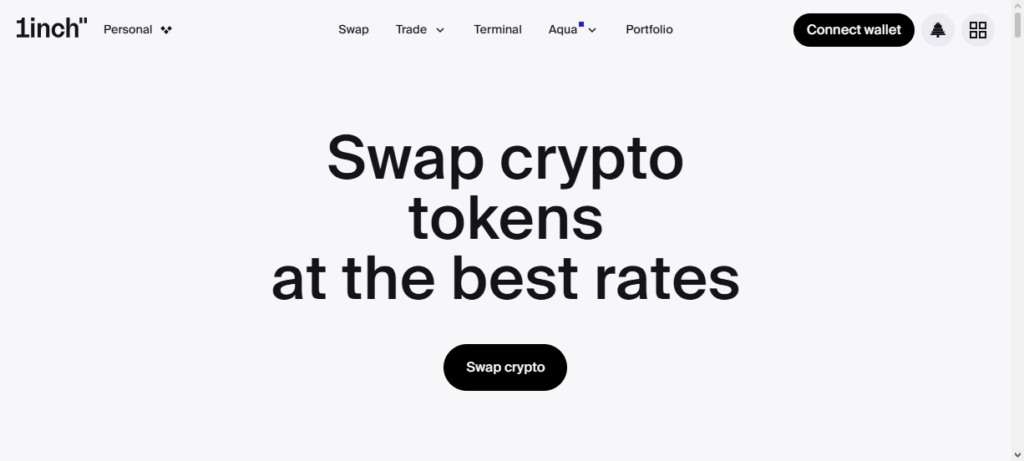
Features such as private order execution, Fusion and multi-chain functionalities, make 1inch Pro an ideal choice to access DeFi liquidity without exposing large orders to unnecessary market risk. It is primarily utilized for algorithmic trading, active market liquidity management, and institutional token swaps.
Features:
- Advanced Pathfinder Routing: Identifies the best trading paths amongst all available liquidity sources.
- Multi-Chain Liquidity Access: Supports cross-chain institutional trading.
- Fusion Mode: Intentional swaps are executed optimally and with a low gas cost.
- Large Order Optimization: Large orders are split across the pools to minimize slippage.
- API Integration: Provides infrastructure for businesses, wallets, and trading systems.
Pros:
- Access to deep DeFi liquidity.
- Excellent price optimization technology.
- Can work across different blockchain networks.
- Designed for bulky institution-level transactions.
- Compatible with an impressive number of integrations.
Cons:
- Complex features may require extra technical skills.
- Depends on available market liquidity.
- Not all advanced features may be fully functional.
- Trade volume may still cause market disruption.
- Exposure to smart contracts may still exist.
3. Matcha (0x Pro)
Matcha is the institutional arm of DeFi liquidity aggregation built on top of 0x protocol and integrates AMM liquidity streams with market maker networks.

Institutions may access multiple decentralized exchanges via the 0x API Infrastructure, enabling institutions to execute swaps at better prices and with improved liquidity.
Matcha focuses on providing users a simple and efficient way to manage their digital assets at scale. The platform uses 0x’s integrations with wallets and DeFi apps as a foundation for strong scalable liquidity infrastructure and token exchange services.
Features:
- 0x API Liquidity Network: Connects multiple DEXs and liquidity providers.
- Smart Order Routing: Automatically selects the best trading paths.
- Professional Trading Infrastructure: Offers scalable swaps to applications and businesses.
- Market Maker Integration: Seeks better execution with professional liquidity sources.
- Developer-Friendly APIs: Web3 application integration is made easy.
Pros:
- Dependable aggregation of liquidity.
- Ease of use.
- Well built developer ecosystem.
- Offers competitive pricing for swaps.
- Is optimized for institutional use.
Cons:
- Still depends on external liquidity providers.
- Has limited institutional-specific features compared to competitors.
- Supports limited advanced portfolio features.
- Can have variances in liquidity depending on the assets.
- Focused on swap execution.
4. Paraswap
For institutional traders, ParaSwap helps achieve the best execution when connecting multiple decentralized exchanges and liquidity sources through its liquidity aggregator. Its Augustus routing engine helps determine pool efficiency based on price, gas cost, and liquidity. ParaSwap’s liquidty aggregator can handle multi hop swaps and large trades.

Professional traders and Web3 businesses can leverage Pegaswap. Pegaswap helps improve the efficiency of trades by employing intent based execution where specialized solvers begin competing for order fulfillment. ParaSwap enables institutions to gain access to DeFi liquidity fractured markets and helps reduce operational burdens.
Features:
- Augustus Routing Engine: Searches multiple DEX liquidity sources for optimized execution.
- Multi-Hop Swaps: Enables complex trading routes between different assets.
- Gas Optimization: Considers transaction costs when selecting routes.
- Multi-Chain Support: Provides access to several blockchain ecosystems.
- Developer APIs: Allows businesses to integrate DeFi swapping infrastructure.
Pros:
- Efficient liquidity discovery.
- Reduces manual trading complexity.
- Supports large transaction volumes.
- Strong DeFi ecosystem connections.
- Provides competitive swap rates.
Cons:
- Execution depends on connected exchanges.
- Limited custody features.
- Not designed as a complete institutional platform.
- Smart contract risks exist.
- Some assets may have limited liquidity.
5. OpenOcean Pro
OpenOcean Pro is a multi-chain liquidity aggregator that helps institutions access multiple decentralized exchanges, centralized exchanges and cross-chain liquidity sources. OpenOcean Pro helps institutions manage complex swaps at a cost effective price. OpenOcean Pro has a variety of features including intelligent routing and an automated market maker.
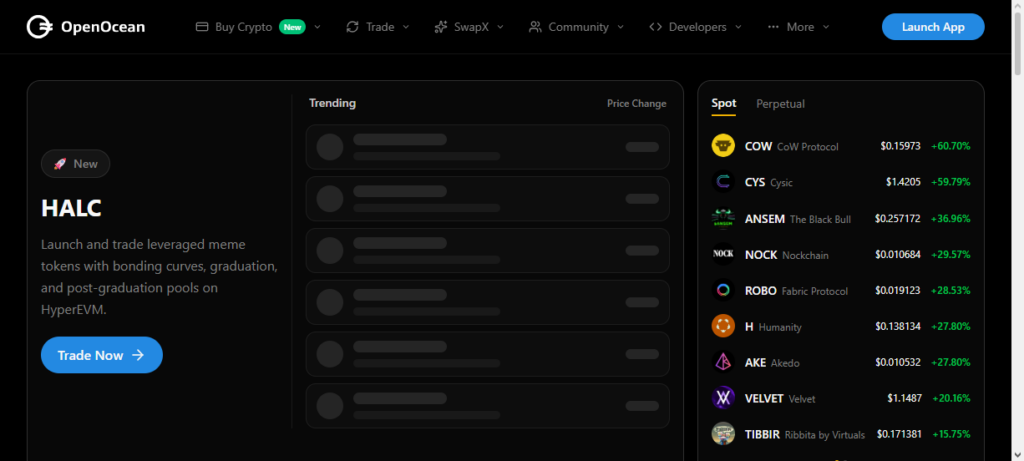
The major advantage is broad liquidity coverage, with professional traders having access to deeper markets. It has less price impact on large transactions. The platform is geared toward crypto funds, market makers, and Web3 organizations that need efficient multi-chain liquidity.
Features:
- Integrates liquidity across multiple blockchains.
- Integrates DEX and CEX liquidity.
- Smart routing algorithms.
- Advanced trading tools.
- Wide range of assets.
Pros:
- Strong multi-chain integration.
- Access to multiple liquidity sources.
- Reduces trading costs.
- Supports complex swaps.
- Effective for cross-chain strategies.
Cons:
- Cross-chain swap may be risky.
- Quality of liquidity varies by network.
- Complex for beginners.
- Security risks from reliance on bridges.
- Some smaller assets may have little liquidity.
6. Odos Institutional Router
Odos Institutional Router is a complex solution for DeFi trading execution that focuses on improving cross chain token swaps and liquidity routing. Compared to other simple aggregators, Odos offers complex solutions for multi-token and multi-path trading. This is useful for organizations that want to execute sophisticated swaps.
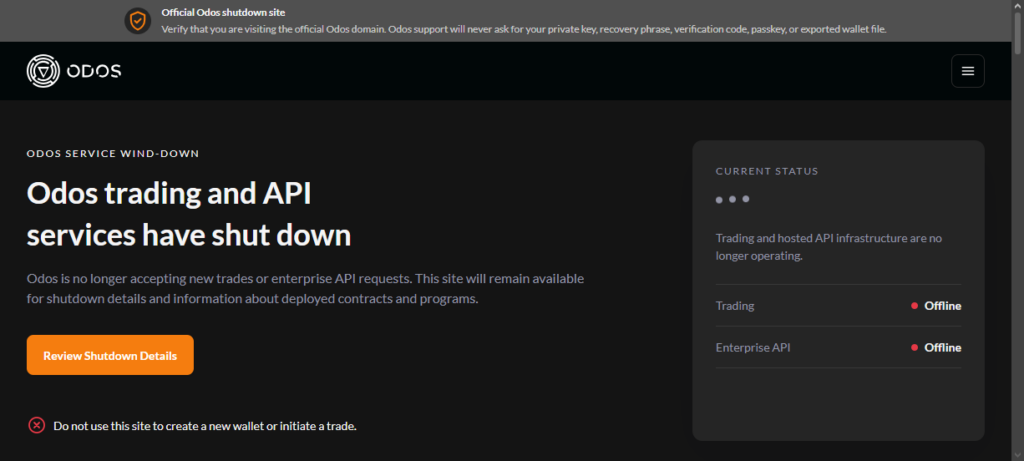
Over a large number of potential trading paths, Odos’ routing technology leverages thousands of potential routes to execute each trade. It is used by professional traders, liquidity providers, and DeFi applications that need high trade execution quality. Institutions can use Odos to execute trades across fragmented liquidity markets.
Features:
- Advanced route optimization.
- Supports swaps across multiple assets.
- Links multiple DeFi liquidity pools.
- Optimizes value vs. gas costs.
- UIs for pro users of DeFi.
Pros:
- Excellent execution.
- Supports complex transactions.
- Optimizes liquidity.
- For professionals.
- Innovative routing.
Cons:
- Newer than some other aggregators.
- Minimal brand recognition.
- Depends on liquidity.
- Complex tools for novice users.
- It can also be subject to variations.
7. Fireblocks DeFi Gateway
Fireblocks DeFi Gateway offers secure access to DeFi liquidity for institutions in a safe manner by maintaining high security standards. This is built to be used by banks, asset managers, and crypto firms, and provides a secure link between custody and DeFi.
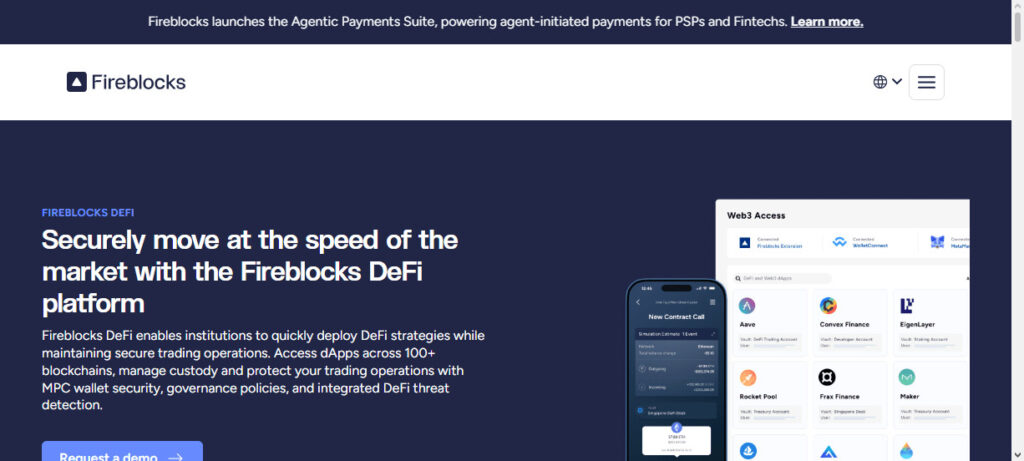
Fireblocks offers institutions a trusted way to settle transactions and deal with the risks and complexities of DeFi, all with an integrated solution. This is useful for companies that want to have access to secure DeFi liquidity.
Features:
- Institutional Security Infrastructure: Establishes secure access to DeFi with enterprise security.
- Custody Integration: Connects DeFi and custody.
- Transaction Approval Workflows: Management of institutional security processes.
- Risk Management Tools: Control and manage blockchain transactions.
- Enterprise Compliance Support: Support for regulated institutions.
Pros:
- High institutional security.
- Preferred by financial institutions.
- Strong custody.
- Operational risk reduction.
- Appropriate for enterprise use.
Cons:
- More expensive than retail.
- Setup is more involved.
- Not built for pure trading.
- Complex for smaller organizations.
- Not for individuals.
8. Copper ClearLoop DeFi
With Copper ClearLoop DeFi, professional traders gain access to crypto liquidity while mitigating counterparty and custody related risks. ClearLoop allows institutions to trade on external markets while maintaining custody of the assets in Copper’s secure custody solution.

TradFi institutional risk management converges with DeFi’s opportunities for liquidity. ClearLoop is directed toward asset managers, hedge funds, and financial firms who require operational control together with secure settlement and deployment of capital efficiently.
Copper, with its institutional custody and trading connectivity service, allows firms to engage in the digital asset markets offering them improved security.
Features:
- Off-Exchange Settlement: Trades with assets kept safe.
- Institutional Custody Support: Protects digital assets when transacting.
- Counterparty Risk Reduction: Mitigates trading platform risk.
- Professional Trading Infrastructure: Geared toward hedge funds and asset managers.
- Capital Efficiency Tools: Capital allocation tools for institutions.
Pros:
- Good security.
- Mitigates exchange custody risks.
- Institution-level security.
- Capital efficient.
- Optimized for trading operations.
Cons:
- Primarily built for institutions.
- Requires onboarding.
- Not for smaller traders.
- Depends on connected trading venues.
- Increased operational complexity.
9. Balancer Institutional Pools
Balancer Institutional Pools provides DeFi participants with a buildable liquidity infrastructure for customizable asset management and advanced market making. Balancer provides institutions with the ability to create liquidity pools of their design based on diverse parameters such as asset weights, fee structures, and portfolio strategies.
Funds, DAOs, and financial institutions are able to manage their treasury assets and capture liquidity rewards from these pools. Institutional clients of Balancer experience automated portfolio management with a greater degree of flexibility and control and a higher level of decentralization with a lower reliance on intermediaries.
Balancer’s flexible pool design accommodates the requirements of institutions developing advanced DeFi offerings and institutional liquidity offerings.
Features:
- Customizable Liquidity Pools: Allows institutions to create flexible pool structures.
- Automated Portfolio Management: Supports automated asset balancing.
- Multiple Token Weights: Enables customized investment strategies.
- Liquidity Incentive Management: Helps optimize returns for providers.
- Programmable DeFi Infrastructure: Supports advanced financial applications.
Pros:
- Highly flexible pool design.
- Suitable for treasury management.
- Supports innovative DeFi strategies.
- Enables customized liquidity solutions.
- Strong ecosystem adoption.
Cons:
- Requires DeFi expertise.
- Impermanent loss risks exist.
- Complex pool management.
- Liquidity depends on participation.
- Not ideal for simple token swaps.
10. Unizen Institutional Hub
Simplifying access to decentralized markets is the purpose behind Unizen Institutional Hub. Through combination of tools including liquidity aggregation and trading optimization, the institutional-grade platform provides users with the means to efficiently execute orders.
Unizen Institutional Hub maintains an emphasis on providing simplified access to various DeFi ecosystems and optimized workflow for users managing an array of assets. Users are provided access to numerous liquidity sources to enable them to seek the best pricing available on decentralized marketplaces.
Unizen provides its services to crypto funds and enterprises which need improved management of portfolios and optimized execution of liquidity spanning several blockchains.
Features
- Multi-Chain Trading: Connecting blockchain ecosystems.
- Liquidity Aggregation: Signature DeFi liquidity.
- Cross Chain: Moving assets across networks.
- Trading Optimization Tools: Tools for optimal trading.
- Unified DeFi Interface: Simple DeFi access.
Pros
- Access to multiple chains.
- Simplified DeFi management.
- Supports advanced trading strategies.
- Less fragmented liquidity.
- Services Web3 businesses.
Cons
- Smaller ecosystem than leading aggregators.
- Possible variable liquidity.
- Unsophisticated institutional adoption.
- Risks of cross-chain.
- Limited advanced enterprise features.
Conclusion
Institutional DeFi liquidity aggregators provides professional investors, hedge funds, asset managers, and Web3 organizations with efficient access to fragmented decentralized markets. These platforms execute better by marrying the liquidity from multiple DEXs, AMMs, market makers and blockchain networks, by decreasing slippage and improving pricing.
Smart order routing solutions like CowSwap, 1inch Pro, Matcha (0x Pro), ParaSwap, OpenOcean Pro, and Odos Institutional Router are some of the solutions with the aim of optimizing execution and providing deep liquidity. Fireblocks DeFi Gateway and Copper ClearLoop DeFi fulfill institutional demands of custody solution, control over transaction, and risk management.
In thefragmented DeFi landscape, the right liquidity aggregator for an institution depends on the trading volume, blockchain networks, custody, compliance, and execution strategies. As DeFi matures, institutional grade liquidity providers will connect the traditional finance world with the blockchain based markets by offering secure, reliable and efficient trading infrastructure.
Best DeFi liquidity aggregators build poker like ecosystems to efficiently and effectively support institutional participation in the on chain economy.
FAQ
What Are Institutional DeFi Liquidity Aggregators?
Institutional DeFi liquidity aggregators are advanced platforms that combine liquidity from multiple decentralized exchanges (DEXs), automated market makers (AMMs), and blockchain networks into a single trading solution. They help professional investors, hedge funds, crypto companies, and financial institutions execute large transactions with better pricing, lower slippage, and improved market efficiency. These platforms use smart routing algorithms to identify the best available liquidity sources and optimize trade execution.
Why Do Institutions Need DeFi Liquidity Aggregators?
Institutions use DeFi liquidity aggregators because decentralized markets are highly fragmented across different exchanges and blockchain networks. Aggregators solve this challenge by connecting multiple liquidity pools and finding the most efficient trading routes. They help reduce transaction costs, minimize price impact on large orders, improve execution speed, and provide access to deeper liquidity without manually interacting with multiple protocols.
How Do Institutional DeFi Liquidity Aggregators Work?
Institutional DeFi liquidity aggregators use smart order routing technology to scan multiple liquidity sources and compare available prices, fees, gas costs, and market conditions. When a trade request is submitted, the platform automatically selects or combines different liquidity pools to complete the transaction at the best possible rate. Some advanced aggregators also use solver networks, intent-based trading, and algorithmic execution strategies.
Which Are the Best Institutional DeFi Liquidity Aggregators in 2026?
Some of the leading institutional DeFi liquidity aggregators include CowSwap, 1inch Pro, Matcha (0x Pro), ParaSwap, OpenOcean Pro, Odos Institutional Router, Fireblocks DeFi Gateway, Copper ClearLoop DeFi, Balancer Institutional Pools, and Unizen Institutional Hub. Each platform offers different advantages, such as optimized routing, enterprise security, multi-chain liquidity access, or institutional custody integration.