

This article focuses on how the Best Restaked Liquidity & LRT Yield Exchanges provide crypto stakeholders with opportunities to maximize their staking rewards using liquid restaking methods.
- What Are Restaked Liquidity & LRT Yield Exchanges?
- How Do LRT Yield Exchanges Work?
- Key Point
- 1. EigenLayer Exchange
- EigenLayer Exchange Features
- 2. Symbiotic LRT Hub
- Symbiotic LRT Hub Features
- 3. Karak Yield Network
- Karak Yield Network Features
- 4. ether.fi YieldX
- ether.fi YieldX Features
- 5. Renzo Yield Pools
- Renzo Yield Pools Features
- 6. Kelp DAO Yield Market
- Kelp DAO Yield Market Features
- 7. Puffer Finance Yield
- Puffer Finance Yield Features
- 8. Swell Yield Station
- Swell Yield Station Features
- 9. Mantle Yield Exchange
- Mantle Yield Exchange Features
- 10. Rocket Pool RestakeX
- Rocket Pool RestakeX Features
- Comparison of Leading Restaked Liquidity & LRT Yield Exchanges
- Conclusion
- FAQ
These platforms help users to earn additional DeFi yields while sustaining their liquidity through the Liquid Restaking Tokens (LRTs). Here we analyze their attributes and drawbacks. This article further analyzes the main considerations when picking a restaking platform.
What Are Restaked Liquidity & LRT Yield Exchanges?
Restaked Liquidity & LRT Yield Exchanges enable users to earn interest on cryptocurrency through decentralized finance (DeFi) solutions that include liquid restaking. Programs based on liquid restaking tokens (LRTs) cook up a solution that allows users to liquid restake.
Traditional staking locks users’ assets and only allows users to earn a return on them. Restaking networks, liquidity pools, and yield farming offer users an opportunity for additional rewards. Restaked Liquidity and LRT Yield Exchanges increase the efficiency of capital for users. They enable users to lock their assets and maintain fluidity and expose users to several opportunities to earn within DeFi.
How Do LRT Yield Exchanges Work?
Users Deposit Staked Assets: With LRT yield exchanges, users have the option of depositing assets, such as Ethereum (ETH), into liquid restaking protocols, which are then used for staking and securing blockchain networks and earning rewards.
Assets Are Restaked Through Protocols: After a deposit is made, the platform restakes the assets through networks such as EigenLayer or other restaking ecosystems, offering participants the opportunity to earn additional rewards in excess of conventional staking rewards.
LRT Tokens Are Issued: LRT Tokens, representing the deposited and restaked assets, are issued to users. These tokens retain the value of the original stake and allow users to use the tokens in other DeFi applications.
LRT Tokens Have DeFi Utility: LRT holders have the ability to engage in other DeFi applications, such as liquidity pools, lending, and yield farming, to earn additional passive income without having to unstake their assets.
Rewards Are Distributed Automatically: LRT exchanges are built to collect all staking and restaking rewards from the validators and payback users based on their LRT holdings.
Users Earn Yield While Keeping LiquidityInstead of having assets locked during staking, users have the freedom to move, trade, or deploy their assets to other DeFi applications while earning staking rewards.
Smart Contracts Run Operations: Users do not have to worry about managing their deposits and withdrawals, thank you to automated smart contracts which take care of reward calculation and connecting validators, as well as automated transactions.
Key Point
| Exchange | Best For | Key Features |
|---|---|---|
| EigenLayer Exchange | Institutional stakers | Native restaking, AVS yield routing |
| Symbiotic LRT Hub | Multi‑collateral users | ERC‑20 vault safety, permissioned operators |
| Karak Yield Network | Cross‑chain traders | DVN bridge integrity, multi‑asset restaking |
| ether.fi YieldX | Liquidity seekers | Native eETH/weETH restaking, DeFi integrations |
| Renzo Yield Pools | L2 stakers | ezETH liquidity, reduced gas costs |
| Kelp DAO Yield Market | Diversified portfolios | rsETH multi‑asset restaking, broad DeFi support |
| Puffer Finance Yield | Security‑focused stakers | Anti‑slashing tech, native restaking |
| Swell Yield Station | DeFi + L2 users | rswETH restaking, integrated L2 ecosystem |
| Mantle Yield Exchange | Layer‑2 ecosystems | mETH restaking, low‑cost yield routing |
| Rocket Pool RestakeX | Decentralized pools | rETH native restaking, community validators |
1. EigenLayer Exchange
EigenLayer was the first company to offer restaking for Ethereum in 2021. Users of EigenLayer can restake ETH and liquid staking tokens (LST). EigenLayer charges different fees for each Active Validated Service (AVS) used and shares out rewards to the stakers.

EigenLayer currently has the most value locked in their restaking protocol of any other protocol that currently services billions of dollars of value. One innovation that EigenLayer has, which restaking protocols have yet to offer, is shared security.
EigenLayer offers security infrastructure for decentralized services to be built on top of Ethereum. Among restaking protocols, it has the most users and liquidity, making EigenLayer Exchange the best liquidity restaking protocol available to both large and small users of liquidity.
EigenLayer Exchange Features
- Year of founding – 2021
- Supports – ETH, LSTs (stETH, rETH, etc.)
- Fees – Variable AVS operator fee
- Core feature – Restaking protocol securing Actively Validated Services (AVSs)
- Unique value proposition – Billions of dollars in total value locked (TVL), foundational restaking protocol for Ethereum
| Pros | Cons |
|---|---|
| Largest restaking protocol with billions in TVL | Complex AVS selection may confuse retail users |
| Strong Ethereum security backing | Variable fees depending on AVS operators |
| Supports ETH and multiple LSTs | Liquidity risks during market stress |
| Enables Actively Validated Services (AVSs) | Regulatory uncertainty around restaking |
| High institutional adoption | Still evolving governance model |
2. Symbiotic LRT Hub
Symbiotic was the restaking protocol to launch in 2024 that allows any ERC-20 token to be restaked outside of Ethereum (ETH). Like other restaking protocols, Symbiotic offers cross-collateral restaking.
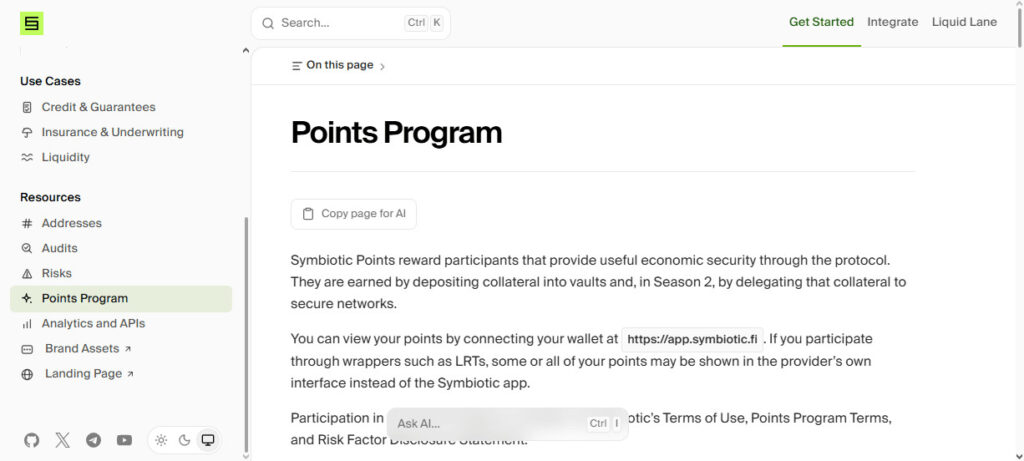
Symbiotic charges fees between 0-2%, depending on the vault manager, and does not issue its own token. Symbiotic has already gained a large user base quickly, which is common among liquidity restaking protocols, because it offers a wide range of services for liquidity restaking. Symbiotic LRT Hub is among the best yield exchanges available because of its flexible architecture.
Symbiotic LRT Hub Features
- Year of founding – 2024
- Supports – Any ERC-20 (ETH, stablecoins, governance tokens)
- Fees – 0-2% vault fees
- Core feature – Multi-collateral restaking beyond ETH
- Unique value proposition – Permissionless design and wide collateral support
| Pros | Cons |
|---|---|
| Supports any ERC‑20 token (multi‑collateral) | New protocol, limited track record |
| Permissionless design | Lower liquidity compared to EigenLayer |
| Flexible vault management | Fees vary (0–2%) depending on managers |
| Expands restaking beyond ETH | Adoption still growing |
| Attractive for DAOs and DeFi | Less AVS diversity than EigenLayer |
3. Karak Yield Network
Karak introduced its multi-chain restaking network in 2023. It extends beyond Ethereum by supporting ETH, LSTs and stablecoins. Its Decentralized Security Service (DSS) uses AI to detect risks. It charges about 10% of rewards as protocol fees and has a model that integrates AI-based risk detection. Karak aims for cross-chain interoperability.
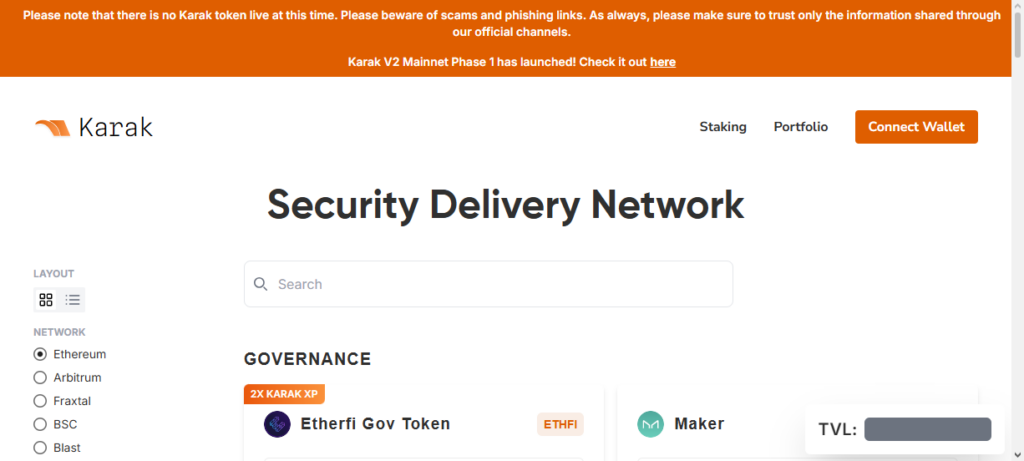
This means that the restaked assets can secure services in different ecosystems. The design of the restaking network minimizes the risk of slashing, whilst increasing the yield. With advanced security, multi-asset support and innovative risk management, Karak Yield Network is regarded as one of the top restaked liquidity exchanges.
Karak Yield Network Features
- Year of founding – 2023
- Supports – ETH, LSTs, stablecoins
- Fees – ~ 10% protocol fee
- Core feature – Multi-chain restaking with the DSS security model
- Unique value proposition – Risk detection yield AI to optimize yield
| Pros | Cons |
|---|---|
| Multi‑chain restaking support | Higher protocol fees (~10%) |
| AI‑powered risk detection | Complexity may deter retail stakers |
| DSS security model reduces slashing | Still early in adoption |
| Supports ETH, LSTs, stablecoins | Limited DeFi integrations |
| Strong institutional focus | Smaller liquidity compared to leaders |
4. ether.fi YieldX
Established in 2022, ether.fi is a non-custodial liquid restaking protocol that issues eETH and weETH (wETH) with a 10% rewards fee. The protocol supports ETH, LSTs and ETHFI. Nearly $5B TVL has made ether.fi one of the leaders in restaking.

By offering consumer friendly products such as the Visa-backed ether.fi Cash Card, ether.fi has created a user friendly yield marketplace product, YieldX. Non-custodial design of ether.fi YieldX puts users in control of their keys, eliminating custodial risk. This makes ether.fi YieldX one of the best LRT yield exchanges.
ether.fi YieldX Features
- Year of founding – 2022
- Supports – ETH, eETH, weETH, ETHFI
- Fees – 10% rewards fee
- Core feature – User key control for non-custodial staking
- Unique value proposition – Visa Cash Card
| Pros | Cons |
|---|---|
| Non‑custodial staking (users keep keys) | 10% rewards fee |
| Large TVL ($5B+) | Governance still maturing |
| Consumer products (Visa Cash Card) | Limited AVS diversity compared to EigenLayer |
| Strong DeFi integrations | Complexity for new users |
| Transparent yield marketplace | Dependent on Ethereum ecosystem |
5. Renzo Yield Pools
Renzo is a liquid restaking protocol and will start offering ezETH and the governance token, REZ, in 2024. For each staking reward, it charges a 10% fee. Unlike other protocols, Renzo simplifies restaking by creating AVS (Automated Value Selection) strategies for users.
Renzo provides its users with tools to earn high yields with minimal complexity on staking. Renzo Yield Pools provide high and simplified return exposures to AVS. For all of these reasons, Renzo is one of the best yield exchanges available, with liquidity and restaking benefits.
Renzo Yield Pools Features
- Year of founding – 2024
- Supports – ETH, ezETH, REZ
- Fees – 10% rewards fee
- Core feature – AVS strategies for restaking
- Unique value proposition – Strong retail adoption with over 3 billion dollars in TVL
| Pros | Cons |
|---|---|
| Simplified curated AVS strategies | 10% rewards fee |
| Strong retail adoption | Less flexibility for advanced stakers |
| Multi‑chain support | New protocol, evolving governance |
| $3B+ TVL | Liquidity risks during volatility |
| Easy access for beginners | Limited institutional adoption |
6. Kelp DAO Yield Market
Kelp DAO was created in 2023 and also issues rsETH along with KEP, the governance token. Kelp DAO has a 3.5% fee on staking rewards, making it one of the lowest fee protocols and also one of the most attractive to users looking to maximize yield.

Kelp DAO also offers tools to earn “Kelp Miles” by maintaining liquidity staked for a certain period, further creating user incentives for long-term participation. It also has TVL in the billions, and is the second largest LRT protocol behind ether.fi. It is one of the best restaked liquidity exchanges by successfully combining low fees, liquidity, and user incentive protocol design.
Kelp DAO Yield Market Features
- Year of founding – 2023
- Supports – ETH, rsETH, KEP
- Fees – 3.5% staking rewards fee
- Core feature – Loyalty rewards through “Kelp Miles”
- Unique value proposition – Cross-chain liquidity and the second-largest LRT protocol
| Pros | Cons |
|---|---|
| Low fees (3.5%) | Smaller AVS ecosystem |
| Loyalty rewards (Kelp Miles) | Still growing liquidity depth |
| Cross‑chain rsETH adoption | Governance less decentralized |
| Second‑largest LRT protocol | Competition from ether.fi |
| Strong DeFi integrations | Yield depends on AVS performance |
7. Puffer Finance Yield
Launched in 2024, Puffer Finance is a validator decentralization focused restaking protocol which issues pufETH and the PUFFER token with a 10% reward fee. Puffer has released Secure-Signer technology in order to eliminate staking risk, in which validators can stake with only 1-2 ETH.
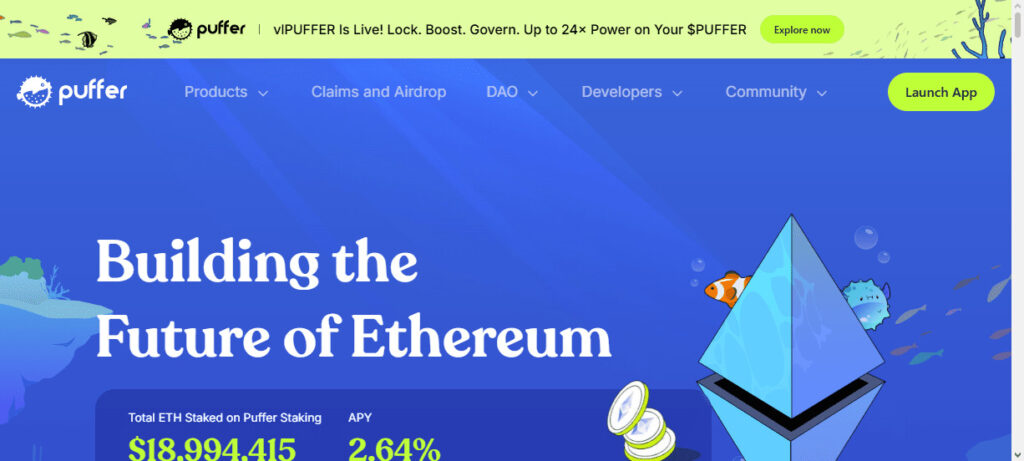
This innovation reduces barriers to entry while guaranteeing the security of the staking infrastructure. Puffer Finance Yield targets smaller stakers by maximizing yield with minimal risk. With innovative anti-slashing technology and providing users the opportunity to participate in secure validator staking, they are one of the most exciting and best yield exchanges available in the market.
Puffer Finance Yield Features
- Year of founding – 2024
- Supports – ETH, pufETH, PUFFER
- Fees – 10% rewards fee
- Feature: Secure‑Signer anti‑slashing tech
- Highlight: Validator entry 1-2 ETH
| Pros | Cons |
|---|---|
| Secure‑Signer anti‑slashing tech | 10% rewards fee |
| Validator entry as low as 1–2 ETH | New protocol, limited track record |
| Democratizes staking access | Smaller liquidity compared to leaders |
| Strong decentralization | Limited AVS diversity |
| Innovative validator protection | Adoption still early stage |
8. Swell Yield Station
Swell launched in 2023 as a complete solution staking protocol for ETH and restaked assets. swETH, rswETH and the SWELL token are Swell’s products, and they charge a 10% staking fee. Swell’s Yield Station is entire marketplace dedicated to the provision of yield through staking with AVS.

Swell also launched their Swell Chain, which incorporates DeFi and staking, offering a unified staking ecosystem. Swell, thanks to strong DeFi partnerships, is a major player in the LRT space. The Swell Yield Station is one of the most best restaked liquidity exchanges in the industry.
Swell Yield Station Features
- Founded: 2023
- Assets: ETH, swETH, rswETH, SWELL
- Fees: 10% staking fee
- Feature: All-in-one staking, restaking, L2
- Highlight: DeFi integrations and Swell Chain
| Pros | Cons |
|---|---|
| Integrated staking + restaking + L2 | 10% staking fee |
| Strong DeFi partnerships | Governance still evolving |
| swETH and rswETH widely adopted | Liquidity risks in volatile markets |
| Launch of Swell Chain (L2) | Complexity for retail stakers |
| Vertically integrated ecosystem | Competition from EigenLayer & ether.fi |
9. Mantle Yield Exchange
Founded in 2023, Mantle was built on the foundations of BitDAO. It is now a ZK-rollup L2 with its own staking infrastructure, and charges around a 10% fee on its rewards. It has mETH and MNT. Mantle’s cross-chain support for over $2B in TVL includes ETH and LSTs. Mantle Yield Exchange allows users to use its L2 infrastructure to earn yields on AVSs.
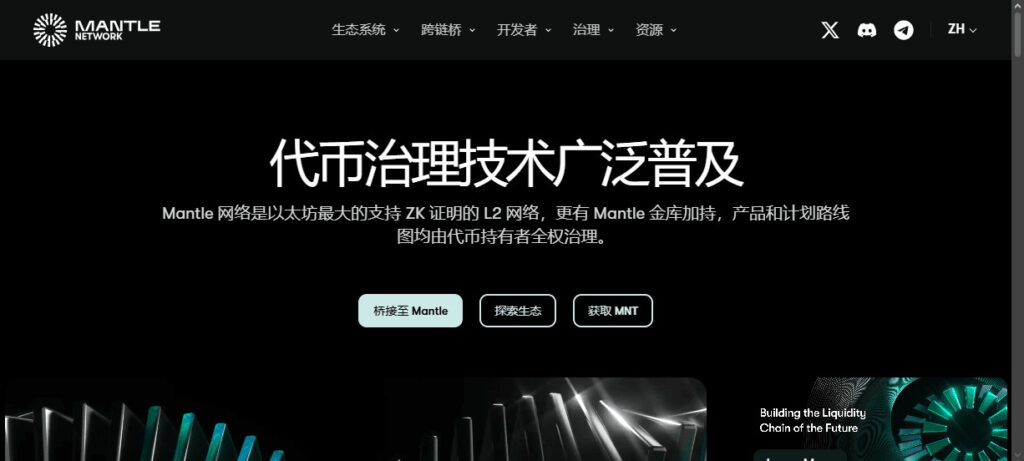
Through its integration with the BitDAO treasury, it has deep liquidity and governance support. Mantle has built one of the best yield exchanges with its innovative restaking models, liquidity, and scalability on L2.
Mantle Yield Exchange Features
- Founded: 2023 (from BitDAO)
- Assets: ETH, mETH, MNT
- Fees: ~10% rewards fee
- Feature: L2 with restaking and ZK-rollups
- Highlight: $2B+ TVL, liquidity from BitDAO
| Pros | Cons |
|---|---|
| Originated from BitDAO treasury | ~10% rewards fee |
| ZK‑rollup L2 scalability | Still building AVS ecosystem |
| Deep liquidity backing | Smaller adoption vs EigenLayer |
| Supports ETH, mETH, MNT | Governance centralization concerns |
| $2B+ TVL | Limited retail awareness |
10. Rocket Pool RestakeX
Launched on its mainnet in 2021, Rocket Pool was the first decentralized ETH staking protocol launched in 2016. It issues rETH and requires RPL token bonding for node operators.
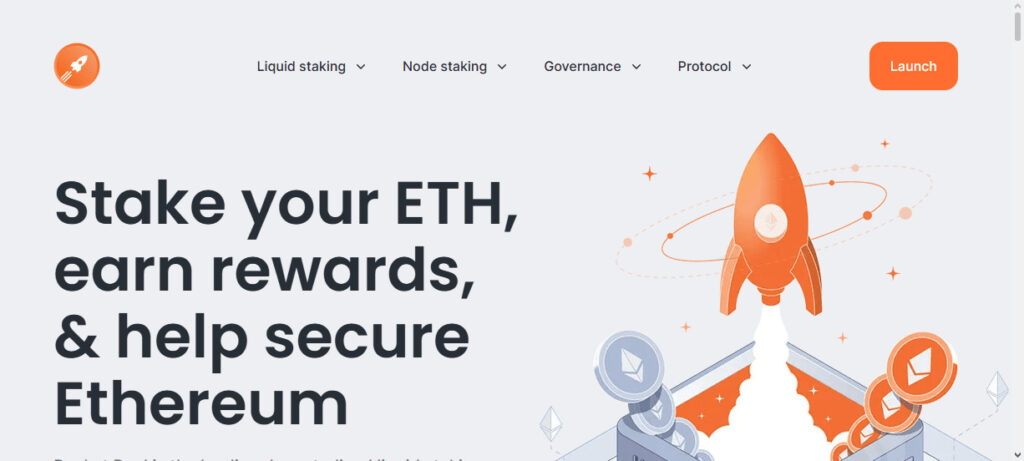
There is a 10% commission added to the fees and there are RPL collateral requirements. Rocket Pool has over $3B TVL and supports ETH and LSTs. RestakeX is an extension to staking by Rocket Pool and allows participation in AVSs for rETH holders.
Rocket Pool has flexible, permissionless minipools that allow entry as low as 0.01 ETH. For its decentralization, accessibility and strong community governance, Rocket Pool RestakeX is considered one of the best restaked liquidity exchanges.
Rocket Pool RestakeX Features
- Founded: 2016 (mainnet 2021)
- Assets: ETH, rETH, RPL
- Fees: 10% commission + RPL bond
- Feature: Minipools for small stakers
- Highlight: Most decentralized ETH staking, $3B+ TVL
| Pros | Cons |
|---|---|
| Most decentralized ETH staking | 10% commission + RPL bond |
| Permissionless minipools | Higher complexity for node operators |
| Accessible (0.01 ETH minimum) | Lower yields vs larger protocols |
| Strong community governance | Requires RPL collateral |
| $3B+ TVL | Limited AVS integrations compared to EigenLayer |
Comparison of Leading Restaked Liquidity & LRT Yield Exchanges
| Exchange | Founded | Main Token(s) | Fees | Key Features |
|---|---|---|---|---|
| EigenLayer Exchange | 2021 | ETH, LSTs, EIGEN | Variable AVS fees | Largest restaking protocol, >$20B TVL peak, supports AVSs like EigenDA, Hyperlane, Witness Chain. |
| Symbiotic LRT Hub | 2024 | Any ERC-20 | No native token, 0–2% vault fees | Permissionless, multi-collateral restaking, supports stablecoins & governance tokens. |
| Karak Yield Network | 2023 | ETH, LSTs, Stablecoins | ~10% protocol fee | Multi-chain restaking, DSS security model, AI-powered risk detection. |
| ether.fi YieldX | 2022 | eETH, weETH, ETHFI | 10% rewards fee | Non-custodial liquid restaking, $5B+ TVL, Visa-powered Cash Card. |
| Renzo Yield Pools | 2024 | ezETH, REZ | 10% rewards fee | Managed AVS selection, multi-chain support, $3B+ TVL. |
| Kelp DAO Yield Market | 2023 | rsETH, KEP | 3.5% staking rewards fee | Second-largest LRT protocol, cross-chain rsETH, loyalty points (Kelp Miles). |
| Puffer Finance Yield | 2024 | pufETH, PUFFER | 10% rewards fee | Secure-Signer anti-slashing tech, low validator entry (1–2 ETH). |
| Swell Yield Station | 2023 | swETH, rswETH, SWELL | 10% staking fee | Vertically integrated LST + LRT + L2 (Swell Chain), strong DeFi integrations. |
| Mantle Yield Exchange | 2023 | mETH, MNT | ~1.8% APY, 10% fee | Originated from BitDAO, now a ZK-rollup L2, $2B+ TVL. |
| Rocket Pool RestakeX | 2016 (mainnet 2021) | rETH, RPL | 10% commission + RPL bond | Most decentralized ETH staking, permissionless minipools, $3B+ TVL. |
Conclusion
The LRT Yield Exchanges and Restaked Liquidity protocols have experienced rapid growth and innovation in many areas. One of the notable developments is EigenLayer Exchange and Symbiotic consolidating their security measures and collateral for multi-collateral restaking.
For now, EigenLayer continues to play the most pivotal role in Ethereum’s restaking economy. For stablecoins and governance token restaking, Symbiotic is the leader. Karak Yield Network and ether.fi YieldX incorporate innovation with artificial intelligence to identify the risk of unbonding in staking, as well as non-custodial staking. Meanwhile, Renzo and Kelp DAO Yield Market simplify access with curated pools and loyal clientele rewards.
For decentralization and accessibility, Puffer Finance Yield and Rocket Pool RestakeX are distinguished frontrunners because of their efforts to remove barriers of entry and empower active community validators. On the integration front, Mantle Yield Exchange and Swell Yield Station offer the opportunity to engage in L2 ecosystems and staking, thus bringing scalable yield on-chain.
FAQ
What is a Restaked Liquidity Exchange?
A restaked liquidity exchange allows ETH or liquid staking tokens (LSTs) to be “restaked” to secure Actively Validated Services (AVSs), earning additional yield while leveraging Ethereum’s shared security.
What fees do these exchanges charge?
Most charge 3–10% rewards fees. EigenLayer varies by AVS, Symbiotic vaults range 0–2%, Kelp DAO is lower at 3.5%, while ether.fi, Renzo, Swell, and Puffer Finance typically charge 10%.
Which cryptocurrencies are supported?
ETH and LSTs (EigenLayer, ether.fi, Renzo, Kelp DAO, Swell, Rocket Pool)
Multi‑collateral ERC‑20s (Symbiotic)
Stablecoins + cross‑chain assets (Karak, Mantle)
Which exchange is best for decentralization?
Rocket Pool RestakeX and Puffer Finance Yield excel in decentralization, allowing small ETH holders and community validators to participate.