

This article will cover the best alternatives to Webull for 2026. Webull has been popular for commission-free trading and its mobile-first design, but other brokerages have better charting and margin trading. International trading is possible with Interactive Brokers. For options trading, tastytrade is a good choice.
- What Are Webull Alternatives?
- Benefits Of Webull Alternatives for Active Traders
- Key Points
- 1. Interactive Brokers
- Interactive Brokers Features
- 2. thinkorswim (Schwab)
- thinkorswim (Schwab) Features
- 3. TradeStation
- TradeStation Features
- 4. Fidelity Active Trader Pro
- Fidelity Active Trader Pro Features
- 5. Tastyworks
- Tastytrade Features
- 6. Moomoo
- Moomoo Features
- 7. Robinhood
- Robinhood Features
- 8. Public.com
- Public.com Features
- 9. Charles Schwab
- Charles Schwab Features
- 10. ChartingLens
- ChartingLens Features
- Conclusion
- FAQ
Active traders can use Moomoo for mobile trading, as it is owned by the same company as Webull. Compared to other trading apps, all of these brokerages offer a wider selection of assets, more complex order types, and more automated trading tools.
What Are Webull Alternatives?
Webull is one mobile trading app that allows commission-free trading. There are several trading platforms that allow features that are beneficial to active traders and that compete with Webull.
Some of these platforms are Interactive Brokers, thinkorswim (Schwab), TradeStation, Fidelity Active Trader Pro, tastytrade, Moomoo, Robinhood, Public.com, Charles Schwab, and ChartingLens.
Each of these platforms provide features that encourage trading on a global scale and introduce automation to trading. Other features include providing users with pricing on options, Advanced Charting Features, and other tools that promote social trading.
Benefits Of Webull Alternatives for Active Traders
Lower margin rates – Platforms like Interactive Brokers offer margin rates as low as 4–6%, helping traders reduce borrowing costs compared to Webull’s higher rates.
Advanced charting tools – thinkorswim and ChartingLens provide hundreds of indicators, scripting, and AI-powered analytics, far beyond Webull’s limited ~20 indicators.
Options & futures support – tastytrade and TradeStation specialize in derivatives, offering capped commissions and automation tools that Webull lacks.
Global market access – Interactive Brokers allows trading in 150+ markets worldwide, while Webull is mostly US-focused.
Automation & backtesting – TradeStation and QuantConnect enable algorithmic trading and backtesting, features not available in Webull.
Mobile-first competitors – Moomoo offers free Level 2 data and advanced mobile UX, making it a stronger mobile alternative.
Social investing – Public.com integrates community-driven insights and transparency, appealing to traders who value collaboration.
Full-service support – Charles Schwab and Fidelity provide retirement planning, research, and customer service alongside active trading tools.
Key Points
| Broker/Platform | Best For | Stock/ETF Commission | Options Pricing | Margin Rate | Key Strengths |
|---|---|---|---|---|---|
| Interactive Brokers | Professional & global traders | $0 (Lite) / tiered $0.15–$0.65 | Very low (from 4.8%) | Global access, lowest margin rates, advanced TWS platform | |
| thinkorswim (Schwab) | Technical day traders | $0 | $0.65 | Competitive | Best-in-class charting, options analytics, paper trading |
| TradeStation | Strategy automation | $0 up to 10k shares | $0.60 | Competitive | Backtesting, EasyLanguage scripting, automation tools |
| Fidelity Active Trader Pro | Active + long-term investors | $0 | $0.65 | Competitive | Robust tools, strong customer service, research depth |
| tastytrade | Options & futures traders | $0 stocks/ETFs | $1 open / $0 close (cap $10/leg) | Competitive | Options-focused, capped commissions, futures support |
| Moomoo | Mobile-first traders | $0 | $0 | Competitive | Free Level 2 data, pro charts, Webull-style mobile UX |
| Robinhood | Casual active traders | $0 | $0 | Higher | Simple UX, low friction, Gold tier for L2 data |
| Public.com | Transparency seekers | $0 base + sales fees | Limited | Competitive | Multi-asset focus, social investing, improved charts |
| Charles Schwab | Full-service active investors | $0 | $0.65 | Competitive | thinkorswim integration, strong research, broad services |
| ChartingLens | Charting-focused traders | Free / Paid tiers | N/A | N/A | AI-powered charting, insider data, advanced analytics |
1. Interactive Brokers
Interactive Brokers was launched in 1978 and is a top broker agency in the world. Accounts are quickly opened and funded (in as little as 3 days and without a minimum deposit). Stock and ETF trades are commission-free with Interactive Brokers LITE.
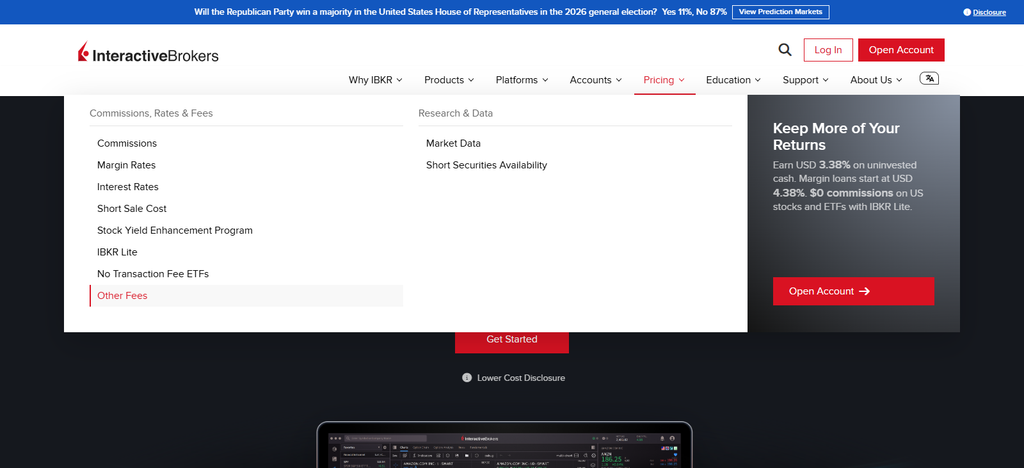
Interactive Brokers PRO charges stock and ETF commissions of $0.0005-$0.0035 per share. Options trades are $0.15 to $0.65 per contract and Futures are $0.25 to $1.00. Interactive Brokers LITE charges an exchange and regulatory fee that is assessed on each trade.
Margin rates are as low as 4.12% (after deposit) and Interactive Brokers does not charge an inactivity fee. Comparatively, Interactive Brokers is less expensive than other brokers.
Interactive Brokers Features
- Established in 1978, largest electronic broker in the world.
- No commission on stocks and ETFs with IBKR Lite.
- Options at tiered prices from $0.15 to $0.65.
- Low margin rates at 4-6%.
- Smart routing and advanced order routing.
| Pros | Cons |
|---|---|
| Lowest margin rates (4–6%) | Complex fee structure |
| Global market access | Steeper learning curve |
| Advanced Trader Workstation (TWS) | Interface less beginner-friendly |
| $0 stock/ETF commissions (Lite) | Tiered pricing can confuse |
| SmartRouting for best execution | Customer service less personalized |
| Strong risk management tools | Higher minimums for Pro accounts |
| Multi-asset support (stocks, options, futures, forex) | Research tools less intuitive |
| Highly regulated, secure | Platform feels overwhelming for casual traders |
2. thinkorswim (Schwab)
Think or Swim was created by Tom Sosnoff and became a part of TD Ameritrade and is currently a subsidiary of Charles Schwab. Accounts require a $0 cash balance and a $2,000 margin balance to be opened.
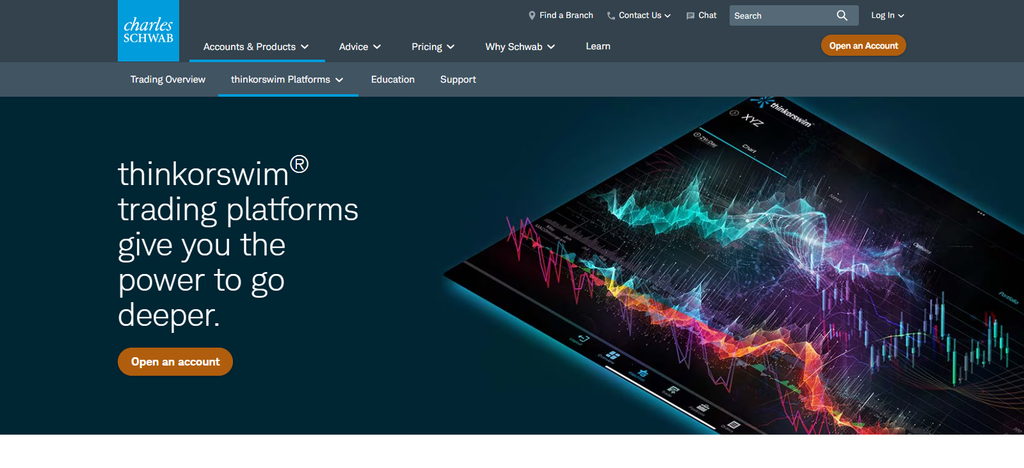
Broker-assisted trades are commission-free and options trades are $0.65 per contract. Futures are $2.25 per contract and crypto trades are $0.75. Margin rates are 10-12% (of the balance). The platform provides advanced charting and is free to use. It is one of the more powerful platforms for day traders.
thinkorswim (Schwab) Features
- Originally founded by Tom Sosnoff, now part of Schwab.
- No commission on stocks and ETFs. Options at $0.65 per contract.
- Margin rates at 10-12%.
- Powerful charting and indicator suites.
- Scripting and paper trading.
| Pros | Cons |
|---|---|
| Best-in-class charting | Margin rates ~10–12% |
| Paper trading included | Platform can be resource-heavy |
| $0 stock/ETF commissions | Options $0.65 per contract |
| Strong scripting via thinkScript | Steep learning curve |
| Advanced technical indicators | Limited global market access |
| Integrated with Schwab accounts | Interface cluttered for beginners |
| Strong educational resources | No capped options pricing |
| Reliable customer support | Futures pricing higher than rivals |
3. TradeStation
Founded in 1982, TradeStation has innovated through automation and technology over the years. The flagship product has become a robust trading platform and has a more institutional/active trader focus. TradeStation does not have a minimum deposit for its basic account, TS GO. Higher-tier accounts, TS Select and TS Elite require a $2,000 equity or trade volume for commission-free trading.

The commission structure for trade execution is $0 for up to 10,000 shares for equities and ETFs and $0.50 to $0.60 per contract for options. Futures are $0.50 to $1.50 per contract. TradeStation provides margin trading at rates from 4.25% (for active traders) and 12.5% for other trades. The platform utilizes EasyLanguage for custom indicators and automated trading strategies and offers RadarScreen for scanning and strategy auto-titration, thereby catering to algorithmic trading.
TradeStation Features
- Established in 1982, automated order routing.
- No commission on stocks and ETFs up to 10,000 shares. Options at $0.50-0.60.
- Margin rates at 4.25-12.5%.
- Powerful scripting and automation.
| Pros | Cons |
|---|---|
| Automation via EasyLanguage | Margin rates vary widely |
| $0 stock/ETF trades up to 10k shares | Platform fees for inactive accounts |
| Strong backtesting tools | Options $0.50–$0.60 per contract |
| RadarScreen scanning | Interface less mobile-friendly |
| Futures support | Higher learning curve |
| Customizable strategies | Customer service less robust |
| Long history (founded 1982) | Not ideal for casual traders |
| Advanced analytics | Limited free research compared to Fidelity |
4. Fidelity Active Trader Pro
Established in 1946, Fidelity offers its Active Trader Pro platform to its clients. Active Trader Pro does not require a minimum deposit. Fidelity charges no commissions for stock and ETF trades, and charges $0.65 per contract for options. Bonds are traded for a $250 commission.
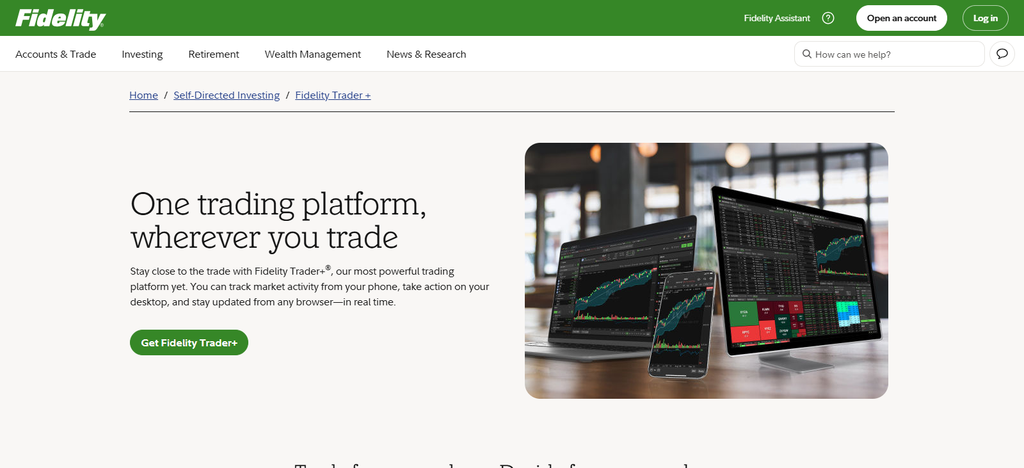
Margin rates for accounts with a balance over $1,000,000 are 7.5%. Rates for other customers range from 8.5-12.3%. Fidelity does not charge inactivity fees. Active Trader Pro is a good choice for both active traders and buy-and-hold investors.
Fidelity Active Trader Pro Features
- Established in 1946.
- Zero commission for stocks and ETFs.
- Options trading at a price of $0.65 per contract.
- Margin rates between 7.5% to 12.3%
| Pros | Cons |
|---|---|
| $0 stock/ETF commissions | Margin rates 7.5–12.3% |
| Strong customer service | Options $0.65 per contract |
| Streaming Level II quotes | Less automation support |
| Advanced charting | Platform less customizable |
| Trusted brand (founded 1946) | No capped options pricing |
| Thousands of NTF mutual funds | Interface less sleek than rivals |
| Strong retirement planning tools | Limited futures trading |
| Balanced for active + long-term investors | Research depth can overwhelm beginners |
5. Tastyworks
Tastyworks was founded by the same founders of tastytrade, and focuses on options and futures trading. There is no minimum deposit requirement to open an account. Trades for up to 10,000 shares of stocks and ETFs are commission free. Options trades are priced at $1 to open and are capped at $10. Futures are traded at $1.25, while micro futures are traded at $0.85.

Margin rates range from 8-11%, depending on the account balance. For options trading, Tastyworks offers very competitive commission rates. Tastyworks futures trading, however, lacks competitiveness.
Tastytrade Features
- Founded in 2011 by Tom Sosnoff.
- Zero commission for stocks and ETFs.
- Options trading with capped commissions per leg.
- Margin rates between 8% to 11%
| Pros | Cons |
|---|---|
| Options-focused with capped pricing | Margin rates ~8–11% |
| $0 stock/ETF commissions | Limited research tools |
| Futures support | Less beginner-friendly |
| Micro futures available | No paper trading |
| Founded by Tom Sosnoff (2011) | Platform less polished |
| Strong options analytics | Limited global access |
| Crypto trading available | Interface geared toward pros |
| Transparent fee structure | No retirement planning tools |
6. Moomoo
Launched in 2018 by Futu Holdings, Moomoo is a commission-free brokerage app that enables users to trade U.S. based stocks, ETFs and options. Moomoo allows users to trade U.S. based stocks and ETFs commission free.
Options trades carry a pass through fee of about $0.04, and index options are $0.50. Moomoo’s margin rates are 6.8% flat. Free level 2 data, and risk-free paper trading with advanced charting make Moomoo a competitive alternative to Webull. Moomoo also offers customers the ability to make international trades.
Moomoo Features
- Established in 2018.
- Options and ETFs trades with zero commission.
- Margin rates between 6.8%
- Level 2 Market data
- Advance charting
| Pros | Cons |
|---|---|
| Free Level 2 data | Margin ~6.8% flat (higher than IBKR) |
| $0 stock/ETF commissions | Options fees via pass-through |
| Mobile-first design | Limited global access |
| Advanced charting | Less robust research |
| Paper trading included | Customer service less established |
| Founded in 2018 | Newer broker, less history |
| Strong community features | Interface less customizable |
| Competitive pricing | Limited retirement tools |
7. Robinhood
Launched in 2013, Robinhood was the first to offer commission-free trades. Accounts have no minimum deposit. Free trades on stocks and ETFs. Options are $0.65 per contract.
Gold membership ($5/month) is required to trade options commission-free. Margin is available with Gold membership at ~8% APR. Rates and offerings are limited compared to other brokers.
Robinhood Features
- Commission-free trading of stocks and ETFs; $0 options with Robinhood Gold.
- Started in 2013, first to offer commission-free trading.
- Margin trading available with Robinhood Gold at ~8% (APR).
- User-friendly, uncomplicated user interface.
- Commission-free trading of cryptocurrencies.
| Pros | Cons |
|---|---|
| $0 stock/ETF commissions | Margin only via Gold (~8%) |
| Simple, beginner-friendly UX | Limited advanced charting |
| Options $0 with Gold | Customer service weaker |
| Crypto trading commission-free | Spreads can be costly |
| No account minimums | Limited research tools |
| Founded in 2013 | Not ideal for pros |
| Easy mobile interface | No futures trading |
| Strong brand recognition | Limited customization |
8. Public.com
Transparency is the main focus of Public. Accounts require a $20 minimum deposit. First 3 trades of the month are free on stocks and ETFs.

Options are free and rebated. Margin rates are 4.9% and are lowered to 3.95% with higher account balances. Public Cash accounts offer a 3.3% APY. Social and investing features are provided with the app. More information at buystock.net and brokerchooser.com.
Margin rates are around 12%, on average. Schwab’s platform includes strong research and retirement planning resources, as well as the thinkorswim trading platform.
Public.com Features
- Commission-free trading of stocks and ETFs; small spreads on cryptocurrencies.
- Started in 2019. Focused on transparency.
- Tiered Margin trading at ~3.95-4.9%.
- Social-media integrations.
- 3.3% APY on cash and securities.
| Pros | Cons |
|---|---|
| $0 stock/ETF commissions | Crypto spreads (0.49–6.49%) |
| Margin rates ~3.95–4.9% | Limited options support |
| Social investing features | Smaller platform size |
| High-yield cash accounts (3.3% APY) | Less advanced charting |
| Transparency-focused | Limited global access |
| Founded in 2019 | Newer broker |
| Multi-asset support | Customer service less robust |
| Strong community engagement | No futures trading |
9. Charles Schwab
Founded in 1971, Schwab is a full-service broker with no account minimums for cash accounts and a $2,000 minimum for margin accounts. Trade commissions are $0 for stocks and ETFs and $0.65 per contract for options.
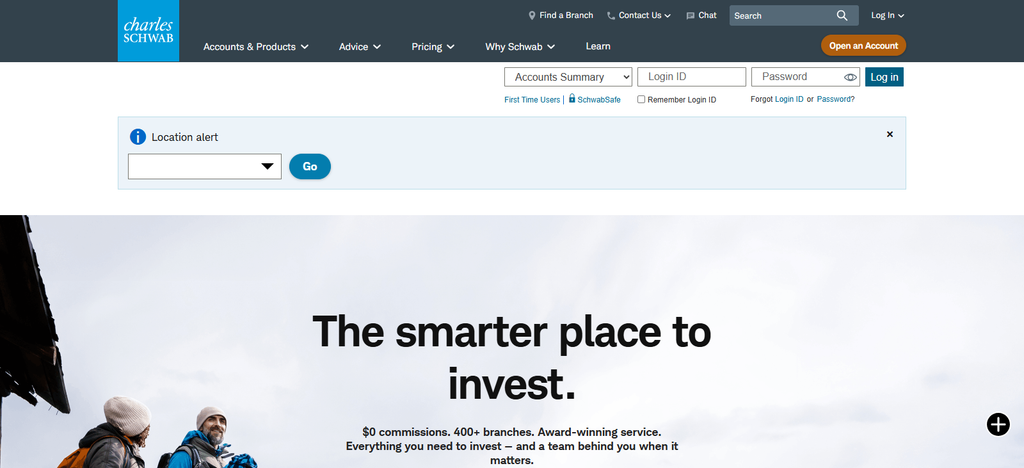
Futures trades are $2.25 per contract. Rates for maintenance margins are 10-12% depending on the balance. Overall, the brokerage is favorable with research, retirement, and other planning resources, as well as an active trading platform, thinkorswim.
Charles Schwab Features
- Commission-free trading of stocks and ETFs; $0.65 per options contract.
- Started in 1971.
- Margin trading at ~10-12%.
- Integration with thinkorswim platform.
- Extensive research and trading tools; advanced tools for retirement planning.
| Pros | Cons |
|---|---|
| $0 stock/ETF commissions | Margin ~10–12% |
| Access to thinkorswim | Options $0.65 per contract |
| Strong research tools | Platform less mobile-friendly |
| Retirement planning support | No capped options pricing |
| Founded in 1971 | Futures pricing higher |
| Full-service broker | Interface less sleek |
| Strong customer service | Learning curve for thinkorswim |
| Trusted brand | Less automation support |
10. ChartingLens
ChartingLens is a relatively new (2020) charting and analysis platform. Accounts can be opened for free and there are subscription plans: Free, Premium ($14.99/mo), and Pro ($29.99/mo). Compared to TradingView, ChartingLens is cheaper and offers more features like unlimited indicators, AI-analysis, and access to hedge fund and insider trading data.

Because ChartingLens is not a broker, it has neither commissions nor margin rates. It is best for traders interested in more affordable advanced charting.
ChartingLens Features
- Free and Premium memberships.
- Started in 2020.
- Advanced charting and AI.
- Hedge Fund and cryptocurrency holdings.
- Integration with brokerages.
| Pros | Cons |
|---|---|
| AI-powered charting | Not a broker (no direct trading) |
| Unlimited indicators | Subscription fees ($14.99–$29.99) |
| Insider trading data | No margin or commissions |
| Hedge fund holdings | Limited integration with brokers |
| Founded in 2020 | Less established brand |
| Free tier available | No futures/options execution |
| Strong analytics | Requires external broker |
| Advanced visualization | Less beginner-friendly |
Conclusion
Webull is an active trader app that offers commission free trading. Here are 10 brokers that may provide better services than Webull in 2026. They are Interactive Brokers, thinkorswim (Schwab), TradeStation, Fidelity Active Trader Pro, tastytrade, Moomoo, Robinhood, Public.com, Charles Schwab, and ChartingLens.
Webull has low costs and low requirements to open an account. Active traders using Webull should look into other platforms. Depending on what services you use, you may find better offerings elsewhere at a lower price.
Some platforms give access to more financial markets. Others give better pricing for options or equity. Some platforms may use artificial intelligence to make predictions or help traders find patterns. Active traders should find what services fit their trading strategies.
FAQ
Which broker has the lowest margin rates?
Interactive Brokers consistently offers the lowest margin rates, starting around 4–6%, making it ideal for high-volume and leveraged traders.
Which platform is best for advanced charting?
thinkorswim (Schwab) provides the most powerful charting tools, with hundreds of indicators, paper trading, and scripting via thinkScript.
Which broker is best for options trading?
tastytrade stands out with capped commissions ($1 open, $0 close, max $10 per leg), making it cost-effective for heavy options traders.
Is Charles Schwab suitable for day traders?
Yes, Schwab offers $0 stock commissions, $0.65 options pricing, and access to thinkorswim, making it strong for both day and swing traders.