

In this article, we’ll talk about the Best Multisignature Wallets for Small Business Treasuries. Specifically, let’s take a look at the top solutions that aid businesses in securing cryptocurrency funds and managing shared financial assets. We will cover their key features, security features, transaction approval processes, supported networks and pricing so that small businesses can choose the best multisignature wallet that fits their treasury management needs.
- What Are Multisignature Wallets?
- Why Small Businesses Need Multisig Wallets
- Key Points
- 1. Safe (formerly Gnosis Safe)
- Why Use Gnosis Safe (Safe before)?
- Pros & Cons of Safe (Formerly Gnosis Safe)
- 2. BitGo
- Why Use BitGo?
- Pros & Cons of BitGo
- 3. Unchained
- Why Use Unchained?
- Pros & Cons of Unchained
- 4. Casa
- Why Use Casa?
- Pros & Cons of Casa
- 5. Fireblocks
- Why Use Fireblocks?
- Pros & Cons of Fireblocks
- 6. Copper
- Why Use Copper?
- Pros & Cons of Copper
- 7. Sparrow Wallet
- Why Use Sparrow Wallet?
- Pros & Cons of Sparrow Wallet
- 8. Specter Desktop
- Why Use Specter Desktop?
- Pros & Cons of Specter Desktop
- 9. Nunchuk
- Why Use Nunchuk?
- Pros & Cons of Nunchuk
- 10. Electrum
- Why Use Electrum?
- Pros & Cons of Electrum
- Conclusion
- FAQ
What Are Multisignature Wallets?
Multisignature wallets (multisig wallets) are cryptocurrency wallets that require the approval of multiple private key holders before a transaction can be made. These wallets don’t rely on one individual to control funds, but use a predefined approval system (like 2-of-3 or 3-of-5 signatures) to authorize transactions.
This adds another layer of security, reduces the risk of unauthorized access, and helps prevent the loss of funds due to a compromised or lost private key. Crypto companies, DAOs, investment clubs, and other organizations that require shared control over digital currencies often use multisignature wallets.
Why Small Businesses Need Multisig Wallets
Enhanced Security of Funds: Multisig wallets require multiple signatures for transactions, lowering the risk of unauthorized access and ensuring the security of business funds.
Mitigates Single-Point Failure: If one private key is lost, stolen or compromised, other authorized signers can help retain control of business assets.
Shared Financial Control: Business owners, finance managers and trusted employees can collectively control cryptocurrency transactions without giving one person full power.
Increased Accountability: Businesses can track who approved transactions and identify the approver of payments, offering greater transparency in financial processes.
Provides Business Continuity: Multisig wallets enable organizations to keep access to electronic assets when an authorized signer is unable to access the assets.
Key Points
| Multisignature Wallet | Key Point |
|---|---|
| Safe (formerly Gnosis Safe) | The leading multisig wallet for Ethereum and EVM-based assets, widely used by startups, DAOs, and businesses for shared treasury control and customizable approval policies. |
| BitGo | Institutional-grade custody platform combining multisignature security, treasury management tools, policy controls, and compliance features for businesses. |
| Unchained | Bitcoin-focused collaborative custody solution that uses native Bitcoin multisig setups, making it ideal for companies holding BTC reserves. |
| Casa | Provides managed multisig security with distributed key ownership and recovery support, helping businesses reduce single-point-of-failure risk. |
| Fireblocks | Enterprise treasury platform that supports secure digital asset management, transaction approvals, governance controls, and institutional treasury operations. |
| Copper | Institutional digital asset custody and treasury solution offering multi-party authorization workflows and secure asset management for organizations. |
| Sparrow Wallet | Advanced open-source Bitcoin wallet with strong multisignature capabilities, hardware wallet integration, and detailed transaction management. |
| Specter Desktop | Open-source Bitcoin multisig coordinator designed for organizations that want self-custody, hardware wallet integration, and full-node compatibility. |
| Nunchuk | Flexible Bitcoin multisig wallet supporting collaborative custody models, hardware wallets, and team-based treasury management. |
| Electrum | One of the longest-running Bitcoin wallets with native multisignature support, suitable for businesses seeking open-source and customizable treasury security. |
1. Safe (formerly Gnosis Safe)
Safe (formerly known as Gnosis Safe) is a wallet built on a smart contract-based multisignature architecture that allows multiple owners to manage a shared wallet. Users can set approval thresholds (2-of-3 or 3-of-5, etc.) before executing transactions.
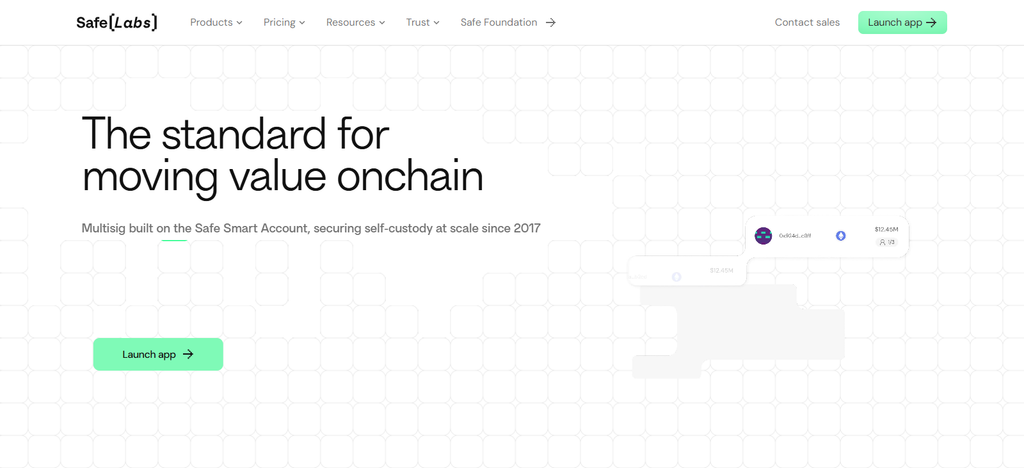
It supports ETH, ERC-20 tokens, NFTs, and other compatible digital currencies. Blockchain support is mainly confined to Ethereum and EVM compatible networks such as Polygon, Arbitrum, Optimism, and Gnosis Chain. Security Controls: Independent signer approvals, transaction simulation integrations, hardware wallet compatibility, permission management, recovery options.
Infrastructure is open source and can be customized and integrated with third-party services. Creating a basic wallet is usually free, but network gas fees, integrations, and other services may incur costs.
Why Use Gnosis Safe (Safe before)?
- Multi-signature Security: Transactions are approved only when multiple authorized owners approve them, minimizing the risk of unauthorized access.
Approvals Customization: Users can configure signing thresholds, for example 2-of-3 or 3-of-5. - Multi-Chain Support: Compatible with Ethereum and various EVM-based blockchain networks.
- Asset Management: Safe management of cryptocurrencies, ERC-20 tokens and NFTs.
- Team Collaboration: Shared wallet management for DAOs, businesses, and investment teams.
Pros & Cons of Safe (Formerly Gnosis Safe)
| Pros | Cons |
|---|---|
| Provides strong smart contract-based multisignature security. | Requires understanding of smart contract wallet operations. |
| Supports multiple EVM-compatible blockchain networks. | Not designed for native Bitcoin multisig. |
| Offers customizable transaction approval thresholds. | Network gas fees apply to transactions. |
| Supports cryptocurrencies, tokens, and NFTs. | Some advanced features require third-party integrations. |
| Suitable for DAOs and collaborative treasury management. | Recovery depends on configured owners and security arrangements. |
2. BitGo
BitGo provides institutional-grade multisignature and multi-party computation (MPC) wallet infrastructure for businesses, financial institutions and professional investors. Its multisig architecture typically uses a 2-of-3 signing scheme with keys from the user, a backup and BitGo, while MPC wallets use threshold signature technology.
The supported assets are Bitcoin, Ethereum, Litecoin, XRP, Solana, stablecoins, and many other cryptocurrencies and tokens depending on the wallet configuration. It has blockchain coverage for major networks like Bitcoin, Ethereum, Polygon and other supported protocols.
Security controls are: cold storage, hot wallets, key management, recovery procedures, role-based permissions, transaction approvals. Pricing is based on custody requirements, supported assets, transaction activity and enterprise services; custom commercial agreements are typically available.
Why Use BitGo?
- Institutional Security: Provides enterprise-level custody and wallet protection for digital assets that are standard.
- Multiple Signing Methods: Supports multisig and MPC wallet security.
- Broad Asset Support: Supports Bitcoin, Ethereum, stablecoins and many other cryptocurrencies.
- Transaction Management: Provides approval workflows and controls for handling cryptocurrency transfers.
- Business Integration: Provides infrastructure for exchanges, financial institutions and professional investors.
Pros & Cons of BitGo
| Pros | Cons |
|---|---|
| Provides institutional-grade custody infrastructure. | Pricing may be expensive for smaller users. |
| Supports multisig and MPC security approaches. | Some services require enterprise onboarding. |
| Offers broad cryptocurrency and token support. | Asset availability varies by product and jurisdiction. |
| Provides transaction approval and access controls. | Configuration can be complex for beginners. |
| Suitable for exchanges and financial institutions. | Not as simple as a basic self-custody wallet. |
3. Unchained
Unstoppable specializes in Bitcoin multisig custody solutions for individuals, businesses and long-term Bitcoin holders. They tend to use a 2-of-3 multisig arrangement in their architecture, distributing signing power between the customer and independent key holders to reduce dependence on any one device or organization.

It is mainly a Bitcoin supported asset rather than a diverse set of cryptocurrencies. Blockchain support is limited to Bitcoin network, Bitcoin transactions and compatible hardware-wallet workflows. Security controls include geographically separated keys, hardware wallet signing, collaborative custody, inheritance planning, recovery procedures and dedicated account support. “
Customers retain significant control of their Bitcoin while benefiting from the advantages of institutional custody support. The price depends on the type of membership, custody and services. Transaction or service fees apply depending on the plan you select.
Why Use Unchained?
- Bitcoin Multisig Protection: Safeguards long-term Bitcoin holdings through multisignature architecture.
- Shared Custody: Enables customers to maintain control while receiving professional custody assistance.
- Hardware Wallet Compatibility: Compatible with hardware wallets for secure transaction signing.
- Inheritance Planning: Tools and services to help families plan for Bitcoin inheritances.
- Recovery Assistance: Provides assistance to recover access when a key or device is lost.
Pros & Cons of Unchained
| Pros | Cons |
|---|---|
| Offers Bitcoin-focused multisignature security. | Primarily focused on Bitcoin rather than multiple cryptocurrencies. |
| Provides collaborative custody arrangements. | Some custody services involve additional costs. |
| Supports hardware wallet integration. | Requires careful management of multiple keys. |
| Offers inheritance planning options. | Some services may require eligibility or account onboarding. |
| Helps users maintain control over their Bitcoin. | Less suitable for users seeking multi-chain asset management. |
4. Casa
Casa provides individuals, families and high-net-worth investors multisignature Bitcoin security to protect against lost keys, device failure and unauthorized transactions. The way it is built uses multisig vaults with different signing thresholds and key arrangements, such as 3-key and 5-key setups depending on the subscription.

Supported assets are primarily Bitcoin with additional support for cryptocurrency depending on product and plan available. The main blockchain it supports is Bitcoin, with dedicated workflows for wallet management and recovery.
Security controls include hardware wallets, geographically separated keys, emergency account lockdown, inheritance planning, recovery help, and optional Casa-assisted key recovery.
It offers Standard for $250 per year, Premium for $2,100 per year and Private Client for $7,500 per year, with each subscription level offering different features.
Why Use Casa?
- Multisig Wallet Security: Offers multi-key protection for Bitcoin assets.
- Main Configurations: Different multisignature configurations per subscription plans.
- Hardware Wallet Integration: Provides hardware based private-key management.
- Inheritance Solutions: Helps users set up secure inheritance plans for cryptocurrency.
- Emergency Protection: Offers recovery assistance and account security features to safeguard digital information.
Pros & Cons of Casa
| Pros | Cons |
|---|---|
| Provides multisignature protection for Bitcoin holdings. | Advanced features may require paid subscriptions. |
| Supports multiple key configurations. | Primarily focuses on Bitcoin security. |
| Offers inheritance planning features. | Subscription costs may be high for smaller investors. |
| Integrates hardware wallet security. | Requires users to understand key management. |
| Provides recovery assistance. | Some recovery options depend on the selected plan. |
5. Fireblocks
Fireblocks builds institutional custody and wallet infrastructure for digital resources using multi-party computation (MPC) and policy-based transaction authorization. Its architecture relies on splitting cryptographic key shares into several secured environments, rather than holding a single private key in its entirety.
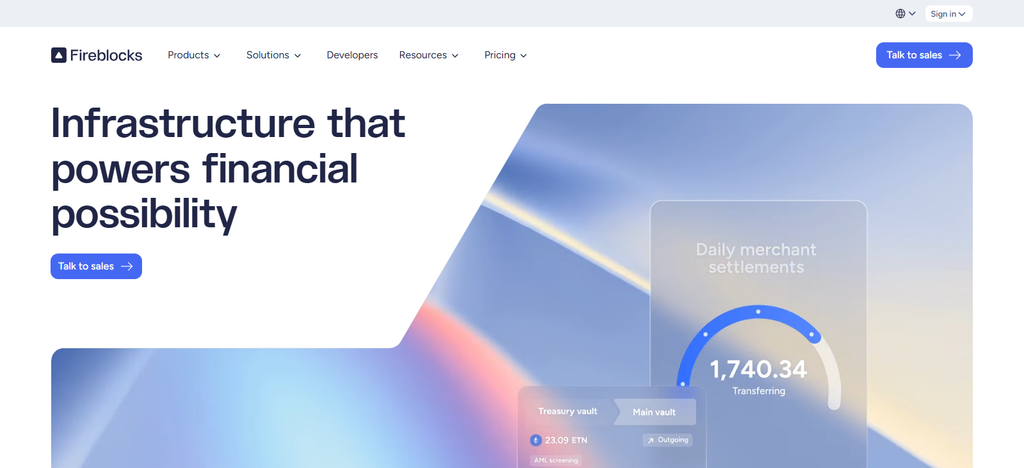
Businesses can create approval workflows with multiple administrators, teams and authorized devices. It supports Bitcoin, Ethereum, stablecoins, ERC-20 tokens, Solana assets and many other cryptocurrencies.
Supported blockchains include major networks and selected Layer-2 ecosystems, depending on the supported asset and service. Security controls include MPC-CMP technology, hardware security modules, transaction policies, allow listed addresses, role based permissions and automated risk monitoring.
Pricing is typically customized for institutional customers depending on wallet usage, transaction volume, supported networks, and required infrastructure.
Why Use Fireblocks?
- MPC Technology: Spreads the cryptographic signing authority, minimizing exposure of private keys.
- Institutional Asset Support: Supports a wide range of cryptocurrencies, tokens and stablecoins.
- Transaction Policies: Enables businesses to create custom transaction approval policies.
- Automated Security: Offers transaction monitoring, address allowlisting and risk-management controls.
- Enterprise Infrastructure: Supporting institutional custody, treasury operations, and digital asset transfers.
Pros & Cons of Fireblocks
| Pros | Cons |
|---|---|
| Uses advanced MPC-based wallet security. | Primarily targets institutional customers. |
| Supports numerous digital assets and networks. | Pricing may not suit individual investors. |
| Offers customizable transaction policies. | Initial setup can be technically complex. |
| Provides automated transaction security controls. | Requires integration and operational configuration. |
| Supports enterprise treasury and custody operations. | Access to features depends on the selected service agreement. |
6. Copper
Copper provides institutions with MPC-based infrastructure for custody, settlement and trading of electronic assets. The technology distributes control of the private key across multiple cryptographic shares, enabling authorized parties to approve transactions without exposing the full private key.
Copper’s custody infrastructure supports Bitcoin, Ethereum, stablecoins and a wide range of other digital currencies, based on product availability. We support the major cryptocurrency networks and select token ecosystems. Its ClearLoop infrastructure enables institutional trading and off-exchange settlement through connected trading venues.
Security controls comprise MPC key management, approval policies, segregated custody arrangements, transaction authorizations and operational risk management. Copper is primarily aimed at institutional investors, asset managers and trading companies.
Pricing is typically available via customized enterprise agreements based on custody needs, transaction activity and selected services.
Why Use Copper?
- MPC-based security, which uses distributed cryptographic key management to secure digital resources.
- Institutional Custody: Custody infrastructure for professional investors and financial institutions.
- Off-Exchange Settlement: ClearLoop infrastructure provides institutional trading and settlement.
- Multi-Asset Support: Supports Bitcoin, Ethereum, stablecoins and other qualifying digital currencies.
- Transaction Authorization: Facilitates controlled transaction approval and operational security workflows.
Pros & Cons of Copper
| Pros | Cons |
|---|---|
| Provides MPC-based digital asset protection. | Primarily designed for institutional customers. |
| Offers institutional custody solutions. | Pricing is generally customized. |
| Supports off-exchange settlement through ClearLoop. | Integration may require technical expertise. |
| Supports multiple cryptocurrencies and networks. | Asset support varies across services. |
| Provides transaction authorization controls. | May be excessive for individual wallet users. |
7. Sparrow Wallet
Sparrow Wallet is a Bitcoin desktop wallet that supports multisignature setups and gives users granular control over signing transactions. It supports all kinds of multisig configurations such as 2-of-3, 3-of-5, etc. with compatible hardware wallets and software signing devices.
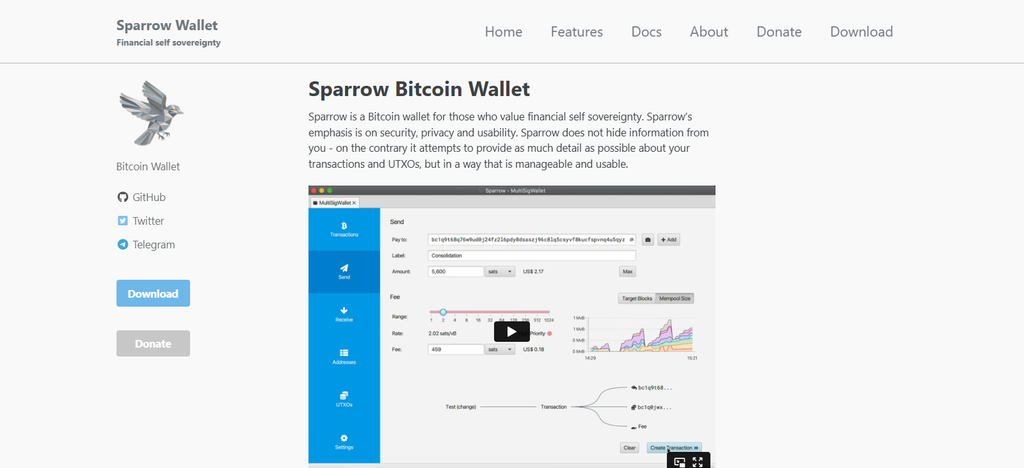
Main supported asset is Bitcoin, including regular Bitcoin transactions and compatible UTXO based wallet flows. Blockchain support is limited to the Bitcoin network and does not include Ethereum, Solana, or other smart-contract ecosystems. Security features include offline signing, hardware wallet integration, air-gapped transaction signing, PSBT support, coin control, and configurable transaction policies.
Users can run their own Bitcoin nodes for additional privacy and verification. Sparrow is free and open source, but users will need to pay any applicable Bitcoin network transaction fees.
Why Use Sparrow Wallet?
- Bitcoin Multisig Support: enables users to create custom multisignature Bitcoin wallets.
- Hardware wallet support: Connects multiple hardware wallets to sign your transactions.
- Offline transactions: allows for air-gapped signing to reduce the attack surface.
- Transaction Privacy: Provides coin control and advanced transaction handling.
- Open Source Software: Free wallet functionality with transparent (and community-reviewable) code.
Pros & Cons of Sparrow Wallet
| Pros | Cons |
|---|---|
| Supports customizable Bitcoin multisig wallets. | Supports Bitcoin rather than multiple blockchain ecosystems. |
| Integrates with hardware wallets. | Requires users to understand wallet configuration. |
| Provides offline transaction signing. | Desktop-based interface may challenge beginners. |
| Offers advanced coin control features. | Users are responsible for their own key backups. |
| Free and open-source software. | Does not provide institutional custody services. |
8. Specter Desktop
Specter Desktop is an open-source bitcoin wallet management application for users seeking hardware-wallet-based multisignature security and more control over their private keys. It’s architecture is designed to support Bitcoin multisig setups, including 2-of-3 and other signing thresholds that can be customized.
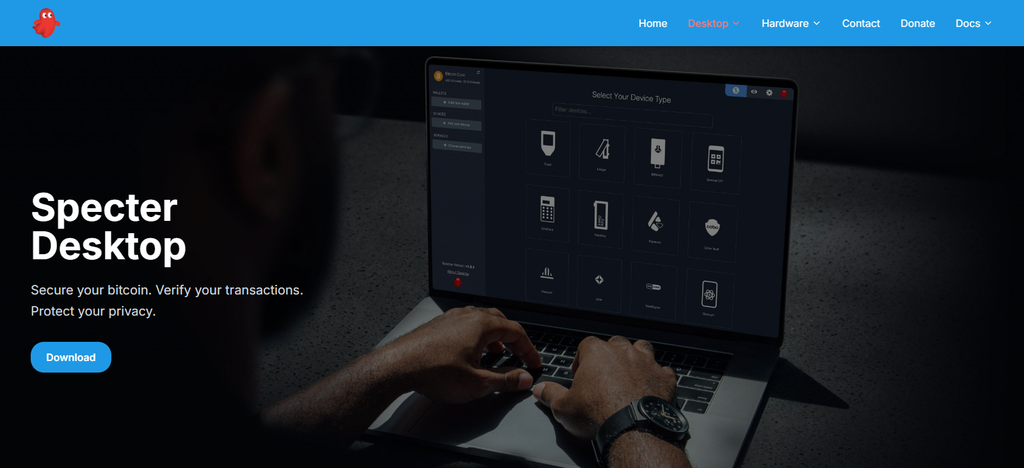
It allows users to manage multiple hardware wallets and set up multi-signature arrangements, without one custodian holding all the keys. It is contingent upon the wallet and hardware devices you have, but the primary supported asset is Bitcoin. No Blockchain support. Only Bitcoin and related transaction infrastructure.
Security controls include cold storage, air-gapped signing, hardware wallet integration, Bitcoin Core connectivity and PSBT-based transaction approval. Specter Desktop is open source software. Specter Desktop does not require a regular subscription fee, but there may be hardware, server and network transaction fees.
Why Use Specter Desktop?
- Multisig Wallet Creation: Customizable Bitcoin multisignature wallet schemes.
- Hardware Wallet Coordination: Allows multiple hardware wallets to jointly authorize a transaction.
- Cold Storage Management: Allows users to manage their Bitcoin holdings via offline signing workflows.
- Bitcoin Core Connectivity: Connect to your own Bitcoin Core infrastructure to verify independently.
- Open Source Architecture: wallet software with no mandatory subscription fees and transparency.
Pros & Cons of Specter Desktop
| Pros | Cons |
|---|---|
| Supports customizable Bitcoin multisignature arrangements. | Primarily limited to Bitcoin. |
| Works with multiple hardware wallets. | Hardware wallet setup can be complicated. |
| Supports cold storage management. | Requires careful key backup and recovery planning. |
| Integrates with Bitcoin Core. | Running personal infrastructure requires technical knowledge. |
| Free and open-source. | Less convenient for users seeking mobile-first wallet management. |
9. Nunchuk
Nunchuk is a Bitcoin multi-signature wallet for individuals, families, businesses and collaborative Bitcoin treasury management. It offers a configurable multisig architecture with 2-of-3, 3-of-5 and other signing combinations, allowing users to spread key ownership amongst different people and devices.
The assets that are supported are mainly Bitcoin and the wallet functionality revolves around Bitcoin compatible signing and transaction management. Its blockchain support is geared toward Bitcoin, not multiple smart-contract networks. Security controls include hardware wallet integration, collaborative custody, air-gapped signing, PSBT transaction support, inheritance planning and key recovery coordination.
Its interface also allows for shared wallet management and multiple signing devices. Nunchuk is a free functionality, with paid subscription options that can be selected based on the features, services and subscription arrangements.
Why Use Nunchuk?
- Wallet Management Collaboration: Allows you to share Bitcoin wallets with other participants to manage together.
- Configurable Multisig: Allows for different signature thresholds depending on the desired security level.
-Hardware Wallet Support: Compatible hardware devices are integrated to secure private keys. - Inheritance Planning: Offers tools to help plan for beneficiary access and recovery of Bitcoin.
- Air-Gapped Signing: Allows transactions to be signed offline, reducing exposure to attacks from the Internet.
Pros & Cons of Nunchuk
| Pros | Cons |
|---|---|
| Supports flexible Bitcoin multisig configurations. | Primarily focuses on Bitcoin. |
| Offers collaborative wallet management. | Multiple participants can make coordination difficult. |
| Integrates with hardware wallets. | Requires careful device and key management. |
| Provides inheritance planning functionality. | Some advanced services may require paid plans. |
| Supports air-gapped transaction signing. | Beginners may need time to understand multisig workflows. |
10. Electrum
Electrum is a popular open source bitcoin wallet that can create native multisignature wallets and provide advanced transaction management. Its architecture allows users to define signing thresholds (e.g. 2-of-3 or 3-of-5) using different private keys and signing devices that are supported.
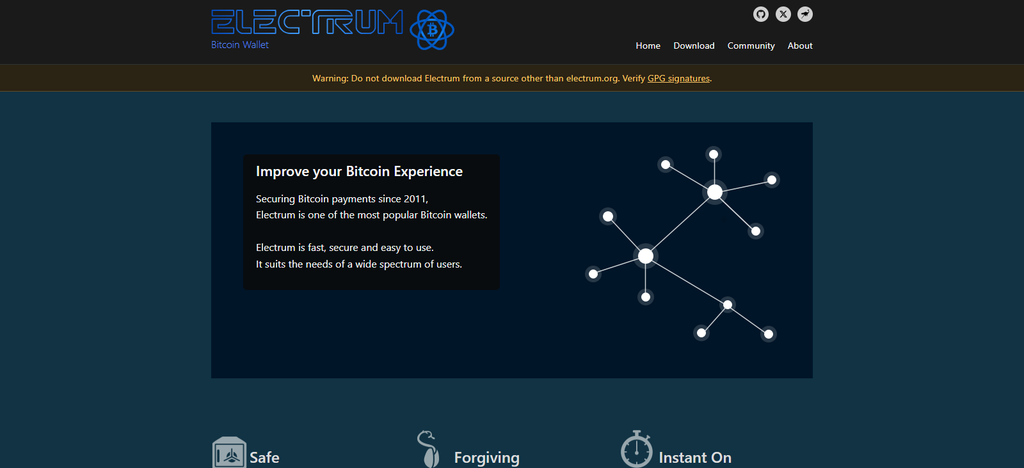
Most of the supported assets are Bitcoin, not a wide variety of cryptocurrencies or smart-contract tokens. Its blockchain support is Bitcoin-centric, including support for Bitcoin transactions and related wallet infrastructure.
Security measures include hardware wallet integration, cold storage, offline signing, seed phrase backups, watch-only wallets, and partially signed Bitcoin transactions (PSBT). Users can connect to Electrum servers or run their own infrastructure.
Electrum is free and open source software. There is no subscription fee, but you will have to pay transaction fees to the bitcoin network, and you may also want to pay for server infrastructure.
Why Use Electrum?
- Native Multisig Support: Bitcoin wallets supporting configurable multi-signature setups.
- Hardware Wallet Compatibility: Works with supported hardware wallets for added private-key security.
- Cold Storage Support: Enables users to generate offline wallets and sign transactions securely.
- Watch-Only Wallets: View your transactions without revealing your private keys.
- Free and Open Source: Manage your Bitcoin wallet without having to subscribe to mandatory fees.
Pros & Cons of Electrum
| Pros | Cons |
|---|---|
| Provides native Bitcoin multisignature functionality. | Does not provide broad multi-chain asset support. |
| Supports hardware wallet integration. | Interface may appear complex to beginners. |
| Offers offline transaction signing. | Users must manage their own recovery information. |
| Includes watch-only wallet functionality. | Does not provide institutional custody services. |
| Free and open-source software. | Requires careful configuration to avoid wallet-management mistakes. |
Conclusion
Multisig wallet providers offer varying levels of security, asset support, transaction control and custody flexibility to individuals, businesses and institutional investors. Safe, BitGo, Fireblocks and Copper provide solutions to manage digital currencies across multiple blockchain networks.
Unchained, Casa, Sparrow Wallet, Specter Desktop, Nunchuk and Electrum are more focused on bitcoin security and multisig management. Their features include hardware wallet integration, distributed key management, MPC technology, recovery options, and customizable transaction approvals.
Which is the right provider depends on what assets are supported, what blockchains are compatible, what security needs you have, what the pricing is, and how much control you want over your private keys.
FAQ
What is a multisig wallet?
A multisig wallet is a cryptocurrency wallet that requires approval from multiple private keys before executing a transaction. It reduces single-key risks and improves asset security.
Which are the best multisig wallet providers?
Safe, BitGo, Unchained, Casa, Fireblocks, Copper, Sparrow Wallet, Specter Desktop, Nunchuk, and Electrum are notable options for different cryptocurrency custody and security requirements.
How does multisig wallet architecture work?
Multisig architecture distributes transaction authorization among multiple keys. For example, a 2-of-3 wallet requires at least two authorized signatures out of three available keys to approve a transaction.
Which multisig wallets support Bitcoin?
Unchained, Casa, Sparrow Wallet, Specter Desktop, Nunchuk, and Electrum offer Bitcoin-focused multisignature functionality. BitGo also supports Bitcoin custody solutions.
Do multisig wallets support multiple cryptocurrencies?
Yes. Providers such as Safe, BitGo, Fireblocks, and Copper support multiple digital assets and blockchain networks, depending on their specific wallet products and configurations.