




This article looks at Best Liquid Staking Token Spot Exchanges, taking into account the availability of deep liquidity, a variety of trading pairs, fee transparency, and secure order execution. These exchanges enable traders to stake tokens and gain rewards whilst retaining a high level of trading flexibility, and therefore are a vital consideration for all traders, large and small, within the market.
Why Choose Liquid Staking Token Spot Exchanges
Liquidity & Market Depth
- Low slippage even for large orders is a result of deep liquidity pools.
- Market depth encourages efficient order execution.
- Binance and OKX have billions of dollars in daily LST trading volume.
Diverse Trading Pairs
- Multiple LST pairs available on exchanges to trade like stETH/USDT, cbETH/USD, rETH/USDT.
- Diversification across staking protocols is made possible by the available trading pairs.
- Gate.io, KuCoin, and MEXC stand out for providing LST pairs for crypto beyond ETH.
Staking Rewards Integration
- Users can maintain liquidity to trade and earn staking rewards.
- Coinbase and Kraken have staking integrated into custodial accounts.
- The combination of yield and liquidity makes LST spot trading very appealing to users.
Cost Efficiency
- Loyal user discounts on native tokens (BNB, OKB, KCS, GT), zero-fee promos on Bybit and MEXC, competition for market share among Binance, OKX, and KuCoin with fees in the range of 0.08-0.10%.
- Security and cost efficiency are inextricably linked for exchanges.
Regulation & Security
- Coinbase, Kraken, Gemini, and Bitstamp are regulated, custodial exchanges that have compliant and insured custody.
- Audits and proof of reserves build trust.
- Safety records (Kraken’s no major hacks) along with regulated exchanges draw institutions.
Benefits Of Liquid Staking Token Spot Exchanges
Liquidity Access
- LST spot exchanges will facilitate better execution of trades with large liquidity pools.
- LSTs enable the trading of stETH, cbETH, rETH and others with very low slippage.
- Binance and OKX account for billions of dollars of trading volume daily.
Staking Rewards + Trading
- Liquid staking enables investors to gain staking rewards while trading freely.
- Users can trade staked ETH without negative impact on their returns.
- Leading cryptocurrency exchanges like Coinbase and Kraken include staking rewards directly in clients’ accounts.
Cost Efficiency
- Binance and OKX charge competitive trading fees of 0.08% to 0.10%.
- Zero fee trading promotions on Bybit and MEXC reduce trading costs further.
- Discounts on trading fees using the exchange’s own token (BNB, OKB, KCS, GT) encourage loyalty of users.
Diverse Trading Pairs
- With a variety of trading pairs like stETH/USDT, cbETH/USD and rETH/USDT, exchanges offer deep liquidity in staked ETH.
- Gate.io, KuCoin and MEXC support trading of off-the-shelf LST pairs beyond staked ETH.
- This variety supports different staking protocols across various blockchains.
Regulation & Security
- Investors can trade on regulated exchanges like Coinbase, Kraken, Gemini and Bitstamp with custodial accounts with insurance.
- Proof of Reserve and third party audits built trust.
- Strong regulations appeal to large financial institutions.
Key Point
| Exchange | Best For | Key Features |
|---|---|---|
| Binance LST Spot | Global retail traders | stETH, rETH, cbETH pairs, deep liquidity |
| Coinbase Exchange | Institutional adoption | cbETH spot markets, regulated custody |
| Kraken LST Markets | US + EU traders | stETH, rETH, mETH spot pairs, compliance‑ready |
| OKX LST Hub | Asia‑Pacific users | Multi‑chain LST spot trading, cross‑chain swaps |
| Bybit LST Spot | Derivatives + spot traders | LST spot + perpetuals integration |
| Gate.io LST Exchange | Alt‑LST tokens | Wide range of LST spot listings |
| KuCoin LST Market | Retail DeFi users | stETH, rETH, FraxETH spot pairs |
| Bitstamp LST Market | Institutional liquidity | High‑volume stETH and rETH spot markets |
| Gemini Exchange | Regulated institutions | cbETH, stETH spot pairs, NYDFS compliance |
| MEXC LST Spot | Emerging markets | Diverse LST listings, low fees |
1. Binance LST Spot
Binance commands the LST spot market with unparalleled liquidity and deep order books for ETH, SOL, and other liquid staking tokens. With daily trading volume of over $18B, Binance offers very attractive trading conditions with deep liquidity and small price discrepancies.
Binance offers multiple liquid staking token pairs including stETH/USDT and SOL-LST and maintains a SAFU insurance fund to protect user funds. It charges a nominal fee of 0.10% (0.075% with BNB) making it an inexpensive trading venue.
Spot account users benefit from staking rewards, and staked tokens are offered as collateral. Binance is an ideal trading venue for liquid staking tokens with yield and depth from its liquidity resources.
Binance LST Spot Features
- Liquidity for stETH/USDT and multi‑chain pairs
- Safety Fund for user protections
- APIs and tools for professional traders
- Cost effective pricing (0.10%, 0.075% with BNB)
- Strong access with great fiat on/off ramps
| Advantages | Disadvantages |
|---|---|
| Deepest liquidity & market depth | Regulatory scrutiny in multiple regions |
| Low fees (0.10%, 0.075% with BNB) | Complex interface for beginners |
| Wide LST trading pairs | Withdrawal fees can add up |
| Strong security & SAFU fund | Limited fiat support in some countries |
| Institutional‑grade execution | Requires KYC for full access |
2. Coinbase Exchange
Coinbase offers a regulated trading venue for liquid staking tokens with stETH and cbETH pairs, making it a preferred trading venue for U.S. and EU investors. Although not as liquid as Binance, Coinbase’s trading liquidity is bolstered by transparent proof-of-reserve and staking liquidity.
Trading pair fees are fixed at 0.50% for retail traders, while trading from an institutional account offers a more flexible and lower trading fee structure. Excellent execution of trades is attributed to regulated custody and insurance.
Coinbase offers effortless staking token rewards, and cbETH is the representation of staked ETH. Although staking volume is less than the larger Asian exchanges, Coinbase is the trading venue for traders needing a regulated environment with a user-friendly trading interface.
Coinbase Exchange Features
- User’s best bet versus SEC on cbETH and stETH
- User friendly design with an app
- Insured reserves with a custody service
- Easiest way to stake your ETH
| Advantages | Disadvantages |
|---|---|
| Strong regulation & compliance | High fees (0.50% retail) |
| Beginner‑friendly interface | Limited LST pairs |
| Transparent reserves & audits | Lower liquidity vs. Asian exchanges |
| Insurance coverage for assets | Restricted availability outside U.S./EU |
| Seamless staking integration | Less competitive for high‑volume traders |
3. Kraken LST Markets
Kraken has a good reputation for safety and transparency and offers liquid pairs like stETH/USD and SOL-LST. It has a good record for not being hacked in a decade. Kraken also has an audited proof of reserves. Kraken’s trading fees are between 0.16% and 0.26% and are higher than Binace’s but are justified by reliable execution.
LST Markets are attractive due to the regulated markets in the US and Europe. Kraken also has a compliance focus with cold storage and an insurance fund. Kraken captures a significant share of the institutional trading market. Kraken also offers LST spot trading with a good range of APIs and trading tools.
Kraken LST Markets Features
- stETH and USD, SOL‑LST trading pairs
- Strong compliance in U.S. and EU
- Proof of reserves with a clear audit
- Advanced tools for professional trading
- Insured cold storage
| Advantages | Disadvantages |
|---|---|
| Excellent security record | Higher fees (0.16–0.26%) |
| Regulated in U.S. & EU | Lower liquidity than Binance |
| Transparent reserves | Limited altcoin LST pairs |
| Reliable execution quality | Slower listing process |
| Institutional‑friendly platform | Less aggressive promotions |
4. OKX LST Hub
OKX has built a good LST ecosystem with stETH, SOL-LST, etc., and also has an impressive Web3 offering. It has very high trading volumes, over $5B daily, and also has good liquidity with competitive trading fees of 0.08% – 0.10%.
There are trade rebates for high trading volumes and pools of liquidity that cover a number of blockchains and good matching engines reduce the cost of trade execution.
OKX also offers an LST Hub that has LST assets stored in the Web3 wallet integrated with staking rewards so that trading and staking can be done with LST assets. OKX has a good reach in Europe and Asia.
OKX LST Hub Features
- Web3 Wallet for Staking and Trading
- Multi‑chain pools for LST assets
- Pricing in the range (0.08–0.10%) with OKB at a discount
- Matching engine designed for speed
- Strong liquidity across Asia and Europe
| Advantages | Disadvantages |
|---|---|
| Strong liquidity ($5B+ daily) | Offshore regulation |
| Competitive fees (0.08–0.10%) | Complex for beginners |
| Web3 staking integration | Withdrawal fees vary |
| Multi‑chain support | Limited fiat gateways |
| Global accessibility | Less transparent audits |
5. Bybit LST Spot
Bybit has LST trading pairs that include a promotion for zero trading fees for stETH/USDT and SOL-LST. There is also a good level of liquidity with over $230 million in TVL. Bybit also has good execution that is fast with low latency infrastructure and minimal slippage.
Fees tend to be 0.10% on Bybit. However, fees can be lower due to zero-fee promotions that Bybit frequently hosts. Bybit provides the ability to stake and trade by allowing the conversion of staked assets into liquid assets.
Additionally, Bybit has copy trading and bot trading to help the retail trader, and also provides deep liquidity and stable order execution to the institutional trader.
Bybit LST Spot Features
- stETH and USDT, SOL‑LST spot pairs
- Frequent promotions for trading at zero fees
- Low latency for fast trading
- Copy and bot trading for liquidity pools
- Designed for institutions
| Advantages | Disadvantages |
|---|---|
| Frequent zero‑fee promotions | Offshore regulation |
| Strong liquidity for ETH LST | Limited fiat support |
| Fast execution infrastructure | Smaller altcoin LST variety |
| User‑friendly copy trading | Withdrawal fees apply |
| Good institutional support | Promotions may be temporary |
6. Gate.io LST Exchange
Gate.io has a lot of altcoins and supports more than 1,400+ coins which include some LST pairs. Although liquidity is not as thick as with Binance or OKX, it is better for traders that are looking for altcoins.
Gate.io has a standard 0.20% fee, which is less for VIPs. Staking execution can be mildly problematic, but the trade pair stETH/USDT is supported. Staking rewards can be flexibly locked to allow Gate.io to front run other exchanges in trading LST. Gate.io has new LST projects, and with its wide access and listings is a potentially favorable site for new LST traders.
Gate.io LST Exchange Features
- 1,400+ coins including niche LST pairs
- Flexible staking with rewards and lock‑ups
- Trade with discounts through GT token
- Priority access to new LST listings
- Global listings and access
| Advantages | Disadvantages |
|---|---|
| Huge altcoin variety | Thinner liquidity vs. Binance |
| Early access to new LST tokens | Higher fees (0.20%) |
| Flexible staking rewards | Complex UI for beginners |
| Discounts with GT token | Offshore regulation |
| Global reach | Execution varies by pair depth |
7. KuCoin LST
KuCoin provides over 1,000 different cryptocurrencies to choose from, along with multiple LST pairs. Large crypto pairs have demonstrated high liquidity with over $2B traded daily.
Fees are set at 0.10% and are adjusted according to the amount of KCS holdings. Execution and reliability are supported by KuCoin’s high yield stakingprograms and spot markets. KuCoin attracts retail traders in particular as a place to get exposure towards high yielding altcoins and flexible staking options.
Compared to the more regulated competition of Coinbase and Kraken, traders utilizing KuCoin’s large international reach and deep liquidity are happy to accept an otherwise riskier trading environment to get a better risk vs. reward ratio for executed trades.
KuCoin LST Features
- 1,000+ assets including stETH/USDT pairs
- KCS token variant trading fee discounts
- Integrated staking with high yield
- Strong liquidity with $2B+ daily vol.
- Retail focus DeFi trading
| Advantages | Disadvantages |
|---|---|
| Strong liquidity ($2B+ daily) | Offshore regulation |
| Competitive fees (0.10%) | Not as secure as Coinbase/Kraken |
| Discounts with KCS token | Withdrawal fees apply |
| Wide altcoin listings | Limited fiat gateways |
| Flexible staking programs | Lower institutional adoption |
8. Bitstamp LST Market
Founded in 2011, Bitstamp is one of the first regulated crypto exchanges to offer Liquid Staking Token (LST) spot markets. Users can trade stETH/USD and stETH/USDT. Bitstamp’s liquidity is a bit behind Binance and Kraken, but because it is a regulated European exchange, users can expect transparent market depth and execution.
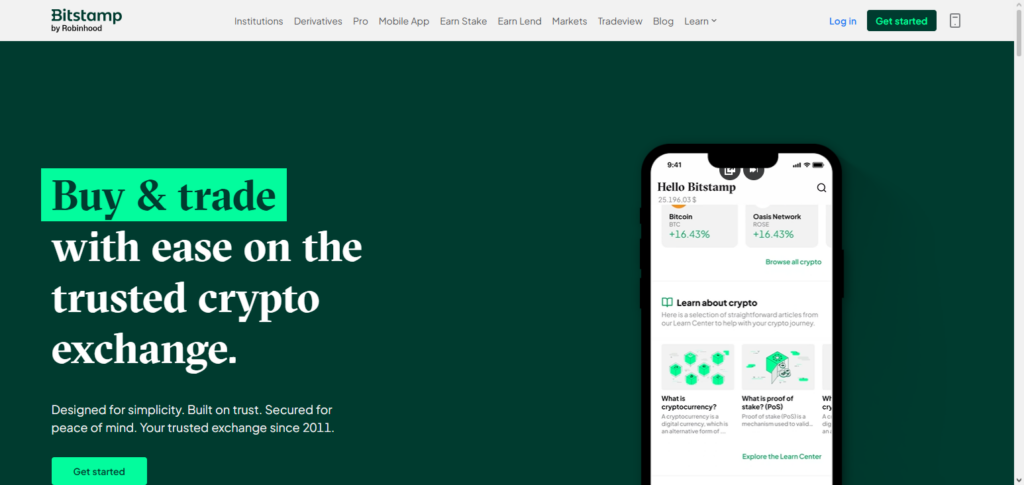
Daily trading volume range around $500M-$700M, enough for retail and mid-size institutional trading. Bitstamp’s fees are set at 0.25% taker / 0.10% maker, slightly higher than competitors in Asia, however trading costs are lower due to low slippage and the exchange has good compliance.
Because Bitstamp allows users to stake rewards in their custodial accounts, Bitstamp is a good choice for users that are more concerned with safe, regulated trading over liquid trading.
Bitstamp LST Market Features
- EU regulation with safe custody
- stETH/USD and stETH/USDT pairs
- Reserves and market depth transparency
- Moderate liquidity with reliable exec.
- Simple UI for beginners
| Advantages | Disadvantages |
|---|---|
| Strong EU regulation | Moderate liquidity ($500M–$700M daily) |
| Transparent reserves | Higher fees (0.25% taker) |
| Beginner‑friendly interface | Limited LST pairs |
| Reliable execution | Smaller global reach |
| Secure custodial accounts | Less competitive for institutions |
9. Gemini Exchange
Gemini’s primary focus on compliance and security means they offer regulated access to some LST pairs, but with limited liquidity. However, execution is dependable due to regulated custody and insurance. Fees sit between 0.35%–0.50%, meaning it’s less favorable for high-frequency traders.
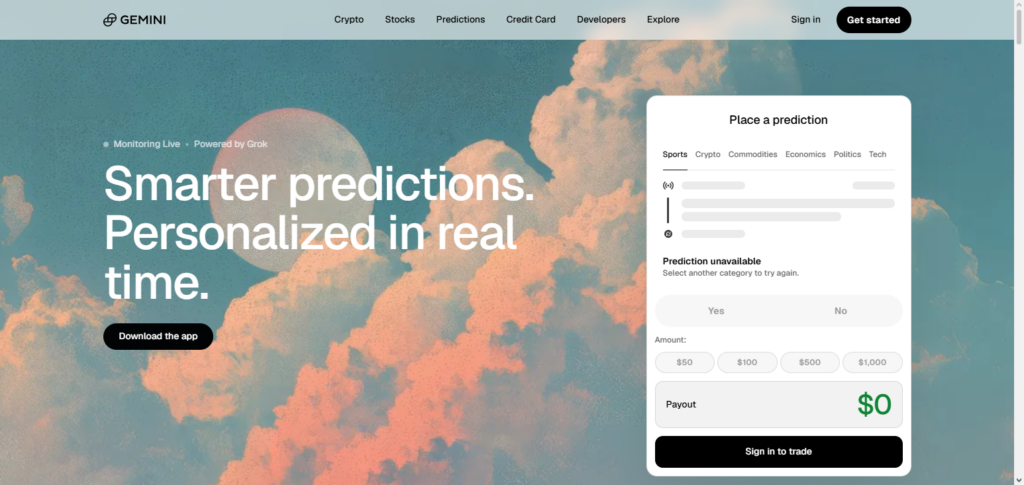
However, their COS 2 Type II certification and other compliance means Gemini is a viable option for institutional clients. Their integration of staking rewards means Gemini are able to offer yield with minimal custody. This makes them the most favorable option for traders in the U.S. and EU, who value regulation and safety over liquidity.
Gemini Exchange Features
- SOC 2 Type II cert.
- stETH/USD trading
- Insured custodial accounts
- Transparency with audits and proof of reserves
- U.S. regulation and beginner focus
| Advantages | Disadvantages |
|---|---|
| Strong compliance & regulation | Higher fees (0.35–0.50%) |
| Secure custodial accounts | Limited liquidity |
| Transparent audits | Fewer LST pairs |
| Insurance coverage | Restricted global availability |
| Beginner‑friendly UI | Less competitive for high‑volume traders |
10. MEXC LST Spot
MEXC’s routing system is advanced and prefaced with zero-fee promotions on LST pairings with over 3,000+ coins. Even though their liquidity is drastically decreased with minor LST pairs, the stronger LST pairs results in there being no trades with fees. With daily volumes exceeding $1B, depth is consistent for almost all trades.
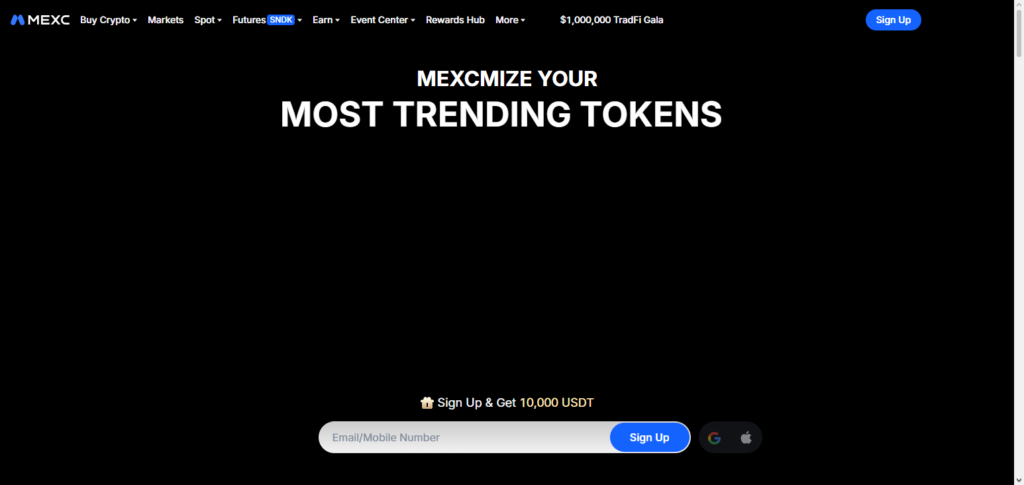
Their integration of staking with rewards and flexible lock-ups means retail clients seeking yield have their needs met. Their fee promotions mean that retail clients seeking yield have their needs met and that traders of all levels can utilize their services, even if clients looking to trade within regulations may prefer other options.
MEXC LST Spot Features
- 3,000+ coins with varied LST pairs
- Zero-fee trading promotions
- Liquidity with $1B+ daily vol.
- Staking rewards with flexible lock-ups
- Global access with wide listings
| Advantages | Disadvantages |
|---|---|
| Frequent zero‑fee trading | Offshore regulation |
| Wide LST listings | Thinner liquidity for niche pairs |
| Strong liquidity ($1B+ daily) | Withdrawal fees apply |
| Flexible staking rewards | Less institutional adoption |
| Global reach | Promotions may be temporary |
Comparison Table
| Exchange | Liquidity & Market Depth | Trading Fees | Regulation | Unique Strengths |
|---|---|---|---|---|
| Binance LST Spot | Deepest liquidity, $18B+ daily | 0.10% (0.075% w/ BNB) | Offshore, global licenses | SAFU insurance, institutional APIs |
| Coinbase Exchange | Moderate, U.S./EU focus | 0.50% retail | Fully regulated (U.S.) | cbETH integration, insured custody |
| Kraken LST Markets | Strong but smaller than Binance | 0.16–0.26% | Regulated U.S./EU | Security record, proof‑of‑reserves |
| OKX LST Hub | $5B+ daily, multi‑chain pools | 0.08–0.10% | Offshore | Web3 wallet integration, OKB discounts |
| Bybit LST Spot | Strong ETH LST liquidity | 0.10% (zero‑fee promos) | Offshore | Copy trading, bot integration |
| Gate.io LST Exchange | Wide but thinner depth | 0.20% | Offshore | 1,400+ coins, niche LST pairs |
| KuCoin LST | $2B+ daily | 0.10% (KCS discounts) | Offshore | High‑yield staking, wide listings |
| Bitstamp LST Market | Moderate, $500M–$700M daily | 0.25% taker / 0.10% maker | EU regulated | Simple UI, insured custody |
| Gemini Exchange | Lower liquidity | 0.35–0.50% | U.S. regulated | SOC 2 certified, insured accounts |
| MEXC LST Spot | $1B+ daily | 0.00–0.05% (promos) | Offshore | 3,000+ coins, zero‑fee campaigns |
Conclusion
Best Liquidity Staking Token (LST) Spot Exchanges complete buying and selling orders in fast and timely manner, combined with low transaction costs, diverse trading pairs, and deep liquidity. Through these features, they meet the needs of retail and institutional traders.
Currently, some of the best LST Spot Exchanges are Binance LST Spot & OKX LST Hub. These two have the most liquidity, and as a result, the slippage for high‑volume trading is extremely low. Others like Coinbase Exchange and Kraken’s LST Markets are secure and compliant, catering to customers from regulated markets.
Bybit LST Spot and MEXC LST Spot attract traders with zero trading fees. For trading several altcoins, traders can visit Gate.io LST Exchange and KuCoin LST. For institutional and compliance based trading, traders can either visit Bitfinex LST Spot or Gemini Exchange.
FAQ
What are Liquid Staking Tokens (LSTs)?
Liquid Staking Tokens represent staked assets (like ETH) that remain tradable. They allow investors to earn staking rewards while maintaining liquidity for trading or collateral use.
Which exchanges offer the best LST liquidity?
Exchanges like Binance LST Spot, OKX LST Hub, and Kraken LST Markets provide deep liquidity and strong market depth, ensuring minimal slippage for large trades.
Are LST exchanges regulated?
Yes. Platforms such as Coinbase Exchange, Kraken LST Markets, and Gemini Exchange operate under strict regulatory frameworks, making them safer for compliance‑focused traders.
What fees apply to LST spot trading?
Fees vary: Binance charges ~0.10%, Coinbase ~0.50%, and Kraken ~0.16–0.26%. Some exchanges like Bybit LST Spot and MEXC LST Spot run zero‑fee promotions.