


This article explores the Best Crypto Bookkeeping Tools for Stablecoin Businesses to manage transactions with USDC, USDT, and other digital currencies. We’ll take a look at their key features, blockchain compatibility, automatic bookkeeping, payment reconciliation, tax reporting, integrations, and pricing to help businesses choose the best solution for accurate financial management and efficient stablecoin accounting.
- What Is Crypto Bookkeeping Tools?
- Key Points
- 1. Cryptio
- Cryptio Best For
- Cryptio – Key Strengths
- 2. Bitwave
- Bitwave Best For
- Bitwave – Key Strengths
- 3. SoftLedger
- SoftLedger Best For
- SoftLedger – Key Strengths
- 4. Entendre Finance
- Entendre-Finance Best For
- Entendre Finance – Key Strengths
- 5. Ledgible
- Ledgible Best For
- Ledgible – Key Strengths
- 6. Koinly
- Koinly Best For
- Koinly – Key Strengths
- 7. CoinTracking
- CoinTracking Best For
- CoinTracking – Key Strengths
- 8. CoinLedger
- CoinLedger Best For
- CoinLedger – Key Strengths
- 9. CoinTracker
- CoinTracker Best For
- CoinTracker – Key Strengths
- 10. Crypto Tax Calculator
- Crypto Tax Calculator Best For
- Crypto Tax Calculator – Key Strengths
- Conclusion
- FAQ
What Is Crypto Bookkeeping Tools?
Crypto Bookkeeping Tools Crypto bookkeeping tools are specialized software platforms that help businesses record, track, organize, and manage cryptocurrency transactions for financial accounting.
The tools can support stablecoins like USDC and USDT, as well as other digital currencies. They work by importing blockchain transactions, classifying payments, tracking wallet balances, calculating transaction values, and reconciling financial records.
They also assist businesses in transaction cost management, accounting record keeping, tax report generation, and digital asset data integration with traditional accounting systems such as QuickBooks, Xero, and NetSuite.
Crypto accounting tools reduce manual accounting, improve financial accuracy, simplify reconciliation, and allow transparent financial reporting for businesses accepting stablecoin payments.
Key Points
| Tool | Best For | Key Strength |
|---|---|---|
| Cryptio | Enterprises | Financial reporting & reconciliation |
| Bitwave | Finance teams | Accounting workflow automation |
| SoftLedger | Stablecoin treasuries | Native ledger accounting |
| Entendre Finance | Growing businesses | AI-driven bookkeeping |
| Ledgible | Professional accounting | Audit-ready reporting |
| Koinly | SMBs | Broad integrations |
| CoinTracking | High-volume operations | Advanced reconciliation |
| CoinLedger | Small businesses | Easy bookkeeping exports |
| CoinTracker | U.S.-based firms | Automated transaction tracking |
| Crypto Tax Calculator | Multi-chain businesses | Comprehensive transaction coverage |
1. Cryptio
Established: 2018
Cryptio is an institutional-grade crypto accounting and bookkeeping platform for financial institutions, payment firms, exchanges and businesses managing digital currencies. Founded in 2018, it supports the accounting of stablecoin and other digital currencies using blockchain transaction tracking, wallet integrations and automated financial data processing.
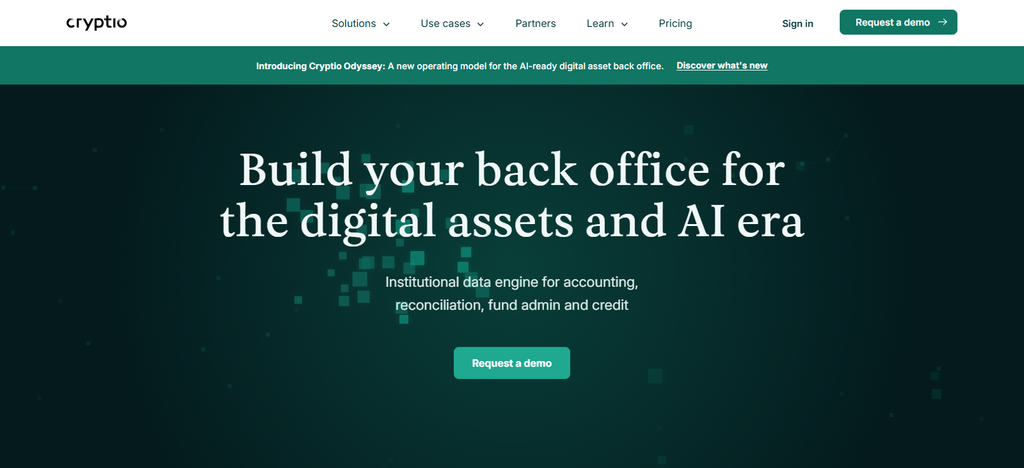
It integrates with more than 150 blockchains, exchanges, custodians and DeFi protocols, and supports a wide range of tokens including stablecoins. Cryptio offers reconciliation of transactions, verification of balances, identification of internal transfers and exports of accounting data. It handles high volume operations.
It has enterprise reporting and GAAP and IFRS oriented workflows. Businesses can integrate with accounting systems such as NetSuite, SAP, QuickBooks and Xero. We don’t have a standard subscription price but price according to modules, integrations and business requirements.
Cryptio Best For
- Companies that need institutional-grade crypto accounting and financial reporting.
- Businesses that transact in USDC, USDT and other digital currencies.
- Finance teams that need automated blockchain transaction reconciliation.
- Companies that integrate crypto records with NetSuite, SAP and QuickBooks.
- Companies with multi-entity reporting requirements and audit-ready accounting records.
Cryptio – Key Strengths
| Key Strength | Details |
|---|---|
| Institutional Accounting | Supports structured digital asset accounting for financial institutions and enterprises. |
| Blockchain Reconciliation | Helps reconcile blockchain transactions with accounting records. |
| Multi-Entity Management | Supports financial reporting across multiple business entities. |
| ERP Integrations | Connects crypto accounting workflows with traditional enterprise accounting systems. |
| Audit-Ready Reporting | Provides detailed transaction records and financial reporting capabilities. |
2. Bitwave
Established: 2018
Founded by Pat White and Amy Kalnoki in 2018, Bitwave is an enterprise digital asset accounting platform. It helps businesses to manage stablecoin payments, crypto bookkeeping, accounts payable, accounts receivable and financial reporting with a centralized accounting system.
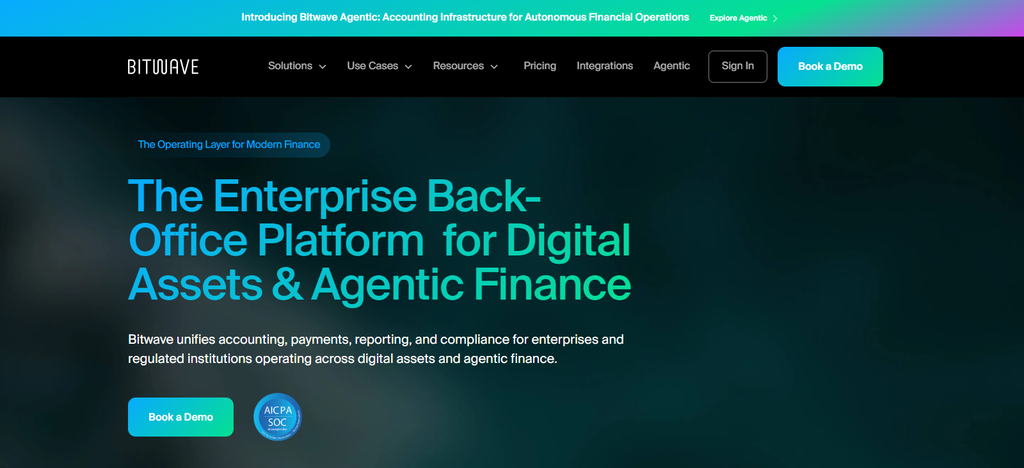
Its stablecoin functionality is particularly relevant for companies that need to process B2B payments, invoices and cross-border settlements. Bitwave supports a number of blockchain networks including Ethereum, Solana, Base, Polygon, Arbitrum, Avalanche and others, enabling finance teams to track digital asset transactions across ecosystems.
It is automated for transaction classification, reconciliation, journal entries and ERP synchronization. It’s built for high-volume enterprise level activity, not a small, fixed set of transactions. It’s business accounting capabilities are enhanced with tax and compliance workflows, audit trails and integrations with NetSuite, QuickBooks, Xero and Sage Intacct. Pricing is given through custom sales quotes.
Bitwave Best For
- Crypto native businesses handling stablecoin payments and treasury operations.
- Companies automating accounts payable and receivable processes.
- Finance teams that need automated transaction categorization and reconciliation.
Companies linking digital asset accounting to ERP systems. - Businesses engaged in high-volume blockchain transactions and financial reporting.
Bitwave – Key Strengths
| Key Strength | Details |
|---|---|
| Stablecoin Payment Accounting | Supports business workflows involving digital asset payments. |
| Automated Bookkeeping | Reduces manual transaction categorization and accounting work. |
| Payment Reconciliation | Helps match blockchain activity with business accounting records. |
| ERP Connectivity | Integrates digital asset accounting with established financial systems. |
| Enterprise Automation | Supports accounts payable, receivable and financial reporting workflows. |
3. SoftLedger
Established: 2015
Founded in 2015 by Ben Taylor and Geoff Ostrega, SoftLedger is a cloud-based accounting platform. It is designed for growing businesses that require general ledger accounting, multi-entity financial management and cryptocurrency transaction tracking.

Digital asset accounting features include assets such as Bitcoin, Ethereum, Solana, Avalanche and Cardano, with asset-agnostic functionality to manage supported blockchain activity. Stablecoin transactions can be used in digital asset accounting workflows, but businesses should check on specific token and network integrations before implementing.
SoftLedger’s cryptocurrency integrations provide automated transaction imports, accounting entries, balance tracking and financial reconciliation.
It is meant for organizations that process a large amount of digital asset activity, but there is no public limit on transaction volume. Connected specialist integrations can support tax reporting. Pricing is dependent on business size, modules and accounting needs.
SoftLedger Best For
- Growing businesses needing integrated general ledger accounting.
- Businesses with crypto balances in addition to conventional financial ledgers.
- Finance teams that need multi-entity accounting and reporting.
- Companies that are automating the import and reconciliation of digital asset transactions
- Companies that require centralized accounting and financial management
SoftLedger – Key Strengths
| Key Strength | Details |
|---|---|
| General Ledger | Combines traditional accounting with digital asset financial records. |
| Multi-Entity Accounting | Helps manage accounting across multiple business entities. |
| Financial Reporting | Supports structured financial statements and accounting reports. |
| Transaction Management | Helps organize cryptocurrency transaction data. |
| Accounting Automation | Reduces manual work through automated accounting processes and integrations. |
4. Entendre Finance
Founded in: 2023
Entendre Finance is an AI-powered accounting platform launched in 2023 and automates bookkeeping and financial operations for Web3 companies. It connects digital asset wallets, exchanges, subledgers, and traditional accounting systems to organize financial transactions.
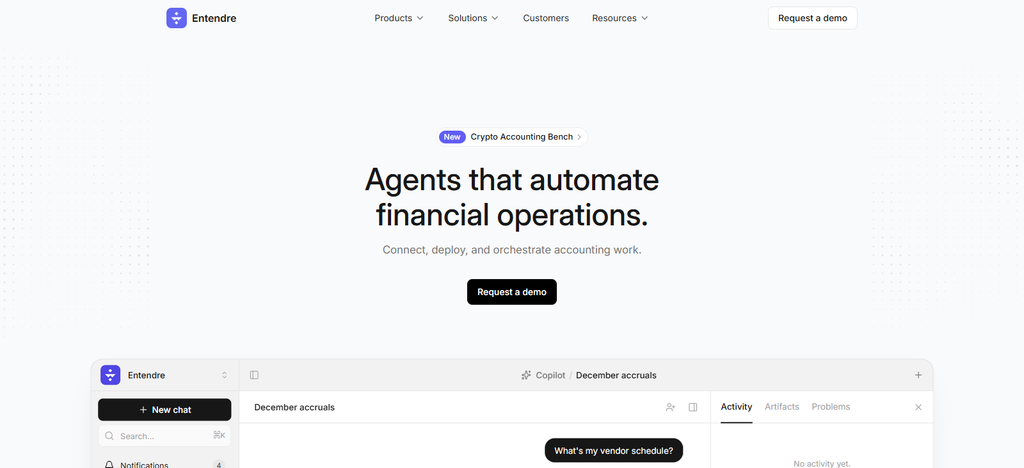
Its capabilities are especially relevant for businesses processing stablecoin payments, blockchain transfers and multiple digital asset accounts. Companies should check the required USDC, USDT and network coverage before onboarding, as blockchain compatibility depends on supported wallet, exchange and data integrations.
Its AI agents help automate transaction categorization, reconciliation, accounting workflows, and financial data management. Entendre’s goal is to reduce manual bookkeeping, and to allow increasing volumes of transactions, although a universal transaction capacity is not specified publicly. It’s better for businesses that want to automate their finance operations, with enterprise integrations and custom pricing.
Entendre-Finance Best For
- Businesses that need AI-powered transaction categorization
- Finance teams with multiple blockchain wallets and digital resources under their control.
- Companies cutting manual reconciliation and accounting workloads.
- Businesses looking to automate their financial data management and reporting;
Entendre Finance – Key Strengths
| Key Strength | Details |
|---|---|
| AI-Powered Accounting | Uses AI to automate digital asset accounting workflows. |
| Transaction Categorization | Helps classify blockchain transactions into accounting categories. |
| Automated Reconciliation | Reduces manual reconciliation work for digital asset records. |
| Wallet Connectivity | Connects supported wallets and blockchain data sources. |
| Financial Automation | Streamlines bookkeeping and financial data management for Web3 businesses. |
5. Ledgible
Founded in 2016
Ledgible is a digital asset tax and accounting platform founded in 2016 and built for accounting professionals, financial institutions, enterprises and crypto businesses. It helps organizations to collect transaction information from wallets, exchanges and supported digital asset platforms to create structured accounting and tax records.
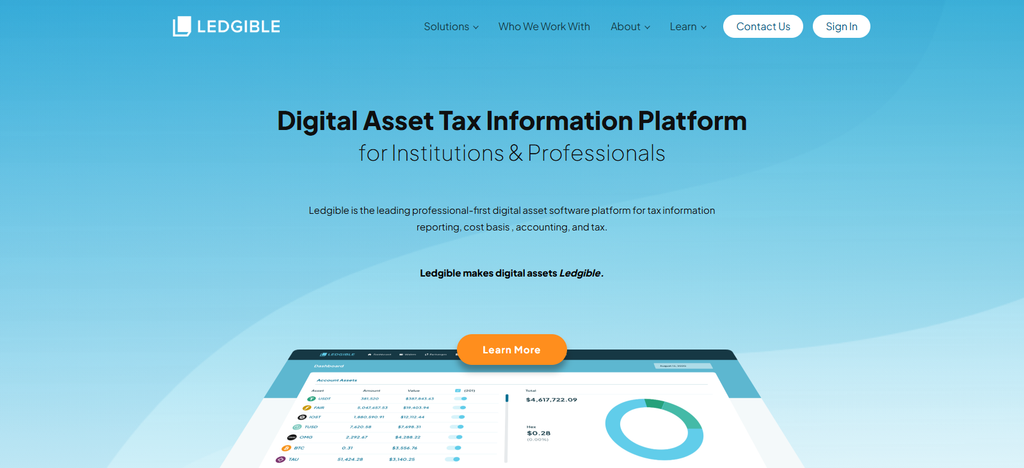
Supported digital asset reporting workflows can include stablecoins such as USDC and USDT, but businesses need to verify token-by-token and blockchain-by-blockchain integration. Features include cost basis tracking, transaction categorization, digital asset subledgers and financial reporting.
Ledgible also supports professional tax reporting, tax information reporting and compliance workflows, including the relevant US tax forms. It’s designed for institutional data needs and integrates with existing accounting and tax systems. Pricing and transaction limits are based on the selected product and enterprise arrangement, not a single public offering.
Ledgible Best For
- Accounting firms that handle cryptocurrency records for a number of clients.
- Businesses that require professional digital asset tax reporting.
- Finance teams managing crypto transaction and cost basis.
- Organizations that are preparing audit documentation and compliance reports.
- Companies that are integrating digital asset accounting into their existing tax systems.
Ledgible – Key Strengths
| Key Strength | Details |
|---|---|
| Professional Tax Reporting | Supports cryptocurrency tax reporting for accounting professionals. |
| Cost-Basis Tracking | Helps calculate and organize digital asset cost-basis information. |
| Institutional Accounting | Offers digital asset accounting capabilities for financial organizations. |
| Compliance Workflows | Supports tax documentation and relevant reporting requirements. |
| Accounting Integrations | Connects digital asset records with professional accounting and tax workflows. |
6. Koinly
Year Founded: 2019
Koinly is a cryptocurrency transaction tracking and tax reporting platform launched in 2019. It helps businesses, investors and accountants import digital asset transactions from supported exchanges, wallets and blockchains. You can track stablecoins like USDC and USDT as digital currencies, if your connected integrations support it.
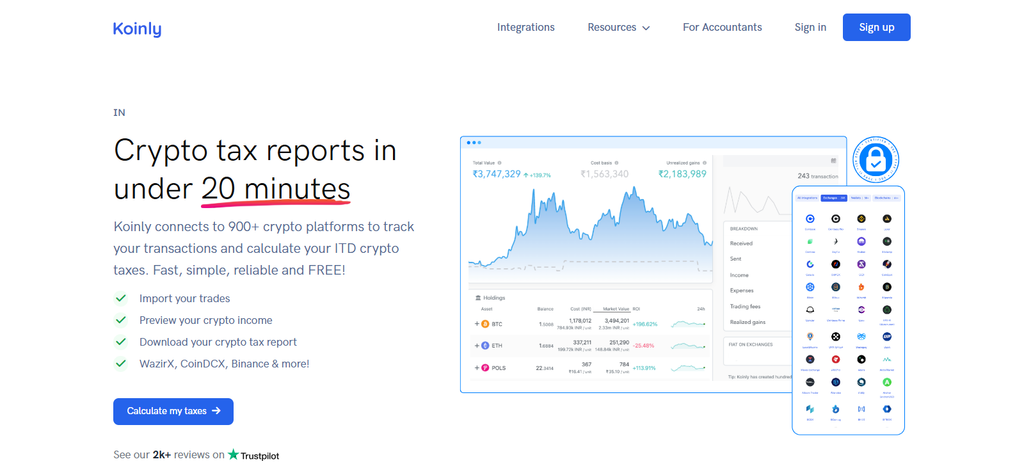
Its blockchain coverage includes EVM-compatible networks, Solana and other supported ecosystems with automated transaction imports, transfer matching and transaction categorization. Koinly can handle transaction histories for capital gains, income, and tax reporting, but it is not a complete enterprise bookkeeping or accounts-payable system.
It has plans for 100, 1,000 and 3,000-plus transactions with free tracking options. Paid pricing starts at $49 per tax year, with higher tiers beginning at $99 and $199.
Koinly Best For
- Small businesses monitoring transactions of stablecoins across wallets and exchanges.
- Users who want to automate crypto transaction imports.
- Companies working out crypto capital gains and taxable income.
- Accountants preparing tax reports on cryptocurrency for their clients.
- Companies handling DeFi, staking and digital asset transaction history.
Koinly – Key Strengths
| Key Strength | Details |
|---|---|
| Automated Imports | Imports supported transactions from exchanges and wallets. |
| Tax Calculations | Calculates cryptocurrency gains, losses and taxable income. |
| Multi-Chain Tracking | Supports transaction tracking across numerous blockchain networks. |
| Transfer Matching | Helps identify transfers between connected wallets. |
| DeFi Tracking | Organizes supported DeFi, staking and cryptocurrency transactions. |
7. CoinTracking
Founded Year: 2012
CoinTracking is a cryptocurrency portfolio and tax reporting service that was founded in 2012. It helps users keep track of crypto transactions, balances, and capital gains across supported exchanges and wallets. Stablecoins such as commonly traded USDT and USDC assets can be added to portfolio records and transaction reports when supported by the relevant integrations.

It supports hundreds of exchanges and wallets, as well as various blockchain-based assets and DeFi activity. CoinTracking provides import of transactions, historical portfolio tracking, tax calculations, profit/loss reports and downloadable financial data. The transaction limits depend on the subscription, so businesses that process frequent stablecoin payments should choose the right plan.
Plans to be published include a free version, Starter at $49 per year, Pro at $169, Expert at $259 and Unlimited at $899. It is, however, primarily a tax and portfolio reporting solution, not a full business general ledger.
CoinTracking Best For
- Companies with a long history of large crypto transactions.
- Users with multiple wallets and exchange accounts.
- Finance teams that require detailed reports on portfolios and transactions.
- Accountants figuring out crypto gains and losses.
- Digital asset records for tax purposes spanning multiple years organized by businesses.
CoinTracking – Key Strengths
| Key Strength | Details |
|---|---|
| Transaction History | Organizes extensive cryptocurrency transaction histories. |
| Portfolio Tracking | Monitors digital asset balances and portfolio performance. |
| Exchange Integrations | Supports imports from numerous cryptocurrency exchanges. |
| Tax Reporting | Calculates capital gains and generates cryptocurrency tax reports. |
| Detailed Analytics | Provides portfolio statistics and transaction-based financial insights. |
8. CoinLedger
Established: 2018
CoinLedger (formerly CryptoTrader.The show “Tax” was created in 2018 by David Kemmerer, Lucas Wyland and Mitchell Cookson. It allows users to import, organize and calculate cryptocurrency transactions from exchanges and wallets.

Businesses that accept stablecoins can review digital asset activity and prepare tax reports using supported USDC and USDT transaction records. Its integrations are across a wide range of exchanges, wallets and cryptocurrency platforms, while blockchain compatibility depends on the import options available and the networks that are supported.
CoinLedger provides automated transaction imports, transfer identification, cost-basis calculations, capital gains reporting, and tax document preparation. Plans are largely based on transaction volumes and reporting obligations.
It can help you track stablecoin transactions and prepare taxes, but if your business needs to match invoices, sync with ERP systems and keep ongoing bookkeeping for your enterprise, you might need additional accounting software.
CoinLedger Best For
- Small businesses sorting through records of cryptocurrency transactions.
- Founders preparing reports for crypto gains and income.
- Users who import transactions from several exchanges and wallets.
- Accountants viewing digital asset tax calculations.
- Businesses looking for straightforward crypto tax reporting workflows.
CoinLedger – Key Strengths
| Key Strength | Details |
|---|---|
| Simple Tax Reporting | Makes cryptocurrency tax reporting easier to manage. |
| Transaction Imports | Imports supported records from wallets and exchanges. |
| Cost-Basis Calculations | Helps calculate cryptocurrency acquisition costs and gains. |
| DeFi Transaction Support | Organizes supported DeFi and blockchain transaction records. |
| Tax Document Preparation | Generates cryptocurrency tax reports and supporting documents. |
9. CoinTracker
Established in 2017.
Jon Lerner and Chandan Lodha founded CoinTracker, a cryptocurrency portfolio tracking and tax reporting platform, in 2017. It allows users to connect supported wallets and exchanges to track cryptocurrency balances, arrange transaction histories and compute taxable gains. Portfolio tracking and tax calculations can include supported USDC and USDT activity and stablecoin transactions.
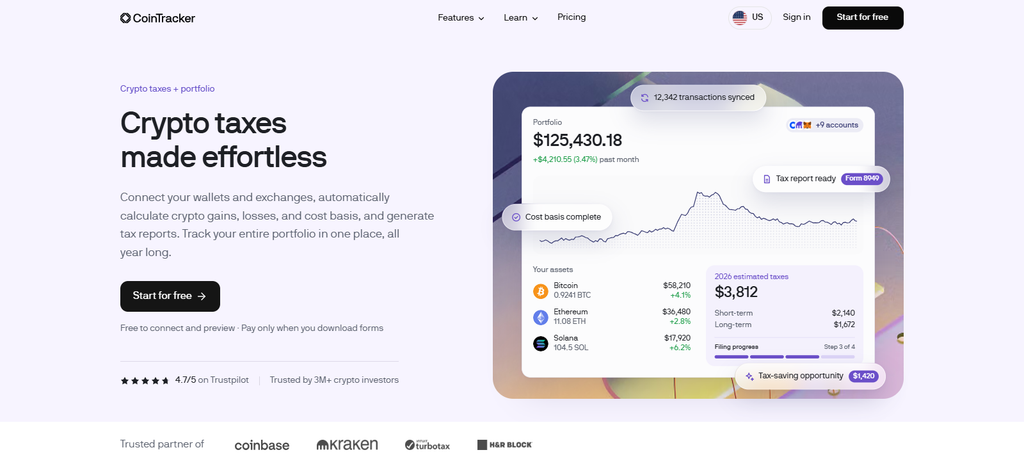
Transaction matching is built to detect transfers between linked accounts, with blockchain compatibility including supported networks, wallets, DeFi applications and exchange integrations. CoinTracker offers cost-basis calculations, staking and rewards categorization, tax-loss harvesting and tax document generation.
It provides a free portfolio plan, Base at $59 a year, Prime at $199 and Ultra at $599, with higher transaction-volume options. It is good for stablecoin tax records but not a full enterprise accounts payable or general ledger solution.
CoinTracker Best For
- Firms monitoring cryptocurrency portfolios and wallet balances.
- Users tracking USDC, USDT and other digital currencies that they support
- Finance teams figuring out crypto cost basis and capital gains
- Investors arranging transactions for DeFi, staking and exchange.
- Accountants who prepare cryptocurrency tax reports and documents.
CoinTracker – Key Strengths
| Key Strength | Details |
|---|---|
| Portfolio Monitoring | Tracks cryptocurrency balances and portfolio performance. |
| Wallet Synchronization | Connects supported wallets and exchanges for transaction tracking. |
| Tax-Loss Harvesting | Provides tools to identify potential tax-loss harvesting opportunities. |
| Cost-Basis Tracking | Organizes acquisition costs and cryptocurrency capital gains. |
| DeFi Support | Tracks supported DeFi, staking and digital asset activities. |
10. Crypto Tax Calculator
Established: 2018
Crypto Tax Calculator, now called Summ, was founded in 2018 by Shane Brunette and Tim Brunette. It is designed to help cryptocurrency users, traders and accountants to organize digital asset transactions and calculate tax obligations.
Businesses that accept stablecoin payments can use the supported USDC and USDT transaction records for tracking, transaction categorization and tax calculations. Its integration ecosystem covers hundreds of exchanges and blockchain networks, including supported DeFi transaction and wallet activity.
The platform includes transaction imports, cost-basis calculations, capital gains reports and tax reporting workflows for supported tax jurisdictions. Subscription and reporting requirements determine transaction volume and pricing limits.
It can assist stablecoin businesses in preparing structured tax records but should not be viewed as a substitute for a complete corporate bookkeeping system with invoice management and ERP-based reconciliation.
Crypto Tax Calculator Best For
- Companies producing histories of cryptocurrency transactions for tax reporting purposes.
- Users determining capital gains/losses for virtual assets.
- Accountants looking at complex blockchain transaction data.
- Supports companies tracking DeFi and wallet and exchange activity.
- Crypto users getting ready to file tax returns in jurisdictions where it is supported.
Crypto Tax Calculator – Key Strengths
| Key Strength | Details |
|---|---|
| Automated Tax Calculations | Calculates cryptocurrency gains, losses and tax obligations. |
| Blockchain Integrations | Imports supported blockchain and wallet transaction data. |
| DeFi Transaction Tracking | Helps organize supported decentralized finance activity. |
| Transaction Categorization | Classifies cryptocurrency transactions for tax calculations. |
| Tax Reporting | Generates tax reports for supported jurisdictions and reporting requirements. |
Conclusion
Choosing the right crypto bookkeeping tool is important for businesses accepting stablecoins like USDC and USDT. Cryptio, Bitwave, SoftLedger and Entendre Finance offer business-focused accounting, automated reconciliation and financial reporting, while Koinly, CoinTracking,
CoinLedger, CoinTracker, Ledgible and Crypto Tax Calculator target transaction organization and ease of tax reporting. When choosing a platform, businesses should evaluate supported stablecoins, blockchain compatibility, transaction capacity, accounting integrations, pricing, and compliance features.
The best solution is one that reduces manual bookkeeping, improves financial accuracy and enables businesses to grow with increasing volumes of stablecoin payments.
FAQ
What are crypto bookkeeping tools for stablecoin businesses?
Crypto bookkeeping tools help businesses record, organize and reconcile digital asset transactions, including USDC and USDT payments. They support transaction tracking, financial reporting, wallet monitoring and accounting integrations.
Which crypto bookkeeping tools are best for businesses accepting stablecoins?
Cryptio, Bitwave, SoftLedger and Entendre Finance are business-focused options for digital asset accounting and reconciliation. Koinly, CoinTracking, CoinLedger and CoinTracker are useful for transaction tracking and tax reporting.
Do crypto bookkeeping tools support USDC and USDT?
Yes, many crypto accounting and tax platforms support USDC and USDT transaction tracking. However, supported tokens and blockchain networks vary by platform, so businesses should verify compatibility before choosing a solution.
Can crypto bookkeeping software automatically reconcile stablecoin payments?
Some platforms automate transaction imports, wallet matching, categorization and accounting entries. Advanced reconciliation may also connect blockchain transactions with customer invoices and business records, depending on the software.