

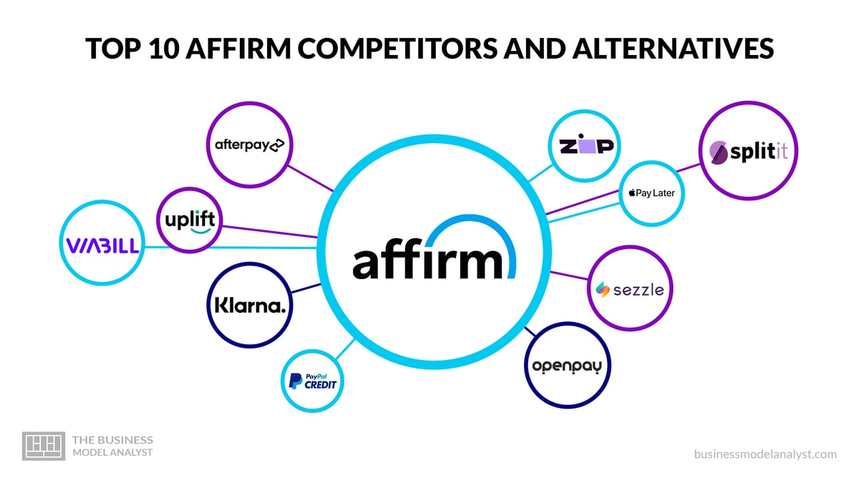

I will be talking about the top Affirm competitors for shopping loans in 2026, particularly the main BNPL and cash-advance companies that compete with Affirm. Beyond the well-known global players like PayPal Pay Later and Klarna, there are players like Sezzle, EarnIn, and others, who have different models, fees and loan and credit limits, and reporting systems. These companies provide various terms and payment options for consumers.
What Are Affirm Competitors?
Affirms that competitors offering buy now, pay later (BNPL) services and financing platforms provide consumers with options to split purchases into installments or access point-of-sale financing.
These companies may offer short-term payment plans, longer-term installment loans, virtual cards, or financing directly through participating merchants. Compared to Affirm, competitors may vary in interest rates, fees, repayment terms, credit requirements, merchant coverage, approval processes, and payment options.
Some providers specialize in daily retail transactions, whereas others cater to travel, healthcare, electronics, or high-value purchases. Comparing these factors can help shoppers understand how different BNPL and shopping-loan platforms align with their purchasing and repayment needs.
Why Choose Affirm Competitors for Shopping Loans
More Payment Options: Some providers offer different installment schedules, including shorter or longer repayment periods.
Different Interest Rates: APRs and promotional financing terms can vary by provider, purchase amount, and borrower.
Lower or Different Fees: Competitors may have different fee structures, including late-payment or service fees.
Broader Merchant Coverage: Some platforms partner with retailers, travel companies, healthcare providers, or other specialized merchants.
Flexible Credit Requirements: Eligibility and approval criteria can differ between shopping-loan providers.
Different Purchase Limits: Some competitors may support different minimum and maximum financing amounts.
Specialized Financing: Certain platforms focus on categories such as travel, healthcare, home improvement, or electronics.
Alternative Payment Methods: Competitors may provide virtual cards, direct checkout financing, or other ways to use installment plans.
Promotional Financing: Some providers offer promotional or interest-free financing for qualifying purchases.
Better Fit for Specific Needs: Comparing multiple providers can help shoppers evaluate repayment terms, total costs, merchant availability, and eligibility before choosing a financing option.
Key Points
| Competitor | Core Strengths | Key Differentiator in 2026 |
|---|---|---|
| Klarna | Broad merchant network, flexible terms | Pay in 4 or up to 36 months, global reach |
| Afterpay | Simple pay‑in‑4 | Integrated with Cash App, strong youth adoption |
| PayPal Pay Later | Trusted wallet ecosystem | Pay in 4 or longer terms, seamless checkout |
| Zip | Virtual card, flexible installments | Pay in 4 or 8, soft credit checks |
| Sezzle | Rescheduling flexibility | Sezzle Up reports positive payments to bureaus |
| Perpay | Salary‑deducted installments | Payroll‑linked repayment, credit‑building focus |
| Splitit | Uses existing credit cards | No new loans, splits charges directly |
| Cash App Borrow | Small cash advances | Up to $1,000, tied to Cash App ecosystem |
| Chime MyPay | Line of credit | Up to $500, linked to deposits |
| Dave | Cash advance app | Up to $500, subscription‑based |
| Brigit | Budgeting + cash advance | $50–$250, subscription model |
| EarnIn | Early paycheck access | Up to $1,000, tip‑based model |
1. Klarna
Originally launched in Sweden in 2005, Klarna has quickly become one of the largest BNPL providers worldwide with its Pay-in-4, Pay-in-30, and longer-term payment options. The company charges merchant fees between 2.7% and 6% and collects unregulated triple-digit collection fees.

It funds customer loans out of its own pockets, and loan amounts can range from small purchases to thousands of dollars. At the time of writing, Klarna has partnerships with over 500,000 merchants around the world. Klarna generally does not report payments to credit bureaus, and may only report customer loan defaults.
Flexible payment terms, and strong app integration are a couple of the reasons for Klarna’s popularity, but merchant processing costs are greater than credit card processing costs.
| Characteristic | Detail |
|---|---|
| Founded | 2005, Sweden |
| Financing Model | Pay‑in‑4, Pay‑in‑30, long‑term up to 36 months |
| Fees | Merchant fees 2.7–6%, capped late fees |
| Loan Amount | $50–$10,000 depending on merchant |
| Merchant Coverage | 500,000+ global retailers |
| Credit Reporting | Defaults reported, positive payments not |
| Interest | 0% short‑term, APR up to 29.99% long‑term |
| Integration | Strong app + browser extension |
| Global Reach | Europe, U.S., Asia |
| Differentiator | Flexible repayment options |
| Risk | Merchant fees higher than card processing |
| User Base | 150M+ active users worldwide |
2. Afterpay
Afterpay is an Australian-based company that offers after-the-fact payments (Pay-in-4) first made popular in the U.S. by Cash App. Afterpay offers no-interest loans that are charged through a merchant fee averaging 4-6%. Like other short-term loan apps, Afterpay has limits on the maximum loan amount.
Afterpay loan limits range from $50 to $2,000. Afterpay has a merchant coverage of over 100K merchants across the U.S. and abroad. Afterpay does not report payments to credit bureaus, and therefore, cannot help consumers build their credit. After the statutory grace period expires, Afterpay can charge a 25% fee of the order.
Afterpay has a first mover’s advantage and easy-to-use payments among consumers 18-24. Afterpay and other comparable apps like Klarna and Affirm, face higher merchant fees which inhibits their adoption among merchants.
| Characteristic | Detail |
|---|---|
| Founded | 2014, Australia |
| Financing Model | Pay‑in‑4 only |
| Fees | Merchant fees 4–6%, capped late fees |
| Loan Amount | $50–$2,000 |
| Merchant Coverage | Tens of thousands globally |
| Credit Reporting | No bureau reporting |
| Interest | 0% for consumers |
| Integration | Linked with Cash App |
| Differentiator | Youth adoption, simplicity |
| Risk | High merchant fees |
| Global Reach | U.S., Australia, UK |
| User Base | 20M+ active users |
3. PayPal Pay Later
PayPal Pay Later was released in 2020, and offers Pay-in-4, as well as longer term installment loans. Pay-in-4 charges fees similar to traditional credit, and longer term loans charge fees that include true credit-like costs.
Pay-in-4 loans can be as little as $30. Longer term loans can be up to $10,000. Loan terms are determined by the merchant. Merchants can charge fees on any sale. Because PayPal is so widely accepted, merchant coverage is broad.
PayPal does not report Pay-in-4 loans to the credit bureaus, but may report longer term loans. PayPal is known for convenience and is trusted globally. However, longer term loans charged by PayPal can be unsecured credit with APRs of up to 29.99%.
| Characteristic | Detail |
|---|---|
| Founded | 2020, U.S. |
| Financing Model | Pay‑in‑4 + long‑term loans |
| Fees | Merchant fees 3–5%, interest on long‑term |
| Loan Amount | $30–$10,000 |
| Merchant Coverage | Millions via PayPal |
| Credit Reporting | Longer loans may be reported |
| Interest | 0% short‑term, APR up to 29.99% |
| Integration | PayPal Wallet |
| Differentiator | Trusted ecosystem |
| Risk | High APR on long‑term |
| Global Reach | Worldwide |
| User Base | 400M+ PayPal accounts |
4. Zip
Zip, operating out of Australia, jumped on the BNPL bandwagon in 2013 with its Pay in 4 and Pay in 8 options. It charges merchant fees in the range of 4-6% and consumer fees for things like rescheduling and late payments.
Customer loans are in the range of $50 to $3,000. Merchant coverability includes a slew of retailers in the U.S. and Australia. Zip charges soft credit checks mid-application, however, positive payment activity is not reported to the credit bureaus, making it hard for customers to build their credit.
Repayment flexibility and virtual cards are a few features that differentiate Zip from the competition. The trade off is that retailers that work with Zip have been seen to charge higher merchant fees compared to competitors like Klarna and PayPal.
| Characteristic | Detail |
|---|---|
| Founded | 2013, Australia |
| Financing Model | Pay‑in‑4, Pay‑in‑8 |
| Fees | Merchant fees 4–6%, late fees |
| Loan Amount | $50–$3,000 |
| Merchant Coverage | Thousands globally |
| Credit Reporting | No positive reporting |
| Interest | 0% short‑term |
| Integration | Virtual card |
| Differentiator | Flexible schedules |
| Risk | Merchant fees higher |
| Global Reach | U.S., Australia |
| User Base | 10M+ |
5. Sezzle
Sezzle, established in 2016, is another Pay‑in‑4 provider, based in the U.S. Sezzle charges consumers no interest on funded loans. These loans are funded by merchant fees ranging from 4 to 6 percent. Loan amounts are between $50 and $2,500.

Sezzle covers thousands of small to mid-size merchants, mostly in the lifestyle and fashion industries. Sezzle’s merchant fees are higher than Affirm’s, but Sezzle differentiates itself by allowing consumers to reschedule payments and charge consumers no interest on funded loans.
Additionally, Sezzle allows its consumers to opt in to have their credit reported to the credit bureaus, if the consumer makes timely payments.
| Characteristic | Detail |
|---|---|
| Founded | 2016, U.S. |
| Financing Model | Pay‑in‑4 |
| Fees | Merchant fees 4–6% |
| Loan Amount | $50–$2,500 |
| Merchant Coverage | Thousands of SMBs |
| Credit Reporting | Sezzle Up reports positive payments |
| Interest | 0% |
| Integration | App + browser |
| Differentiator | Credit‑building option |
| Risk | Merchant fees high |
| Global Reach | U.S., Canada |
| User Base | 3M+ |
6. Perpay
Established in the U.S. in 2014, Perpay is a payroll-linked BNPL service. Like other BNPLs, Perpay charges fees for short-term loans. However, instead of relying on the consumer to make the payment, like other BNPLs, Perpay uses payroll to collect the payment. This makes Perpay’s BNPL product less risky for the consumer.

Like other BNPLs, Perpay charges fees for their short-term loans, and those fees are embedded in the product price. Perpay positions itself as a credit-builder; however, compared to other large BNPLs like Klarna and PayPal, it has a very limited merchant network. Perpay could also be positioned as a financial technology company to improve access to credit and financial services for underserved consumers.
| Characteristic | Detail |
|---|---|
| Founded | 2014, U.S. |
| Financing Model | Payroll‑linked BNPL |
| Fees | Embedded in product pricing |
| Loan Amount | $200–$2,500 |
| Merchant Coverage | Perpay marketplace only |
| Credit Reporting | Positive payments reported |
| Interest | No explicit APR |
| Integration | Payroll deduction |
| Differentiator | Credit‑building |
| Risk | Limited merchant choice |
| Global Reach | U.S. only |
| User Base | 1M+ |
7. Splitit
Established in 2012 in Israel, Splitit facilitates payment by dividing purchases into installments using credit cards. By doing so, it extends short-term credit to consumers who make purchases from partner merchants.

Splitit charges the merchants a fee for this service. Unlike traditional BNPL companies, Splitit does not charge consumers any interest. Like other BNPL companies, the loans extended by Splitit are small and rely on the credit card issuers’ credit limits. Merchants that accept Splitit’s payment solution include online merchants around the world.
While Splitit has done a good job differentiating itself from competitors by claiming its model poses less of a threat to consumers since it eliminates the risk of creating new debt, its model relies on the credit card, therefore, it further limits the market.
| Characteristic | Detail |
|---|---|
| Founded | 2012, Israel |
| Financing Model | Uses existing credit card |
| Fees | Merchant fees |
| Loan Amount | Based on card limit |
| Merchant Coverage | Thousands globally |
| Credit Reporting | Tied to card issuer |
| Interest | Depends on card issuer |
| Integration | Checkout plugin |
| Differentiator | No new loans |
| Risk | Excludes non‑card users |
| Global Reach | Worldwide |
| User Base | 1M+ |
8. Cash App Borrow
Cash App Borrow launched in 2021 to provide small-dollar loans to users of the Cash App. Loan sizes are charged using a financing model that includes fees and/or interest. Cash App Borrow loans range from $20 to $1,000.

Funds are transferred to the user’s Cash App account. Users can then spend the money by using the cash app or by using a card that is linked to the Cash App. Because the cash is first loaded to the user’s Cash App account, Cash App Borrow does not build the user’s credit.
Because Cash App Borrow is integrated with the Cash App’s peer-to-peer payments and BNPL features, the service is geared more towards younger users. Competition for shopping loans is greater because Cash App Borrow limits loan sizes.
| Characteristic | Detail |
|---|---|
| Founded | 2021, U.S. |
| Financing Model | Small cash advances |
| Fees | Flat fees or interest |
| Loan Amount | $20–$1,000 |
| Merchant Coverage | Indirect via Cash App |
| Credit Reporting | No bureau reporting |
| Interest | Varies by loan |
| Integration | Cash App ecosystem |
| Differentiator | P2P + BNPL |
| Risk | Small loan sizes |
| Global Reach | U.S. |
| User Base | 50M+ Cash App users |
9. Chime MyPay
Chime MyPay took a first-mover advantage in the market with its launch in 2023 and its offerings of small, short-term, interest-free loans secured by direct deposits. The company expects to generate income with interchange fees and fees for use of the service. Loan amounts are determined by the size of direct deposits and range between $20 and $500.

Merchant acceptance is through a Chime account or Chime debit card. Chime MyPay differentiates itself by allowing customers to access payroll checks earlier and by providing overdraft protection. Small loan sizes do not allow for significant use case scenarios compared to other companies in the market, like Affirm and Klarna.
| Characteristic | Detail |
|---|---|
| Founded | 2023, U.S. |
| Financing Model | Deposit‑linked credit |
| Fees | None for eligible users |
| Loan Amount | $20–$500 |
| Merchant Coverage | Indirect via Chime |
| Credit Reporting | No bureau reporting |
| Interest | 0% |
| Integration | Chime accounts |
| Differentiator | Banking ecosystem |
| Risk | Small loan sizes |
| Global Reach | U.S. |
| User Base | 20M+ |
10. Dave
Dave is a U.S.-based cash advance app that launched in 2016 and provides cash advances of up to $500. Its financing model charges subscription fees of $1 per month and allows users to set tips.
Dave positions itself to serve the paycheck-to-paycheck customer. Merchant services are not integrated. Funds are provided to the customer to use at their discretion. Dave does not report payment data to credit bureaus.
As a result, it does not impact a consumer’s credit health in the long-term. Dave provides smaller loans and does not integrate merchant services. As a result, it does not pose a threat to the BNPL industry. Its customer base is made up of consumers that need to bridge a cash flow gap.
| Characteristic | Detail |
|---|---|
| Founded | 2016, U.S. |
| Financing Model | Cash advances |
| Fees | $1/month subscription |
| Loan Amount | Up to $500 |
| Merchant Coverage | Indirect via bank |
| Credit Reporting | No bureau reporting |
| Interest | None, optional tips |
| Integration | Budgeting tools |
| Differentiator | Affordable subscription |
| Risk | Limited loan size |
| Global Reach | U.S. |
| User Base | 10M+ |
11. Brigit
Bridgit is a U.S. company started in 2017 with budgeting and cash advance services. It charges a $9.99/month subscription, and, unlike other payday loan services, charges no interest. Loan amounts are between $50 and $250. BNPL coverage is for general spending.

Brigit also does not report loan payments to credit bureaus. Other than BNPL services, Brigit offers financial health tools such as spending notifications and aids in developing budgets. The tools, however, may not be enough to compete against bigger BNPL services.
Offering small loans may also negatively compete against bigger BNPL services. Brigit’s main customer base may be people that do not qualify for bigger BNPL services and the general population that uses payday loans.
| Characteristic | Detail |
|---|---|
| Founded | 2017, U.S. |
| Financing Model | Cash advances + budgeting |
| Fees | $9.99/month subscription |
| Loan Amount | $50–$250 |
| Merchant Coverage | Indirect via bank |
| Credit Reporting | No bureau reporting |
| Interest | None |
| Integration | Alerts + budgeting |
| Differentiator | Holistic money tools |
| Risk | Subscription cost |
| Global Reach | U.S. |
| User Base | 3M+ |
12. EarnIn
Launched in 2013, EarnIn specializes in early-paycheck access. tip-based financing means no charges for using the service. Tip-based financing also determines loan amount which is between $20 and $1,000. EarnIn takes a indirect merchant funding approach as loan proceeds are transferred to client accounts and can be used for any purchase. EarnIn doesn’t report loan payments to credit bureaus.
Tip-based financing gives clients flexibility to borrow against their upcoming paychecks, and also helps clients avoid late fees and overdraft charges, if used responsibly. However, for larger ticket purchases, EarnIn cannot be competitive with Affirm or Klarna.
| Characteristic | Detail |
|---|---|
| Founded | 2013, U.S. |
| Financing Model | Early paycheck access |
| Fees | Tip‑based |
| Loan Amount | $20–$1,000 |
| Merchant Coverage | Indirect via bank |
| Credit Reporting | No bureau reporting |
| Interest | None |
| Integration | Employer direct deposit |
| Differentiator | Flexible tip model |
| Risk | Reliant on payroll |
| Global Reach | U.S. |
| User Base | 5M+ |
Concluion
Affirm’s biggest rivals in 2026, like Klarna and Afterpay, are part of the same international merchant networks as PayPal Pay Later. Meanwhile, Zip and Sezzle differ from the competition by providing the prospect of building better credit, and by providing more flexibility when it comes to repayment. Cash App Borrow and Splitit are not as popular as their competitors, but still provide different means of making payments. The same can be said for EarnIn, Brigit, and Dave. The models each competing company uses allows consumers to think about credit in a different way and gain access to it in ways that are not confined to traditional credit cards.
FAQ
What is Klarna?
Klarna, founded in 2005, is a Swedish BNPL provider offering Pay‑in‑4, Pay‑in‑30, and financing up to 36 months. It charges merchants 2.7–6% fees and may report defaults to credit bureaus.
How does Afterpay work?
Afterpay, launched in 2014, pioneered Pay‑in‑4 with no interest. It earns from merchant fees and late fees capped at 25%. It does not report payments to credit bureaus.
Is PayPal Pay Later safe?
PayPal Pay Later, introduced in 2020, offers Pay‑in‑4 and longer loans up to 24 months. Longer loans may carry APRs up to 29.99%. Merchant coverage is global.
What makes Zip different?
Zip, founded in 2013, offers Pay‑in‑4 and Pay‑in‑8 with flexible schedules. It uses soft credit checks but does not report positive payments.
Does Sezzle build credit?
Yes. Sezzle, founded in 2016, offers Pay‑in‑4 and Sezzle Up, which reports positive payments to bureaus, helping users build credit.