

In this article I am going to talk about the Best Stablecoin Treasury Platforms for Global Business that helps companies to manage international payments, electronic assets, liquidity and cross-border transactions in a more efficient manner. We’ll look at their core features, supported stablecoins, treasury automation, custody and security, pricing, transaction fees and integrations to help businesses decide which platform best suits their global financial operations.
- What Are Stablecoin Treasury Platforms?
- Key Points
- 1. Fireblocks
- Characteristics
- Advantages
- Disadvantages
- 2. BVNK.
- Characteristics
- Advantages
- Disadvantages:
- 3. Bridge (Stripe)
- Characteristics
- Advantages
- Disadvantages
- 4. Circle Mint
- Characteristics
- Advantages
- Disadvantages
- 5. Ripple Treasury
- Characteristics
- Advantages
- Disadvantages
- 6. Bitgo
- Characteristics
- Advantages
- Disadvantages
- 7. Anchorage Digital
- Characteristics
- Advantages
- Disadvantages
- 8. Conduit
- Characteristics
- Advantages
- Disadvantages
- 9. Paxos
- Characteristics
- Advantages
- Disadvantages
- 10. Utila
- Characteristics
- Advantages
- Disadvantages
- Conclusion
- FAQ
What Are Stablecoin Treasury Platforms?
Stablecoin treasury platforms are financial infrastructure solutions that help businesses manage, store, transfer, convert and monitor stablecoins such as USDC, USDT and other digital currencies.
These platforms leverage blockchain technology with treasury management tools to facilitate cross-border payments, enhance liquidity management, automate financial activities, and minimize settlement delays.
They also offer digital asset custody, fiat on/off-ramps, transaction monitoring, compliance controls, and accounting integrations.
Stablecoin treasury platforms are used by global businesses, fintech companies and financial institutions for managing international funds, streamlining supplier payments and improving visibility across their digital financial operations.
Key Points
| Platform | Key Point |
|---|---|
| Fireblocks | Institutional-grade digital asset treasury platform offering custody, treasury automation, stablecoin transfers, policy controls, and integrations for global finance teams. |
| BVNK | Combines fiat and stablecoin accounts, treasury management, settlement, and cross-border payment infrastructure for businesses operating internationally. |
| Bridge (Stripe) | API-first stablecoin treasury and settlement platform that helps businesses manage cross-border transfers, virtual accounts, and stablecoin liquidity. |
| Circle Mint | Provides enterprises with USDC minting, redemption, treasury operations, and settlement tools across supported blockchain networks. |
| Ripple Treasury | Supports enterprise treasury management, liquidity operations, and global value transfer using blockchain-based payment infrastructure. |
| BitGo | Institutional custody and treasury platform featuring secure stablecoin storage, asset transfers, governance controls, and treasury workflows. |
| Anchorage Digital | Federally chartered digital asset platform offering regulated custody, treasury controls, and audit-focused infrastructure for enterprises. |
| Conduit | Focuses on global stablecoin-powered business payments, treasury movement, and reconciliation for cross-border commercial transactions. |
| Paxos | Regulated blockchain infrastructure provider offering stablecoin services and treasury solutions for enterprises integrating digital dollars. |
| Utila | Multi-chain digital asset treasury platform designed for enterprises needing real-time treasury visibility, governance controls, and operational management. |
1. Fireblocks
Fireblocks is an institutional digital asset infrastructure provider that provides businesses with the ability to handle stablecoin payments, treasury operations, and cross-border transfers. The platform supports major stablecoins like USDC, USDT, and PYUSD on a variety of blockchain networks.
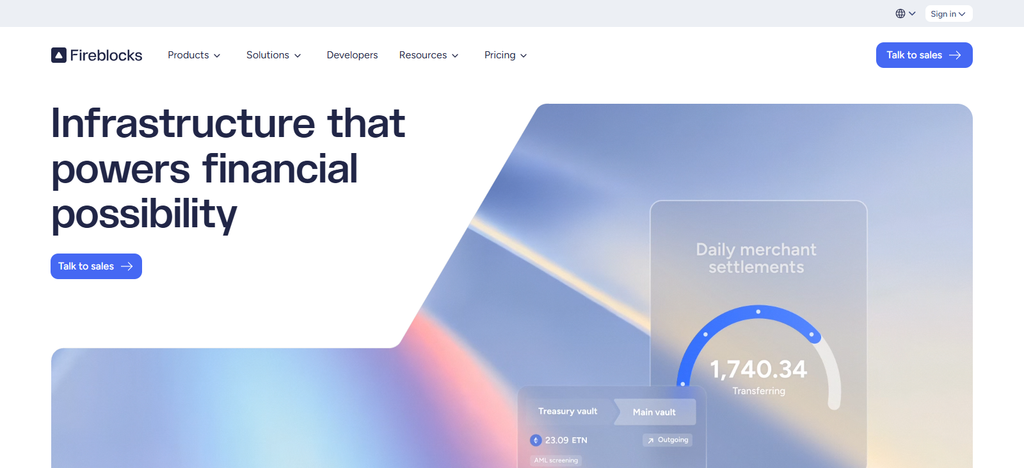
Treasury Automation: With customizable rules, businesses can automate fund transfers, withdrawals, deposits, payment routing and treasury workflows. Custody & Security: It employs MPC-based key management, transaction approval policies, role-based permissions, and real-time threat monitoring.
Integrations: Businesses can integrate exchanges, liquidity providers, banks and payment partners. Pricing & Transaction Fees: Enterprise pricing is generally custom based on platform use, transaction volume and services selected; network fees may also apply.
Characteristics
- Institutional Infrastructure Provides digital asset infrastructure to businesses, banks, fintech companies and financial institutions.
- Support for Stablecoins: Compatible with leading stablecoins such as USDC, USDT, PYUSD, USDP, and RLUSD on compatible blockchain networks.
- Treasury Automation: Automated transfers, transaction approvals, payment workflows and programmable treasury operations.
- Custody & Security: Utilizes MPC-based key management, transaction policies, approval workflows, and role-based control of access.
- Integrations: Links to exchanges, custodians, liquidity providers, payment processors and blockchain applications.
Advantages
- It powers institutional stablecoin operations across multiple blockchains.
- Provides enhanced wallet security and transaction controls with MPC.
- Provides automated transfers and configurable approval workflow.
- Connects businesses to a wide digital asset ecosystem.
- Provides API infrastructure for scalable treasury and payment operations.
Disadvantages
- Enterprise pricing is costly for smaller companies.
- Need technical skills for advanced integration.
- Businesses might need separate banking and fiat conversion partners.
The initial deployment may involve some complex security policies. - Not a full replacement for traditional corporate banking.
2. BVNK.
BVNK is a stablecoin infrastructure provider dedicated to helping businesses with cross-border payments, digital wallets, fiat conversions and treasury management. Its platform supports major stablecoins such as USDC and USDT on networks like Ethereum, Solana, Polygon, Tron, Base and Arbitrum depending on the product.
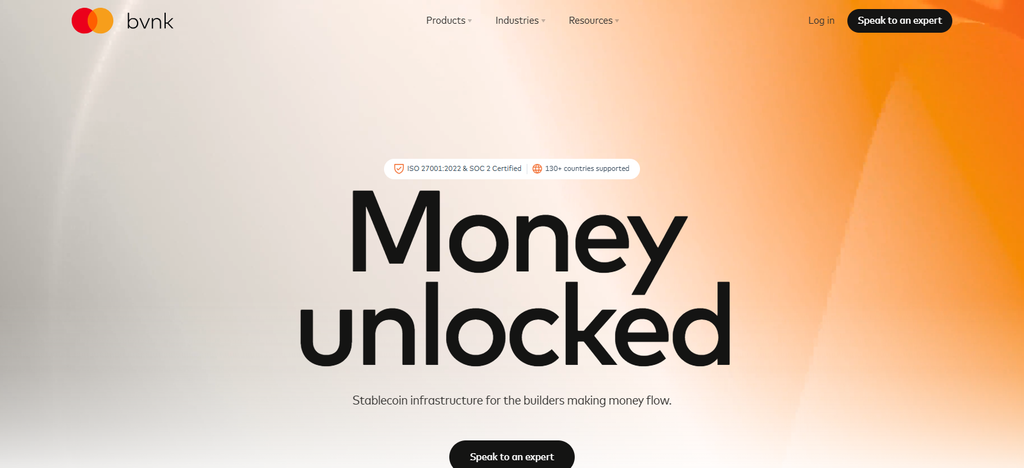
Treasury Automation: APIs will allow businesses to automate pay-ins, payouts, payment reconciliation, stablecoin conversions and global settlements.
Custody & Security: BVNK provides custodial and self-custody wallet formats, transaction monitoring and institutional security controls. Integrations: Connects payment processors, business platforms, and liquidity providers. Pricing & Transaction Fees Pricing is customized. Processing, wallet and blockchain network fees may apply.
Characteristics
- Platform Background: Offers stablecoin and fiat payment infrastructure to international businesses and financial institutions.
Stablecoin Support: Supports major stablecoins such as USDC and USDT on a variety of supported networks. - Treasury Automation: Provides automated global payouts, collections, conversions and payment reconciliation.
- Custody & Security: Wallet infrastructure, transaction monitoring, security controls for institutions.
- Integrations: Provides APIs for payments, digital wallets, virtual accounts, and cross-border payments.
Advantages
- Integrates with fiat and stablecoin payment infrastructure.
- Supports international payments to over 130 countries.
- Companies can automate the collection and payout of stablecoins.
- Offers various currency conversion and settlement options.
- Provides institutional security certifications and compliance controls.
Disadvantages:
- Designed primarily for businesses with large payment requirements.
- Enterprise pricing might not be suitable for early-stage startups.
- Service availability varies by geographic eligibility.
- Businesses might need technical resources to integrate APIs.
Not all stablecoins and payment features are available in all markets.
3. Bridge (Stripe)
Bridge, a Stripe company, offers stablecoin infrastructure that enables businesses to receive, hold, convert and transfer digital dollars across international markets. It supports some stablecoins such as USDC, USDT, USDB, USDG, USDP, PYUSD and EURC. Availability depends on supported networks and regions.
Treasury Automation API for automated fiat on-ramps, stablecoin transfers, cross-chain movement, virtual accounts and local currency payouts. Custody & Security: Businesses can choose to use Bridge wallets or connect to external wallet infrastructure.
Integrations. It provides unified APIs for wallets, payments, cards and stablecoin issuance. Pricing & Transaction Fees: Commercial pricing is customized and is subject to conversion, payment and network fees depending on transaction routes.
Characteristics
- Platform Background: Provides businesses APIs for stablecoin infrastructure. Stripe Acquires Bridge to Extend Global Payment Ecosystem
- Stablecoin Support: Supports stablecoins such as USDC, USDT, USDB, USDG, USDP, PYUSD and EURC, depending on the network.
- Treasury Automation: Automated stablecoin purchases, transfers, conversions, virtual accounts and cross-border payment workflows.
- Custody & Security: Provides wallet and custody infrastructure, transaction monitoring and controls related to compliance.
- Integrations: API-based integrations for fintech apps, payment platforms, wallets and financial services.
Advantages
- It provides programmable stablecoin payment infrastructure.
- Support for multiple blockchain networks and stablecoins.
- Simplifies the conversion from fiat to stablecoin and vise versa.
- Offers APIs for building financial applications that fit your needs.
- Integrates stablecoin infrastructure into Stripe’s larger payments ecosystem.
Disadvantages
- Technical development may be required for advanced features.
- The price depends on the services and terms of the transaction.
- Availability is subject to supported countries and eligibility of business.
– Some banking services may need additional partners for businesses. - Not all treasury features are available in a corporate treasury management module.
4. Circle Mint
Circle Mint is Circle’s institutional platform built for businesses needing direct access to stablecoin issuance, redemption, custody and global distribution. It supports USDC, EURC and cirBTC with USDC and EURC on multiple supported blockchain networks.
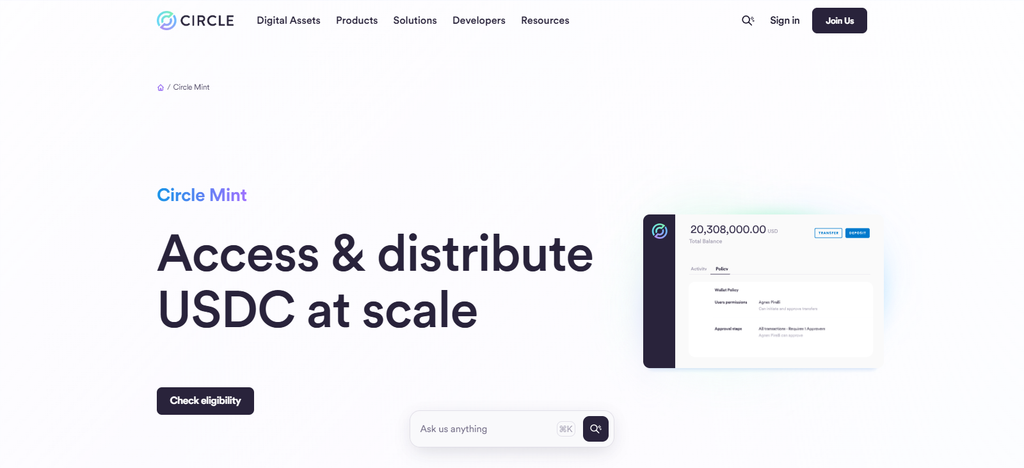
Treasury Automation: Companies can automate minting, redemption, transfers and fund distribution through APIs, and control account permissions and transaction approvals. Custody & Security: Institutional custody, asset segregation, user permissions and account level controls support treasury protection.
Integrations: Circle gives you the API and banking building blocks you need to run your business. Pricing & Transaction Fees: Circle redemption fee for standard USDC/EURC redemptions: None. Circle redemption fee for Express redemptions: 5 basis points. Outgoing network fees may apply.
Characteristics
- Platform Background: Built by Circle to provide institutions access to issue, redeem and operate with digital dollars.
- Stablecoin Support: Support for USDC and EURC primarily, and other eligible digital asset services.
- Treasury Automation: Supports API-driven minting, redemption, transfers and stablecoin distribution flows.
- Custody & Security: Institutional account controls, transaction permissions and secure digital asset infrastructure.
- Integrations: Connections with banking infrastructure, payment apps, wallets and blockchain-based financial services.
Advantages
- Gives eligible institutions direct access to mint and redeem USDC.
- Supports EURC for businesses performing digital transactions in Euros.
- Provides API infrastructure to automate stablecoin operations.
- Helps companies manage liquidity in digital dollars.
- Provides access to Circle’s stablecoin ecosystem and supported blockchains.
Disadvantages
- Smaller businesses may not be able to meet institutional onboarding requirements.
- Not all businesses are available or eligible in all locations.
- It’s more of stablecoin issuance and redemption than full treasury management.
- Businesses may need more providers to provide a wider range of banking activities.
- Transaction fees can also depend on network and third-party service fees.
5. Ripple Treasury
Ripple Treasury (formerly GTreasury) is a corporate treasury management platform that integrates conventional financial operations and digital asset capabilities. It helps global businesses with liquidity, cash forecasting, payments, financial risks, and stablecoin-related operations. Its digital asset ecosystem includes RLUSD, Ripple’s USD-pegged stablecoin that can be used across supported blockchain networks.
Treasury Automation: Functionalities include payment approvals, cash forecasting, intercompany netting, liquidity management and transaction reconciliation. Custody & Security: Companies can embed digital asset infrastructure and governance controls into treasury workflows.
Integrations: Connects banks, ERP systems, payment networks and financial platforms. Pricing & Transaction Fees: Enterprise pricing is typically quote based with implementation and service costs determined by modules selected.
Characteristics
- Stablecoin Support: RLUSD is a part of Ripple’s stablecoin ecosystem and its availability is based on the product and networks it integrates with.
- Treasury Automation: streamlines cash forecasting, liquidity management, payment approvals and corporate treasury workflows.
- Custody & Security. Access to digital asset infrastructure and enterprise financial controls through Ripple relevant services and integrations.
- Integrations: Integrates with banking systems, ERP platforms, financial institutions, and corporate treasury applications.
Advantages
- Integrates classic treasury management with digital asset functionality.
- Offers cash forecasting and liquidity management capabilities.
- Provides support for corporate payment and financial reporting processes.
- Provides access to Ripple’s payment and stablecoin ecosystem.
- Suitable for businesses running complex treasury operations.
Disadvantages
- Some digital asset functionality may require separate integrations.
- Enterprise deployment may require significant planning.
- Pricing is usually customized based on business needs.
- Native stablecoin features may not be as comprehensive as traditional treasury features.
- Companies should assess the availability of RLUSD related services in their respective markets individually.
6. Bitgo
BitGo, founded in 2013, is a provider of institutional digital asset custody and wallet infrastructure. It assists businesses, financial institutions and investment companies to securely store, transfer and manage electronic assets including supported stablecoins. Its infrastructure lets thousands of digital resources run on multiple blockchain protocols.
Treasury Automation: Wallet APIs, transaction policies, withdrawal controls and integrations help businesses manage institutional transfers. Custody & Security: BitGo offers cold storage custody, multi-signature security, address whitelisting, velocity limits and role-based permissions.
Integrations: APIs for exchanges, financial institutions and digital asset platforms. Pricing & Transaction Fees: Custody fees can include assets-under-custody fees based on basis points, plus any applicable transaction and service fees.
Characteristics
- About BitGo. Founded in 2013, BitGo provides institutional digital asset custody, wallet infrastructure and financial services.
- Stablecoin Support: Supports major stablecoin assets including USDC and USDT depending on supported networks and custody.
- Treasury Automation: Wallet APIs, transaction management, withdrawal controls & automated digital asset workflows.
- Custody & Security: Offers institutional custody, multi-sig wallet technology, MPC infrastructure and transaction approval policies.
- Integrations: Connects with exchanges, banks, digital asset platforms, and institutional trading services.
Advantages
- Offers institutional-grade digital asset custody.
- Supports multi-signature and MPC-based security.
- Supports automatic wallet and transaction management
- It provides infrastructure for institutions to transfer digital resources.
- Provides custody and trading services in the broader ecosystem.
Disadvantages
- New asset support may need internal approval.
- Some treasury features require further integrations.
Enterprise onboarding can be tough.
Businesses requiring extensive international fiat payouts may need external payment providers.
7. Anchorage Digital
Anchorage Digital is an institutional digital asset platform with regulated custody, trading, staking, and financial infrastructure through its affiliates. Its federally chartered bank offers institutional custody for supported cryptocurrencies and stablecoins, including some stablecoin assets on compatible blockchain networks.
Treasury Automation: Enterprises can monitor institutional asset transfers, transaction approvals, settlement actions, and digital asset operations. Custody & Security: The custody infrastructure includes segregated, bankruptcy-remote accounts, biometric transaction approvals and institutional governance controls.
Integrations: it supports institutional trading, settlement and blockchain based financial operations. Pricing & Transaction Fees: Anchorage typically offers tailored institutional pricing, not a public fee schedule; custody, trading and transaction fees vary based on the services chosen.
Characteristics
- Platform Background: Offers institutional digital asset services via Anchorage Digital Bank and its associated financial infrastructure businesses.
- Stablecoin Support: Allows custody and digital asset operations of chosen stablecoins for institutions (subject to asset eligibility).
- Treasury Automation: Institutional asset transfers, transaction approvals, settlement workflows, digital asset management.
Custody & Security: Provides federally chartered bank custody, institutional security controls, and hardware-based key management. - Integrations: Connects with institutional trading, settlement, staking and digital asset financial services.
Advantages
- Gives access to federally chartered digital asset banking infrastructure.
- Provides institutional custody and asset protection.
- Supports settlement and trading activities of electronic assets.
- Provides governance and transaction approval controls.
- Appropriate for regulated financial institutions and institutional investors.
Disadvantages
- Institutional onboarding can be complicated.
- Not every business has access to all banking and custody services.
- Pricing is typically custom.
- Supported assets and services are subject to eligibility.
- Businesses may need to add more providers to manage international fiat payment operations.
8. Conduit
Conduit is a financial infrastructure platform that helps businesses move money internationally using stablecoins and local payment networks. It supports USDC on Ethereum, Base, Solana and Polygon, USDT on Ethereum and Tron and RLUSD on the XRP Ledger.
Fiat coverage in USD, EUR, GBP, BRL and MXN, with COP available for payouts. Treasury Automation: APIs enable international pay-ins, payouts, on-ramps, off-ramps and payment processing. Custody & Security Companies need to consider the custody arrangements and wallet responsibilities that are part of their chosen payment setup. Integrations.
Connect financial apps with API-based integrations. Pricing & Transaction Fees: Prices are generally adapted to the payment corridors, conversion requirements, and transaction volumes.
Characteristics
- Platform Background: Focused on cross-border payments and financial infrastructure for international businesses using stablecoins.
- Stablecoin Support: Supports select assets, e.g. USDC, USDT, RLUSD, on supported blockchain networks.
- Treasury Automation: API-based international payouts, collections, stablecoin conversions, and payment processing.
Custody & Security: Built-in wallet and payment infrastructure, custody arrangements depend on the service you choose. - Integrations: API connectivity for fintechs, financial applications and businesses that deal with international payments.
Advantages
- Concentrates on international stablecoin payment business.
- Supports a number of stablecoins and blockchain networks.
- Allows businesses to utilize local fiat payment infrastructure
- Automates payments through an API.
- Supports international payment and conversion processes.
Disadvantages
- Its capabilities are more payments-oriented than general corporate treasury management.
- Availability of country and currency depends on the payment corridor.
- For advanced enterprise pricing you may need to contact them directly.
- Some needs may require separate custody solutions for businesses.
- Technical resources are necessary for API integration.
9. Paxos
Paxos is a blockchain infrastructure and stablecoin provider that enables companies to manage digital payments, issue and convert stablecoins, and settle with institutions. Supported stablecoins include USDG, PYUSD, USDP and USDC for payment use cases, availability varies by blockchain and service.
Treasury Automation: Its APIs enable stablecoin minting and redemption, fiat conversion, merchant payments, and programmable payouts. Custody & Security: Paxos offers regulated infrastructure, segregated reserve arrangements and monthly reserve transparency reports for its issued stablecoins.
Integrations: Companies use APIs to integrate with payment and settlement services. Pricing & Transaction Fees: Pricing is customized based on services, payment volumes and transaction needs. Blockchain network and conversion fees may apply.
Characteristics
- Platform Background: Offers regulated blockchain infrastructure, stablecoin issuance, and digital asset services for financial institutions and businesses.
- Stablecoin Support: Supports its stablecoin ecosystem including PYUSD, USDP, USDG, and other eligible digital currencies.
- Treasury Automation: API-based minting, redemption, conversions and digital payment workflows for stablecoins.
- Custody & Security: Provides institutional digital asset infrastructure, reserve management and compliance-centric operational controls.
- Integrations: Connects with financial institutions, payment platforms, exchanges and blockchain based apps.
Advantages
- Provides infrastructure for issuing and redeeming stablecoins.
- Allows institutional financial operations on a blockchain.
- Offers API integration for bespoke payment processing.
- Offers reserve transparency of its issued stablecoins.
- Helps businesses to integrate electronic assets into financial products.
Disadvantages
- Some services require onboarding and approval from your institution.
- Price depending on the selected services and commercial agreements.
- additional integration may be needed for treasury automation.
- Stabilitycoin and network availability will vary by product.
- Businesses may seek external assistance for wider international banking functions.
10. Utila
Utila is an institutional digital asset infrastructure provider enabling fintechs, financial institutions and global businesses to manage stablecoins and digital assets treasury operations.
The multi-chain platform facilitates stablecoin transactions across compatible blockchain networks, with the specific assets available depending on the integrations and wallet configurations.
Treasury Automation: Treasury Sweeps, batch transfers, cross-border settlements, payment reconciliation and gas management can be automated by companies. Custody & Security: Employs MPC-based wallets, granular transaction approvals, governance policies, and SOC 2 Type II certified security controls.
Integrations: APIs connect businesses to exchanges, DeFi protocols, and fiat on/off-ramps. Pricing & Transaction Fees: Enterprise pricing is customized to meet your wallet needs, transaction volumes and integrations; blockchain network fees may apply.”It was an amazing experience!””It was an amazing experience.
Characteristics
- Platform Background: Provides institutional digital asset wallet and treasury infrastructure for fintech, financial institutions and digital asset businesses.
- Stablecoin Support: Supports basic stablecoin operations on compatible blockchain networks, based on wallet configuration.
Treasury Automation – Automated transfers, treasury sweeps, batch payments, transaction management and gas management. - Custody & Security: Uses MPC-based wallets, configurable transaction policies, approval workflows, and role-based permissions.
- Integrations: Connects with exchanges, DeFi apps, payment infrastructure and institutional digital asset services.
Advantages
- Offers MPC-based institutional wallet infrastructure.
- Supports automated workflows for stablecoin treasuries.
- Configurable transaction approval policies.
- Assist companies to handle multiple wallets and blockchain networks.
- Offers API infrastructure for digital asset integrations.
Disadvantages
- Technical Implementation for advanced features may be required.
- Generally, pricing is designed to meet institutional requirements.
- Businesses may need their own fiat banking partners.
- The assets and integrations supported are subject to network compatibility.
- It is more about digital asset operations, and not traditional corporate treasury management.
Conclusion
Stablecoin treasury platforms are changing how global businesses handle international payments, liquidity and digital financial operations. Solutions like Fireblocks, BVNK, Bridge, Circle Mint, Ripple Treasury, BitGo, Anchorage Digital, Conduit, Paxos and Utila offer a range of capabilities for stablecoin transfers, custody, treasury automation and cross-border settlements.
However, the right choice depends on the business requirements, the supported stablecoins, the blockchain networks, the compliance needs, the integration capabilities and the transaction costs.
Businesses should consider security controls, fiat conversion options, pricing structure and international payment coverage of a platform when selecting one to build efficient and scalable global treasury operations.
FAQ
What Are Stablecoin Treasury Platforms?
Stablecoin treasury platforms help businesses manage, store, transfer, convert, and monitor stablecoins. They support international payments, liquidity management, digital asset custody, and financial operations.
How Do Stablecoin Treasury Platforms Help Global Businesses?
They simplify cross-border payments, reduce dependence on traditional banking intermediaries, enable faster settlements, improve fund visibility, and support international supplier payments and business payouts.
Which Stablecoins Are Commonly Supported by Treasury Platforms?
Commonly supported stablecoins include USDC, USDT, PYUSD, USDP, EURC, USDG, and RLUSD. Availability depends on the platform, supported blockchain networks, and business location.
Are Stablecoin Treasury Platforms Suitable for Enterprise Businesses?
Yes. Many platforms provide institutional custody, automated payment workflows, transaction approvals, API integrations, liquidity management, and compliance tools for large businesses and financial institutions.
How Much Do Stablecoin Treasury Platforms Charge?
Pricing varies by provider and service. Costs may include subscription fees, transaction charges, blockchain gas fees, currency conversion spreads, custody fees, and fiat withdrawal charges.