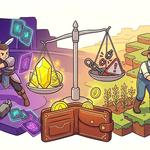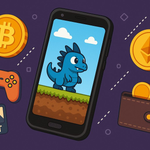


Best Crypto Strategy Games With On-Chain Economies. In this article, I’ll cover the best crypto strategy games that combine strategic gameplay with blockchain-based assets, player ownership, trading and digital economies. You’ll discover how each game handles tokens, NFTs, marketplaces, resources and economic systems as you explore their game mechanics, accessibility and overall potential for strategy-focused Web3 players.
- Why Choose Crypto Strategy Games With On-Chain Economies
- Key Points
- 1. Axie Infinity: Origins
- Features:
- Pros
- Cons
- 2. Star Atlas
- Features
- Pros
- Cons
- 3. Illuvium
- Features
- Pros
- Cons
- 4. Splinterlands
- Features
- Pros
- Cons
- 5. Gods Unchained
- Features**
- Pros
- Cons
- 6. Pixels
- Features
- **Pros
- Cons
- 7. DeFi Kingdoms
- Features
- Pros
- Cons
- 8. Nine Chronicles
- Features
- Pros
- Cons
- 9. Alien Worlds
- Features
- Pros
- Cons
- 10.The Sandbox
- Features
- Pros
- Cons
- Conclusion
- FAQ
Why Choose Crypto Strategy Games With On-Chain Economies
True Digital Ownership: Players can own eligible in-game assets such as NFTs, characters, cards, land and equipment, instead of everything being locked up inside of a centralized game account.
Strategic Resource Management: On-chain economics add another layer of strategy as players must decide when to earn, spend, trade, upgrade, or save resources.
Tradable Game Assets: In general, supported assets are tradable through game marketplaces, enabling players to handle their collections away from the regular gameplay.
Transparent Transactions: Blockchain records can produce publicly verifiable information regarding qualified transactions, ownership and asset movements.
Multiple Ways to Participate: Play through battling, crafting, collecting, trading, producing resources, exploring, owning land, or governing.
Better utilization of assets: NFTs and tokens can be used practically in-game (unlocking features, upgrading characters, accessing resources, or participating in specific activities).
Linked Game Economies: Some Web3 games integrate disparate systems – such as marketplaces, crafting, resources and governance – which introduces more economic decision making.
Community Participation: Some games include governance or ecosystem decisions that players can take part in, allowing the community to have a larger role than in traditional games.
Long-Term Strategic Depth: Well designed on-chain economy allows to define scarcity, utility of assets, resource distribution and trading to be part of overall strategy.
Key Points
| Game | Key Point |
|---|---|
| Axie Infinity: Origins | Turn-based strategy game with a mature on-chain economy powered by AXS and SLP tokens, NFT Axies, breeding, and marketplace trading. |
| Star Atlas | Grand strategy and space-exploration game featuring player-owned ships, land, resources, and a fully blockchain-based economic system. |
| Illuvium | Strategy-focused auto-battler and RPG ecosystem where players own, collect, and trade Illuvial NFTs within an on-chain economy. |
| Splinterlands | Competitive blockchain card strategy game with tradable NFT cards, staking, governance, and player-driven markets. |
| Gods Unchained | Tactical trading card game where NFT cards are fully owned by players and traded through an on-chain ecosystem. |
| Pixels | Farming and resource-management strategy game on Ronin with player-owned assets, crafting, and token-based economic activity. |
| DeFi Kingdoms | Strategy RPG that blends kingdom management, resource allocation, and DeFi mechanics into a player-driven economy. |
| Nine Chronicles | Fully decentralized MMORPG strategy game where crafting, trading, governance, and gameplay operate entirely on-chain. |
| Alien Worlds | Resource extraction and governance strategy game featuring land ownership, mining, staking, and DAO participation. |
| The Sandbox | Virtual-world strategy and land-management platform with on-chain ownership, user-created economies, and NFT-based assets. |
1. Axie Infinity: Origins
Axie Infinity: Origins is from Sky Mavis, whose Axie project started in 2018 and is mostly built on the Ronin Network, an Ethereum-aligned gaming blockchain. On-chain assets are composed of Axies, land related assets, and tradeable Runes and Charms with AXS and SLP underpinning the broader economy.
Axie Marketplace ** NFT trading with supported Ronin tokens. You can play Origins with starter Axies, but owning NFTs gives you more options in the game. Economy sources are gameplay, crafting, trading and contests. Its economy is more regulated now with SLP emissions in Origins ending January 2026.
Features:
- Axies of different classes, skills, and roles in combat.
- Team building mechanics in turn based strategic battles.
- Runes and Charms offer strategic customization.
- Built on the Ronin gaming ecosystem.
Competitive modes reward tactical decision making.
Pros
- Accessible strategic combat system
- Massive and mature Web3 gaming ecosystem.
- Free starter Axies can reduce the barrier to entry.
- Robust digital asset ownership model.
- Active competitive and community ecosphere.
Cons
- The economy has changed significantly over time.
Owned assets can improve advanced gameplay. - The beginner can get confused by the many game currencies.
NFT and token values are subject to change. - The best combinations of teams are learned over time.
2. Star Atlas
Founded in 2020, Star Atlas is built on the Solana blockchain and employs a player-owned metaverse economy. Its on-chain assets include spaceships, crews, land, structures, pets, components, and other NFTs . ATLAS is the main transactional token, and POLIS is the governance token and DAO token.
Players can trade assets via the Star Atlas Marketplace. Its published tokenomics include a 36 billion ATLAS max supply and 360 million POLIS supply. You will need a compatible wallet to enter and sources of economy include trading in assets, exploration, crafting, upgrades, repairs and resource activity.
Features
- Sci-fi strategy and exploration gameplay
- Player-owned assets in a huge virtual universe.
- Spaceships, land, equipment and other NFTs.
- ATLAS enables economic transactions.
- POLIS is a governance utility
Pros
- Aspiring game world in space.
- Strong emphasis on ownership of digital resources.
- The potential for a resource and economic strategy is deep.
Solana has fast transactions on the blockchain. - Multiple game play and economy systems.
Cons
- Ecosystem complex for new users.
- Some of the advanced features require digital resources.
Development on a large project can take time. - Crypto-market risk is financial risk.
- It has an economy that takes some getting used to.
3. Illuvium
Illuvium was built by Kieran, Aaron and Grant Warwick in 2020, and is part of the Immutable ecosystem, powered by blockchain infrastructure, with interlinked games. On-chain assets such as Illuvials, land, weapons, armor, skins and other digital collectibles. ILV is the native ecosystem token.
The IlluviDEX is the marketplace layer for qualifying digital assets that are standard. The economy is a mix of gathering, fighting, land ownership, crafting, trade and being part of the ecosystem.
Different games and different activities have different entry requirements. Some experiences are designed to reduce barriers to onboarding. So its economy is a multi-game asset-based model, rather than a single-game marketplace.
Features
- Tactical auto-battler gameplay with monster-collection.
Illuvials come in different classes and affinities. - Land adds more economic mechanics.
NFTs can be used to represent creatures and other digital objects. - ILV is good for the ecosystem as a whole.
Pros
- High quality visual presentation.
- Multiple connected game experiences.
- Excellent strategic team-building mechanics.
- Digital resources may have in-game utility.
Created for Web3 and regular gamers.
Cons
- Some ecosystem attributes can be complex.
- Additional setup may be needed for blockchain assets.
The prices of electronic assets are volatile. - A plethora of game components can be difficult for beginners.
- It takes time to get to the full depth of the ecosystem.
4. Splinterlands
Splinterlands was launched in 2018 as a blockchain trading-card game and runs mostly on the Hive blockchain. Its core on-chain assets are collectible NFT cards, as well as other game assets that players can own, trade, combine or burn.
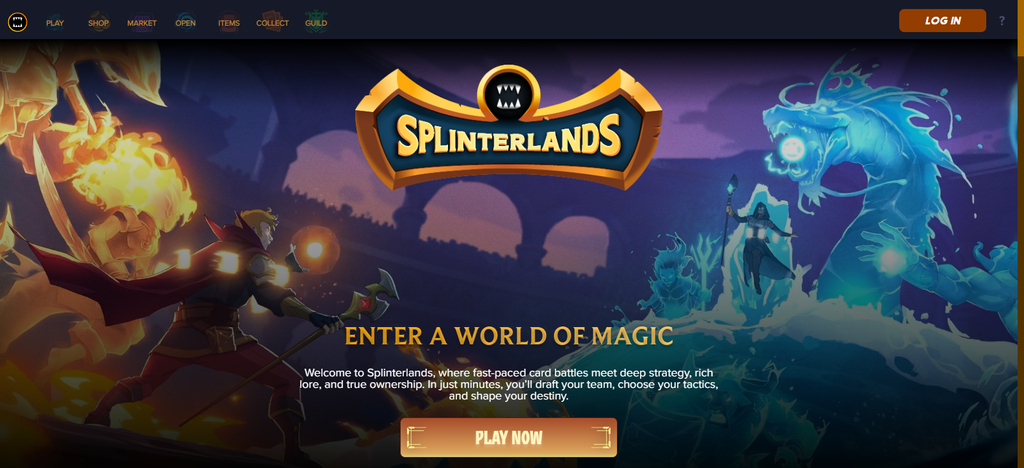
SPS is used as its governance and ecosystem token, DEC is an essential in-game currency. Players can buy and sell assets with each other in the Splinterlands marketplace. Players can enter through available starter game play.
Economic sources include battles, card trading, renting, crafting/combining and asset management. Its economy is player driven by nature, with market demand dictated by card scarcity and utility.
Features
- Blockchain-based strategy game with collectible cards.
Cards have different stats, abilities and rarities. - Cards can be collected, traded, rented, combined or burned.
SPS supports governance and ecosystem functions. - DEC acts as a major in-game currency.
Pros
- Fast-paced strategic card battles.
- Large selection of cards and abilities.
- Solid player-to-player economy.
- Card rental enhances access.
Mature game ecosystem on blockchain.
Cons
- Learning curve on many cards and abilities.
- Competitive optimization is complicated.
- Values of assets can change.
- Economy may be hard for new players to understand.
- Card collections can have strategic benefits.
5. Gods Unchained
Gods Unchained was announced in 2018 by the team that would later become Immutable and is now associated with Immutable X/Immutable infrastructure. Its primary on-chain assets are collectible NFT trading cards, with GODS as the native ERC-20 token.
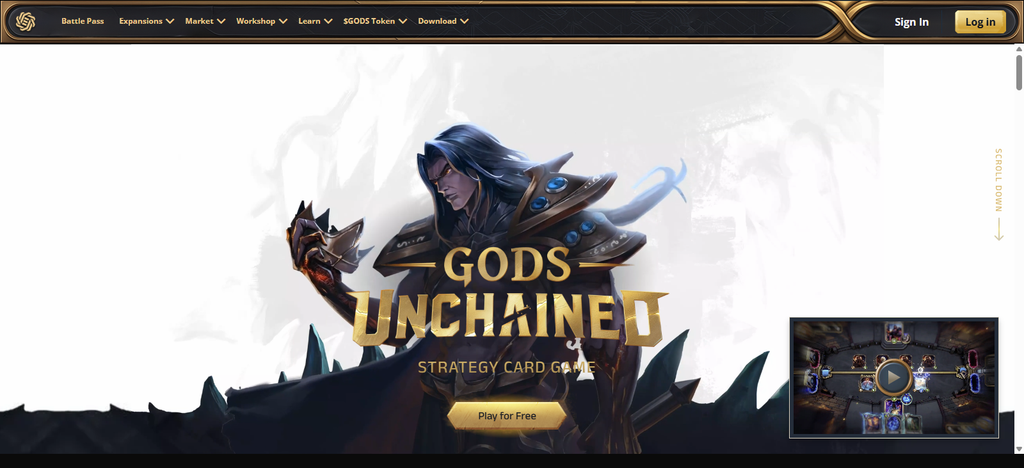
The marketplace ecosystem enables players to trade cards and GODS can be utilized for things like NFT crafting, marketplace purchases, staking, and governance. The game is free-to-play and a strategy card game, which lowers the initial barrier to entry.
The economic sources are card trading, gameplay rewards, crafting and collecting. It has a trading history of considerable economic activity between players.
Features**
- Competitive trading-card play in the digital space.
- The cards differ in rarity and strategy skills.
- Some cards are owned and traded by players, as NFTs.
- GODS is the native token of the ecosystem.
- Building the deck is the heart of competitive strategy.
Pros
- Entry model is free-to-play.
Familiar trading card game structure. - Heavy emphasis on strategic deck building.
- Players can own digital cards that are eligible.
- Marketplace adds an economic dimension.
Cons
- Good cards can be expensive.
- You need to know card combinations to play competitively.
- Meta shifts can affect the strength of decks.
- NFT and token value is subject to change.
New players could be up against experienced players.
6. Pixels
Pixels, a blockchain social farming and adventure game, has emerged as a major title within the Ronin ecosystem. Its economy is built on PIXEL as the main ecosystem token and blockchain assets like land and other collectible or utility-based items. The Ronin marketplace ecosystem provides the infrastructure for NFT trading.
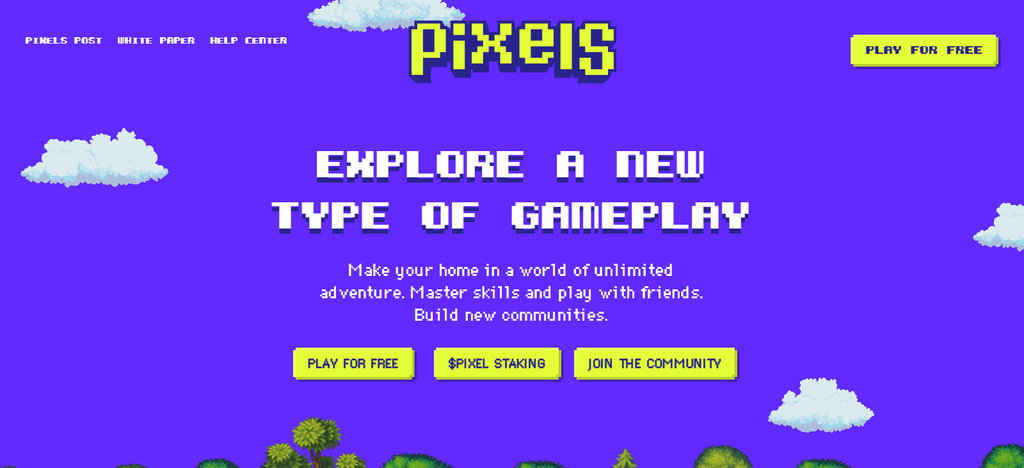
The entry is relatively easy as players can play core gameplay without needing to buy expensive NFTs first. The economy is built on farming, quests, crafting, gathering, land, and the market. It’s a model that blends social gameplay with a player-driven digital economy, making resource management and asset utility key parts of progression.
Features
- Farming, exploring, crafting and social gameplay.
- Progression of a player in a pixel-art virtual world.
- Land and other assets can be linked to the blockchain economy.
- PIXEL is the main ecosystem token.
The economy revolves around resource management and crafting.
**Pros
- Easy farming gameplay.
Experience with social and community oriented programs. - Easy to enter vs asset intensive games.
- Several resources and crafting systems.
- Web3 economy, powered by Ronin infrastructure.
Cons
- May become repetitive for some players.
Economy adds more complexity to traditional farming games. - Token value can change.
- Some advanced features are blockchain assets.
- To progress over the long term you need to be consistently involved.
7. DeFi Kingdoms
DeFi Kingdoms was officially launched in 2021, blending RPG gameplay with decentralized finance mechanics. Its current ecosystem includes DFK Chain, Kaia, and Metis, depending on the game component. On-chain assets include Heroes, Pets, Weapons, land-related items and other utility NFTs.
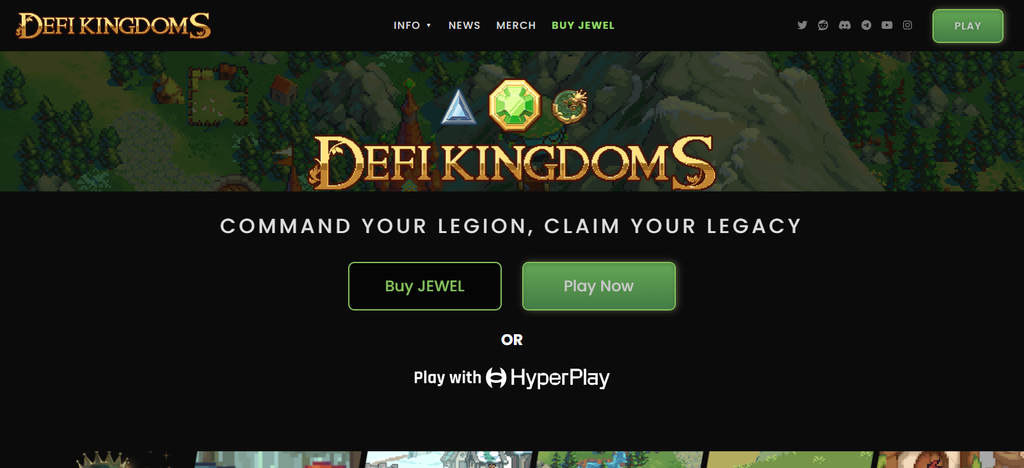
JEWEL is what backs the economy. But also ecosystem specific tokens like **CRYSTAL and JADE. The Marketplace operates on a decentralized trading infrastructure, while the Bazaar allows for additional player transactions.
The entry fee depends on the activity, but players can participate in numerous economic systems. Economic sources include quests, professions, trading, liquidity providing, staking, resource gathering, and Hero progression, leading to a strongly interconnected economy.
Features
- Quests and professions offer resource generating activities.
- Mixes elements of RPG, strategy, and decentralized-finance.
- Heroes are digital resources on the blockchain.
- JEWEL is a core ecosystem token .
- Trading, staking and liquidity all in one systems
Pros
- Deep integration of gaming and DeFi mechanics.
- Strong element of economic strategy.
- Hero NFTs are useful for in-game.
- Different ways to participate in the economy.
- Progression is a reward for long-term strategic planning.
Cons
- Tough for old-school gamers.
- DeFi jargon can be confusing for the uninitiated.
Token prices can fluctuate. - Some activities require an economic understanding.
- Learning curve is steep due to multiple systems.
8. Nine Chronicles
Nine Chronicles was founded as a project in 2018 with the first alpha launched in 2019 and operates on its own blockchain built by Planetarium. Unlike many hybrid games, the documentation says, “game actions and game elements are stored on chain.”
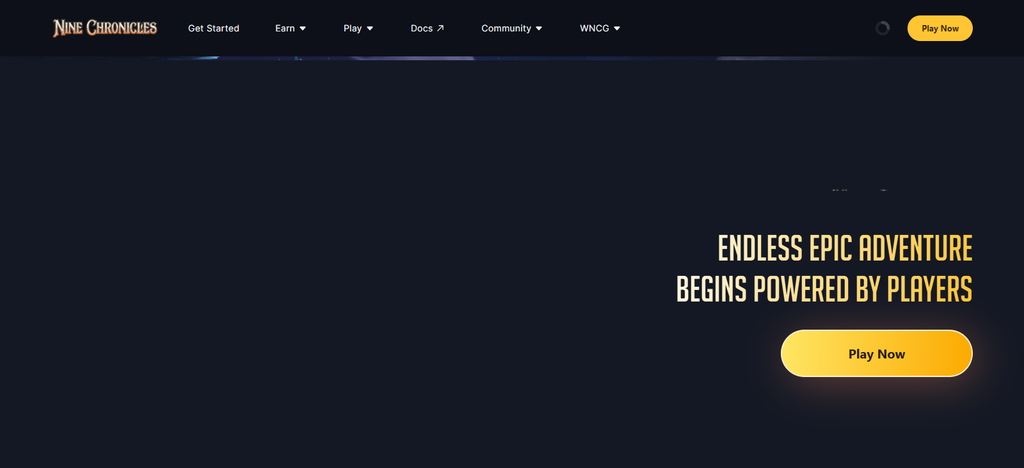
The main in-game currency is NCG (Nine Chronicles Gold) and the maximum supply is 1 billion NCG. The Ethereum-compatible version is WNCG. Players can trade equipment, materials, food, costumes, AP Potions and Hourglasses in the in-game market. Economy sources are crafting, arena competition, trading and staking which creates a supply and demand driven economy.
Features
- Blockchain-native RPG with extensive on-chain mechanics.
- Game assets and actions can be connected to its blockchain.
- NCG functions as the main in-game currency.
- Crafting and equipment management are important.
- Marketplace supports trading of game-related assets.
Pros
- Strong on-chain integration.
- Player-driven crafting and trading economy.
- Resource management adds strategic depth.
- Large range of equipment and materials.
- Distinct blockchain-native architecture.
Cons
- Blockchain mechanics can be difficult for beginners.
- Gameplay may feel grind-heavy to some players.
- Economic systems require significant understanding.
- Asset values can fluctuate.
- On-chain activity can add complexity to gameplay.
9. Alien Worlds
Alien Worlds was launched in 2020 as a sci-fi strategy and exploration game built on blockchain networks, especially WAX, but with interoperability with other supported networks. On-chain assets include land, tools, weapons, avatars and other NFTs.
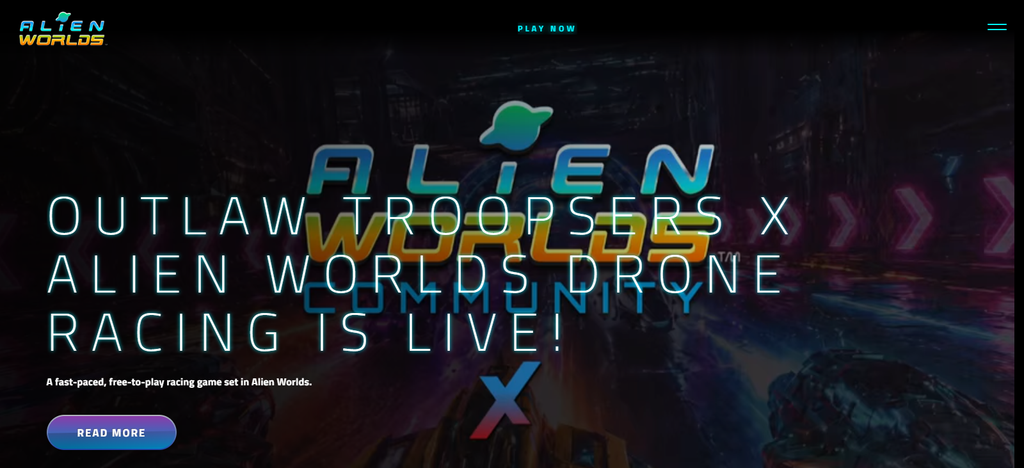
TLM (Trilium) is the primary ecosystem token. Marketplace allows players to trade eligible digital items. Compared to games with a heavy focus on NFTs, it may be relatively easy to get in, as players can use basic tools to start.
Economic sources include mining, owning land, trading NFTs, missions and planetary governance. Its economy is a combination of resource production, scarcity, land utility and token incentives.
Features
- Sci-fi exploration and resource-mining gameplay.
- Players can own land and NFT-based tools.
- TLM is the primary ecosystem token.
- Planetary governance adds a strategic layer.
- Mining and asset management drive economic activity.
Pros
- Easy-to-understand resource-based gameplay.
- Multiple planets create different strategic opportunities.
- Land ownership adds economic depth.
- Blockchain assets can be traded.
- Governance provides additional player participation.
Cons
- Mining-focused gameplay can become repetitive.
- Economy is influenced by token-market conditions.
- Advanced strategies require understanding several systems.
- Asset utility varies between NFTs.
- Long-term engagement may depend on economic incentives.
10.The Sandbox
The Sandbox started as a game project in 2018 and then became a blockchain-based virtual world built on Ethereum and Layer-2 infrastructure. Its main on-chain items are LAND, ASSETS, avatars, collectibles and creator-built experiences.
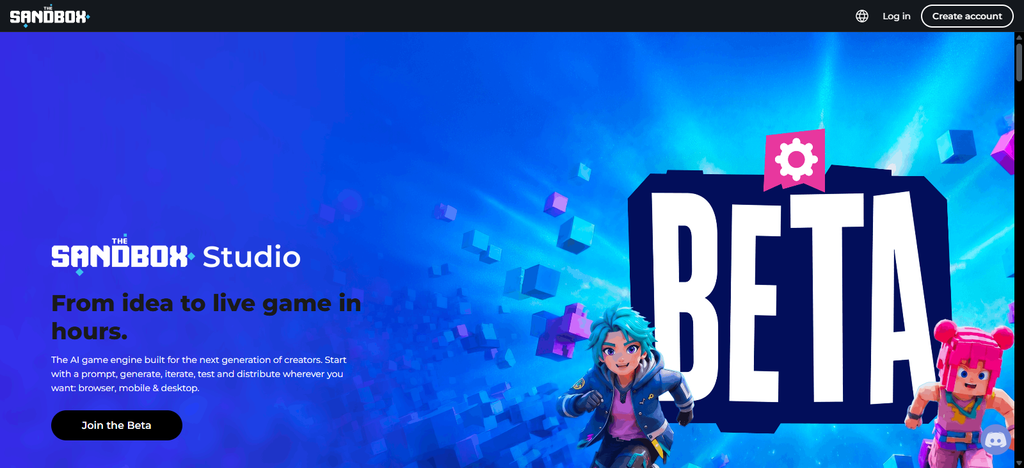
SAND is the native utility token across the ecosystem. The Sandbox Marketplace enables the trading of digital resources and Creator Tools empower users to create and monetize experiences.
Entry is subject to a user playing, creating, owning LAND or trading assets. Economic sources include LAND sales, asset creation, marketplace activity, experiences, and creator monetization, making it primarily a creator-driven virtual economy.
Features
- User-generated virtual world and gaming ecosystem.
- LAND represents virtual real estate.
- ASSETS can represent creator-made digital objects.
- SAND is the native ecosystem token.
- Players can create, own, trade, and monetize experiences.
Pros
- Strong creator-focused ecosystem.
- Virtual LAND provides ownership opportunities.
- Extensive user-generated content potential.
- Multiple ways to participate beyond traditional gameplay.
- Established blockchain gaming brand.
Cons
- Creating advanced experiences requires learning tools.
- LAND can have high acquisition costs.
- SAND and NFT prices are volatile.
- Quality varies across user-created experiences.
- Full ecosystem participation can be complex for beginners.
Conclusion
The on-chain economy crypto strategy games are revolutionizing the way players interact with digital currencies, resources, and virtual worlds. Some of the games that leverage different combinations of blockchain ownership, marketplaces, tokens, NFTs, and player-driven economies are Axie Infinity: Origins, Star Atlas, Illuvium, Splinterlands, Gods Unchained, Pixels, DeFi Kingdoms, Nine Chronicles, Alien Worlds, and The Sandbox.
Your best choice depends on your preferred strategy style, entry requirements, asset ownership, trading opportunities and economic depth. Instead of just looking for token rewards, players should consider how useful and sustainable each game’s economy will be over the long run.
FAQ
What are crypto strategy games with on-chain economies?
Crypto strategy games with on-chain economies combine strategic gameplay with blockchain-based assets, tokens, marketplaces, and player ownership. Players can manage resources, build characters or worlds, trade digital assets, and sometimes participate in governance.
Which crypto strategy games have on-chain assets?
Axie Infinity: Origins, Star Atlas, Illuvium, Splinterlands, Gods Unchained, Pixels, DeFi Kingdoms, Nine Chronicles, Alien Worlds, and The Sandbox all incorporate blockchain-based assets or economic elements, although the degree of on-chain integration differs between games.
Do these games require NFTs to start playing?
Not always. Some games provide free or starter experiences, while others may require specific assets or purchases for advanced features. Entry requirements can also change as developers update their game economies.
What is an on-chain economy in a blockchain game?
An on-chain economy uses blockchain technology to record some combination of ownership, transactions, assets, currencies, or other economic activities. This can allow players to trade or manage digital assets outside the game’s traditional centralized database.
What tokens are used in these crypto strategy games?
Different games use different native tokens. Examples include AXS and SLP in the Axie ecosystem, ATLAS and POLIS in Star Atlas, ILV in Illuvium, SPS and DEC in Splinterlands, and GODS in Gods Unchained.