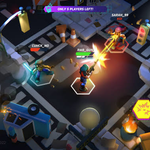


In this article, I will go over the Top Web3 Games With Real Players. Games with active communities, fun gameplay, multiplayer experiences, and meaningful blockchain features will be discussed. Discover their platforms, genres, player activity, Web3 economies, NFT integration, free-to-play options, and key strengths to find games offering real player engagement and long-lasting gaming experiences in 2026.
- What Are Web3 Games With Real Players?
- How To Choose Top Web3 Games With Real Players
- Key Points
- 1. Alien Worlds
- 2. League of Kingdoms
- 3. Big Time
- 4. RavenQuest
- 5. Shrapnel.
- 6. Star Atlas (ATLAS)
- 7. Splinterlands
- 8. Parallel
- 9. The Sandbox
- 10. Decentraland (MANA)
- Top Web3 Games With Real Players — Comparison Table
- Conclusion
- FAQ
What Are Web3 Games With Real Players?
Real players in Web3 games are games based on the blockchain with real users directly participating in gameplay rather than depending heavily on bots, inactive wallets, or speculative transactions.
These games typically blend multiplayer experiences with blockchain features like NFTs, player-owned assets, tokens, digital marketplaces, and decentralized economies. The matchmaking, battles, quests, tournaments, guilds, trading and community engagement all show real player activity.
These are not simple blockchain projects with lots of wallets. These are about gameplay and interaction between players in the long run. So, if you want to consider the long-term value of the game in 2026, look for active communities.
How To Choose Top Web3 Games With Real Players
If you are searching for Web3 games with real players, here are some important things to consider:
Active Player Activity – Daily or monthly checks on player activity, availability for matchmaking, in-game interactions and other signs of active play.
Quality of Gameplay – Seek an engaging experience, balanced mechanics, meaningful progression, and enough content to bring players back in.
Community engagement – Look at Discord, social communities, guilds, tournaments, and other signs of real player engagement.
Player Retention – Determine if players are coming back after the first launch or if activity is only due to promotions or rewards.
Web3 Utility – Does the blockchain feature like NFTs, tokens, ownership, trading, or governance add real gameplay value?
Game Accessibility – Find games that are easy to jump into, offer free-to-play options when possible, and don’t require pricey assets before getting started.
Multiplayer Experience – Think about PvP, co-op, guilds, matchmaking, tournaments, and other things that require a healthy player base.
Development Activity – Look for frequent updates, new content, communication from the developers, roadmaps, and improvements that show active development.
Economy and Marketplace – Investigate the in-game economy for good trading, crafting, rewards and sustainable player-driven activity.
Bot and Wallet Activity – Don’t mix up wallet counts and number of players. Compare blockchain activity to real gameplay, community participation and multiplayer activity.
Key Points
| Web3 Game | Key Point 1 | Key Point 2 |
|---|---|---|
| Alien Worlds | Multi-chain gaming | Mining and missions |
| League of Kingdoms | MMO strategy | Kingdom building |
| Big Time | Multiplayer action RPG | Dungeon-based combat |
| RavenQuest | Sandbox MMORPG | Player-driven economy |
| Shrapnel | Extraction FPS | Competitive PvP |
| Star Atlas | Sci-fi gaming universe | Space exploration |
| Splinterlands | Strategic card battles | NFT card ownership |
| Parallel | Sci-fi card strategy | Faction-based decks |
| The Sandbox | User-generated world | Virtual LAND |
| Decentraland | Decentralized virtual world | LAND ownership |
1. Alien Worlds
2020 Alien Worlds is a blockchain metaverse and mining game playable through web browsers. It is a multi-chain Web3 ecosystem, running on WAX, BNB Chain, and Ethereum.
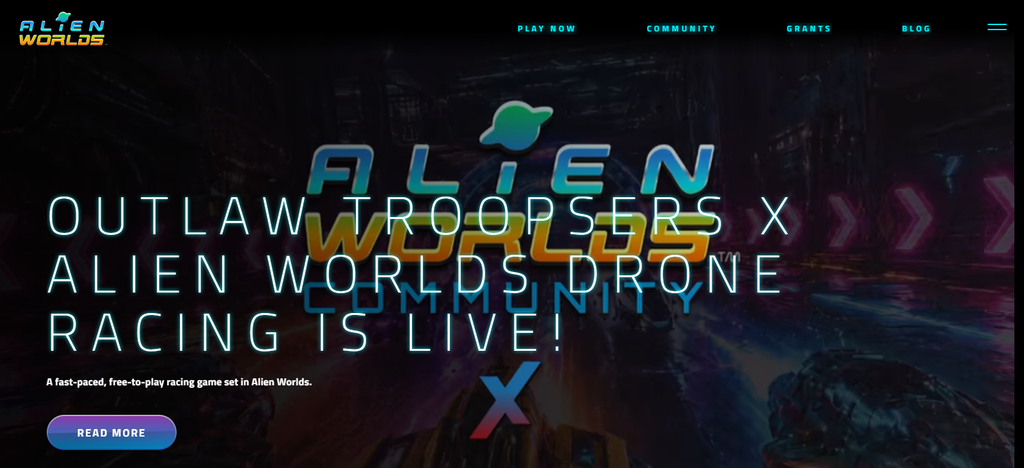
The game has reported more than 9.3 million lifetime users and its 2025 ecosystem averaged over 90,000 daily active accounts.
The game is free-to-start, players can mine Trilium (TLM), complete missions, join planetary Syndicates and play in community-created games. NFTs, TLM, staking, governance, and player-owned assets, as well as a large community, is a key strength for its economy.
| Feature | Details |
|---|---|
| Game Type | Blockchain metaverse, mining, missions and card-battler ecosystem |
| Core Gameplay | Mining, Missions, Syndicate participation and Battledome battles |
| Blockchain | WAX, BNB Chain and Ethereum |
| Main Token | Trilium (TLM) |
| NFTs | Land, tools, spacecraft, weapons, minions and mission NFTs |
| Mining | Players select land and use mining tools to obtain TLM |
| Missions | Players send spacecraft on missions and can receive rewards and NFTs |
| Battledome | Skill-based battles using weapons and minions |
| Governance | Players can participate in planetary governance through TLM |
| Economy | Player-owned NFTs and TLM-based activities |
| Accessibility | Browser-based entry with supported blockchain wallets |
| Key Strength | Multi-chain ecosystem combining mining, missions, governance and combat |
| Web3 Utility | Asset ownership, token rewards, governance and blockchain transactions |
2. League of Kingdoms
League of Kingdoms is a strategy-focused MMO game released in 2020 and available on web and mobile. The game uses blockchain-based NFTs and the LOKA token for ownership, governance, staking, and economic participation.

League of Kingdoms has historically validated over 150,000 daily active users and 800,000 monthly active users, showing a solid adoption from players. You can play it for free, build your kingdom, manage resources, form alliances, fight over territory and join competitive events.
Its economy features NFTs, Drago assets, resources and utility powered by LOKA, with alliance gameplay and large-scale multiplayer competition remaining at the heart of its community experience.
| Feature | Details |
|---|---|
| Game Type | MMO strategy and kingdom-building game |
| Core Gameplay | Build kingdoms, develop armies, collect resources and fight opponents |
| Platform | Mobile and supported blockchain/game clients |
| Blockchain | LINE Blockchain ecosystem |
| Main Token | LOKA |
| Land NFTs | Players can own LAND and generate resources through gameplay |
| Alliances | Players can join or create alliances and expand territory |
| Combat | Kingdom-versus-kingdom battles and monster encounters |
| Governance | Blockchain-based voting for ecosystem leadership |
| Resources | Kingdom resources can be cultivated and managed |
| Digital Assets | LAND, resources and limited-edition skins |
| Economy | Player-owned digital assets and marketplace-oriented activity |
| Social Features | Alliances, territorial competition and community governance |
| Web3 Utility | Ownership, trading, staking/governance and blockchain voting |
| Key Strength | Combines traditional MMO strategy with blockchain ownership |
3. Big Time
Big Time is a multiplayer action RPG for PC that was released in 2021 and fuses classic dungeon crawling with a Web3 economy. Its blockchain-based assets are SPACE, Forges, Armories and Time Wardens. BIGTIME is the utility token of the ecosystem. The game is free-to-play and there is no need to own an NFT.

The game is focused on dungeons, quests, events, crafting, combat and progression. Its registered player base has been reported to be over 2.5 million, but registered accounts should not be taken to be the same as active daily players. Player-driven crafting, asset ownership, upgrades, and token utility drive its economy.
| Feature | Details |
|---|---|
| Game Type | Multiplayer action RPG |
| Platform | Windows PC |
| Gameplay | Dungeons, combat, quests, exploration and crafting |
| Free-to-Play | Yes |
| Blockchain Economy | Player-driven digital-asset economy |
| Main Token | BIGTIME |
| NFTs | SPACE, Forges, Armories, Time Wardens and collectibles |
| Procedural Generation | Creates changing environments, objectives and enemies |
| Personal Metaverse | Players can customize personal spaces |
| Crafting | Players can craft and upgrade weapons and armor |
| Class System | Pocket Watches allow players to change character classes |
| Trading | Players can trade eligible items and collectibles |
| Special Areas | Some collectibles can provide access to special areas |
| Economy | Gameplay-generated BIGTIME plus player-owned assets |
| Web3 Utility | Asset ownership, crafting, upgrades and ecosystem transactions |
| Key Strength | Traditional action-RPG gameplay combined with player ownership |
4. RavenQuest
RavenQuest is a free-to-play pixel-art MMORPG for PC with mobile and cross-play development underway. It was released on March 14, 2025 Its gameplay includes PvP, PvE, professions, exploration, quests, guilds, and a player-driven economy. As players play the game, they earn Silver Coins that can be traded for QUEST tokens through the inbuilt peer-to-peer system.
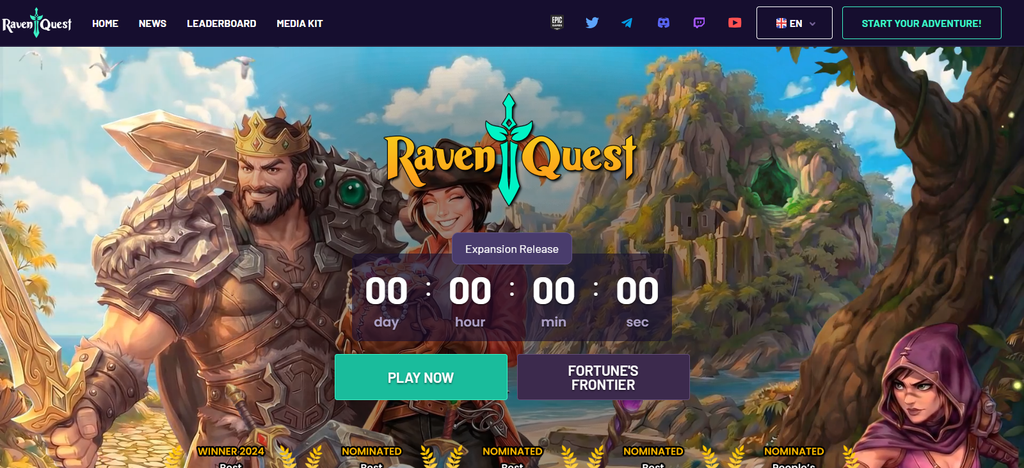
The developers emphasize anti-bot measures and fair play. Community and leaderboard activity are more useful than showing an unsupported single player-count number, considering that current public player estimates vary widely. The community is defined by its economy, trading system and active competitive seasons.
| Feature | Details |
|---|---|
| Game Type | Pixel-based sandbox MMORPG |
| Core Gameplay | Exploration, combat, gathering, crafting, trading and land ownership |
| Free-to-Play | Yes |
| World Design | Dynamically changing open world |
| Character System | Multi-archetype customization |
| PvP | Guild Wars, Solo/Duo Arena and open-world PvP |
| Economy | Player-driven economy |
| Currency | Silver Coins and QUEST ecosystem |
| Trading | In-game peer-to-peer exchange system |
| Land | Players can claim, customize and develop land |
| Housing | Houses can be customized with furniture, pets and rooms |
| Crafting | Skill-based gathering and crafting |
| Transportation | Customizable ships and wagons |
| Collectibles | RavenCards, companions and cosmetics |
| Anti-Cheat | BattleEye, Anybrain and manual player audits |
| Key Strength | Deep player-driven MMORPG economy with extensive customization |
5. Shrapnel.
Shrapnel is a competitive extraction FPS for PC that entered Early Access in 2026. Its Web3 infrastructure is built on GalaChain and allows for the ownership and trading of in-game digital items.
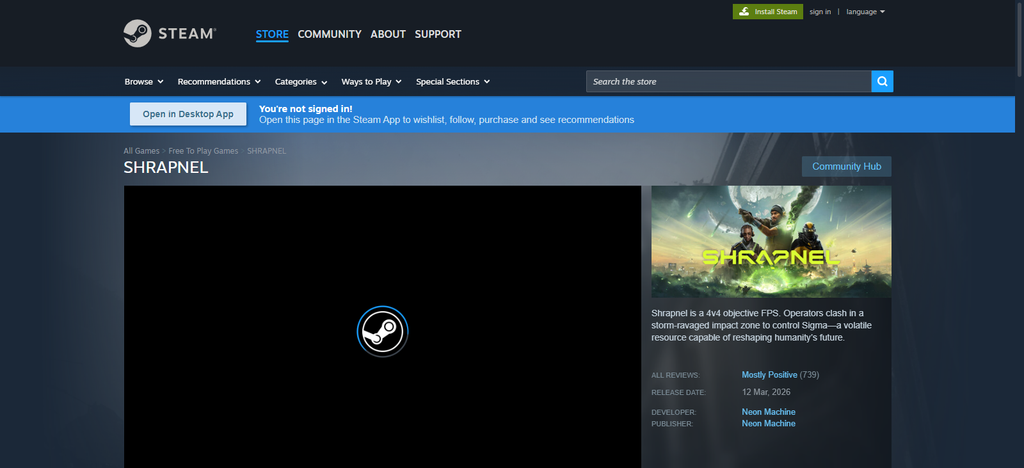
The game combines shooting, extraction, competitive multiplayer and player-created content, with its economy linking digital items to blockchain ownership. Shrapnel is free to play.
However current public Steam activity is relatively low with September 2026 numbers showing an average of only about 2 Steam players per day with an all time Steam peak of 253. It has 400,000+ NFTs on-chain in its wider ecosystem. China expansion is another major 2026 development.
| Feature | Details |
|---|---|
| Game Type | Competitive extraction shooter |
| Platform | PC |
| Gameplay | FPS combat, extraction, looting and survival |
| Game Model | Free-to-play |
| Blockchain | GalaChain |
| Web3 Assets | Player-owned digital collectibles and in-game assets |
| Extraction Gameplay | Enter zones, collect valuable items and extract safely |
| PvP | Competitive player-versus-player combat |
| Player-Created Content | Creator-focused ecosystem and user-generated content |
| Economy | Digital assets can support ownership and trading |
| Customization | Weapons, gear and cosmetic-style assets |
| Competitive Element | Risk-versus-reward extraction gameplay |
| Community Focus | Competitive shooter and creator communities |
| Web3 Utility | Asset ownership and blockchain-based digital collectibles |
| Key Strength | Combines AAA-style FPS mechanics with Web3 ownership |
6. Star Atlas (ATLAS)
Star Atlas is a space exploration and strategy MMO ecosystem built on Solana and playable on PC, web and Epic Games Store. First playable in 2022. The Unreal Engine 5 experience is free-to-play and lets users explore, race, fight, mine and play with others without owning NFTs right away.
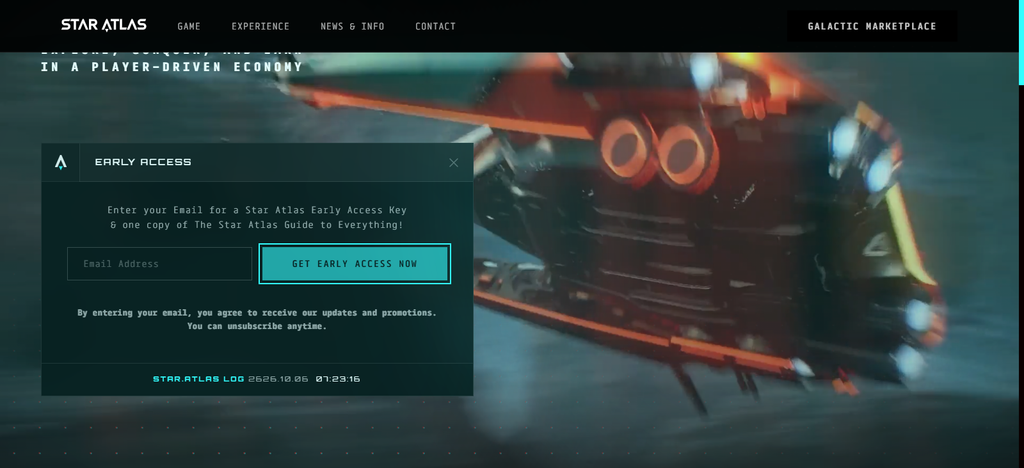
The larger ecosystem includes SAGE, a browser-based on-chain strategy experience where players manage fleets, resources, crafting and trade routes. Its economy utilizes ATLAS for in game transactions and POLIS for governance while core Web3 utility is provided by player owned ships, crew and resources.
| Feature | Details |
|---|---|
| Game Type | Space exploration, strategy and MMO ecosystem |
| Blockchain | Solana |
| Platform | PC, web and Epic Games Store ecosystem |
| Core Gameplay | Exploration, combat, racing, mining and resource management |
| Free-to-Play | Core experiences can be accessed without mandatory NFT ownership |
| Main Token | ATLAS |
| Governance Token | POLIS |
| NFTs | Ships, crews, resources and other digital assets |
| Space Economy | Trading, resource gathering and asset management |
| SAGE | Browser-based on-chain strategy experience |
| Multiplayer | Competitive and cooperative space activities |
| Asset Ownership | Players can own blockchain-based ships and other assets |
| Web3 Utility | Ownership, trading, governance and resource-based economies |
| Key Strength | Large-scale sci-fi ecosystem combining gaming and blockchain ownership |
7. Splinterlands
Splinterlands. Launched in 2018, the game is a collectible trading card game built on the Hive blockchain and its digital asset ecosystem.
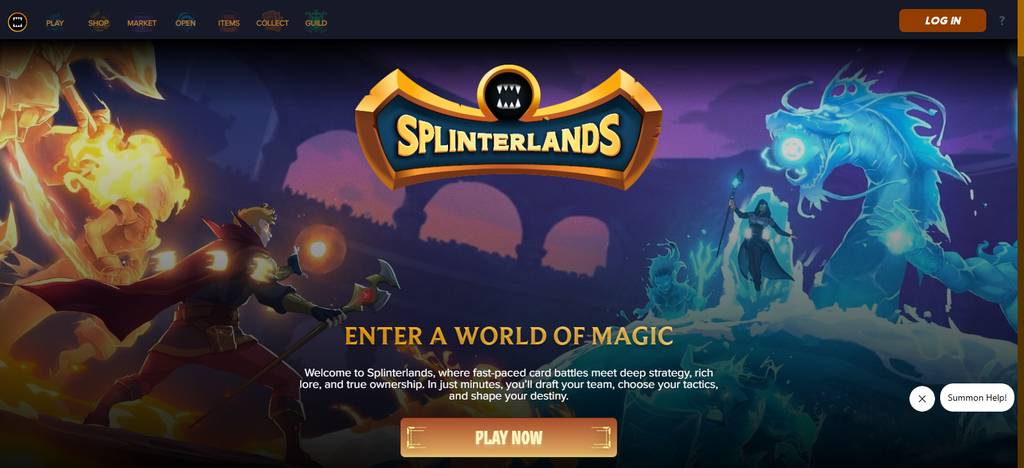
Players collect cards, build decks to battle, play ranked matches, fight in tournaments and look after guild matters. September 2026 blockchain activity data showed roughly 3,500 daily active accounts. However, active accounts should not be automatically interpreted as unique human players.
The game is free to enter, allowing players to try it out before making the leap to further participation. SPS and DEC tokens are used for governance and economic functions. NFTs allow for true ownership of cards, trade, collection building and use in the marketplace.
| Feature | Details |
|---|---|
| Game Type | Collectible trading card game |
| Blockchain | Hive-based blockchain ecosystem |
| Core Gameplay | Deck building and strategic card battles |
| PvP | Ranked battles and competitive matches |
| Cards | Collectible digital cards with different abilities and stats |
| NFTs | Player-owned cards and digital collectibles |
| Free Entry | Players can access the game without immediately building a large paid collection |
| Main Tokens | SPS and DEC |
| Marketplace | Players can buy, sell and trade eligible assets |
| Tournaments | Competitive tournament ecosystem |
| Guilds | Community and guild-based gameplay |
| Economy | Cards, tokens, rewards and marketplace transactions |
| Web3 Utility | True digital ownership and transferable card assets |
| Key Strength | Combines traditional strategy card gameplay with NFT ownership |
8. Parallel
Parallel is a fast-paced trading card game focused on science-fiction factions, strategic deck building and multiplayer battles. The Web3 model is built around NFT cards and digital ownership. The ecosystem also has tokenized assets and marketplace functionality.

The game is free-to-play on PC, and primarily focuses on multiplayer PVP and turn-based strategy. Public Steam tracking showed relatively modest activity, averaging ~3 daily concurrent players in September 2026, while its own ecosystem reports additional off-Steam activity.
This makes it a lot more important to distinguish between platform-specific player counts and total community participation when judging the actual playerbase for Parallel.
| Feature | Details |
|---|---|
| Game Type | Competitive science-fiction trading card game |
| Platform | PC |
| Core Gameplay | Strategic deck building and turn-based card battles |
| PvP | Competitive player-versus-player matches |
| Factions | Multiple science-fiction factions with different strategies |
| Cards | Digital collectible cards used to construct decks |
| NFTs | Blockchain-based card ownership |
| Economy | Collecting, trading and marketplace activity |
| Free-to-Play | Players can access the core game without needing to purchase every asset |
| Strategy | Tactical card combinations and faction-based deck building |
| Competitive Play | Ranked and organized competitive experiences |
| Web3 Utility | Digital ownership and tradable collectible assets |
| Community | Competitive card-game and Web3 gaming communities |
| Key Strength | Focuses more heavily on strategic gameplay than simple token rewards |
9. The Sandbox
The Sandbox began as a mobile game in 2012, and has grown into a blockchain-based 3D multiplayer creator platform, with its Web3 version expanding from 2020. It’s playable on PC, Mac, and more and more in browsers (some in Season 7 are playable with no downloads).
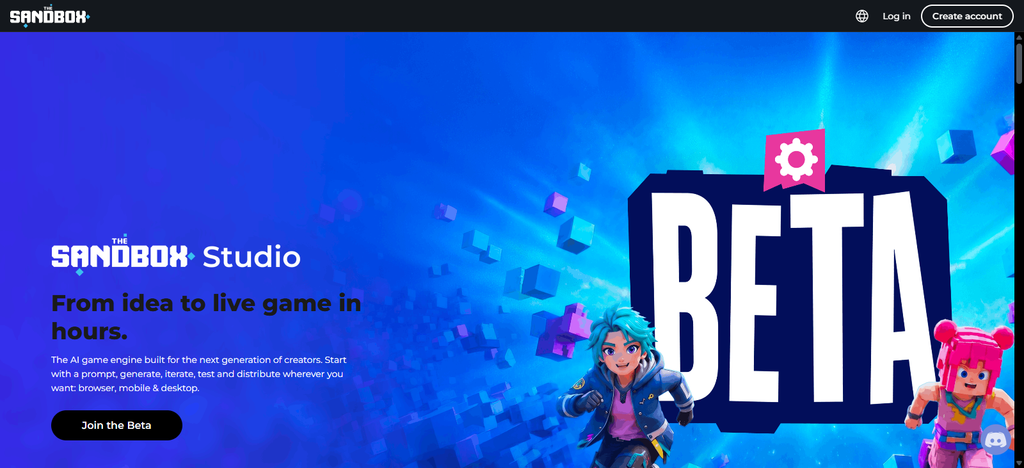
The platform is free-to-play and centers on user-generated experiences, virtual LAND, avatars, collectibles and environments created by creators.
The Sandbox boasts 8 million users and 400,000 creators and its recent seasons have set records for player volume and engagement. Its SAND token and NFTs enable creators to own, create, transact, and monetize across its ecosystem.
| Feature | Details |
|---|---|
| Game Type | User-generated metaverse and virtual-world platform |
| Original Launch | 2012; blockchain-based ecosystem expanded later |
| Platform | PC, Mac and browser-supported experiences |
| Core Gameplay | Create, explore, socialize and participate in user-generated experiences |
| Main Token | SAND |
| Virtual Land | LAND enables ownership of virtual spaces |
| NFTs | LAND, avatars, collectibles and creator assets |
| Creator Tools | Tools for building interactive experiences |
| User-Generated Content | Players and creators can develop their own experiences |
| Marketplace | Digital assets can be bought, sold and traded |
| Social Features | Events, communities and multiplayer experiences |
| Creator Economy | Creators can monetize digital experiences and assets |
| Web3 Utility | Ownership, transactions, creation and digital asset monetization |
| Key Strength | Strong creator ecosystem combining gaming with user-generated content |
10. Decentraland (MANA)
Decentraland was officially launched in February 2020 as a decentralized virtual world but started blockchain development earlier. You can choose between a desktop or web version of the experience, with the newer client having better performance, social interactions, badges and daily quests.

Players can explore virtual spaces, take part in events, socialize, create experiences and trade digital items. Its economy is based on MANA, LAND, Estates, wearables and other blockchain-based assets.
Decentraland also offers analytics on unique visits, weekly active users, concurrent users, retention and playtime, providing creators with measurable data on their community. It’s DAO and creator ecosystem are still core aspects of its Web3 utility.
| Feature | Details |
|---|---|
| Game Type | Decentralized virtual world and social metaverse |
| Launch | 2020 |
| Platform | Web and desktop experiences |
| Main Token | MANA |
| Virtual Land | LAND and Estates provide blockchain-based virtual property |
| Core Activities | Explore, socialize, attend events and experience virtual spaces |
| Creator Tools | Users can build interactive environments and experiences |
| Digital Assets | LAND, Estates, wearables and collectibles |
| Marketplace | Trading of supported virtual assets |
| Events | Community events, social gatherings and creator experiences |
| DAO | Community governance through Decentraland DAO |
| Economy | MANA-based ecosystem and digital asset ownership |
| Web3 Utility | Virtual property ownership, trading, governance and creator monetization |
| Key Strength | Decentralized ownership combined with social and creator-focused virtual experiences |
Top Web3 Games With Real Players — Comparison Table
| Game | Launch Year | Genre | Platform | Blockchain / Network | Active Player Signal | Free-to-Play | Main Economy | Web3 Utility | Best For |
|---|---|---|---|---|---|---|---|---|---|
| Alien Worlds | 2020 | Metaverse / Mining | Web Browser | WAX, BNB Chain, Ethereum | Active blockchain gaming community | Yes | TLM, NFTs | Mining, ownership, missions, governance | Blockchain explorers |
| League of Kingdoms | 2020 | MMO Strategy | Mobile / Web | Blockchain ecosystem | Large historical player base and alliance activity | Yes | LOKA, LAND, resources | LAND ownership, governance, trading | Strategy players |
| Big Time | 2021 | Action RPG | PC | Ethereum-based ecosystem | Large registered player base; platform activity varies | Yes | BIGTIME, SPACE NFTs | Asset ownership, crafting, trading | RPG and dungeon fans |
| RavenQuest | 2025 | Sandbox MMORPG | PC / Cross-platform development | Blockchain-integrated ecosystem | Active MMORPG and competitive community | Yes | Silver Coins, QUEST | Trading, land, ownership, player economy | MMORPG players |
| Shrapnel | 2026 | Extraction FPS | PC | GalaChain | Early-stage platform activity with broader ecosystem participation | Yes | SHARP / digital assets | Asset ownership and creator economy | FPS players |
| Star Atlas | 2022 | Space MMO / Strategy | PC / Web | Solana | Ongoing ecosystem and SAGE activity | Yes | ATLAS, POLIS | Ships, resources, governance | Sci-fi and strategy fans |
| Splinterlands | 2018 | Trading Card Game | Web / PC / Mobile | Hive ecosystem | Thousands of daily active blockchain accounts | Yes | SPS, DEC, NFTs | Card ownership, trading, rewards | Card-game players |
| Parallel | 2023 | Sci-Fi Strategy Card Game | PC | Ethereum ecosystem | Active competitive ecosystem; platform-specific activity varies | Yes | NFT cards / ecosystem assets | Card ownership and trading | Competitive card players |
| The Sandbox | 2012 / Web3 2020 | Virtual World / Creator Game | PC / Mac / Web | Ethereum / Polygon ecosystem | Millions of users and strong creator participation | Yes | SAND, LAND, NFTs | Virtual land, creation, ownership | Creators and metaverse users |
| Decentraland | 2020 | Virtual World / Social | Web / Desktop | Ethereum / Polygon ecosystem | Public analytics track visits, active users and engagement | Yes | MANA, LAND, wearables | Land ownership, DAO, trading | Social and virtual-world users |
Conclusion
Top Web3 Games With Real Players in 2026 are not just NFTs, tokens, or blockchain technology. Games like Alien Worlds, League of Kingdoms, Big Time, RavenQuest, Shrapnel, Star Atlas, Splinterlands, Parallel, The Sandbox and Decentraland shine through with their gameplay, communities, player-owned economies and ongoing ecosystem development.
Player numbers however can vary from platform to platform and wallet activity is not always representative of unique human players. So, players should consider the gameplay activity, community engagement, accessibility, and long-term development along with the Web3 features when deciding on a game.
FAQ
What are the best Web3 games with real players in 2026?
Some of the top Web3 games with active communities in 2026 include Alien Worlds, League of Kingdoms, Big Time, RavenQuest, Shrapnel, Star Atlas, Splinterlands, Parallel, The Sandbox, and Decentraland.
Are Web3 games free to play?
Many Web3 games offer free-to-play access, including Big Time, RavenQuest, The Sandbox, and several others. However, some optional NFTs, assets, or marketplace activities may require spending.
How can I check if a Web3 game has real players?
Look beyond wallet numbers. Check active gameplay, matchmaking activity, tournaments, community discussions, player-created content, marketplace activity, and regular updates to get a better picture of genuine player engagement.
Do Web3 games still use NFTs in 2026?
Yes. NFTs remain important in several Web3 games for player-owned cards, characters, land, weapons, ships, collectibles, and other digital assets. Their usefulness varies from game to game.
Can I play Web3 games without owning cryptocurrency?
Yes. Several Web3 games allow players to start without purchasing cryptocurrency or NFTs. However, blockchain transactions, premium assets, or marketplace features may require a supported wallet or digital assets.