

In this article, I’ll go over the Top Fundrise Alternatives for Real Estate Investing, including platforms that offer residential, commercial, and alternative real estate opportunities. We will compare their investment products, fees, minimum investment, portfolio choices, liquidity and key features. This guide can help investors understand how these platforms differ and find options that match their goals.
- What Are Fundrise Rivals for Real Estate Investing?
- Key Points
- 1. Arrived
- Arrived Pros & Cons
- Pros
- Cons
- 2. Groundfloor
- Groundfloor Pros & Cons
- Pros
- Cons
- 3. Realty Mogul
- RealtyMogul Pros & Cons
- Pros
- Cons:
- 4. CrowdStreet
- CrowdStreet Pros & Cons
- Pros
- Cons
- 5. EquitlyMultiple
- EquityMultiple Pros & Cons
- Pros
- Cons
- 6. Ark 7
- Ark7 Pros & Cons
- Pros
- Cons
- 7. Roofstock
- Roofstock Pros & Cons
- Pros
- Cons
- 8. Yieldstreet
- Yieldstreet Pros & Cons
- Pros
- Cons
- 9. Rooting
- Roots Pros & Cons
- Pros
- Cons
- 10. Uplifted
- Lofty Pros & Cons
- Pros
- Cons
- Conclusion
- FAQ
What Are Fundrise Rivals for Real Estate Investing?
Other competitors of Fundrise in real estate investing are investment platforms that permit individual investors to get involved in residential, commercial, or debt-based real estate opportunities besides Fundrise.
They provide different investment options, such as fractional property ownership, private REITs, commercial real estate crowdfunding, rental property investment, and real estate lending. Popular Fundrise alternatives include Arrived, Groundfloor, RealtyMogul, CrowdStreet, EquityMultiple, Ark7, Roofstock, Yieldstreet, Roots, and Lofty.
Some cater to beginner investors with low minimum investments and others offer institutional quality opportunities for accredited investors. They provide an opportunity to earn passive income, diversify your portfolio and create long-term wealth through real estate holdings.
Key Points
| Platform | Investment Focus | Minimum Investment | Investor Eligibility | Key Advantage Over Fundrise |
|---|---|---|---|---|
| Arrived | Single-family rental and vacation homes | $100 | Non-accredited investors | Lets investors choose individual rental properties instead of pooled funds. |
| Groundfloor | Real estate debt and short-term property loans | $10 | Non-accredited investors | Focuses on lending-backed investments with relatively short durations. |
| RealtyMogul | Commercial real estate and REITs | $5,000 | Non-accredited and accredited investors (depending on offering) | Access to commercial real estate REITs and private deals. |
| CrowdStreet | Commercial real estate projects | Typically $25,000 | Accredited investors | Direct access to institutional-grade commercial real estate opportunities. |
| EquityMultiple | Commercial real estate equity and debt investments | $5,000 | Accredited investors | Offers diversified exposure across debt, preferred equity, and equity investments. |
| Ark7 | Fractional ownership of rental properties | $20 | Non-accredited investors | Low minimum investment and monthly distributions from rental properties. |
| Roofstock | Single-family rental properties | Varies by property | Generally available to U.S. investors | Enables direct ownership of income-producing rental homes. |
| Yieldstreet | Alternative assets including real estate | Usually $10,000+ | Accredited investors for many offerings | Broader exposure beyond real estate, including private credit and other alternatives. |
| Roots | Single-family rental REITs | $100 | Non-accredited investors | Focuses on income-generating rental housing with redemption options. |
| Lofty | Fractional real estate ownership | $50 | Non-accredited investors | Offers fractional property investing with rental income distributions and enhanced liquidity features. |
1. Arrived
Founded in 2021, Arrived has a fractional real estate investment platform that focuses on single-family rental homes and vacation properties. The company is allowing non-accredited investors to buy shares in individual properties, not just through diversified funds.
Its minimum investment of $100 makes it an option for those just getting started in real estate. Investors can choose particular homes by location, expected performance and rental strategy.

Arrived sits in the middle of its investment model, taking care of property acquisition, management, maintenance, tenant relations and reporting to provide a passive investment experience.
You make money from the income distributions from the rental and any appreciation of the property. Fees differ between property and fund structure and include management and operating costs.
Geographic exposure includes several U.S. housing markets with properties in residential neighborhoods and vacation destinations. The platform is especially appealing to investors who want direct ownership exposure but don’t want the hassles of being a landlord.
Arrived Pros & Cons
Pros
- Low minimum investment of about $100.
- Enables investment in individual rental properties.
- ” For non-accredited investors.
- Fully managed properties – no landlord duties.
- Rental income and appreciation in property value.
Cons
- Not as liquid as public REITs.
- Returns are based on performance of the property.
- Earnings could be impacted by property-specific risks.
- Costs of management and operations may erode returns.
- You could want to own an investment for some years.
| Feature | Details |
|---|---|
| Fractional Ownership | Invest in shares of individual rental properties rather than buying an entire home. |
| Low Entry Requirement | Minimum investment typically starts at $100. |
| Residential Focus | Primarily focuses on single-family rental and vacation homes. |
| Passive Investing | Arrived manages tenants, maintenance, and property operations. |
| Property Selection | Investors can choose specific properties that match their goals. |
| Rental Income | Potential quarterly rental income distributions. |
| Property Appreciation | Opportunity to benefit from long-term home value growth. |
| Non-Accredited Access | Open to most U.S. investors without accreditation requirements. |
| Portfolio Diversification | Invest across multiple properties and markets. |
2. Groundfloor
Groundfloor, founded in 2013, is not a property ownership company but a real estate debt investment company. The platform provides investors with the opportunity to fund short-term loans to real estate developers and house flippers.
Groundfloor is different from many other crowdfunding platforms in that it allows non-accredited investors and has a low minimum investment of around $10 per loan opportunity. Its model is lending capital secured by real estate assets.

Groundfloor’s investment structure differs in that it pays returns to investors via interest paid by borrowers, not by collecting rent. The platform generally does not charge direct investor fees and offers a diversified loan portfolio option via its investment funds. Geographic exposure includes numerous residential property markets across the United States.
Property Types include fix and flips, residential renovations and short term development opportunities. Groundfloor appeals to investors looking for potentially higher yields and shorter investment timeframes than traditional real estate equity ownership.
Groundfloor Pros & Cons
Pros
- Very low investment minimum, sometimes $10 or so.
- For non-accredited investor.
- Specializes in brief term real estate loans.
- Possibly higher returns than traditional savings products.
- Many opportunities for property-backed loans.
Cons
- Borrower defaults can affect returns.
- No direct holding of real estate assets.
- Returns are linked to performance in loan repayment.
- Investments are relatively illiquid until the loan is paid back.
- In a downturn, the dangers of lending could be greater.
| Feature | Details |
|---|---|
| Real Estate Debt Investing | Invests in loans rather than direct property ownership. |
| Very Low Minimum | Investments can start from about $10. |
| Short-Term Investments | Many loans have shorter durations than traditional real estate. |
| Non-Accredited Access | Available to everyday investors. |
| Loan Diversification | Funds can be spread across multiple projects. |
| Interest-Based Returns | Earnings come from borrower interest payments. |
| Residential Project Focus | Primarily finances fix-and-flip and renovation projects. |
| Asset-Backed Investments | Loans are secured by underlying real estate. |
| Automated Investment Options | Portfolio-based investing solutions are available. |
3. Realty Mogul
RealtyMogul, launched in 2012, is one of the largest online real estate crowdfunding platforms in the United States. The company gives investors access to private real estate deals and REITs that invest in income-producing commercial properties.
Investors can participate in diversified portfolios or in single commercial projects. Some of the publicly available offerings on the platform usually require a minimum investment of around $5,000.

RealtyMogul’s focus is on commercial real estate sectors such as office buildings, industrial facilities, retail centers, multifamily communities, and mixed-use projects. Income usually comes from rental cash flow and long-term appreciation.
The charges vary depending on the investment products and asset management needs. Geographic exposure (includes major metropolitan markets across the United States. RealtyMogul is for investors seeking institutional-level diversification in professionally managed commercial real estate investments.
RealtyMogul Pros & Cons
Pros
- Commercial real estate investments access.
- Provides diversified REIT products.
- Asset Management Professional.
- Possible income from dividends and distributions.
- Exposure to various property sectors.
Cons:
- Minimum investment higher than many competitors.
- Some offerings have long hold periods.
- Private real estate investments are less liquid.
- Investment product fees may vary.
- Commercial real estate markets are cyclical.
| Feature | Details |
|---|---|
| Commercial Real Estate Access | Invest in institutional-quality commercial properties. |
| REIT Offerings | Offers diversified REIT investment options. |
| Passive Management | Professional teams handle operations and asset management. |
| Income Potential | Rental income and dividend opportunities. |
| Accredited & Non-Accredited Options | Certain products are available to different investor types. |
| Portfolio Diversification | Exposure to multiple commercial property sectors. |
| Long-Term Investment Focus | Designed for wealth creation over time. |
| Nationwide Exposure | Investments across major U.S. markets. |
| Asset Variety | Multifamily, office, industrial, and retail properties. |
4. CrowdStreet
Founded in 2014, CrowdStreet is focused solely on commercial real estate opportunities. The platform targets accredited investors and provides access to institutional quality private market real estate transactions.
Multifamily developments, industrial properties, office projects, hospitality assets and mixed-use developments are often investment opportunities. Typical minimum investments start at about $25,000, depending on the offering.

At the core of the CrowdStreet investment model is direct participation in individual commercial real estate deals sponsored by professional developers and operators. Earnings are generated from property cash flow distributions and the future appreciation of the assets.
General fees are sponsor dependent and vary by the structure of each project. Geographic exposure includes key U.S. growth markets and gives investors the ability to target specific regions and property types. Like CrowdStreet, many investors want direct control over where their money is going in commercial real estate.
CrowdStreet Pros & Cons
Pros
- Access to institutional-quality commercial properties.
- Direct investment in individual deals.
- Strong focus on growth-oriented markets.
- Potential for significant appreciation.
- Broad selection of commercial asset types.
Cons
- Primarily for accredited investors.
- High minimum investment requirements.
- Individual deal risk can be substantial.
- Investments are generally illiquid.
- Returns depend heavily on sponsor performance.
| Feature | Details |
|---|---|
| Direct Commercial Deals | Access individual commercial real estate projects. |
| Accredited Investor Platform | Primarily designed for accredited investors. |
| Institutional Assets | High-quality commercial property opportunities. |
| Sponsor Selection | Choose projects from experienced developers. |
| Multifamily Investments | Strong focus on apartment communities. |
| Geographic Choice | Select opportunities by city or region. |
| Potential Cash Flow | Regular property distributions may be available. |
| Growth Opportunities | Equity investments can benefit from appreciation. |
| Commercial Diversification | Includes industrial, office, hospitality, and mixed-use assets. |
5. EquitlyMultiple
Founded in 2015, EquityMultiple provides accredited investors access to professionally sourced commercial real estate investments. The platform provides multiple investment structures such as equity, preferred equity and debt opportunities.
Minimum investment requirements typically fall in the $5,000 range, but some offerings may require a higher level of commitment, depending on the project and strategy.

Strength of EquityDiverse commercial real estate approach lies multiple. Investors can choose between income-oriented debt products or growth-oriented equity investments. Income can come from interest payments, rental distributions or profit-sharing arrangements.
Fees depend on the type of asset and fund structure. Geographic exposure spans a wide range of U.S. commercial property markets. Asset classes include multifamily housing, industrial complexes, storage facilities, hospitality properties, and mixed-use developments, which offer tremendous diversification opportunities.
EquityMultiple Pros & Cons
Pros
- Multiple investment structures including debt and equity.
- Professionally vetted opportunities.
- Diversified commercial real estate exposure.
- Income and growth-focused investment options.
- Comprehensive investor reporting.
Cons
- Accredited investor status is generally required.
- Investment minimums may be relatively high.
- Private market investments lack liquidity.
- Returns are not guaranteed.
- Commercial market fluctuations can affect performance.
| Feature | Details |
|---|---|
| Multiple Investment Structures | Equity, debt, and preferred equity offerings. |
| Commercial Property Focus | Targets institutional-grade commercial assets. |
| Professional Underwriting | Opportunities undergo detailed review processes. |
| Income Products | Debt investments can generate regular income. |
| Growth Investments | Equity opportunities focus on capital appreciation. |
| Accredited Investor Access | Built primarily for accredited investors. |
| Diversification Options | Exposure across various sectors and strategies. |
| Online Investment Platform | Fully digital investment experience. |
| Portfolio Reporting | Provides performance tracking and updates. |
6. Ark 7
Ark7 is a fractional real estate platform that allows investors to buy shares of rental properties rather than entire buildings. Affordability is a key point of the platform, with some opportunities reportedly starting from $20 minimum investments.
The investment model is designed to provide everyday investors with access to rental property ownership without the hassle of property management.
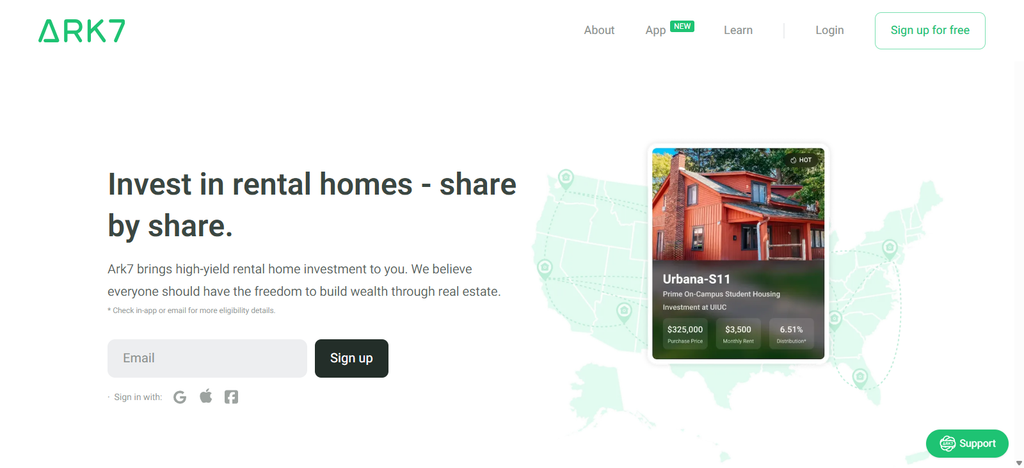
Ark7 buys residential rental properties and shares income from rental payments by tenants in the middle of its structure. Investors will have the opportunity to receive distributions on a monthly basis and share in the future appreciation of the property.
The platform typically invests in residential housing assets in select U.S. markets. Fees are built into the platform operations and property management operations.
Geographic exposure includes several US cities with strong rental demand. Ark7 is for investors who want to buy a rental property and make passive income with little money down.
Ark7 Pros & Cons
Pros
- Very low investment minimum.
- Fractional ownership of rental properties.
- Potential monthly income distributions.
- Easy portfolio diversification.
- Beginner-friendly investment platform.
Cons
- Limited property inventory compared to larger platforms.
- Rental income may fluctuate.
- Property appreciation is not guaranteed.
- Secondary market liquidity may be limited.
- Concentration risk in certain housing markets.
| Feature | Details |
|---|---|
| Fractional Property Shares | Buy small portions of rental properties. |
| Low Investment Minimum | Entry levels start around $20. |
| Monthly Income Potential | Rental income distributions may be paid monthly. |
| Residential Real Estate Focus | Primarily invests in rental housing. |
| Passive Ownership | Property management handled by professionals. |
| Easy Diversification | Spread investments across multiple homes. |
| Digital Platform | Simple online investing experience. |
| Property Appreciation Exposure | Benefit from future property value increases. |
| Beginner Friendly | Accessible for newer real estate investors. |
7. Roofstock
Founded in 2015, Roofstock specializes in access to single-family rental properties. Roofstock differs from many crowdfunding platforms in that it lets investors buy whole properties, not pieces of them. The platform targets cash-flow producing homes already occupied by tenants, making it easier to buy rental real estate remotely.
One of Roofstock’s key features is its marketplace model, which allows investors to evaluate single-family homes on the basis of location, rental income, tenant history, and market fundamentals. Income is from the collection of rents and future appreciation. Fees are based on transaction services and property purchases.
Geographic exposure comprises a number of U.S. housing markets with proven rental demand. Most of the properties are single-family homes, so Roofstock is a great option for investors who want to own real estate directly and have full control of their assets.
Roofstock Pros & Cons
Pros
- Direct ownership of rental properties.
- Access to tenant-occupied homes.
- Detailed property investment analytics.
- Nationwide real estate opportunities.
- Full control over investment decisions.
Cons
- Requires significantly more capital.
- Property ownership involves greater responsibility.
- Maintenance and vacancy risks remain.
- Real estate transaction costs can be high.
- Market-specific risks affect property values.
| Feature | Details |
|---|---|
| Direct Property Ownership | Purchase entire rental properties. |
| Tenant-Occupied Homes | Many listings already have tenants in place. |
| National Marketplace | Access properties in multiple U.S. markets. |
| Rental Income Focus | Generate income through tenant rent payments. |
| Property Analytics | Detailed investment and market data provided. |
| Remote Investing | Buy properties without living nearby. |
| Property Management Support | Access professional management services. |
| Residential Focus | Specializes in single-family rental homes. |
| Ownership Control | Investors fully own and control purchased assets. |
8. Yieldstreet
Yieldstreet is an alternative investment platform that provides access to real estate, private credit, art, legal finance and other non-traditional asset classes.
It launched in 2015. Many investment opportunities are aimed at accredited investors and minimum investments usually start at about $10,000 depending on the offering.

While real estate is still a major part of the platform, Yieldstreet provides more diversification than dedicated real estate platforms.
Depending on the type of investment, income may be generated from interest payments, appreciation of assets or profit sharing. Fees vary by offering and asset class.
Geographic exposure may include domestic and international opportunities depending on the investment. The platform is for sophisticated investors who want diversified alternative investments outside of traditional stock, bond and real estate ownership.
Yieldstreet Pros & Cons
Pros
- Access to a variety of alternative asset classes.
- Diversification beyond real estate
- Institutional grade investment opportunities.
- Professionally Managed Products
- potential revenue-generating investments.
Cons
- Most offerings must be accredited.
- Higher minimum investment.
- Alternative investments are complicated.
- Liquidity may be restricted.
- Fees vary by investment product.
| Feature | Details |
|---|---|
| Alternative Investments | Offers real estate and other alternative assets. |
| Diversification Beyond Real Estate | Includes private credit and specialty investments. |
| Professional Management | Investments are managed by experienced teams. |
| Income Opportunities | Interest and distribution-generating products. |
| Accredited Investor Focus | Many offerings target accredited investors. |
| Multiple Asset Classes | Real estate, credit, legal finance, and more. |
| Digital Investment Platform | Easy online investment management. |
| Portfolio Expansion | Helps reduce reliance on traditional assets. |
| Institutional Opportunities | Access investments typically unavailable to retail investors. |
9. Rooting
Roots is a residential real estate investment platform that focuses on rental housing properties that produce income. It offers a REIT-like structure for participation and is open to non-accredited investors.
Minimum investments are generally in the $100 range, which enables investors to create a diversified real estate portfolio with a somewhat modest capital commitment.
Roots’ investment approach focuses on residential rental communities and long-term housing needs. Investors earn income via rental cash flow distributions and possible property appreciation. Fees may include management and redemption-related costs, depending on holding periods.
In the past, the geographic exposure has been concentrated in selected U.S. residential markets. Property holdings are focused on workforce and single family housing. Roots is for investors seeking passive income, diversification and access to professionally managed residential real estate assets.
Roots Pros & Cons
Pros
- Low entry investment requirement.
- Focuses on income-producing residential properties.
- Open to non-accredited investors.
- Professionally managed portfolio.
- Potential for passive income generation.
Cons
- Limited liquidity compared to public securities.
- Real estate market conditions affect returns.
- Redemption restrictions may apply.
- Geographic concentration may increase risk.
- Performance depends on occupancy rates.
| Feature | Details |
|---|---|
| Residential REIT Structure | Invest through a professionally managed REIT. |
| Accessible Entry Point | Minimum investment generally around $100. |
| Rental Income Focus | Designed for recurring income generation. |
| Non-Accredited Access | Open to a broad investor base. |
| Long-Term Growth Potential | Property appreciation opportunities. |
| Professional Management | Operations handled by experienced teams. |
| Diversified Housing Exposure | Invest in multiple residential properties. |
| Passive Investing | No landlord responsibilities required. |
| Portfolio Stability | Focuses on income-producing housing assets. |
10. Uplifted
Lofty is a fractional real estate investment platform that allows investors to buy fractional shares of individual rental properties.
The company’s low minimum investments, often around $50, are designed to increase accessibility. Instead of general real estate funds, the platform allows investors to invest directly in specific rental properties.

Lofty’s model is based on fractional property ownership and income distributions from rental operations. Investors receive a proportional share of rental income and may benefit from long-term capital appreciation of the property.
Fees vary according to property management and platform operations. Geographic exposure is made up of many residential markets in the United States. The main property types are rental income producing homes. Lofty appeals especially to investors who value transparency, flexibility and direct participation in individual real estate investments.
Lofty Pros & Cons
Pros
- Low minimum investment threshold.
- Fractional ownership of individual properties.
- Potential rental income distributions.
- Property-level investment transparency.
- Easy diversification across multiple homes.
Cons
- Limited operating history compared to larger platforms.
- Residential market risks remain.
- Liquidity may be restricted.
- Property appreciation is not guaranteed.
- Returns depend on rental property performance.
| Feature | Details |
|---|---|
| Fractional Ownership Model | Purchase shares of individual rental properties. |
| Low Minimum Investment | Entry starts around $50. |
| Property-Level Investing | Select specific properties directly. |
| Rental Income Participation | Share in rental revenue generated by properties. |
| Residential Real Estate Focus | Primarily offers rental housing opportunities. |
| Passive Investment Experience | Management is handled by professionals. |
| Geographic Diversification | Access properties across various U.S. markets. |
| Appreciation Potential | Gain exposure to future property value growth. |
| Transparent Investment Data | Property performance information is available online. |
Conclusion
The best Fundrise alternative will depend on the investor’s goals, risk tolerance, capital availability, and preferred real estate strategy. Arrived, Ark7, Roots and Lofty make residential real estate accessible to non-accredited investors at affordable prices, while CrowdStreet,
EquityMultiple, RealtyMogul and Yieldstreet focus on higher-end commercial and alternative investments. Groundfloor is targeted at investors looking to invest in real estate debt, while Roofstock provides direct ownership of rental homes.
These platforms, together, offer a variety of ways to generate passive income, diversify your portfolio, and build wealth over time with investments in residential, commercial, debt, and fractional real estate.
FAQ
What is the best alternative to Fundrise in 2026?
The best Fundrise alternative depends on your investment goals. Arrived is popular for fractional rental property investing, Groundfloor is known for real estate debt investments, and CrowdStreet is favored by accredited investors seeking commercial real estate opportunities.
Which Fundrise rival has the lowest minimum investment?
Groundfloor offers investments starting at about $10, while Ark7 allows investors to begin with around $20 and Lofty with approximately $50, making them accessible options for beginners.
Are these Fundrise competitors open to non-accredited investors?
Yes. Arrived, Groundfloor, Ark7, Roots, Lofty, and certain RealtyMogul offerings are available to non-accredited investors. However, platforms such as CrowdStreet, EquityMultiple, and many Yieldstreet investments are generally designed for accredited investors.
Which platform is best for investing in individual rental properties?
Arrived, Ark7, Lofty, and Roofstock provide direct exposure to specific rental properties. Roofstock even allows investors to purchase entire single-family rental homes rather than fractional shares.
Which Fundrise alternative focuses on commercial real estate?
CrowdStreet, RealtyMogul, and EquityMultiple specialize in commercial real estate investments, including multifamily communities, industrial facilities, office buildings, and mixed-use developments.