


This article discusses the best crypto exchange applications for bridge-free cross-chain trading disrupting DeFi. These apps let users exchange assets across blockchains without utilizing bridges.
- What Are Bridge-Free Cross-Chain Exchange Apps?
- Key Features of Modern Bridge-Free Crypto Exchange Apps
- Challenges and Risks to Consider
- How to Choose the Right Bridge-Free Cross-Chain Exchange App
- Key Point & New Best Crypto Exchange Apps for Bridge-Free Cross-Chain
- 1. ThorChain 2.0 App
- ThorChain 2.0 App Features, Advantages & Disadvantages
- Features
- Advantages
- Disadvantages
- 2. SushiXSwap Mobile
- SushiXSwap Mobile Features, Advantages & Disadvantages
- Features
- Advantages
- Disadvantages
- 3. Osmosis v2 App
- Osmosis v2 App Features, Advantages & Disadvantages
- Features
- Advantages
- Disadvantages
- 4. Injective Exchange App
- Injective Exchange App Features, Advantages & Disadvantages
- Features
- Advantages
- Disadvantages
- 5. Sei Network DEX App
- Sei Network DEX App Features, Advantages & Disadvantages
- Features
- Advantages
- Disadvantages
- 6. Curve Cross‑Chain App
- Curve Cross-Chain App Features, Advantages & Disadvantages
- Features
- Advantages
- Disadvantages
- 7. Balancer v3 App
- Balancer v3 App Features, Advantages & Disadvantages
- Features
- Advantages
- Disadvantages
- 8. GMX v2 Mobile
- GMX v2 Features, Advantages & Disadvantages
- Features
- Advantages
- Disadvantages
- 9. ZKSync Era Swap App
- ZKSync Era Swap App Features, Advantages & Disadvantages
- Features
- Advantages
- Disadvantages
- 10. StarkNet DeFi Hub App
- StarkNet DeFi Hub App Features, Advantages & Disadvantages
- Features
- Advantages
- Disadvantages
- Conclusion
- FAQ
This improves DeFi trading due to less risk and faster and more streamlined transactions. I will review the features and benefits of these applications for users.
What Are Bridge-Free Cross-Chain Exchange Apps?
Bridge-free cross-chain exchange apps are cryptocurrency trading applications that allow users to trade assets across different blockchains without the use of a bridge. With typical cross-chain trading, users lock their tokens on one chain, and a version of the token is minted on the second chain.
These apps make transfers across different blockchains more direct and reduce certain security risks. Using the bridge-free method cuts down the vulnerabilities of smart contracts and the hacks that are typically seen when bridges are used. Using native liquidity pools, more advanced interoperability protocols, and cross-chain message systems are some of the techniques that facilitate direct transfers across blockchains without the need for a bridge.
This method also resolves a lot of the user experience issues that come with cross-chain trading, as it is now more efficient, faster, easier to use, and more decentralized.
Key Features of Modern Bridge-Free Crypto Exchange Apps
Native Cross-Chain Swaps – Exchange supported cryptocurrencies that exist on multiple blockchains, without the need for wrapped tokens or traditional bridges.
Decentralized Liquidity Pools – Employ liquidity provided by users and/or protocols in order to facilitate smooth trade on multiple networks.
Non-Custodial Trading – Full control of private keys and funds is maintained by the user at all times.
Multi-Chain Compatibility – Support the majority of available blockchains including but not limited to Ethereum, Bitcoin, Cosmos, Solana, Polygon, etc.
Enhanced Security Architecture – Utilize native interoperability/decentralized validation to reduce risk associated with bridges and exploits.
Fast Transaction Processing – Transfer and trade assets quicker compared to traditional cross-chain bridging.
Low Transaction Costs – Offer users low-cost services by optimizing routing and settlement.
Automated Smart Contract Execution – Trustless smart contracts that manage swaps, liquidity, and settlement are employed.
Integrated Wallet Connectivity – Direct connection to popular crypto wallets.
Cross-Chain Liquidity Aggregation – Aggregate liquidity from multiple chains to offer better pricing with reduced slippage.
User-Friendly Interface – Easy to use dashboard with the ability to perform one-click swaps for cross-chain functionality.
Real Time Market Data – Display current pricing, liquidity, and trades for analytics across all supported networks.
Scalable Infrastructure – Support transactions for a growing user base with optimal performance and throughput across the network.
Governance Participation – Token holders participate in on-chain voting for protocol updates and structure.
DeFi Ecosystem Integration – Use a single platform to access staking, lending, yield farming, and other decentralized finance services.
Challenges and Risks to Consider
Potential for Smart Contract Bugs – Smart contracts are immutable, so bugs are detrimental. Loss of funds may occur, and the platform may behave unexpectedly.
Liquidity Gaps – Certain cross-chain trading pairs may have less liquidity. This may lead to unfavorable trading due to slippage.
Network Load – High demand on a blockchain may lead to delays and increased fees on transactions.
Price Fluctuations – Cryptocurrencies are prone to high volatility, which can lead to more unfavorable trades.
User Unfriendliness – New users may find decentralized, cross-chain platforms too complex.
Lack of Comprehensive Interoperability – Some blockchains may not be able to interoperate with others.
Ongoing Security Concerns – While bridge-free systems may eliminate some risks, other systems may still be exploited.
Offline Protocols – Updates on the blockchain, maintenance, and unexpected bugs may lead to the unavailability of trading services.
Weakening Trust in Regulatory Agencies – The ongoing shifts in oversight of the cryptocurrency space may prevent access for users of these platforms.
Impermanent Loss – This may occur when liquidity providers lose funds if the price of assets moves significantly.
Less Availability of Assets – Some exchanges of interest may not support the desired cryptocurrencies.
Governance Concerns – Poor governance of these ecosystems may result in stagnation of development for the protocols.
Transaction Delay – Some blockchains may have to confirm transactions multiple times before complete settlement.
User Error Risks – Users who transact with the wrong wallet addresses or the wrong token will completely lose their funds.
Dependence on Ecosystem Growth – The long-term success of bridge-free exchange apps will likely depend on the growth and expansion of the blockchain ecosystems that they currently support.
How to Choose the Right Bridge-Free Cross-Chain Exchange App
Supported Blockchains – Go for the app that supports the networks that you use the most.
Security – Look for security audits of the smart contracts, decentralized validation, a bug bounty program, and a history of security.
Evaluate Liquidity – Opt for the exchange that has a larger liquidity pool for better execution of your trades with less slippage.
Transaction Costs – Compare the costs of swaps and the network fees along with any other costs that could impact trading costs.
Usability – Go for the exchange with the most user-friendly design that allows for easy connection of wallets.
Non-Custodial – Choose the exchange that allows you to maintain custody of your keys and assets.
Transaction Time – Pick exchanges that are well-known to have faster execution for cross-chain transactions.
Cross-Chain Technology – Understanding how the exchange implements interoperability is important to knowing whether they provide true bridge-free cross-chain transactions.
Platform Reputation – Look for community reviews, developer notes, and other comments to verify the reliability and safety of the exchange.
Trading Pairs – Select the exchanges that support the token pairs that you want to trade.
Cross-Platform Availability – Pick the exchange that is available on all platforms for easy access.
Governance and Transparency – Choose the exchange that is the most transparent with the day-to-day operations and has community governance for long-term trust.
Check DeFi Ecosystem Integration – Check if the app offers staking, lending, yield farming, and other DeFi services.
Assess Customer Support and Documentation – Availability of tutorials, guides, and support documents are potential advantages.
Consider Future Development Plans – Pick the platforms that are being developed upon, are updated often, and have a roadmap.
Key Point & New Best Crypto Exchange Apps for Bridge-Free Cross-Chain
| Crypto Exchange App | Key Points |
|---|---|
| ThorChain 2.0 App | Native cross-chain asset swaps without wrapped tokens; bridge-free transactions; decentralized liquidity pools; supports Bitcoin and Ethereum swaps; enhanced security through node validation. |
| SushiXSwap Mobile | One-click cross-chain trading; integrates multiple blockchain networks; user-friendly mobile interface; gas optimization features; supports DeFi token swaps across chains. |
| Osmosis v2 App | Cosmos ecosystem-focused DEX; Inter-Blockchain Communication (IBC) support; customizable liquidity pools; low transaction fees; advanced staking options. |
| Injective Exchange App | Cross-chain derivatives trading; zero gas fees for many operations; high-speed order execution; decentralized order book model; supports multiple blockchain assets. |
| Sei Network DEX App | Optimized for trading performance; parallel transaction processing; low-latency execution; built for high-frequency trading; seamless cross-chain asset support. |
| Curve Cross-Chain App | Efficient stablecoin swaps across networks; deep liquidity pools; low slippage trading; cross-chain liquidity aggregation; yield-generating opportunities. |
| Balancer v3 App | Automated portfolio management; customizable liquidity pools; multi-token pool support; enhanced capital efficiency; cross-chain liquidity access. |
| GMX v2 Mobile | Decentralized perpetual futures trading; leverage trading capabilities; low trading fees; multi-chain compatibility; real-time price execution. |
| ZKSync Era Swap App | Layer-2 scaling with zk-rollups; fast and low-cost swaps; Ethereum-compatible ecosystem; enhanced transaction privacy; efficient cross-chain interactions. |
| StarkNet DeFi Hub App | Zero-knowledge proof technology; scalable DeFi trading environment; reduced transaction costs; secure cross-chain asset management; growing DeFi ecosystem support. |
1. ThorChain 2.0 App
ThorChain 2.0 App is a Cross-Chain Swap service designed to allow users to swap digital currencies on different blockchains without using Wrapped Tokens or a Centralized Bridge. ThorChain users enjoy complete custody of their funds. ThorChain’s bridge-free design increases security around users funds.
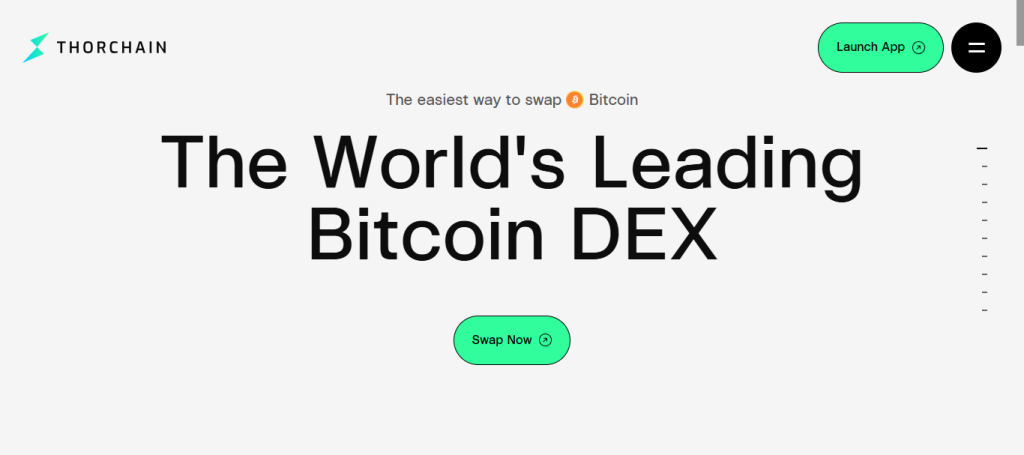
Appearing on multiple lists of Best Crypto Exchange Apps for Cross-Chain Swaps, ThorChain 2.0 contains a vast and diverse liquidity pool, a network of decentralized validators, clearly defined governance, and an effective settlement system that serves multi-chain trading.
ThorChain 2.0 App Features, Advantages & Disadvantages
Features
- Offers cross-chain swaps with no wrapped tokens
- Bitcoin, Ethereum, and multi-blockchain support
- Decentralized liquidity pools
- Non-custodial management
- AMM capability
Advantages
- No more dependency on centralized bridges
- Increased security from decentralization
- Wallet-to-wallet transfer
- Major cryptocurrency liquidity
- Users maintain asset control
Disadvantages
- Limited to newer and less developed blockchains
- Larger transfer costs during network congestion
- Begginer friendly-ness
- Asset liquidity can be inconsistent
- Contract risk
2. SushiXSwap Mobile
SushiXSwap Mobile is a Cross-Chain Swap app designed for decentralized trading. Sushi’s own app, SushiXSwap, combines multiple blockchains and liquidity pools and simplifies the bridging process.
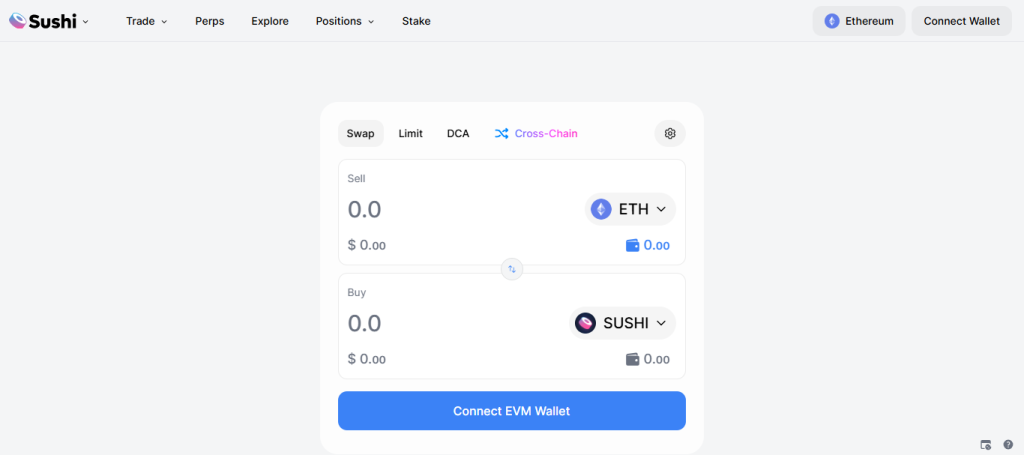
SushiXSwap also prioritizes a user friendly design and a simplistic approach to trading. SushiXSwap is ranked among the Best Crypto Exchange Apps for Cross-Chain Swaps because of its design that optimizes and routs transactions for lower fees, greater efficiency, and capital, along with improved user accessibility and trading.
SushiXSwap Mobile Features, Advantages & Disadvantages
Features
- One-click cross-chain swaps
- Multi-chain liquidity aggregation
- Trade mobile interface
- Integrated routing optimization
- Decentralized wallet connectivity
Advantages
- Good cross-chain experience
- Multiple blockchain support
- Efficient transaction routing
- User-friendly
- Less manual bridging
Disadvantages
- Partner network liquidity
- Slippage on volatile tokens
- Spotty mobile performance
- Gas gives inconsistencies
- Advanced features can confuse beginners
3. Osmosis v2 App
The Osmosis v2 App is an innovative decentralized exchange on the Cosmos platform. The Osmosis v2 App uses Inter-Blockchain Communication (IBC) technology and makes exchanging chain assets seamless.

The Osmosis v2 App has features such as customizable liquidity pools and advanced staking features along with a decentralized governance framework that lets users help build the ecosystem. The Osmosis v2 App has great infrastructure to carry inexpensive and fast transactions while remaining decentralized.
Among the New Best Crypto Exchange Apps for Bridge-Free Cross-Chain, the Osmosis v2 App stands out the most because it links an array of networks on the Cosmos platform, makes asset transfers easy, and liquidity is more manageable for users as the platform is made for traders that need cross-chain features while remaining scalable.
Osmosis v2 App Features, Advantages & Disadvantages
Features
- Built on the Cosmos IBC
- Custom liquidity pools
- Staking rewards included
- Tools for governance participation
- Fast cross-chain transfers
Advantages
- Low-cost transactions
- Strong integration with Cosmos
- Highly interoperable
- Community governance
- Flexible liquidity management
Disadvantages
- IBC focused
- Small user base
- Limited non-IBC integration
- New user learning curve
- Liquidity can differ by pool
4. Injective Exchange App
The Injective Exchange App removes the limitations of centralized exchanges and lets users easily trade advanced DeFi products through its fully decentralized order book. The Injective Exchange App has the ability to trade both high performance derivatives and spot markets as the infrastructure was built for both everyday and professional traders.

The Injective Exchange App has made interoperating between multiple chains extremely easy and is one of the New Best Crypto Exchange Apps for Bridge-Free Cross-Chain. The Injective Exchange App lets users easily deploy their capital, trade with low fees, and manage their DeFi portfolio through a secure app.
Injective Exchange App Features, Advantages & Disadvantages
Features
- Order-book based DEX
- Spot & derivatives
- Cross-chain assets
- Fast transactions
- Trading tools
Advantages
- Offers a professional trading experience
- Quick trade execution
- Low fees
- High liquidity
- Supports advanced trading
Disadvantages
- Not beginner friendly DEX
- Risky derivatives
- Smaller than major exchanges
- Needs market understanding
- Risk of poor liquidity
5. Sei Network DEX App
Sei Network DEX App prioritizes trading speed, building blockchain infrastructure tailored for decentralized exchanges. With parallel transaction processing and rapid finality, the platform strives for low latency.

The architecture accommodates high throughput, ideal for traders and liquidity providers. Currently placed in the New Best Crypto Exchange Apps for Bridge-Free Cross-Chain, Sei Network DEX App aims to decrease the latency typical in bridging and improve interoperability.
The platform offers the trader a multitude of blockchains without the need for a conventional bridge, emphasizing secure user experience and scalability.
Sei Network DEX App Features, Advantages & Disadvantages
Features
- Designed for trading
- Parallel transactions
- Low-latency
- High throughput
- Cross-chain
Advantages
- Super fast transactions
- Less network congestion
- Fast order filling
- Trader focused
- Flexible
Disadvantages
- New compared to others
- Fewer DeFi apps
- Limited historical performance
- Smaller liquidity
- Developing ecosystem
6. Curve Cross‑Chain App
Curve Cross-Chain App extends the popular Curve Finance ecosystem to trading across multiple blockchains. Focused on trading stablecoins and similar assets, the platform is designed for both low slippage individual trades and high liquidity institutional trades.
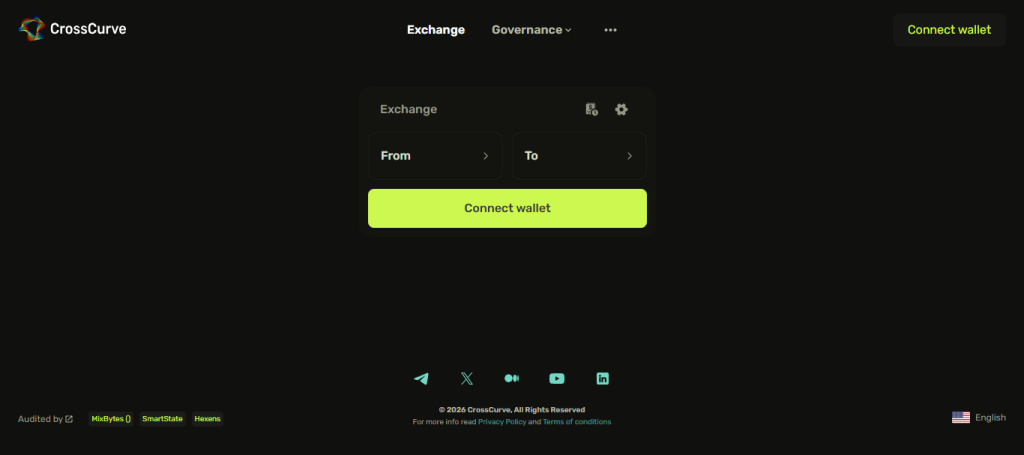
By pulling together the liquidity of the various blockchains, trading costs and execution time are significantly improved. Rated among the New Best Crypto Exchange Apps for Bridge-Free Cross-Chain, Curve Cross-Chain App offers an even greater degree of usability and yield opportunities while facilitating safe decentralized transactions.
The platform’s capital efficiency is ideal for bridge-free cross-chain asset swaps and stable asset management.
Curve Cross-Chain App Features, Advantages & Disadvantages
Features
- Cross-chain stable swaps
- Deep liquidity
- Low-slippage
- Yield opportunities
- Multi-chain liquidity
Advantages
- Best for stable swaps
- Efficient liquidity
- Low swap fees
- Excellent DeFi credibility
- Strong institutional support
Disadvantages
- Not for volatile assets
- Complex liquidity
- Quiet markets yield low returns
- Limited advanced trading
7. Balancer v3 App
The Balancer v3 App manages liquidity pools and offers a variety of automated portfolio management services. Users can build custom pools that contain different assets. This flexibility is a major improvement over the options that the typical decentralized exchange offers.
In addition, Balancer v3 App built its model to maximize capital efficiency, and liquidity providers earn better yields. Balancer v3 App falls under the category of New Best Crypto Exchange Apps for Bridge-Free Cross-Chain and features cross-chain liquidity and trading functionalities. The app’s framework coupled with its automated rebalancing is attractive to both long-term investors and traders.
Balancer v3 App Features, Advantages & Disadvantages
Features
- Multi-asset liquidity pools
- Automated portfolio balancing
- Custom pool creation
- Advanced liquidity management
- Cross-chain integrations
Advantages
- Flexible investment strategies
- Improved capital efficiency
- Diversified liquidity pools
- Supports multiple asset allocations
- Strong DeFi ecosystem presence
Disadvantages
- Complex setup for beginners
- Impermanent loss risk
- Some pools have low liquidity
- Requires active monitoring
- Advanced features need experience
8. GMX v2 Mobile
GMX v2 Mobile is a decentralized trading app for derivatives that enables the trading of perpetual futures along with spot trading in real-time. This trading can all be done through mobile devices. GMX v2 Mobile is a disruptive model’s decentralized app because it offers leverage trades, clear pricing, and less reliance on centralized exchanges.
Its model favors the security and control of assets and low trading fees for its users. As a member of the New Best Crypto Exchange Apps for Bridge-Free Cross-Chain, GMX v2 Mobile allows traders to interact across many blockchains while also using decentralized liquidity. The user interface is easy to navigate for all users whether they be beginners in the trading realm or professionals.
GMX v2 Features, Advantages & Disadvantages
Features
- Offers decentralized perpetual futures
- Mobile trading enabled
- Advanced leverage trading (with risk)
- Multi-chain integration
- Fair pricing model
Advantages
- No reliance on centralized exchanges
- Good derivative liquidity
- Assets owned by users
- Trades available on mobile
- Low fees for trading
Disadvantages
- Increased risk due to leverage
- Difficult for beginners
- Volatility loss impact
- Limited spot trading
- Advanced risk management needed
9. ZKSync Era Swap App
ZKSync Era Swap App uses zero-knowledge rollups for an innovative approach for faster and cheaper DEX offerings. Utilizing Ethereum rollups, this app maintains high security while further decreasing transaction costs.
ZKSync Era Swap helps process transactions even faster while supporting and extending the infrastructure of decentralized apps and services. ZKSync Era Swap ranks highest among New Best Crypto Exchange Apps for Bridge-Free Cross-Chain because of its superior Layer-2 operations with optimal user experience and higher app scalability.
ZKSync Era Swap App is congestion free and enables fairly costless cross-chain transactions by utilizing modern cryptography and avoiding main blockchain networks.
ZKSync Era Swap App Features, Advantages & Disadvantages
Features
- Layer-2 zK-rollup tech
- Fast settlement
- Low fees
- Ethereum compatible
- Advanced trading infrastructure
Advantages
- Cost savings
- Fast with settlement speeds
- High scalability
- Improved security
- Strong integration support
Disadvantages
- Still building ecosystem
- Not as many apps as Ethereum
- Low liquidity on some assets
- Technical barriers
10. StarkNet DeFi Hub App
StarkNet DeFi Hub App is a DeFi app that combines Layer-2 efficiency with the privacy and scalability of zero-knowledge proofs. Users of StarkNet DeFi Hub App can swap tokens, provide liquidity, and manage their assets more efficiently and securely, thanks to its Layer-2 infrastructure.
StarkNet DeFi Hub App ranks as one of the New Best Crypto Exchange Apps for Bridge-Free Cross-Chain because of its improved cross-chain interconnectivity among blockchains. A decentralized financial app of the future is built on the faster, more scalable magic of StarkNet DeFi Hub App’s infrastructure.
StarkNet DeFi Hub App Features, Advantages & Disadvantages
Features
- Zero Knowledge Rollup tech
- Highly secure
- Layer-2 scaling solution
- Multi-Service DeFi ecosystem
- Asset management
- Cross-chain DeFi access
Advantages
- High Scalability Potential
- Diminished Transaction Costs
- Enhanced Security
- Growing Developer Community
- Efficient Network Performance
Disadvantages
- Newer Platform
- Less Mainstream Adoption
- User Learning Curve
- Decreased Liquidity Compared to Larger Chains
- Under-Developed Tools
Conclusion
The introduction of new best crypto exchange apps has dramatically affected new approaches to decentralized finance. apps such as Thorchain 2.0, Sushixswap mobile, Osmosis v2, Injective, Sei network DEX, Curve, Balancer v3, GMX v2 mobile, ZKSync Era Swap, and Starknet DeFi hub eliminate the traditional challenges and security risks exposed in bridge crypto blockchain technology.
These apps promote the movement of assets among multiple networks. As interoperability between different blockchains continues to progress, we will see bridge-free cross-chain exchange applications rapidly evolve to enhance liquidity and lower the transactional burden within the decentralized financial realm.
FAQ
What are bridge-free cross-chain crypto exchange apps?
Bridge-free cross-chain crypto exchange apps allow users to swap cryptocurrencies between different blockchain networks without using traditional third-party bridges. These platforms use advanced interoperability protocols, liquidity networks, or native cross-chain technologies to facilitate secure and efficient asset transfers.
Why are bridge-free cross-chain swaps becoming popular?
Bridge-free swaps are gaining popularity because they reduce the security risks often associated with blockchain bridges. They also simplify the trading process, lower transaction complexity, improve user experience, and provide faster access to liquidity across multiple blockchain ecosystems.
Which apps are considered the best for bridge-free cross-chain trading?
Some of the leading options include ThorChain 2.0 App, SushiXSwap Mobile, Osmosis v2 App, Injective Exchange App, Sei Network DEX App, Curve Cross-Chain App, Balancer v3 App, GMX v2 Mobile, ZKSync Era Swap App, and StarkNet DeFi Hub App. Each platform offers unique features for decentralized cross-chain asset trading.
Are bridge-free cross-chain exchange apps safe to use?
Most reputable bridge-free exchange apps are designed with strong security measures, decentralized validation systems, and transparent smart contracts. However, users should always conduct their own research, verify platform audits, and follow best security practices when trading digital assets.
Do bridge-free cross-chain apps require account registration?
Many decentralized bridge-free exchange apps do not require traditional account registration. Users can typically connect a compatible crypto wallet and start trading while maintaining control of their private keys and assets.