


This article will analyze Decentralized Social Platforms Paying Creator Yield. Web3-based social networks are beginning to alter monetization methods for creators. The networks allow creators to be compensated in tokens, NFTs, and subscriptions, or through rewards for participating community members.
- What Is Decentralized Social Platforms?
- How To Choose Decentralized Social Platforms Paying Creator Yield
- Key Point & Decentralized Social Platforms Paying Creator Yield
- 1. Lens Protocol
- Lens Protocol Features, Pros & Cons
- Features
- Pros
- Cons
- 2. Farcaster
- Farcaster Features, Pros & Cons
- Features
- Pros
- Cons
- 3. Mirror
- Mirror Features, Pros & Cons
- Features
- Pros
- Cons
- 4. Audius
- Audius Features, Pros & Cons
- Features
- Pros
- Cons
- 5. Steemit
- Steemit Features, Pros & Cons
- Features
- Pros
- Cons
- 6. Mastodon + Web3
- Mastodon + Web3 Features, Pros & Cons
- Features
- Pros
- Cons
- 7. Deso
- DeSo (Decentralized Social) Features, Pros & Cons
- Features
- Pros
- Cons
- 8. Chingari
- Chingari Features, Pros & Cons
- Features
- Pros
- Cons
- 9. Diamond App
- Diamond App Features, Pros & Cons
- Features
- Pros
- Cons
- 10. CyberConnect
- CyberConnect Features, Pros & Cons
- Features
- Pros
- Cons
- Comparison Table: Decentralized Social Platforms Paying Creator Yield
- Conclusion
- FAQ
The best part is that creators keep ownership of their content and digital identity. We will identify the leading networks and examine their features and advantages as well as their impact on the creator economy.
What Is Decentralized Social Platforms?
Decentralized Social Platforms put social media on the blockchain to give users an unprecedented level of control over digital identities, profiles, and content. Because ownership and monetization of user data is built into traditional social media, or is owned by third parties, traditional social media lacks transparency and discourages creator engagement.
With blockchain, transparent ownership and creator engagement are built into social media. With decentralized social media, creators engage with their communities and earn income through social tokens and crypto, NFTs, subscriptions, and tips.
By eliminating the third party, user data, financial assets, and social networks are fully under the control of the social media user and creator monetization models are based on engagement, ownership, and transparency.
How To Choose Decentralized Social Platforms Paying Creator Yield
Revenue Model – Understand how yield is paid out, be it advertising revenue, tokens, staking rewards, or tips.
Token Utility – Assess the value of the native token. Does it serve a purpose in governance, payments, or liquidity?
Transparency – The platform should either be open-source or provide detailed documentation about their payout rules.
Community Strength – More active users on the platform means better engagement, resulting in greater yield potential.
Ease of Monetization – The presence of NFT sales, micro-tips, or subscriptions is a plus.
Security & Custody – Check if creators are paid out in a non-custodial manner and if they have custody of their funds.
Scalability – Platforms with blockchain infrastructure that can scale provide cheap and quick transactions.
Compliance – For creators in places like Georgia or India, the platform should meet the legal requirements to ensure a steady income.
Key Point & Decentralized Social Platforms Paying Creator Yield
| Decentralized Social Platform | Key Points |
|---|---|
| Lens Protocol | • Blockchain-based social graph infrastructure• Users own profiles, followers, and content data• Supports decentralized applications (dApps)• Enables permissionless creator tools• Built for Web3 communities |
| Farcaster | • Decentralized social protocol focused on user ownership• Uses blockchain identity and portable profiles• Supports mini-app ecosystems through Frames• Reduces dependence on centralized platforms• Growing Web3 developer community |
| Mirror | • Web3 publishing platform for writers and creators• Enables decentralized content ownership• Supports blockchain-based crowdfunding• Provides NFT publishing tools• Connects creators with global communities |
| Audius | • Decentralized music streaming platform• Gives artists more control over distribution• Removes traditional music intermediaries• Supports blockchain-based artist profiles• Provides transparent royalty mechanisms |
| Steemit | • Blockchain-powered blogging platform• Rewards users for creating and curating content• Uses community-driven content ranking• Provides decentralized publishing• Early model for creator economy platforms |
| Mastodon + Web3 | • Decentralized social network based on federated servers• Gives communities control over their platforms• Supports open-source development• Can integrate Web3 identity and payments• Focuses on user privacy and ownership |
| DeSo (Decentralized Social) | • Blockchain designed specifically for social applications• Provides decentralized user identities• Supports creator-owned profiles and content• Enables social apps at blockchain scale• Combines social media with crypto economics |
| Chingari | • Web3 short-video social platform• Combines entertainment with blockchain rewards• Popular among emerging markets• Supports creator-focused monetization• Uses token-based engagement models |
| Diamond App | • Blockchain-based social networking platform• Built around creator ownership• Supports decentralized profiles and communities• Enables Web3 content creation• Focuses on creator monetization tools |
| CyberConnect | • Decentralized social network protocol• Enables portable Web3 identities• Supports creator-focused applications• Provides decentralized social graphs• Connects users across Web3 ecosystems |
1. Lens Protocol
Lens Protocol is a decentralized social graph framework. With Lens, creators can own and manage their followers, profiles, and content. Traditional social networks hoard user data and leave creators powerless.
Lens allows creators to build their communities within the myriad of Web3 apps. Lens employs NFT profiles, collectible and subscribed content, and decentralized identity to empower users.

Unlike traditional social models, creators on Lens monetize their work via their engaged communities, digital collectibles, and membership.
Lens’s open economy allows developers to build custom social media apps on the platform while ensuring creators can control, own, and monetize their content.
Lens Protocol Features, Pros & Cons
Features
- Graphs that are decentralized socially allow participants to own their profiles, followers, and posts.
- Supports NFT based profiles and digital media.
- Developers can build different social apps on the same network.
- Allows creators to earn via subscriptions and digital goods.
- Incorporates blockchain based identities for a more portable and socially owned experience.
Pros
- Offers creators complete ownership of their social identity and audience.
- Offers multiple earning avenues via NFTs and subscriptions.
- Lowers reliance on traditional social media.
- Caters to new Web3 based apps and communities.
- Allows more open interactions than traditional social media.
Cons
- Offers a steep learning curve for Web3 and wallet setup.
- User adoption pales when compared to traditional social media.
- Blockchain fees on the network may make it less usable.
- Earning potential for creators is based on the activity and growth of the network.
- Some features are more usable with extra skills.
2. Farcaster
Farcaster is a decentralized social framework with a focus on user-owned identities and profiles. Unlike traditional social networks, Farcaster allows users to maintain their social connections across a variety of different applications.
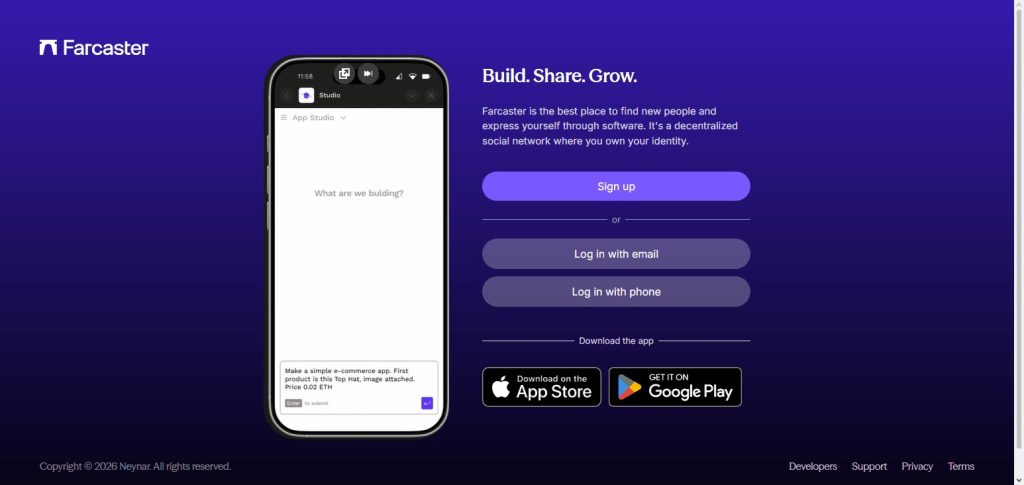
Within its ecosystem, Farcaster has a concept of mini-apps (called Frames) that enable commerce, games, and other interactive social content directly within social posts.
Farcaster combines decentralized identity and blockchain ownership to create new opportunities for monetization to creators via community engagement, digital assets, tips, and other Web3 enabled content.
Farcaster Features, Pros & Cons
Features
- Social protocol that is decentralized and socially owned identity based.
- Frames allows for richer interaction in social posts.
- Offers portability of profiles in different apps.
- Completely open for creators to build on.
- Social experiences can be driven and controlled by the creators.
Pros
- Social connections can be owned by the participants.
- Strong developer ecosystem for Web3 apps.
- Less dependency on platforms and censorship.
- Offers new ways for creators to earn.
- Compared to traditional social networks, allows for better data ownership.
Cons
- Compared to mainstream social platforms, the audience using Web3 based social / publishing platforms is relatively smaller.
- Decentralized platforms are difficult to navigate for traditional web users.
- Blockchain wallet integration is a must.
- These platforms are in the early stages of development. Therefore the features are rudimentary.
3. Mirror
Mirror is a Web3 publishing platform for writers, creators, and communities that want to own their content on the blockchain. It lets you publish articles, create and sell NFTs, and build an audience.
Mirror differs from traditional blogging tools because it lets creators retain ownership of their IP, and uses blockchain tech to monetize. Decentralized Social Platforms Paying Creator Yield like Mirror enable creator earnings through NFTs, tokenized memberships, and community supported endeavors.
Mirror allows the publishing industry to go creator controlled, and shift from an ad focused model to a blockchain asset focused model.
Mirror Features, Pros & Cons
Features
- Web3 decentralized social network
- NFT-based ownership is built-in
- Ability to fund projects through the network
- Web3 based publishing tools
- Enables creators to publish directly to their community
Pros
- No need for middlemen to monetize
- Supports community funded projects
- Payments are made using the service
- Ability to grow audience on the platform
- Supports digital ownership
Cons
- Focus is on creators in Web3
- Smaller audience then typical blogging platforms
- NFT earnigns are related to market volatility
- Requires knowledge of crypto wallets
- Ability to discover content is still growing
4. Audius
Audius is a decentralized music streaming platform that gives artists better control to own the distribution and monetization of their music.
Other music platforms take a large share of revenue, while Audius builds a more equitable relationship between musicians and listeners on the blockchain.

It allows artists to upload music and build a community around it, while also getting paid in the process. Decentralized Social Platforms Paying Creator Yield like Audius let musicians earn through token rewards, fan engagement, and community support.
The AUDIO token is used for platform governance and to pay for participation. Audius eliminates middlemen in music systems and allows artists to better own their craft, while also earning a livable revenue stream.
Audius Features, Pros & Cons
Features
- Web3 decentralized music streaming service
- Music ownership on the blockchain
- Part of the AUDIO token ecosystem
- Direct artist to fan relationships
- Transparent creator rewards
Pros
- Artists gain control of the distribution of their music
- Creates alternate revenue opportunities
- Fans earn the ability to engage with artists through the token
- Diminishes the need for traditional music platforms
- Supports independent musicians worldwide
Cons
- Smaller audience than Spotify or YouTube Music
- Token value drops = earned value drops
- Limited popular music library.
- • Crpyto knowledge necessary for rewards.
- • Relies on user buy-in for profitability.
5. Steemit
Steemit pioneered a reward system for user-generated content and participation using blockchain technology. Functions on the Steem blockchain offer rewards in cryptocurrency for engagement to a whole new economy of users. Content contributors, commenters, and upvoters receive compensation.

Decentralized Social Platforms Paying Creator Yield like Steemit show that blockchain technology can shift social activity to reflect a new economy. Instead of relying on earnings from ad revenue, social media creators receive compensation from the blockchain.
Through a creator economy based on token awards, Steemit set a foundation for competitors and influenced new social platforms based on user control and on Web3.
Steemit Features, Pros & Cons
Features
- • Combines blogging, social media, and blockchain.
- • Tokens reward content creators and curators.
- • Community voting determines content ranking.
- • Decentralized publishing is built-in.
- • Crypto creator payments incorporated.
Pros
- • Direct content earnings for creators.
- • Early adopter with reward systems on blockchain.
- • Community participation is incentivized.
- • Rewards are clearly and fairly distributed.
- • Users are incentivized through ownership.
Cons
- • Users voting to reward can skew the system.
- • Compared to current systems, low platform usage.
- • Creator earnings dependent on token value.
- • Varied content quality.
- • Users need to know about blockchain rewards.
6. Mastodon + Web3
Mastodon is a decentralized social network that uses a federated model, allowing individual communities to manage their own servers while staying interconnected. Mastodon can be further enhanced using Web3, allowing features like decentralized identity, crypto payments, and token-based communities.

Mastodon gives its users far more control when compared with centralized social networks. Decentralized Social Platforms Paying Creator Yield including Mastodon + Web3 allow creators to explore new ways to monetize their creations including crypto tips, NFT content, membership, and community tokens. By fusing open-sourced social networking with the blockchain, Mastodon + Web3 creates new possibilities.
Mastodon + Web3 Features, Pros & Cons
Features
- • Decentralized, federated social network.
- • Open-source, independently controlled servers.
- • Web3 identity can be integrated.
- • Community tokens and crypto can be exchanged.
- • User control and privacy focused.
Pros
- • Further community control.
- • Less reliance on big centralized companies.
- • Increased autonomy for rule setting.
- • Transparency from an open-source setting.
- • Web3 monetization can be incorporated.
Cons
- • Currently limited Web3 functions.
- • User experience is complicated.
- • Technical knowledge to manage a server.
- • Poor development for monetization.
- • Compared to big-name platforms, the creator economy is smaller.
7. Deso
The Decentralized Social (DeSo) blockchain allows creators to gain ownership of their profiles, their followers, and their published content. Many types of blockchains exist, but without the specialized functions that accommodate social networks,
DeSo offers the creator coin and NFT functions alongside decentralized identifiers to fulfill its purpose. DeSo’s frame encourages developers to create social networks that enable users to take ownership of their digital affiliations.
Further, Decentralized Social Platforms Paying Creator Yield leverage creator coins and social tokens, along with digital collectibles, to enhance creator monetization.
Supporters, users, and followers of the creator who bolster their growth and engagement in return for financial gain, propel DeSo’s goal of social activity translating directly to blockchain economic value.
DeSo (Decentralized Social) Features, Pros & Cons
Features
- • Social apps can use the social-focused blockchain.
- • Implements creator coins and social tokens.
- • Allows decentralized identities.
- • Integrates NFTs and other digital assets.
- • Social apps can be developed on the platform.
Pros
- • Allows new models to invest in creators.
- • Facilitates audience monetization.
- • Users own their social data.
- • Focused on scalable social apps.
- • Creates blockchain-based communities.
Cons
- • Financial state of the platform depends on the crypto market.
- • Users need to understand tokens.
- • Usage is low.
- • Financial risks are prevalent in creator coin models.
- • Limitations of blockchain may inhibit growth.
8. Chingari
Chingari is a short-form video social media app built on Web3 that uses creator communities to further entertainment and engagement and slots blockchain-based rewards within its virtual economy.
Creators and users become engaged in digital ecosystems that are token powered. Short-form video apps are typically the same, but Chingari stands out among the rest because of the GARI token powered ecosystem.
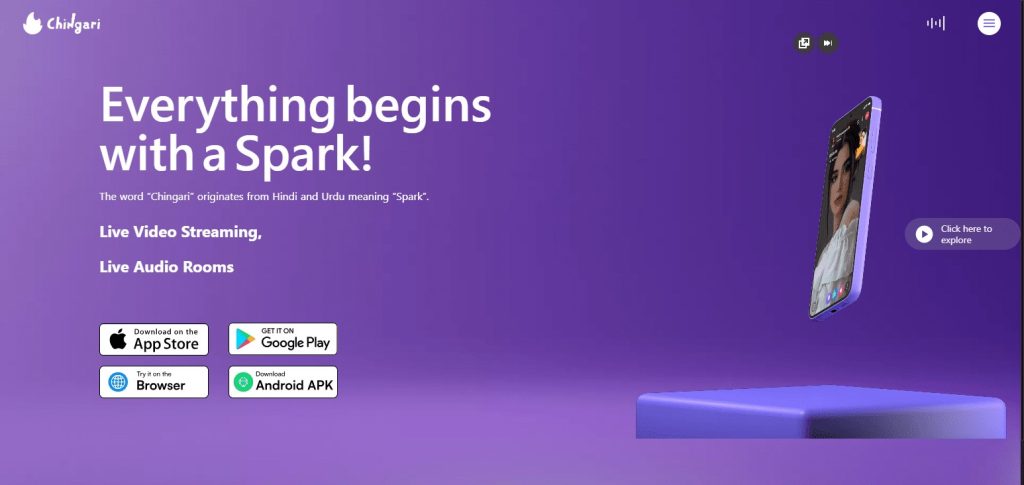
Decentralized Social Platforms Paying Creator Yield is Chingari’s monetization method. Beyond traditional creator monetization, creators are awarded for participation and engagement through fan-based digital rewards.
Chingari integrates social entertainment and blockchain to achieve a creator-friendly venue. Here, financial ownership and equity are awarded to users.
Chingari Features, Pros & Cons
Features
- • Focused on short videos in a social media format.
- • GARI token rewards ecosystem participants.
- • Users earn rewards for creator engagement.
- • Combines entertainment with blockchain.
- • Targets mobile-first social users.
Pros
- • Users earn for creating videos.
- • Engaged users earn tokens.
- • Can earn in-app without relying on an ad model.
- • Focused on creators in emerging markets.
- • Combines entertainment and Web3.
Cons
- Earnings are tied to token volatility.
- Major players in the space are competitors (TikTok and YouTube Shorts).
- Adoption is reliant on users accepting crypto.
- Creator ecosystem is lacking globally.
- Regulations can adversely affect business.
9. Diamond App
Diamond App is a decentralized social media application integrating creator empowerment, blockchain identities, and Web3 monetization. It provides multiple community engagement tools.
The focus is on decreasing reliance on traditional social media corporations through blockchain ownership and reward systems. Decentralized Social Platforms Paying Creator Yield such as Diamond App are enabling creators to earn via digital assets, community engagement, and decentralized monetization.
In keeping with Diamond App’s goals, users are able to make decisions regarding their social profiles and content, and the App fosters an engagement-to-earn framework. This signals a shift towards a user-oriented social network.
Diamond App Features, Pros & Cons
Features
- Focus on creator’s rights in Web3
- Facilitates decentralized profiles and communities
- Blockchain monetized content
- Digital assets
- Creator centric social design
Pros
- Direct digital identity control
- Community monetization
- Blockchain rewards
- Less reliance on centralized platforms
- Ownership of the creator economy
Cons
- Small user base
- Limit of mainstream user recognition
- Requires knowledge of Web3
- Adoption determines monetization
- Still in development
10. CyberConnect
CyberConnect is a decentralized framework for social networking, allowing users to construct their Web3 identities and own social relationships. CyberConnect is cross-app and provides the necessary infrastructure for developers to build social apps while allowing users to keep ownership of their digital profiles and communities.
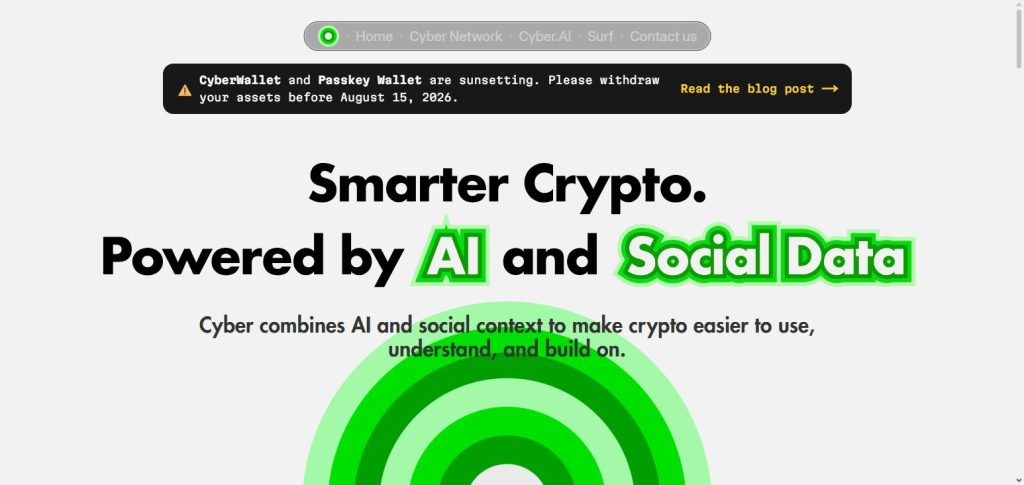
CyberConnect embraces creator monetization through subscriptions and NFTs, and decentralized social graphs. Decentralized Social Platforms Paying Creator Yield like CyberConnect allow creators to build community and deepen audience engagement, all while enabling novel revenue opportunities.
The CYBER token creates added value within the network through governance and participation. CyberConnect is an example of a creative future in which social capital and identity are blockchain-enabled.
CyberConnect Features, Pros & Cons
Features
- Decentralized social network protocol
- Web3 identity/social graph
- Creator subscriptions/monetization
- Social app infrastructure
- Use of CYBER token
Pros
- Ownership of social connections
- New creator economy revenue streams
- DApps facilitate improved digital identity
- Community focused
Cons
- Requires knowledge of blockchain
- Still in early adoption phase
- Token value uncertainty
- Many Web3 protocols in competition
- User experience for beginners may be difficult
Comparison Table: Decentralized Social Platforms Paying Creator Yield
| Platform | Creator Monetization | Ownership Model | Token / Reward System | Best For | Key Advantage |
|---|---|---|---|---|---|
| Lens Protocol | NFTs, subscriptions, collectibles, community rewards | Users own profiles, followers, and content | Blockchain-based ecosystem incentives | Web3 creators, developers, communities | Strong decentralized social graph and creator ownership |
| Farcaster | Tips, apps, digital assets, community monetization | Portable identity and social connections | Ecosystem rewards and Web3 incentives | Builders, influencers, Web3 communities | Interactive social experience through Frames |
| Mirror | NFT publishing, crowdfunding, memberships | Creators own published content and digital assets | Community-driven creator rewards | Writers, artists, publishers | Enables direct funding and content ownership |
| Audius | Music rewards, fan support, token incentives | Artists maintain control over music distribution | AUDIO token ecosystem | Musicians and audio creators | Decentralized music monetization model |
| Steemit | Content rewards, blogging incentives, community voting | Blockchain-based content ownership | STEEM-based reward system | Bloggers and writers | Early blockchain creator reward platform |
| Mastodon + Web3 | Crypto tips, memberships, NFTs, community tokens | Federated communities control their networks | Web3 integrations and token models | Privacy-focused communities | Open-source and decentralized social structure |
| DeSo | Creator coins, NFTs, social tokens | Users control profiles and social data | DESO token ecosystem | Social entrepreneurs and developers | Built specifically for decentralized social apps |
| Chingari | Video rewards, fan engagement, token incentives | Creator-focused digital ownership | GARI token rewards | Short-video creators | Combines entertainment with blockchain rewards |
| Diamond App | Digital assets, subscriptions, community support | Creator-owned profiles and content | Native Web3 incentives | Emerging Web3 creators | Focuses on creator-first monetization |
| CyberConnect | Subscriptions, NFTs, community monetization | Decentralized identity and social graphs | CYBER token ecosystem | Web3 communities and developers | Enables portable social identity across apps |
Quick Comparison Summary
| Category | Leading Platforms |
|---|---|
| Best for Creator Ownership | Lens Protocol, CyberConnect, DeSo |
| Best for Writers & Publishers | Mirror, Steemit |
| Best for Musicians | Audius |
| Best for Short Video Creators | Chingari |
| Best for Developers Building Social Apps | Farcaster, Lens Protocol, DeSo |
| Best for Decentralized Communities | Mastodon + Web3 |
| Best Token-Based Monetization | DeSo, Audius, Chingari |
| Best NFT Integration | Lens Protocol, Mirror, CyberConnect |
Conclusion
Decentralized Social Platforms like Lens Protocol, Farcaster, Mirror, Audius, DeSo and CyberConnect are about to disrupt the creator economy further by giving the remaining power to the content creators and the users again, instead of the centralized companies.
They do this by allowing the content creators the ability to build and own their audience and following, as well as earn them tokens, NFTs, subscriptions, and other community-driven rewards/incentives.
These decentralized social networks take advantage of the growing Web 3.0 technologies, and as blockchain adoption increases and social media networks move away from traditional advertising, the value proposition of these networks is clear. It is even more apparent that these networks will create safer and more just online economies.
FAQ
What are Decentralized Social Platforms Paying Creator Yield?
Decentralized Social Platforms Paying Creator Yield are Web3-based social networks that allow creators to earn rewards through blockchain-powered mechanisms such as tokens, NFTs, subscriptions, tips, and community incentives. Unlike traditional social media platforms that mainly generate revenue through advertisements, decentralized platforms enable creators to directly monetize their content and audience relationships. These platforms focus on user ownership, transparent rewards, and giving creators more control over their digital assets.
How do decentralized social platforms help creators earn money?
Decentralized social platforms help creators earn money through multiple Web3 monetization methods, including native tokens, NFT sales, paid memberships, creator coins, tipping systems, and decentralized applications. Creators can receive direct payments from followers without relying on centralized intermediaries. Blockchain technology enables transparent transactions, allowing creators to capture more value from their content, communities, and digital interactions.
Which are the best decentralized social platforms for creator rewards?
Some popular decentralized social platforms focused on creator monetization include Lens Protocol, Farcaster, Mirror, Audius, Steemit, DeSo, Chingari, Diamond App, and CyberConnect. These platforms provide different earning models, including content rewards, music monetization, NFT-based ownership, token incentives, and community-driven income opportunities.