





This article will cover the Top Stablecoin Orchestration Platforms that are shaping digital finance in 2026. They allow enterprises, fintechs, and DAOs to securely operate across multiple blockchains.
There are several orchestration tools with unique approaches to custody, compliance, treasury management, and cross-blockchain coverage. This article aims to identify the most reliable cross-border payment and stablecoin treasury tools.
What is Stablecoin Orchestration Platforms?
An stablecoin orchestration platform is a service that helps businesses, fintechs, and DAOs automate stablecoin transactions across different blockchains. These platforms integrate compliance, custody, and treasury management to ensure smooth cross border payments.
Compared to basic wallets or exchanges, stablecoin orchestration platforms offer enterprise features of geo-licensing, MPC custody, abstraction of gas costs, and intent basedWorkflow orchestration. They cover the major stablecoins USDC, USDT, and EUROC and have a variety of Ethereum, Solana, Polygon, Avalanche, and multiple Layer 2 networks.
Stablecoin orchestration platforms combine compliance, execution automation, and treasury management and, as a result, help global enterprises easily offer stablecoin network flow solutions that are safe, scalable, and ready for compliance.
Key Points
| Platform | Best For | Key Features | Regulatory Status |
|---|---|---|---|
| Bridge by Stripe | Full-stack orchestration | 7 stablecoins, 10+ chains, ACH/Wire/SEPA/FedNow | US & EEA entities, corridor-specific licensing |
| BVNK | PSP & merchant flows | SOC 2/ISO audits, ramps in 130+ countries | UK/Malta EMIs, MiCA CASP, US MSB/MTLs |
| Circle Programmable Wallets | Treasury automation | Multi-chain programmable wallets, compliance hooks | US-regulated issuer (USDC) |
| Eco (Routes + Permit3) | Execution reliability | Native atomic execution, gas abstraction | Policy enforcement at execution layer |
| Fireblocks | Institutional custody | Secure MPC custody, programmable treasury | SOC 2 Type II, ISO 27001 |
| Halliday | Programmable automation | Multi-chain orchestration, intent-based workflows | Compliance integrated at execution |
| Mesh Payments | Corporate treasury | Stablecoin-based spend management | US MSB registration |
| Conduit | Developer-first orchestration | API-first treasury automation | Regulatory partnerships for fiat ramps |
| Brale | White-label issuance | Stablecoin creation + orchestration | US regulatory filings for issuance |
| Squads + Magna | Solana-native orchestration | Distribution + DAO treasury automation | Solana ecosystem compliance |
1. Bridge by Stripe
Bridge by Stripe was launched in 2024 to build Stripe’s stablecoin payment layer. Their usage-based pricing model charges for transactions and corridors. Focusing on compliance, Bridge by Stripe has US MSB licenses, EU MiCA CASP registrations, and corridor-specific approvals.

Their custody solution uses programmable wallets and is non-custodial. Their blockchain reach supports Ethereum, Solana, Avalanche, Polygon, and Layer 2.
They support stablecoins like USDC, USDT, and EUROC and others based on the corridor. Bridge by Stripe offers enterprise solutions to automate treasury operations and sponsor gas fees for compliance with multi-chain payment orchestration.
Bridge by Stripe Features
- Founded as the orchestration layer by Stripe in 2024
- Usage based pricing per corridor and transaction
- Strong compliance: US MSB, EU MiCA CASP, corridor specific licensing
- Non-custodial model with programmable wallets
- Blockchains: Ethereum, Solana, Avalanche, Polygon, Layer 2s; support for USDC, USDT, EUROC
| Advantages | Disadvantages |
|---|---|
| Strong compliance with US MSB & MiCA CASP | Pricing can be high for corridor-heavy flows |
| Multi-chain coverage (Ethereum, Solana, L2s) | Limited customization for developers |
| Non-custodial programmable wallets | Heavy reliance on Stripe ecosystem |
| ACH/SEPA/FedNow integration | Corridor licensing still expanding |
| Enterprise-grade treasury automation | Focused mainly on large enterprises |
2. BVNK
BVNK is a UK based payments and orchestration platform founded in 2021. Pricing follows SaaS plus transaction fee model and has enterprise tiers for PSPs and merchants. BVNK has climate change and compliance licenses from FCA EMI, Malta VFA, MiCA CASP, and US MSB/MTLs. In terms of custody, it offers hybrid wallet services with MPC technology used for institutional control.

It has services for blockchain payments such as Ethereum, Solana, Stellar, and Polygon. It supports stablecoins USDC, USDT, EUROC, and GBP. BVNK is good at merchant flows and has ramps for payments in 130+ countries and SOC 2/ISO audit. Its orchestration layer provides corridor specific compliance and programmable treasury automation.
BVNK Features
- Stablecoin custodial platform for UK payments, founded in 2021
- SaaS + transaction fees
- Compliance: FCA EMI, Malta VFA, MiCA CASP, US MSB/MTLs
- Hybrid custody with MPC wallets
- Covers: Ethereum, Solana, Stellar, Polygon; supports USDC, USDT, EUROC, GBP-backed assets
| Advantages | Disadvantages |
|---|---|
| FCA EMI & MiCA CASP compliance | Smaller developer ecosystem |
| Hybrid custody with MPC wallets | Pricing higher for small merchants |
| Supports GBP-backed stablecoins | Limited blockchain coverage vs peers |
| Global ramps in 130+ countries | Heavy focus on PSPs, less flexible |
| SOC 2 & ISO audits | Not ideal for DAO workflows |
3. Circle Programmable Wallets
Circle Programmable Wallets are an extension of Circle’s USDC infrastructure into the realm of orchestration. API-based pricing tiers include both developer and enterprise options. Circle’s US-based stablecoin compliance framework is combined with MiCA CASP registration in Europe.

Custody solutions are programmable and non-custodial, with compliance integrations. The blockchains supported include Ethereum, Solana, Avalanche, Polygon, and NEAR. Stablecoins supported are USDC, USDC, EUROC, and corridor-specific assets.
Focused on enterprise treasury automation as well as programmable workflows and atomic execution, Circle seeks to provide reliability through the automation of programmable workflows. By engineering compliance into programmable wallets directly, Circle’s orchestration layer reduces operational risks.
Circle Programmable Wallets Features
- Launched by Circle in 2023
- API pricing with developer and enterprise tiers
- Compliance: US regulated issuer, MiCA CASP in Europe
- Non-custodial programmable wallets with compliance hooks
- Covers: Ethereum, Solana, Avalanche, Polygon, NEAR; supports USDC, EUROC
| Advantages | Disadvantages |
|---|---|
| Backed by Circle’s USDC issuer status | Limited stablecoin diversity beyond USDC/EUROC |
| Non-custodial programmable wallets | Pricing can be complex for scaling |
| Strong compliance in US & EU | Focused mainly on treasury automation |
| Multi-chain coverage (Ethereum, Solana, Polygon) | Less suited for merchant flows |
| Atomic execution reliability | Dependent on Circle ecosystem |
4. Eco (Routes + Permit3)
Eco was founded in 2022 and is an execution platform focus on stablecoin orchestration. Eco uses usage-based pricing and tiered pricing for developers. Compliance happens at the execution layer.

Policies are enforced. Eco has non-custodial control. Eco offers gas abstraction and intent based workflows. Eco supports blockchains like Ethereum, Solana and Layer 2s. Eco supports the stablecoins USDC and USDT as well as corridor assets that are programmable.
Eco excels at execution reliability and offers atomic transfers as well as programmable routes. Eco’s stablecoin orchestration allows treasury teams to automate workflows with no hidden risks, making Eco a champion of programmable automation.
Eco (Routes + Permit3) Features
- Started building a platform in 2022 focused on programmable execution
- Pricing built on developer friendly tiers with usage based billing
- Compliance built into the execution layer
- Non-custodial custody with gas abstraction
- Covers: Ethereum, Solana, Layer 2s; supports USDC, USDT
| Advantages | Disadvantages |
|---|---|
| Execution reliability with atomic transfers | Smaller compliance footprint |
| Gas abstraction reduces treasury risk | Limited custody options |
| Non-custodial programmable workflows | Narrow blockchain coverage |
| Intent-driven automation | Focused mainly on developers |
| Lightweight pricing model | Less enterprise adoption compared to peers |
5. Fireblocks
Founded in 2018, Fireblocks is the first company to offer custody and orchestration for institutions. Enterprise pricing features per-wallet fees, with additional fees for transactions. Fireblocks has SOC 2 Type II and ISO 27001 compliances, and specific corridor approvals. Fireblocks’ custody model is based on MPC.

Secure institutional controls, as well as coverage for Ethereum, Solana, Polygon, Avalanche, and Stellar, make Fireblocks an attractive custody provider. Furthermore, Fireblocks supports stablecoins USDC, USDT, EUROC, and other corridor specific stablecoins.
Fireblocks focuses on automating institutional treasuries, programmable custody, and secure orchestration. It also offers a robust compliance structure and custody model which is used by banks, fintechs, and enterprises when managing stablecoin flows.
Fireblocks Features
- Starting as an institutional custody provider in 2018
- Enterprise pricing with per wallet fees and transaction fees
- SOC 2 Type II, ISO 27001
- MPC based custody with institutional controls
- Covers: Ethereum, Solana, Polygon, Avalanche, Stellar; supports USDC, USDT, EUROC
| Advantages | Disadvantages |
|---|---|
| Institutional-grade MPC custody | Pricing is enterprise-only, expensive |
| SOC 2 Type II & ISO 27001 | Less developer-friendly |
| Broad blockchain coverage | Focused mainly on large institutions |
| Secure programmable treasury | Limited corridor-specific licensing |
| Trusted by banks & fintechs | Not ideal for startups or DAOs |
6. Halliday
Halliday is a new automation focused, programmable orchestration platform launched in 2023. Pricing is offered on a SaaS basis with both developer and enterprise tiers. Integrated compliance is performed at the execution layer, allowing for corridor specific policy enforcement. Custody is non-custodial with programmable workflows.

Blockchain coverage includes Ethereum, Solana, and some Layer-2s. Support for stablecoins includes USDC and USDT, in addition to programmable corridor assets. Halliday stands out in intent-driven workflows, helping treasury teams to automate complex tasks in orchestration. With programmable automation, Halliday provides strong compliance and reliability, and will likely gain market share in the orchestration space.
Halliday Features
- Founded in 2023, orchestration automation platform.
- SaaS pricing with developer and enterprise tiers.
- Compliance integrated at execution layer.
- Non‑custodial custody with programmable workflows.
- Coverage: Ethereum, Solana, Layer‑2s; supports USDC, USDT.
| Advantages | Disadvantages |
|---|---|
| Intent-driven programmable workflows | Smaller compliance footprint |
| Non-custodial custody | Limited blockchain coverage |
| SaaS pricing for developers | Less suited for institutional custody |
| Corridor-specific policy enforcement | Still growing enterprise adoption |
| Strong automation features | Focused mainly on treasury teams |
7. Mesh Payments
Mesh Payments began offering stablecoin orchestration in 2024 after starting in 2018. Pricing utilizes enterprise SaaS tiers for corporate treasuries. Compliance includes registration as a money services business in the U.S. and corridor specific approvals.
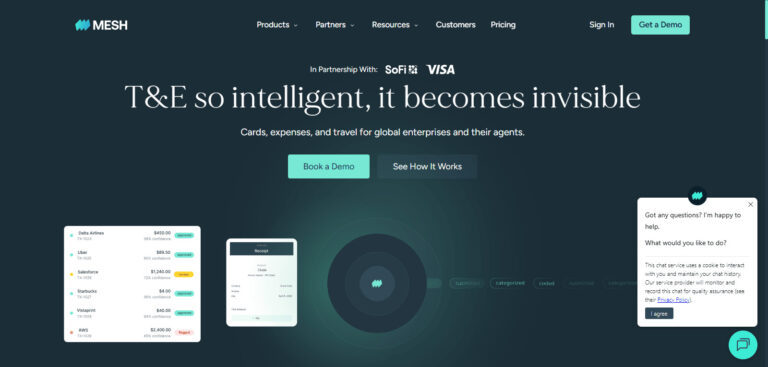
Hybrid custody has a MPC based wallet with spend controls. Their supported blockchains include Ethereum, Solana, and Polygon. Stablecoins currently offered are USDC, USDT, and EUROC.
Mesh focuses on automation of corporate treasury, with offerings around stablecoin based spend control and workflows that can be implemented through programming logic. Their stablecoin orchestration also manages compliance and reliability for corporate treasury workflows.
Mesh Payments Features
- 2018, incorporation; stablecoin support in 2024.
- SaaS tiered pricing for corporate treasury.
- U.S. money service business (MSB) registration, corridor approvals for compliance.
- Hybrid custody with multi-party computation (MPC) with spend controls.
- Ethereum, Solana, Polygon, cover USDC, USDT, EUROC.
| Advantages | Disadvantages |
|---|---|
| Corporate treasury automation | Limited blockchain coverage |
| Hybrid custody with spend controls | Focused mainly on enterprises |
| US MSB compliance | Not ideal for DAOs or developers |
| SaaS pricing tiers | Higher cost for small businesses |
| Stablecoin-based spend management | Narrow stablecoin support vs peers |
8. Conduit
Launched in 2022, Conduit was created to provide an orchestration platform tailored to developers. Prices for this API are based on tiers designed for developers and enterprise teams. Regulatory partnerships provide compliance for fiat on/off ramp. Conduit’s custody solution uses programmable wallets.
There are non-custodial wallets. Wallets are programmable. Focus is on Ethereum, but Solana and some Layer 2 networks are covered. Support is for stable coins like USDC and USDT, as well as programmable corridor assets.
Conduit can automate treasury management and build programmable workflows. Conduit is the best choice for developer experience for both startups and enterprises designing their custom orchestration stacks.
Conduit Features
- Developer-first orchestration, 2022.
- API pricing for usage tiers.
- Regulatory compliance for partner fiat on/off ramps.
- Non-custodial with programmable wallets.
- Ethereum, Solana, Layer-2s, cover USDC, USDT
| Advantages | Disadvantages |
|---|---|
| Developer-first orchestration | Smaller compliance footprint |
| API-based pricing | Limited enterprise adoption |
| Non-custodial programmable wallets | Narrow corridor licensing |
| Multi-chain coverage (Ethereum, Solana, L2s) | Focused mainly on developers |
| Strong developer experience | Less suited for institutional custody |
9. Brale
Brale, founded in 2021, is a white-label stablecoin issuance and orchestration platform. Pricing is software as a service (SaaS) with two tiers: issuance and orchestration. Compliance includes the filing of US stablecoin issuance regulations.

Custody uses hybrid models with programmable wallets and controls for stablecoin issuance. Coverage for blockchains is the Ethereum, Solana, and Stellar networks. Support for stablecoins includes USDC, USDT, EUROC, and custom stablecoins.
Brale helps enterprises issue and orchestrate stablecoins with white-label solutions and programmable workflows. Their compliance depth also helps them build the trust of clients.
Brale Features
- White-label stablecoin and issuance platform, 2021.
- SaaS pricing tiers for issuance and orchestration.
- Regulatory filing for stablecoin issuance in the U.S. for compliance.
- Hybrid custody with programmable wallets.
- Ethereum, Solana, Stellar, cover USDC, USDT, EUROC, and custom assets.
| Advantages | Disadvantages |
|---|---|
| White-label stablecoin issuance | Limited blockchain coverage |
| US regulatory filings for issuance | Focused mainly on issuers |
| Hybrid custody with programmable wallets | Smaller enterprise adoption |
| Supports custom assets | Pricing higher for small projects |
| SaaS orchestration tiers | Less suited for DAOs or treasury teams |
10. Squads + Magna
Founded in 2022, Squads and Magna are the first platform builders for orchestration designed for Solana. Both utilize a usage-based payment model that divides customers into either DAOs or enterprises. Each of their compliance systems is designed specifically for the Solana ecosystem.

Custodial services are non-custodial and include automation for treasury management. For treasury management, Magna focuses on DAO automation, while Squads focuses on DAO treasury automation. Both combine to offer programmable automation, compliance, and orchestration for DAOs and enterprises on Solana.
Squads + Magna Features
- Founded in 2022, Solana‑native orchestration.
- Usage‑based pricing with DAO and enterprise tiers.
- Compliance ecosystem‑specific within Solana corridors.
- Non‑custodial custody with programmable treasury workflows.
- Coverage: Solana ecosystem; supports USDC (Solana), USDT, corridor assets.
| Advantages | Disadvantages |
|---|---|
| Solana-native orchestration | Limited to Solana ecosystem |
| DAO treasury automation | Narrow compliance footprint |
| Non-custodial programmable workflows | Not multi-chain |
| Usage-based pricing | Focused mainly on DAOs |
| Strong distribution orchestration | Less suited for enterprises |
Conclusion
In conclusion, the stablecoin orchestration landscape of 2026 includes player types that include depth of compliance, custody innovation, and automation that can be programmed. Some players that currently market corner‑specific licenses and have global reach include Bridge by Stripe and BVNK.
Others that include reliability of execution and programmable workflows paint the stablecoin orchestration landscape of 2026 include Circle Programmable Wallets and Eco (Routes + Permit3). Fireblocks continues to dominate institutional custody. Conduit continues to dominate developer‑focused stablecoin orchestration and so does Halliday with its automation focus.
The reliable corporate treasury solutions continue to serve the stablecoin orchestration stakeholder community with the ability to move stablecoins in a compliant and secure manner across different blockchain networks and always at programmable precision include players such as Mesh Payments, Brale, and Solana native orchestration players such as Squads and Magna.
FAQ
What is a stablecoin orchestration platform?
A stablecoin orchestration platform is a system that automates, secures, and manages stablecoin flows across multiple blockchains. It handles treasury automation, compliance, custody, and programmable workflows for enterprises, PSPs, and DAOs.
Which platform is best for compliance?
Bridge by Stripe and BVNK lead in compliance, with corridor‑specific licensing, MiCA CASP approval, and US MSB/MTLs. They are ideal for enterprises needing global regulatory coverage.
Which platform offers the strongest custody model?
Fireblocks dominates custody with MPC‑based institutional controls, SOC 2 Type II, and ISO 27001 certifications. It is the preferred choice for banks and large fintechs.
Which is best for programmable workflows?
Eco (Routes + Permit3) and Halliday excel in programmable automation, offering intent‑driven workflows, gas abstraction, and atomic execution for treasury teams.
Which platforms support multi-chain orchestration?
Circle Programmable Wallets, Conduit, and Bridge by Stripe provide broad blockchain coverage, including Ethereum, Solana, Polygon, Avalanche, and Layer‑2 networks.