

This article reviews the Best Gasless Web3 Crypto Swap Platforms that are making waves in how we conduct decentralized trading. These services simplify trading with features like account abstraction, relays, and intent-based swaps, allowing users to trade without having the native gas token on hand. I will break down all the features, pros, cons, and how they are changing how we interact with Web3.
- Why Choose Gasless Web3 Crypto Swap Platforms
- Key Point
- 1. Biconomy Hyphen
- Characteristics:
- Benefits:
- Drawbacks:
- 2. Zerion Gasless Swap
- Characteristics:
- Benefits:
- Drawbacks:
- 3. Safe (ex‑Gnosis Safe) Gasless Router
- Characteristics:
- Benefits:
- Drawbacks:
- 4. OpenOcean Gasless
- Characteristics:
- Benefits:
- Drawbacks:
- 5. dYdX v4 Gasless
- Characteristics:
- Benefits:
- Drawbacks:
- 6. UniswapX Gasless
- Characteristics:
- Benefits:
- Drawbacks:
- 7. 1inch Fusion Gasless
- Characteristics:
- Benefits:
- Drawbacks:
- 8. Symbiosis Gasless Router
- Characteristics:
- Benefits:
- Drawbacks:
- 9. Orbiter Finance Gasless
- Features:
- Benefits:
- Drawbacks:
- 10. Polygon zkEVM Gasless Swap
- Features:
- Benefits:
- Drawbacks:
- Conclusion
- FAQ
Why Choose Gasless Web3 Crypto Swap Platforms
No Compulsory Holding Of Gas Tokens: Web3 gasless crypto swap platforms don’t require having ETH, MATIC, BNB, or any other token that is native to their blockchain. Swaps can be done without the burden of having to buy and manage gas currencies on different blockchain networks.
Smooth User Experience: These platforms simplify decentralized trading by lowering the technical barriers. In this swap, the user only approves the transaction while relayers, fillers, or paymasters cover the blockchain fee carrying out the transaction in the background to offer a user experience comparable to financial application.
Improve Web3 Adoption: High gas fees on Ethereum, as well as other DeFi platforms, have been a major barrier to mass adoption. Gasless swap solutions eliminate this barrier, allowing blockchain applications to be more approachable to beginners, businesses and everyday crypto users.
Convenient Multi-Chain Trading: Many gasless swap solutions enable users to perform trading operations across multiple blockchains, even if they don’t have gas balance on all the blockchains.
Lower Operational Complexity: Web3 gasless platform automate smart contract-based trading to reduce operational complexities, leading to reduced failure in transactions and confusion in blockchain fee calculation.
Increased Capital Efficiency: Traders can keep their capital invested where it is most productive rather than keeping small gas balance on every blockchain network to meet gas fees.
Key Point
| Platform | Best For | Key Features |
|---|---|---|
| Biconomy Hyphen | Multi‑chain swaps | Meta‑transactions, sponsored gas, cross‑chain liquidity |
| Zerion Gasless Swap | Retail DeFi users | Gasless ERC‑20 swaps, wallet‑native UX |
| Safe (ex‑Gnosis Safe) Gasless Router | Institutional custody | Gasless multisig swaps, compliance modules |
| OpenOcean Gasless | Aggregated liquidity | Gasless routing across CEX + DEX pools |
| dYdX v4 Gasless | Derivatives traders | Gasless perpetual swaps, ZK rollup execution |
| UniswapX Gasless | DeFi liquidity seekers | Intent‑based swaps, off‑chain gas sponsorship |
| 1inch Fusion Gasless | High‑volume traders | Gasless limit orders, MEV‑resistant execution |
| Symbiosis Gasless Router | Cross‑chain swaps | Gasless bridging + liquidity aggregation |
| Orbiter Finance Gasless | L2 retail traders | Gasless rollup swaps, fast bridging |
| Polygon zkEVM Gasless Swap | Ethereum scaling | ZK proofs, gasless ERC‑20 swaps |
1. Biconomy Hyphen
The Biconomy Hyphen product offers infrastructure to enable seamless gasless Web3 swaps. Their solution eliminates the need for users to hold a blockchain’s native token for economic gas fees. Biconomy Hyphen uses account abstraction, relayers, and gas sponsorship mechanisms to accomplish easier swapping.
By integrating their APIs and SDKs, developers can allow their DeFi apps, wallets, and dApps to perform swaps without the need for users to worry about MATIC, ETH, or other fees for the different blockchains.
The platform offers cross-chain movement of liquidity and eases Web3 onboarding as it offers services that decrease complexity of transactions. Biconomy can take care of the gas completely or enable users to pay the swap fee using the token being swapped.
Characteristics:
- Gasless Transaction Infrastructure: Relayers and account abstraction technologies enable developers to build gas-free Web3 applications.
- Cross-Chain Support: Asset transfers across different blockchain networks.
- Developer-Friendly APIs: SDKs and APIs for integrating gasless swaps in dApps and wallets.
- Transaction Sponsorship: Paymaster solutions where applications sponsor user gas fees.
- Improved User Experience: Users no longer have to maintain native tokens for each network.
Benefits:
- Reduces friction for onboarding new Web3 users.
- Scalable DeFi and wallet applications.
- Faster and better transaction execution.
- Web2-like UX in blockchain.
- Increases adoption of decentralized applications.
Drawbacks:
- Gas sponsorship relies on available relayer infrastructure.
- Integration may require advanced technical knowledge.
- Gas costs may be present, but indirect.
- Limited support for blockchain networks.
- Relayer dependency creates risks of an unexpected execution.
2. Zerion Gasless Swap
Zerion Gasless Swap aims to make DeFi trading simple through wallet based swaps, solving the issue of users not having to concern themselves with gas token management.
Zerion employs smart routing technology which seeks out the best trading paths on the supported decentralized exchanges while reducing friction on transactions. The gasless approach is designed to make it easy to interact with Web3 assets, including beginners who may not hold native tokens on every chain.
The platform combines portfolio management, wallet tracking, and DeFi swapping with a unified interface, making it convenient for users to enjoy a unified Web3 platform. Zerion gas abstraction technology provides a smooth trading crypto environment.
Characteristics:
- Wallet-Based Gasless Trading: Allows users to swap assets without manually managing gas tokens.
- Integrated DeFi Portfolio: Combines wallet management, portfolio tracking, and swapping features.
- Smart Swap Routing: Finds efficient routes across decentralized liquidity sources.
- Multi-Chain Compatibility: Supports various blockchain ecosystems.
- Beginner-Friendly Interface: Designed for simple Web3 asset management.
Benefits:
- Simplifies crypto swaps for beginners.
- Eliminates gas token management complexity.
- Provides all-in-one wallet and DeFi features.
- Improves accessibility of decentralized trading.
- Offers convenient portfolio monitoring.
Drawbacks:
- Gasless features may not support all tokens.
- Swap fees can vary depending on routes.
- Less suitable for advanced professional traders.
- Depends on third-party liquidity sources.
- Limited customization compared with advanced DEX tools.
3. Safe (ex‑Gnosis Safe) Gasless Router
Safe’s Safe Gasless Router enables the trading of digital assets via swaps, executed with smart contract wallets, with the capability of being gasless for the end user. Before a rebranding exercise, Safe was known as Gnosis Safe.
Safe thus enables the automation of advanced transactions in multisig wallets. Safe’s system enables users to execute swaps and approvals by relayers or sponsored transactions without the need for them to bear network fees.
The solution is particularly relevant for companies in Web3, DAOs, and institutional clients, for their asset management. Safe’s smart wallet framework is designed to simplify transactions and heighten security. With Safe’s framework, companies can implement DeFi swaps to their employees without forcing them to hold native balances.
Characteristics:
- Secure multi-signature wallet technology
- Secure multi-signature wallet technology
- Uses relayers to execute transactions without direct gas payments
- Provides approval systems and permission management
- Enables recurring and programmable transactions
Benefits:
- High security for large crypto holdings
- Ideal for DAOs and businesses
- Reduces operational complexity
- Provides strong transaction approval mechanisms
Drawbacks:
- More complex for beginner users
- Multi-signature approvals can slow transactions
- Mainly focused on organizations rather than casual traders
- Requires wallet setup knowledge
- Gasless availability depends on supported integrations
4. OpenOcean Gasless
OpenOcean Gasless uses its DEX aggregation technology to provide users with optimized crypto trading with swaps that are gas efficient. Being a cross-chain liquidity aggregator, OpenOcean searches a number of decentralized exchanges to find the most competitive swap rates.
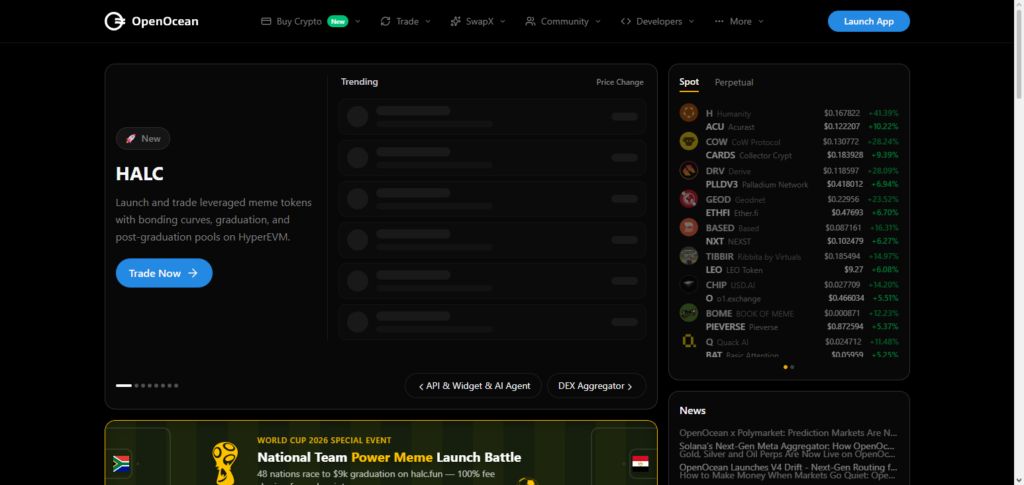
OpenOcean’s gasless technology integrates transaction optimization and third-party execution mechanism to minimize the need for users to hold tokens specific to a network. As a cross-chain trading platform for liquidity optimization and efficient routing, OpenOcean offers the trader the convenience of managing gas balances across multiple chains.
Characteristics:
- DEX Aggregation Technology: Combines liquidity present on multiple DEXs.
- Efficient Swap Routing: Determines optimal paths that minimize slippage.
- Multi-Chain Support: Uses different blockchain networks.
- API Integration: Gasless swaps are provided through API calls.
- Liquidity Comparison Engine: Searches for the best prices across different sources.
Benefits:
- Competitive swap fees.
- Reduced complexity in transactions.
- Works with many blockchain networks.
- Provides services to make it easier to integrate DeFi Swaps.
- Increases trading efficiency.
Drawbacks:
- Final prices may be affected by how much liquidity is available.
- Gasless options are different on each network.
- Smart routing creates more complex execution.
- Not all tokens get the optimal routing.
- Users may still incur costs.
5. dYdX v4 Gasless
dYdX v4 Gasless’s architecture provides a more optimized trading experience with a decentralized perpetual exchange. dYdX v4 resides on the Cosmos network, providing users the ability to trade outside of traditional Ethereum gas models, resulting in a trading environment with significantly reduced gas costs.

With an off-chain order book and a decentralized validator network, dYdX v4 is designed to offer a gasless experience to its users, therefore providing professionals the ease to execute their trades without worrying about gas costs.
dYdX v4 aims to establish itself as a premier derivatives trading venue. It achieves this by combining deep order books, rapid transaction execution, customer-centric service, and low-friction decentralized trading services that surpass the competition in traditional centralized markets.
Characteristics:
- Decentralized Derivatives Exchange
- Cosmos-Based Infrastructure
- High-Speed Trading Engine
- Order Book Model
- Reduced Gas Dependency
Benefits:
- Created for professional traders.
- Has better liquidity than most exchanges.
- Offers quicker execution.
- Has gas cost reductions.
- Retains decentralized exchanges.
Drawbacks:
- Lacks simple swap options.
- Is complex.
- Has limited spot trading options.
- Need for understanding perpetual markets.
- Has the risks of a decentralized platform.
6. UniswapX Gasless
SwapX Gasless is an improved version of how decentralized exchanges are less convenient. In that, instead of making transactions and paying gas fees, users sign swap intents which are filled by third parties.
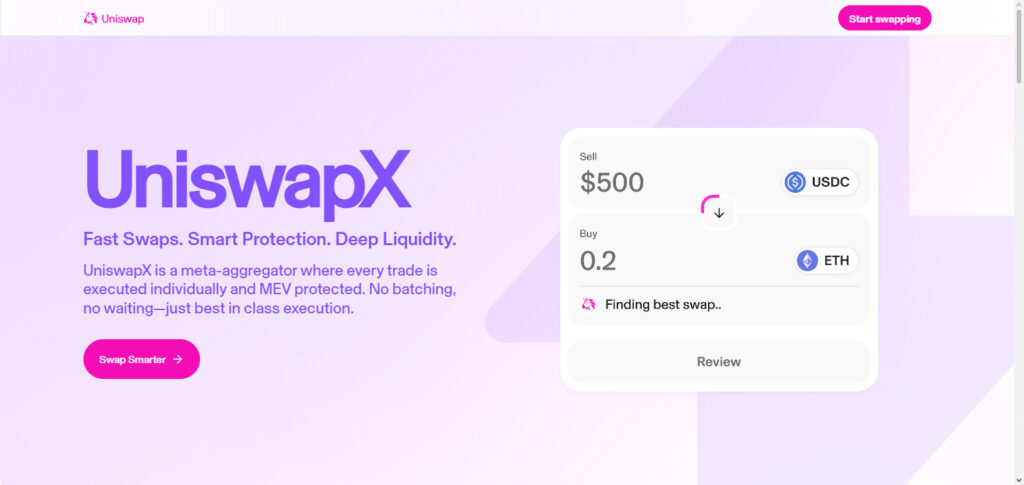
These competing entities pay the transaction gas, and users can trade with no need to maintain a position in the gas token. Users are able to trade more effectively with improved routing options, additional liquidity, and market execution protection from certain types of MEV.
The SwapX protocol is a significant improvement over how swapping tokens is done. It is also easier for beginners and advanced users of DeFi by separating user intent from transaction execution.
Characteristics:
- Intent-Based Trading Model: Users sign swap requests instead of submitting transactions directly.
- Third-Party Fillers: Professional executors complete swaps and handle gas fees.
- MEV Protection Features: Helps reduce certain transaction manipulation risks.
- Competitive Order Execution: Fillers compete for better execution.
- Liquidity Expansion: Connects multiple liquidity sources.
Benefits:
- Users can swap without holding gas tokens.
- Provides improved trading convenience.
- Reduces transaction complexity.
- Offers competitive swap execution.
- Enhances DeFi accessibility.
Drawbacks:
- Depends on filler participation.
- Execution quality varies by market conditions.
- Limited availability for some assets.
- Smart contract risks remain.
- Users may pay hidden execution costs.
7. 1inch Fusion Gasless
One of 1inch’s mainstays in gasless system offerings, 1inch Fusion Gasless executes trades on users’ behalf through an intent-based system. Here, resolvers cover the gas costs incurred in trade, and users are required to sign an order. Users are able to execute gasless swaps by utilization of the Dutch auction.
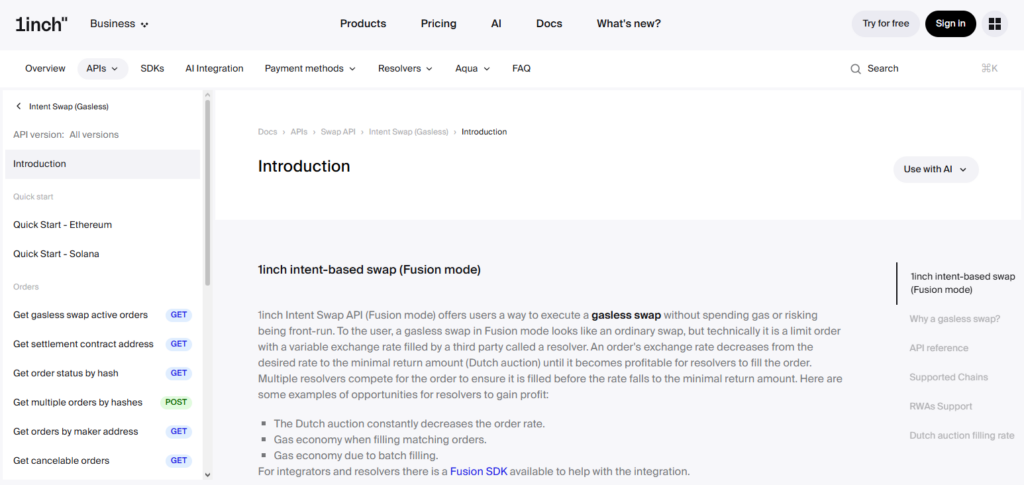
Fusion increases system security by eliminating front-running and sandwich attacks and protecting its users from first-rank execution. Fusion also aims to provide the best trading rates by providing fast access to multiple trading pools and liquidity sources and allowing users to trade in a gasless fashion.
Characteristics:
- Resolver-Based Swap System: Professional resolvers execute user orders.
- Gas-Free Trading: Users do not directly pay blockchain gas fees.
- Dutch Auction Mechanism: Helps achieve competitive swap prices.
- DEX Aggregation: Connects multiple liquidity providers.
- MEV Protection: Reduces risks from front-running attacks.
Benefits:
- No requirement for native gas tokens.
- Provides optimized swap rates.
- Protects users from certain MEV attacks.
- Offers efficient liquidity access.
- Suitable for advanced DeFi users.
Drawbacks:
- Depends on resolver availability.
- Fusion mode may not support every token pair.
- Execution speed depends on market conditions.
- Requires understanding of intent-based swaps.
- Pricing may differ from direct DEX swaps.
8. Symbiosis Gasless Router
Symbiosis Gasless Router simplifies cross-chain swaps through an integrated user interface for swapping tokens across multiple blockchain networks. Users do not have to worry about coordinating multiple transactions for a single swap, nor do they need to manage gas tokens across various networks.
The router searches the liquidity pools for the best possible transaction route. Symbiosis aims to provide its users with the best possible user experience when traversing different blockchain networks. Improvementsin cross-chain interoperability include combining automated routing with gas-optimized transactions.
This router makes swapping assets between the networks of Polygon, BNB Chain, and others to the Ethereum network smoother, while also improving the overall experience of the Web3 ecosystem.
Characteristics:
- Cross-Chain Swap Infrastructure: Enables token exchanges between different blockchains.
- Unified Trading Interface: Simplifies multi-chain transactions.
- Liquidity Routing System: Finds available liquidity across networks.
- Gas Optimization Technology: Reduces the need for multiple gas tokens.
- Multi-Network Support: Connects various blockchain ecosystems.
Benefits:
- Simplifies cross-chain transactions.
- Saves time and reduces complexity.
- Helps users avoid multiple gas purchases.
- Supports broader blockchain interoperability.
- Provides convenient asset movement.
Drawbacks:
- Cross-chain bridges involve security risks.
- Supported networks may be limited.
- Liquidity can affect swap quality.
- Transaction speeds vary between chains.
- Bridge dependency creates additional risks.
9. Orbiter Finance Gasless
Orbiter Finance Gasless looks to simplify inter-blockchain asset transfers while focusing on the complexity of transactions. They provide means to transfer assets between Ethereum-based rollups and the Layer 2 ecosystem.
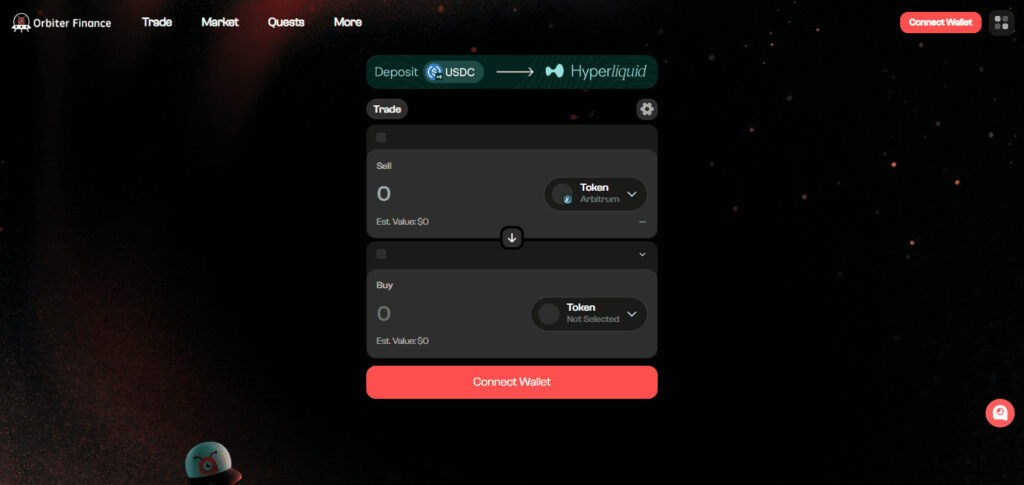
One of the goals of Orbiter Gasless is to lessen user interactions by reducing the need to use several native gas tokens in cross-chain transactions. The architecture of Orbiter Gasless uses fast, low cost, cross-chain transfers that use a decentralized bridge, which is in stark contrast to more traditional high cost cross-chain bridge systems.
This system is focused on the Ethereum ecosystems and users of the scaling networks that use diverse ecosystems but need to quickly and cheaply move assets between networks.
Features:
- Layer 2 Bridge Solution: Facilitates transfers between Ethereum rollups.
- Fast Cross-Rollup Transactions: Allows quick movement of assets.
- Low-Cost Transfers: Uses scalable networks for cheaper transfers.
- Ethereum Ecosystem Focus: Covers diverse Layer 2 networks.
- Easy To Use Interface: For simple transfers.
Benefits:
- Makes Layer 2 transfers hassle-free.
- Decreases blockchain congestion.
- Supports the scaling of the Ethereum ecosystem.
- Offers faster cross-rollup transfers.
- Has an easy to use interface.
Drawbacks:
- Is focused mainly on Ethereum-based networks.
- Hazards due to bridge security persist.
- Limited token support in comparison to major DEXs.
- Liquidity depends on the available routes.
- Not designed for complex trading strategies.
10. Polygon zkEVM Gasless Swap
Polygon’s zkEVM Gasless Swap relies on zkRollups for gas abstraction, leading to lower cost and simpler token swapping. Polygon zkEVM uses zkRollups to keep Ethereum agreements while lowering transaction fees.

Gasless swaps on Polygon zkEVM provide users with decentralized application interaction with no need to pay MATIC for gas fees. This improves both the user experience and the app onboarding process for Web3 applications looking for gasless trading solutions, because now easy-to-use DeFi applications streamline the swapping process.
The platform improves gasless trading with faster transaction execution and block confirmations, Ethereum-level security, and scalability for transactions.
Features:
- ZK Rollup Technology: Employs zk proofs for Ethereum transaction scaling.
- Compatibility With Ethereum: Uses existing Ethereum tools and smart contracts.
- Abstraction of Gas: Reduces reliance on MATIC payments.
- Low Transaction Fees: Offers lower interaction costs with the blockchain.
- Developer Focused: Supports the development of scalable DeFi applications.
Benefits:
- Facilitates faster and cheaper swaps.
- Retains security features of Ethereum.
- Eases the onboarding of users to Web3.
- Supports the development of scalable dApps.
- Simplifies gas management.
Drawbacks:
- Still under early adoption.
- Lower liquidity in comparison to the Ethereum mainnet.
- Not all applications are fully compatible.
- Users may experience bridging problems.
- Still relatively new technology in comparison to L2 networks.
Conclusion
Gasless Web3 crypto swap platforms are making fundamental changes in the trading of blockchain-based assets by reducing one of the most challenging barriers of blockchain adoption, sophisticated management of gas fees.
Account abstraction, relayers, and intent-based transactions offer smoother platforms and user experiences for swapping tokens to users without the requirement to manage gas balances and are more efficient and secure. DeFi will continue to grow and throughout its advancement one of the main supporting technologies will be gasless swaps.
They are laying the groundwork for blockchain trading to become accessible and adaptable in multiple ecosystems for mainstream adoption. The technology will also make Web3 trading more suitable for beginners.
FAQ
What Are Gasless Web3 Crypto Swap Platforms?
Gasless Web3 crypto swap platforms are decentralized trading solutions that allow users to exchange tokens without directly paying blockchain network fees. Instead of users submitting transactions and paying gas with native tokens like ETH, MATIC, or BNB, these platforms use relayers, fillers, paymasters, or intent-based systems to handle transaction execution costs. This removes the need to maintain gas balances across multiple networks and creates a smoother DeFi trading experience.
How Do Gasless Crypto Swaps Work?
Gasless swaps work by allowing users to sign a transaction request or swap intent instead of directly broadcasting an on-chain transaction. A third-party executor, such as a relayer or solver, processes the transaction and covers the required gas fees. The cost is usually managed through the swap rate, protocol incentives, or sponsored transactions. This mechanism simplifies trading by reducing wallet management requirements and improving user onboarding.
What Are the Best Gasless Web3 Crypto Swap Platforms?
Some of the leading gasless Web3 crypto swap platforms include Biconomy Hyphen, UniswapX, 1inch Fusion, OpenOcean Gasless, Zerion Gasless Swap, Safe Gasless Router, dYdX v4, Symbiosis Gasless Router, Orbiter Finance, and Polygon zkEVM Gasless Swap. Each platform uses different approaches such as account abstraction, liquidity aggregation, intent-based trading, or cross-chain routing to reduce gas-related friction.
Is Biconomy Hyphen a Gasless Swap Platform?
Yes, Biconomy Hyphen provides infrastructure that helps Web3 applications offer gasless transactions through relayers and account abstraction technology. It allows developers to integrate sponsored transactions, enabling users to interact with DeFi applications without holding native blockchain tokens for gas payments. Biconomy is mainly focused on powering gasless experiences for wallets, dApps, and Web3 platforms.
How Does UniswapX Provide Gasless Swaps?
UniswapX enables gasless swaps through an intent-based trading model where users sign swap requests instead of paying gas directly. Third-party fillers execute these orders on-chain while covering transaction costs. This system helps users avoid managing native gas tokens and improves swap execution through competitive order fulfillment. UniswapX also focuses on better routing and reducing certain MEV-related risks.


