


This article will cover the top Crypto Exchange Aggregators of 2026. Many DeFi projects have focused on finding solutions to access better liquidity, especially across different blockchain networks, and minimize ‘sandwich attacks’ by advancing innovations in cross-chain and MEV.
- What Are Crypto Exchange Aggregators?
- How Crypto Exchange Aggregators Work
- Liquidity Scanning
- Smart Order Routing
- Unified Market Access
- Slippage and Fee Optimization
- API Integration
- Key Points
- 1. ChangeNOW
- ChangeNOW Features
- 2. Changelly
- Changelly Features
- 3. OKX DEX
- OKX DEX Features
- 4. Jupiter
- Jupiter Features
- 5. 1inch
- 1inch Features
- 6. CowSwap
- CowSwap Features
- 7. ParaSwap
- ParaSwap Features
- 8. 0x Matcha
- 0x Matcha Features
- 9. OpenOcean
- OpenOcean Features
- 10. Odos
- Odos Features
- Conclusion
- FAQ
Several crypto aggregators have emerged, mainly Centralized and Decentralized Exchanges, which offer swap services. Each type of aggregator has its pros and cons, and users should be mindful of the risks when swapping on DeFi. This article is a resource to assist users in finding the safest and most effective swap services to participate in DeFi.
What Are Crypto Exchange Aggregators?
Crypto exchange aggregators provide users with a single platform to access various cryptocurrency exchanges. These aggregators automatically check and compare the best available rates across connected centralized and decentralized exchanges.
These aggregators provide an estimate of the cost to transfer the cryptocurrency, including the cost of the transaction, gas and the expected slippage. Decentralized exchange aggregators can break up a user’s order across different liquidity pools to reduce slippage.
Centralized exchanges use order books to provide depth and limit orders. Some aggregators also provide order books and limit orders. Other features of aggregators include MEV protection, a fiat on ramp, and a software development kit.
Crypto exchange aggregators provide users the best available rates to transfer cryptocurrencies and reduce the complexity of using multiple exchanges. This is why cryptocurrency aggregators are one of the most widely used cryptocurrency applications in 2026.
How Crypto Exchange Aggregators Work
Liquidity Scanning
Aggregators look at order books across all connected platforms to find the best place to execute an order.
Smart Order Routing
An order is split into several parts and sent to different trade execution venues. The order is then recombined to form the final order.
Unified Market Access
Through aggregators, clients are provided with the total order book depth of all connected liquidity pools.
Slippage and Fee Optimization
Aggregators give clients the opportunity to trade digital tokens in an atmosphere of low slippage and latency.
API Integration
Aggreators provide APIs to various institutions to help clients program trading strategies.
Key Points
| Aggregator | Type | Key Strengths | Supported Chains | Unique Feature |
|---|---|---|---|---|
| ChangeNOW | CEX Aggregator | Instant swaps, no account needed | BTC, ETH, USDT, 900+ assets | Non-custodial fiat gateway |
| Changelly | CEX Aggregator | Simple UI, fixed/floating rates | BTC, ETH, BNB, 500+ assets | Integrated wallet support |
| OKX DEX | Hybrid Aggregator | Deep liquidity, cross-chain swaps | Ethereum, Solana, Polygon, BSC | CEX + DEX liquidity routing |
| Jupiter | DEX Aggregator | Best Solana liquidity | Solana ecosystem | Advanced routing & MEV protection |
| 1inch | DEX Aggregator | Multi-chain routing, low slippage | Ethereum, BSC, Polygon, Arbitrum | Pathfinder algorithm |
| CowSwap | DEX Aggregator | MEV protection, batch auctions | Ethereum, Gnosis Chain | Gasless trading via CoW protocol |
| ParaSwap | DEX Aggregator | Professional-grade API, liquidity depth | Ethereum, Polygon, Avalanche | Optimized for institutional traders |
| 0x Matcha | DEX Aggregator | Clean UI, broad liquidity | Ethereum, Polygon, BSC | Smart order routing |
| OpenOcean | Hybrid Aggregator | CEX + DEX coverage | Ethereum, BSC, Solana, Tron | Cross-chain interoperability |
| Odos | DEX Aggregator | Advanced pathfinder, multi-hop swaps | Ethereum, Arbitrum, Optimism | Customizable routing engine |
1. ChangeNOW
ChangeNOW is a non-custodial cryptocurrency exchange that launched in 2017. Unlike traditional cryptocurrency exchanges that charge customers based on the volume traded, ChangeNOW charges a spread-based fee, which results in lower fees for customers. ChangeNOW have both fixed and floating rates.
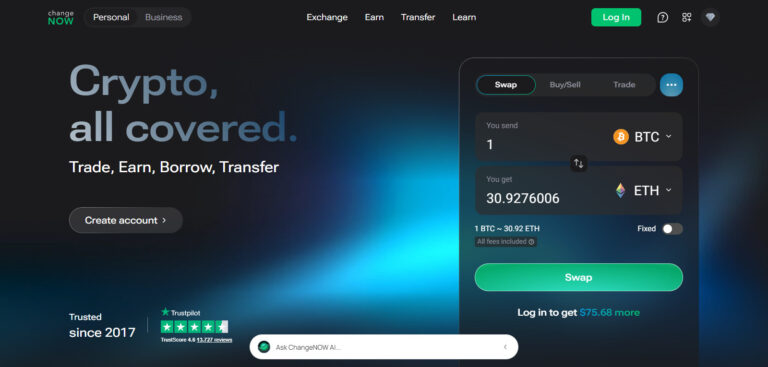
Fix rates are mainly used for large transactions. ChangeNOW supports hundreds of cryptocurrencies, and can be integrated with numerous other exchanges. ChangeNOW provides a card and bank purchase options, as well as several APIs.
ChangeNOW is considered the best cryptocurrency aggregator for retail customers because it is very fast and has a non-custodial model, which means customers do not need to create an account to use the service.
ChangeNOW Features
- Launched in 2017 as a non-custodial instant cryptocurrency swap service.
- Flexible fees structure.
- Over 900 supported assets.
- Employs centralized liquidity to route swaps.
- Provides a merchant and payment API.
| Pros | Cons |
|---|---|
| Non‑custodial instant swaps | Limited to CEX liquidity |
| Supports 900+ assets | Spread‑based fees |
| No account required | Less transparency in pricing |
| Fiat gateway integration | No advanced routing |
| Fast execution | Fewer institutional tools |
2. Changelly
Launched in 2015, Changelly is an aggregator that has established a reputation for swift exchanges between over 500 digital tokens. Embedded within the exchange rate is a fee typically around 0.25%. Float and fixed rates are offered to users. Like ChangeNOW, its supported venues consist of large centralized exchanges.
To facilitate trades, Changelly connects to several order books. Fiat is incorporated to provide bank and card purchases to further increase the user experience. Because of its extensive partner liquidity venues and user friendliness, Changelly continues to gain and retain users.
Changelly Features
- Established in 2015 as one of the first crypto exchange aggregators.
- Fee between 0.25% and 0.26%.
- Suppports over 500 assets across various centralized exchanges.
- Employs order routing.
- Widely used by wallets and related services.
| Pros | Cons |
|---|---|
| Established since 2015 | Higher embedded fees (~0.25%) |
| Beginner‑friendly UI | Limited DEX access |
| Supports 500+ assets | Slower execution vs DEXs |
| Fixed & floating rates | No MEV protection |
| Wallet integrations | Fewer supported chains |
3. OKX DEX
Launched in 2017 as part of OKX’s ecosystem, OKX DEX has since built a multi-chain, cross-bridge DEX aggregator. Along with accessing several DEXs and coordinating swaps across multiple DEXs, OKX DEX provides access to several CEXs, including OKX. OKX DEX offers users swaps with varying CEX and DEX orders, which offers better pricing and liquidity.
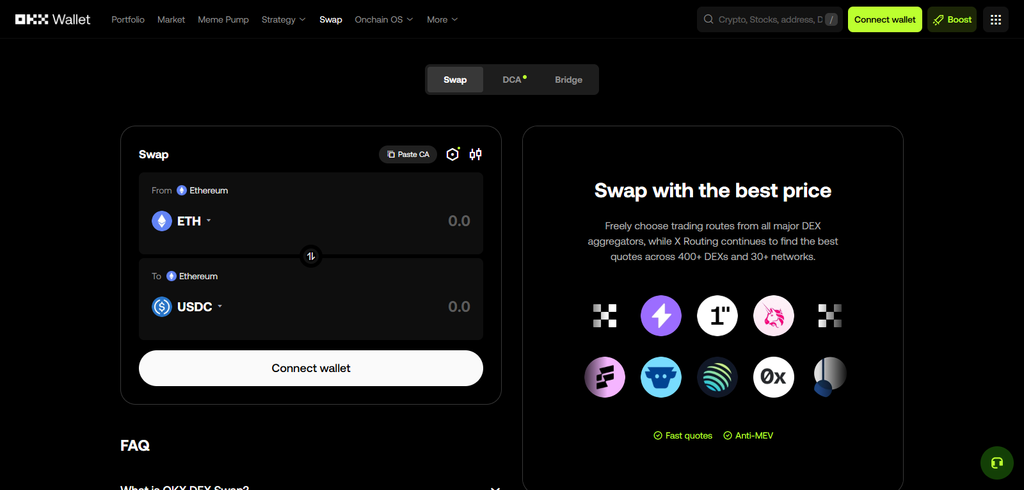
OKX DEX’s API allows businesses to integrate OKX DEX and other services into their business, and has capabilities for developing trading bots. OKX DEX’s multi-chain support makes it a premier platform for decentralized swapping in 2026.
OKX DEX Features
- 2017 launch.
- Centralized exchange (CEX) and a decentralized exchange (DEX) aggregator.
- Supports cryptocurrencies on the Ethereum, BSC, Polygon and Solana networks.
- CEX order routing and DEX liquidity.
- Provides an institutional-grade API.
| Pros | Cons |
|---|---|
| Hybrid CEX + DEX liquidity | Gas costs apply |
| Deep liquidity pools | Centralized dependency |
| Cross‑chain swaps | Complex UI for beginners |
| Institutional‑grade API | Limited non‑OKX venues |
| Strong brand backing | Higher learning curve |
4. Jupiter
Starting in 2021, Jupiter has been the first and only Solana DEX aggregator. Because of Solana’s low gas fees, Jupiter is able to charge even less for trades than other DEXs. Because it aggregates all major Solana DEXs, Jupiter is the most convenient and cheapest option to trade in the Solana ecosystem.

Jupiter’s advanced routing algorithms automatically finds the best and most efficient method to route an order across multiple liquidity pools. Jupiter uses MEV (maximum exchange utilized) to protect its users from front running bots.
This allows Jupiter to increase its overall trade execution. Because Solana is able to process thousands of transactions per second, coupled with Jupiter’s advanced order routing, it’s able to process the most Solana transactions of any aggregator in 2026.
Jupiter Features
- 2021 launch.
- Specializes in aggregating liquidity on the Solana network.
- Employs advanced routing.
- Supports wallets and automation.
| Pros | Cons |
|---|---|
| Solana’s leading aggregator | Solana‑only focus |
| Minimal fees | Limited cross‑chain support |
| Advanced routing | Reliant on Solana uptime |
| MEV protection | Fewer fiat options |
| Developer‑friendly API | Niche ecosystem |
5. 1inch
Launched in 2019, 1inch is a DEX aggregator that created its own algorithm called Pathfinder. Pathfinder is used to find the best path through multiple liquidity pools to ensure users get the best price while incurring the lowest slippage.
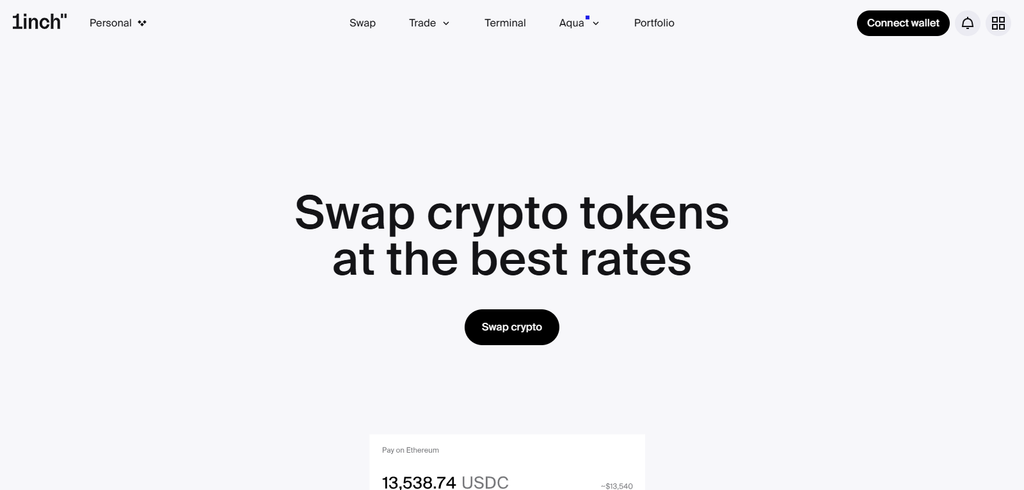
1inch supports multiple blockchains like Ethereum, BSC, Polygon, Arbitrum, and Optimism. Like other DEX aggregators, 1inch splits a user’s transaction across several liquidity pools to get the cheapest and best price.
Because of its advanced routing, developers often use 1inch’s more institutional-grade API. Because of its advanced technology, it continues to lead the charge in decentralized finance. 1inch will probably be used widely in 2026 and beyond.
1inch Features
- 2019 launch.
- Employs order routing across various networks.
- Supports Ethereum and other layer 2 networks.
- Path finding and order splitting.
- Provides an institutional API.
| Pros | Cons |
|---|---|
| Multi‑chain coverage | High gas costs |
| Pathfinder algorithm | Complex for beginners |
| DAO governance | Slippage risk in volatile pools |
| Institutional‑grade API | Requires wallet setup |
| Strong DeFi adoption | Limited fiat support |
6. CowSwap
Launched in 2021, CowSwap is a DEX aggregator that employs the CoW protocol. It offers low trading fees and uses batch auctions to limit the impact of gas fees and MEV. Currently, it supports auctions on Ethereum and Gnosis Chain.
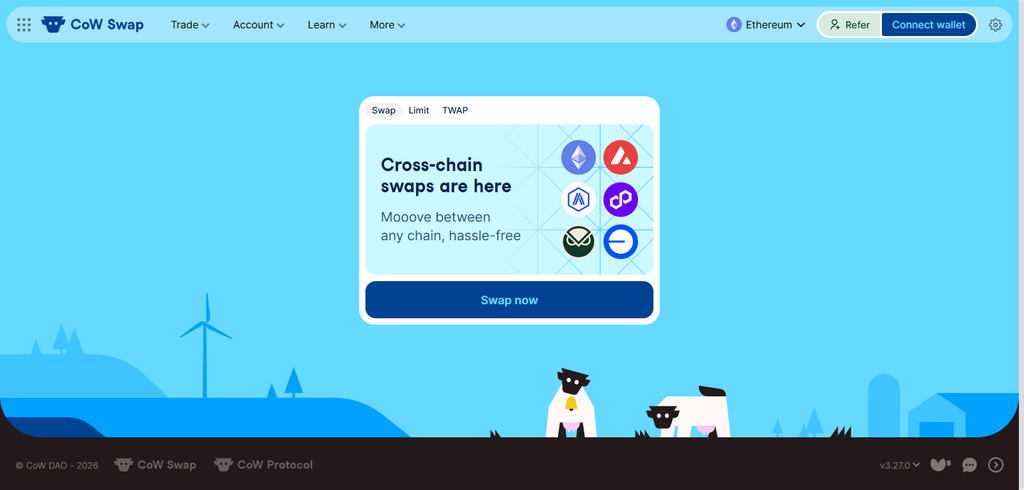
It performs trades on various pools and uses an on-chain matcher to fulfill trades at the same price. It is known for its gasless trades, where users conduct all trades off-chain.
Its API allows users to integrate wallets and bots. It employs various techniques to protect users from MEV and provides fair trades to users. In 2026, it was one of the most used protocols for users who wished to interact with the Ethereum network.
CowSwap Features
- 2021 launch.
- Routed batch settlement.
- Supports Ethereum and Gnosis.
- Employs advanced routing and MEV.
- Supports wallets and automation.
| Pros | Cons |
|---|---|
| MEV protection | Limited chain support |
| Gas‑efficient batch auctions | Slower batch execution |
| Fair pricing | Niche user base |
| Non‑custodial | No fiat options |
| Wallet/bot API support | Less liquidity depth |
7. ParaSwap
Launched in 2019, ParaSwap offers professional DEX aggregation services with low additional spread and gas costs. It offers institutional clients automated routing services to liquidity venues. The services are available on Ethereum, Polygon, Avalanche and BSC. Its aggregation services use sophisticated tech to reduce slippage.
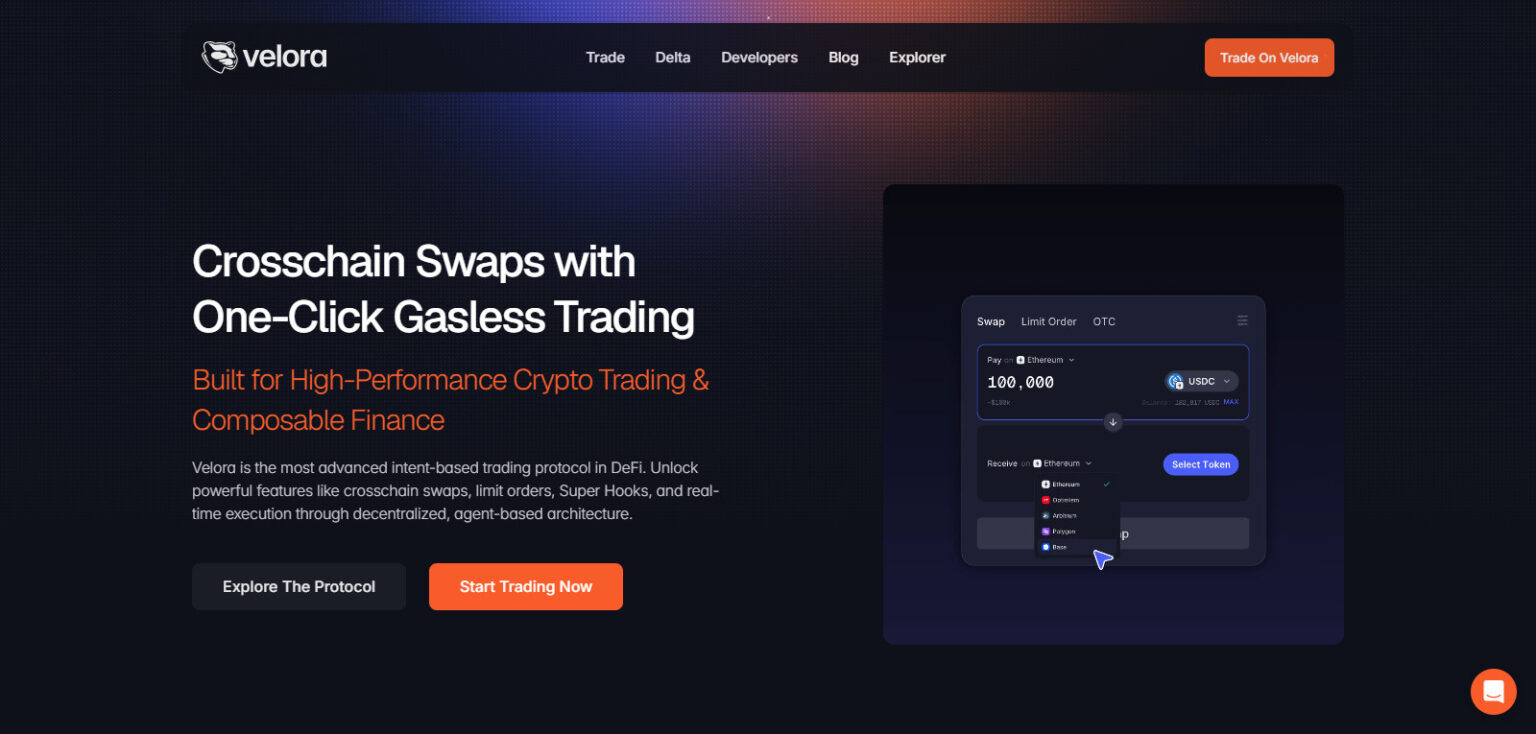
The company provides an enterprise API to the trading desk, bots and custodians. It has formed strategic partnerships with liquidity providers and has become one of the preferred aggregators for professional traders. Its key differentiators from retail oriented aggregators is its ability to provide trading services to institutions.
ParaSwap Features
- Founded: 2019, institutional‑focused aggregator
- Fees: Competitive spreads + gas costs
- Supported Venues: Ethereum, Polygon, Avalanche, BSC
- Aggregation Model: Optimized execution across venues
- API: Enterprise‑focused with advanced features
| Pros | Cons |
|---|---|
| Institutional‑grade API | Higher complexity |
| Deep liquidity | Gas costs |
| Multi‑chain support | Less beginner‑friendly |
| Advanced routing | Limited fiat support |
| Strong institutional adoption | Requires advanced knowledge |
8. 0x Matcha
Launched in 2020 as part of the 0x project, Matcha is an easy-to-use DEX aggregator.Matcha provides automated access to multiple DEXs and charges fees in the exchange rate. Users pay an additional gas fee. Matcha currently supports trading on Ethereum, Polygon, and BSC.
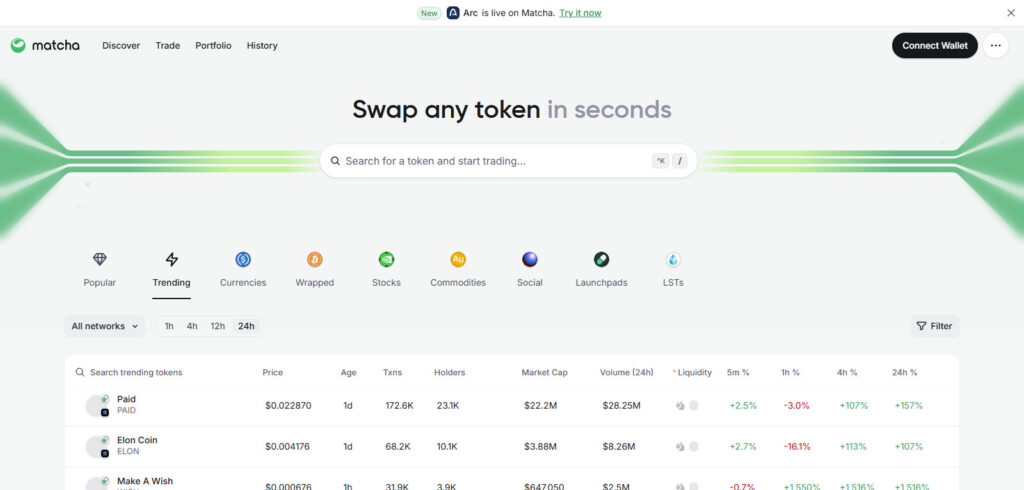
Matcha routes trading commands to the best DEX based on the trade criteria. The project’s simple, Web 2.0 inspired, user interface gives beginner traders a solid DEX option.
For more advanced traders, Matcha offers an application programming interface. The application has a strong focus on code and routing to provide the best trading experience for its users in 2026.
0x Matcha Features
- Founded: 2020, by 0x Team
- Fees: Rates + gas
- Supported Venues: Ethereum, Polygon, BSC
- Aggregation Model: Order routing
- API: Integration for wallets and apps
| Pros | Cons |
|---|---|
| Clean UI | Limited chain support |
| Broad liquidity access | Gas costs |
| Wallet integration | Fewer advanced tools |
| Simple experience | Less institutional focus |
| Backed by 0x protocol | Embedded fees |
9. OpenOcean
Launched in 2020, OpenOcean is a cross-exchange (CEX-DEX) liquidity aggregator. Like its competitors, OpenO Owen charges clients based on the venue it sources liquidity from, and contains spreads in its charges.
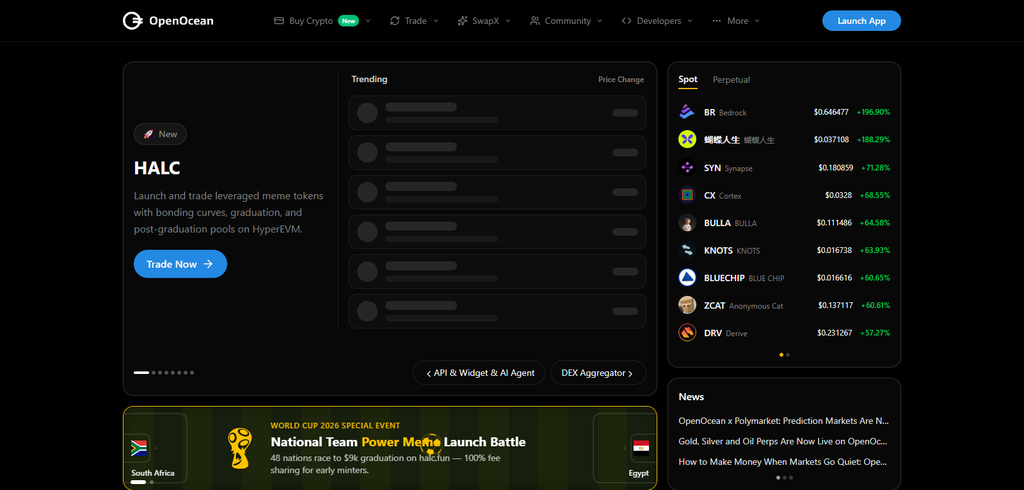
For the time being, OpenOcean supports the Ethereum, BSC, Solana, and Tron blockchains, as well as major centralized exchanges. OpenOcean’s proprietary tech integrates CEX order-taking with DEX order-routing to provide cross-chain payment swapping and trading.
It is the first liquidity aggregator to provide derivatives and futures. Its API is cutting edge and supports both the retail and institutional clientele. OpenOcean will continue to provide clients with access to both centralized and decentralized liquidity, making it the leading cryptocurrency liquidity aggregator.
OpenOcean Features
- Founded: 2020, hybrid CEX/ DEX Aggregator
- Fees: Variable
- Supported Venues: Ethereum, BSC, Solana, Tron, CEXs
- Aggregation Model: Cross-CEX and DEX aggregation
- API: Retail and Institutional
| Pros | Cons |
|---|---|
| Hybrid CEX + DEX model | Spread‑based fees |
| Multi‑chain coverage | Complex interface |
| Derivatives support | Centralized dependency |
| Versatile API | Slower execution |
| Retail + institutional use | No MEV protection |
10. Odos
Launched in 2022, Odos is an Ethereum-based DEX aggregator. Odos differentiates itself from its peers by charging execution fees and embedding them in trades, instead of adding fees on top of trades like other aggregators.

This means traders pay gas fees, but no additional fees. Currently, Odos supports Arbitrum and Optimism. Odos uses pathfinder algorithms to perform sophisticated routing. Like other aggregators, Odos allows traders to perform swaps across many pools.
Unlike other aggregators, Odos allows traders to choose between many swap path options and gives traders the ability to use bots and other automated integrations via APIs. Odos offers trader control and sophistication, especially for traders that wish to implement swap path strategies.
Odos Features
- Founded: 2022, next‑gen routing aggregator
- Fees: Embedded in execution + gas costs
- Supported Venues: Ethereum, Arbitrum, Optimism
- Aggregation Model: Multi‑hop customizable routing
- API: Developer‑friendly, supports custom integrations
| Pros | Cons |
|---|---|
| Next‑gen routing | Newer platform |
| Customizable swaps | Smaller liquidity base |
| Developer‑friendly API | Gas costs |
| Multi‑chain support | Advanced setup required |
| Efficient execution | No fiat support |
Conclusion
The 10 Best Crypto Exchange Aggregators for 2026 (ChangeNOW, Changelly, OKX DEX, Jupiter, 1inch, CowSwap, ParaSwap, 0x Matcha, OpenOcean, Odos) offer their customers the best possibilities for liquidity, cross-chain trading and transaction fee reduction.
These aggregators differ from each other by the swapping methods and interfaces they provide. Some provide swaps from a single CEX while others provide swapping methods and interfaces for multiple DEXs.
These aggregators help traders gain access to different markets and provide the necessary liquidity for swaps. The aggregators mentioned help traders achieve better slippage and fewer transaction costs. These aggregators are the future of decentralized cryptocurrency trading.
FAQ
What is a crypto exchange aggregator?
A crypto exchange aggregator is a platform that connects multiple exchanges (CEXs or DEXs) to provide the best rates, liquidity, and execution for swaps or trades.
Which aggregator is best for beginners?
Platforms like ChangeNOW and Changelly are beginner‑friendly due to simple UIs, instant swaps, and fiat gateways.
Which aggregator supports multi‑chain trading?
1inch, OpenOcean, and Odos excel at multi‑chain routing, supporting Ethereum, BSC, Polygon, Arbitrum, and more.
Do aggregators charge fees?
Yes. Most embed fees in exchange rates or spreads. DEX aggregators also require network gas fees.