


This article will examine the best accounts payable automation tools that assist companies in simplifying the processing of business invoices, workflow payments, manual error reduction, and overall financial function.
- What Are Accounts Payable Automation Tools?
- Why Choose Accounts Payable Automation Tools?
- Key Features of Accounts Payable Automation Tools
- Key Point & Best Accounts Payable Automation Tools
- 1. SAP Concur
- SAP Concur Features, Pros & Cons
- 2. Oracle NetSuite AP
- Oracle NetSuite AP Features, Pros & Cons
- 3. Tipalti
- Tipalti Features, Pros & Cons
- 4. Coupa Pay
- Coupa Pay Features, Pros & Cons
- 5. Stampli
- Stampli Features, Pros & Cons
- 6. AvidXchange
- AvidXchange Features, Pros & Cons
- 7. Basware
- Basware Features, Pros & Cons
- 8. Airbase
- Airbase Features, Pros & Cons
- 9. MineralTree
- MineralTree Features, Pros & Cons
- 10. Melio
- Melio Features, Pros & Cons
- Risks and Considerations of AP Automation Software
- Future Trends in Accounts Payable Automation
- Conclusion
- FAQ
These solutions incorporate elements of AI, automation, and integration in accounts payable. I will dive into the features, benefits, pricing, and choosing the right tool, while analyzing the pros and cons of each tool.
What Are Accounts Payable Automation Tools?
Accounts Payable Automation Tools simplify the Accounts Payable process. These tools manage everything from the capturing and validating processes of invoices to the approval and payment processes.
Tools of this nature utilize some advanced technologies like Artificial Intelligence (AI), Machine Learning (ML), and Optical Character Recognition (OCR) to automate data entry, decrease manual entry, and process finances at a quicker pace.
Using Accounts Payable Automation software helps businesses to interact and collaborate with their vendors more effectively, improve the accuracy of the invoices they process, control their cash flow, and ensure that they operate within the confines of their legal and financial obligations more easily and effectively than traditional manual accounting processes.
Why Choose Accounts Payable Automation Tools?
Lowers Labor Costs: Automation of tasks like invoice input, approval, and payment processing alleviates the burden of time-consuming tasks and allows the finance team to pursue other value-added activities.
Fast Invoice Processing: Delays due to manual workflows and paper-based systems are eliminated and the processing of invoice matching and approval is expedited.
Reduces Errors: Mistakes related to the data entry of invoices, duplicate receipts, and erroneous payments, as well as other AP-related tasks, are reduced through the use of AI and automation.
Better Cash Flow Forecasting: Improves cash flow forecasting due to automated AP, which provides better visibility into future cash outflows and liabilities.
Improved Security: Advanced automation and security features pinpoint duplicate payments, suspicious invoices, and atypical payment requests.
Greater Efficiency: Increased automation results in improved processes which allow companies to handle a high volume of invoices with less manpower.
Better Vendor Relations: Improved payment accuracy and speed helps companies achieve better vendor relationships.
Always Compliant and Audit Ready: Automated AP systems allow companies to be audit-ready and compliant due to the availability of digital approvals and audit trails of transactions.
Systems Friendly: Helps companies establish a payment management system that integrates with their ERP, accounting, and finance systems.
Automated Scalability: AP automation systems are scalable, allowing companies to handle a higher volume of invoices without the need to expand their operations.
Key Features of Accounts Payable Automation Tools
Automated Invoice Capture: Extracts invoice data from different formats and media using AI and Optical Character Recognition (OCR). This feature minimizes the manual data entry burden.
AI-Driven Invoice Processing: This feature improves processing speed and accuracy by judging and correcting the data.
Custom Automated Approval Workflows: Approval workflows can be set up based on business rules, specific departments, invoice amounts, or levels of authorization.
Automated Invoice Matching: Matches invoices to pay orders and receipts to validate and ensure correct payment.
Payment Automation: Simplifies the payment process by offering different payment methods, and reduces the risk of late payments.
Enhanced Vendor Management: Improves record maintenance, payment tracking, and communication with vendors.
Improved Reporting and Analytics: Offers a variety of dashboards and analytics for visibility to invoices, payments, spend patterns, and the activity of accounts payable.
Integration with Other Systems: Facilitates the use other business systems and financial applications by offering integrations with accounting, Enterprise Resource Systems, and Procurement Systems.
Fraud Prevention Features: Flags duplicate invoices and suspicious transactions.
Cloud-Based System: Web-based systems that allow finance teams to work remotely, while still accessing the accounts payable data.
Tax and Compliance Automation: Simplifies compliance and record keeping with financial documentation and audit trails.
Supplier Self-Service: Empowers suppliers to invoice, check the status of payments, and update their information, thus decreasing the manual workload.
Mobile Features: Allows remote invoice reviews and payment approvals via mobile or responsive systems.
Security and Data Protection: Safeguards sensitive financial data through encryption, user permissions, and authentication controls.
Key Point & Best Accounts Payable Automation Tools
| Platform | Key Strengths |
|---|---|
| SAP Concur | Expense + invoice automation, policy-based approvals, strong T&E integration |
| Oracle NetSuite AP | Native ERP integration, robust AP workflows, global compliance |
| Tipalti | Automated vendor onboarding, global payments, compliance screening |
| Coupa Pay | Rule-based invoice matching, procurement + AP integration, spend visibility |
| Stampli | AI-assisted invoice coding, collaborative approval workflows |
| AvidXchange | Payment-focused automation, strong mid-market ERP support |
| Basware | Advanced e-invoicing, global compliance, deep ERP integrations |
| Airbase | Unified spend management, corporate cards + AP automation |
| MineralTree | Invoice-to-pay automation, strong QuickBooks/NetSuite integration |
| Melio | Simple bill pay, ACH/check payments, QuickBooks integration |
1. SAP Concur
SAP Concur is a top-tier AP automation platform which mixes expense invoice automation, providing a complete travel, expense, and AP solution. By using SAP Concur, users get automated invoice capture, policy- based approval, and direct integration within SAP ERP systems.
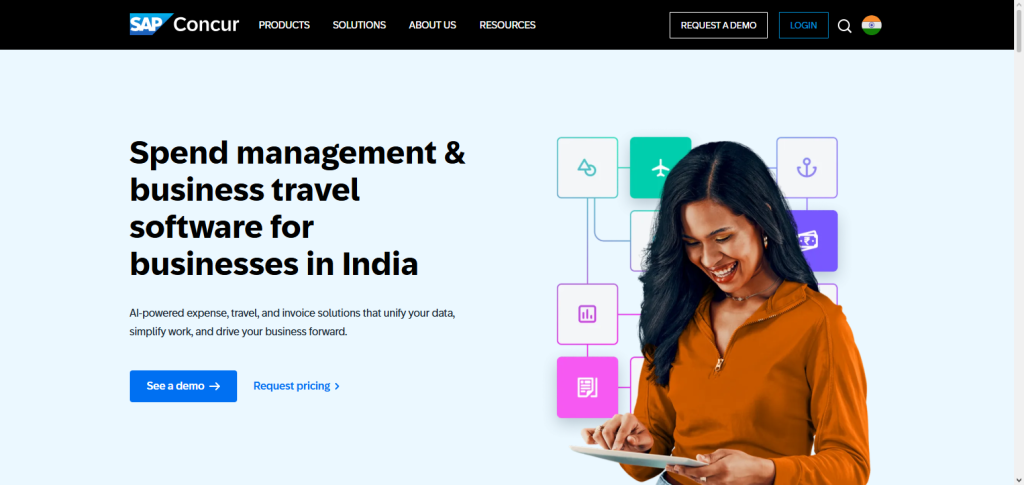
Best Accounts Payable Automation Tools are great for large companies looking to optimize both AP process automation and expense reporting. SAP Concur’s primary benefit is its compliance, audit, and global multi-national readiness.
AP automation and travel and expense optimization helps reduce labor and increase financial clarity across all business units.
SAP Concur Features, Pros & Cons
| Features | Pros | Cons |
|---|---|---|
| Expense + AP integration | Unified travel, expense, and AP workflows | Expensive for SMBs |
| Policy-based approvals | Strong compliance and audit readiness | Complex onboarding |
| ERP integration | Seamless with SAP ecosystem | Best for SAP users only |
| Mobile access | Easy expense reporting | Limited customization |
| Global compliance | VAT/GST support | Overkill for small firms |
| Analytics | Strong spend visibility | Requires SAP ERP |
| Scalability | Enterprise-ready | Long implementation |
2. Oracle NetSuite AP
Oracle NetSuite AP is an AP automation solution built on a fully integrated ERP system and is best suited for mid to large enterprises. Its features include sophisticated invoice to pay workflows and vendor management with built in global compliance.
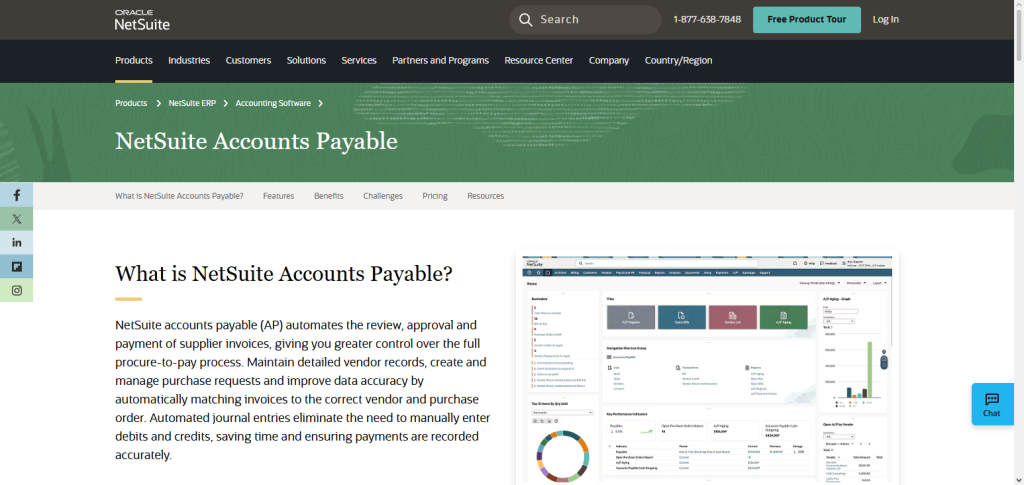
The best Accounts Payable Automation Tools such as Oracle NetSuite AP, provide seamless integration with NetSuite’s ERP, providing real-time financial visibility and cash flow impact.
Oracle NetSuite AP, through its automation, eliminates the need for manual entries of invoices, enhances accuracy and provides support for multiple currencies. For AP automation systems, NetSuite ERP customers, the AP Module is the perfect product for extending automation, compliance, and modular control of corporate finances.
Oracle NetSuite AP Features, Pros & Cons
| Features | Pros | Cons |
|---|---|---|
| Native ERP AP module | Real-time financial reporting | Limited outside NetSuite |
| Multi-currency support | Strong global compliance | Higher learning curve |
| Vendor management | Seamless ERP integration | Costly for SMBs |
| Automated workflows | Reduces manual entry | Complex setup |
| Global tax compliance | Strong audit readiness | ERP dependency |
| Analytics | Cash flow visibility | Requires NetSuite ERP |
| Scalability | Enterprise-grade | High licensing cost |
3. Tipalti
Tipalti is a global payables automation platform that is the best fit for a fast-growing international supplier business. This accounts payable service automates vendor onboarding and tax compliance.
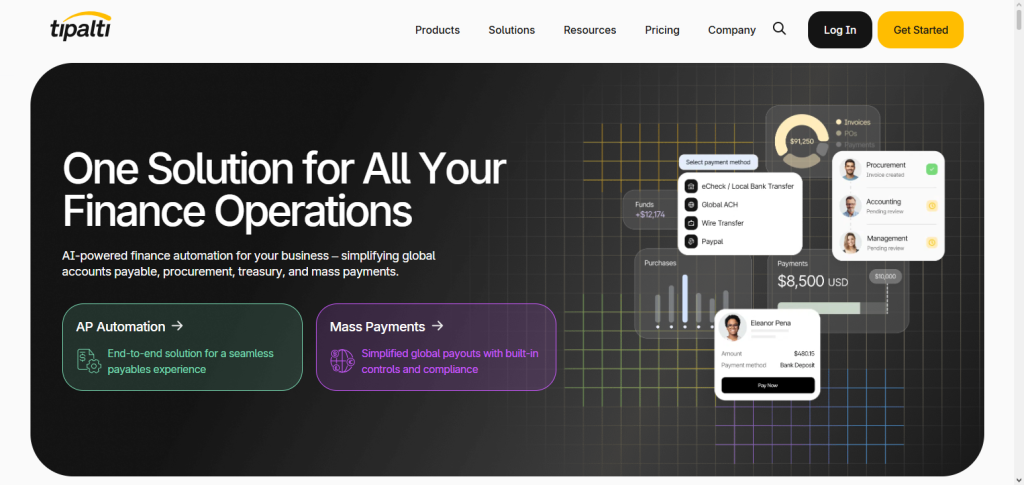
It handles cross-border payments in multiple currencies. Best accounts payable services, such as Tipalti, cover multiple payment methods, including ACH, wire transfers, PayPal, and prepaid debit cards.
They use compliance screening for Know Your Customer (KYC) and Anti-Money Laundering (AML) regulations. Tipalti is perfect for international growing companies that want to keep their financial compliance and regulatory positions accurate. It consolidates global payments into one system.
Tipalti Features, Pros & Cons
| Features | Pros | Cons |
|---|---|---|
| Global payments | Handles ACH, wire, PayPal, cards | Premium pricing |
| Vendor onboarding | Automated tax compliance | Complex setup |
| Compliance screening | Strong KYC/AML features | Best for global firms |
| Multi-currency support | Ideal for international suppliers | Overkill for SMBs |
| Payment scheduling | Reduces admin overhead | Limited ERP depth |
| Analytics | Real-time visibility | Higher cost |
| Scalability | Growth-focused | Long onboarding |
4. Coupa Pay
Coupa Pay fuses procurement and accounts payable, like much of the products in the Coupa spend management suite. Rule-based spend visibility, invoice matching, and supplier payments are some features Coupa Pay offers.
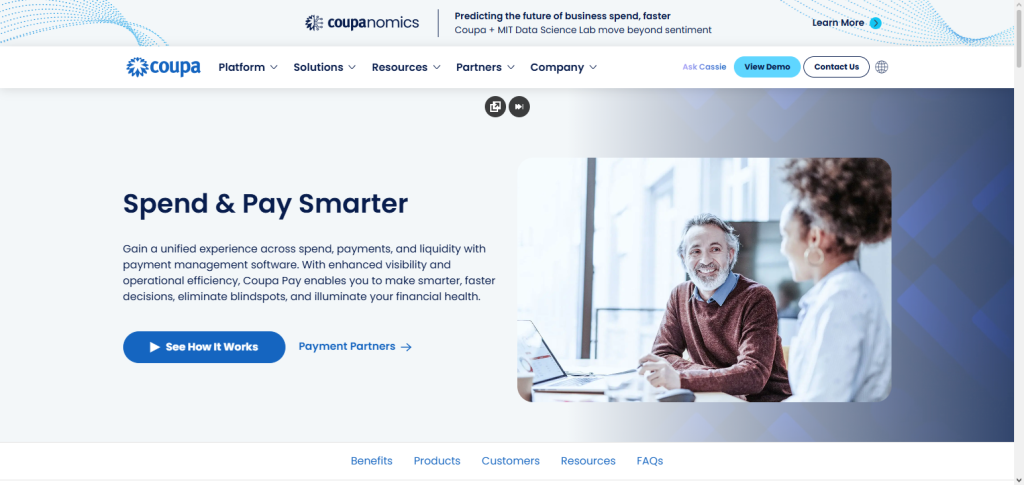
Best Accounts Payable Automation Tools are made with large enterprises in mind, wanting to match governance of procurement with AP automation.
With Coupa Pay, organizations can maintain compliance and control spend with real-time data. Coupa Pay leverages procurement strategies and AP automation to improve supplier relationships and working capital, while also decreasing the risk of fraud.
Coupa Pay Features, Pros & Cons
| Features | Pros | Cons |
|---|---|---|
| Procurement + AP integration | Full spend visibility | Enterprise-focused |
| Rule-based invoice matching | Strong fraud prevention | Long implementation |
| Supplier payments | Improves vendor relationships | Costly for SMBs |
| Analytics | Real-time insights | Complex setup |
| Compliance | Strong governance | Requires Coupa ecosystem |
| Scalability | Large enterprise ready | Overhead for small firms |
| ERP integration | Deep compatibility | High licensing fees |
5. Stampli
Stampli is a collaboration-placed AP Automation tool. It is a perfect example of a machine learning- enhanced tool in automatic AP code capture. By supporting conversations among AP team members, vendors, and invoice approvers, Stappli provides a hub for invoice-related dialog.
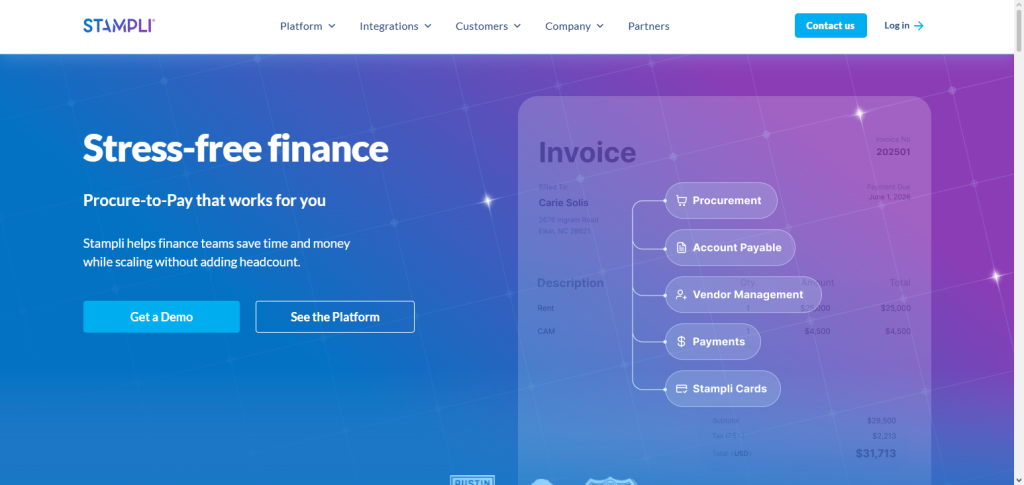
For a company that values the quick resolution of invoices with harmonious transparency, tools like Stappli are some of the best in the field of AP automation. Stakeholders are free to comment on invoices through the easy-to-use interface,
eliminating bottlenecks. Stappli is a collaborative AP automation tool that major ERPs and accounting software compliment. With no demand for robust special internal systems support, Stappli is relatively easy to implement. This makes Stappli great for mid-sized companies.
Stampli Features, Pros & Cons
| Features | Pros | Cons |
|---|---|---|
| AI invoice coding | Fast approvals | Limited global compliance |
| Collaboration hub | Easy communication with vendors | Mid-market focus |
| ERP integrations | Quick adoption | Fewer advanced analytics |
| Mobile access | Easy approvals | Limited scalability |
| Fraud prevention | Reduces risk | Not enterprise-grade |
| Vendor communication | Transparent workflows | Limited global reach |
| Ease of use | Intuitive interface | Lacks advanced reporting |
6. AvidXchange
AvidXchange focuses on payment automation for mid-market firms. Automation includes invoice capture, approvals, and vendor payments via ACH, virtual cards, and checks. Best Accounts Payable Automation Tools include AvidXchange because of its solid ERP integrations and high payment volume capabilities.
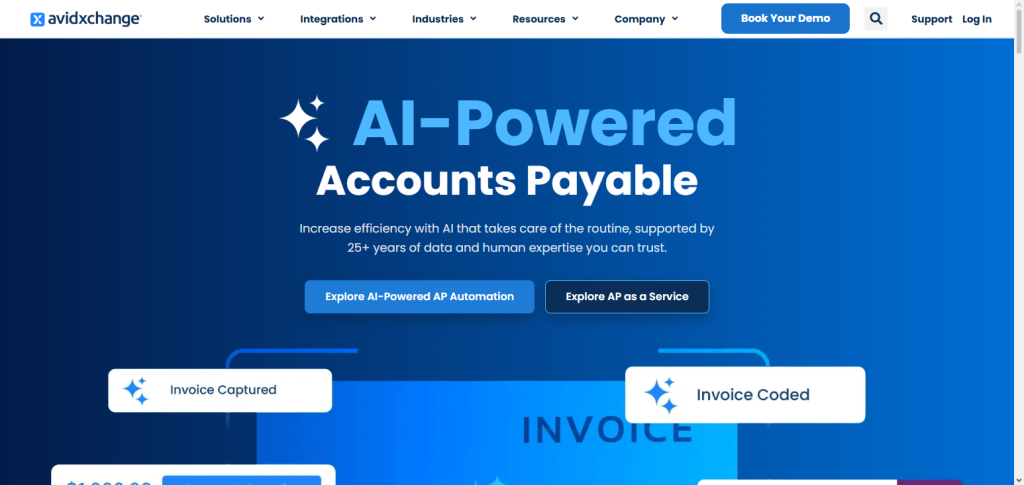
AvidXchange’s platform enhances cash flow visibility and vendor satisfaction, while eliminating paper processes. AvidXchange is most beneficial for real estate, construction, and healthcare, as large vendor payment volumes are Important for operational efficiency.
AvidXchange Features, Pros & Cons
| Features | Pros | Cons |
|---|---|---|
| Payment automation | Strong ERP compatibility | Mid-market only |
| ACH, virtual cards, checks | Handles high payment volumes | Limited global reach |
| Invoice capture | Reduces paper processes | Implementation time |
| Vendor payments | Improves satisfaction | Limited analytics |
| Fraud prevention | Secure transactions | Not ideal for SMBs |
| ERP integrations | Wide compatibility | Costly for small firms |
| Scalability | Mid-market ready | Not enterprise-grade |
7. Basware
Basware leads the market for e-invoicing and AP automation. Its systems of compliance and scaling allow support for complex multi-entity organizations. Such systems include advanced invoice matching, supplier portals, and global tax compliance.
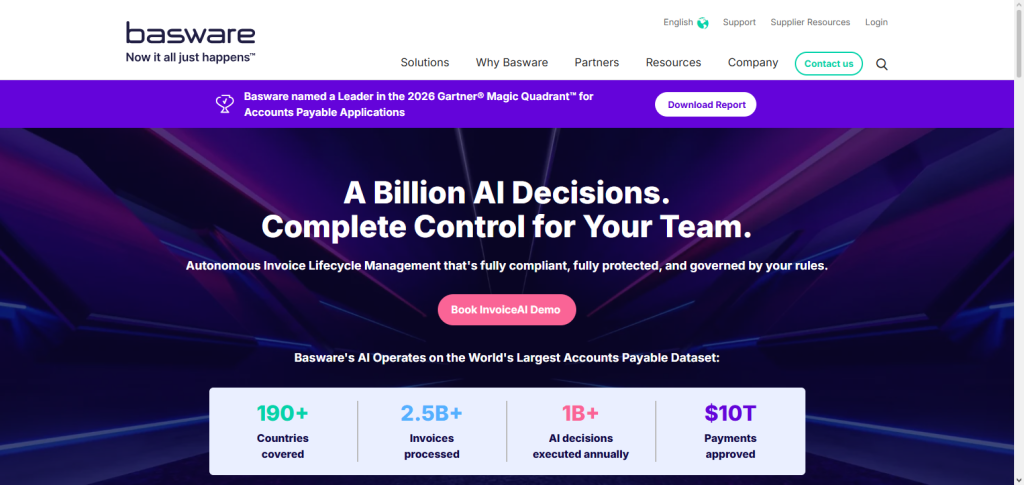
AP automation tools especially like Basware are best used by enterprises working in many locations which have to adhere to strict regulatory compliance. Deep ERP integrations combined with Basware tools and analytics, allow clear visibility into spending and cash flow.
Basware’s strength also comes from working best with high-volume transactions while adhering to compliance of multiple tax frameworks like VAT and GST. This also makes it the best option for large global corporations.
Basware Features, Pros & Cons
| Features | Pros | Cons |
|---|---|---|
| E-invoicing | Global compliance | Enterprise-only |
| Multi-entity support | Deep ERP integrations | High cost |
| Analytics | Strong spend visibility | Complex onboarding |
| Global tax compliance | VAT/GST ready | Overkill for SMBs |
| Supplier portal | Improves vendor collaboration | Long implementation |
| Fraud prevention | Strong governance | Requires ERP |
| Scalability | Enterprise-grade | Expensive licensing |
8. Airbase
Airbase combines corporate cards, expenditure issues, and automation of accounts payable in a single package. This new expenditure managing systems give companies a real-time overview of their expenditure, automated approvals, and effortless vendor payments.
Accounts Payable Automation Tools such as Airbase target SMBs and mid-market firms in need of unified control over expenses and payables.
Their tool replaces the need for multiple systems by integrating spend management tools. Airbase is a perfect fit for controlling budget restrictions and simplifying approvals and offers the best flexibility for all transactional expenditure.
Airbase Features, Pros & Cons
| Features | Pros | Cons |
|---|---|---|
| Unified spend management | Combines cards + AP | SMB/mid-market only |
| Real-time visibility | Strong budget controls | Limited global compliance |
| Automated approvals | Easy adoption | Fewer enterprise features |
| Corporate cards | Integrated spend control | Not global-ready |
| Vendor payments | Simple workflows | Limited analytics |
| Fraud prevention | Secure transactions | Not enterprise-grade |
| Scalability | Mid-market ready | Limited ERP depth |
9. MineralTree
MineralTree has invoice-to-pay automation that integrates seamlessly with QuickBooks, NetSuite, and other mid-market ERPs. Invoice capture and vendor payment features, as well as approval workflows, all help reduce manual data entry.
MineralTree is one of the best accounts payable automation tools for small and mid-sized businesses that need a strong and affordable AP automation solution. The platform increases efficiency and reduces the risk of fraud while providing better visibility of cash flow.
The ease of use and widespread scalability of the MineralTree AP automation platform means that finance teams can implement AP automation without the additional difficulty that is often associated with enterprise-grade solutions. MineralTree has a good balance between simplicity and strong features.
MineralTree Features, Pros & Cons
| Features | Pros | Cons |
|---|---|---|
| Invoice-to-pay automation | Affordable for SMBs | Limited scalability |
| QuickBooks/NetSuite integration | Easy to use | Fewer advanced features |
| Fraud risk reduction | Improves efficiency | Not enterprise-grade |
| Vendor payments | Simple workflows | Limited global compliance |
| Mobile access | Easy approvals | Basic analytics |
| ERP compatibility | Mid-market ready | Limited customization |
| Scalability | Growth-friendly | Not for large firms |
10. Melio
Melio is a hassle-free and inexpensive AP automation tool that’s made for small businesses. Bills are easy to pay whether through ACH, checks, or credit cards since everything is integrated with QuickBooks. The Best Accounts Payable Automation Tools category includes tools that small teams are finally able to afford and can use, like Melio.
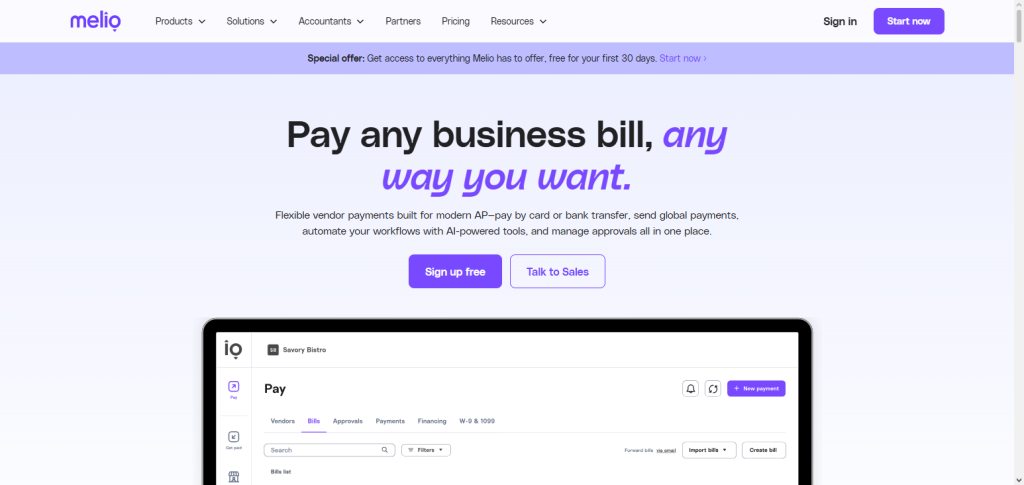
Doing this decreases flexibility, but Melio has a way for businesses to pay their vendors even if they don’t accept cards. Because of this and more, Melio is best for small businesses that quickly want to digitize their AP without spending so they don’t have to create infrastructure.
Melio Features, Pros & Cons
| Features | Pros | Cons |
|---|---|---|
| Simple bill pay | Easy ACH/check payments | SMB-only |
| QuickBooks integration | Affordable and flexible | Limited automation depth |
| Vendor card payments | Pay vendors without card acceptance | No global compliance |
| Mobile access | Easy to use | Limited scalability |
| Fraud prevention | Secure payments | Not enterprise-grade |
| Analytics | Basic visibility | Few advanced features |
| Scalability | SMB-ready | Not suited for large firms |
Risks and Considerations of AP Automation Software
Time and Resource Intensive: Automation of AP processes will be a time intensive and resource intensive project to plan and integrate with current financial systems.
Partial Solutions: Some software may offer partial automation and integrations with current ERP, accounting, and procurement solutions, and force manual interventions for data sync.
Sensitive Data Risks: AP automation options will require the evaluation of security and control options for sensitive financial and vendor data.
Licensing, Implementation, and Customization Costs: The cost of AP automation software will include the license cost, costs associated with implementation and customization of the software, and costs associated with training staff.
Customization Costs: (Process & Approval Levels): Process and approval level customization may be additional costs that businesses incur when purchasing AP automation tools.
Over Reliance on Automation: AP automation tools may limit manual review processes, which may result in the increased reliance on the tool.
Vendor Tool Limitations: Businesses will be dependent on the software vendor for product improvements, support, maintenance, and uptime.
Automation of AP Processes will not Remove Compliance Issues: Automation of AP processes will not remove the responsibility of businesses to comply with tax and other reporting requirements.
Staff Resistance: The shift to AP process automation will likely be met with resistance as staff will be moving away from a manual process they are accustomed to.
Customization Costs (Volume of Transactions): Increasing the volume of AP transactions that the automation tool will handle will likely incur additional costs.
Uptime and Availability of Automation Tools: The inability of AP automation tools to handle requests will prevent businesses from processing AP transactions.
Future Trends in Accounts Payable Automation
The development of Accounts Payable Automation will likely stem from the influence of numerous advanced technologies such as artificial intelligence (AI), machine learning, robotic process automation (RPA), and analytics.
Sophisticated AP offerings will have even more advanced capabilities such as the automatic reading of invoices, fraud detection, and the ability to make better judgment calls regarding payment.
Businesses will implement more advanced real-time payment processing, touchless approval on invoices, and fully integrated financial ecosystems to increase organizational efficiency.
A combination of cloud platforms, secure block chain transactions, and AI cash flow forecasting will improve transparency, compliance, and control. With the continuing evolution of automation, AP teams will transition to a greater focus on the Planning and Strategy of the Business vs. Processing transactions.
Conclusion
From small businesses to large corporations, there are Best Accounts Payable Automation Tools that fit every business need. SAP Concur and Oracle NetSuite AP are AP Automation tools that work best in large enterprises.
They provide deep integration in top-tier ERPs and support advanced compliance needs. Tipalti and Basware are best with global payments and regulatory concerns. AvidXchange, Stampli, and MineralTree provide great mid-market automation with good ERP integration. Airbase and Melio provide both simplicity and low cost for small and medium-sized businesses.
When considering the AP Automation solutions that best suit your companies needs, think about your company size, ERP, and global payments. Small and medium sized businesses will benefit the most from Airbase and Melio.
AvidXchange, Stampli, and MineralTree are a great fit for the mid-market and large enterprises will benefit from Basware and Coupa Pay.
Tipalti is best for large global companies. With AP Automation, you can create the most streamlined and the most transparent solution that will provide the best oversight to your financials based on your companies operational scale and needs.
FAQ
What are Accounts Payable Automation Tools?
Accounts Payable (AP) automation tools are software solutions that streamline invoice capture, approval workflows, vendor payments, and compliance. They reduce manual data entry, improve accuracy, and provide visibility into cash flow.
Which AP tools are best for enterprises?
Enterprise-grade solutions include SAP Concur, Oracle NetSuite AP, Coupa Pay, and Basware. These platforms integrate deeply with ERP systems, support global compliance, and handle high transaction volumes.
Which AP tools are best for SMBs?
For small businesses, Melio, MineralTree, and Airbase are cost-effective and easy to implement. They offer simple bill pay, QuickBooks integration, and unified spend management without complex onboarding.
Which AP tools handle global payments?
Tipalti and Basware excel in cross-border payments, tax compliance, and multi-currency transactions. They are ideal for companies with international suppliers and regulatory requirements.
Which AP tools focus on collaboration?
Stampli is designed for communication-driven invoice approvals. It allows AP teams, vendors, and approvers to collaborate directly on invoices, reducing bottlenecks and speeding up resolution.