


In this article, I am going to talk about the Best Crypto Fraud Detection Tools for Online Merchants that help businesses identify suspicious wallet addresses, monitor blockchain transactions, prevent fraudulent crypto payments, and minimize financial risks. I’ll cover their key features, fraud protection capabilities, blockchain support, wallet screening, integrations, pricing, pros and cons to help merchants to choose the right solution.
- What Is Crypto Fraud Detection Tools?
- How We Selected Crypto Fraud Detection Tools for Online Merchants
- Key Points
- 1. Chainalysis KYT
- Characteristics
- Advantages
- Disadvantages
- 2. TRM Labs
- Characteristics:
- Advantages
- Disadvantages
- 3. Elliptic Navigator
- Characteristics
- Advantages
- Disadvantages
- 4. CipherTrace
- Characteristics
- Advantages
- Disadvantages
- 5. Crystal Intelligence
- Characteristics
- Advantages
- Disadvantages
- 6. Merkle Science
- Characteristics
- Advantages
- Disadvantages
- 7. Scorechain
- Characteristics
- Advantages
- Disadvantages
- 8. AMLBot
- Characteristics
- Advantages
- Disadvantages
- 9. Blockpass
- Characteristics
- Advantages
- Disadvantages
- 10. Nansen
- Characteristics
- Advantages
- Disadvantages
- Conclusion
- FAQ
What Is Crypto Fraud Detection Tools?
Crypto fraud detection tools are specialized software platforms that help businesses to identify, monitor and prevent fraudulent activities in cryptocurrency transactions. These tools analyze blockchain data, wallet addresses, transaction histories, and suspicious payment patterns to identify risks such as stolen funds, scams, money laundering, and sanctioned wallet activity.
Technologies like AI-powered risk scoring, wallet screening, real-time transaction monitoring and blockchain analytics are leveraged to determine the legitimacy of payments.
These solutions allow online merchants to secure their crypto payments, reduce financial losses, increase transaction security, and identify suspicious activities prior to accepting or processing digital asset payments.
How We Selected Crypto Fraud Detection Tools for Online Merchants
We evaluated the tools based on their fraud prevention capabilities, blockchain coverage, merchant requirements, transaction monitoring, and integration options.
| Selection Criteria | What We Evaluated |
|---|---|
| Primary Fraud Protection | Ability to detect scams, stolen funds, suspicious payments, and illicit crypto activities. |
| Wallet Screening | Capability to identify high-risk wallet addresses and connections with suspicious entities. |
| Transaction Monitoring | Real-time or continuous monitoring of incoming and outgoing cryptocurrency transactions. |
| Blockchain Support | Number and variety of supported blockchain networks and digital assets. |
| Risk Scoring | Ability to assess wallet and transaction risks using intelligence and behavioral analysis. |
| AI & Automation | Automated suspicious activity detection, alerts, and risk assessment capabilities. |
| API & Integrations | Compatibility with merchant payment systems, APIs, and existing business workflows. |
| Investigation Tools | Availability of transaction tracing, wallet analysis, and suspicious fund investigation features. |
| Pricing & Scalability | Pricing transparency, subscription options, custom plans, and suitability for growing transaction volumes. |
| Merchant Suitability | Practical usefulness for e-commerce stores, payment gateways, crypto businesses, and online merchants. |
Key Points
| Tool | Key Point |
|---|---|
| Chainalysis KYT | Monitors cryptocurrency transactions in real time and flags wallets linked to fraud, scams, sanctions, or illicit activity. |
| TRM Labs | Provides blockchain risk scoring and transaction monitoring to help merchants identify suspicious crypto payments. |
| Elliptic Navigator | Screens wallet addresses and transactions against known criminal, fraud, and high-risk entities. |
| CipherTrace | Delivers crypto transaction tracing and risk intelligence to detect potentially fraudulent payment activity. |
| Crystal Intelligence | Uses blockchain analytics to uncover suspicious wallet connections and fraud-related transaction patterns. |
| Merkle Science | Offers automated transaction monitoring and risk detection for merchants accepting cryptocurrency payments. |
| Scorechain | Provides wallet screening, transaction risk assessment, and compliance monitoring for crypto businesses. |
| AMLBot | Checks wallet addresses against sanctions lists, scam databases, and high-risk cryptocurrency entities before accepting payments. |
| Blockpass | Combines identity verification and blockchain risk assessment to reduce fraud in crypto transactions. |
| Nansen | Tracks wallet behavior and on-chain activity, helping merchants identify potentially risky or suspicious counterparties. |
1. Chainalysis KYT
Founded in 2014
Chainalysis KYT is a crypto transaction monitoring solution that enables online merchants, payment platforms, exchanges and financial institutions to detect suspicious crypto activity. Its core fraud protection capabilities allow for the identification of exposure to sanctioned entities, scams, ransomware, illicit services and other high-risk activities on the blockchain.
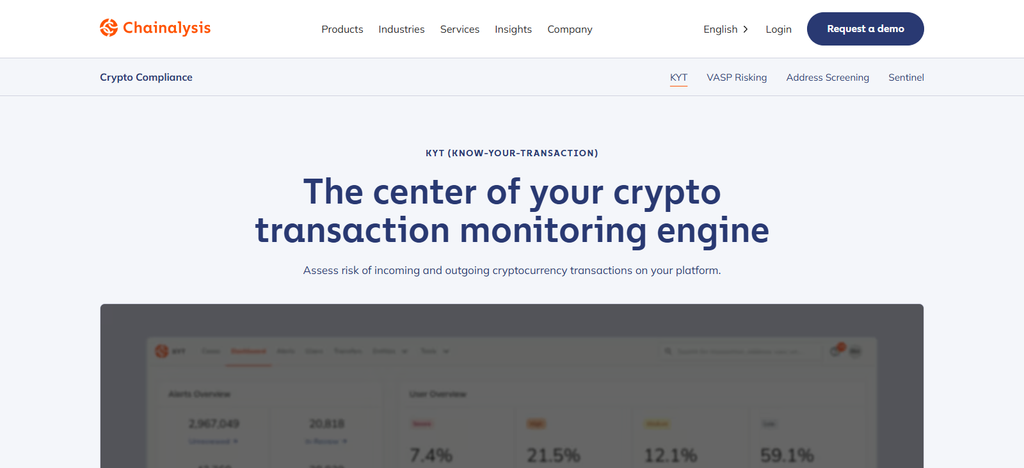
The platform filters incoming and outgoing transactions, analyzes direct and indirect wallet exposures and generates risk alerts in real time.
Supports 400+ blockchain networks, 50M+ tokens. Its API, configurable risk rules, and automated monitoring and investigation workflows help merchants manage payment risk. Pricing is customized and usually involves contacting the sales team for a quote.
Characteristics
- Real-time monitoring of cryptocurrency transactions, both incoming and outgoing.
- Risk score for suspicious wallet addresses and transactions.
- Detection of direct and indirect exposure across blockchain networks.
- Configurable behavioral alerts and risk monitoring rules.- Case management and investigation workflows integration.
Advantages
- 400+ blockchain networks and 50M+ tokens support.
- Generates alerts on risk in real-time transactions.
- Provides customizable risk thresholds and monitoring rules.
- Helps in detecting exposure to sanctioned entities and dirty money.
- Connects with Chainalysis investigation tools.
Disadvantages
- Pricing is not standardized publicly.
- May need specialist knowledge of compliance.
- Further products may be necessary for advanced investigations.
- Enterprise-level features can be too much for a small merchant.
Integration and configuration require implementation effort.
2. TRM Labs
Founded: 2018
TRM Labs offers blockchain intelligence and cryptocurrency risk management solutions to online merchants, payment providers and financial institutions to identify suspicious digital asset activity. It has key fraud protection features, such as detecting money laundering, ransomware exposure, sanctioned wallets, scams, and illicit fund movements.
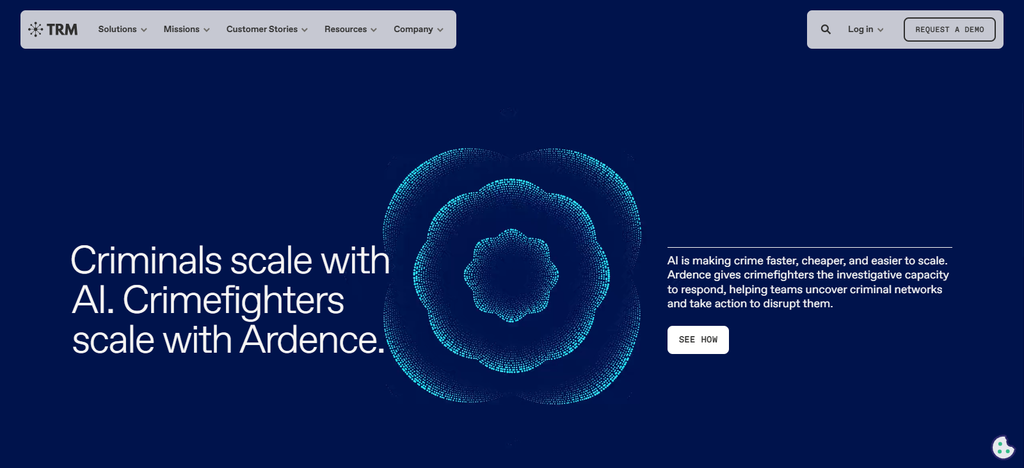
It offers wallet screening, transaction monitoring in real-time, risk scoring and blockchain investigations to assess incoming and outgoing payments.
TRM supports multiple blockchain ecosystems and provides APIs to integrate risk checks into existing business workflows. Automated alerts and investigation tools aid compliance teams in responding to suspicious transactions. Pricing is customized, typically available through its sales team.
Characteristics:
- Monitoring crypto deposits and withdrawals in real-time.
- Configurable rules for behavior and exposure-based risk.
- Blockchain threat intelligence to screen wallets.- Risk assessment of transactions on the supported networks.
- Case management and investigation processes have been integrated.
Advantages
- Enables risk screening on 184+ blockchains.
- Configurable transaction monitoring rules.
- Gives transparent, evidence-based wallet attribution.
- Automated alerts and daily rescreening of transactions.
- Supports API integration and investigation workflows.
Disadvantages
- Pricing typically requires a custom quote.
- Sophisticated features may demand compliance know-how.- Coverage of indexing is not the same as coverage of screening.
- Enterprise capabilities might be overkill for small stores.
- The setup rules may need technical planning at the beginning.
3. Elliptic Navigator
Founded: 2013
Elliptic Navigator is a blockchain investigation and analytics solution enabling merchants and financial institutions to understand the risk of their cryptocurrency transactions and to trace suspicious fund movements. Its key fraud protection features include detection of exposure to scams, sanctioned entities, illicit services and suspicious wallet networks.
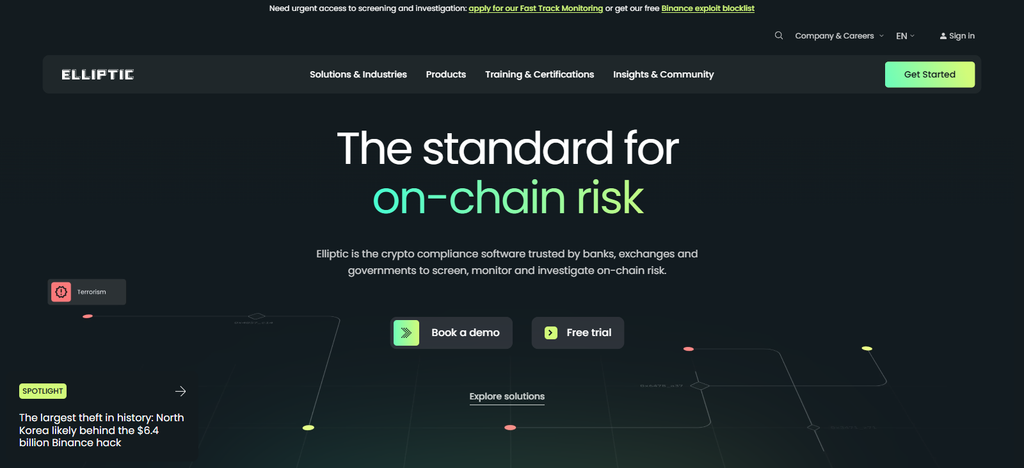
By screening wallets and transactions, companies can evaluate their counterparties and research potentially risky payments. Elliptic’s broader compliance platform, including Lens, supports real-time monitoring and screening across 60+ blockchains and 250+ bridges.
Its configurable risk rules, ongoing tracking, and API capabilities enable automated compliance workflows. Tariffs are generally tailored to the needs of the business and use of the platform.
Characteristics
- Ability to explore blockchains and track transactions.- Identify suspicious wallet relationships and fund flows.
- Exposure analysis for high risk entities and services.
- Elliptic’s broader cross-chain investigation capabilities platform.
- Involved in compliance investigations and risk assessment processes.
Advantages
- Helps to investigate suspicious crypto transactions.
- Delivers blockchain intelligence for risk assessment.
- Aids in the identification of illicit fund exposure.- Provides integration options via APIs.
- Perfect for crypto businesses and financial institutions.
Disadvantages
- Pricing is usually based on quotes.
- May need training to use advanced investigation features.
- Various Elliptic products are suited to different screening needs.- Navigator doesn’t have all features.
- Enterprise features might be overkill for smaller merchants.
4. CipherTrace
Established: 2015
CipherTrace is a cryptocurrency intelligence and blockchain security solution originally built to help financial institutions, exchanges and businesses spot suspicious digital asset activity. It delivers essential fraud prevention capabilities such as cryptocurrency risk scoring, tracing of illicit funds, transaction intelligence and identification of exposure to high-risk entities.
The technology it provides is able to analyze blockchain transactions and help investigate potentially fraudulent payment flows. CipherTrace has historically provided cryptocurrency intelligence on over 900 cryptocurrencies, assisting organizations in comprehending their digital asset exposure.
Mastercard completed its acquisition in October 2021, so businesses should check the current availability of specific CipherTrace standalone products. Prices and commercial access differ depending on the applicable Mastercard offering.
Characteristics
- Cryptocurrency transaction intelligence and blockchain analytics.
- Identification of potentially suspicious movements of funds.
- Ability to investigate historical wallets and transactions.
- Risk assessment of financial institutions on cryptocurrency.
- technology within Mastercard’s broader crypto risk ecosystem.
Advantages
- Developed crypto intelligence technologies.
- Helps to investigate suspicious cryptocurrency transactions.
- Helps investigate financial crime and illicit funds.- Good for understanding exposure to cryptocurrency transactions.
- Leverages Mastercard’s broader financial services ecosystem.
Disadvantages
- Current commercial availability may differ from in the past.
- Need to check product availability as standalone.
- Pricing is sometimes not publicly available.• Product features are subject to the current Mastercard offer.
It may not be for merchants looking for a basic stand-alone screening tool.
5. Crystal Intelligence
Year founded: 2016
Crystal Intelligence is a blockchain analytics and cryptocurrency investigation platform that enables merchants, financial institutions and compliance teams to identify suspicious transactions and trace potentially illicit funds. Key fraud protection features are sanctions screening, wallet risk rating, transaction monitoring and identifying relationships with high risk entities.
The platform provides wallet screening, entity attribution, cross-chain fund tracing and real-time exposure alerts.
Through its blockchain intelligence you can investigate across hundreds of networks and APIs help you integrate monitoring into your existing workflows. Crystal is offered as SaaS and API and pricing is generally given on a business quote basis depending on needs and usage.
Characteristics
- Proficiency in cryptocurrency investigation and blockchain analytics.
- Wallet risk analysis and detection of suspicious addresses.
- Transaction monitoring and money flow tracking.
- Entity attribution, cross-chain traceability.- Integration through APIs – for workflows to monitor business.
Advantages
- Helps you investigate suspicious wallet activity.
- Helps assess the risk of cryptocurrency transactions.- Provides compliance teams with blockchain intelligence.
- Provides you with automated monitoring and investigation.- Good for businesses that need detailed tracking of funds.
Disadvantages
- Custom quotation required for most pricing.
- Advanced investigations might require trained analysts.-Small merchants may not need all the features.
Business workflows need different integrations.- Look at depth of coverage on individual networks.
6. Merkle Science
Established: 2018
Merkle Science provides cryptocurrency risk intelligence and compliance solutions that help online merchants, exchanges and financial institutions detect suspicious blockchain activity. Its core fraud protection features include behavioral analysis, which can detect money laundering, scams, illicit wallet exposure, and unusual transaction patterns.
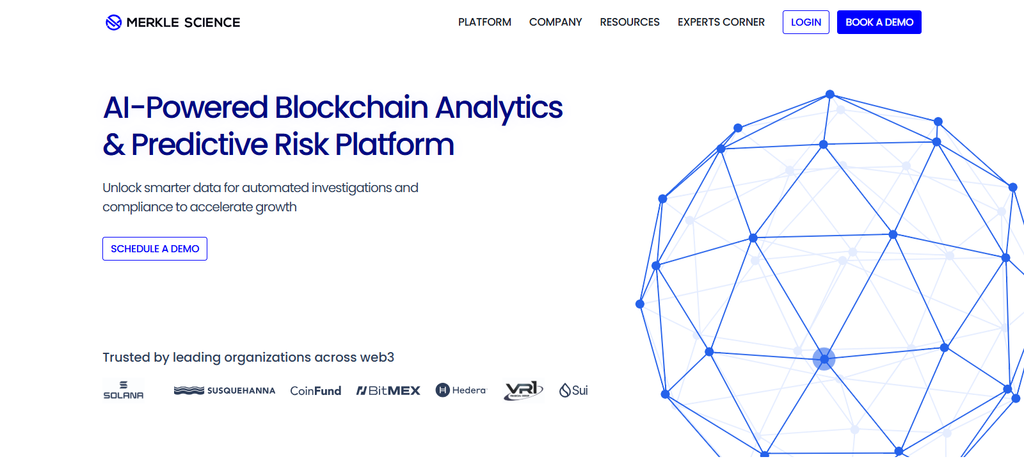
Its solution Compass enables wallet screening and transaction monitoring, and Tracker helps investigate and trace suspicious cryptocurrency movements.
The platform also provides risk assessment and automated compliance workflows via its behavioral rule engine. Blockchain intelligence spans across several digital asset ecosystems. Pricing is generally based on size of business, monitoring needs, integrations and transaction volume.
Characteristics
- Behavioral analysis of suspicious crypto activity.
- Screening of wallets and assessment of transaction risk.
- Automated monitoring with its compliance solutions.
- Finding suspicious fund movements and exposure;
- Investigative capabilities with its Tracker solution.
Advantages
- More than basic wallet blacklist screening.
- Detecting behavioral risk.
- Compliance monitoring automation.
- Allows for investigation of suspicious cryptocurrency movements.- Offers API integration alternatives.
Disadvantages
- Pricing is typically customized.
- Requires configuring monitoring rules.
- Specialist knowledge may be required for advanced features.
- Check specific asset’s blockchain coverage.
- It might be more platform than small merchants need.
7. Scorechain
Year Founded: 2015
Scorechain is a blockchain analytics and cryptocurrency AML compliance platform that helps online merchants, payment providers and financial institutions to monitor transactions and assess wallet related risks.
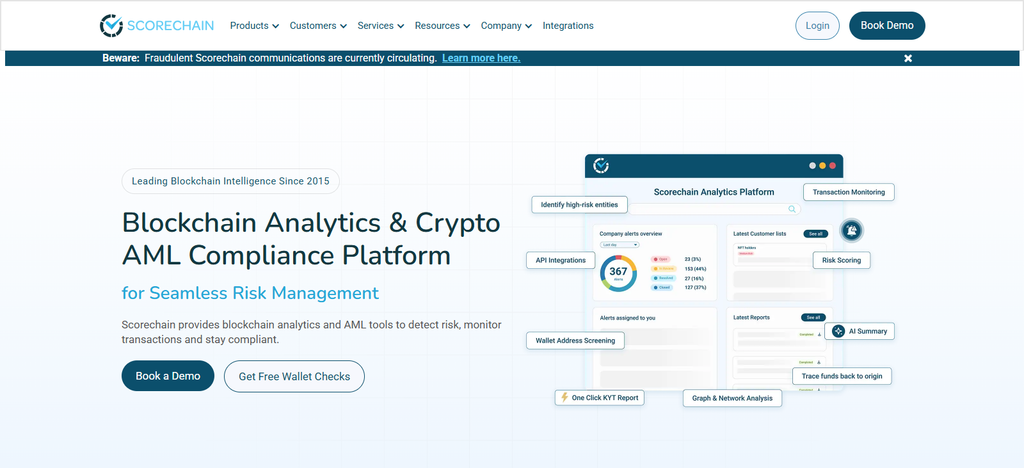
Key fraud protection capabilities include detection of sanctioned addresses, identification of suspicious counterparties and exposure assessment to potentially illicit funds. The platform offers the ability to screen wallets, monitor transactions, score risk, and investigate the blockchain.
It supports more than 25 blockchain networks and provides API access to embed automated screening in business operations. It uses AI-powered risk intelligence to detect abnormal wallet activity. Pricing depends on services chosen, screening needs and business usage. Enterprise quotes available.
Characteristics
- Finding suspicious addresses and counterparties.
- Cryptocurrency AML platform & blockchain analytics- Screening of wallets and risk assessment of transactions.
- Tools to monitor and investigate blockchain transactions.
- Compliance reporting and API integrations.
Advantages
- Helps to identify high-risk crypto wallets
- Enables transaction monitoring and risk scoring.
- Offers blockchain investigation capabilities.
- Can be used for AML compliance work-flows.- Offers options to integrate with business systems.
Disadvantages
- Pricing usually requires a sales quote.
- Support for blockchain varies by functionality.
- Technical knowledge may be required for advanced analytics.
- Enterprise features may not be needed for smaller merchants.
- Custom implementation may require additional resources.
8. AMLBot
Year Founded: 2019
AMLBot is a blockchain analytics and cryptocurrency AML compliance platform that helps merchants, exchanges and crypto businesses find risky wallets and suspicious transactions. It mainly protects against fraud by detecting exposure to sanctioned entities, scams, stolen funds and other high-risk blockchain activities.
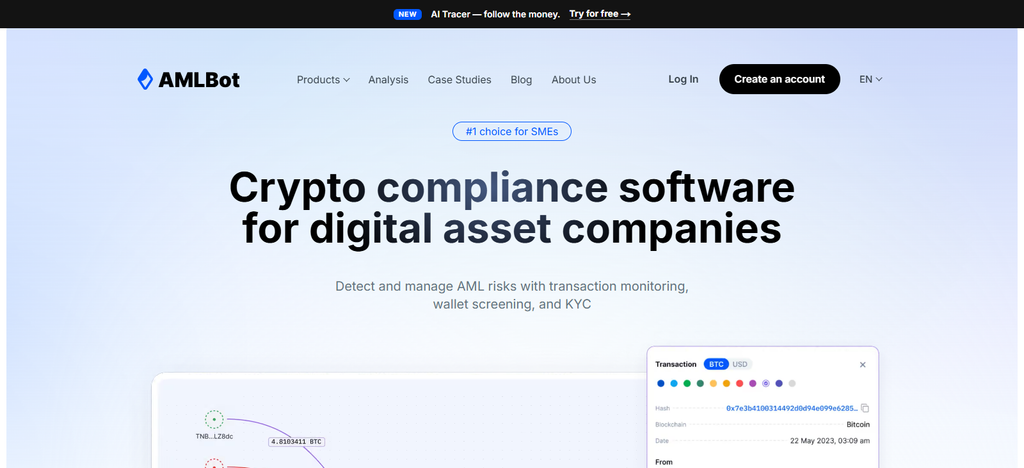
The platform screens wallet addresses, checks transactions, monitors Know Your Transaction on a continuing basis and assesses risk through its business dashboard and API. Its automated monitoring capabilities allow businesses to review incoming payments and investigate suspicious activity.
AMLBot also offers KYC/KYB and blockchain investigation services. The price depends on the volume of screenings, API needs and the compliance services you select.
Characteristics
- Screening of cryptocurrency wallet address.
- AML risk assessment of digital asset deals.
- Detection of exposure to questionable entities.
- Blockchain investigation and transaction monitoring capabilities.- API and dashboard driven workflows for screening.
Advantages
- It helps to check suspicious wallet addresses.
- Features handy wallet checking options.
- Supports AML risk assessments for cryptocurrencies.
- Provides API access to integrate with business systems.- Ideal for crypto companies that need to check transactions.
Disadvantages
- Advanced screening may require a paid subscription.
- Prices are based on usage and the services you choose.
- The results of risk must be interpreted correctly.
- Verify blockchain coverage prior to implementation.- Not a complete substitute for identity verification systems.
9. Blockpass
Established: 2017
Blockpass is a digital identity verification and crypto compliance platform for online merchants to reduce fraud related to identity and improve customer verification during payment onboarding. Its main features to prevent fraud are KYC, KYB, AML checks, identity document verification and screening related to crypto wallets.
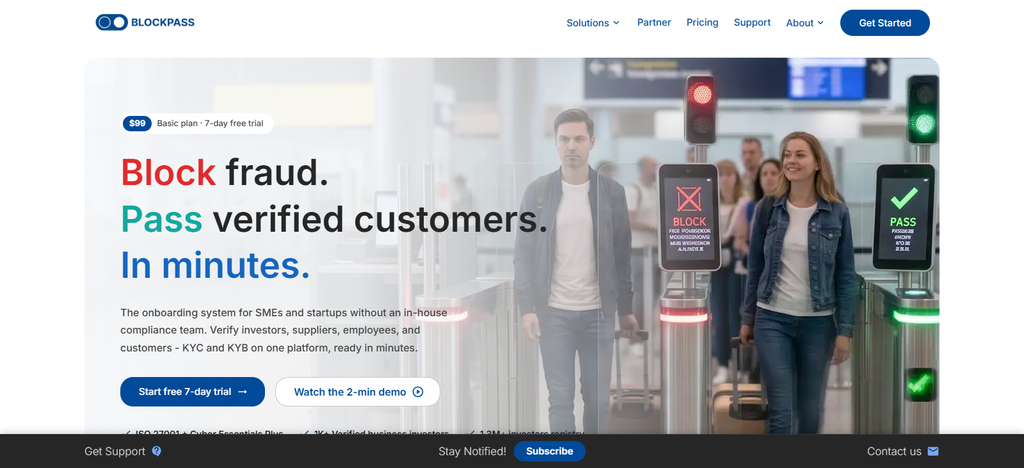
Businesses can assess wallet risks and reinforce customer verification procedures with its Crypto AML and Unhosted Wallet KYC solutions. It also offers website widgets and integrations for automated onboarding workflows.
Blockpass’ subscription fees start at $99/month for the Basic plan, plus it also charges usage-based verification fees. This is especially helpful for merchants who want to protect identity and remain compliant.
Characteristics
- Customer onboarding and digital identity verification.
- KYC and KYB verification capabilities.
- Customer’s compliance with AML screening.
- Crypto wallet related verification service.
- Automated onboarding – integrations & widgets.
Advantages
- Reduces payment fraud related to identity.
- Enables automated customer verification.
- Provides KYC and KYB capabilities.- Offers choices for embedding onboarding workflows.
- Lists subscription prices for some plans.
Disadvantages
- Not mainly a blockchain transaction monitoring platform.
Enhanced compliance services may incur additional costs. - Identity verification is no guaranty of payment safety.
- Verification of merchant-specific wallet screening criteria.
- Some businesses will need a different solution to KYT.
10. Nansen
Established: 2020
Nansen is an on-chain analytics and wallet intelligence platform that helps businesses understand blockchain activity, monitor wallet behavior and investigate cryptocurrency movements.
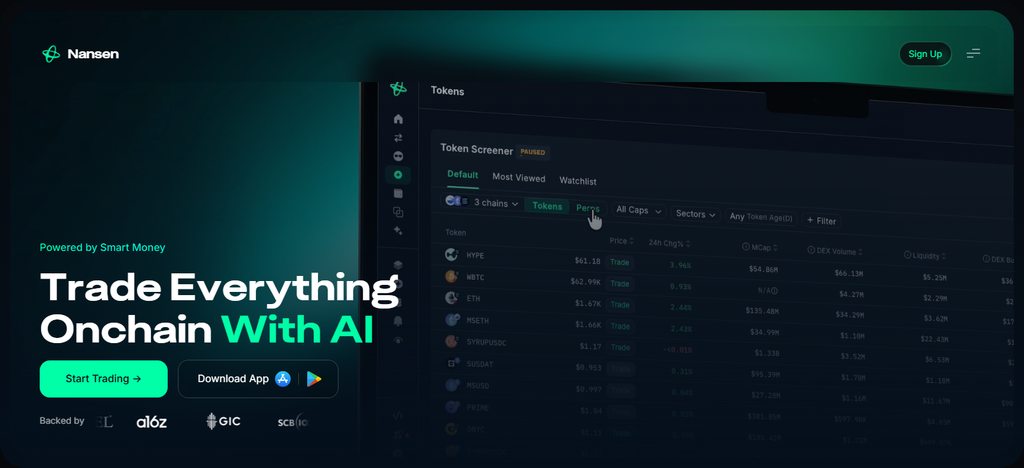
Its key risk capabilities include tagged wallet identification, suspicious-looking activity tracking, token movements analysis and unusual on-chain behavior monitoring. Its wallet intelligence covers over 500 million tagged addresses and its analytics support multiple blockchain ecosystems including Ethereum, Solana, BNB Chain, and Polygon.
Smart alerts, custom labels, watchlists and API access enable users to keep an eye on blockchain activity. Nansen Pro is available for $49/month (billed annually) or $69/month. But it’s not a fraud screening tool for merchants, it’s an analytical instrument.
Characteristics
- On-chain and wallet analytics and intelligence.
- Tagging a wallet and tracking its address activity
- analysis of transaction and token movement.
- Wallet monitoring and smart alerts.
- Blockchain data & analytics through API.
Advantages
- Provides rich labeled wallet intelligence.
- Traces cryptocurrency transactions.
- Multi-blockchain ecosystem support.
- Alerts and watchlists are provided.
- Good for identifying anomalous on-chain activity.
Disadvantages
- Not a dedicated fraud screening platform for merchants.
- Not a substitute for full AML monitoring.
- Some advanced features are paid subscriptions.
- Labels on wallets are not conclusive evidence of fraud.
- Merchants may require extra tools to screen payments.
Conclusion
For online merchants accepting cryptocurrency payments, choosing the right crypto fraud detection tool is key to reducing financial risks. Chainalysis KYT, TRM Labs, Elliptic Navigator, and Merkle Science provide transaction monitoring, wallet screening, and blockchain risk intelligence. Blockpass and AMLBot provide identity verification and crypto AML checks.
Before choosing a platform, merchants should evaluate blockchain coverage, real-time monitoring, API integrations, automated alerts, pricing and scalability. In the end, the best solution depends on transaction volume, payment methods, security requirements, and how much fraud protection their business needs.
FAQ
What are crypto fraud detection tools?
Crypto fraud detection tools are software platforms that help online merchants identify suspicious wallet addresses, monitor blockchain transactions, detect illicit funds, and reduce risks associated with cryptocurrency payments.
Why do online merchants need crypto fraud detection tools?
Online merchants need these tools to identify suspicious payments, prevent exposure to stolen funds, detect risky wallet addresses, monitor transactions, and strengthen payment security.
Which are the best crypto fraud detection tools for online merchants?
Some popular options include Chainalysis KYT, TRM Labs, Elliptic Navigator, CipherTrace, Crystal Intelligence, Merkle Science, Scorechain, AMLBot, Blockpass, and Nansen.
How do crypto fraud detection tools identify suspicious transactions?
These platforms analyze wallet addresses, transaction histories, blockchain connections, risk indicators, and fund movements to identify potentially fraudulent or high-risk cryptocurrency activity.