


In this article, I will discuss the Best Wallet Monitoring Tools for Crypto Accounting Firms that help accountants monitor multiple client wallets, monitor blockchain transactions, verify digital asset balances, and manage financial records. We’ll dig into their core features, blockchain integrations, accounting integrations, pricing, transaction monitoring capabilities, and multi-client management options to help firms choose the best solution for their needs.
- What Are Wallet Monitoring Tools?
- Quick Comparison
- 1. Nansen
- Characteristics
- Pros
- Cons *
- 2. Arkham
- Characteristics
- Pros
- cons
- 3. DeBank
- Characteristics
- Pros•
- Cons
- 4. Zerion
- Characteristics:
- Pros:
- Cons
- 5. zapper
- Characteristics
- Pros
- Cons
- 6. Breadcrumbs (optional)
- Characteristics
- Pros
- Cons
- 7. Chainalysis
- Characteristics
- Pros
- Cons
- 8. TRM Labs
- Characteristics
- Pros
- Cons
- 9. Etherscan
- Characteristics
- Advantages
- Cons
- 10. Blockchair
- Characteristics
- Pros
- Cons •
- Conclusion
- FAQ
What Are Wallet Monitoring Tools?
Wallet monitoring tools are software platforms that assist individuals, businesses, and crypto accounting firms in monitoring cryptocurrency wallet addresses, digital asset balances, transaction history, and blockchain activities.
These tools give you visibility into incoming and outgoing transfers, token movements, DeFi positions, and wallet interactions across the blockchain networks that are supported. Accounting firms use them to monitor various client wallets, confirm transactions, detect unusual activities, review historical balances, and gather financial information for bookkeeping and reporting.
Moreover, there are numerous platforms that provide transaction alerts, wallet analytics, API integrations, risk screening, and reporting features to enhance crypto accounting accuracy and simplify financial tracking.
Quick Comparison
| Tool | Best For | Key Strength |
|---|---|---|
| Nansen | Accounting & analytics firms | Smart-money and wallet intelligence |
| Arkham | Investigations | Entity attribution |
| DeBank | DeFi accounting | Wallet and protocol tracking |
| Zerion | Multi-chain monitoring | Portfolio visibility |
| Zapper | DeFi reconciliation | Unified asset dashboard |
| Breadcrumbs | Transaction tracing | Visual fund-flow analysis |
| Chainalysis | Enterprise compliance | AML and blockchain investigations |
| TRM Labs | Risk management | Compliance monitoring |
| Etherscan | Ethereum accounting | On-chain transaction verification |
| Blockchair | Multi-chain research | Cross-blockchain visibility |
1. Nansen
Nansen provides wallet monitoring, blockchain analytics and portfolio tracking functionality that enables crypto accounting firms to review client wallet activity across multiple networks. The platform provides wallet labels, token balances, transaction history, historical holdings, portfolio analysis, and wallet activity insights.
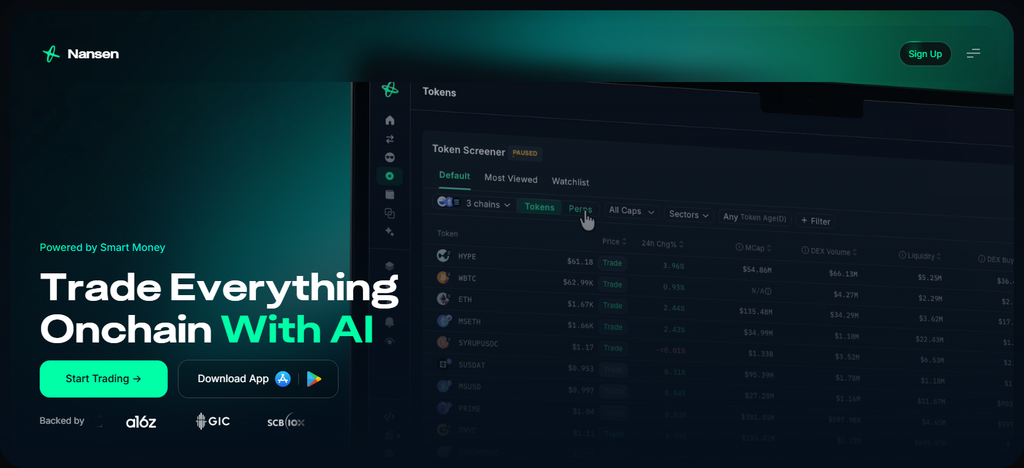
It also supports multi-chain monitoring, which makes it useful for firms with clients who have assets across different blockchain ecosystems. Accountants can use its portfolio tools and CSV exports for reviewing transaction records and assisting their bookkeeping workflows. Transaction alerts and tagged wallet intel help spot large movements.
Nansen has a Pro subscription model and pay-as-you-go API credits. Integrations with accounting software and dedicated multi-client workspaces should be considered on their own.
Characteristics
- Smart Money Tracking: Identifies and tracks wallets of experienced investors, funds and major market participants to help accounting teams understand significant blockchain movements.
- Multi-Chain Analytics: Offers wallet and token analytics on the supported blockchain networks allowing firms to review client holdings and transaction activity across different ecosystems.
- Wallet Profiling: Provides wallet balances, token holdings, transaction history and portfolio activity for client asset reviews.
- Custom Alerts: Users can track specific wallets, tokens and blockchain activity with alerts and watchlists.
- API & Data Access: Provides API functionality to embed blockchain intelligence into internal dashboards, research systems and customized reporting workflows.
Pros
- Wallet labels and entity intelligence in detail.
- Assists in identifying large wallet movements.
- Tracks portfolios & gives insight into past activity.
- Multi-Blockchain Ecosystem Support.
- API access to build your own monitoring.
Cons *
- Advanced analytics may require subscription payment.
- Not meant to be a complete accounting ledger.
- Feature coverage varies by asset and blockchain.
- You may need custom development to integrate accounting software.
- Financial reporting requires independent verification of wallet labels.
2. Arkham
Arkham is a blockchain intelligence platform enabling accounting teams to research wallet addresses, identify related parties, and track cryptocurrency transactions. It has wallet tracking, transaction history, entity labeling, portfolio balances, visual transaction tracing, custom dashboards and activity alerts.
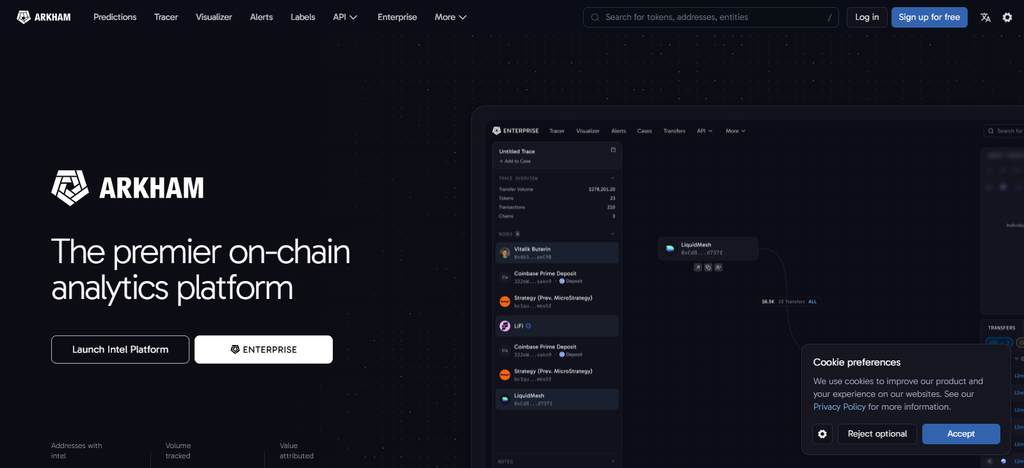
It interacts with several blockchain ecosystems such as Ethereum related networks, Polygon, Avalanche, BNB Chain, Optimism, Arbitrum, Base, and Tron. Accounting firms can use its transaction filters and wallet intelligence to investigate large transfers, identify counterparties and review unusual activity.
Its API allows integration with custom internal monitoring systems. Basic explorer functionality is free and enterprise pricing is per team. It’s not a complete accounting ledger or an automatic reconciliation platform.
Characteristics
- Entity Identification: Identifies blockchain addresses linked to known entities, such as exchanges, investment funds, and other publicly attributed organizations.
- Transaction Visualization: Offers visualizations to analyze wallet relationships, fund movements, and links between various blockchain addresses.
- Wallet Monitoring: Allows users to monitor selected wallets, analyze balances, transaction histories, and portfolio changes.
- Custom Notifications: Enables teams to track significant changes with notifications on specific entities, wallet activity and transaction movements.
- API & Investigation Tools: Offering blockchain intelligence capabilities for custom monitoring, transaction investigations and internal reporting systems.
Pros
- Good wallet and entity identification features.
- Enables the investigation of intricate transaction flows.
• Gives helpful alerts to monitor your wallet - Helps to find relationships between blockchain addresses.
- Public investigation features are available.
cons
- Sometimes entity tags don’t confirm verified ownership.
- Not a dedicated crypto accounting solution.
- Additional features for enterprise investigation may be available for a fee.
- More tools are needed for financial reconciliation.
- Coverage and attribution quality varies across networks.
3. DeBank
DeBank enables crypto accounting firms to track client wallets, token holdings, DeFi positions and portfolio activity across supported blockchain networks. The portfolio dashboard provides visibility into wallet holdings, protocol interactions, token allocations, and asset values, which are useful for reviewing decentralized finance transactions.
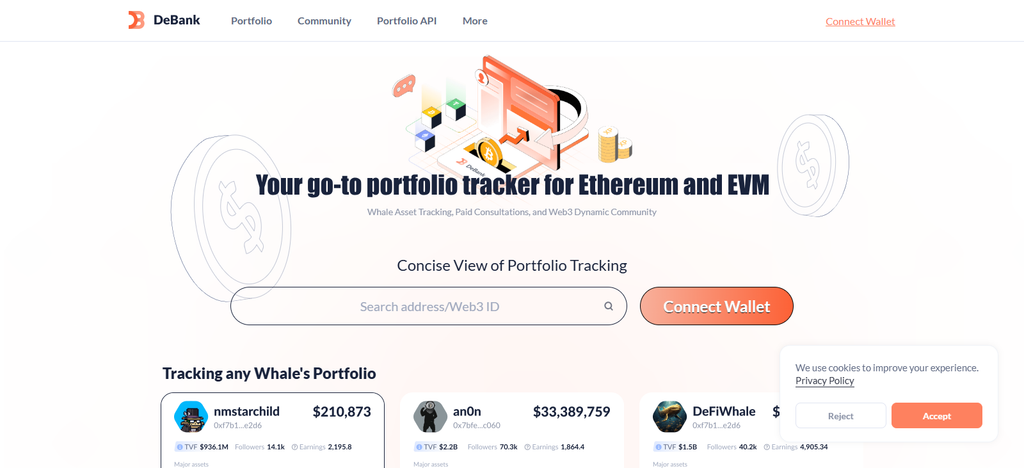
It has the strongest coverage around EVM-compatible ecosystems. Accountants can build internal reporting workflows using existing portfolio data and developer API capabilities, but there is no guaranty of native integration with QuickBooks, Xero or NetSuite.
To organize wallet monitoring and client tracking, you can use wallet lists and external systems. The public portfolio is freely accessible, but you might have to pay separately for API access or for commercial access.
Characteristics
- DeFi Portfolio Tracking: View wallet holdings, token balances and decentralized finance positions across supported networks and protocols.
- Multi-Wallet Monitoring: Users can view multiple public wallet addresses and compare their portfolio activity.
- Protocol Visibility: Assists in tracking assets deposited in lending platforms, liquidity pools, staking services, and other DeFi applications.
- Transaction History: Provides wallet activity data that helps accountants review transfers and decentralized application interactions.
- Developer API: Get access to data to create your own portfolio dashboards and integrate wallet data into your internal reporting systems.
Pros•
- good for DeFi portfolio tracking.
- Gives you a consolidated view of your wallet assets.
• Helps decide where to invest at the protocol level. - Provides easy public wallet lookup.
- Supports data workflows for developers.
Cons
- Not a substitute for professional accounting software.
- Accounting software integrations are native, but limited.
- DeFi valuations can change quickly.
- EVM coverage is not suitable for all client portfolios.
External tools might be needed for advanced reporting.
4. Zerion
Zerion provides multi-chain portfolio monitoring, giving accounting teams a view into wallet balances, tokens, NFTs and decentralized finance positions from one interface. The networks it supports include Ethereum, Solana, Arbitrum, Base, Optimism, Polygon, BNB Chain, Avalanche and other ecosystem.
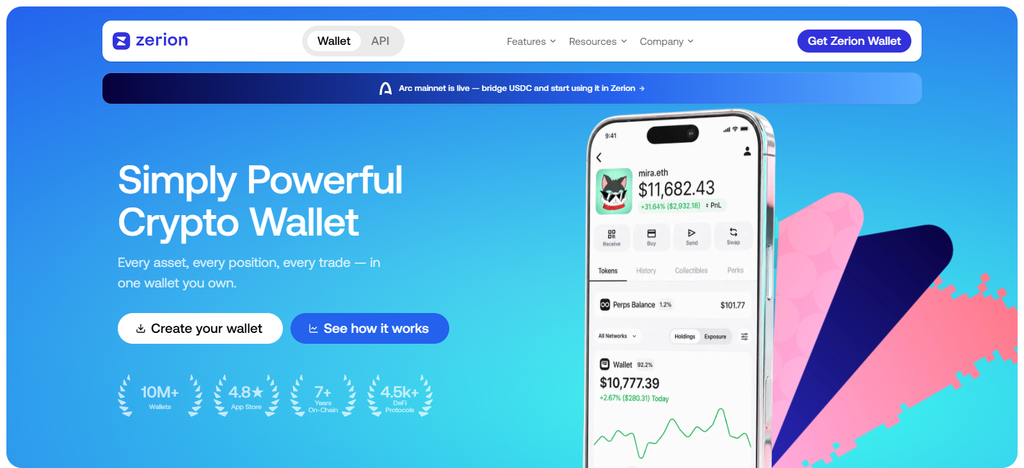
Companies can track the wallets and transaction history to review client asset movements, monitor changes in a portfolio and gather information for bookkeeping. Direct accounting integrations are implementation-dependent. Developer API access can help integrate wallet data into custom accounting dashboards.
Consumer wallet and portfolio services provide an accessible entry point, while business API arrangements may be subject to varying commercial terms. It is not intended as a dedicated multi-client accounting management.
Characteristics:
- Portfolio Monitoring: Monitors wallet balances and portfolio transactions across supported blockchain networks via a unified interface.
- Wallet Address Tracking: Users can view public wallet addresses, token balances and history of transaction activities.
- DeFi Position Visibility: Helps you monitor decentralized finance holdings, staking activities, and other protocol positions supported.
- Transaction History: Offers wallet transaction information that can assist accounting teams in reviewing transfers and investigating portfolio changes.
- Developer API: Allows businesses to pull wallet and portfolio data to build custom dashboards and monitoring applications.
Pros:
- Provides easy to use portfolio tracking interface.
- Supports a lot of blockchain ecosystem.
- Good for tracking tokens and DeFi positions.
- Has capability to watch wallet addresses.
- Custom reporting workflows via API access.
Cons
- Not a full crypto accounting platform.
Enterprise multi-client functionality may require custom development. - Some advanced features require network support.
- Does not verify wallet ownership independently.
- Complex reconciliation transactions may require additional software.
5. zapper
Zapper provides a single portfolio interface that helps accounting firms audit crypto wallets, token holdings, NFTs, and DeFi positions. Its developer API gives on-chain data for over 50 blockchain networks, including portfolio balances, transaction details, token information and decentralized finance activity.
This can help firms that need to build bespoke dashboards for a wide range of clients and collect wallet information for financial reviews. Zapper is particularly good at tracking diversified Web3 portfolios and seeing how assets are spread across networks.
Accounting integration is normally API-based development or data exports and does not require a pre-built ledger connection. Enterprise API access requires commercial evaluation, and access to the public portfolio and developer services is priced differently.
Characteristics
- Multi-Chain Data: Provides portfolio data across multiple supported networks to give firms visibility into diversified client assets.
- Wallet Activity Tracking: View transaction activity and portfolio changes to understand movements between wallets and protocols.
- DeFi Monitoring: It helps to analyze decentralized finance holdings, token distribution and interactions with protocols.
- API Integration: Gives developers access to data to build custom dashboards, portfolio monitoring systems, and blockchain reporting workflows.
Pros
- Provides a snapshot of a Web3 portfolio.
- Helps in checking many wallet addresses.
- Provides useful DeFi portfolio data.
- Supports API data integrations.
- Makes information about blockchain assets more accessible
Cons
- Not a full accounting/bookkeeping solution.
- Advanced API access may have additional costs.
- It’s not primarily designed for automated ledger reconciliation.
- Availability of historical data may vary.
- Companies may need to use third-party tools to document their audits.
6. Breadcrumbs (optional)
Breadcrumbs offers blockchain transaction analysis, wallet attribution, counterparty identification and transaction-flow investigation visualization. Accounting and compliance teams can use the tools to understand where funds are coming from, identify related addresses, investigate suspicious transfers and examine relationships between transactions across supported networks.
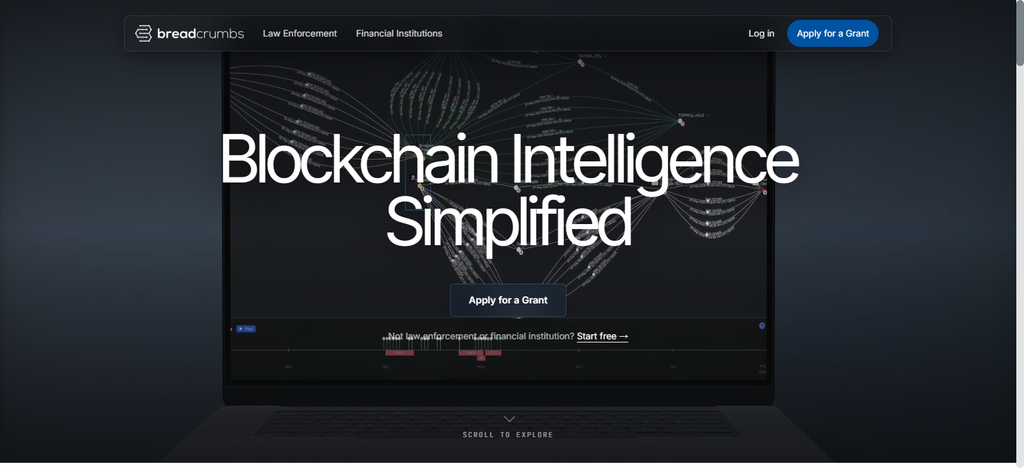
Its API offers address attribution, risk information, sanctions screening, and transaction history over 15+ chains. This can be useful for firms with complex client transactions or investigating unexplained wallet movements.
Its API can support custom monitoring and reporting systems but integration with accounting software directly and automated ledger reconciliation needs to be checked separately. API usage is on a credit basis. Documented transaction search requests are $0.01 per page.
Characteristics
- Visual Transaction Tracking: Allows visualization of cryptocurrency transactions between wallet addresses to aid transaction investigation.
- Wallet Attribution: Aids in identifying address relationships and existing wallet labels for understanding transaction counterparties.
- Transaction Investigation: Enables users to monitor incoming and outgoing transfers and follow fund movement on supported networks.
- Risk Screening – delivers blockchain intelligence capabilities to assist in the investigation of potentially suspicious addresses and transaction activity.
- API Capabilities: Provides data access to integrate blockchain data into custom investigation dashboards and monitoring workflows.
Pros
- Enables comprehension of tracing of transactions.
- Helps in the investigation of complex wallet relationships.
- Supports blockchain address analysis
- Good for identifying unusual fund flows.
- Provides API based monitoring capabilities.
Cons
- Not designed for full crypto accounting.
- Custom development may be needed for accounting integrations.
- More verification may be needed for address attribution.
- Costs may increase with advanced use of the API.
- Investigation capabilities are no substitute for formal compliance procedures.
7. Chainalysis
Chainalysis provides professional blockchain transaction monitoring and risk intelligence services to accounting firms, financial institutions and compliance teams. Its KYT (Know Your Transaction) solution tracks incoming and outgoing crypto transfers, evaluates wallet exposure, detects suspicious transaction patterns and issues real-time risk alerts.
It supports over 400 blockchain networks and 50 million tokens, which is helpful for firms that have clients with varied digital asset holdings. Accounting teams can research high-risk counterparties, record transaction review findings and link monitoring workflows via APIs and ecosystem integrations.
It’s enterprise-oriented pricing, usually requiring a custom quote. It is more about compliance and risk monitoring than about bookkeeping or ledger reconciliation.
Characteristics
- Know Your Transaction (KYT): Provides visibility into crypto transactions to identify potential exposure to suspicious wallets, entities, and financial activities.
Wallet Risk Screening – Assess wallet exposure to sanctions, illicit activity and other blockchain-related financial risks. - Real-Time Monitoring: Supports transaction monitoring and alerts to allow compliance teams to investigate significant cryptocurrency movements.
- Blockchain Investigations: Analytical tools to track cryptocurrency transactions and analyze relationships between wallets and entities.
- Enterprise Integrations: Professional grade data and integration capabilities to connect blockchain intelligence with institutional compliance and investigation workflows.
Pros
- Powerful capabilities for institutional blockchain intelligence.
- Helps to highlight potential financial crime risk.
- Assists in transaction monitoring and risk assessment.
- Good for enterprise compliance operations.
- Provides extensive investigative capabilities.
Cons
- Enterprise pricing can be expensive for smaller businesses.
- The advanced investigation features need training to use.
- Not a full crypto bookkeeping solution.
Certain integrations may require enterprise level agreements. - Risk indicators must be reviewed and interpreted by professionals.
8. TRM Labs
TRM Labs provides blockchain intelligence, transaction monitoring, wallet screening and cryptocurrency risk detection to businesses and financial institutions. Crypto accounting firms may utilize its capabilities to analyze client wallet activity, identify suspicious counterparties, investigate potentially illicit transactions and understand cross-chain fund movement.
Its platform enables monitoring across more than 190 blockchains, although asset-specific and risk-screening coverage varies by network. Compliance teams can use transaction intelligence and risk information to review client payments and keep supporting investigation records.
API and enterprise integrations can tie monitoring data into workflows within the organization. Prices are typically customized to meet business needs, transaction volumes and organizational needs. It’s more of a compliance and investigation tool, not a complete accounting platform.
Characteristics
- Transaction Monitoring: Assists in observing cryptocurrency transactions and identifying irregular transaction patterns on the supported blockchain networks.
- Wallet Screening: Delivers wallet risk intelligence to assist accounting and compliance teams in assessing client addresses and transaction counterparties.
- Cross-Chain Investigations : Helps trace cryptocurrencies moving across different blockchain ecosystems.
- AML & Sanctions Detection: Detects exposure to sanctioned entities, illicit financial activity and other compliance related risks.
- API & Enterprise Workflows: Provides the ability to integrate with internal monitoring, reporting and compliance systems by providing blockchain intelligence integration capabilities.
Pros
- Offers professional blockchain risk intelligence.
- Assists in detecting suspicious wallet activity.
- Supports research on cross-chain transactions.
- Useful for AML and compliance work flows.
- Provides enterprise integration capabilities.
Cons
- Might not be priced for small accounting firms.
- Some advanced tools require specialist knowledge.
- Not designed primarily for bookkeeping.
- Some features require subscription and network availability.
- Compliance alerts need further investigation and documentation.
9. Etherscan
Etherscan is an Ethereum blockchain explorer that lets accounting firms see wallet addresses, transaction hashes, token transfers, smart contract interactions, and past blockchain activity. Accountants can use it to check incoming and outgoing transactions, ERC-20 token movements, gas fees, and timestamps of transactions.
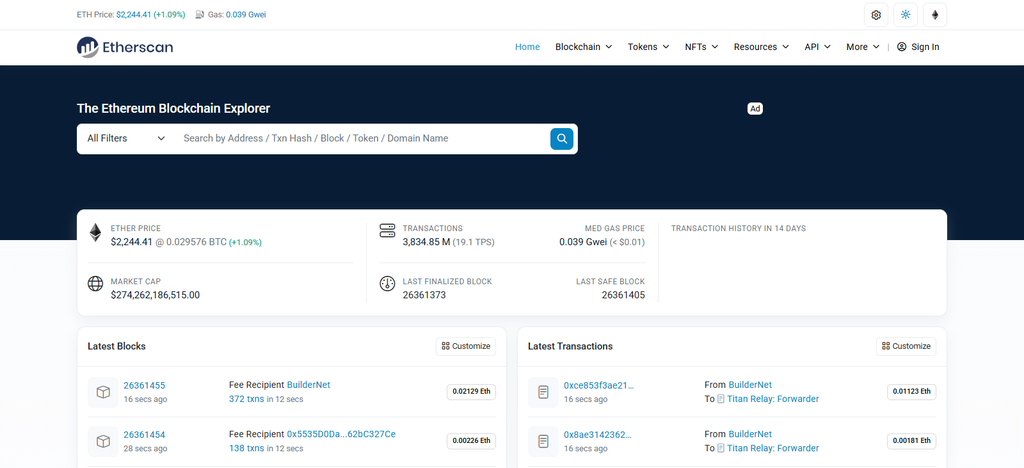
Its API offers structured blockchain data for developers to build custom accounting dashboards, transaction monitoring systems, and reconciliation workflows. It is not a full blockchain monitoring, but rather a focus on Ethereum and Ethereum related data.
It’s publicly available or you can use the API, which has a number of tiers and limits depending on how you use it. Multi-client management and accounting software integration will typically require external systems or custom development.
Characteristics
- Transaction Monitoring: Assists in observing cryptocurrency transactions and identifying irregular transaction patterns on the supported blockchain networks.
- Wallet Screening: Delivers wallet risk intelligence to assist accounting and compliance teams in assessing client addresses and transaction counterparties.
- Cross-Chain Investigations : Helps trace cryptocurrencies moving across different blockchain ecosystems.
- AML & Sanctions Detection: Detects exposure to sanctioned entities, illicit financial activity and other compliance related risks.
- API & Enterprise Workflows: Provides the ability to integrate with internal monitoring, reporting and compliance systems by providing blockchain intelligence integration capabilities.
Advantages
- Offers professional blockchain risk intelligence.
- Assists in detecting suspicious wallet activity.
- Supports research on cross-chain transactions.
- Useful for AML and compliance work flows.
- Provides enterprise integration capabilities.
Cons
- Might not be priced for small accounting firms.
- Some advanced tools require specialist knowledge.
- Not designed primarily for bookkeeping.
- Some features require subscription and network availability.
- Compliance alerts need further investigation and documentation.
10. Blockchair
Blockchair provides blockchain explorers and blockchain data access via APIs to help accounting firms analyze cryptocurrency transactions, wallet addresses and balances, blocks, and historical network activity.
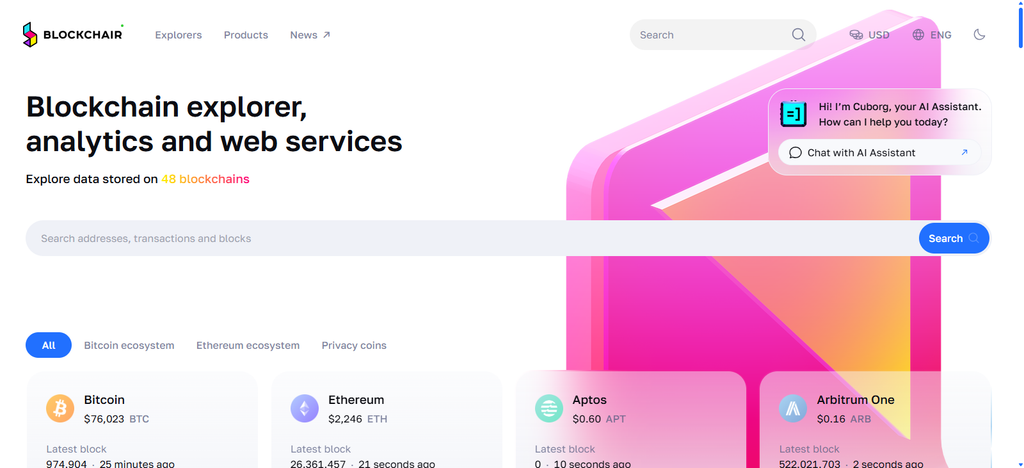
Its platform supports multiple blockchain ecosystems such as Bitcoin, Bitcoin Cash, Ethereum, Litecoin, Dogecoin, Dash, Ripple, Stellar, Cardano and other networks. Accountants can use its filtering and search features to verify client transactions and investigate transfers, and to obtain blockchain records for financial documentation.
Its API supports structured queries, sorting, filtering and aggregated blockchain information that can be integrated into custom reporting and accounting workflows .
API access is limited for testing. Commercial applications need appropriate premium access to the API. Its main features are not dedicated multi-client dashboards and native accounting integrations.
Characteristics
- Wallet Address Explorer: Enables accounting teams to search Ethereum wallet addresses and review balances, token holdings and blockchain activity.
- Transaction Verification: Provides transaction hashes, timestamps, confirmation status, sender and receiver addresses to authenticate financial records.
- ERC-20 Token Tracking: Enables accountants to review token transfers and movements of supported Ethereum-based electronic assets.
- Smart Contract Info: Information regarding contract interactions, transaction info and verified contract information to analyze decentralized app activity.
- Developer API: Provides structured data from the Ethereum blockchain for businesses to build transaction monitoring, reconciliation and reporting workflows.
Pros
- Offers transparent Ethereum transaction logs.
- Has wallet and token search.
- Assists in checking the transaction hashes and time stamps.
- Gives you helpful smart contract information.
- Supports fetching data from the blockchain via API.
Cons •
- Mainly covers Ethereum blockchain data.
- Does not provide full accounting automation.
- For advanced API usage, paid plans may be required.
- Lack of native multi-client management.
- Needs more tools to do full financial reports.
Conclusion
The best wallet monitoring tools for crypto accounting firms will depend on client requirements, blockchain coverage, transaction monitoring, and accounting workflows. Wallet balances and portfolio activity are tracked using platforms like Nansen, Arkham, DeBank, Zerion and Zapper, while Chainalysis, TRM Labs and Breadcrumbs provide more in-depth transaction intelligence and risk analysis.
Etherscan and Blockchair are good for looking at blockchain transactions and getting historical records. Accounting firms should consider API access, multi-client management, reporting capabilities, security, accounting integrations, and pricing before selecting a platform to manage their crypto finances efficiently and accurately.
FAQ
What are wallet monitoring tools for crypto accounting firms?
Wallet monitoring tools help crypto accounting firms track client wallet balances, transaction histories, token transfers, and blockchain activity. They support financial recordkeeping, transaction verification, and portfolio monitoring.
Which are the best wallet monitoring tools for crypto accounting firms?
Nansen, Arkham, DeBank, Zerion, Zapper, Breadcrumbs, Chainalysis, TRM Labs, Etherscan, and Blockchair are useful options for different wallet monitoring, blockchain analytics, and transaction investigation requirements.
What features should crypto accounting firms look for in wallet monitoring software?
Important features include multi-chain wallet tracking, transaction alerts, historical balance records, automatic transaction classification, API access, client-level reporting, reconciliation support, and security controls.
Can wallet monitoring tools track multiple blockchain networks?
Yes. Platforms such as Nansen, Zapper, Zerion, Chainalysis, and TRM Labs support multiple blockchain ecosystems. However, network coverage and supported assets vary between providers.