


Today I’ll be covering the Best Crypto Tax Platforms for Staking & Restaking. I’ll be talking about features, pricing, supported wallets, staking rewards, restaking capabilities, transaction capacity and tax reporting tools. You’ll also learn about how these platforms track DeFi activities, calculate crypto income, handle numerous transactions and help investors simplify their crypto tax reporting.
- What Are Crypto Tax Platforms for Staking and Restaking?
- Why Do Staking and Restaking Investors Need Crypto Tax Software?
- Key Points
- 1. Koinly
- Koinly Details
- 2. CoinLedger
- CoinLedger Details
- 3. CoinTracker
- CoinTracker Details
- 4. TokenTax:
- TokenTax Details
- 5. ZenLedger
- ZenLedger Details
- 6. CoinTracking
- CoinTracking Details
- 7. Cryptio
- Cryptio Details
- 8. Blockpit
- Blockpit Details
- 9. Summ
- Summ (Formerly Crypto Tax Calculator) Details
- 10. Recap
- Recap Details
- Comparison Table: 10 Best Crypto Tax Platforms for Staking & Restaking
- Conclusion
- FAQ
What Are Crypto Tax Platforms for Staking and Restaking?
Crypto tax platforms for staking and restaking are specialized software tools that help cryptocurrency investors with tracking rewards, managing blockchain transactions, calculating taxable income and preparing tax reports.
The platforms interact with crypto wallets, exchanges and DeFi protocols to collect transaction data — including staking deposits, reward distributions, withdrawals, liquid staking tokens and restaking activities. They help investors track reward values, aggregate transaction history, calculate capital gains, and find missing records.
Other platforms also support automated imports, portfolio reconciliation, and the generation of tax reports, making it easier to manage complex crypto activities and keep accurate tax records.
Why Do Staking and Restaking Investors Need Crypto Tax Software?
Restaking Transaction Management: Investors using restaking protocols can manage deposits, withdrawals, reward distributions, and liquid restaking token transactions via compatible integrations and transaction classification tools.
Accurate tax calculations: The platforms use transaction histories and historical asset prices to calculate cryptocurrency income, capital gains, and losses, assisting investors in preparing more organized tax records.
Multi-Wallet Integration: Investors can consolidate their transaction history across wallets, exchanges and blockchain networks into a single dashboard, reducing fragmented records and improving portfolio visibility.
DeFi Transaction Tracking: Crypto tax software helps organize DeFi activities, including but not limited to liquidity providing, token swaps, staking deposits, reward claims, and other supported smart contract interactions.
Identifying Missing Transactions. Reconciliation tools can help you spot missing deposits, duplicate transactions, mismatched transfers, and incomplete reward records that can skew your tax calculations.
Historical Reward Valuation: Investors can trace the value of staking and restaking rewards back in time based on the timestamp of the transaction, allowing for more consistent income tracking and cost basis calculations.
Easier Tax Reporting: These platforms produce profit and income summaries, capital gain reports, transaction histories and downloadable tax documents, which facilitate the annual tax preparation process to be more organized and efficient.
Key Points
| Crypto Tax Platform | Key Point |
|---|---|
| Koinly | Comprehensive crypto tax platform with support for staking rewards, DeFi activities, multiple wallets, and tax reporting across numerous jurisdictions. |
| CoinLedger | Popular tax software that automatically imports transactions from exchanges, wallets, and major DeFi protocols, helping users track staking income and taxable events. |
| CoinTracker | Well-known portfolio tracking and crypto tax solution offering automated transaction reconciliation and support for staking-related tax reporting. |
| TokenTax | Designed for complex crypto portfolios, including DeFi, staking, and advanced transaction histories, with optional professional tax assistance. |
| ZenLedger | Crypto tax and accounting platform that supports staking rewards, DeFi activities, and automated tax calculations for individual investors and businesses. |
| CoinTracking | Advanced crypto tax and portfolio analytics platform favored by active traders and investors handling large transaction volumes, including staking income. |
| Cryptio | Enterprise-focused crypto accounting and tax platform with support for complex on-chain activities, including staking, treasury operations, and institutional reporting. |
| Blockpit | Tax reporting solution supporting cryptocurrency transactions, staking activities, and localized tax calculations across multiple countries. |
| Summ (formerly Crypto Tax Calcul | Supports thousands of integrations across exchanges, wallets, and DeFi protocols, with coverage for staking, airdrops, bridges, and other on-chain transactions. |
| Recap | Crypto tax platform that helps users track portfolio activity, staking rewards, and taxable crypto events while generating compliant tax reports. |
1. Koinly
Founded in 2019.
Koinly is a crypto tax platform founded in 2019 to help investors track their transactions across exchanges, wallets and blockchains. It supports hundreds of exchange, wallet and blockchain integrations, including API, public wallet address and CSV imports. Koinly tracks staking rewards, DeFi income, airdrops, capital gains and other crypto transactions.
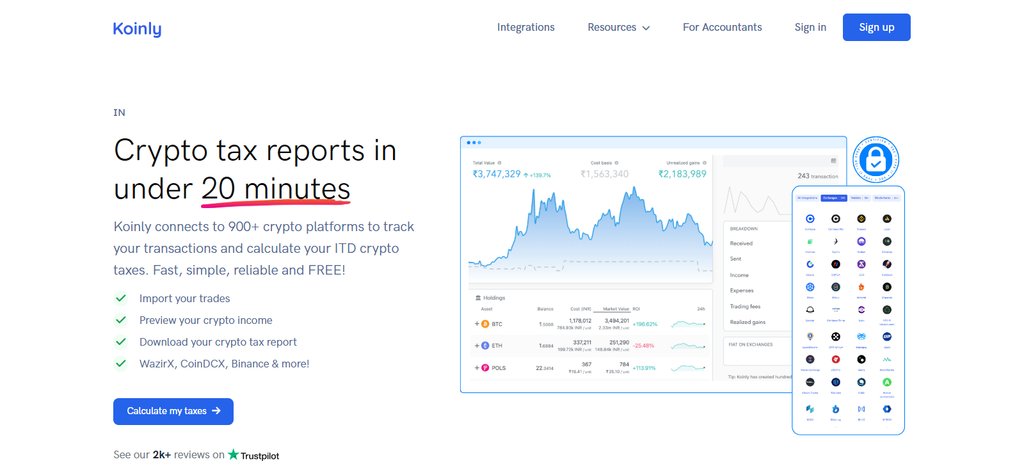
General staking integration doesn’t guaranty full restaking automation, so its restaking-specific support needs to be checked on a protocol-by-protocol basis. Prices vary based on the tax year selected and volume of transactions. Importing is free, and tax report plans are paid.
Transaction limits differ by plan. Its reports include income, capital gains, holdings and transaction histories.I have been an avid collector of rare books and manuscripts for over forty years.
Koinly Details
| Category | Details |
|---|---|
| Features | Automated crypto transaction imports, staking reward tracking, DeFi support, wallet synchronization, capital gains calculations, and tax reports. |
| Staking Support | Tracks supported staking rewards, deposits, withdrawals, and crypto income. |
| Restaking Support | Protocol-specific support needs verification for EigenLayer and other restaking platforms. |
| Wallet Integrations | Supports multiple blockchain wallets, exchanges, and CSV imports. |
| Tax Reporting | Provides capital gains, income summaries, transaction histories, and tax reports. |
| Transaction Management | Offers transaction reconciliation, duplicate detection, and missing transaction identification. |
| Pros | Broad wallet and exchange compatibility; international tax reporting; automated transaction categorization; user-friendly dashboard; useful DeFi tracking capabilities. |
| Cons | Advanced reporting requires paid plans; complex DeFi transactions may need manual corrections; transaction limits depend on pricing tiers; dedicated restaking automation is not guaranteed. |
2. CoinLedger
Founded: In 2018
Founded in 2018, CoinLedger (formerly CryptoTrader.Tax) provides cryptocurrency tax reporting, portfolio tracking and transaction management solutions. Wallet addresses, exchange integration, CSV imports and blockchain transaction histories are supported.

It has staking capabilities of native staking, liquid staking, staking deposit, withdraw, reward income tracking. It supports assets and activities related to platforms like Lido and Marinade, but the methods of integration can be different. Before relying on automatic imports, dedicated restaking protocol support should be verified.
Its basic tax plans start at about $49 per year of tax, with caps on transactions depending on the plan you choose. Reports including capital gains, income, transaction history and tax calculations.
CoinLedger Details
| Category | Details |
|---|---|
| Features | Automated transaction imports, portfolio tracking, DeFi support, NFT tracking, capital gains calculations, and tax-loss harvesting. |
| Staking Support | Supports staking-related income tracking and compatible blockchain transaction imports. |
| Restaking Support | Specific restaking protocol integrations should be checked individually. |
| Wallet Integrations | Supports exchange APIs, blockchain wallets, and CSV transaction imports. |
| Tax Reporting | Generates capital gains reports, income records, and tax documentation. |
| Transaction Management | Provides transaction reconciliation, categorization, and historical record management. |
| Pros | Beginner-friendly interface; straightforward tax reporting; multiple import options; useful portfolio tracking; tax-loss harvesting features. |
| Cons | Some complex DeFi transactions require manual classification; advanced reporting requires paid plans; transaction limits vary by subscription; restaking-specific automation needs verification. |
3. CoinTracker
Established: 2017
CoinTracker, founded in 2017, offers automated tax reporting and cryptocurrency portfolio management. It aggregates transaction histories by connecting supported exchanges, blockchain wallets, and DeFi platforms.
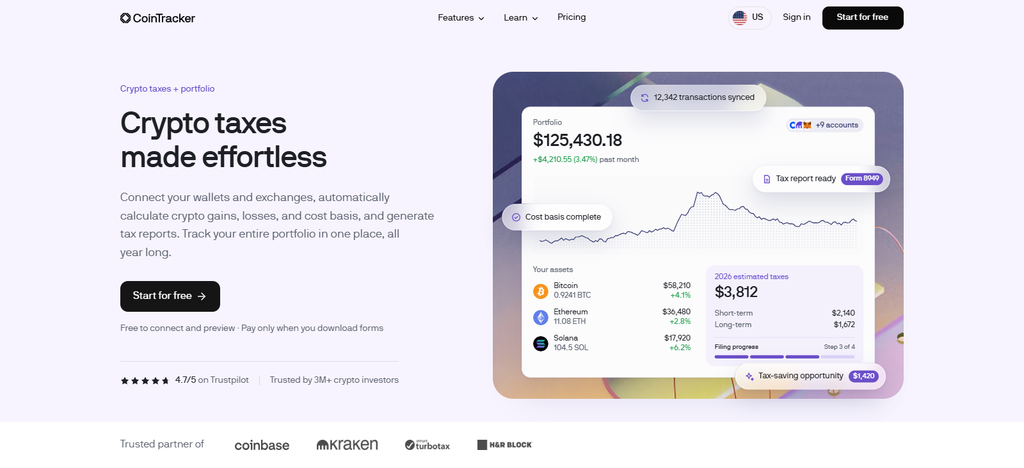
It has features such as tracking staking rewards, income classification, capital gains calculation, DeFi transaction categorization and spam detection. Investors can adjust transaction classifications and cost basis when imported records need to be corrected. Don’t assume that DeFi integrations of a protocol will have restaking support – look for dedicated restaking support in each protocol.
The pricing is tiered on subscription levels based on the number of transactions and the reporting needs. Published plans support 10,000, 25,000 and 50,000 transactions. Larger volumes available with specialized services for larger portfolios.
CoinTracker Details
| Category | Details |
|---|---|
| Features | Cryptocurrency portfolio tracking, automated wallet synchronization, tax calculations, DeFi tracking, and tax-loss harvesting. |
| Staking Support | Helps identify and organize supported staking rewards and crypto income. |
| Restaking Support | Dedicated restaking coverage depends on protocol and transaction compatibility. |
| Wallet Integrations | Supports centralized exchanges, self-custody wallets, and blockchain transaction imports. |
| Tax Reporting | Offers capital gains reports, income summaries, and supported tax filing exports. |
| Transaction Management | Provides transaction categorization, wallet-level tracking, and portfolio reconciliation. |
| Pros | Easy-to-use portfolio dashboard; automated transaction synchronization; useful exchange integrations; tax-loss harvesting; supports multiple crypto assets. |
| Cons | Higher transaction volumes can increase subscription costs; some advanced features require premium plans; complex DeFi records may need corrections; restaking support is not universal. |
4. TokenTax:
Established: 2017
Founded in 2017, TokenTax offers a combination of professional tax preparation services and software for calculating taxes owed on cryptocurrencies. It allows for centralized exchange imports, DeFi transactions, NFT activity, and manual transaction uploads for more complex portfolios.
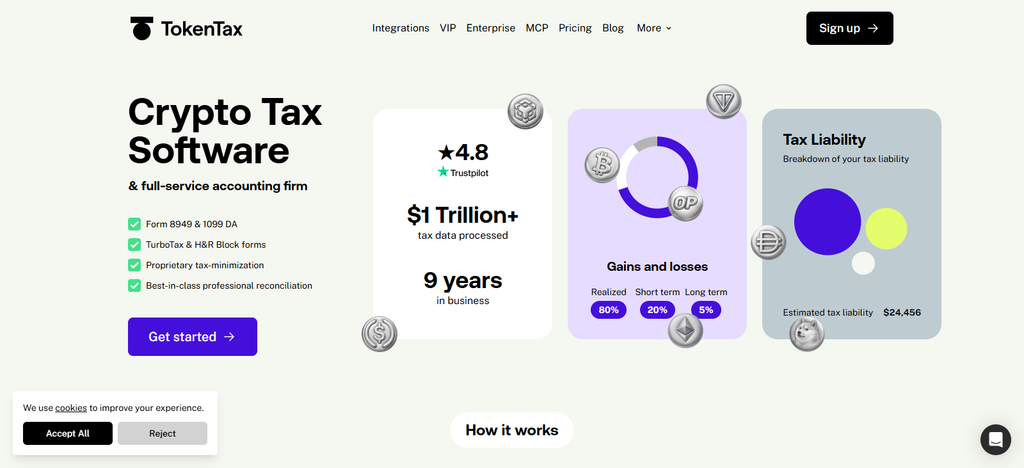
It can be used to organize records of staking related income and calculate cryptocurrency gains. Investors should confirm specific restaking protocol automation before platform choice. Its integrations bring together your trading and wallet activity into a single tax record.
Basic starts at $49 per tax year, Premium at $199, Pro at $1,999, and VIP at $3,499. Transaction capacities are from 100 to 30,000 depending on the plan. Income, capital gains, and audit-trail records are reported.I’m going to try to keep it simple.
TokenTax Details
| Category | Details |
|---|---|
| Features | Crypto tax calculations, exchange imports, DeFi transaction management, professional tax preparation, and capital gains reporting. |
| Staking Support | Helps organize supported staking-related income and transaction records. |
| Restaking Support | Specific restaking protocol automation should be confirmed before use. |
| Wallet Integrations | Supports major exchanges, compatible wallets, and manual transaction uploads. |
| Tax Reporting | Provides income reports, capital gains calculations, and tax documentation. |
| Transaction Management | Helps consolidate trading, staking, and DeFi records for tax preparation. |
| Pros | Professional tax assistance; useful for complex portfolios; multiple reporting options; supports DeFi activity; suitable for investors requiring additional tax preparation support. |
| Cons | Higher-priced professional plans; some services are expensive for individual investors; complex transaction imports may require manual work; limited confirmation of dedicated restaking automation. |
5. ZenLedger
Founded: Year 2017
Founded in 2017, ZenLedger focuses on cryptocurrency tax calculations, portfolio reconciliation and reporting for investors with different transaction volumes. The platform is capable of importing data from compatible exchanges, wallets and blockchain networks through integrations and CSV formats.
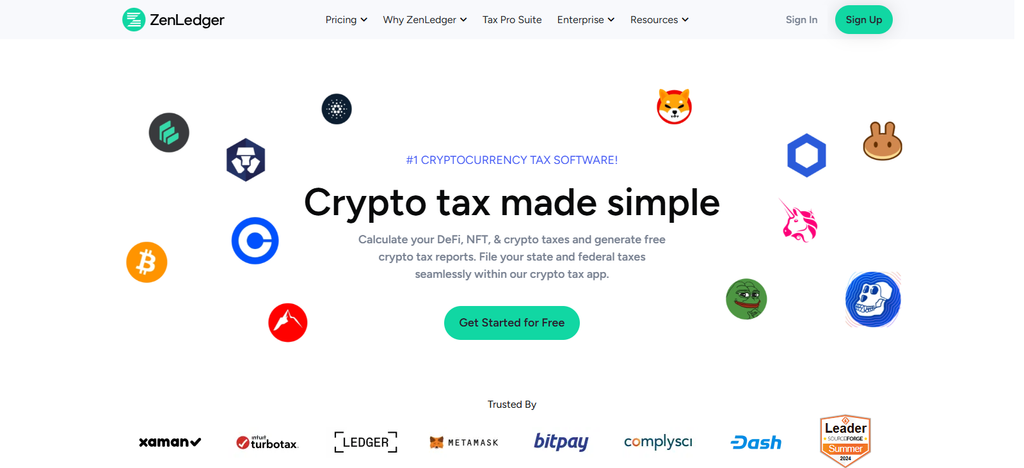
Its tax reporting features help you manage your trading activity, crypto income, staking rewards and DeFi transactions. Investors should verify whether their specific restaking protocol and reward distribution events are automatically supported, as general staking support does not necessarily mean dedicated restaking support.
The lowest entry pricing has been reported to be around $49 per tax year, with transaction limits and advanced features depending on the plan. Reports include transaction records, income summaries and capital gains to help you prepare your taxes.“
ZenLedger Details
| Category | Details |
|---|---|
| Features | Automated crypto tax calculations, portfolio reconciliation, DeFi tracking, NFT transaction management, and tax reporting. |
| Staking Support | Supports the organization and reporting of compatible staking reward transactions. |
| Restaking Support | Individual restaking protocol compatibility requires verification. |
| Wallet Integrations | Supports multiple exchange accounts, blockchain wallets, and CSV imports. |
| Tax Reporting | Generates capital gains, income summaries, and cryptocurrency tax reports. |
| Transaction Management | Helps organize transaction histories, wallet records, and crypto income. |
| Pros | Multiple wallet integrations; DeFi and NFT transaction support; useful tax calculation features; portfolio reconciliation; supports different investor requirements. |
| Cons | Some advanced capabilities require higher-tier plans; complicated transaction histories may need manual corrections; pricing increases with transaction volume; restaking automation needs verification. |
6. CoinTracking
Established: 2012
Launched in 2012, CoinTracking provides cryptocurrency portfolio tracking, transaction analysis and tax reporting for investors with multiple wallets and exchanges. It has hundreds of exchange and wallet integrations, API sync and CSV imports.
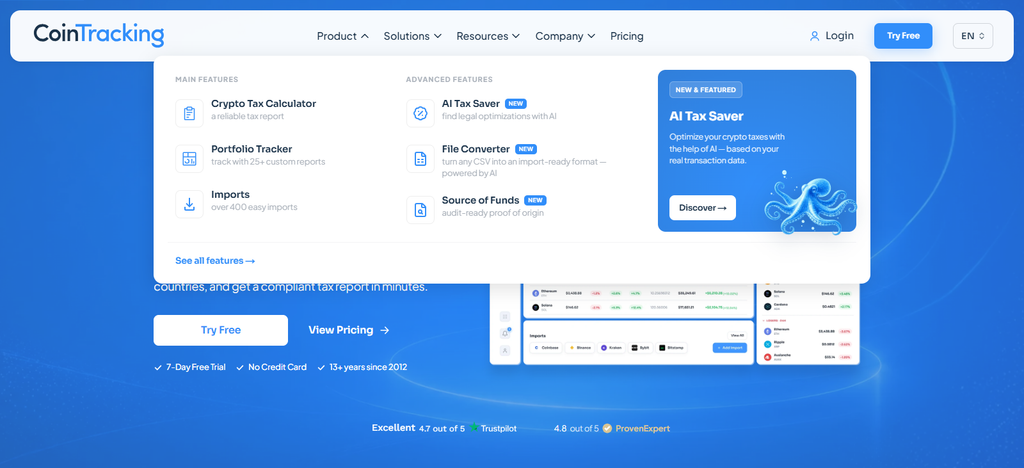
Its reporting system combines staking income, trading activity, DeFi transactions, asset balances, and capital gains. Investors can view and sort imported reward transactions, but specific restaking protocols need to be checked individually for automatic support. Starter starts from around $49 per year, Pro from $169, and Expert from $259.
Transaction Capacities: Plan options include transaction capacities from less than 200 records to 100,000 transactions. It provides detailed reports on your transaction history, gains and losses, and a summary of your portfolio.
CoinTracking Details
| Category | Details |
|---|---|
| Features | Detailed portfolio analytics, transaction imports, crypto tax calculations, exchange synchronization, and historical reporting. |
| Staking Support | Helps track supported staking rewards and other crypto income transactions. |
| Restaking Support | Restaking transactions should be checked individually for automatic recognition and classification. |
| Wallet Integrations | Supports numerous exchanges, wallets, APIs, and CSV imports. |
| Tax Reporting | Provides capital gains, income, profit-and-loss, and portfolio reports. |
| Transaction Management | Offers transaction categorization, historical records, balance tracking, and reconciliation tools. |
| Pros | Detailed transaction analytics; useful for high-volume portfolios; extensive historical tracking; multiple tax calculation methods; advanced reporting capabilities. |
| Cons | Interface can feel complicated for beginners; manual categorization may be necessary; advanced features require paid plans; complex restaking events may need adjustments. |
7. Cryptio
Founded: 2018 (10)
Cryptio was founded in 2018 and was built for institutions, accounting teams, crypto businesses and financial professionals who manage complex digital asset operations. It aggregates transactional data from exchanges, custodians, wallets, smart contract, and DeFi environments into an accounting-centric ledger.

It can reconcile transactions, offer crypto-to-fiat valuations, generate financial reports and integrate with accounting systems such as Xero and QuickBooks. Any possible staking-related records can be added whenever the connected data sources allow. Dedicated restaking reward automation needs protocol-specific verification.
It is not a consumer tax calculator, but usually involves specific business and enterprise pricing, not just retail transaction based plans. It reports on the accuracy of accounting, audit trails and institutional financial records.
Cryptio Details
| Category | Details |
|---|---|
| Features | Digital asset accounting, blockchain transaction reconciliation, financial reporting, valuation management, and enterprise accounting integrations. |
| Staking Support | Can incorporate supported staking-related records through connected data sources and accounting workflows. |
| Restaking Support | Dedicated protocol-level restaking automation needs to be confirmed with the provider. |
| Wallet Integrations | Connects supported institutional wallets, custodians, exchanges, and blockchain data sources. |
| Tax Reporting | Focuses on accounting records, financial statements, audit trails, and digital asset reporting. |
| Transaction Management | Supports transaction reconciliation, historical record management, and accounting categorization. |
| Pros | Designed for institutional requirements; strong accounting focus; detailed audit trails; useful financial reconciliation; supports complex digital asset operations. |
| Cons | Less suitable for casual retail investors; customized pricing can make cost comparisons difficult; implementation may require professional assistance; specific restaking integrations need verification. |
8. Blockpit
Founded: 2017 year
Blockpit is a cryptocurrency tax reporting, portfolio tracking and digital asset compliance solution founded in 2017 in Austria. It has over 700 exchange and wallet integrations, including API connections, blockchain imports, and CSV uploads.

Its transaction management features help investors to organize staking rewards, DeFi activity, transfers, trading transactions and capital gains. Be careful with automatic classification of rewards, as not all protocols are supported. Blockpit provides free portfolio tracking, one-time purchases of tax reports, and an optional Plus subscription.
Tax report pricing starts at €49 for up to 50 transactions, €99 for 1,000 and €149 for 3,000. Advanced reporting, transaction history, and country-specific tax documentation.
Blockpit Details
| Category | Details |
|---|---|
| Features | Cryptocurrency tax reporting, portfolio tracking, wallet integrations, transaction imports, and tax compliance tools. |
| Staking Support | Supports compatible staking-related transaction tracking and income records. |
| Restaking Support | Specific restaking protocol integrations should be checked before importing rewards. |
| Wallet Integrations | Supports exchanges, blockchain wallets, APIs, and CSV imports. |
| Tax Reporting | Provides capital gains calculations, income reports, and country-specific tax documentation. |
| Transaction Management | Offers transaction categorization, wallet synchronization, and historical portfolio tracking. |
| Pros | International tax reporting; multiple wallet integrations; useful transaction management; supports DeFi activity; accessible portfolio tracking options. |
| Cons | Some features require paid subscriptions; advanced transaction histories may require corrections; pricing varies by transaction capacity; dedicated restaking support needs confirmation. |
9. Summ
Summ (formerly Crypto Tax Calculator) offers cryptocurrency tax reporting and portfolio tracking for investors with transactions on multiple exchanges, wallets, and blockchain networks. You can import data using API connections, wallet addresses, CSV uploads, or manual entry.

The platform helps to organize staking rewards, DeFi transactions, trading activity, crypto income for tax calculations. That said, dedicated restaking protocol coverage should be checked on an individual basis, and not assumed from general DeFi support.
The pricing that’s published includes a basic Rookie subscription, beginning at around $49 per year, with limits on transactions and features that vary with the plan you choose. Reporting features include capital gains, income summary and historic tax records for supported regions.
Summ (Formerly Crypto Tax Calculator) Details
| Category | Details |
|---|---|
| Features | Automated crypto tax calculations, DeFi tracking, NFT transaction imports, portfolio management, and transaction reconciliation. |
| Staking Support | Helps identify and organize supported staking rewards and crypto income. |
| Restaking Support | Specific restaking protocols require individual integration and transaction compatibility checks. |
| Wallet Integrations | Supports exchange connections, blockchain wallets, APIs, and CSV imports. |
| Tax Reporting | Generates capital gains calculations, income summaries, and cryptocurrency tax reports. |
| Transaction Management | Provides transaction categorization, missing record identification, and historical data reconciliation. |
| Pros | Extensive integration coverage; useful DeFi transaction management; automated imports; portfolio tracking; supports complex crypto transaction histories. |
| Cons | Some transaction classifications require manual adjustments; advanced reporting depends on subscription level; high-volume portfolios may require expensive plans; restaking automation is not universally confirmed. |
10. Recap
Founded: 2018 (check founding year)
Recap is a cryptocurrency tax platform, which allows investors to track their transactions, calculate capital gains and generate tax reports across multiple wallets and exchanges. It has unlimited integrations, auto-importing of transactions, and supports DeFi, mining and staking activities.

Its reward tracking features help organize staking income and transaction records, though you should verify automatic support for individual restaking protocols before importing complex reward histories. Recap’s Basic plan is £119 a year, and covers up to 5,000 transactions.
The Pro plan is £219 a year, and provides unlimited transactions. The reports include capital gains, income statements, historical tax records and CSV exports. Accountant sharing is available for professional tax prep, too.
Recap Details
| Category | Details |
|---|---|
| Features | Cryptocurrency tax calculations, portfolio tracking, automated wallet imports, DeFi support, and transaction management. |
| Staking Support | Supports tracking compatible staking-related income and transaction records. |
| Restaking Support | Specific restaking protocol compatibility should be verified before relying on automatic reporting. |
| Wallet Integrations | Supports multiple exchange and blockchain wallet integrations with automated imports. |
| Tax Reporting | Provides capital gains, income reports, transaction histories, and tax documentation. |
| Transaction Management | Offers automated synchronization, transaction categorization, and portfolio reconciliation. |
| Pros | Unlimited integrations; automated transaction imports; useful portfolio management; supports DeFi and staking activity; offers high-volume transaction plans. |
| Cons | Paid plans are required for advanced reporting; some complex DeFi records need manual adjustments; pricing may be expensive for smaller investors; dedicated restaking automation needs verification. |
Comparison Table: 10 Best Crypto Tax Platforms for Staking & Restaking
| Platform | Founded Year | Staking Support | Restaking Support | Main Strength |
|---|---|---|---|---|
| Koinly | 2019 | Yes | Protocol verification | Automated tax calculations |
| CoinLedger | 2018 | Yes | Protocol verification | Beginner-friendly reporting |
| CoinTracker | 2017 | Yes | Protocol verification | Portfolio tracking |
| TokenTax | 2017 | Yes, supported records | Protocol verification | Professional tax assistance |
| ZenLedger | 2017 | Yes, supported records | Protocol verification | Tax reconciliation |
| CoinTracking | 2012 | Yes | Protocol verification | Detailed transaction analytics |
| Cryptio | 2018 | Integration-dependent | Protocol verification | Institutional accounting |
| Blockpit | 2017 | Yes | Protocol verification | International tax compliance |
| Summ | Formerly Crypto Tax Calculator | Yes | Protocol verification | DeFi transaction management |
| Recap | Verify | Yes | Protocol verification | Automated wallet imports |
Pricing and Transaction Capacity Comparison
| Platform | Starting Price (Approx.) | Transaction Capacity | Pricing Model |
|---|---|---|---|
| Koinly | $49 | 100–10,000+ | Per tax year |
| CoinLedger | $49 | 100–Unlimited | Per tax report |
| CoinTracker | $59 | 100–10,000+ | Annual subscription |
| TokenTax | $49 | 100–30,000 | Per tax year |
| ZenLedger | $49 | 100+ | Per tax year |
| CoinTracking | $49 | 200–Unlimited | Subscription |
| Cryptio | Custom | Enterprise-dependent | Custom pricing |
| Blockpit | €49 | 50–10,000+ | Per tax year |
| Summ | $49 | 100–100,000+ | Annual subscription |
| Recap | £119 | Up to 5,000 on Basic | Annual subscription |
Wallet, DeFi and Reporting Comparison
| Platform | Wallet & Exchange Imports | DeFi Support | Tax Reporting | Best Suited For |
|---|---|---|---|---|
| Koinly | APIs, wallets, CSV | Yes | Income, capital gains | International investors |
| CoinLedger | APIs, wallets, CSV | Yes | Capital gains, income | Beginners |
| CoinTracker | APIs, wallets, exchanges | Yes | Tax reports, portfolio | Multi-wallet investors |
| TokenTax | Exchanges, wallets, CSV | Yes | Tax reports, professional services | Complex tax situations |
| ZenLedger | APIs, wallets, CSV | Yes | Income, gains, reconciliation | Tax preparation |
| CoinTracking | APIs, wallets, CSV | Yes | Detailed tax and portfolio reports | High-volume investors |
| Cryptio | Institutional wallets, custodians | Integration-dependent | Accounting and audit reports | Crypto businesses |
| Blockpit | APIs, wallets, exchanges | Yes | Country-specific tax reports | International investors |
| Summ | APIs, wallets, blockchain imports | Yes | Income, gains, tax reports | DeFi investors |
| Recap | APIs, wallets, CSV | Yes | Gains, income, tax reports | Automated portfolio tracking |
Conclusion
Wallet compatibility, reward tracking, DeFi integrations, transaction capacity, pricing, and tax reporting features determine the right crypto tax platform for staking and restaking transactions.
There are platforms like Koinly, CoinLedger, CoinTracker, TokenTax, ZenLedger, CoinTracking, Cryptio, Blockpit, Summ and Recap that offer various tools to help you manage your crypto transactions and calculate your tax liabilities.
But before selecting a platform, investors should check carefully the support for liquid staking tokens, restaking rewards, slashing events and multiple reward sources. With the right software, you can make transaction management more efficient, improve the accuracy of your records and organize your crypto tax reporting.
FAQ
What are the best crypto tax platforms for staking and restaking?
Some popular crypto tax platforms include Koinly, CoinLedger, CoinTracker, TokenTax, ZenLedger, CoinTracking, Cryptio, Blockpit, Summ, and Recap. They offer different capabilities for tracking staking rewards, DeFi transactions, wallet activity, capital gains, and crypto income.
Can crypto tax software track staking rewards automatically?
Yes, several crypto tax platforms can automatically import and identify staking reward transactions through supported wallet integrations, exchange APIs, and blockchain connections. However, automation depends on the network, wallet, and staking protocol. Some transactions may require manual classification.
What is the difference between staking and restaking for tax reporting?
Staking involves locking cryptocurrency to support blockchain network validation and earn rewards. Restaking involves using already-staked assets or liquid staking tokens to secure additional protocols. Restaking can generate multiple transaction types and reward sources, making accurate tax tracking more complex.
Are crypto staking rewards taxable?
Staking rewards may be taxable depending on the investor’s country and applicable tax regulations. Some jurisdictions treat rewards as income when received or become accessible, while subsequent sales may create additional capital gains or losses. Investors should maintain accurate reward records.