

In this article, I will cover the Best Crypto Payroll Platforms for Remote Teams to help businesses pay international employees, freelancers and contractors with cryptocurrencies and stablecoins. I will compare their key features, supported cryptocurrencies, countries they are available in, transaction fees, how fast payments are done, blockchain networks, security, and payroll automation to help businesses choose the right platform for managing global salary payments efficiently.
- What Is Crypto Payroll and How Does It Work?
- How Much Does International Crypto Payroll Cost?
- Key Points
- 1. Rise
- Best For Rise
- Rise Key Strength
- 2. Bitwage
- Best For Bitwage
- Bitwage Key Strength
- 3. Deel
- Best For Deel
- Deel Key Strength
- 4. Request Finance
- Best For Request Finance
- Request Finance Key Strength
- 5. Toku
- Best For Toku
- Toku Key Strength
- 6. Rippling
- Best For Rippling
- Rippling Key Strength
- 7. Zebec Payroll
- Best For Payroll System
- Zebec Payroll Key Strength
- 8. Parcel
- Best For Parcels
- Parcel Key Strength
- 9. Oyster
- Best For Oyster Card
- Oyster Key Strength
- Conclusion
- FAQ
What Is Crypto Payroll and How Does It Work?
Crypto payroll is a digital salary payment system that allows companies to pay employees, freelancers and international contractors with cryptocurrencies or stablecoins like Bitcoin (BTC), Ethereum (ETH), USDC and USDT.
Companies use crypto payroll platforms to send salaries through supported blockchain networks and digital wallets, instead of relying just on traditional banking systems. Usually, the process starts with calculating employee earnings, choosing a payment currency, and verifying the recipient’s wallet details. The employer then deposits money into the payroll account and authorizes payments.
Once processed and confirmed on the blockchain, employees receive their salary in compatible wallets. Platform dependent workers can also convert their crypto earnings into local currencies, withdraw funds or hold digital assets of their own.
How Much Does International Crypto Payroll Cost?
International Crypto Payroll Cost The cost of international crypto payroll will depend on the platform, the currency being paid, the blockchain network, the volume of the transaction, and the country of the recipient. Most providers will charge fees for transactions, subscriptions, currency conversions, or withdrawals.
Some platforms don’t charge platform processing fees on certain stablecoin payments, but you may still have to pay blockchain gas fees. For example, Bitwage offers some local currency payout services with a 1% fee. Deel charges a 1% provider fee for qualifying stablecoin funding (not including any applicable network fees).
Businesses should also consider wallet withdrawal fees, exchange charges, and international compliance costs. Companies can find an affordable payroll solution by comparing total cost per employee instead of the advertized transaction fee.
Key Points
| Crypto Payroll Platform | Key Point |
|---|---|
| Rise | Built specifically for global payroll with support for stablecoins, cryptocurrencies, and fiat payouts across 190+ countries, making it one of the most comprehensive crypto payroll solutions for remote teams. |
| Bitwage | One of the longest-running crypto payroll providers, enabling employees and contractors to receive salaries in Bitcoin, stablecoins, or local currency across nearly 200 countries. |
| Deel | Global payroll and Employer of Record (EOR) platform that supports crypto withdrawal options for eligible contractors while providing payroll compliance and workforce management. |
| Request Finance | Crypto-native payroll and payment platform that allows finance teams to execute batch salary payments in stablecoins while maintaining accounting records and reporting. |
| Toku | Specialized in Web3 payroll, token compensation, vesting management, and compliant crypto-based employee remuneration programs. |
| Rippling | Offers global payroll and HR management for distributed teams, with growing support for modern payroll infrastructure and international workforce operations. |
| Zebec Payroll | Blockchain-based payroll platform focused on real-time and recurring crypto salary payments for remote workers and Web3 organizations. |
| Parcel | Crypto payroll solution designed for on-chain teams, offering stablecoin and cryptocurrency compensation workflows for remote contributors. |
| Oyster | International employment and payroll platform that helps remote-first companies hire, manage, and pay workers globally while maintaining compliance. |
1. Rise
Rise provides hybrid fiat and cryptocurrency payroll services for businesses with international contractors and remote teams. It supports funding via USD, USDC and USDT, with access to over 100 cryptocurrencies and 90 local currencies in around 190 countries.
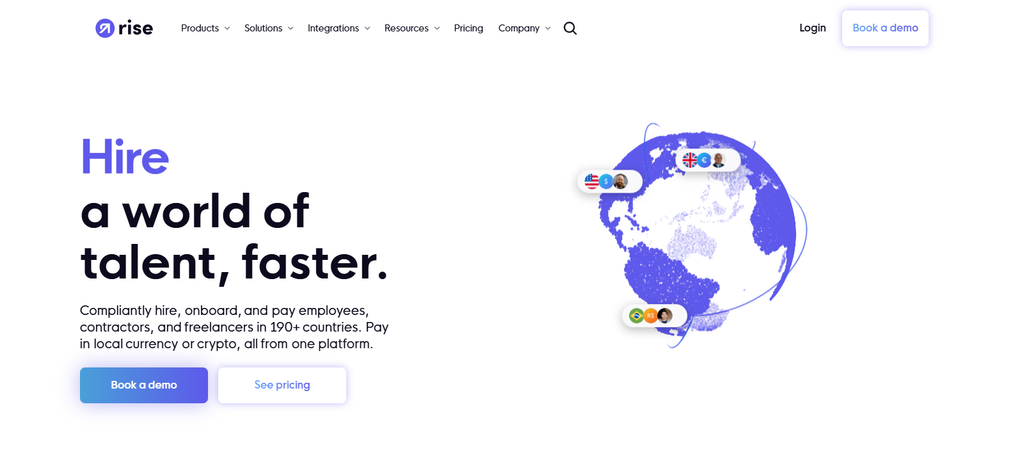
It offers services for one-time and recurring payments, contractor onboarding, wallet withdrawals and payouts in local currencies. Rise also supports integrations with various blockchain and financial infrastructure providers but please confirm the availability of specific networks for each transaction.
Payment and settlement times and fees differ depending on the selected asset, withdrawal method, destination and account setup.
Best For Rise
- Perfect for global companies paying international employees and contractors in crypto.
- Great for companies that need both fiat and crypto payroll.
- Fantastic for startups with international contractor onboarding.
- Well-suited for businesses requiring payroll compliance and payment records.
- Best for remote teams that support multiple cryptocurrencies and local currencies.
Rise Key Strength
| Key Strength | Description |
|---|---|
| Global Contractor Payments | Supports international contractor payment management. |
| Crypto Payroll | Offers cryptocurrency and stablecoin payment options. |
| Hybrid Payments | Supports eligible fiat and crypto salary arrangements. |
| Multi-Currency Support | Provides access to multiple digital and local currencies. |
| Payroll Management | Combines contractor onboarding and payment administration. |
2. Bitwage
Bitwage enables companies to pay payroll in crypto and stablecoins, and workers can receive either crypto or local currency. The supported payout options are Bitcoin, USDT, USDC and DAI. The supported networks for the stablecoins are Ethereum, Polygon, Tron and Stellar. It has services in almost 200 countries including India, United States, United Kingdom and Philippines but the payment options differ from place to place.
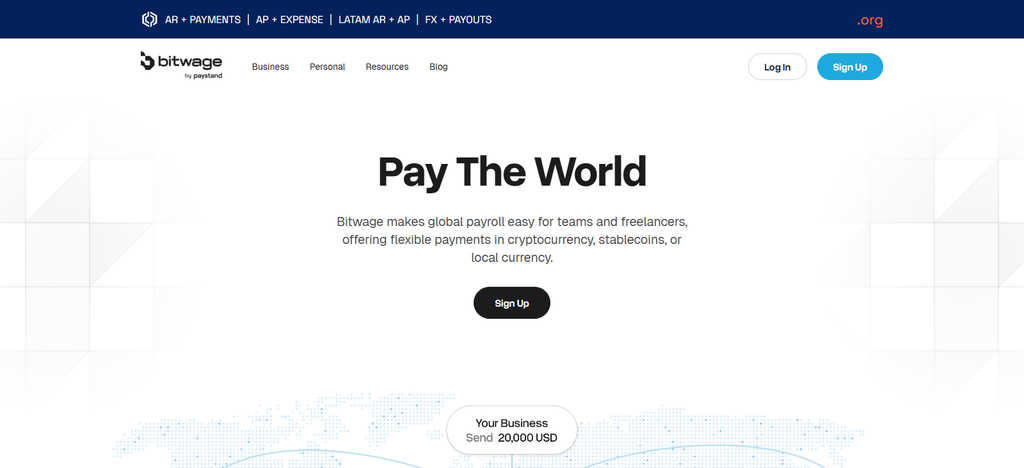
Standard local bank payouts typically have a 1% fee, while stablecoin payouts have asset-specific fees. Crypto payouts are normally sent within hours after release, while bank payouts usually take until the next business day.
Best For Bitwage
- Best for BTC and stablecoins paid employees.
- Ideal for freelancers with clients from around the world.
- Best for businesses looking to make partial crypto salary payments.
- Good for remote employees looking for crypto or local currency payouts.
- Best for companies wanting established crypto payroll infrastructure.
Bitwage Key Strength
| Key Strength | Description |
|---|---|
| Bitcoin Payroll | Enables salary payments in Bitcoin. |
| Stablecoin Payments | Supports USDC and USDT payouts. |
| Global Coverage | Provides international payment services across multiple countries. |
| Flexible Payouts | Offers crypto and local currency payment options. |
| Payroll Automation | Helps businesses manage recurring and batch payments. |
3. Deel
Deel offers international payroll, contractor management, and stablecoin payments for distributed businesses. Supported stablecoins for eligible payout arrangements are USDC, USDT and EURC.
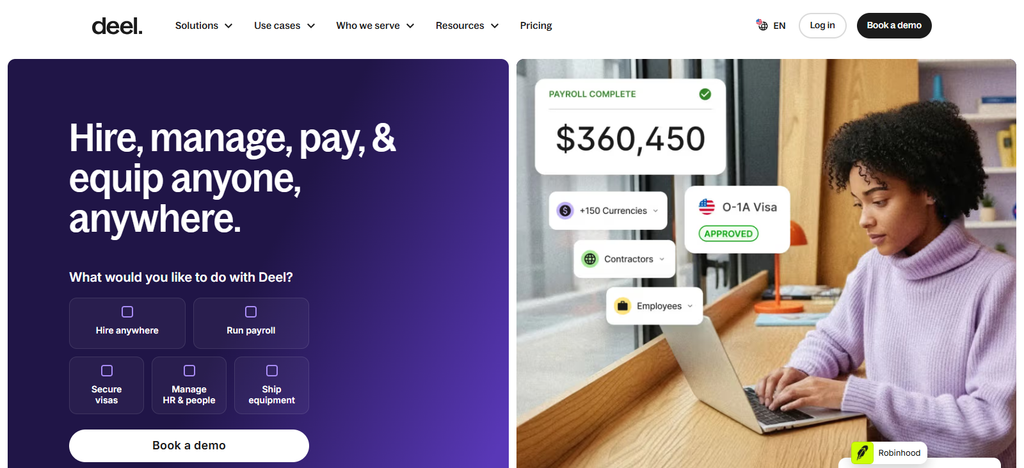
For business-account funding, USDC is supported on Ethereum, Polygon, Base and Solana, and USDT is supported on Ethereum, Polygon, Tron and Tempo. Deel supports companies in over 150 countries and the eligibility to pay via crypto depends on the worker type and currency of the contract. Its stablecoin funding option includes a 1% provider fee and any applicable blockchain gas fees and most transfers settle in minutes.
It also provides compliance screening, payroll reporting and HR integrations.I’ve been working for a long time with the concept of the “postmodern”, and I think it’s a concept that has a lot of value.
Best For Deel
- Perfect for companies with employees and contractors abroad.
- Ideal for companies needing global HR and payroll management.
- Best for employers who need an Employer of Record (EOR) service.
- Best for businesses that provide traditional payroll in addition to eligible crypto payments.
- Best for growing businesses that need to stay compliant with employment law and manage their workforce.
Deel Key Strength
| Key Strength | Description |
|---|---|
| Global Workforce Management | Supports international employee and contractor management. |
| Stablecoin Payments | Provides eligible USDC, USDT, and EURC payment options. |
| Compliance Management | Offers international employment and contractor compliance tools. |
| Payroll Automation | Simplifies recurring payroll processing. |
| HR Integrations | Connects payroll with workforce management systems. |
4. Request Finance
Request Finance allows Web3 companies to handle contractor payments, invoices and recurring crypto payroll in one centralized financial platform. Supported assets include USDC, USDT, DAI, WETH and other network-specific tokens.

Available blockchain networks: Ethereum, Polygon, Arbitrum, Avalanche, Base, Optimism, Solana, Tron, BNB Chain, Stellar and more. Businesses can pay recipients in more than 190 countries, depending on payout methods available.
Stablecoin payouts have no platform processing fees, but bank off ramps have percentage and fixed fees. Features include batch payments, payment approvals, transaction tracking and accounting integrations.
Best For Request Finance
- Best for Web3 companies dealing with crypto payroll.
- Best for DAOs paying contributors overseas.
- Best for businesses processing bulk payments in stablecoins.
• Perfect for finance teams managing recurring payments and crypto invoices - Ideal for businesses that need accounting records and payment reconciliation.
Request Finance Key Strength
| Key Strength | Description |
|---|---|
| Multi-Chain Payments | Supports multiple blockchain networks. |
| Stablecoin Support | Offers USDC, USDT, DAI, and other digital assets. |
| Bulk Payments | Helps businesses process multiple crypto payments. |
| Invoice Management | Combines invoicing and business payment workflows. |
| Accounting Integration | Supports financial tracking and reconciliation. |
5. Toku
Toku provides international payroll and contractor payments using stablecoins, fiat currencies and digital tokens. It supports the stablecoins USDC and USDT, with more tokens and networks available through the connected payment infrastructure and configurable.
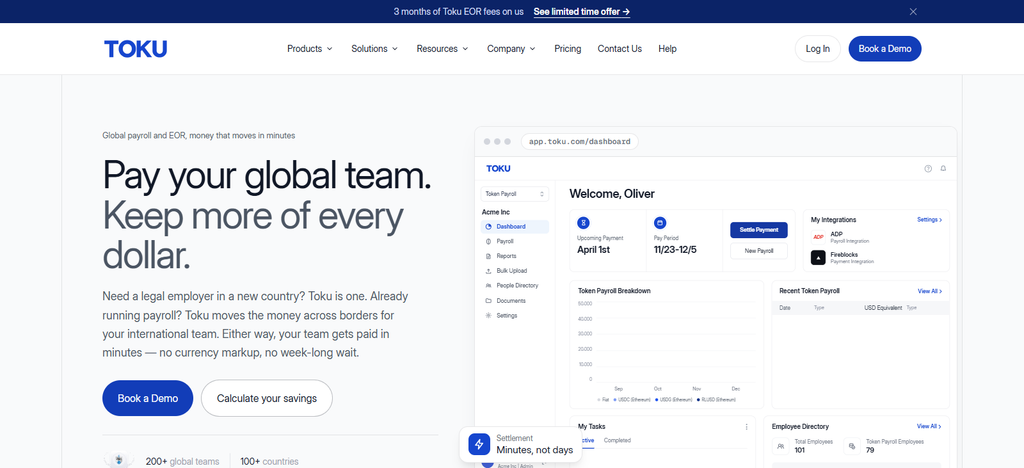
The platform supports payroll and payouts across 100+ countries including employee and contractor payment setups.
Workers can be paid in full or partial salaries in stablecoins or local currency. Toku has no FX markup, no withdrawal fees and same-day stablecoin settlement. Employer of Record services cost $19 per contractor per month and $599 per employee.
Best For Toku
- Best for Web3 companies that use token-based compensation.
- Best for businesses that pay employees and contractors in stablecoins.
- Best for companies that handle token grants and vesting schedules.
- Best for organizations that need payroll tax and compliance support.
- Best for global teams wanting to integrate crypto payments with existing payroll systems.
Toku Key Strength
| Key Strength | Description |
|---|---|
| Stablecoin Payroll | Supports eligible USDC and USDT salary payments. |
| Global Payroll | Provides international workforce payment capabilities. |
| Token Compensation | Supports token-based compensation and vesting workflows. |
| Compliance Support | Helps businesses manage payroll and employment compliance. |
| Flexible Compensation | Enables eligible fiat and stablecoin salary arrangements. |
6. Rippling
Rippling provides payroll, HR, employee management, and accounting, with stablecoin payments via the Toku integration. Eligible employees can receive traditional bank deposits, stablecoins or both under this arrangement.

The supported blockchain networks and availability of USDC and USDT depend on how the employer has set up Toku. Rippling will remain the system of record for payroll, calculating gross salary, deductions and tax information, with Toku handling blockchain payouts and reconciliation.
Settlement of payment depends on the chosen network. The connected provider should confirm standalone crypto transaction fees and network specific charges prior to implementation.
Best For Rippling
- Best for companies handling HR, payroll and employee administration.
- Best for companies that mix workforce management with stablecoin payout integrations.
- Best suited for companies wanting to automate employee onboarding and payroll workflows.
- Best for companies that need centralized HR and accounting management.
- Best for organizations already using Rippling’s payroll ecosystem.
Rippling Key Strength
| Key Strength | Description |
|---|---|
| HR Management | Combines employee administration and workforce management. |
| Payroll Automation | Automates payroll calculations and payment workflows. |
| Stablecoin Integration | Enables eligible stablecoin payouts through Toku integration. |
| Accounting Tools | Connects payroll information with financial workflows. |
| Centralized Management | Manages employee information through one platform. |
7. Zebec Payroll
Zebec Payroll is committed to ongoing salary streaming, which enables businesses to pay their employees in real-time, rather than waiting for the traditional monthly payroll cycles. It supports USDC and other compliant stablecoins for its payroll services, with payments sent to compatible wallets including Phantom, MetaMask and Ledger.
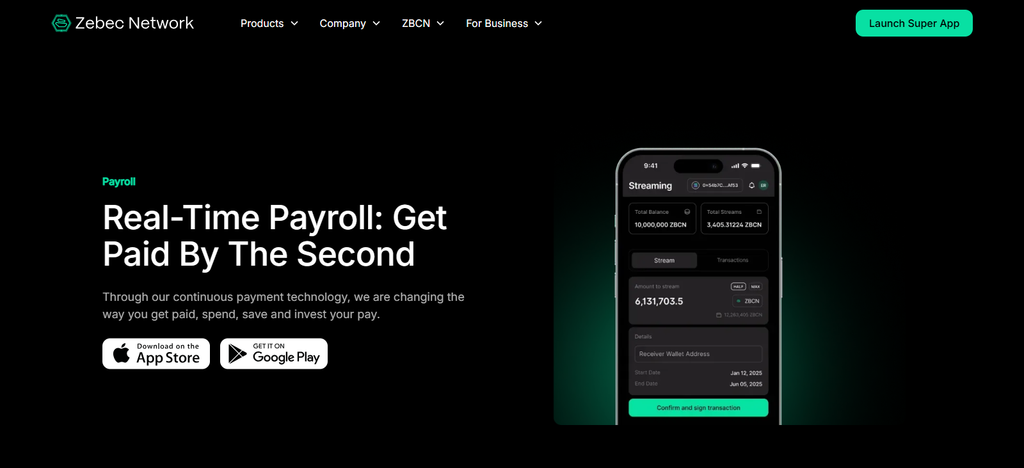
Employees can at any time access their accumulated earnings, employers can start, pause or change payment streams. Zebec also offers bank off-ramp options and enterprise integrations to human capital management systems.
The platform has no additional payroll surcharges, but you’ll want to check for network costs, supported countries and specific token availability for each deployment.
Best For Payroll System
- Best for companies with real-time salary streaming.
- Perfect for Web3 companies that pay their employees in stablecoins.
- Ideal for remote employees who need access to earned salary 24/7.
- Ideal for organizations handling recurring payments in blockchain.
- Best for crypto-native teams that require automated wallet payments.
Zebec Payroll Key Strength
| Key Strength | Description |
|---|---|
| Real-Time Salary Streaming | Enables continuous salary distribution. |
| Stablecoin Payments | Supports stablecoin-based payroll arrangements. |
| Wallet Compatibility | Connects payments with supported cryptocurrency wallets. |
| Automated Payments | Helps businesses manage recurring salary streams. |
| Flexible Salary Access | Allows employees to access accrued earnings continuously. |
8. Parcel
Before Parcel is added as a dedicated crypto payroll provider, careful consideration should be given. I was not able to find a public, reliable and up-to-date specification of which payroll cryptocurrencies are supported, which blockchains it runs on, which countries it operates in internationally, what the transaction fees are, and what the settlement times are.
Do not confuse these details with features provided by unrelated payment products with similar names. Before you think of Parcel as an international payroll solution, check if it has employee onboarding, recurring salary distribution, bulk wallet transfers, payroll reporting, and local currency withdrawals. Do not say USDC, USDT, Bitcoin, or certain network compatibility without verified documentation.
Best For Parcels
- Perfect for companies that want to test alternative digital payment infrastructures.
- Ideal for companies with specific payment workflow needs.
- Best for teams looking at wallet-based payment management.
- Best for companies looking to explore digital payment options.
- Best for businesses that can validate its payroll and crypto capabilities prior to adopting it.
Parcel Key Strength
| Key Strength | Description |
|---|---|
| Digital Payment Research | Evaluate its documented digital payment capabilities. |
| Payment Workflows | Verify available payment management features. |
| Wallet Support | Confirm supported wallet compatibility. |
| Blockchain Compatibility | Verify officially supported networks and digital assets. |
| Payroll Suitability | Confirm whether it provides dedicated payroll functionality. |
9. Oyster
Oyster offers global employment, contractor management and payroll services to companies hiring remote employees in international markets. It has a global payroll coverage and is operating in countries such as India, Australia, Canada, Germany, France, Japan, Singapore and United Kingdom.
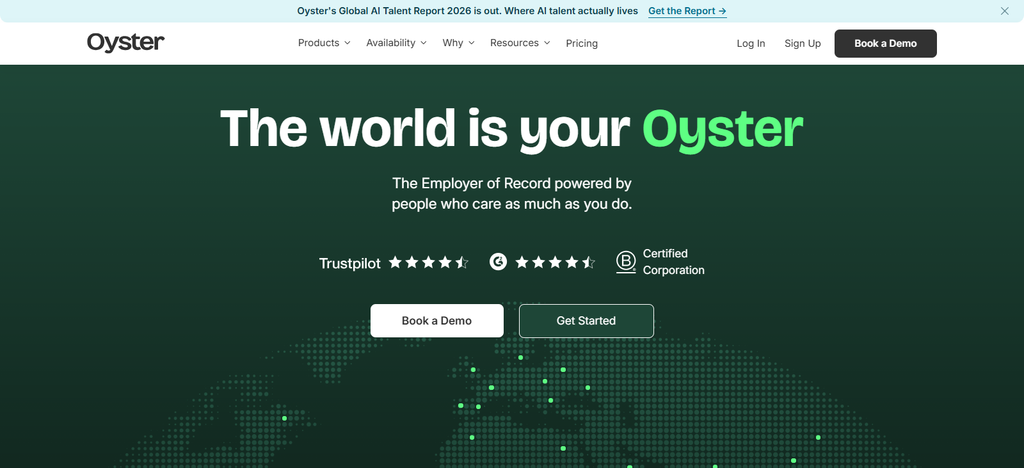
But Oyster’s published payroll offering does not set up native salary payouts in Bitcoin, USDC or USDT, nor does it publish crypto transaction fees or supported blockchain networks. Key features include local currency payroll, employment administration, international hiring and compliance management.
Businesses considering Oyster for crypto payroll should check if any third-party payout arrangement is available before choosing it.
Best For Oyster Card
- Best for companies with international remote employees.
- Ideal for companies making payments to contractors globally.
- Ideal for organizations that require Employer of Record services.
- Best for companies managing international employment compliance.
- Best for remote teams that manage traditional global payroll and HR.
Oyster Key Strength
| Key Strength | Description |
|---|---|
| Global Employment | Supports international employee hiring. |
| Contractor Management | Helps businesses manage global contractors. |
| Employer of Record | Provides international EOR services. |
| Payroll Administration | Supports global payroll management. |
| Compliance Management | Helps manage international employment requirements. |
Conclusion
Best crypto payroll platform for remote teams in 2026, according to supported cryptocurrencies, international country coverage, transaction fees, payment speed, and payroll automation. Alternatives for stablecoin payments, contractor management and global salary disbursement are offered by companies such as Rise, Bitwage, Deel, Request Finance and Toku.
Businesses should also consider blockchain networks, wallet compatibility, tax compliance, security, and fiat withdrawal options before making a decision. Crypto payroll can make it easier to pay people in other countries, but companies need to be mindful of local regulations and employee needs. The right platform can help businesses manage global teams more effectively and simplify cross-border salary payments.
FAQ
What Is a Crypto Payroll Platform?
A crypto payroll platform allows businesses to pay employees, freelancers, and international contractors using cryptocurrencies or stablecoins such as Bitcoin, USDC, and USDT. These platforms simplify cross-border payments, automate salary distribution, and provide digital payment records.
Which Are the Best Crypto Payroll Platforms for Remote Teams in 2026?
Some notable platforms include Rise, Bitwage, Deel, Request Finance, Toku, Rippling with Toku integration, and Zebec Payroll. Each offers different capabilities for international payroll, stablecoin payments, contractor management, and payment automation.
Can Companies Pay International Employees in USDC or USDT?
Yes. Businesses can use eligible crypto payroll services to pay international employees and contractors in USDC or USDT. Availability depends on the platform, recipient country, employment arrangement, and supported blockchain network.
How Much Do Crypto Payroll Platforms Charge?
Fees vary by provider and payment method. Businesses may encounter monthly subscription charges, transaction fees, blockchain gas fees, currency conversion spreads, and withdrawal costs. Some providers offer zero platform processing fees for specific stablecoin payments.