


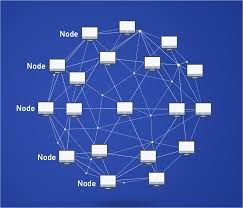


In this article I’ll talk about the Best RPC Node Providers for Crypto Projects. I’ll compare their blockchain coverage, pricing, performance, scaling options, WebSocket support, deployment, and RPC infrastructure.
I will further indicate key features, advantages, limitations and use cases to help developers assess different providers and select an RPC solution that meets their project’s technical needs and expected workload.
How To Choose RPC Node Providers for Crypto Projects
News from the Blockchain: Select a provider that supports the networks you’re currently utilizing and may require in the future, both EVM and non-EVM chains.
Performance and Latency: Response times, throughput, RPS limits, reliability, infrastructure capacity, especially for trading, DeFi, gaming, and high-traffic apps.
Pricing Model: Look beyond the advertized starting price and compare requests, compute units, credits, subscriptions, overage fees, and dedicated-node costs.
Scaling Options: Find providers who can scale up request limits, RPS, WebSocket connections, and infrastructure capacity as your application’s traffic grows.
WebSocket Support: If your app needs real-time blockchain events, make sure the provider supports WebSockets, connection limits, subscription support and the networks supported.
Archived info: Choose archive-node support if your application requires old transactions, historical blockchain states, smart-contract data, or analytics workloads.
RPC Infrastructure: Compare shared nodes, dedicated nodes, distributed infrastructure, load balancing, failover mechanisms and node redundancy.
Deployment and Regions: If latency and regional availability are important to your users, check the geographic regions and routing options that are available to you.
Developer APIs: Look into improved APIs, webhooks, indexing, transaction data, token details and SDKs that could reduce additional development work.
Security: Review the security features of the infrastructure, including API-key controls, authentication, access restrictions, rate limiting, monitoring, etc.
Reliability & Support: Check published uptime figures, availability of SLAs, incident communication, quality of documentation and technical support options.
Workload specific to your project: Adapt the provider to your use case. A wallet, a DeFi protocol, an NFT platform, a blockchain explorer, a trading application, and a gaming project may have very different RPC needs.
Key Points
| RPC Node Provider | Launch / Founded | Blockchain Coverage | Pricing Model | Scaling | Deployment / Regions | WebSocket | Performance / RPC Infrastructure | Best For |
|---|---|---|---|---|---|---|---|---|
| dRPC | 2023 | Multi-chain, including EVM and non-EVM networks | Compute Units / usage-based | Distributed RPC capacity and higher usage plans | Distributed infrastructure with regional routing | Yes, for supported networks | Decentralized RPC routing and distributed node infrastructure | Multi-chain dApps |
| Blast API | 2021 | Multiple blockchain networks | Plan and usage-based | Scalable managed RPC infrastructure | Managed cloud infrastructure | Available on supported networks | Managed RPC endpoints and developer APIs | dApps and Web3 developers |
| Tenderly Node RPC | 2020 | Primarily EVM-compatible chains | Usage / plan-based | Scalable hosted RPC infrastructure | Managed infrastructure | Yes | RPC combined with simulation, debugging and monitoring tools | EVM development teams |
| Tatum | 2018 | 130+ blockchain networks | Credit-based | Dedicated API keys and higher-throughput plans | Managed global infrastructure | Yes, supported networks | Unified API, SDK and managed blockchain infrastructure | Multi-chain applications |
| Validation Cloud | 2022 | 50+ blockchain networks | Compute Units / usage-based | Usage-based and enterprise scaling | Globally distributed infrastructure | Available for supported services | Enterprise-focused node and blockchain infrastructure | Enterprise Web3 projects |
| Chainnodes | 2021 | Multiple blockchain networks | Request-based | Higher RPS plans and dedicated nodes | Managed RPC infrastructure | Yes | Request-based RPC with predictable usage accounting | Developers seeking simple RPC pricing |
| Helius | 2022 | Primarily Solana | Credits / usage-based | Up to high-RPS plans and dedicated nodes | Solana-focused infrastructure | Yes | High-performance Solana RPC, gRPC and streaming | Solana dApps and DeFi |
| NOWNodes | 2019 | Numerous blockchain networks | Monthly request-based plans | Shared, dedicated and enterprise capacity | Managed and dedicated infrastructure | Yes, supported paid networks | Full-node access, APIs, WebSockets and webhooks | Wallets, exchanges and dApps |
| Blockdaemon | 2017 | Broad multi-chain coverage | Compute Units / plan-based | Higher RPS plans and dedicated nodes | Enterprise global infrastructure | Yes, supported chains | Institutional RPC APIs and dedicated infrastructure | Enterprise and institutional projects |
| GetBlock | 2019 | 130+ blockchain networks | Compute Units / plan-based | Higher RPS plans and dedicated nodes | Shared and dedicated infrastructure | Yes | JSON-RPC, WebSocket and archive infrastructure | Multi-chain dApps and Web3 platforms |
1. dRPC
dRPC provides a decentralized RPC infrastructure, enabling crypto projects to connect to the blockchain with high reliability without running their own nodes.
Its network spans a wide range of EVM and non-EVM ecosystems such as Ethereum, Polygon, Base, BNB Chain, Arbitrum and more. dRPC bills in Compute Units. Currently the documentation prices standard RPC methods at $0.30 per 1 million CUs.
Its infrastructure is based on distributed data providers and supports regional routing and Web3 applications can use HTTP and WebSocket access where supported. dRPC scales with distributed infrastructure and configurable pricing rules, which makes it suitable for multi-chain dApps that require flexible RPC capacity.
dRPC Features, Pros & Cons
Features
- Decentralized RPC network and distributed infrastructure.
- Support for major blockchain ecosystems in multi-chain.
- HTTP and WebSocket access to the networks that are supported.
*Scale and usage by compute unit flexibility. - Routing optimized for improved availability of RPCs.
Pros
- A distributed infrastructure can reduce reliance on a single node.
- Multi-chain applications compatible
- Flexible pay-as-you-go pricing
- Supports production like RPC workload.
- Useful for developers needing decentralized infrastructure.
Cons
- Pricing may require knowledge of compute-unit consumption.
Feature availability varies by supported chain - paid plans may be needed for advanced capacity
RPC performance varies with the network and provider. - Some features may need to be setup.
2. The Blast API
Blast API is a blockchain infrastructure platform with RPC endpoints and developer APIs to connect applications with multiple blockchain networks. Its infrastructure revolves around managed node access vs teams needing to run blockchain nodes themselves.
The platform supports major networks and provides APIs for application development; availability and specific features differ by chain. Pricing depends on usage and your plan, with bigger capacity options for production workloads.
The Blast API provides scalable RPC access, endpoint management and real-time blockchain connectivity with supported WebSocket configurations. Its infrastructure is designed for dApps, wallets, DeFi applications and other projects that need managed blockchain access instead of self-hosted nodes.
Blast API Features, Pros & Cons
Features
- Management of blockchain RPC infrastructure.
- Multi-Blockchain support.
API access will be loved by developers.
Infrastructure to build scalable dApps. - Real-time connectivity options on supported networks.
Pros
- Can be used to create web3 applications.
- Simplifies blockchain node management.
- Provides managed infrastructure.
- Support for Multi-Blockchain Ecosystem
- Scales to the needs of the application.
Cons
- Rates differ based on usage and plan.
- Feature availability varies between networks.
- Higher-tier plans may be needed for advanced infrastructure.
- Less control over infrastructure than hosting yourself.
- High volume workloads require careful capacity planning.
3. Tenderly node API
Tenderly Node RPC is production-ready JSON-RPC infrastructure that plugs into Tenderly’s larger simulation, debugging and transaction-development platform. Its infrastructure is primarily built for EVM compatible blockchain environments and is tightly integrated with Tenderly’s debugging and simulation tools.

There isn’t a universal public pricing, rather the pricing and capacity will depend on the Tenderly infrastructure setup you choose. Developers are able to use the Tenderly dashboard to provision hosted RPC endpoints, manage access tokens, and monitor usage. Support for persistent realtime connections via websocket.
Production infrastructure to evolve with throughput and latency requirements. This makes Tenderly particularly relevant for development teams that combine RPC access with transaction simulation, debugging and operational blockchain tooling.
Tenderly Node RPC Features, Pros & Cons
Features
- EVM-centric RPC infrastructure.
- Integration with Tenderly development tools
- Environment for transaction simulation and debugging.
- WebSocket support for real time applications.
- Managed RPC end points for production apps.
Pros
- Deep integration with smart-contract development workflows.
- Good for debugging and testing.
- Integrates RPC access and simulation tools
- Offers real-time blockchain connectivity.
- Suitable for EVM development teams
Cons
- Pricing is based on usage and infrastructure needs.
- Primarily for the EVM compatible environments.
- *Advanced Tenderly features are at an additional cost.
- Less versatile for non-EVM applications
Some unsupported chains may require separate infrastructure.
4. Tatum
Tatum offers managed RPC infrastructure for 130+ blockchain networks, allowing developers to connect to multiple chains with a unified API and SDK approach. It covers Ethereum, Bitcoin, Solana, Polygon, Base, Arbitrum, BNB Chain, Tron and many more networks. RPC pricing is credit based, with standard methods taking less credits, and heavier calls such as eth call, debug, and trace methods taking more.
Tatum also provides dedicated API keys with guarantyd throughput, starting at 10 RPS for $99/month and going up to 100 RPS for $1,049/month. WebSockets deliver block, transaction, account, and smart-contract events in real time; dedicated capacity enables higher production workloads.
Tatum Features, Pros & Cons
Features
- Multi-chain infrastructure for 130+ networks.
- Unified SDK and API approach.
- Credit-based RPC usage model.
WebSocket access, for networks that support it. - Dedicated API keys and higher throughput options.
Pros
- Wide coverage of blockchains.
- Consistent development experience across chains
- Provides APIs other than basic RPC access.
Production workloads are supported by dedicated capacity. - Useful for wallets, exchanges and multi chain applications.
Cons
- Pricing by credit requires usage monitoring.
RPC calls that are heavy cost more credits. - Paid plans for increased throughput
- Very costly for heavy workloads.
- Features can differ between blockchains.
5. Validation Cloud
Validation Cloud delivers enterprise blockchain infrastructure on 50+ networks including Ethereum, Solana, Bitcoin, BNB Chain, Base, XRP, Hedera, Stellar, Chainlink and other ecosystems. Its Node API and RPC services follow an AWS-like usage model, with a free starting allocation of 50 million compute units/month and consumption-based pricing thereafter.
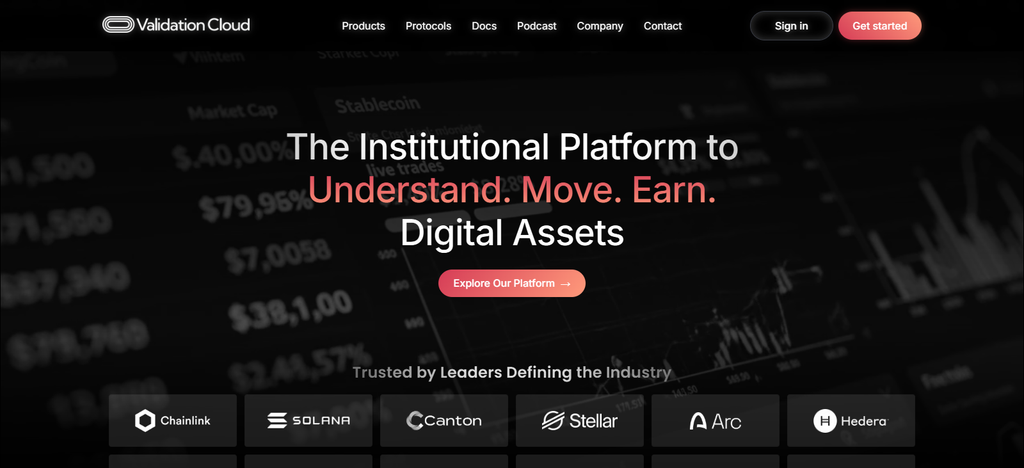
The platform provides enterprise security and performance, powered by a globally distributed infrastructure with operations across North America, Europe and Asia.
Validation Cloud’s production scaling with usage-based capacity and enterprise infrastructure, and its broader platform with RPC, blockchain data and staking services. Its performance positioning as documented is fast API response times and global connectivity.
Validation Cloud Features, Pros & Cons
Features
- Blockchain infrastructure for 50+ networks.
- Node RPC and API services.
Compute unit based usage model - Infrastructure spread all over the world
- Blockchain services for enterprises.
Pros
- Wide coverage area.
- Usage-based infrastructure scales with demand.
- For enterprise workloads.
• Supports multiple blockchain ecosystems. - Merges RPC and wider blockchain infrastructure.
Cons
- Enterprise features may require custom plans.
- High volume workloads are complicated to price.
- Features available depend on the network.
- Developers might have to track compute-unit usage.
- Smaller projects might not require its full infrastructure offering.
6. Chainnodes
Chainnodes is an RPC infrastructure provider that charges for predictable, request-based pricing instead of billing based on the compute unit. The free Core tier offers 12.5 million requests a month and 25 RPS, while the Developer plan costs $50 a month for 25 million requests and 50 RPS.
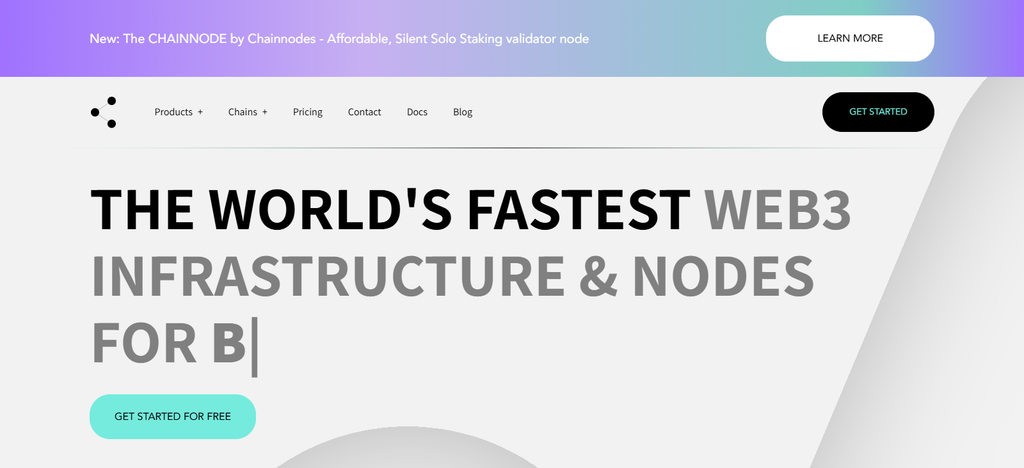
Higher Team and Growth plans increase capacity even further. Chainnodes supports multiple blockchain networks. The complexity of the RPC method allows a request to be considered as one request. Limits are for HTTP and WebSocket traffic combined and paid plans offer much higher WebSocket connection limits.
Archive requests are included at no additional request multiplier, and dedicated nodes can be added to heavily used production workloads where additional infrastructure capacity is needed.
Chainnodes Features, Pros & Cons
Features
- Cost for request-based RPCs.
- Developer level for free.
HTTP and WebSocket connectivity.
Archive requests available on supported infrastructures. - Bigger plans for production workloads.
Pros
- Request based billing made easy.
- Free tier for testing, development.
- Support for WebSocket.
- Predictable demand accounting.
- Improved infrastructure for larger workloads.
Cons
- RPS limits are dependent on subscription.
- Expensive tiers may be required for high volume applications.
- Less broad chain coverage than some larger providers.
- WebSocket capacity depends on plan.
7. Helius
Helius is a blockchain infrastructure provider focused on the Solana ecosystem. We build RPC nodes, enhanced APIs, and high performance data streaming infrastructure. Its current plans range from a free tier with 1 million credits and 10 RPS to paid plans going up to 500 RPS.

Enterprise customers can request custom rate limits, geographic coverage and optimized infrastructure. Helius provides WebSocket access through its LaserStream platform, as well as gRPC streaming for higher-performance workloads.
Dedicated nodes start at $2,900/month as of today and additional streaming bandwidth can be purchased via data add-ons. Its infrastructure includes archival data, staked connections, transaction APIs and specialized low-latency services for high-throughput Solana apps.
Helius Features, Pros & Cons
Features
- RPC infrastructure focused on Solana.
- Better Solana API’s.
- WebSocket and gRPC streaming
- Dedicated RPC servers.
- Infrastructure for high-throughput Solana applications
Pros
- Deep expertise in the Solana ecosystem.
- APIs for developers to use, enhanced.
- Lets you stream data, in real-time.
- Heavy applications on dedicated nodes.
- Great for DeFi, trading, wallets and other Solana workloads.
Cons
- Mainly focused on Solana.
- Dedicated infrastructure can be costly.
Paid plans offer higher throughput. - Usage-based credits must be tracked.
- Not as good for multi-chain projects needing many other non-Solana networks.
8. NOWNodes
NOWNodes offers managed blockchain node and API infrastructure for cryptocurrency applications. Shared and dedicated solutions are available to suit any traffic needs. Pricing is primarily based on monthly request allowances, with published plans ranging from 100,000 requests to 100 million requests per month, and higher tiers featuring lower overage rates.
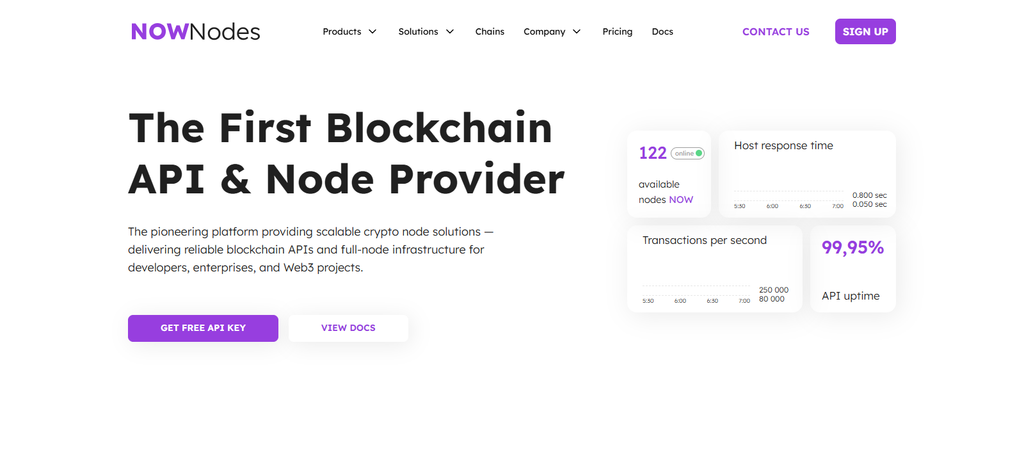
The platform supports a number of different blockchain networks and offers dedicated infrastructure, select regions, webhooks and additional blockchain data services for larger customers. Paid plans include WebSocket access to more than 30 networks including Ethereum, BNB Chain, Solana and Polygon.
NOWNodes is great for wallets, exchanges, dApps and blockchain services since scaling is transferable from shared infrastructure to dedicated nodes and custom enterprise arrangements.
NOWNodes Features, Pros & Cons
*Features:
- Managed blockchain nodes infrastructure.
- Support for many types of blockchain networks.
- Node choice, shared and dedicated.
WebSocket support on supported paid plans.
Webhooks & Blockchain Data APIs.
Pros
- Detailed blockchain coverage.
- Multiple infrastructure choices.
- Nodes dedicated for heavier workloads.
Useful in exchanges and for wallets. - Supports real-time applications with WebSocket and webhook support.
Cons
- Prices are monthly request limits.
- More expensive plans are needed for higher request volumes.
- WebSocket availability is dependent on your network and plan.
- Less control with shared infrastructure.
- Custom arrangements may be required for advanced requirements.
9. Blockdaemon
Blockdaemon offers institutional-grade blockchain infrastructure with RPC access to a range of networks including Ethereum, Bitcoin, Solana, Polygon, Base, Avalanche, Polkadot and others.
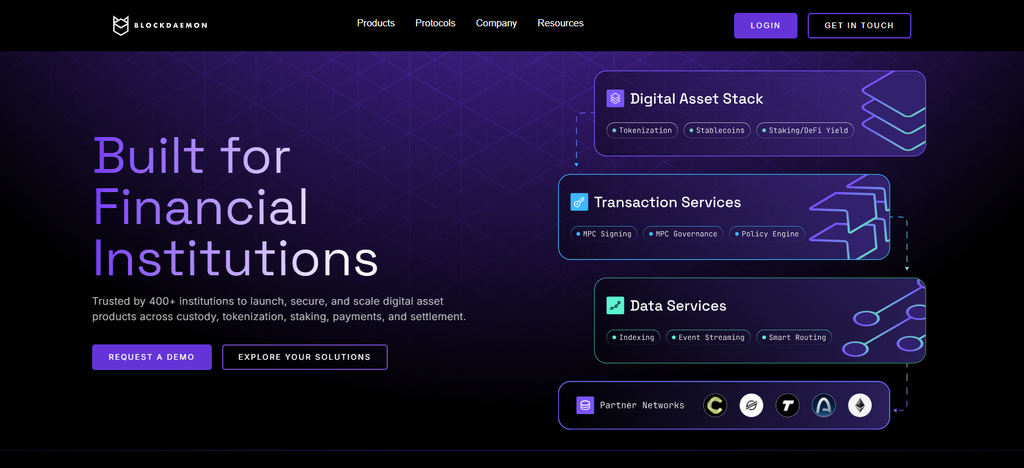
API pricing is based on Compute Units, with a free tier of 3 million CUs per month and 5 RPS, Starter and Growth tiers of 100 and 200 RPS respectively, and Enterprise with custom capacity and SLAs. Blockdaemon provides WebSocket access on supported chains and dedicated nodes with no rate limits on the standard offering.
Its infrastructure also includes APIs, event streaming and blockchain services for institutional use. Regional deployments, enterprise support, and custom scaling make it suitable for applications that need managed production infrastructure and higher operational requirements.
Blockdaemon Features, Pros & Cons
Features
- Institutional blockchain infrastructure.
- RPC APIs for different blockchain networks.
Prices are per compute-unit. - WebSocket support for chains that are supported.
- Enterprise infrastructure and dedicated nodes.
Pros
- Built for institutional and production workloads.
- Wide coverage of blockchain.
- Dedicated infrastructure choices.
- Enterprise support and SLA choices.
High volume applications catered for.
Cons
- Pricing can be a bit tricky for small teams.
- Enterprise features may be more than start-ups require.
The use of compute units needs to be monitored. - Increased capacity infrastructure can add cost.
Enterprise arrangements provide access to some advanced features.
10. GetBlock
GetBlock is a blockchain RPC and Web3 Infrastructure provider that gives you access to 130+ blockchain networks through shared and dedicated nodes. Its coverage spans the Ethereum, Bitcoin, Solana, BNB Chain, Polygon, Base, Arbitrum, Optimism, Aptos, Sui and other ecosystems.
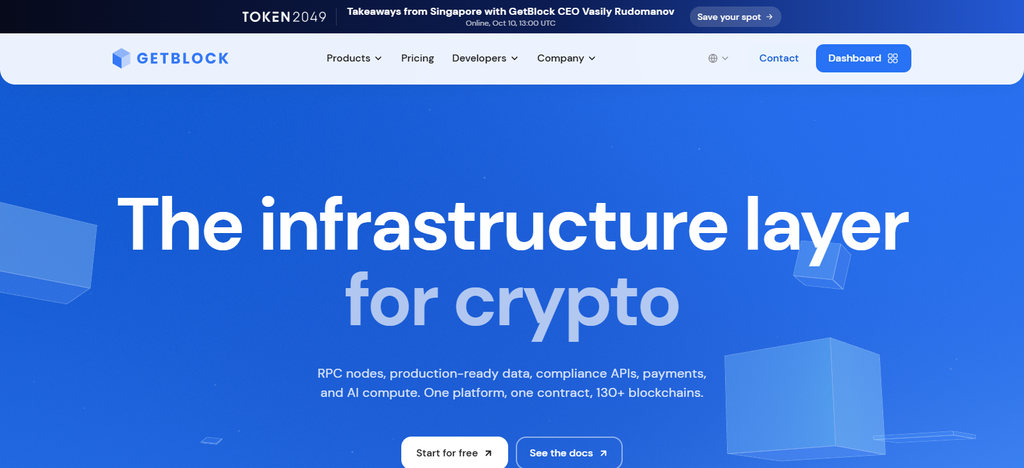
Shared pricing today begins with a free plan, and paid plans offer higher compute-unit allowances and RPS. Published tiers are Starter, Advanced and Pro, with dedicated infrastructure for larger workloads.
GetBlock supports JSON-RPC, WebSocket and other interfaces, archive data, MEV protection and multi-region routing. Its infrastructure scales from shared endpoints to dedicated nodes with high RPS capacity, making it suitable for production dApps, wallets, exchanges, and data intensive applications.
GetBlock Features, Pros & Cons
Features
- RPC infrastructure for 130+ blockchains.
- Shared and dedicated node options
- Access via JSON-RPC & WebSocket.
- Archive node availability.
- Multiple pricing tiers with higher RPS options
Pros
- Broad multi-chain coverage.
- Development free plan.
- Supports shared and dedicated infrastructure.
- Websocket and archive features are nice.
Works with dApps, wallets, exchanges and Web3 platforms.
Cons
- Paid plans are necessary for increased usage.
- Usage tracking is required for compute unit billing.
- Features depend on the supported networks.
Costs are inflated by the dedicated infrastructure. - High-throughput projects require careful plan selection.
Conclusion
The RPC node provider you choose will depend on your crypto project’s blockchain coverage, traffic needs, performance expectations, pricing model, and scaling needs. Some providers, with different approaches to RPC infrastructure and developer access, include: dRPC, Blast API, Tenderly Node RPC, Tatum, Validation Cloud, Chainnodes, Helius, NOWNodes,
Blockdaemon and GetBlock. Compare supported networks, request or compute-unit limits, WebSocket support, archive access, deployment options, pricing, and dedicated-node support when choosing one. Decide what you expect your workload to be and what chains you need, then assess how each vendor can scale, handle traffic spikes, and produce reliably. This can help you choose infrastructure that meets your project’s technical requirements and budget.
FAQ
What Is an RPC Node Provider?
An RPC node provider offers managed blockchain infrastructure that allows crypto applications to communicate with blockchain networks without running and maintaining their own nodes.
What Does an RPC Provider Do?
An RPC provider handles blockchain requests such as reading account balances, retrieving transaction data, querying smart contracts, submitting transactions, and accessing historical blockchain information.
How Much Do RPC Node Providers Cost?
Pricing varies by provider and may be based on requests, compute units, credits, subscriptions, or dedicated infrastructure. Free tiers are also available from several providers.
What Is WebSocket Support in RPC Infrastructure?
WebSocket support provides persistent connections for receiving real-time blockchain updates, such as new blocks, transactions, contract events, and account activity.
What Is an Archive RPC Node?
An archive RPC node stores historical blockchain states and allows applications to query older blockchain data that may not be available through standard nodes.