



This article discusses the best rivals to Acorns for micro-investing in 2026. I also cover applications that permit users to invest small amounts of money in a quick, simple and inexpensive manner.
Some of the applications covered are Robinhood, M1 Finance, and Wealthfront, among others. Each application takes a unique approach in facilitating micro-investing, and therefore, give investors some level of automation and the opportunity to earn gains over the long-term.
Key Points
| Platform | Best For | Fees on $1,000 | Key Features |
|---|---|---|---|
| Robinhood | DIY beginners | $0 | Free stock/ETF trades, optional Gold ($5/mo) |
| M1 Finance | Auto‑rebalanced portfolios | $0 | “Pie” investing, fractional shares, automation |
| SoFi Invest | Banking‑integrated beginners | $0 active / $2.50 robo | Commission‑free trades, 0.25% robo fee |
| Public.com | Multi‑asset DIY | $0 | Stocks, ETFs, crypto, social investing |
| Wealthfront | Low‑cost robo | $2.50 | 0.25% AUM fee, tax‑loss harvesting |
| Betterment | Hands‑off investors | $2.50 | 0.25% AUM fee, goal‑based portfolios |
| Stash | Habit‑building beginners | $36 (3.6%) | Auto‑Stash, Stock‑Back card |
| Stockpile | Kids & families | $59.40 | Custodial accounts, gift cards for stocks |
| Plynk | New investors | $0 | Free trades, 25% dividend cash match |
| Vanguard Personal Advisor | Long‑term investors | ~0.30% AUM | Human + robo hybrid advice |
1. Robinhood
Launched in 2013, Robinhood quickly became a dominant force in the micro-investing space, particularly for commission-free trading, as it competed directly with Acorns. Robinhood still charges $0 for stock and ETF trades.
It offers an upgraded service, Robinhood Gold, for $5/month for harvesting options and margin trading. Users can purchase stock and ETFs for as little as $1 through Robinhood. The company also has a mobile app with a host of features and tools for users to make investments. Robinhood is more of a hands-on investing platform and doesn’t offer services to assist users with investing strategies, like some other platforms.
That said, combined with its commission-free trading and fractional trading, Robinhood offers an affordable micro-investing platform for users looking to directly invest in the stock market.
Robinhood Features
- Commission-free trading of stocks and ETFs
- Fractional shares
- Easy-to-use mobile app
- Research and Margin trading for $5/mo.
- Cryptocurrency trading
| Pros | Cons |
|---|---|
| Commission‑free trades | No robo‑advisor automation |
| Fractional shares from $1 | Risk of overtrading |
| Sleek mobile/web app | Limited retirement accounts |
| Crypto trading available | Customer support issues |
| Instant deposits | Margin trading risk |
2. M1 Finance
Launched in 2015, M1 Finance combines aspects of robo-advisors and allowing users to make investment decisions themselves. Its commission and management fee models are both 0, and its only charged service model “M1 Plus” (3$/mo) is discounted from its original price (12$/yr) during the time of writing.
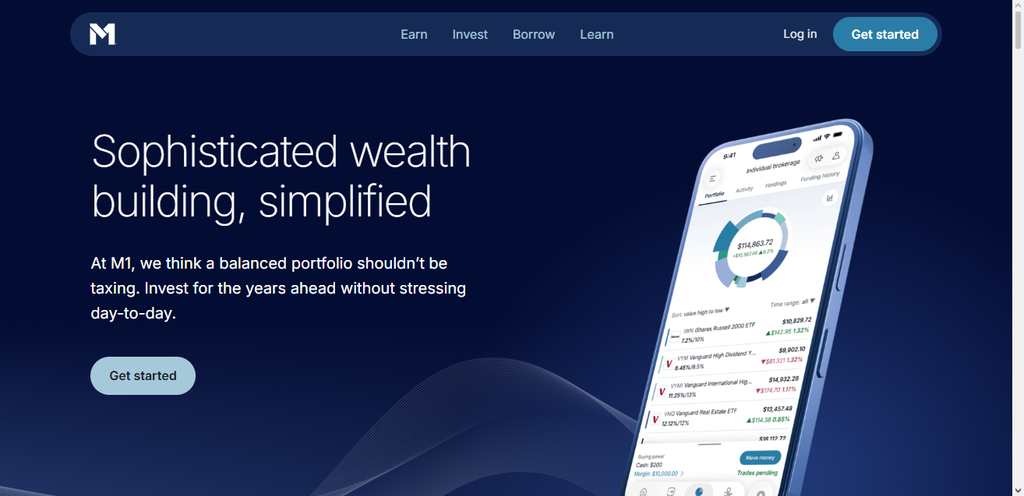
M1 uses its signature model “Pie” to create a customizable investment portfolio made up of ETFs and/or Stocks. M1 is unique from other micro investing apps as it allows its users to reinvest into a portfolio made up of multiple assets (similar to M1’s Pies) without charging a fee.
Although M1 offers automated investing, it gives the user the opportunity to control their own investment strategy. Compared to other Apps of its class, M1 Finance offers more functionality while still being extremely easy to use.
M1 Finance Features
- Portfolio flexibility with “Pies”
- Fractional share investing
- 100% commission and fee free investing
- User control over when to purchase stocks
- M1 Plus membership
| Pros | Cons |
|---|---|
| No commissions or management fees | $100 minimum for taxable accounts |
| “Pie” investing model | Limited trading windows |
| Auto‑rebalancing | No tax‑loss harvesting |
| Fractional shares | Less flexibility for active traders |
| Scheduled deposits | Learning curve for beginners |
3. SoFi Invest
Based in 2011, SoFi launched as a student loan refinancing company, and later expanded to offer investing. SoFi Invest offers both active trading and automated investing. Active investing is commission free, and automated investing is 0.25% annually.
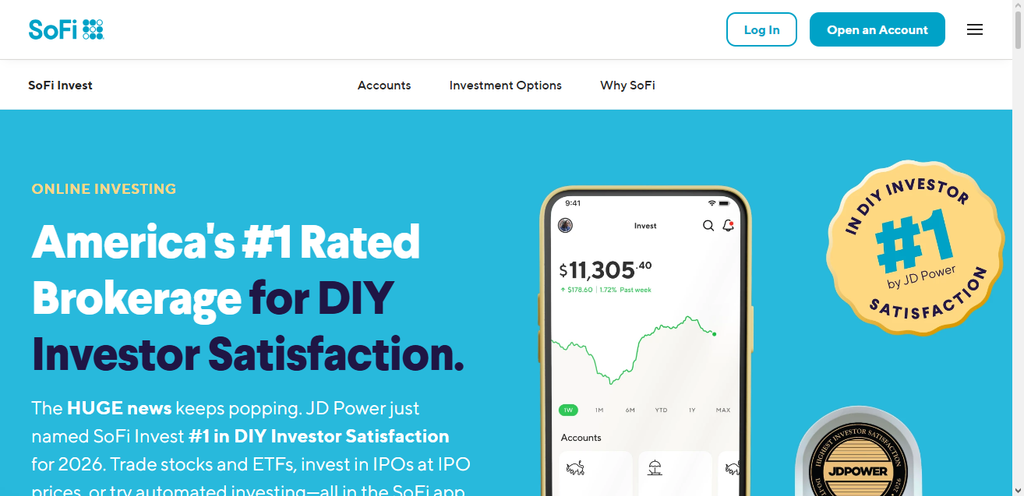
SoFi Invest also offers user-friendly features for micro-investing with the option to purchase fractional shares. SoFi banking offers features like cash management and rewards. Instead of using the round-up model to invest like Acorns, SoFi takes a broader approach to financial wellness by offering financial coaching and other member benefits.
SoFi’s clean mobile app allows users to trade individually, or automated through an investing portal. Compared to Acorns, SoFi is more geared towards the small investor and provides more features through their banking and credit services.
SoFi Invest Features
- Free-commission trading of stocks and ETFs
- Automated investing and robo portfolios
- Fractional share investing
- Integrated banking and lending
- Member benefits
| Pros | Cons |
|---|---|
| $0 commissions on active trades | Robo portfolios less customizable |
| Fractional shares | Limited advanced research tools |
| Banking integration | Customer service mixed reviews |
| Member benefits (career coaching) | Robo fee 0.25% |
| Easy mobile app | Smaller ETF selection |
4. Public.com
Public.com is a one-stop investing app for stocks, ETFs, and cryptocurrency launched in 2019. With no commissions and a range of features available through a subscription, Public.com offers commission-free trading.

Public.com provides a number of features to help novice investors feel more comfortable including the ability to purchase fractional shares, traditional social investing features, and educational resources. Users of the app can gain access to company explanations before trades are made.
Public.com provides users access to a range of investments and resources in a user-friendly format. While Public.com does provide users with an easy way to gain access to a range of investments, users interested in further automating their investments may want to consider Acorns.
Public.com Features
- Commision-free trading of stocks, ETFs and cryptocurrencies
- Fractional sharing trading
- Easy-to-use mobile app
- Educational features
- User community
| Pros | Cons |
|---|---|
| Commission‑free trades | No tax‑loss harvesting |
| Fractional shares | Crypto volatility risk |
| Social investing features | Limited account types |
| Educational company explanations | No retirement accounts |
| Multi‑asset access | Community may encourage speculation |
5. Wealthfront
Wealthfront is another popular robo-advisor. Launched in 2008, it charges a fee of 0.25%, or $2.50, on accounts with a 12-month balance of $1,000. Similar to Betterment, it provides automatically managed ETF portfolios with tax-loss harvesting.

Wealthfront differentiates itself by allowing clients to set and invest for specific goals. Like Betterment and many other robo-advisors, the company’s target clientele are novice investors seeking low-cost and easy ways to invest.
The main difference between Wealthfront and Acorns is that Wealthfront has a more developed control over its clients’ portfolios and offers financial planning tools through its app. Wealthfront provides a better value than Acorns for clients seeking automation and low costs for control over their investment portfolios.
Wealthfront Features
- Robo-advisor services with day-to-day tax-loss harvesting
- 0.25% annual fee
- Cash management and checking services
- Financial planning features
| Pros | Cons |
|---|---|
| Low 0.25% annual fee | $500 minimum balance |
| Daily tax‑loss harvesting | No human advisors |
| Direct indexing at $100K+ | Limited customization |
| Path financial planning | No fractional stock trading |
| Automated rebalancing | Best for passive investors only |
6. Betterment
Betterment is a fintech company started in 2008. In 2019, they had over 300,000 customers and $16 billion in assets under management. Their standard plan charges a 0.25% annual fee. On a $1,000 account balance, this would equate to a $2.50 charge.
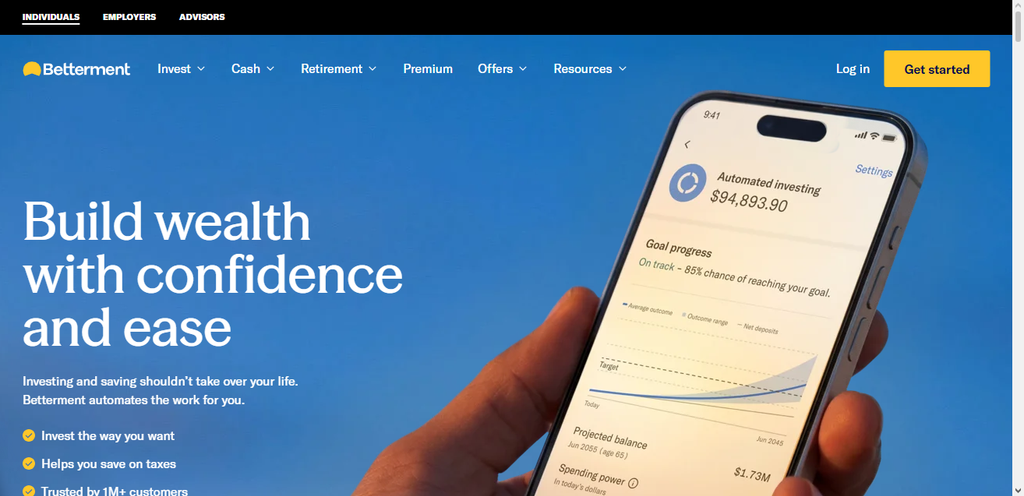
Betterment offers micro investing with individual, retirement, and education goals in mind. Their financial planning focuses on larger, long term goals beyond micro-investing. Like Acorns, Betterment offers tax loss harvesting.
Betterment has a strong mobile platform and offers investors a cash management account with check writing capability. Betterment is less expensive than Acorns, and the automation of Betterment’s platform gives investors a sense of security for a first time investment.
Betterment Features
- Robo-advisor services with 0.25% annual fee
- Tax-loss harvesting
- Goal-oriented investing and flexibility
- Cash management
| Pros | Cons |
|---|---|
| 0.25% annual fee | Limited customization |
| Goal‑based portfolios | $10 minimum deposit |
| Auto‑rebalancing | No crypto access |
| Tax‑efficient strategies | Flat fee can add up |
| Cash management tools | No advanced trading features |
7. Stash
Stash launched in 2015 with a subscription model starting at $3/month. This model quickly quashed its user base as it is not cost‑effective for micro‑investors. Stash has been attempting to build on its user base by implementing several new features.
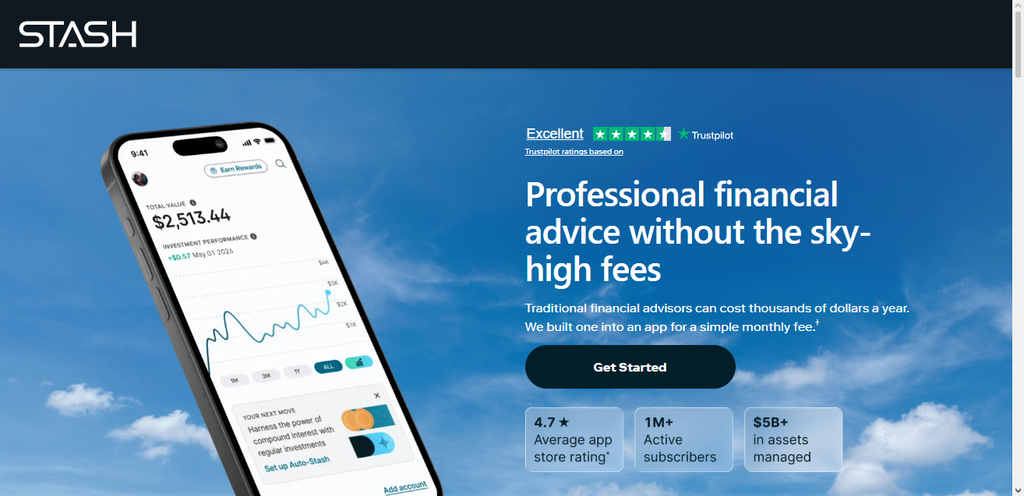
Stash’s latest features include Auto‑Stash (similar to Acorns’ round‑ups), and a Stock‑Back card, which gives users cash back in the form of fractional shares. Stash also allows users to investment fractional shares. With a $5 minimum investment, users are given more flexibility than other investing platforms.
While there are features that up charge users (i.e. investing advice), the Stash app provides users various ETFs and other investing resources. Overall, Stash is relatively new and still developing its features. However, Stash has sought to differentiate itself from competitors by offering a rewards based model.
Stash Features
- Subscription model starting at $3/month
- Fractional shares with minimum $5 investment
- Auto‑Stash deposits for habit building
- Stock‑Back debit card rewards in shares
- Curated ETF themes for beginners
| Pros | Cons |
|---|---|
| Fractional shares | $3/month flat fee hurts small balances |
| Auto‑Stash deposits | Limited advanced tools |
| Stock‑Back debit rewards | Higher effective cost for micro‑investors |
| Beginner‑friendly ETF themes | No tax‑loss harvesting |
| Educational content | Smaller investment selection |
8. Stockpile
Launched in 2010, Stockpile’s focus on gift cards and custodial accounts provides a family-centric investment option. It offers premium accounts for $4.95 per month. However, the pricing may be a barrier for the micro-investing clientele.
Stockpile provides a micro-investing opportunity for youth and novice investors with the sale of fractional shares. Acorns also offers an opportunity for novice investors, but Stockpile’s main competitor may be more focused on the long-term investment outlook.
Stockpile is able to provide investment education and benefits to custodial account holders. Stockpile offers an easily useable mobile platform to facilitate trade giftings and trades of fractional shares. Stockpile is able to combine micro-investing and education in a way that benefits the youth and novice investor.
Stockpile Features
- Stock gift cards for family investing
- Custodial accounts for kids and teens
- Fractional shares available for small balances
- Simple mobile app for gifting and trading
- Premium plan at $4.95/month
| Pros | Cons |
|---|---|
| Stock gift cards | $4.95/month premium fee |
| Custodial accounts for kids | Limited investment options |
| Fractional shares | No advanced portfolio tools |
| Family‑friendly education | Higher costs for small balances |
| Simple mobile app | Not ideal for serious investors |
9. Plynk
Plynk is a commission-free investing app that was launched in 2021. One unique feature of Plynk is its 25% dividend cash match. Like many other apps, Plynk offers a simple and easy to use platform with no trade commissions. For trades less than $3, Plynk uses round-up-like-Acorns trading techniques to allow further investment opportunities.
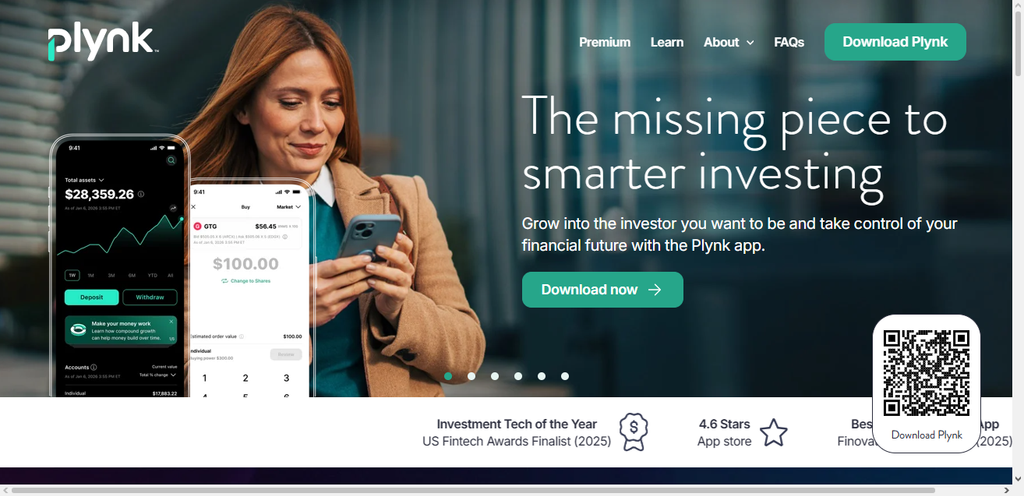
Plynk stands out amongst competitors with a mobile platform designed to educate and teach users investing basics through games and contests. Offering a dividend cash match and round-up trading to micro-investors sets Plynk apart from competitors like Acorns.
Plynk Features
- Commission‑free trades for stocks and ETFs
- Fractional shares starting at $1
- Dividend cash match (25% bonus)
- Beginner‑friendly guided investing prompts
- Educational and gamified mobile app
| Pros | Cons |
|---|---|
| Commission‑free trades | Limited track record (new app) |
| Fractional shares | Fewer advanced features |
| Dividend cash match | No tax‑loss harvesting |
| Beginner‑friendly prompts | Smaller ETF selection |
| Gamified mobile app | Less robust than rivals |
10. Vanguard Personal Advisor
Launched in 1975, Vanguard revolutionized low-cost investing with its presence felt worldwide. Its Personal Advisory Service is a combination of robo-advisory and human advisors, with an annual charge of 0.30% (or $3 on every $1000 invested). This is higher than Acorns, but human advisory is a major plus.
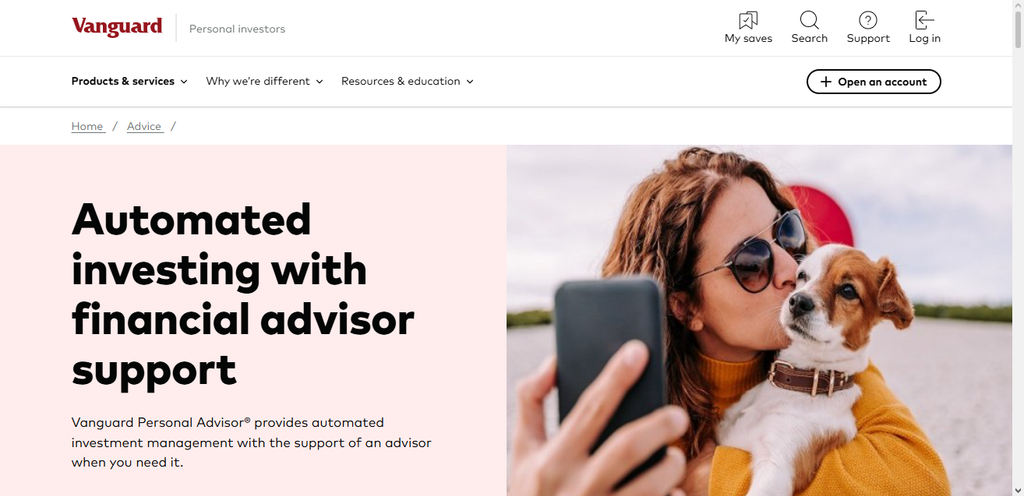
Vanguard’s micro-investing service is geared towards long-term investment, and offers smaller investment units than Acorns. However, Vanguard has higher minimum investment levels. While Acorns uses round-ups to incentivize investment, Vanguard, at a higher charge, also offers financial planning and access to human advisors.
Vanguard’s app allows users to plan for retirement and track their portfolio. Overall, Vanguard’s personal advisor service is more robust than Acorns’, and more appropriate for the cautious investor.
Vanguard Personal Advisor Features
- Hybrid robo + human advisor service
- Annual fee around 0.30% of assets
- Access to Vanguard’s low‑cost ETFs
- Personalized financial planning with advisors
- Minimum balance requirement of $50,000
| Pros | Cons |
|---|---|
| Trusted Vanguard brand | 0.30% annual fee |
| Hybrid robo + human advice | $50,000 minimum balance |
| Access to low‑cost ETFs | Less accessible for micro‑investors |
| Personalized financial planning | Higher fees than robo‑only rivals |
| Long‑term retirement focus | Not ideal for beginners |
Conclusion
Looking ahead to 2026, there will be many micro-investing apps available beyond Acorns. Apps such as Robinhood and M1 Finance, for example, allow for commission-free trading of even fractional shares.
Other apps like Wealthfront and Betterment, which are also automated investment apps, or robo-advisors, will let users set up automatically rebalanced ETF portfolios. Stash and Stockpile are also good options for users looking to automatically invest small amounts of money, as are Plynk and SoFi Invest.
Public.com is similar to SoFi but offers users an opportunity to invest and trade in a social setting. Vanguard Personal Advisors, while not as “micro”, offers low-cost personal investment advice and management. Each of these apps will provide users with a number of ways to accelerate their investment growth by 2026.
FAQ
What is micro‑investing?
Micro‑investing means investing very small amounts of money, often just a few dollars at a time. Apps like Acorns, Robinhood, and M1 Finance make this possible through fractional shares and automation.
Why look for Acorns alternatives?
Acorns charges flat monthly fees ($3–$5), which can eat into small balances. Rivals like Wealthfront and Betterment use percentage‑based fees, often cheaper for beginners.
Which rival is best for free trading?
Robinhood, M1 Finance, and Public.com all offer commission‑free trades and fractional shares, making them ideal for DIY micro‑investors.
Which rival is best for automation?
Wealthfront and Betterment are robo‑advisors that automate portfolios, rebalance investments, and provide tax‑efficient strategies for hands‑off investors.
Which rival is best for beginners?
Stash, Stockpile, and Plynk focus on education, rewards, and family‑friendly investing, making them great for first‑time investors.