




This article will cover Omni-Chain Native Asset DEX Aggregators. I will judge them on the basis of cross-chain market liquidity, supported chains and routing tech, fees, execution, safety and overall ease of use. Competing against THORChain and Stargate will be Rango, OpenOcean, LI.FI, Socket, and others. I’ll highlight what I think are key advantages and disadvantages of each individual protocol.
Key Points
| Aggregator | Key Features |
|---|---|
| Chainlink CCIP Aggregator | Cross‑chain native asset swaps, oracle‑verified routing |
| LayerZero Stargate | Native asset bridging, unified liquidity pools |
| THORChain Aggregator | Native BTC, ETH, ATOM swaps, omni‑chain routing |
| Squid Router (Axelar) | Intent‑based swaps, AI‑driven routing |
| LI.FI Aggregator | Unified API, cross‑chain liquidity aggregation |
| Rango Exchange | Multi‑chain aggregator, wallet integrations |
| Socket Protocol | Modular omni‑chain liquidity routing |
| Odyssey Aggregator | AI‑driven routing, compliance‑ready swaps |
| Symbiosis Finance | Cross‑chain swaps, liquidity aggregation |
| OpenOcean Omni‑Chain | Aggregated liquidity, cross‑chain spot + derivatives |
1. Chainlink CCIP Aggregator
The Chainlink CCIP Aggregator helps build safe cross-chain asset transfer applications that enable connection to token and liquidity networks across several blockchain ecosystems through Chainlink’s cross-chain infrastructure.
Its main advantage is the use of message-transfer-control protocols and token-transfer-control protocols integrated as a combination, making it useful for projects aiming to retain control of assets across networks in an issuer or asset-native state.
For users/clients that want to evaluate the Best Omni-Chain Native Asset DEX Aggregators, CCIP is a good choice for project security architectures, programmable transfers, and institutional-grade interoperability. It can connect L1s, L2s, and appchains and reduce the need for integrations for each of the individual chains.
Chainlink CCIP Aggregator Characteristics, Benefits & Drawbacks
Characteristics
- Messages and transfers tokens across different blockchain networks.
- Supports programmable transactions that span multiple networks.
- Built on top of Chainlink’s decentralized oracle network.
- Bridges different blockchain networks.
- Designed for decentralized finance (DeFi) and enterprise applications.
Benefits
- Prioritizes security for transactions spanning multiple networks.
- Supports transfers of the network’s native tokens.
- Eliminates the need for many integrations to different chains.
- Supports cross-chain applications that interact with multiple chains.
- Supports decentralized finance (DeFi) and tokenized assets.
Drawbacks
- May have limited support for some blockchain networks.
- Costs for transactions vary depending on the network.
- May require advanced technical knowledge to integrate.
- Lacks a built-in trading interface; does not function as a traditional DEX.
- Final execution is dependent on liquidity providers.
2. LayerZero Stargate
LayerZero Stargate integrates cross-chain messaging along with a unified liquidity infrastructure for moving assets across the supported blockchain networks.
Stargate V2 supports native asset liquidity pools and cross chain transfer routes, while its architecture can extend liquidity to additional chains by way of Stargate OFTs.
This makes it highly Relevant in the Best Omni-Chain Native Asset DEX Aggregators for applications requiring composable cross chain swaps, without needing to manage several independent bridge transactions.
Stargate additionally functions as a more comprehensive bridge hub, supporting LayerZero OFTs and interoperability connectors through its interface. Its primary differentiator is liquidity, messaging, and application level composability.
LayerZero Stargate Characteristics, Benefits & Drawbacks
Characteristics
- Built on LayerZero interoperability, combined with Stargate liquidity.
- Supports transfer of assets across different blockchain networks.
- Uses unified liquidity frameworks.
- Supports routes for native asset transfers.
- Designed for composable omnichain applications.
Benefits
- Movement of assets across different blockchain networks is made simple.
- Access to cross-chain liquidity is provided.
- Suitable for decentralized finance and omnichain applications.
- Functionality is extended with programmable messaging.
- Reduces the number of bridges a user needs to traverse.
Drawbacks
- Costs for transactions may vary depending on the network.
- Routes may not be available depending on asset support.
- Transactions across different chains may take longer than transactions within the same chain.
- Execution is dependent on the availability and state of liquidity.
- Protocol is used to traverse chains, exposing users to risks.
3. THORChain
THORChain is a potent offering for true native asset cross-chain trading, since it can swap assets such as BTC and ETH, without the need for wrapped assets or centralized custody. Its liquidity design pairs supported assets with RUNE, which is used as the settlement asset between its pools.
Users will notice THORChain for its ability to provide a cross chain BTC to ETH swap in a native fashion; THORChain will do the routing and settlement while the user takes care of the remaining trade. THORChain differentiates itself from other bridged-based aggregators by utilizing decentralized vaults, threshold-signature security, providing permissionless service, and settlement of native assets.
THORChain Characteristics, Benefits & Drawbacks
Characteristics
- Supports swapping of assets across different blockchain networks.
- Uses RUNE for all transactions across the network.
- Provides decentralized pools of liquidity.
- Supports multiple assets across different blockchain networks.
- Supports native swaps without the need for wrapped assets.
Benefits
- Native BTC and asset swaps.
- No centralized intermediary.
- Eases cross-chain swapping.
- Supports larger swaps due to deep liquidity.
- Great for native asset DeFi.
Drawbacks
- Not as many assets and networks supported as other aggregators.
- Has a unique liquidity model with RUNE.
- Large swaps will have some price impact.
- Still subject to on-chain transaction costs.
- Smart contract and operational risks due to cross-chain designs.
4. Squid Router (Axelar)
Squid Router is designed to make inter-blockchain interactions easier by offering simple cross-chain swaps. User interaction is minimized by automating bridge selection and determining the optimal DEX route. Innovative routing infrastructure can automate cross-chain transactions and a destination chain swap.

Squid Router plays an important role in the Best Omni-Chain Native Asset DEX Aggregators because multiplex composability is an architectural focus. Squid Router’s multiplex composability allows developers to add cross-chain capabilities to any application such as a wallet or a DeFi application.
Squid Router offers higher order utility by providing interoperability and integrating seamless transaction routing, so that users can traverse across networks to reach their desired assets or applications in a streamlined manner.
Squid Router (Axelar) Characteristics, Benefits & Drawbacks
Characteristics
- Cross-chain routing via Axelar.
- Join up swaps with cross-chain routing.
- Focused on multi-chain app routing.
- Offers cross-chain routing for organized sequences.
- Capable of routing large and complex multi-step sequences.
Benefits
- Provides a wide range of routing options.
- Low complexity for developers.
- Supports routing for cross-chain apps.
- Helps to abstract the process of bridging and swapping.
Drawbacks
- Quality of the route is largely determined by liquidity.
- Cross-chain routing can become costly.
- Dependent on the integrations and can be complex.
- More complex transactions can require several steps.
- Security is partially dependent on spanning multiple protocols.
5. LI.FI Aggregator
LI.FI is a cross-chain liquidity and DEX aggregation layer. LI.FI scans across all bridges and decentralized exchanges and finds the best possible route for each swap request. LI.FI expands beyond the traditional model of using a single liquidity source.
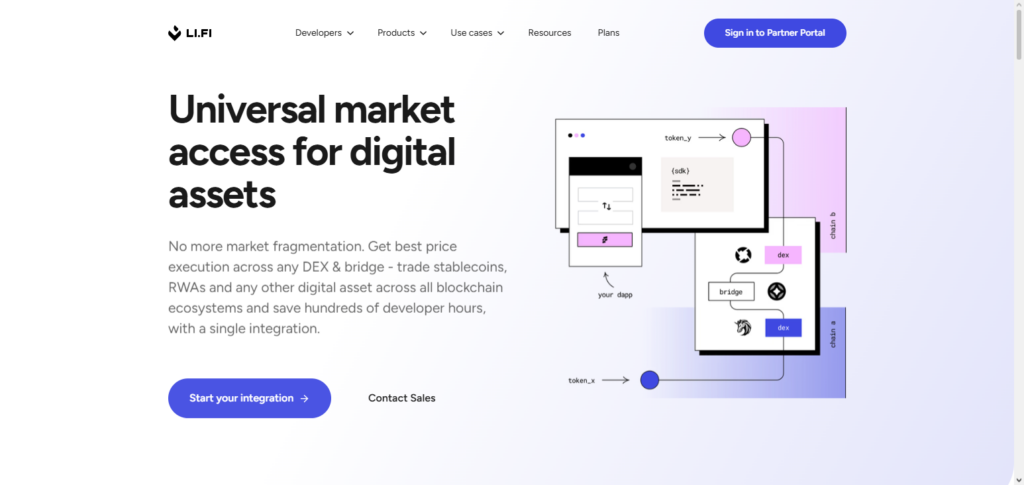
LI.FI is designed to handle many transaction and routing providers within a single, cross-chain execution. LI.FI is designed primarily for applications that want to improve routes and have a broad ecosystem.
The developer toolkit includes APIs, SDKs, contracts, and widgets to integrate cross-chain trading with no independent creation of each bridge and DEX.
LI.FI Aggregator Characteristics, Benefits & Drawbacks
Characteristics
- Combines liquidity sources via bridges and DEXs.
- Provides cross-chain routing.
- Supports routing via an API.
- Supports multiple integrations.
- Supports DeFi and wallet applications.
- Focused on finding the best execution for cross-chain swaps.
Benefits
- Combines liquidity sources.
- Supports multiple routes.
- Less time spent on integrating.
- Supports fragmented liquidity.
Drawbacks
- Final route may consist of multiple protocols.
- Fees vary based on route chosen.
- Slippage is unpredictable and depends on market conditions.
- Inevitably bridge risks are present during aggregation.
- It is up to the user to check the destination token information.
6. Rango Exchange
Rango Exchange is a cross-chain aggregation platform that is designed to link cross-chain swaps, bridges, and liquidity sources. Rango is designed to simplify the fast and easily the usually numerous steps required to complete a swap by finding the best routes between source and destination assets with respect to the underlying bridges and exchanges.
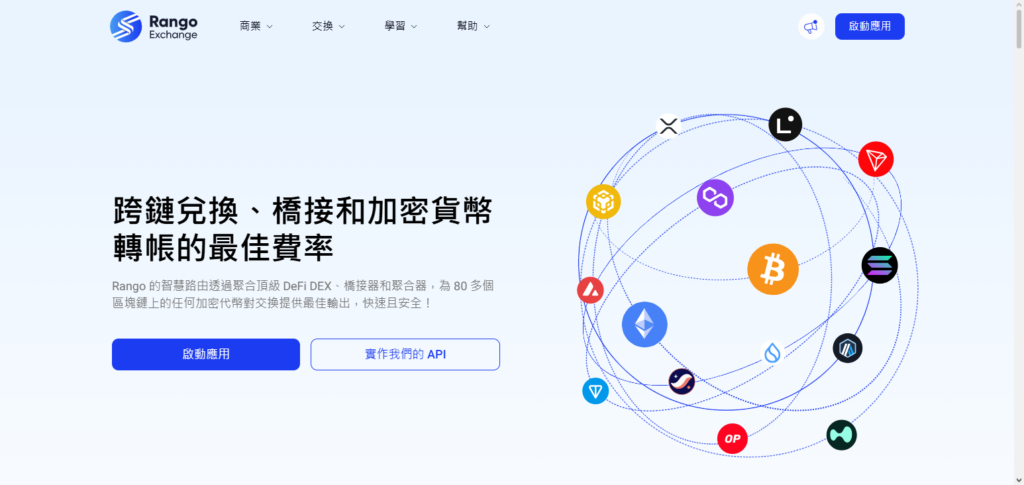
Rango is an excellent example of a Best Omni-Chain Native Asset DEX Aggregator in that it focuses on connecting a large number of chains and optimizing routes compared to other aggregators that operate in a single chain.
An example of a complex route is a swap within a source chain, a cross-chain transfer, and a conversion on the destination chain. The complexities of the route are abstracted by the aggregator.
Rango Exchange Characteristics, Benefits & Drawbacks
Characteristics
- Cross-chain swap aggregator.
- Connects DEXs, bridges, and liquidity providers.
- Supports advanced multi-step routing.
- Offers routing capabilities for different ecosystems.
- Built to ease multi-chain trading.
Benefits
- Supports routing across multiple protocols.
- Automated route selection reduces the need for manual bridge selection.
- Supports multiple ecosystems.
- Allows multiple swaps and bridges in a single flow.
- Great for users dealing with an inefficient market.
Drawbacks
- Routes may incur higher transaction cost.
- Routes are limited to existing integrations.
- Execution quality depends on liquidity.
- Additional time added due to cross-chain execution.
- Users exposed to risks of underlying bridges and DEXs.
7. Socket Protocol
Socket Protocol establishes infrastructure for applications that move assets and transact across blockchain networks. Socket’s ecosystem connects bridges, routes, and liquidity pools. This enables developers to offer cross-chain capabilities with a single integration. Among the Best Omni-Chain Native Asset DEX Aggregators,
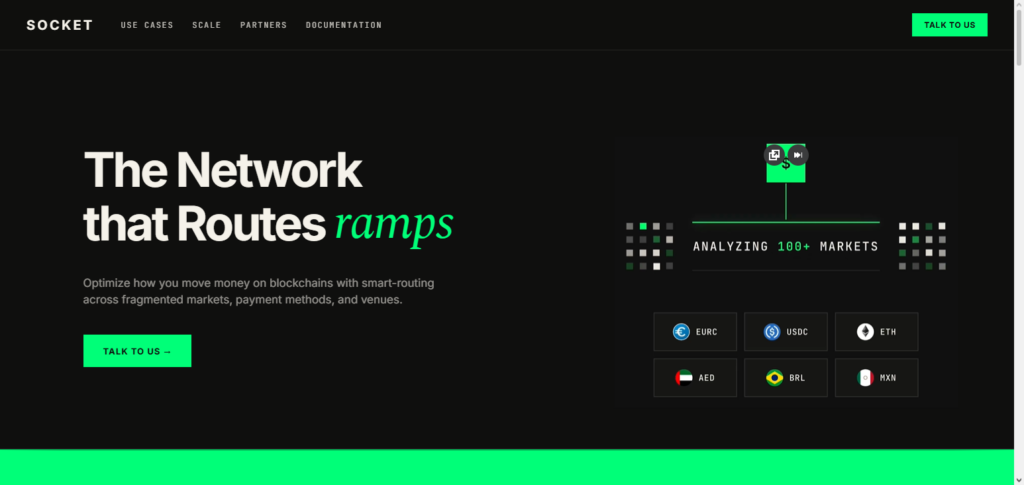
Socket Protocol offers convenience for developers that want the ability to choose routing in a more flexible manner as opposed to solely using one bridge. Their infrastructure intends to help wallets,
DeFi applications, and trading platforms better navigate the complexities of cross-chain interactions with less code required for multi-chain integrations. Thus, their true value rests in their aggregation and connectivity layers as opposed to being a standalone DEX.
Socket Protocol Characteristics, Benefits & Drawbacks
Characteristics
- Cross-chain interoperability infrastructure.
- Connects bridges and liquidity routes.
- offers routing tools with a developer focus.
- Infrastructure for cross-chain asset movement.
- Built for wallets, dApps and DeFi ecosystems.
Benefits
- Easy integration for multi-chain.
- Access to multiple routes of interoperability.
- Lowers development complexity.
- Infrastructure for programmable cross-chain routing.
- Offers better route selection through aggregation.
Drawbacks
- Infrastructure focus means less utility for an end-user.
- Routing paths highly depend on integrated service providers.
- Cross-chain execution is subject to variable fees.
- Execution quality is highly dependent on underlying bridges.
- May be subject to a steep learning curve for developers.
8. Odyssey Aggregator
Odyssey Aggregator has a lens as an omni-chain routing framework to simplify the execution of swaps and movement of assets across various blockchain networks. Within the Best Omni-Chain Native Asset DEX Aggregators, Odyssey Aggregator has the ability to provide users with a more simplified trading experience.
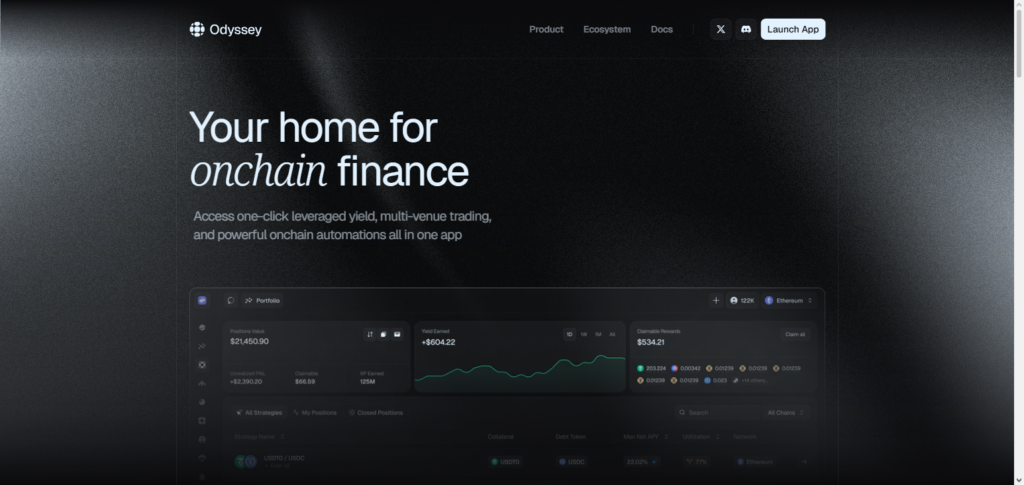
Based on evaluation of trade possibilities by the aggregator, routes can be executed more efficiently without the user knowing which bridges, DEX modules, or intermediary routes to select.
Hence, when analyzing Odyssey Aggregator, users should evaluate supported networks, liquidity, route quality, execution, cost, slippage protection, and if the destination asset is delivered in its native form.
Odyssey Aggregator Characteristics, Benefits & Drawbacks
Characteristics
- Multi-chain asset routing.
- Access fragmented liquidity.
- Create complex swaps and versatile cross-chain routes.
- Provide an abstraction for multi-chain trading.
- Focus on executing omnichain transactions seamlessly.
Benefits
- Simplify cross-chain transaction complexities.
- Reduce the need to manually select routes.
- Access fragmented liquidity.
- Improved potential execution by comparing available routes.
- Adaptable to complex multi-chain trading.
Drawbacks
- Routes are limited to the chains supported.
- Liquidity for assets can vary and may result in empty markets.
- Cross-chain transactions inherently have multiple fees.
- Final execution is reliant on the integrated protocols.
- Route and asset availability should be checked before trading.
9. Symbiosis Finance
Symbiosis Finance creates connections across blockchain networks for swapping assets. They combine cross chain liquidity and routing. This means users can jump delta between assets on different networks without having to do all the underlying hops.
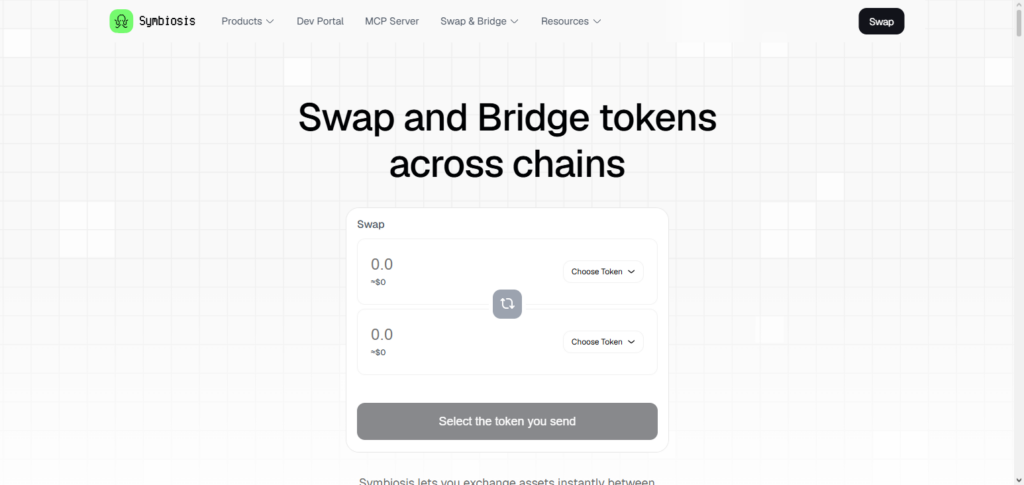
Symbiosis is relevant to the Best Omni-Chain Native Asset DEX Aggregators for its focus on cross chain swaps and liquidity abstraction.
Their approach of aggregation simplifies the fragmented DeFi market by unifying multiple networks with trading flow in one. Before choosing a route, users should consider liquidity, slippage, expected cost, and trade execution time.
Symbiosis Finance Characteristics, Benefits & Drawbacks
Characteristics
- Cross-chain liquidity protocol.
- Swapping on different blockchain networks.
- Cross-chain liquidity pools.
- Multi-chain DeFi work.
- Simplifying cross-chain asset exchange.
Benefits
- Cross-chain swaps made easy.
- Eliminates having to take a bridge transaction.
- Liquidity is cross multiple ecosystems.
- Great for DeFi apps and wallet.
- Simplify management for multiple chains.
Drawbacks
- Varies with each trading pair.
- Final execution can be impacted by cross-chain fees.
- Slippage is determined by the depth of the pools.
- Coverage of supported chains is ever changing.
- Smart contract and interop risks are present.
10. OpenOcean Omni‑Chain
OpenOcean Omni-Chain offers optimized trading routes for aggregating liquidity across DEXs and blockchain networks. As opposed to traditional AMMs, aggregators can analyze the liquidity provided across multiple DEXs and determine the best execution path for a trade.
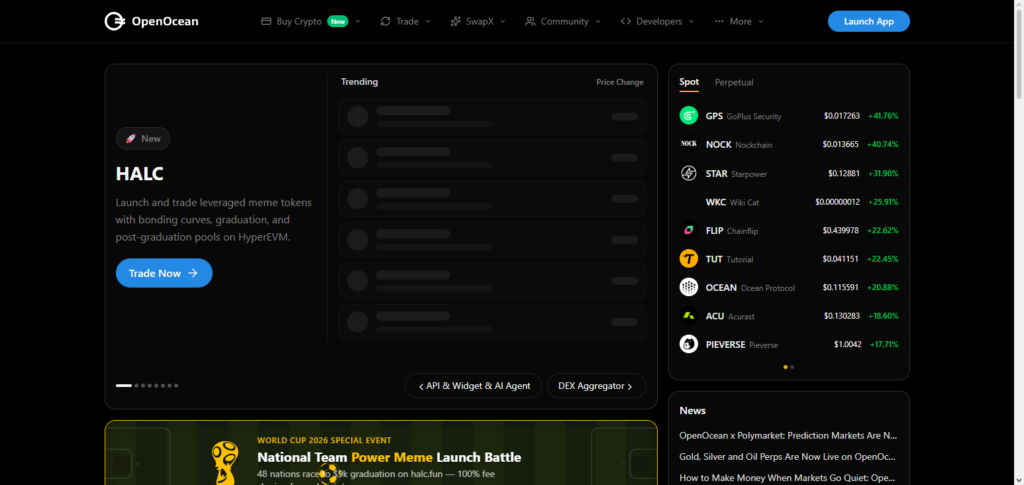
OpenOcean is one of the better options in the Omni-Chain Native Asset DEX Aggregators for those wanting extensive coverage across DEXs and automated route finding. The service supports many blockchain ecosystems and integrates with other cross-chain infrastructure enabling users to access fragmented liquidity through a single unified interface.
When assessing OpenOcean you should consider supported networks, quoted output, price impact, gas cost, routing efficiency, token variety, and overall execution reliability .
OpenOcean Omni-Chain Characteristics, Benefits & Drawbacks
Characteristics
- DEX aggregation with infrastructure.
- Cross multiple DEXs liquidity.
- Supports multi-chain with DEXs.
- Automated route discovery.
- Focus on cross-chain trade execution.
Benefits
- Combines broken DEX liquidity.
- Finds competitive swap routes.
- Eases multi-chain trading.
- Decreases manual DEX checking effort.
- Ideal for optimized execution traders.
Drawbacks
- Clay routes can be more costly.
- Added fees from cross-chain routes.
- Slippage varies with liquidity.
- Limited networks and token availability.
- Routes can require several transactions.
Conclusion
Best Omni-Chain Native Asset DEX Aggregators have simplified cross-chain trading by connecting isolated liquidity, native assets, DEXs and interoperability networks. THORChain and Stargate concentrate primarily on the native asset movement, while LI.FI, Rango, Socket, and OpenOcean focus on aggregation and the best routing.
The best solution ultimately depends on the available networks, the native assets, liquidity, fees, slippage, security, and execution speed. As the multi-chain DeFi market continues to grow, Omni-Chain aggregators will become even more important to simplify cross-chain trading across different ecosystems.
FAQ
What are Omni-Chain Native Asset DEX Aggregators?
Omni-chain native asset DEX aggregators are platforms that combine liquidity, DEXs, bridges, and cross-chain protocols to help users swap assets between different blockchain networks. Instead of manually selecting a bridge and then finding a DEX, an aggregator can search available routes and coordinate the transaction. Rango, for example, combines DEX aggregators, bridges, and cross-chain liquidity providers to create multi-step routes between assets on different networks.
How do Omni-Chain DEX Aggregators work?
They generally evaluate available liquidity and cross-chain routes before selecting an execution path. A transaction may involve a source-chain swap, cross-chain transfer, and destination-chain swap. Platforms such as LI.FI aggregate DEXs, DEX aggregators, bridges, and other liquidity infrastructure, allowing applications to access multiple routes through a unified integration.
What is a native asset cross-chain swap?
A native asset swap allows users to exchange the original asset of one blockchain for an asset on another network without necessarily relying on a wrapped representation. THORChain, for example, supports native cross-chain swaps where assets such as BTC and ETH can be exchanged through its decentralized liquidity infrastructure.