

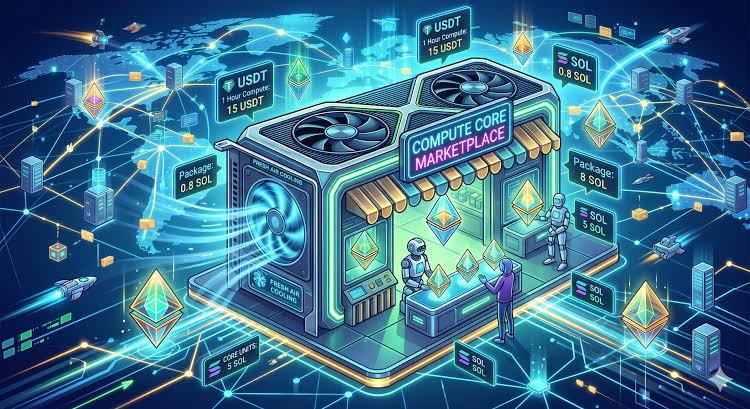


This article examines Decentralized GPU Marketplaces Cheaper Than AWS for AI. These market spaces are able to offer less monetary demand for computing power supply and are specialized for training AI and ML and for handling high-performance workloads.
We will look into the decentralized GPU networks and infrastructure models and the new technologies that are providing solutions for reducing the costs of using cloud computing for decentralized AI.
Why Choose Decentralized GPU Marketplaces Cheaper Than AWS for AI
Price of Computing: Costs associated with computing power for AI are significantly lower due to how Decentralized GPU Marketplaces are designed. They harness unused GPU resources around the world. Unlike the traditional cloud, such as AWS, the overhead is minimized, leading to a more competitive marketplace where powerful GPUs come at a lower price to AI developers.
More Powerful GPUs: Access to modern GPUs that are essential for performing AI training and computationally intensive tasks such as deep learning, rendering, and processing ML workloads are offered by Decentralized GPU Marketplace platforms. Businesses can forgo the acquisition and maintenance of expensive computing resources and dedicated data centers.
Nimble Scaling for AI Endeavors: For the Decentralized GPU networks, scaling the throughput of computing resources to match the needs of a project is easily achievable. Both established companies and Startups alike can easily adjust the consumption of GPU resources.
Less Reliance on Centralized Cloud Solutions: By design, Decentralized GPU Marketplaces offer a more computing resource distributed computing solution, serving as an alternative to most cloud solutions. This inherently provides more freedom to innovate with AI, as it lessens reliance on centralized solutions.
Better Use of Existing Resources: Idle GPU capacity is brought to new life by these marketplaces. Existing hardware is used more and brought to a better state to develop AI services.
More Options for AI Researchers and Startups: Lower priced cloud GPUs result in less operational costs to run advanced AI models, bringing more options to researchers and developers to aid the progression of artificial intelligence.
Key Point & Decentralized GPU Marketplaces Cheaper Than AWS for AI
| Platform | Key Point |
|---|---|
| Render Network | A decentralized GPU rendering and AI computing marketplace that connects unused GPU resources with creators and AI developers, offering scalable and cost-efficient processing compared to traditional cloud providers. |
| Akash Network | A decentralized cloud computing marketplace that allows users to rent affordable GPU and CPU resources from global providers, reducing infrastructure costs for AI training and machine learning workloads. |
| Gensyn | A blockchain-powered decentralized machine learning network designed to connect distributed computing resources, enabling AI model training across multiple devices with transparent verification and lower costs. |
| Bittensor | A decentralized AI network that rewards machine learning contributors for providing valuable intelligence, creating an open ecosystem where AI models can compete and collaborate. |
| DeepBrain Chain | A decentralized AI computing platform that provides affordable GPU resources for AI companies, researchers, and developers by utilizing global distributed computing power. |
| Spheron | A decentralized cloud infrastructure platform offering GPU computing, container deployment, and Web3-native hosting solutions for AI developers seeking flexible and cost-effective resources. |
| Exabits | A decentralized AI infrastructure platform focused on providing high-performance GPU computing power, helping businesses access scalable resources for AI training and inference. |
| Phala Network | A privacy-focused decentralized cloud computing network that combines secure execution environments with distributed computing resources for AI applications and Web3 services. |
| Ankr Compute | A decentralized GPU marketplace providing on-demand computing resources for AI, blockchain, and Web3 developers through a global network of independent hardware providers. |
| Cudo Compute | A cloud GPU marketplace offering affordable access to powerful GPUs for AI training, rendering, and scientific workloads with flexible pricing options. |
| OctaneRender Cloud | A GPU-powered rendering platform that provides high-speed cloud rendering capabilities for designers, studios, and AI-related creative workflows without expensive hardware investments. |
1. Render Network
Render Network is an innovative example of a Decentralized GPU Marketplace Cheaper Than AWS for AI. Render facilitates connections between people and companies requiring GPU processing and people and companies willing to sell GPU processing.

Render is primarily designed for rendering 3D graphics, but also has the capability to process AI and ML workloads and other advanced computing tasks.
Render competes with other cloud computing companies, but aims to reduce the cost of high quality processing for creators, developers, and AI companies. Render is particularly useful for the cost intensive process of training AI models, as well as 3D rendering and advanced creative tasks.
Render Network Features, Pros & Cons
Features
- Aims to connect GPU creators and AI developers through a decentralized GPU marketplace.
- Able to handle GPU rendering, AI, and ML, as well as HPC.
- Manages payments and resource sharing though blockchain.
- Scalable GPU access without the costs of hardware.
- Allows for faster rendering and AI through distributed resources.
Pros
- Costs of GPUs are lower than in most cloud services.
- Access to powerful global network of GPUs.
- Less reliance on centralized computing.
- Supports a range of industries from AI to creative.
- Resources adjust to fit demand.
Cons
- GPU choice and supply still rely on the network.
- May take time to learn blockchain-based systems.
- Consistency in performance will differ compared to cloud offerings.
- Lacks enterprise-level cloud service offerings that AWS provides.
- More adoption and use is needed for the network.
2. Akash Network
Akash Network is another example of a Decentralized GPU Marketplace Cheaper Than AWS for AI. Akash aims to provide the most affordable cloud computing service for creating AI and other blockchain applications.

Akash does this by decentralizing the traditional computing services offered by data centers and eliminating the pricing control of service monopolies. The open and decentralized nature of cloud computing services offered by Akash enables AI developers to build and train models with greater ease and at lowers costs.
Users of Akash can get access to high performing GPUs, while sellers of GPU services get compensated for their underutilized computing services.
Akash Network Features, Pros & Cons
Features
- Decentralized renting of GPU and CPU on the cloud.
- Resources for AI and blockchain are more affordable.
- Open cloud tech allows for easy deployment of apps.
- Connects businesses to global independent hardware.
- Flexible computing with no long-term commitment.
Pros
- Prices are lower when compared to standard cloud offerings.
- Marketplace keeps GPU prices low.
- Good for AI and research.
- Can be deployed easily.
- Less reliance on centralized clouds.
Cons
- Distributed providers mean supply is not guaranteed.
- Deployment may require a high level of expertise.
- Support for enterprises is not widely available.
- The performance of services varies by provider.
- Compared to AWS and Azure, the cloud services offered are fewer.
3. Gensyn
Gensyn is a decentralized machine learning computing network. Gensyn is one of the emerging platforms in the Decentralized GPU Marketplaces Cheaper Than AWS for AI.

Gensyn is focused on creating a system without restrictions where developers train AI models using distributed GPU power. Gensyn is building a network of worldwide computational resources with the goal of making AI training cheaper and more accessible.
The network uses cryptographic verification methods to confirm that the computational work is done correctly. Gensyn is building the open AI economy and focuses on reducing the costs of AI for infrastructures.
Gensyn Features, Pros & Cons
Features
- Provides a decentralized framework for the machine learning community to train AI models.
- Implements distributed computing using spare global hardware.
- Applies verification systems to assess computational tasks.
- Capable of handling training requirements for large AI models.
- Establishes a new open marketplace for machine learning.
Pros
- Decreases costs for training AI models using a distributed network.
- Increases accessibility to computing resources.
- Advances the development of decentralized AI.
- Addresses the problem of underutilized GPU resources.
- Supports the advancement of open AI infrastructure.
Cons
- Compared to traditional cloud service providers, technology is in an earlier phase.
- Performance of the network is determined by the number of participants.
- In general, large-scale enterprise adoption is absent.
- Advanced verification may mean greater technical barriers.
- Very few examples of AI in practice.
4. Bittensor
Bittensor is a decentralized artificial intelligence network. It builds an open AI economy by combining the incentives of machine learning with the blockchain.

Bittensor is building a network of collaborative and competing machine learning systems. Bittensor is a unique player in the Decentralized GPU Marketplaces Cheaper Than AWS for AI. It is a system that enables the distributed development of AI systems.
It does so by incentivizing and rewarding collaborative and competitive behavior. The decentralized nature of Bittensor’s system enables users of the system to control the design and direction of AI.
Bittensor Features, Pros & Cons
Features
- Integrates blockchain and machine learning in a decentralized AI network.
- Provides a mechanism to reward people for adding AI intelligence.
- Fosters collaborative AI model building through an open network.
- Decentralized systems with built-in rewards allow for improving ML networks to compete.
Pros
- Provides a framework for the continuation of open-source AI.
- Provides a means to economically contribute to AI.
- Lessens the reliance on AI corporations.
- Provides a means to improve AI models in a decentralized way.
- Strongly favors decentralized intelligence.
Cons
- May be beyond the capability of a novice user.
- Not a GPU marketplace in the style of AWS.
- Network economics is complex.
- AI performance relies heavily on participant quality.
- Still in a phase of developing widespread adoption.
5. DeepBrain Chain
DeepBrain Chain is a decentralized network of AI computing aiming to provide low-cost GPU resources to AI companies, researchers, and developers.

One of the Decentralized GPU Marketplaces Cheaper Than AWS for AI, DeepBrain Chain uses distributed GPU resources provided by participants around the world instead of relying on centralized cloud solutions. The network’s flexible solutions for GPU computing help AI developers reduce costs.
DeepBrain Chain leverages blockchain to facilitate sharing of computing resources, payment, and participation in the network. Its vision is to make infrastructure of AI computing economically feasible for all.
DeepBrain Chain Features, Pros & Cons
Features
- Offers a decentralized AI computing network for less expensive GPU services.
- Optimized for AI, rendering, and research.
- Manages computing via blockchain.
- Associates possible providers of GPUs with users of AI.
- Optimizes AI infrastructure.
Pros
- Allows cheaper computing for AI.
- Supports intensive GPU tasks.
- Offers access to decentralized resources.
- Supports hardware cost needs for startups.
- Optimized for AI computing.
Cons
- Small community compared to major cloud services.
- GPU shortage relies on users.
- Lacks enterprise features.
- Limited large company support.
- Requires the knowledge of a decentralized system.
6. Spheron
Spheron is a decentralized cloud computing platform for GPU computing with application hosting and Web3 deployment. As one of the Decentralized GPU Marketplaces Cheaper Than AWS for AI, Spheron allows developers to use distributed GPU resources for AI without relying on costly centralized cloud offerings.

The platform provides a flexible decentralized environment for deploying AI applications, ML models, and containerized workloads. Spheron aims to make cloud computing affordable, scalable, and transparent. Its marketplace brings together hardware providers and clients in need of advanced computing for AI and blockchain.
Spheron Features, Pros & Cons
Features
- Decentralized cloud service with GPU computing.
- Services the AI and Web3 and application building block infrastructure.
- Provides computing for different sized tasks.
- Connects users with decentralized resources.
Pros
- Affordable computing compared to centralized cloud computing.
- Open architecture.
- Supports lower infrastructure cost and desktop computing.
- Services both AI and blockchain.
Cons
- Limited advanced computing services.
- Smaller community compared to AWS.
- Variable GPU supply.
- Limited enterprise adoption.
- Requires knowledge of development.
7. Exabits
Exabits is a decentralized AI infrastructure platform under development. It seeks to provide scalable GPU resources for AI. Exabits is a part of the category of Decentralized GPU Marketplaces Cheaper Than AWS for AI.

It focuses on connecting businesses to distributed computing, therefore reducing the cost of AI infrastructure. Exabits supports the business of AI training and inference, as well as other computationally intensive tasks.
Exabits leverages distributed infrastructure to provide advanced computation resources to businesses while helping them avoid the expenses of traditional cloud solutions. Its infrastructure model is aimed at researchers, startups, and enterprises, and offers the cost-effective tools needed to build sophisticated AI solutions.
Exabits Features, Pros & Cons
Features
- Decentralized AI infrastructure focused on GPU computing.
- Allows scalable AI training and inference resources.
- Accommodates high-performance computing needs.
- Links users to distributed hardware.
- Intentional to lower AI infrastructure costs.
Pros
- Lowers cost of AI computing.
- Allows on-demand scalable GPU.
- Adapts to new AI solutions.
- Decentralization of infrastructure.
- Great for startups and researchers.
Cons
- New, thus limited presence in market.
- Small hardware provider network.
- Less tested against competitors.
- Little insight into the ecosystem.
- Features targeting enterprises are still a work in progress.
8. Phala Network
Phala Network is a decentralized, cloud, computing solution that combines privacy and computation. Phala, a member of the Decentralized GPU Marketplaces Cheaper Than AWS for AI allows the secure processing of sensitive workloads.

Phala combines distributed computing and Trusted Execution Environments (TEEs). Developers can run apps in a secure environment, while leveraging a decentralized infrastructure for computing resources.
Phala has a wide range of applicability for AI, confidential computing, and computing tasks that are complex and privacy-focused. Phala Network is a decentralized computing infrastructure solution that focuses on privacy and computing, and serves as an alternative to traditional cloud providers.
Phala Network Features, Pros & Cons
Features
- Decentralized cloud computing platform.
- Protects infrastructure and computing with secure execution environments.
- AI agents and closed computing are welcomed.
- Combines blockchain and distributed computing.
- Protects critical infrastructure and computation of sensitive data.
Pros
- Great emphasis on privacy and security.
- Supports closed AI.
- Decentralization implies trust.
- Protects sensitive computation.
- Especially useful for both Web3 and AI.
Cons
- Not exclusively a GPU marketplace.
- Comparison vs. traditional cloud platforms – inadequate.
- Requires knowledge in blockchain to utilize.
- Small developer community.
- Limited resources and poor performance.
9. Ankr Compute
Ankr Compute is a decentralized marketplace for cloud computing and distributed GPUs. Developers have access to the distributed hardware needed to build their applications.

Ankr Compute is listed among Decentralized GPU Marketplaces Cheaper Than AWS for AI. Ankr’s unique marketplace enables IT developers to access the GPU for AI from multiple offerings, therefore eliminating the need for a costly centralized computing infrastructure.
Ankr Compute offers AI developers flexible GPU rentals with scalable projects and optimal resource usage. The decentralized computation marketplace drives faster innovation to the fields of AI, gaming, and dApps.
Ankr Compute Features, Pros & Cons
Features
- Decentralized GPU marketplace for AI and Web3.
- Offers computing resources on demand.
- Connects users to distributed hardware.
- Supports computing needs of blockchain and all cloud flexibility.
Pros
- GPUs are offered at competitive rates.
- Multiple W3 and AI functionalities
- Fast and simple integration with DApps
- Less infrastructure spending
- Variable computing availability
Cons:
- GPU accessibility relies on network service providers
- Smaller than traditional cloud services
- Low enterprise assistive features
- Inconsistent performance
- Slow adoption rate
10. Cudo Compute
Cudo Compute is a decentralized cloud GPU marketplace that makes high-performance computing for AI training, rendering, and other workloads available at a lower price. It is among the platforms listed in Decentralized GPU Marketplaces Cheaper Than AWS for AI.

Cudo Compute enables users to rent GPU power from a worldwide network of hardware for a reasonable price. Cudo Compute allows businesses to gain access to powerful processing without the need for a large investment in computing infrastructure.
It is ideal for machine learning developers as well as researchers and creative professionals who need GPU resources that can easily be scaled. Cudo Compute is focused on increasing the availability of advanced computing through decentralized cloud infrastructure.
Cudo Compute Features, Pros & Cons
Features
- Cloud GPU marketplace for AI, rendering, and scientific computing.
- Provides access to high-performance GPUs on demand.
- Supports flexible pricing models.
- Connects users with global computing resources.
- Helps businesses avoid expensive hardware investments.
Pros
- Affordable GPU rental options.
- Suitable for AI and rendering workloads.
- Flexible resource scaling.
- Easy access to powerful hardware.
- Reduces upfront infrastructure costs.
Cons
- Less comprehensive than AWS cloud services.
- GPU availability may change frequently.
- Limited enterprise ecosystem.
- Performance depends on hardware providers.
- Requires technical setup knowledge.
11. OctaneRender Cloud
OctaneRender Cloud is targeted at professional users with demanding rendering requirements. Other rendering solutions tend to require investment in expensive hardware infrastructure.

OctaneRender Cloud falls within the alternatives in Decentralized GPU Marketplaces Cheaper Than AWS for AI because the service provides flexible access to GPUs for creative workflows and for simulations and AI-based visual applications.
Being cloud-based, OctaneRender Cloud allows artists, designers, and other users to bring large and complex projects to bear without the prohibitively expensive upgrades to workstations that would be necessary. OctaneRender Cloud’s proprietary solution comprises an environment of GPUs and accelerated rendering.
OctaneRender Cloud Features, Pros & Cons
Features
- Cloud-based GPU rendering platform for creative professionals.
- Provides powerful GPU acceleration for rendering projects.
- Supports animation, design, and visual effects workflows.
- Eliminates the need for expensive workstation hardware.
- Enables scalable rendering capacity on demand.
Pros
- Fast GPU rendering performance.
- Reduces hardware investment costs.
- Ideal for designers and creative studios.
- Provides scalable rendering resources.
- Improves productivity for complex projects.
Cons
- Mainly focused on rendering rather than general AI training.
- Requires compatible software workflows.
- Cloud rendering costs can increase for large projects.
- Less suitable for enterprise AI workloads.
- Limited compared with full cloud platforms.
Conclusion
Decentralized GPU Marketplaces Cheaper Than AWS for AI are altering methods for accessing AI workload computing power.
Render Network, Akash Network, Gensyn, and others offer relatively low cost alternatives by tapping into unused latent global GPU resources instead of relying on centralized costly cloud resources.
These decentralized alternatives lower infrastructure costs and increase accessibility all while promoting the scalable AI training, rendering, and machine learning operations. The demand for AI solutions is rapidly increasing and decentralized GPU networks are going to be a major contributor for an open, low cost global AI computing architecture.
FAQ
Why are decentralized GPU marketplaces cheaper than AWS for AI training?
Decentralized GPU marketplaces reduce costs by using distributed hardware from global providers instead of operating large centralized data centers. This eliminates some infrastructure expenses, allowing platforms like Akash Network and Render Network to offer competitive GPU pricing for AI developers and businesses.
Which decentralized GPU marketplaces are alternatives to AWS?
Popular decentralized GPU marketplaces that compete with traditional cloud providers include Render Network, Akash Network, Gensyn, DeepBrain Chain, Spheron, Exabits, Phala Network, Ankr Compute, Cudo Compute, and OctaneRender Cloud. These platforms provide flexible GPU access for AI, rendering, and high-performance computing workloads.
Can decentralized GPU marketplaces support AI model training?
Yes, many decentralized GPU platforms support AI model training, inference, and machine learning workloads. They provide access to powerful GPUs required for training large language models, computer vision systems, generative AI applications, and other advanced artificial intelligence projects.
Are decentralized GPU marketplaces secure for AI workloads?
Decentralized GPU platforms use blockchain technology, encryption, verification systems, and distributed infrastructure to improve security. Some networks, such as Phala Network, focus on confidential computing to protect sensitive AI data and applications during processing.