


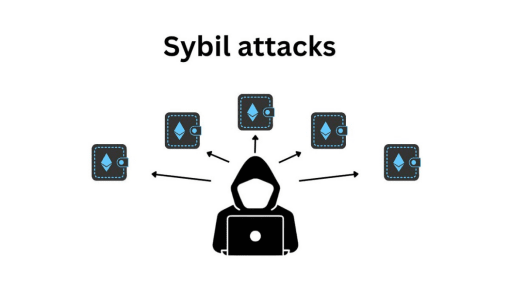


In this article, I highlight the Best DID Systems for Sybil-Resistant User Growth in Web3. I outline how these systems assist projects in user verification, in stopping fake accounts, and in building trust in the community.
As the Web3 Ecosystems expand, the importance of Decentralized Identity systems in protecting airdrop, DAO, and user growth systems while maintaining privacy, security and the potential for growth in the future, becomes even greater.
What is DID Systems?
Decentralized identity (DID) systems allow individuals and organizations to create, manage, and control digital identities on the blockchain without the need to depend on governments, social networking sites, or centralized corporations.
Unlike legacy identity systems, DID solutions empower users with full control of their personal information and credentials through cryptographic signature verification using a decentralized network. DID systems enable secure verification, privacy-preserving authentication, and trusted interactions in the Web3 paradigm.
DID systems are particularly effective in preventing Sybil attacks, enabling user verification, supporting DAO governance and participation, and facilitating a trustworthy decentralized ecosystem, all while ensuring user data privacy and ownership.
Why Sybil Resistance Matters in Web3
Deters Identity Fraud: Presence of Sybil resistance mechanisms makes it difficult for users to create multiple identities and to abuse Web3 applications and reward systems.
Maintains Token Fairness: Airdrop farming is curbed and token drops are made to community members instead of bot users.
Secures DAO Integrity: With unique user verification, voting and decision making in DAO is less susceptible to manipulation.
Minimizes Bot Distortion: Community engagement and growth can be negatively impacted by bot user accounts and Sybil-resistant systems help eliminate their presence.
Community Participation: Protection from bad actors makes users more likely to participate in the ecosystem.
Improves Incentive Programs: Grants, loyalty rewards, and referrals are more effective and target real users instead of bots.
Incentives Abuse: Sybil resistance prevents multiple rewards from the same incentive system using different accounts.
Promotes Real Growth: Genuine users have been prioritized over bots, making user growth more focused and realistic.
Improves Security: There is a lower chance of coordinated exploitation of a dApp with fewer fake user accounts.
Accurate Data: With genuine users, engagement and growth metrics are more reliable.
Fair Distribution Drives Participation: Many genuine users are likely to contribute to the ecosystem when opportunities are equitable.
Verifiable Projects Boost Credibility: Investors, partners, and community members are more likely to support a project with verifiable user systems.
Key Features to Look for in a DID System
User Uniqueness Check: The system should confirm that an identity corresponds to a real and unique user.
Sybil Attack Prevention: Users should not be able to create multiple fake identities.
Identity Verification Privacy: Users should be able to verify their identity without revealing their private information.
Self-Sovereign Identity: Users should control their credentials and data.
Trusted Verifiable Credentials: The system should provide credentials that can be cryptographically verified and are secure.
Zero Knowledge Proofs: Advanced DID systems will allow users to verify claims without disclosing the data that substantiates the claim.
Decentralized Identity System: No single identity management system should be fully trusted.
Cross System Compatibility: The DID system will be usable across various blockchains, wallets, and distributed applications.
Expandable System: A growing number of users should not negatively affect the security or performance of the system.
System Usability: users should easily create, verify, and manage their identity and credentials.
Credential Portability: Users should be able to carry the same identity across multiple Web3 systems and decentralized services.
User Controlled Identity Data: Users’ credentials and identity information should be maintained by the users.
System Security and Encryption: Robust security and cryptography should ensure that identities are not compromised.
Optional KYC/AML Compliance: The system should be able to customize compliance with varying degrees of KYC and AML.
Web3 System Development Tools: The system should provide APIs, SDKs, and extensive documentation to enhance ease of development.
Reputation and Trust Scoring: The system should support the building of reputation and trust based on real, verifiable activity and credentials.
Community Governance Support: DID systems should promote equitable voting participation in DAOs and other decentralized communities.
Cross-Platform Interoperability: Identities should work across all dApps, ecosystems, and networks.
Fraud Detection and Prevention: The system should recognize and restrict the abuse of identity within systems.
Sustainable Development: The DID protocol should be self-sustaining with an evolving ecosystem and community integration.
Benefits of Using DID Systems for User Acquisition
Draws Real Users: DID systems capture authentic platform sign-ups and minimize fake sign-ups and bots.
Minimizes Sybil Attacks: Users cannot manufacture multiple identities to abuse reward systems, airdrops, or referral schemes.
Better Airdrops: Organizing a targeted airdrop for a user group may maximize user acquisition.
Builds Community Confidence: Verified identities create a trusted space for users, stakeholders, and partners.
Grows User Base: Real users will integrate and maintain themselves within the ecosystem.
Stretches Marketing Budget: Increased financial resources may be used to capture users as funds are not allocated to capture fake sign-ups.
Rewards Legit Participants: Incentives, stipends, and loyalty programs are distributed to participants that don’t seek to exploit the system.
Improves DAO Voting: Participants vote as members of the community rather than as DAOs.
Better User Data: Accurate user metrics improve the quality of growth.
Safer Platforms: Verified identities improve trust and reduce spam, malice, and fraud within the ecosystem.
Builds a Reputation: Users can gain trust and verified credits.
Real User Interactions: Communities gain meaningful user interactions versus bot-based engagement.
Eases Regulation: Some DID systems can do KYC and regulation-compliant activities while protecting user identity.
Improved Multi-Service Identities: Users can transport their verified identities across a multitude of Web3 services.
Facilitates Fast Growth: DID solutions streamline secure user onboarding for larger numbers.
Safeguards Referral System: Identity verification stops account duplication and referral reward exploitation.
Enhances Brand Trust: Verified user acquisition reflects healthy user growth, increasing trust for the project from investors and partners.
Allows Verification with Privacy: Sensitive personal information can remain private.
Builds Resilient Ecosystems: Real user growth establishes active, sustainable Web3 communities.
Improves Competitive Advantage: Over time DID systems help projects attract better user quality and grow the network.
Key Point & Best DID Systems for Sybil-Resistant User Growth in Web3
- Worldcoin (World ID) – Uses biometric verification to prove unique human identity and prevent Sybil attacks.
- BrightID – Verifies users through social trust networks without requiring government-issued documents.
- Proof of Humanity – Combines video submissions and community validation to establish unique human identities.
- Gitcoin Passport – Aggregates on-chain and off-chain credentials into a trust score for user verification.
- Civic Pass – Provides reusable identity verification credentials for compliant Web3 access and rewards.
- Polygon ID – Leverages zero-knowledge proofs to enable privacy-preserving identity verification.
- Lens Protocol Profiles – Creates portable, user-owned social identities across decentralized applications.
- Spruce ID – Enables self-sovereign identity using wallet-based authentication and verifiable credentials.
- KILT Protocol – Allows users to create and manage decentralized credentials while maintaining data ownership.
- Serto DID – Offers decentralized identity infrastructure for secure credential issuance and verification.
10 Best DID Systems for Sybil-Resistant User Growth in Web3
1. Worldcoin (World ID)
Worldcoin (World ID) is an internationally popular solution to verify unique human participation in a system through a decentralized identity solution. This system utilizes biometric verification using Worldcoin’s Orb device that scans an individual’s iris to create a privacy-preserving digital identity.
This system is especially important for Web3 projects during a token airdrop or community attacks, as it is effective in limiting fake accounts, bot activities, and Sybil attacks. World ID, one of the Best DID Systems for Sybil-Resistant User Growth in Web3, assists applications in verifying human beings without the disclosure of private information.
This makes World ID a system of flexibility and great importance to DAOs, decentralized applications, and blockchain-based social networks.
Worldcoin (World ID) Why It Matters
| Why It Matters | Details |
|---|---|
| Prevents duplicate accounts | Uses biometric uniqueness verification to ensure one person has only one identity. |
| Reduces Sybil attacks | Protects airdrops, voting systems, and community rewards from manipulation. |
| Improves token distribution fairness | Ensures incentives reach genuine users rather than bots. |
| Supports large-scale onboarding | Can verify millions of users across global Web3 ecosystems. |
| Enhances trust in communities | Creates confidence that participants are real individuals. |
2. BrightID
BrightID is a decentralized identity network that uses social-graph connections for user verification as an alternative to government-issued documents and biometrics. In fact, BrightID is a communal network of trust built amongst participants, and as such, makes it easy for one user to create multiple rogue accounts.
BrightID is one of the Best DID Systems for Sybil-Resistant User Growth in Web3. As a result, BrightID enables community-driven Web3 ecosystems to create fair governance, token distribution, and reputation systems. Its privacy-preserving design enables users to remain anonymous while proving they are unique. This is important for decentralized applications.
BrightID Why It Matters
| Why It Matters | Details |
|---|---|
| Uses social trust verification | Confirms uniqueness through human connections instead of documents. |
| Protects user privacy | Avoids collecting sensitive personal information. |
| Strengthens DAO governance | Makes voting systems more resistant to fake accounts. |
| Encourages authentic participation | Rewards real community members rather than automated bots. |
| Enables decentralized verification | Eliminates dependence on centralized identity providers. |
3. Proof of Humanity
Decentralized identity registries combine video verification, social vouching and community review processes. Proof of Humanity uses video submissions and member endorsements to establish identity. It is commonly used for fair token distribution, decentralized governance, and Universal Basic Income (UBI) in blockchain ecosystems.
Proof of Humanity, among the Best DID Systems for Sybil-Resistant User Growth in Web3 is very effective at combating duplicate accounts and fraudulent participation. Its community-governed verification system balances trust and decentralization, while minimizing reliance on centralized systems.
Proof of Humanity Why It Matters
| Why It Matters | Details |
|---|---|
| Verifies real humans | Combines video submissions and community validation. |
| Prevents fraudulent participation | Makes it difficult for users to create multiple identities. |
| Supports fair governance | Helps DAOs maintain accurate voting processes. |
| Enables trusted airdrops | Reduces token farming through fake accounts. |
| Builds transparent identity systems | Uses public verification mechanisms for accountability. |
4. Gitcoin Passport
Gitcoin Passport is a reputation-based, decentralized identity system and credential aggregator. It allows users to upload verifiable credentials by connecting their wallet, social accounts, and developer profiles to build a trust score (the Passport Score).
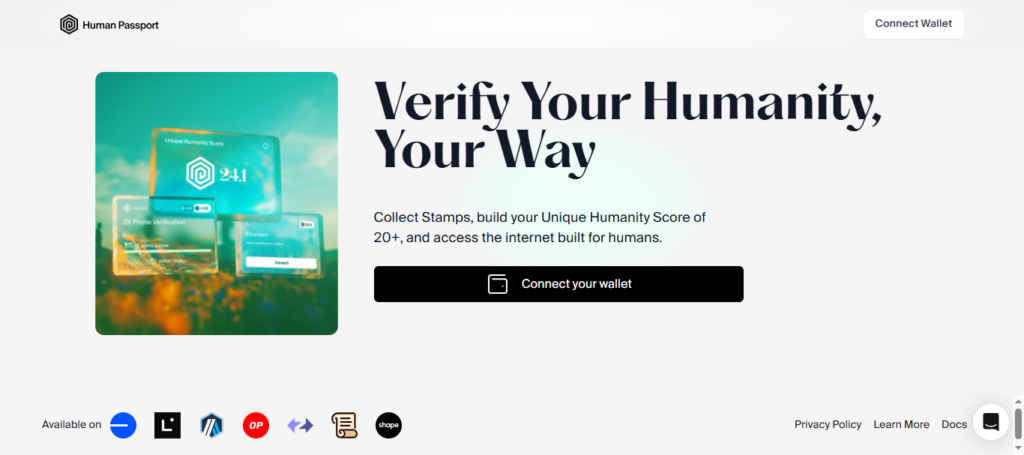
This score is used to determine whether an individual is a legitimate participant and to filter bots during grants, airdrops, and governance.
Gitcoin Passport is also among the Best DID Systems for Sybil-Resistant User Growth in Web3. Its flexible identity solutions enable the assessment of trust across a variety of blockchain ecosystems and decentralized communities, without the need for personally intrusive information.
Gitcoin Passport Why It Matters
| Why It Matters | Details |
|---|---|
| Creates reputation-based trust | Aggregates credentials from multiple trusted sources. |
| Improves grant allocation | Helps funding programs identify legitimate applicants. |
| Reduces bot influence | Higher trust scores make Sybil attacks less effective. |
| Supports Web3 growth campaigns | Verifies users participating in community initiatives. |
| Flexible verification approach | Allows projects to customize trust requirements. |
5. Civic Pass
Civic Pass offers reusable identity credentials that balance compliance with privacy for Web3 applications. Users can verify their identity one time and retain this verified identity for use in other decentralized applications.
Civic Pass is able to implement anti-bot measures, age verification, KYC, and access control for blockchain applications. As one of the Best DID Systems for Sybil-Resistant User Growth in Web3,
it allows projects to focus on user growth and engagement while fraud and multiple account attempts are reduced. Civic Pass is an optimal solution for privacy-focused and compliance-centric Web3 and tokenized applications.
Civic Pass Why It Matters
| Why It Matters | Details |
|---|---|
| Simplifies compliance | Supports KYC and regulatory requirements. |
| Provides reusable credentials | Users verify once and access multiple services. |
| Reduces onboarding friction | Speeds up access to Web3 platforms. |
| Prevents fraudulent users | Screens out suspicious or duplicate participants. |
| Improves ecosystem security | Strengthens trust across decentralized applications. |
6. Polygon ID
Based on zero-knowledge proof technology, Polygon ID allows users to verify credentials in a privacy-preserving manner, and proves age, membership, reputation and eligibility without revealing private information.
Polygon ID is one of the Best DID Systems for Sybil-Resistant User Growth in Web3 because it allows decentralized applications to maintain user privacy while also being able to onboard verified users.
Placed in the Polygon ecosystem, and enhanced credential verification of scalable solutions, Polygon ID is extremely appealing for Web3 developers.
Polygon ID Why It Matters
| Why It Matters | Details |
|---|---|
| Protects user privacy | Uses zero-knowledge proofs for secure verification. |
| Enables selective disclosure | Users reveal only necessary information. |
| Supports scalable identity verification | Designed for high-volume Web3 applications. |
| Reduces identity fraud | Cryptographic proofs increase security. |
| Enhances user control | Individuals maintain ownership of personal data. |
7. Lens Protocol Profiles
Lens Protocol Profiles are self-sovereign digital identities in decentralized social networks that are portable and owned by the user. In comparison to social media accounts that are locked on centralized platforms, Lens profiles are fully owned by the user and secured on the blockchain.
These user profiles store your history, reputation, content, social network, and interactions across all applications.
Lens Protocol is one of the Best DID Systems for Sybil-Resistant User Growth in Web3 and helps projects on the Web3 platform build more trustworthy and engaged communities. Its composable frameworks mitigate the negative influence of automated social attacks and fake accounts while promoting the experimentation of new ideas.
Lens Protocol Profiles Why It Matters
| Why It Matters | Details |
|---|---|
| Creates portable identities | Profiles can move across decentralized applications. |
| Encourages authentic engagement | Reputation is tied to user-owned profiles. |
| Reduces fake social activity | Makes bot-driven interactions easier to detect. |
| Supports creator economies | Gives creators ownership of audience relationships. |
| Builds long-term trust | Identity history follows users across platforms. |
8. Spruce ID
Spruce ID also falls in the category of self-sovereign identities, but focuses on claiming control of one’s own identity and credentials. This is achieved through the use of wallet-authentication and verified credential technology.
Now users can prove they own a certain credential, are a member of a group, or possess a certain qualification, all without a third-party centralized identity provider. Spruce ID is one of the Best DID Systems for Sybil-Resistant User Growth in Web3.
Its privacy-preserving, user-empowered identity framework enables businesses to develop verifiable trust. Spruce ID adopts a standards-based design to enable cross-chain compatibility and frictionless integration of user credentials across a variety of blockchains.
Spruce ID Why It Matters
| Why It Matters | Details |
|---|---|
| Promotes self-sovereign identity | Users fully control their credentials. |
| Enhances interoperability | Works across multiple blockchain networks. |
| Reduces reliance on centralized systems | Eliminates third-party identity dependence. |
| Strengthens authentication security | Uses cryptographic wallet-based verification. |
| Improves user privacy | Minimizes unnecessary data sharing. |
9. KILT Protocol
KILT Protocol is a decentralized credentialing network where individuals and organizations can issue, manage, and verify digital credentials. The platform allows users to retain ownership of their personal data and enables verified trust.
Users are able to maintain control of their digital identity by using cryptographic proofs to disclose information selectively.
As one of the Best DID Systems for Sybil-Resistant User Growth in Web3, KILT Protocol actively works to limit identity fraud and duplicate participation in various decentralized ecosystems. Its credentialing system is flexible enough to be used by enterprises, as well as various blockchain and Web3 based ecosystems that require identity verification.
KILT Protocol Why It Matters
| Why It Matters | Details |
|---|---|
| Enables verifiable credentials | Provides trusted digital identity proofs. |
| Gives users data ownership | Individuals control their personal information. |
| Supports enterprise adoption | Suitable for business and institutional use cases. |
| Reduces credential fraud | Verification mechanisms prevent forgery. |
| Encourages privacy-preserving verification | Shares only essential information when required. |
10. Serto DID
Serto DID enables organizations and users to exchange credentials securely without a central database. Serto DID is built using self-sovereign identity principles, and therefore enables credential verification and user authenticity across blockchain ecosystems.

With Serto DID, organizations are able to establish trusted relationships within decentralized networks. One of the Best DID Systems for Sybil-Resistant User Growth in Web3, Serto DID contributes to prevention of fraud, verification of credentials, and authenticity of users across a variety of blockchain ecosystems.
Its ready-to-use and flexible architecture for enterprises provides a functional basis for the management of identity within Web3.
Serto DID Why It Matters
| Why It Matters | Details |
|---|---|
| Provides decentralized trust infrastructure | Supports secure credential exchanges. |
| Improves identity portability | Credentials can be used across multiple platforms. |
| Enhances security and privacy | Eliminates dependence on centralized databases. |
| Supports enterprise-grade identity solutions | Suitable for large-scale digital ecosystems. |
| Facilitates trusted Web3 interactions | Enables reliable verification between participants and organizations. |
Comparison Table: Best DID Systems for Sybil-Resistant User Growth in Web3
| DID System | Verification Method | Privacy Level | Sybil Resistance | Best For | Key Strength |
|---|---|---|---|---|---|
| Worldcoin (World ID) | Biometric Iris Verification | High | Very High | Large-scale airdrops and user onboarding | Proves unique human identity at scale |
| BrightID | Social Graph Verification | Very High | High | Community-driven Web3 projects | No documents or biometrics required |
| Proof of Humanity | Video + Community Vouching | Medium | High | DAOs and governance systems | Strong community validation process |
| Gitcoin Passport | Credential-Based Reputation Score | High | High | Grants, airdrops, and DAO voting | Aggregates multiple trust signals |
| Civic Pass | KYC and Identity Credentials | Medium-High | High | Compliance-focused Web3 platforms | Reusable verification credentials |
| Polygon ID | Zero-Knowledge Proofs (ZKPs) | Very High | High | Privacy-focused dApps | Verifies data without revealing it |
| Lens Protocol Profiles | On-Chain Social Profiles | High | Medium | Decentralized social networks | Portable user-owned reputation |
| Spruce ID | Self-Sovereign Identity Credentials | Very High | Medium-High | Wallet-based authentication | Full user control over identity |
| KILT Protocol | Verifiable Credentials | Very High | High | Enterprise and Web3 ecosystems | Secure credential issuance and verification |
| Serto DID | Decentralized Credentials Infrastructure | High | High | Enterprise identity management | Interoperable DID infrastructure |
Quick Comparison Summary
| Category | Best Choice |
|---|---|
| Best Overall Sybil Resistance | Worldcoin (World ID) |
| Best Privacy Protection | Polygon ID |
| Best Community Verification | BrightID |
| Best DAO Governance | Proof of Humanity |
| Best Airdrop Protection | Gitcoin Passport |
| Best Regulatory Compliance | Civic Pass |
| Best Decentralized Social Identity | Lens Protocol Profiles |
| Best Self-Sovereign Identity | Spruce ID |
| Best Enterprise Credential Management | KILT Protocol |
| Best DID Infrastructure Platform | Serto DID |
Conclusion
The growing demand for trustworthy and Sybil-resistant Web3 ecosystems has made certain technologies indispensable, including Decentralized Identity (DID) systems. With DID solutions like Worldcoin, BrightID, Proof of Humanity, Gitcoin Passport, Civic Pass, Polygon ID, Lens Protocol Profiles, Spruce ID, KILT Protocol, and Serto DID, projects are able to verify real users while maintaining privacy and decentralization. These tools help achieve sustainable growth of users and fair token distribution by decreasing bots, stopping multiple account creations, and increasing the quality of participation. The selection of a DID solution for your project is highly dependent on project goals, and privacy and compliance preferences, as well as the preferred methods of verification. For these reasons, identity infrastructure is a key factor in Web3 growth strategies.
FAQ
Is Polygon ID suitable for privacy-focused applications?
Yes. Polygon ID is designed around zero-knowledge proof technology, allowing users to prove credentials and eligibility while keeping personal information private.
How do I choose the best DID system for my Web3 project?
Consider factors such as verification method, privacy features, scalability, compliance requirements, ecosystem compatibility, user experience, and resistance to Sybil attacks. The best choice depends on your project’s specific growth and security goals.
Are DID systems useful for token airdrops?
Absolutely. DID solutions help projects distribute tokens more fairly by ensuring rewards go to genuine users rather than bots or individuals operating multiple wallets.
Which DID platform is best for DAO governance?
Gitcoin Passport, BrightID, and Proof of Humanity are commonly used for DAO governance because they help verify unique participants and improve voting integrity.