


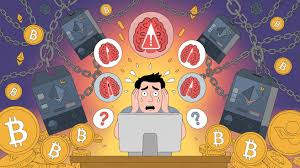


This article is about the Psychological Traps That Fast Destroy Crypto Investors and why are emotional mistakes often cost more than volatility itself? Investors often do not realize that fear, greed and overconfidence — along with suffering from herd behavior — are influencing their investment decisions.
Cognitive Dissonance One way in which institutions can learn from psychological biases is through the lens of evolution then, because we are really bad at making good decisions with our investment capital and understanding these cognitive traps helps to make better provisioning for expectational error rates as anybody who studies human behaviour will tell you.
Why Psychological Traps That Destroy Crypto Investors Fast
High Market Volatility
Crypto markets can move quickly and we see big swings happen within a matter of minutes. This volatility creates fear and greed, which makes investors behave based on emotions rather than logic thereby increasing the likelihood of psychological errors.
Fear of Missing Out (FOMO)
Investors find themselves getting into trending coins due to the success of others. This emotional pressure results in impulse-purchasing at inflated prices, creating victims of hype-driven decisions instead of strategic investing.
Lack of Proper Investment Knowledge
Most crypto investors jump straight into the market without a good understanding of blockchain technology, risk management or what markets are doing. Without proper knowledge they are easy prey for knowing biases like overconfidence and confirmation bias.
Social media and influencers effect on
People Talking Crypto Spread Their Hype and Panic Through Social Media like a Virus Investors do not act on research, but opinion — and this only reinforces herd mentality and rash decision-making.
24/7 Market Accessibility
Unlike stock markets, which open and close during the same hours of every day, crypto trades 24-7. Another source of emotional pressure is checking the price continuously, which results in overtrading and anxietyRelated: Bad Timing — The Anatomy Of A Loss In Some Cases
Emotional Attachment to Investments
Investors tend to get attached and feel a sense of closeness or bond with specific coins/ communities. There is a psychological reason behind this reluctance: the sunk cost fallacy and loss aversion — since we attach to our losing assets, it makes it all that harder sell them.
Desire for Quick Profits
The lure of quick riches compels people to speculate. Because investors behave mainly for the short term ignoring long-termed strategy and going off into these riskier psychological traps.
Information Overload
Investors are drowning in thousands of crypto projects, news messages and market signals. An overload of information leads to confusion, sharpens the confirmation bias and fuels failure.
Key Point & Psychological Traps That Destroy Crypto Investors Fast
| Psychological Trap | Key Point |
|---|---|
| Overconfidence Bias | Investors overestimate their knowledge or skills, leading to excessive risk-taking and ignoring warning signs in volatile crypto markets. |
| Herd Mentality | Following crowd behavior instead of research causes investors to buy during hype cycles and sell during panic crashes. |
| Loss Aversion | Fear of losses makes investors hold losing assets too long or sell winning investments too early to avoid emotional discomfort. |
| Gambler’s Fallacy | Believing past price movements influence future outcomes leads traders to expect reversals without real market evidence. |
| Anchoring Bias | Investors rely heavily on an initial price point (like ATH) and make poor decisions based on outdated valuation references. |
| Confirmation Bias | Traders seek information supporting their beliefs while ignoring negative data, resulting in unbalanced investment decisions. |
| Recency Bias | Recent market events dominate thinking, causing investors to assume short-term trends will continue indefinitely. |
| Sunk Cost Fallacy | Continuing to invest in failing crypto projects simply because time or money has already been invested. |
| Illusion of Control | Investors believe they can predict or control market outcomes despite crypto’s unpredictable nature. |
| Short-Termism | Focusing only on quick profits prevents investors from benefiting from long-term crypto growth and compounding gains. |
1. Overconfidence Bias
Overconfidence bias is one of the worst psychological errors in crypto investing. The widespread assumption that early profits indicate great wisdom in the markets encourages accounts to trade too much, with size, and without protection.

Crypto markets are highly volatile and confidence that isn’t backed up with discipline usually leads to large losses. Overconfidence The worst kind of Investments in the middle of understanding Psychological Traps That Destroy Cripto Investors Faster, over confidence attracts attention, because at this stage all research stops and you only hear your instinct.
Good investors remain anchored, spread their assets out across various resources and listen to the data —not emotion. A mindset that embraces uncertainty mitigates irresponsible actions, safeguarding the portfolio from dismal performance over time.
Overconfidence Bias Pros & Cons
| Pros | Cons |
|---|---|
| Builds strong confidence in decision-making | Leads to excessive risk-taking |
| Encourages active market participation | Ignoring warning signals |
| Helps investors act quickly | Overtrading and higher losses |
| Supports bold investment moves | Poor risk management practices |
| Motivates continuous learning | Underestimates market volatility |
2. Herd Mentality
Herd mentality builds on the idea that investors tend to follow along with market trends blindly rather than performing their own fundamental analysis. Social media hysteria, influencer hype and viral token discussions usually results in panic buying at price peaks.

This gets investor into the hands of expensive assets and sell-off in panic during market crashes. Like many of these Psychological Traps That Destroy Crypto Investors Fast, herd behavior leads to a contagion that increases volatility, meaning the high of extra-ordinary gain is excessively short-lived as emotions move rapidly throughout community.
The smart investor evaluates the fundamentals, utility of a token and sustainability over time which helps avoid crowd pressure. Taking the time to think independently will pay dividends in knowing how not to miss out on a long-term value proposition no matter what loud voices may be shouting, also learning some patience as these asset arcs are by nature very cyclical and establishing disciplined entry strategies by ignoring hype cycles.
Herd Mentality Pros & Cons
| Pros | Cons |
|---|---|
| Helps identify trending assets | Buying at market peaks |
| Provides social confirmation | Lack of independent analysis |
| Enables early trend participation | Panic selling during downturns |
| Reduces decision uncertainty | Creates speculative bubbles |
| Encourages market awareness | Emotion-driven investing |
3. Loss Aversion
Loss aversion is an emotional trait that means because you fear a loss stronger than the value attached to getting something back, in tricky situations people tend not to act. Often the investors in a good coin specifically would not sell coins even at losses, as they hope to well one day overall Crypto market will improve and Prices Too on this attitude sometimes project itself fundamentally are declist.

This results in restricted capital which deters breakeven investments. Psychological Traps That Destroy Crypto Investors Fast Tell why many portfolios stay full of dead tokens #crypto Loss aversion explains why so much still destroys portfolio Emotional love biases judgement and postpones decision-making. Successful investing is all about reducing risk by way of stop-losses, portfolio rebalancing and being intently focused on the facts.
Being able to control small losses is an important part of being a good investor as it helps you conserve capital and keeps your psychology in check during difficult market conditions.
Loss Aversion Pros & Cons
| Pros | Cons |
|---|---|
| Promotes cautious investing | Holding losing positions too long |
| Protects capital from reckless trades | Selling profitable assets early |
| Improves risk awareness | Emotional stress during losses |
| Encourages defensive strategies | Missed growth opportunities |
| Reduces impulsive decisions | Limits portfolio performance |
4. Gambler’s Fallacy
The gambler fallacy happen when investors assume that price movements need to be reversed just because they have moved a long way in one direction.

The assumption by traders is that if coin Y has fallen, it must be tired of falling and get better; or the perfect floor for a rally — and so on. Luckily crypto markets are based on probability and sentiment which definitely doesn’t play fair.
This bias leads to premature entries — over and again as described in Psychological Traps That Destroy Crypto Investors Fast. The markets can remain in a trend longer than one thinks possible and history does not repeat. Investors should instead focus on technical analysis, market structure and avoid using emotional assumption that price must reverse at some point.
Gambler’s Fallacy Pros & Cons
| Pros | Cons |
|---|---|
| Encourages opportunity searching | False expectations of reversals |
| Keeps investors engaged | Misinterpreting market trends |
| Motivates analytical thinking | Repeated poor entries |
| Drives active trading behavior | Ignoring statistical reality |
| Supports speculative exploration | Increased financial losses |
5. Anchoring Bias
Anchoring bias occurs when investors fixate on a specific price, like the all-time high of a particular token and treat every future decision as relative to that single point element. Most are not willing to sell as they think prices will head towards previous highs again at some point.

In the Psychological Traps That Destroy Crypto Investors Fast post, anchoring bias is what makes investors hold unrealistic expectations. Led by new market conditions, level of adoption, and macroeconomic factors all woefully change over time.
Past valuation does not mean future performance. Smart investors do not emotionally attach themselves to historical prices; rather they re-evaluate their investments based on current data, subsequent project progress and achievable growth forecasts.
Anchoring Bias Pros & Cons
| Pros | Cons |
|---|---|
| Provides a reference point for valuation | Unrealistic price expectations |
| Simplifies decision-making | Holding assets based on past prices |
| Helps benchmark performance | Ignores changing fundamentals |
| Supports structured thinking | Delayed selling decisions |
| Encourages consistency | Emotional attachment to entry price |
6. Confirmation Bias
Investors are afflicted with confirmation bias, reacting to news the way many buy new clothes: they look for information that confirms their pre-existing beliefs (while ignoring evidence otherwise).

Unlike traditional markets, where short sellers are also taking risks to support price discovery, crypto communities create echo chambers that reject but bullish opinions. This selective mindset blinds investors to dangers or weaknesses in a project. Confirmation bias is particularly insidious as it warps research and decision making for Psychological Traps That Destroy Crypto Investors Fast.
Investors should read critiques, look for opposing perspectives and assess risks on the basis of data. Balanced research wipes away bad investments and emotional attachment to projects that will not succeed. The disciplined mind is more concerned with the truth than opinion, which leads to better longterm rational investment strategies.
Confirmation Bias Pros & Cons
| Pros | Cons |
|---|---|
| Builds confidence in investment thesis | Ignores negative information |
| Speeds up research decisions | Creates echo chambers |
| Strengthens conviction | Poor risk evaluation |
| Reduces decision confusion | One-sided market analysis |
| Encourages focused research | Leads to biased investments |
7. Recency Bias
Recency bias is a behavioral financial education factor where investors focus too heavily on the recent past market performance. Traders would be a reflexive: Rallies mean prices will shoot upward ad nauseum; crashes signal markets never recover.

The poor timing decisions are driven by this short memory. Recency bias can explain the emotional buying near tops and panic selling at bottoms when examining Psychological Traps That Kill Crypto Investors Quick. Crypto has historically moved through boom and correction cycle (during bull markets).
Investors win by focusing on the long term and ignoring short-term noise. You are miles above the temporary market moves, by keeping this perspective and history of wider markets in your subconscious mind you can avoid making impulsive decisions caused through fear.
Recency Bias Pros & Cons
| Pros | Cons |
|---|---|
| Helps react quickly to trends | Overreacting to short-term events |
| Supports momentum trading | Buying near market tops |
| Keeps investors updated | Selling during temporary dips |
| Encourages adaptability | Ignoring long-term history |
| Improves market responsiveness | Emotional decision-making |
8. Sunk Cost Fallacy
The sunk cost fallacy is when investors invest in a crypto project that they know will fail just because the investor has invested money into it or spent time with it. They just average down without analyzing fundamentals, I prefer to take losses.

This bias bars capital from working on declining projects and narrows portfolio expansion in Psychological Traps That Destroy Crypto Investors Fast. Rational investors know that investments made in the past are lost and should not have affect there current behavior.
The ability to analyse opportunity on its own merits enables capital to flow towards higher-quality assets. We believe the most successful investors in crypto are those that have learned to manage their emotions, not hesitate to cut losses when they need to and put future potential on a higher pedestal than sunk-costs (the funds already spent).
Sunk Cost Fallacy Pros & Cons
| Pros | Cons |
|---|---|
| Encourages persistence | Continuing bad investments |
| Builds commitment to projects | Capital trapped in losses |
| Promotes patience | Refusal to accept mistakes |
| Maintains long-term belief | Increased financial damage |
| Supports emotional resilience | Missed better opportunities |
9. Illusion of Control
The illusion of control creates an unshakable belief in investors that through incessant trading, chart observations, or complex strategies they can somehow predict or influence outcomes in the crypto market.

Knowledge indeed makes us better at decision-making, but markets are also subject to unexpected global influences. One of the Psychological Traps That Destroy Crypto Investors Fast; it drives your overtrading, leading you to take on unnecessary risk. Bull markets make investors confuse luck for skill.
Instead of trying to dictate the behavior of the market, you should focus on risk management through diversification and disciplined strategies so that you’ll be successful even in a sustainable way.
Uncertainty enables investors to shift their mindset away from pursuing absolute precision in timing the market by also shifting toward understanding probability, patience and long-term portfolio design principles.
Illusion of Control Pros & Cons
| Pros | Cons |
|---|---|
| Motivates learning and analysis | Overconfidence in predictions |
| Encourages strategic planning | Excessive trading activity |
| Improves market engagement | Ignoring randomness |
| Builds discipline habits | Emotional burnout |
| Enhances decision involvement | Unrealistic expectations |
10. Short‑Termism
Short-termism is the obsession with short term profits over long-term wealth creation. The majority of crypto investors get lured into providing liquidity for price swings that happen within just a day, investing in meme coins or simply scoring up some rapid gains without no regard to the project fundamentals.

Psychological Traps That Destroy Crypto Investors FastYes, short-term thinking is an emotional trigger that may cause stress and as consequence excessive trading fees or inconsistent results in discussions of **. This means a crypto-innovations often takes years to play out and reach value.
Long-term investors who seek trends, technology advancement focusing on disciplined approach to hold usually have better returns than short term traders. Patience, discipline and time worked together to ensure that investors benefited instead from the compounding growth of their investments too much in lieu of passing fads or excitement.
Short-Termism Pros & Cons
| Pros | Cons |
|---|---|
| Enables quick profit opportunities | High transaction costs |
| Provides trading flexibility | Increased stress and anxiety |
| Encourages market activity | Lack of long-term wealth building |
| Helps capitalize on volatility | Emotional trading behavior |
| Improves liquidity management | Missing compounding growth |
Conclusion
Investing in crypto is a test of not only financial wisdom but also the emotional discipline and awareness. Market crashes don’t sell themselves short, the greatest losses are due to human instinct driven by fear and revenge that causes them to flee (desperation is never a good idea), but as price increases so do people’s greed impatience takes place then comes all those expensive lessons you learn here.
Knowing the mental traps that kill crypto investors fast is about recognizing our hidden cognitive biases and emotional reactions when making decisions during bull or bear markets.
Controlling emotions, adhering to structured strategies and risk management rules while focusing on the long-term enables investors to avoid costly mistakes. In conclusion, mastering psychology is ultimately the main advantage crypto investors that are successful have over those that continually fail.
FAQ
What are psychological traps in crypto investing?
Psychological traps are mental biases and emotional reactions that influence investors to make irrational financial decisions. These include fear, greed, overconfidence, and herd behavior, which often lead to buying at market highs or selling during panic. Understanding Psychological Traps That Destroy Crypto Investors Fast helps investors recognize emotional mistakes before they negatively impact portfolio performance.
Why do crypto investors fall into psychological traps easily?
Crypto markets operate 24/7 and are highly volatile, creating intense emotional pressure. Constant price movements, social media hype, and fear of missing out push investors toward impulsive decisions. Without a clear strategy or risk management plan, even experienced traders can fall victim to Psychological Traps That Destroy Crypto Investors Fast.
Which psychological bias is most dangerous for crypto investors?
Overconfidence bias and herd mentality are often considered the most dangerous. Overconfidence leads to excessive risk-taking, while herd mentality causes investors to follow market hype blindly. Both are major Psychological Traps That Destroy Crypto Investors Fast because they remove independent thinking and disciplined decision-making.
How can investors avoid emotional trading in crypto?
Investors can avoid emotional trading by setting predefined entry and exit rules, using stop-loss orders, diversifying investments, and maintaining a long-term perspective. Keeping a trading journal and following data instead of social media opinions reduces exposure to Psychological Traps That Destroy Crypto Investors Fast.
Does experience eliminate psychological traps?
Experience helps, but it does not completely remove emotional bias. Even professional traders face psychological challenges during extreme market conditions. Continuous learning, self-awareness, and disciplined risk management are essential to overcoming Psychological Traps That Destroy Crypto Investors Fast over time.