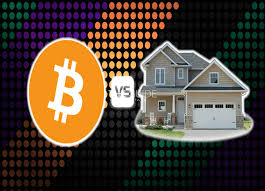

In this article, I will talk about Crypto vs Real Estate and why current investors choose to compare the property with the digital assets.
- Understanding Digital Assets
- What Are Cryptocurrency?
- What Are Real Estate?
- Crypto vs Real Estate — Side-by-Side Comparison
- Why Gen Z Is Moving Away from Traditional Property
- High Property Prices
- Large Down Payments Required
- The Financial Pressure of Student Loans
- Desire for Financial Flexibility
- Remote Work & Mobility Lifestyle
- Faster Wealth Growth Expectations
- Technology-First Mindset
- Affordable Entry Point for Digital Investments
- Key Advantages of Crypto for Gen Z Investors
- Low Investment Entry Barrier
- 24/7 Global Market Access
- High Growth Potential
- Full Financial Control
- Fast Transactions & Liquidity
- Global Accessibility
- Decentralization & Transparency
- Opportunities Beyond Trading
- Tech-Aligned Investment Style
- Digital Land & The Rise of the Metaverse
- Role of Technology & Social Media Influence
- Their Financial Education Is Effortless
- Social Media Investment Trends
- Rise of Finfluencers
- Mobile-First Investing Culture
- Community-Driven Investing
- Real-Time Market Information
- Gamification of Finance
- Risks Gen Z Should Consider
- High Market Volatility
- Lack of Regulation
- Security Risks & Hacks
- Emotional & FOMO Trading
- Limited Investment Experience
- Asset Liquidity Risks
- Future Outlook: Digital Ownership vs Physical Assets
- Conclusion
- FAQ
i will explore growth potential, risks, accessibility and building long-term wealth to see how cryptocurrency differs from real estate — and which investment method is a better fit for today’s accelerating global economy.
Understanding Digital Assets
Digital assets are financial assets that exist purely on the internet within blockchain technology, as opposed to in a material form. These include cryptocurrencies such as Bitcoin and Ethereum, NFTs, tokenized real estate, stablecoins and other blockchain-secured proofs of ownership.
Digital assets work in decentralized networks unlike traditional ones, so they don’t involve banks or intermediaries to process transactions. Ownership is confirmed via cryptographic keys residing in digital wallets, allowing users total control of their funds.
They can be traded 24/7 globally and provide high liquidity and availability for investors around the world. Emerging economic models emerge from digital assets (DeFi, play-to-earn games, virtual land ownership, etc.). With the rise of Web3 technology, digital assets are increasingly becoming a key component of modern investing and the creation of digital wealth.
What Are Cryptocurrency?
Cryptocurrency is digital or virtual currency that runs on blockchain technology, a decentralized network that records transactions in a secure way across many computers. Cryptocurrency is a type of currency that is not issued by governments and not controlled by banks or central authorities.

Notable examples include Bitcoin, Ethereum, and a number of alternative coins that serve as payment tokens, investment assets, or support for decentralized applications. Each transaction is verified using cryptography, which makes the process transparent and secure.
The advantages of cryptocurrencies include instant transfers around the globe, low transaction costs, and total control of their funds by users with digital wallets. Now, cryptos are extensively used for trading, online payments, DeFi(Decentralized Finance), and different digital economies across the globe.
What Are Real Estate?
Real estate refers to physical and tangible properties, that comprises; land, buildings, homes, apartments and commercial spaces + natural resources attached to it. It is one of the oldest and most traditional forms of investment and wealth creation. Owning real estate offers value in the form of place appreciation, rental income, and a pathway to long-term financial stability.

Investors purchase properties for residential, commercial, industry or investment purpose. Real estate is a tangible asset unlike its digital counterparts and has considerable capital, legal documentation as well as maintenance costs(parameters) associated with it.
It is important to note that the availability of slower liquidity does not significantly affect the overall performance of real estate as an asset class — it remains one of the most sought-after investment options because it can provide stability, income generation and inflation protection over time.
Crypto vs Real Estate — Side-by-Side Comparison
| Factor | Cryptocurrency | Real Estate |
|---|---|---|
| Asset Type | Digital asset stored on blockchain | Physical property (land or buildings) |
| Ownership | Verified through digital wallets & private keys | Legal ownership through property documents |
| Entry Cost | Very low — can start with small capital | High — requires large down payment |
| Liquidity | Extremely high (buy/sell instantly) | Low liquidity (selling takes weeks or months) |
| Market Hours | 24/7 global trading | Limited to market/business hours |
| Return Potential | High growth but volatile | Stable long-term appreciation |
| Risk Level | High volatility & regulatory risks | Lower volatility but economic risks |
| Passive Income | Staking, DeFi rewards, yield farming | Rental income from tenants |
| Maintenance | No physical maintenance required | Repairs, taxes, and management needed |
| Accessibility | Anyone with internet access can invest | Location, credit, and legal barriers |
| Transaction Speed | Minutes or seconds | Days to months |
| Diversification | Easy to diversify across many tokens | Requires large capital for multiple properties |
| Inflation Hedge | Potential hedge depending on asset | Traditionally strong inflation hedge |
| Global Reach | Borderless investment | Mostly location-dependent |
Why Gen Z Is Moving Away from Traditional Property
High Property Prices
Home ownership is out of reach for many young investors due to increasingly expensive real estate prices and limited investments to get started.
Large Down Payments Required
Gen Z is not generally a fan of investments that involve long-term debt or large amounts of money.
The Financial Pressure of Student Loans
A lot of young people would rather have a flexible investment than lock it all up in bricks and mortar.
Desire for Financial Flexibility
Digital property is far more liquid than real estate, permitting quick purchases, sales, and portfolio reallocation.
Remote Work & Mobility Lifestyle
Gen Z likes being location independent and never be imprisoned by one physical property.
Faster Wealth Growth Expectations
Younger investors want what could be potentially high-yielding technologies, and the large properties are traditionally low-return in real estate.
Technology-First Mindset
Coming-of-age in the digital age has made blockchain, crypto and online assets second nature, more so than property on Main Street.
Affordable Entry Point for Digital Investments
Unlike real estate, crypto is not capital-intensive; it permits small amounts of investment.
Key Advantages of Crypto for Gen Z Investors
Low Investment Entry Barrier
Gen Z investors can begin with small amounts instead of large capital as required by traditional investments.
24/7 Global Market Access
Unlike traditional markets, cryptocurrency never sleeps — you can trade at any time from anywhere on the globe.
High Growth Potential
Many traditional assets have little to no long-term boom compared to the likes of Bitcoin and Ethereum.
Full Financial Control
Digital wallets allow investors to manage their own funds without the need for banks and intermediary parties.
Fast Transactions & Liquidity
In just a few minutes you can buy or sell crypto, whereas selling real estate can take months.
Global Accessibility
Platforms like Coinbase or Binance make this investing available to anyone with internet access.
Decentralization & Transparency
Transactions are recorded on a distributed public ledger in blockchain technology, enhancing transparency and curtailing centralized control.
Opportunities Beyond Trading
Gen Z can earn through staking, DeFi, NFTs, gaming and digital ownership models.
Tech-Aligned Investment Style
Asset Digital natives and future generations are ingrained with the concepts of online native status assets through Web3 and beyond.
Digital Land & The Rise of the Metaverse
| Aspect | Digital Land / Metaverse Explanation |
|---|---|
| Definition | Digital land refers to virtual property owned inside blockchain-based virtual worlds known as metaverses. |
| Ownership Model | Ownership is verified through NFTs stored on blockchain networks, giving users true digital property rights. |
| Popular Platforms | Virtual worlds like Decentraland, The Sandbox, and Otherside allow users to buy and develop digital land. |
| How People Use Digital Land | Hosting virtual events, gaming zones, digital stores, advertising spaces, social hubs, and NFT galleries. |
| Investment Opportunity | Investors buy virtual plots hoping their value increases as metaverse adoption grows. |
| Monetization Options | Renting virtual spaces, selling NFTs, running branded experiences, or earning through virtual commerce. |
| Accessibility | Anyone globally can purchase digital land without geographic restrictions. |
| Transaction Speed | Purchases happen instantly using cryptocurrencies and smart contracts. |
| Cost Comparison | Often cheaper entry compared to physical real estate, though prices vary widely. |
| Risk Level | Highly speculative due to evolving technology and uncertain long-term adoption. |
| Future Potential | Expected integration with gaming, social media, remote work, education, and digital economies. |
Role of Technology & Social Media Influence
Their Financial Education Is Effortless
Platforms like YouTube, podcast and online courses are fast tracking Gen Z education in investing to even higher levels than traditional educational systems can produce.
Social Media Investment Trends
Apps like TikTok and YouTube introduce young investors daily to crypto trends, stock market analysis and financial strategies.
Rise of Finfluencers
In a crypto world filled with jargon and abstractions, financial creators break the language barrier around terms like blockchain, NFTs and DeFi, making investing more accessible to everyone.
Mobile-First Investing Culture
Users can purchase, sell and track investments directly for their phones at any time — all thanks to technology.
Community-Driven Investing
Discord and Reddit: The SULTANS of online communities that dictate market sentiment/ investment decisions.
Real-Time Market Information
News, charts and price alerts are instant, allowing Gen Z to respond quickly as a new trend emerges.
Gamification of Finance
Modern apps employ clear interfaces and rewards systems that make investing feel interactive and rewarding.
Risks Gen Z Should Consider
High Market Volatility
Cryptocurrency prices are volatile, priced in correcting for significant gains or losses instantly.
Lack of Regulation
Digital asset markets are still developing and diverse government regulations can affect investments made.
Security Risks & Hacks
If proper safety precautions are not taken, funds could be permanently lost due to poor wallet security, phishing scams and exchange breaches.
Emotional & FOMO Trading
The commodity hype then drives investors to make impulsive investments without doing their homework.
Limited Investment Experience
Young investors have intuitively flooded into markets without an understanding of risk management or diversification.
Asset Liquidity Risks
During bear markets, some tokens or NFTs may be hard to liquidate.
Future Outlook: Digital Ownership vs Physical Assets

Investing of the future is more likely to put both digital and physical assets together rather than replace one with another. The technology that introduced us to digital assets like cryptocurrencies, tokenized assets and metaverse estates is now evolving.
New platforms built on decentralized systems are unlocking new horizons of ownership, global transactions and digital economies. Simultaneously, tangible assets such as real estate continue to hold value because of stability, physical ownership and wealth preservation over time.
In the near future, hybrid investing where investors hold cryptocurrencies in addition to traditional property investments will be commonplace.
Tokenized real estate and smart contracts (among other innovations) have the potential to get both worlds closer, facilitating property investment. As younger generations enter financial markets, digital assets will likely become a much larger component of portfolios — whereas physical assets still provide balance and security in expanded portfolios.
Conclusion
Crypto and real estate are two generations of wealth building apart. Overall, real estate provides stability, long-term appreciation, and tangible ownership that serve as a sound basis for achieving financial security.
Conversely, cryptocurrency offers accessibility, flexibility and high growth potential that is highly attractive to Gen Z investors in a digital-first world. They do not compete, and both asset classes are beneficial in a well-balanced portfolio.
The smartest play is not to choose one or the other but to understand how digital assets drive growth while real estate offers stability. Wealth strategies involve a combination of digital and physical ownership in the future of investing.
FAQ
Which is better: crypto or real estate?
Both have advantages. Cryptocurrency offers high growth potential and liquidity, while real estate provides stability, passive income, and long-term wealth preservation. The best choice depends on your financial goals and risk tolerance.
Why is Gen Z more interested in crypto than real estate?
Gen Z prefers crypto because of low entry costs, digital accessibility, faster transactions, and flexibility compared to expensive property investments.
Is crypto riskier than real estate?
Yes, cryptocurrency markets are generally more volatile and unpredictable, whereas real estate tends to be more stable over long periods.
Can crypto replace real estate investments?
Crypto is unlikely to fully replace real estate. Instead, both assets are expected to coexist, serving different roles in diversified investment portfolios.