



Today, I will discover the Signs Your Trading Crypto Emotionally: a lot of us trade on emotions such as fear, greed and FOMO. Most crypto traders do not even realize they are being ruled by psychology, which ends up costing them a lot of money.
- How To Choose Signs You’re Trading Crypto Emotionally
- Notice Fear-Based Decisions
- Market is a psychological game because you cannot predict next move.
- Analyze Your Reaction After Losses
- Monitor Trading Frequency
- Evaluate Risk Management Habits
- Observe Influence From Social Media
- *Track Your Emotion During Trading Earlier Days. *
- Review Your Trading Journal
- Check Sleep and Mental Clarity
- Key Point & Signs You’re Trading Crypto Emotionally (Avoid Loss)
- 1. Panic Selling
- Panic Selling — Features
- Panic Selling — Pros & Cons
- 2. Ignoring Your Plan
- Ignoring Your Plan — Features
- Ignoring Your Plan — Pros & Cons
- 3. Revenge Trading
- Revenge Trading — Features
- Revenge Trading — Pros & Cons
- 4. Overtrading
- Overtrading — Features
- Overtrading — Pros & Cons
- 5. Holding Bags Too Long
- HODLing Bags Too Long — Features
- Holding Bags Too Long — Pros & Cons
- 6. Greed Trap
- Greed Trap — Features
- Greed Trap — Pros & Cons
- 7. Overconfidence Bias
- Overconfidence Bias — Features
- Overconfidence Bias — Pros & Cons
- 8. Anchoring to Past Prices
- Features: Anchoring to Past Prices
- Anchoring to Past Prices — Pros & Cons
- 9. Trading Without Sleep
- Trading While You Sleep — Features
- Trading Without Sleep — Pros & Cons
- 10. Ignoring Risk Management
- Ignoring Risk Management Feature
- Ignoring Risk Management — Pros & Cons
- 11. Following Social Media Hype
- Following Social Media Hype — Features
- Following Social Media Hype — Pros & Cons
- 12. Chasing Pumps
- Chasing Pumps — Features
- Chasing Pumps — Pros & Cons
- Conclusion
- FAQ
By identifying these emotional alerts, investors will have the ability to exercise discipline and manage risk effectively when trading cryptocurrencies in an increasingly volatile market.
How To Choose Signs You’re Trading Crypto Emotionally
Notice Fear-Based Decisions
If you’re someone who sells at every dip or gets right back in the market whenever it rallies without taking time to see if this is a larger event, then emotions are getting the best of you and not any sort of analysis.
Market is a psychological game because you cannot predict next move.
Obviously the most obvious sign is you maybe bit off more than you are ready to chew and immediately abandon your trading strategy. You are emotionally trading if you change your entry, exit or stop-loss rules during the trade.
Analyze Your Reaction After Losses
What you are doing in this case, is that the urge to enter a trade right after losing (an expectation of immediate recovery) demonstrates clear signs of revenge trading – strong emotional reaction rather than analytic judgment.
Monitor Trading Frequency
Want to know the most apparent telltale sign of a novice trader?
Evaluate Risk Management Habits
A clear psychological warning is when risk in your trade considerably exceeds stop-loss orders or trading without position size at all.
Observe Influence From Social Media
In addition to that, taking action on coins based purely off of who the influencer is or what post you come across when reading receptively shows choices driven by your emotions.
*Track Your Emotion During Trading Earlier Days. *
When emotions such as stress, excitement, anger or urgency come to your trades it is just a sign of you being emotional and not professional.
Review Your Trading Journal
Documenting trades provides insights into patterns — panic selling, overconfidence or sloppy strategy.
Check Sleep and Mental Clarity
Trading while fatigued, or being glued to the charts at all times, can blur logical thinking and trigger rash decisions.
Key Point & Signs You’re Trading Crypto Emotionally (Avoid Loss)
| Emotional Trading Sign | Key Point |
|---|---|
| Panic Selling | Selling assets quickly during market drops due to fear instead of following long-term strategy. |
| Ignoring Your Plan | Abandoning your trading strategy when emotions override discipline and logic. |
| Revenge Trading | Trying to recover losses immediately by taking impulsive, high-risk trades. |
| Overtrading | Executing too many trades driven by excitement, boredom, or emotional pressure. |
| Holding Bags Too Long | Refusing to sell losing positions because of hope or emotional attachment. |
| Greed Trap | Holding trades too long expecting unrealistic profits instead of securing gains. |
| Overconfidence Bias | Believing past wins guarantee future success, leading to risky decisions. |
| Anchoring to Past Prices | Fixating on previous price levels rather than analyzing current market conditions. |
| Trading Without Sleep | Making poor trading decisions due to fatigue and lack of mental clarity. |
| Ignoring Risk Management | Avoiding stop-losses or position sizing because of emotional confidence. |
| Following Social Media Hype | Buying coins based on influencers or trending posts instead of research. |
| Chasing Pumps | Entering trades after massive price increases driven by FOMO rather than strategy. |
1. Panic Selling
Panic selling is when traders get scared by volatile price fluctuations, and jump into panic mode to sell their crypto assets during a rapid market decline driven more by emotion than on analytical assessment.
Whereas long-term fundamentals are what you would usually measure stock volatility, emotional traders respond much more quickly to things like red candles and negative news. This behavior is typically very loss making as the market almost always rebounds sharply after such corrections.
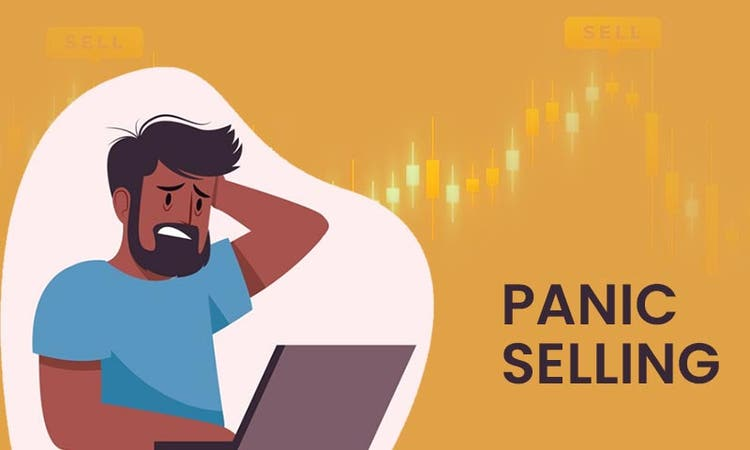
Although there are many facets of Signs You’re Trading Crypto with Emotion among the top is selling to get out of an uncomfortable position instead of following a predetermined strategy. Investors who are successful understand that volatility is simply part of doing business in crypto markets.
They depend on stop-loss planning, position sizing, and patience instead of fear-driven responses that leave portfolios wrecked in corrective periods.
Panic Selling — Features
- If the market crashes, you sell everything at once.
- Fear-Based Decision Making – 2/ End of October,
- Ignoring long-term investment goals.
- As a result, you wind up locking in losses so that the GBTC can ride higher when it recovers.
- A negative news or fast-moving price-action triggers you.
Panic Selling — Pros & Cons
| Pros | Cons |
|---|---|
| Prevents deeper losses in extreme crashes | Locks in losses too early |
| Reduces emotional stress temporarily | Misses market recovery |
| Protects capital in rare market collapses | Driven by fear, not strategy |
| Quick exit from risky positions | Damages long-term returns |
| Avoids prolonged uncertainty | Creates poor trading habits |
2. Ignoring Your Plan
All the successful traders do a trading plan with entry points, exit strategy and risk limits. But rules are discarded when the markets go lower unexpectedly by emotional traders. It is hunger (greed in rallies) during corrective moves or thirst (fear as corrections develop).

Traders override their own money management systems. To change to other Trading strategy mid-trade without logical reason is one of the strongest Signs You’re Trading Crypto Emotionally.
It is consistency that differentiates between a professional and amateur. Random decision, inconsistent result and avoidable loss if you ignore your plan A disciplined trader adheres to their strategy like a business bible and continues even when emotions tell the opposite in an erratic wyckoff crypto regime.
Ignoring Your Plan — Features
- Giving Up on Pre-Set Entry and Exit Plans
- Changing trading rules mid-trade.
- Doing things out of anger and not reasoning.
- 3. Absence of consistency in trade performance
- Increased impulsive decision-making.
Ignoring Your Plan — Pros & Cons
| Pros | Cons |
|---|---|
| Flexibility in changing markets | Loss of consistency |
| Allows reacting to unexpected events | Emotional decision-making |
| Can capture sudden opportunities | Increased trading mistakes |
| Short-term adaptability | No measurable performance |
| Sometimes avoids rigid strategies | Leads to unpredictable results |
3. Revenge Trading
This is called revenge trading, which happens when the traders try to recoup on a loss and go aggressive on trades. Instead of treating losses like a part and parcel feature of the trading framework, emotions repeatedly take traders into high-risk positions on terrible analysis.
That behaviour often injects a further loss rather than curing them. A top of the (very dangerous!) Signs You’re Trading Crypto Emotionally list is urgency to “make back” money fast. Traders who are making a living in the markets STOP and reflect between trades. Markets love patience, not emotions.
It is when revenge trading converts a rational investor into a slot-machine gambler, entering (in) and out on impulse with unchecked position sizes often causing significant draw-downs to their accounts.
Revenge Trading — Features
- Taking trades immediately after a loss.
- Attempting to recover losses immediately.
- Taking oversized or high-risk positions.
- Reduced analysis before trade execution.
- Emotional frustration driving trading actions.
Revenge Trading — Pros & Cons
| Pros | Cons |
|---|---|
| May recover losses occasionally | Usually increases losses |
| Keeps trader engaged | Encourages gambling behavior |
| Builds short-term confidence | High emotional stress |
| Fast decision execution | Poor analysis and risk control |
| Emotional release after loss | Rapid account drawdown |
4. Overtrading
Overtrading occurs when traders open too many positions without a sound setup. A lot of traders tend to think they have 2 be in the market always because mistake here is activity is confused with productivity Instead, it is emotional excitement or boredom and a fear of missing opportunities that will lead you to make unnecessary trades. *

Halo:Here are 7 Clear Signs That You Might be Trading Crypto Emotionally. Your Training Dataset is Limited To upto October, A high frequency of trading means more fees (if applicable for your strategy), more stress, and higher exposure to market noise. Successful traders know that waiting is a strategy as well.
It does not matter how many trades you take, rather it is the quality of your trades that counts. Staying patient, restricting daily trades and avoiding big emotional decisions helps avoid boiling over to an empty shell while instead of being a profit-centric soul in the long run.
Overtrading — Features
- Opening too many trades in little time.
- You are betting against the market, without strong setups or signals.
- Increased transaction fees and stress.
- Struggles of remaining patient outside the market
- Confusing activity with profitability.
Overtrading — Pros & Cons
| Pros | Cons |
|---|---|
| More market exposure | Higher trading fees |
| Increased learning experience | Emotional exhaustion |
| More opportunities to profit | Low-quality trade entries |
| Active market participation | Increased risk exposure |
| Practice for beginners | Reduced profitability |
5. Holding Bags Too Long
Not letting your lose position go and hanging onto nothing is just denial based on the fact of a emotional connection to some coin. Traders dig in rather than admitting mistakes, convincing themselves price will bounce back.

This ties up capital that could be deployed in better opportunities. Refusing to Sell When You Should Be (Broken Market Structure or Invalidated Analysis) One of the Main ways Signs You’re Trading Crypto Emotionally Early loss cut promoters by seasoned investors. Hope is not rewarded by markets; adaptation, however, is.
Traders learn to remove themselves from the losing trades with an objective exit plan which tends to lead them into profit as soon enough they will benefit from moving past market conditions and are able to take advantage of set ups going forward.
HODLing Bags Too Long — Features
- Refusing to sell losing assets.
- Emotional attachment to specific coins.
- Hope replacing logical analysis.
- Capital stuck in poor-performing positions.
- Ignoring invalidated trade setups.
Holding Bags Too Long — Pros & Cons
| Pros | Cons |
|---|---|
| Possible recovery in strong projects | Capital locked in losses |
| Avoids selling at temporary lows | Emotional attachment |
| Long-term investment potential | Missed better opportunities |
| Reduces frequent trading | Ignoring market signals |
| Patience development | Large unrealized losses |
6. Greed Trap
Greed trap When traders avoid selling for a profit, always expecting higher prices to come. In a strong bull, fear replaces risk management and targets for exit go unheeded. Unrealized gains are eventually eliminated by market reversals.

One of the best examples is Signs You’re Trading Crypto Emotionally by moving profit targets multiple times due to excitement. Traders with experience scale out profits slowly rather than try to catch the exact top.
This greed leaves traders susceptible to sudden corrections. Having realistic expectations, predetermined take-profit levels and rigorous execution protects against profit being given back to the lust of emotional miscalculation from bull market euphoria.
Greed Trap — Features
- Holding profitable trades too long.
- Expecting unrealistic price targets.
- Avoiding profit-taking opportunities.
- Ignoring market reversal signals.
- Emotional excitement overriding discipline.
Greed Trap — Pros & Cons
| Pros | Cons |
|---|---|
| Potential for bigger profits | Loss of secured gains |
| Maximizes strong trends | Exposure to reversals |
| Encourages confidence | Unrealistic expectations |
| Allows trend continuation | Emotional overexposure |
| High reward potential | Poor profit-taking discipline |
7. Overconfidence Bias
Too many winning trades and you’ll become a victim of, overconfidence bias! However, now traders start to believe that they are solely skilled rather than it being simply the favorable conditions of markets.
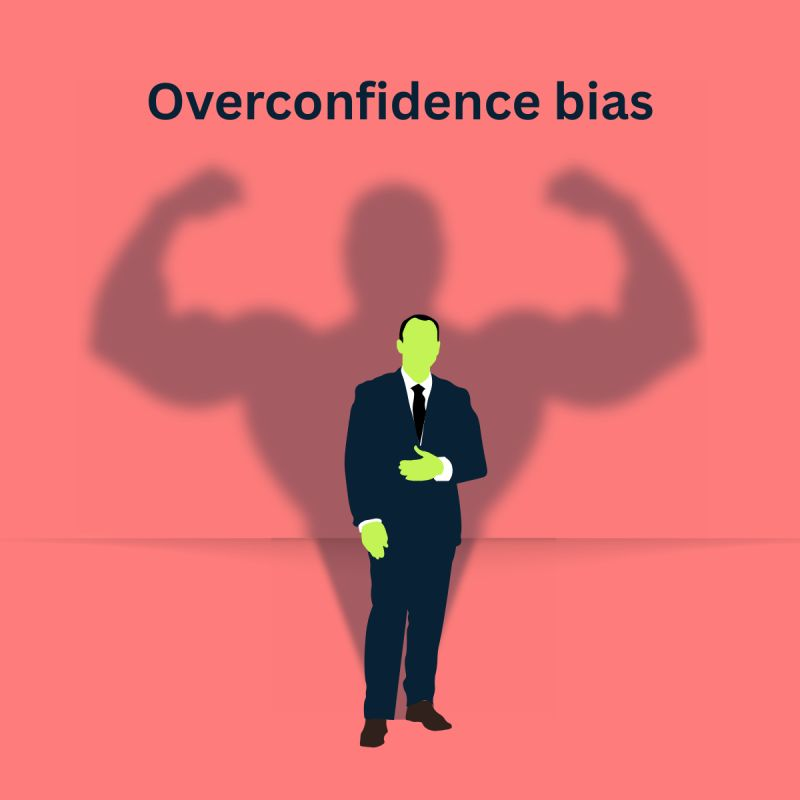
This results in larger positions, less analysis and higher risk exposure. Ignoring risk due to a sense of invincibility created through past wins is one way how you know your trading crypto emotionally.
Markets quickly punish arrogance. Humble, no matter how good they are — professional traders always treat each trade as a new beginning and never lose sight of performing at their best regardless of prior performance.
Overconfidence can lead to margin wipeouts, are prevented by continuous learning, journaling trades and respecting risk management rules.
Overconfidence Bias — Features
- Excessive confidence after winning trades.
- Increasing position sizes without justification.
- Ignoring risk management rules.
- Underestimating market volatility.
- Reduced research and preparation.
Overconfidence Bias — Pros & Cons
| Pros | Cons |
|---|---|
| Boosts trading confidence | Excessive risk-taking |
| Faster decision-making | Ignoring warning signs |
| Encourages bold strategies | Large unexpected losses |
| Builds self-belief | Reduced research effort |
| Motivates participation | Market arrogance penalties |
8. Anchoring to Past Prices
Anchors are often weighted in closer consideration of past price levels compared to the current market dynamic. Holding out on a purchase because the coin used to be cheaper, or refusing to sell until it gets back above where it once was. These decisions fail to consider real-time data and trend changes.

If You Are Trading Based on Historical Price Attachment One of the Subtle Signs you are trading Crypto Emotionally is when your trades depend on historical price attachment.
This is the basic point of technical analysis: Market constantly in evolution and past prices do not predict future prices! Profitable traders make logical analyses of momentum, liquidity and market sentiment rather than emotionally holding on to unrealistic valuations.
Features: Anchoring to Past Prices
- Focusing only on the top or bottom of the previous bar.
- Assessing current price against its past values.
- Not getting the feedback on market changes.
- Emotional attachment to entry price.
- Mistimed buying and/or selling decisions.
Anchoring to Past Prices — Pros & Cons
| Pros | Cons |
|---|---|
| Provides historical reference | Prevents adapting to market |
| Helps valuation comparison | Emotional price attachment |
| Supports long-term analysis | Poor entry and exit timing |
| Reduces impulsive buying | Missed profitable trades |
| Maintains price awareness | Outdated decision framework |
9. Trading Without Sleep
The crypto markets run 24/7, and so too must some traders who feel tempted to remain awake watching charts contingently. Sleep deprivation hinders focus and encourages impulsive choices whilst diminishing the ability to manage your emotions. Bored traders take incorrect signals and react to each minor price move.

Traveling Less: No Sleep for the Crypto Trader — A mistake that professionals consistently avoid and one of those Signs You’re Trading Crypto Emotionally, is to sacrifice sleep by jumping into each market movement. Institutional traders emphasize sharpness and well-structured trading sessions.
Sleep enhances decision-making, discipline and risk perception. Exhaustion trading is one of the most frequent errors, where any mistakes made will be far more costly than potential profits (which rarely come). The sustainable trading requirements are technical market knowledge as well physical health.
Trading While You Sleep — Features
- Monitoring charts continuously without rest.
- Fatigue affecting judgment and focus.
- Increased impulsive decisions.
- Even small price movements result in a huge emotional response.
- Reduced mental clarity during trades.
Trading Without Sleep — Pros & Cons
| Pros | Cons |
|---|---|
| Constant market monitoring | Poor decision-making |
| Never miss market moves | Mental fatigue |
| Fast reaction to volatility | Emotional instability |
| Increased trading activity | Higher mistake rate |
| Continuous engagement | Long-term burnout |
10. Ignoring Risk Management
And even though traders capable of solid risk management can largely avoid catastrophic losses, emotional traders tend to ignore stop-losses or position sizing altogether. Traders think that a trade is going to work definitely because of their confidence, fear or greed. One of the most dangerous Signs You’re Trading Crypto Emotionally is losing stop-loss orders or risking far too much capital on one trade.

Even the top performing strategies have their periods of heavy losses. You will learn that professionals protect capital first and profits second. This risk aversion lays the foundation for survival in unexpected market conditions while still having a shot at future opportunities.
Ignoring Risk Management Feature
- Trading without stop-loss orders.
- Putting big chunks of capital on the line for each trade.
- Lack of position sizing strategy.
- Believing trades cannot fail.
- Exposure to large unexpected losses.
Ignoring Risk Management — Pros & Cons
| Pros | Cons |
|---|---|
| Higher potential profits | Massive loss exposure |
| Allows aggressive strategies | Account wipeout risk |
| Simplifies trading decisions | Emotional pressure increases |
| Captures strong trends fully | No capital protection |
| Faster profit potential | Unsustainable trading style |
11. Following Social Media Hype
Hype around trending cryptocurrencies haunts social media platforms pretty often. Influencers, viral posts and FOMO in communities make traders want to take action without doing thorough research. The most glaring signs that you are Trading Emotional is purchasing crypto-assets just because everyone else on the internet says so.

Many entries based on excitement are happening right at the top of a market when they present their highest risk. Successful investors check fundamentals, tokenomics and market before investing.
The latest events in crypto markets places a premium on independent thinking. As a result avoiding herd mentality gives traders more protection against pump-and-dump cycles and allows them to build sustainable long-term investment strategies.
Following Social Media Hype — Features
- Purchasing coins from influencer discussion
- Responding to Hot/Trendy items or Viral-Tracking
- Lack of independent research.
- Missed opportunity to enter trades towards the latter end of peak hype cycles
- Increased exposure to pump-and-dump schemes.
Following Social Media Hype — Pros & Cons
| Pros | Cons |
|---|---|
| Discover trending projects quickly | Buying near market tops |
| Access to community insights | Lack of independent research |
| Early exposure to narratives | Manipulation risk |
| Fast market awareness | Emotional herd behavior |
| Learning from others | Pump-and-dump exposure |
12. Chasing Pumps
Traders feeling that they will lose the profit to grab pumps and enter a trade after huge price increase You have an emotional sense of urgency instead of a logical entry analysis. Traditionally, ape investors cash out but paper holders end up losing money.

Bulky Signs You’re Trading Crypto Emotionally include shopping for in the course of rapid spikes unaccompanied with the aid of means verification that a trend sustainable. Wait for a Pullback, Confirmation or Consolidation The smart traders — when they are doing their homework on charting and price action — will wait until there is some kind of retracement before entering trades.
The impatient ones receive no reward from the market The why is that traders who understand these market cycles and crucially know how to manage FOMO will not become blood-bag exit liquidity of the preceding baloney curve BTFDers when explosive but short lived price movements occur in such nominal assets.
Chasing Pumps — Features
- Buying after rapid price increases.
- Fear of missing out (FOMO).
- Ignoring proper entry confirmation.
- Entering near market tops.
- Mannyoming these early investors out as exit liquidity
Chasing Pumps — Pros & Cons
| Pros | Cons |
|---|---|
| Chance of quick profits | High risk of losses |
| Participates in momentum | Poor risk-to-reward ratio |
| Captures strong hype trends | Entering at peak prices |
| Fast trade opportunities | Emotional FOMO trading |
| Short-term excitement | Becoming exit liquidity |
Conclusion
One of the essential steps to being a successful crypto investor is spotting that you are trading emotionally. Most of the time, emotions like fear and greed (or its overconfidence counterpart) guide people to make bad choices which ultimately hurt their longrun performance. Discipline, planning and emotional control are rewarded by markets—impulsive reactions to market events not so much.
Traders who avoid common psychological mistakes by following an established plan, managing risk appropriately and remaining patient through volatility can be successful. No one is saying remove emotion but control its actions. Training your mind with emotional discipline is what finally takes trading from the slot machine to a consistent and professional investing approach.
FAQ
. What are the Signs You’re Trading Crypto Emotionally?
Common signs include panic selling, chasing pumps, revenge trading, ignoring risk management, and making decisions based on fear or greed instead of strategy and analysis.
Why do emotions affect crypto traders so much?
Crypto markets are highly volatile and operate 24/7, which increases stress and excitement. Rapid price movements trigger psychological reactions like FOMO, fear, and overconfidence.
Is emotional trading common among beginners?
Yes, beginners often struggle with emotional control because they lack experience, structured strategies, and confidence built through long-term market exposure.
How can I stop trading crypto emotionally?
Create a trading plan, use stop-loss orders, follow risk management rules, keep a trading journal, and avoid making decisions during strong emotional reactions.
Does emotional trading always lead to losses?
Not always immediately, but over time emotional decisions usually create inconsistent results and larger losses compared to disciplined trading strategies.