


In this article, I will talk about the Ways Forex Brokers Make Money From Traders and There are lots of ways for brokers to earn money whereby they will profit from spreads, commissions slippage as well various hidden charges (account maintenance fee deposit & withdrawal fees currency conversion costs inactivity charge platform related expenses).
- Spreads as Primary Income Source
- Account Maintenance Fees
- Slippage Profits
- Key Point & Ways Forex Brokers Make Money From Traders
- 1. Spreads
- Spreads Details
- 2. Commissions
- Commissions Details
- 3. Slippage
- Slippage Details
- 4. Account maintenance fees
- Account Maintenance Fees Details
- 5. Deposit/withdrawal fees
- Deposit/Withdrawal Fees Details
- 6. Currency conversion fees
- Currency Conversion Fees Details
- 7. Inactivity fees
- Inactivity Fees Details
- 8. Guaranteed stop‑loss fees
- Guaranteed Stop-Loss Fees Details
- 9. Data feed fees
- Data Feed Fees Details
- 10. Platform licensing fees
- Platform Licensing Fees Details
- Deposit and Withdrawal Charges
- Conclusion
- FAQ
In this lesson you will learn how each of these methods works together to make up the overall revenue model for a broker, and ultimately impacts what it costs traders in the forex market.
Spreads as Primary Income Source
The most common and primary way forex brokers make money from traders is via spreads. A spread is simply the difference between a buy (bid) price and an asking (sell). Each time a trader opens or closes, this small differential is effectively embedded as transaction cost.
The brokers just widen the natural market spread a little bit to incorporate their profit margin because they earn on every transaction whether he wins or loses. Spreads may reach their high, even less tightly in highly liquid markets (less so among volatility), allowing brokers to make a lot of money.
As millions of trades are executed every day even small spreads generate huge and stable revenue, this is the main source income for most forex brokers.
Account Maintenance Fees
| Feature | Details |
|---|---|
| Definition | Fees charged for maintaining an active trading account |
| Charging Frequency | Monthly, quarterly, or yearly |
| Who Pays | All account holders, active or inactive |
| Purpose | Covers administrative and platform maintenance costs |
| Broker Income Method | Steady passive income from client accounts |
| Deduction Method | Automatically deducted from account balance |
| Impact on Traders | Reduces account balance even without trading activity |
| Profit Role for Brokers | Ensures continuous earnings from dormant accounts |
| Transparency | Often disclosed in broker terms and conditions |
| Overall Effect | Creates consistent non-trading revenue stream for brokers |
Slippage Profits
Slippage is when a trader has executed an order at a price different from the one they wished to do, usually because of rapid or volatile market conditions (which is common in crypto markets).
In such cases, indirect costs are embedded in the final execution price being slightly worse for a trader. And Forex brokers take advantage of this price difference, as well as when there is a lag in order execution or low liquidity.
Slippage, although not necessarily always by design, also becomes one of the avenues which forex brokers earn from traders as a result of execution gaps allowing these internalisation profits to be extracted.
Because even small price differences over thousands and thousands of trades can create large profits for brokers, slippage is a major invisible relationship in the overall revenue profile of industry players.
Key Point & Ways Forex Brokers Make Money From Traders
| Fee / Charge Type | Key Point (How Brokers Earn) |
|---|---|
| Spreads | Difference between buy & sell price of a currency pair |
| Commissions | Fixed fee per trade or lot traded |
| Slippage | Profit from price difference during fast market moves |
| Account maintenance fees | Regular charges for keeping trading account active |
| Deposit/withdrawal fees | Fees applied when adding or removing funds |
| Currency conversion fees | Charges for converting one currency to another |
| Inactivity fees | Fee charged when account is not used for a period |
| Guaranteed stop-loss fees | Extra cost for ensuring stop-loss execution at set price |
| Data feed fees | Charges for real-time market data access |
| Platform licensing fees | Fees for using trading platforms or advanced tools |
1. Spreads
Spreads are the difference in the currency pair bid (enter) and ask price (exit). This is the most common way for forex brokers to profit from traders since every trade automatically incorporates this cost.

Even when traders do not remit a direct payment to their broker, they indirectly pay the spread on each position opened or closed. Brokers increase the cost of spreads just enough past what it is on the interbank market to be able to earn a profit.
Market volatility widens spreads even further and brokers will make more on the active trading conditions. Spreads act as a constant revenue stream of income to forex brokers.
Spreads Details
| Feature | Details |
|---|---|
| Definition | Difference between bid and ask price |
| Type | Variable or fixed spread |
| When applied | Every trade opening and closing |
| Cost impact | Built into every trade automatically |
| Broker profit method | Widening spreads above market rate |
| Market condition effect | Increases during high volatility |
| Trader impact | Reduces overall profit margin |
2. Commissions
Commissions are fees that brokers take for each trade or per lot size in direct compensation. This is one of the main sources of income for forex brokers when trading in ECN or raw spread accounts. Because brokers earn it only by spreads, they charge you a fixed or variable commission for executing your trades.

This fee is applied regardless of whether the trade itself results in a profit, creating an almost guaranteed income stream.
Brokers often reap hefty commissions from high-frequency traders who flip their assets back and forth multiple times. As spreads can be lower in commission-based accounts, these brokers make money through easily recognizable transaction fees for each trade placed.
Commissions Details
| Feature | Details |
|---|---|
| Definition | Fixed fee per trade or lot |
| Account type | ECN / Raw spread accounts |
| Charging method | Per trade volume or lot size |
| Transparency | Clearly shown in trade history |
| Broker profit method | Direct transaction fee |
| Cost stability | Fixed regardless of market conditions |
| Trader impact | Adds predictable trading cost |
3. Slippage
Slippage when a trade execution is different than expected due to fast market movements. Slippage is a trade that takes place with your broker over several seconds causing the price to change. In extremely turbulent markets, traders might get executed a bit worse than expected, providing brokers with hidden profit potential.

The price may differ from current market prices and while this is not always intentional some dealing desk brokers do profit form either pricing delays or by requoting you. How even the tiniest amounts of slippage across thousands of trades can quickly rack up more than pocket change.
This indicates that slippage is in fact a roundabout but transferring stream of earnings for many brokers, who capitalize on fluctuations quantified to the second where their customers get and promote.
Slippage Details
| Feature | Details |
|---|---|
| Definition | Execution at different price than expected |
| Cause | Fast-moving or volatile markets |
| Type | Positive or negative slippage |
| Broker role | Execution delay or liquidity gap |
| Profit source | Price difference on execution |
| Frequency | Common in news/high volatility |
| Trader impact | Unpredictable cost loss |
4. Account maintenance fees
Account maintenance fees: These are periodic charges for having a trading account open on your broker platform. Another forex broker revenue includes the fact that they can earn this money from you even without real trading.
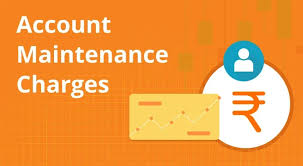
Imposed periodically, either monthly or yearly and directly deducted from the trader balance. Brokers defend this cost for account servicing, platform maintenance and administrative support. Yet even inactive traders generate revenue thanks to these fees.
Maintenance fees are an essential service capable of generating ongoing passive income for brokers over time as they can be obtained at any customer acquisition stage and through a variety of scenarios with varying levels of trading activity or market movement.
Account Maintenance Fees Details
| Feature | Details |
|---|---|
| Definition | Fee for maintaining active account |
| Charging period | Monthly or yearly |
| Applies to | All account holders |
| Reason | Platform and administrative cost |
| Broker profit method | Passive income from accounts |
| Deduction method | Direct account balance deduction |
| Trader impact | Cost even without trading |
5. Deposit/withdrawal fees
Deposit and withdrawal fees: These are charges that apply when traders fund their trading accounts or withdraw money from them. Forex brokers earn income from traders by charging on commission or spread (as either a percentage of the transaction amount only) per trade, etc.

Some brokers promote zero deposits, yet extra charges may be encountered based on payment types or currency exchange. Withdrawal fees may also differ depending on processing or banking channels.
Possible Answer: Those charges provide a steady stream of income, particularly for active traders who transfer money on the regular.
These small financial deductions happen every time periodic transactions take place, which also means broker earnings grow rapidly due to the cumulative character of this commodity.
Deposit/Withdrawal Fees Details
| Feature | Details |
|---|---|
| Definition | Fee for adding or removing funds |
| Payment methods | Bank, card, e-wallet |
| Charging type | Fixed or percentage-based |
| Broker profit method | Transaction processing markup |
| Processing speed | Varies by payment channel |
| Frequency | Every fund transfer |
| Trader impact | Reduces net capital value |
6. Currency conversion fees
Currency conversion fees apply only when traders are depositing or withdrawing in a currency different from the account base currency. The way forex brokers make money from traders is by charging them a mark-up over the true exchange rate – so putting in extra margin where they are trading.

Namely, there are hidden markups when you exchange USD to EUR or INR and etc. Brokers make money with even small differences of a percentage, and on massive volumes.
It is a fee that often goes unnoticed by traders while it adds up to quite some amount over time. As forex trading always involves more than one currency, conversion charges are a perpetual and significant revenue source for brokers complying on an international scale.
Currency Conversion Fees Details
| Feature | Details |
|---|---|
| Definition | Fee for currency exchange |
| When applied | Multi-currency deposits/withdrawals |
| Rate type | Markup over real exchange rate |
| Broker profit method | Exchange rate spread |
| Hidden nature | Often embedded in conversion rate |
| Impact area | International trading accounts |
| Trader impact | Reduced account value |
7. Inactivity fees
These are fees that some brokers charge in case the trading account is inactive for a certain period of time, like 3 to 12 months. Forex brokers earn their money from traders, and begin deducting funds from your dormant account on an automatic basis.

This guarantees that brokers generate revenue even from users who are not trading. The charge is normally per month until the document re-activated or equilibrium reaches no.
Fues there are traders that come and go or forget their small accounts, which is how brokers also make a passive income. Inactivity fees, too, work by promoting account usage—but they remain a controversial but consistent revenue stream for brokers with extensive client lists.
Inactivity Fees Details
| Feature | Details |
|---|---|
| Definition | Fee for inactive trading accounts |
| Trigger period | 3–12 months inactivity |
| Charging method | Monthly deduction |
| Purpose | Encourage account usage |
| Broker profit method | Passive account balance reduction |
| Applies to | Dormant traders |
| Trader impact | Loss of unused funds |
8. Guaranteed stop‑loss fees
A guaranteed stop-loss fee is charged for guaranteeing that a stop-loss order would be executed at a specific price instead of possibly worse prices (particularly in volatile market conditions).

The upside for traders is that Forex brokers typically charge them a premium to provide this risk handling feature. However, in rare abnormal scenarios of huge market swings brokers can incur losses hence this fee is charged to cover risk.
This is not a feature that all brokers offer, but when they do it becomes premium. Brokers profit from guarantees that traders never use (or rarely trigger) but charge extra to avail of. Hence it is a high margin service-based revenue source.
Guaranteed Stop-Loss Fees Details
| Feature | Details |
|---|---|
| Definition | Fee for guaranteed execution price |
| Service type | Risk protection tool |
| Market condition | High volatility protection |
| Broker risk | Absorbs price gaps |
| Profit method | Premium service charge |
| Availability | Not offered by all brokers |
| Trader impact | Extra cost for safety |
9. Data feed fees
Data feed fees For accessing real-time market prices, charts and trading Data Forex brokers make their money from its traders by charging fees for premium data services or simply passing on the costs of exchange market data to clients.

These is also because professional traders need high quality data feeds to trade quickly or just make more effective decisions. This cost is rolled into premium accounts by brokers or sold separately as institutional-grade data.
Because data providers charge brokers for their services, these costs are then passed on to traders with a markup. Data feed fees gain a status of sure revenue source for brokers with time, especially in high-frequency trading environments.
Data Feed Fees Details
| Feature | Details |
|---|---|
| Definition | Charge for real-time market data |
| Data type | Live prices, charts, analytics |
| Users affected | Professional traders |
| Broker profit method | Subscription-based access |
| Source cost | External liquidity providers |
| Fee structure | Monthly or tiered plans |
| Trader impact | Extra trading cost |
10. Platform licensing fees
Platform licensing fees also pertain to broker supplied trading software. Forex brokers simply charge traders access to advance platform, tools, or software integrations with third-party vendors.

Certain brokers utilize licensed systems like Metaorder or custom-built solutions and pass on costs to traders via subscriptions, premium accounts, etc.
These fees could be bundled into tiers in your account or charged on a monthly basis. Automatic trading, analytics and indicators are also paid options. This provides a recurring income stream while also monetizing the technology infrastructure that active traders use.
Platform Licensing Fees Details
| Feature | Details |
|---|---|
| Definition | Fee for using trading software |
| Platforms | MetaTrader, proprietary systems |
| Charging method | Subscription or premium plans |
| Broker cost recovery | Software licensing fees |
| Added features | Indicators, automation tools |
| Account tiers | Premium vs basic access |
| Trader impact | Higher trading overhead |
Deposit and Withdrawal Charges
| Feature | Details |
|---|---|
| Definition | Fees charged when adding or removing funds from a trading account |
| When Applied | During deposits or withdrawals |
| Fee Type | Fixed fee or percentage of transaction |
| Payment Methods Affected | Bank transfer, credit/debit cards, e-wallets |
| Broker Income Method | Markup on transaction processing costs |
| Hidden Element | May be included in payment gateway or processing fees |
| Frequency | Charged every time funds are moved |
| Impact on Traders | Reduces total capital available for trading |
| Broker Benefit | Generates revenue from fund movement activity |
| Overall Effect | Creates consistent earnings from financial transactions |
Conclusion
Finally, forex brokers do not make money from traders in just one way but they can diversify income streams through several direct and indirect channels. There are spreads and commissions on every trade, as well as hidden costs such slippage, inactivity fees or currency conversion charges – each of these mechanisms ensures profitability.
Their revenue model is bolstered by added streams of income like data feed fees, platform licensing for their trading interface and account servicing through guaranteed stop-loss premiums.
These combined fees guarantee that brokers earn money handsomely from both active and inactive traders. In the end, gaining an understanding of these methods allows traders to be more aware of trading costs and select brokers in a less confusing manner.
FAQ
How do forex brokers mainly make money?
Forex brokers mainly earn through spreads, which is the difference between buying and selling prices of currency pairs. Every trade placed by traders includes this cost, making it a primary income source for brokers.
Do brokers charge commissions on trades?
Yes, many brokers charge a fixed commission per trade or per lot. This is another way forex brokers make money from traders, especially in ECN or raw spread accounts where spreads are lower.
What is slippage in forex trading?
Slippage happens when trades are executed at a different price than expected. Brokers may gain small profits from these price differences during fast market movements.
Why do brokers charge inactivity fees?
Inactivity fees are charged when traders do not use their accounts for a long time. This allows brokers to earn even from dormant accounts.
Are deposit and withdrawal fees common?
Yes, some brokers charge fees for deposits and withdrawals depending on payment methods, helping them generate additional revenue.