

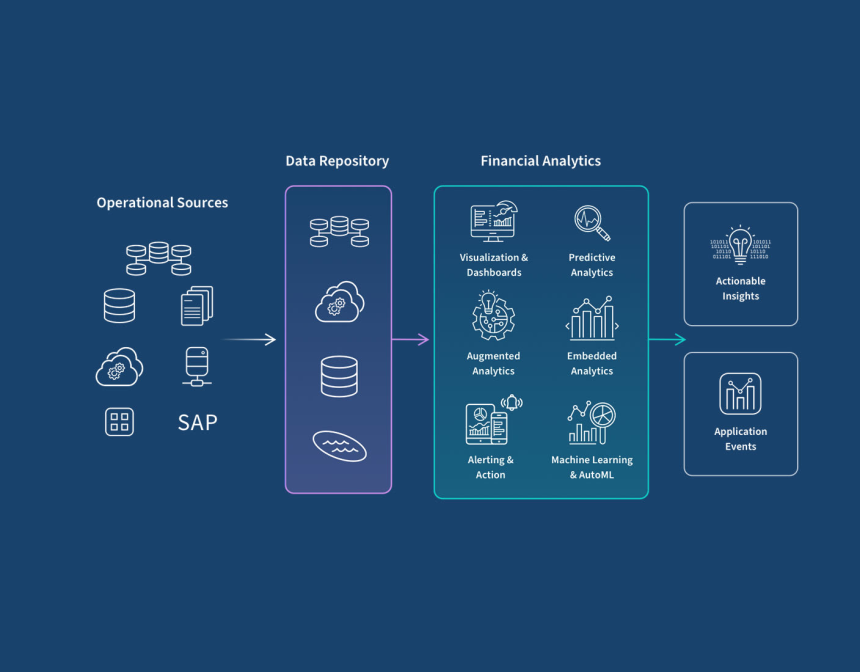

In this article, I will review the top financial data analytics platforms. With the right financial data analytics tools, businesses improve their reporting and have the ability to make decisions based on data.
- What is Financial Data Analytics Platforms?
- Benefits Of Best Financial Data Analytics Platforms
- How To Choose Best Financial Data Analytics Platforms
- Key Point & Best Financial Data Analytics Platforms
- 1. Tableau
- Tableau
- 2. Microsoft Power BI
- Microsoft Power BI
- 3. Qlik Sense
- 4. Looker (Google Cloud)
- Looker (Google Cloud)
- 5. Domo
- Domo
- 6. SAS Visual Analytics
- SAS Visual Analytics
- 7. TIBCO Spotfire
- TIBCO Spotfire
- 8. Alteryx
- Alteryx
- 9. ThoughtSpot
- ThoughtSpot
- 10. Sigma Computing
- Sigma Computing
- Comparison Table – Best Financial Data Analytics Platforms
- Conclusion
- FAQ
Many of the top platforms include advanced reporting with visualizations and real-time predictions. Automated reporting is also included. Analytics tools from Tableau and Power Bi, along with tools that offer AI based analytics, provide organizations with the means to improve their financial analytics and the outcomes of their strategies.
What is Financial Data Analytics Platforms?
Financial Data Analytics Platforms help companies gather, process, and visualize useful financial data.
These software solutions utilize data management, reporting, visualization, and AI to help companies track cash flow and analyze overall financial performance and predictive KPIs like revenue, expenses, and investments.
Additionally, forecasting and identifying trends and risks improve with the use of these platforms. Financial and other data analytics platforms include real-time financial dashboards, automated reporting, and accounting and ERP integration, which further improve operational efficiency and financial control.
Benefits Of Best Financial Data Analytics Platforms
Gains in Financial Decision Quality: With Financial Data Analytics Tools, you can achieve the complete picture faster, yielding more thoughtful decisions with the knowledge that these are data driven.
Monitoring Financials in Real-Time: You can monitor and report financial metrics in real-time in live dashboards.
Enhanced Forecasting and Planning: Tools and analytics that are enhanced and optimized assist businesses in more accurately forecasting trends, budgets, and financial plans.
Simplified Yet Improved Data Visualization: Complex trends in data and financials can be viewed in dashboards as charts and graphs.
Streamlined Reporting Automation: Significant time savings, along with improved accuracy, are achieved as manual efforts to capture, analyze, and report on data diminish.
Increased Risk Mitigation: Anomalies and risk patterns are detected, assessed, and supported by analytics of financial nature.
Data Source Connectivity/Integrations: Financial analytic tools can be connected to ERP tools, Accounting tools, databases, and all Cloud Tools for consolidated analysis.
Boosted Efficiency: Focusing on analysis to aid and grow the business is the biggest efficiency gain as the tool’s automation and workflow functions eliminate repetitive tasks.
State-of-the-art Predictive Analytics: Organizations can refine strategies and analyze market fluctuations and historical data with the tools of financial optimization enhanced by AI and Machine Learning.
Enhanced Teamwork and Data Reporting: Financial data can be accessed and collaborated on from any location.
How To Choose Best Financial Data Analytics Platforms
Understand Your Business Needs: Financial data analytics platforms vary greatly. Choose one that fits the needs of your organization, the goals of your finances, the complexity of your data, and the type of financial analytics you desire. Do you just need reporting? Do you want forecasting? Do you want reports and insights generated by machine learning?
Look At Data Integration Options: Go with a platform that has the ability to connect to your organization’s data sources. This includes your accounting software, ERP systems, databases, Contact Relationship Management systems, and cloud apps. This ensures good data flow to the analytics tool.
Look At Their Visualization/Reporting Options: Data financial analytics platforms should have the ability to create interactive dashboards, as well as customizable charts and reports that offer the ability to analyze data in a variety of ways and that present financial data in a clear manner.
Look At Their Performance and Scalability: Go with the product that can handle high performance for a large volume of data and a large number of users.
Look At Their Security/Compliance Frameworks: Security should be a top priority for any product selection. Look for data encryption, users and role-based access to data, and secure cloud compliance.
Look At Their Pricing/Costs: Consider the subscription, setup, and upkeep costs to choose the product that meets your budget.
Look At Their Usability: A good product should have a simple, easy to use interface that offers analytics and reporting in a self-service manner for the finance team.
Look At Their Customization Options: Choose the products that offer customizable dashboards, reports, KPIs, and analytics workflows.
Incorporate Customer Support and Community: Analytics platforms with accessible customer support, training, and documentation along with a collaborative user community empower organizations to leverage the analytics platform to its fullest potential.
Key Point & Best Financial Data Analytics Platforms
| Financial Data Analytics Platform | Key Points |
|---|---|
| Tableau | Powerful data visualization platform with interactive dashboards, real-time analytics, AI-driven insights, and easy integration with multiple financial data sources. |
| Microsoft Power BI | Cost-effective business intelligence tool offering financial reporting, data modeling, automated dashboards, and strong integration with Microsoft products. |
| Qlik Sense | Provides associative data analytics, self-service BI, predictive insights, and flexible data exploration for financial decision-making. |
| Looker (Google Cloud) | Cloud-based analytics platform with advanced data modeling, real-time reporting, and seamless integration with Google Cloud services. |
| Domo | All-in-one business intelligence platform offering real-time financial dashboards, data automation, collaboration tools, and cloud-based analytics. |
| SAS Visual Analytics | Enterprise analytics solution with advanced statistical analysis, predictive modeling, AI capabilities, and financial risk insights. |
| TIBCO Spotfire | Advanced analytics platform supporting data visualization, predictive analytics, financial forecasting, and real-time decision support. |
| Alteryx | Data preparation and analytics platform that automates financial data workflows, integrates multiple sources, and enables advanced analytics. |
| ThoughtSpot | AI-powered analytics platform with natural language search, automated insights, and real-time financial data exploration. |
| Sigma Computing | Cloud-native analytics tool with spreadsheet-style interface, real-time data access, and collaborative financial reporting features. |
1. Tableau
As a top analytics solution, Tableau allows organizations to simplify intricate financial information. It enables the creation of numerous visual representations and dashboards.
Tableau enhances the ability of finance teams to investigate patterns and trends related to revenues, costs, cash flow, investments, and the overall performance of a company. The Best Financial Data Analytics Platforms – Tableau also offers drag-and-drop analytics, real-time reporting, and predictive insights.
Several databases and cloud systems can be incorporated. It helps recognize financial trends, improves the precision of forecasts, and facilitates the analysis needed to yield key business insights.
Because of its easy adaptability and implementation, Tableau’s strong visual representation and advanced analytical capabilities have led to widespread use among corporate customers.
Tableau
Features:
- Provides advanced visual representation of data
- Interactive financial reporting and analytics available
- Data analysis simplified through drag-and-drop
- Multiple data sources can be integrated
- Insights and forecasting are supported through AI
Pros:
- Dashboards can be designed quickly and easily
- Visualizations are highly effective
- Large financial datasets can be easily managed
- Support and community highly developed
- Both cloud and enterprise options are flexible
- Additional tools for automation may be needed
Cons:
- More expensive when compared to similar options
- Advanced features require training
- Data preparation features are minimal
- Licensing can be complicated
2. Microsoft Power BI
Microsoft Power BI is a popular financial analytics tool. It helps businesses simplify reporting and dashboard creation from raw information. Power BI has advanced data modeling, automated reporting, and real-time analysis features.
These tools make the tracking of revenues, budgets, costs, and the overall performance of the company easier. The Best Financial Data Analytics Platforms – Microsoft Power BI includes seamless integration with Excel, Azure, Dynamics 365, and several data sources.
Its incorporated, empowered, and automated features help organizations identify trends, make forecasts, and enhance their overall planning financially. The combination of reasonable pricing and strong, secure, and easily implemented collaborative capabilities make Power BI an ideal tool for financial professionals.
Microsoft Power BI
Features:
- Financial reports and dashboards are interactive
- Microsoft Excel, Azure, and Dynamics 365 integration are automatic
- Analytics and forecasting supported by AI
- Continuous data assessed in real-time
- Data modeling features are highly developed
Pros:
- Inexpensive pricing tiers
- Rapid integration with Microsoft systems
- Beginner friendly due to simple interface
- Business intelligence features are highly developed
- Continuous improvement through updates
Cons:
- Large scale datasets can slow performance
- Compared to competitors, customization is limited
- Complex knowledge of Microsoft ecosystem required
- Technical skills required for advanced features
- Simplified designs can lead to complex Dashboards
3. Qlik Sense
Qlik Sense is a self-service analytics platform that helps organizations deal with their financial data. This product comes with an associative analytics engine which makes the detection of previously concealed associations much easier.
The Best Financial Data Analytics Platforms – Qlik Sense is suitable for building interactive dashboards, performing predictive analytics, automated reports, and working with analytics and data in real time.
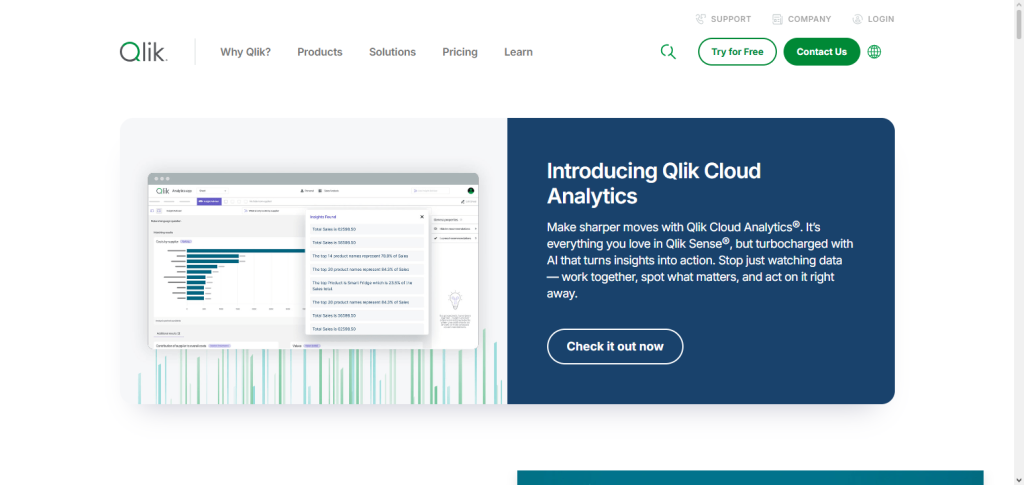
With this product, finance teams are able to monitor profitability, analyze expenditures, assess investment opportunities, and refine their decision-making processes.
This platform’s architecture is designed for easy integration with various databases as well as cloud platforms, which makes Qlik Sense financial analytics one of the top three winners in this category.
4. Looker (Google Cloud)
Looker is a cloud-based analytics platform that provides customizable dashboards and the ability to build complex reports to help users analyze financial data. Their centralized data modeling system provides users with the ability to derive and maintain accurate and consistent financial insights.
The Best Financial Data Analytics Platforms – Looker (Google Cloud) supports real-time analytics and data exploration, and seamless integration with Google Cloud.
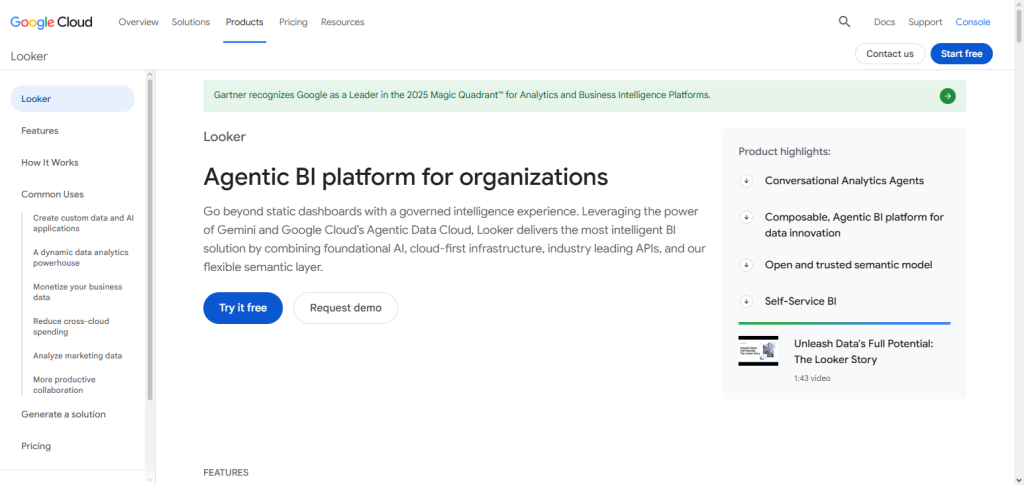
This allows finance teams to analyze key performance metrics, market and data trends, and develop and enhance forecasting models.
Looker’s strong financial analytics capabilities, aggregative collaboration, and flexible analytics offerings make it a preferred choice among organizations with large-scale financial data.
Looker (Google Cloud)
Features:
- BI operating in the cloud.
- Data modeling via LookML.
- Financial analytics in real-time.
- Google Cloud services integration.
- Reporting and dashboards in the application.
Pros:
- Excellent cloud infrastructure.
- Real-time data access.
- Excellent data governance features.
- Highly scalable.
- Good collaboration features.
Cons:
- Needs a good amount of technical knowledge.
- Expensive for small businesses.
- Less data visualization compared to Tableau.
- High initial configuration complexity.
- Best for organizations focused on the cloud.
5. Domo
Domo is a one-stop shop for business intelligence offerings. It helps organizations around the globe manage and analyze financial information. Domo merges data integration, visualization, and reporting in a single service.
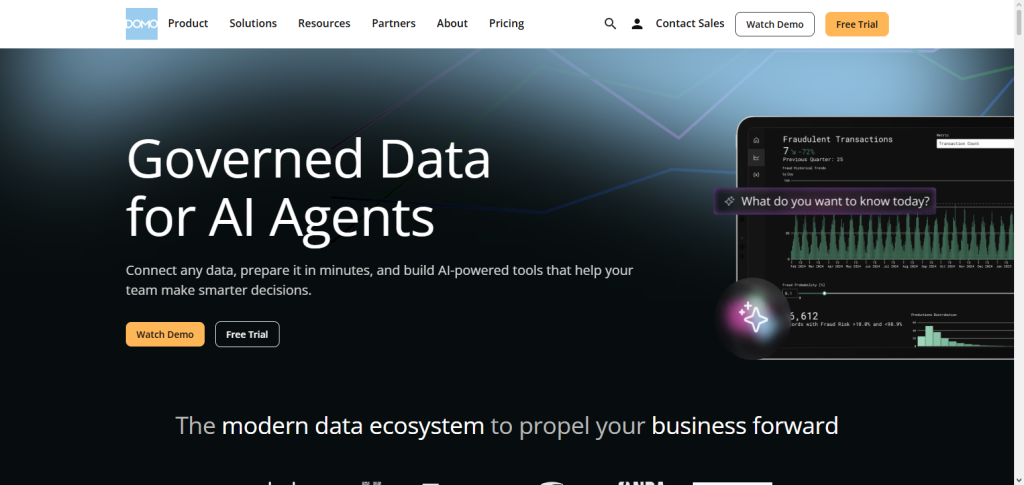
Domo, within the category of Best Financial Data Analytics Platforms, allows users to create interactive dashboards and analyze the positive trends in revenue, increases in expense, and the performance of the organization in relation to set financial goals.
Domo integrates with a wide variety of data sources, from cloud applications to various enterprise systems. Domo greatly assists businesses with automating manual (time-consuming) reports by providing financial insights and improving financial planning and business decision processes.
Domo
Features:
- Financial dashboards that operate in real-time.
- Reporting automation.
- BI in the cloud.
- Data integration from various sources.
- Collaboration features in the application.
Pros:
- Very fast dashboard creation.
- Excellent data connectivity.
- Good collaboration features.
- Cloud-based analytics.
- Mobile analytics.
Cons:
- High subscription cost.
- Analytics features not advanced.
- Less applicable to complex data science.
- Customizations are not very flexible.
- High cost relative to use.
6. SAS Visual Analytics
SAS Visual Analytics is an advanced analysis and visualization platform with the necessary infrastructure for an organization to perform complex financial analyses and even predictive analytics.
SAS Visual Analytics combines visualization and analysis with artificial intelligence (AI) and machine learning (ML) to explain complex financial information.
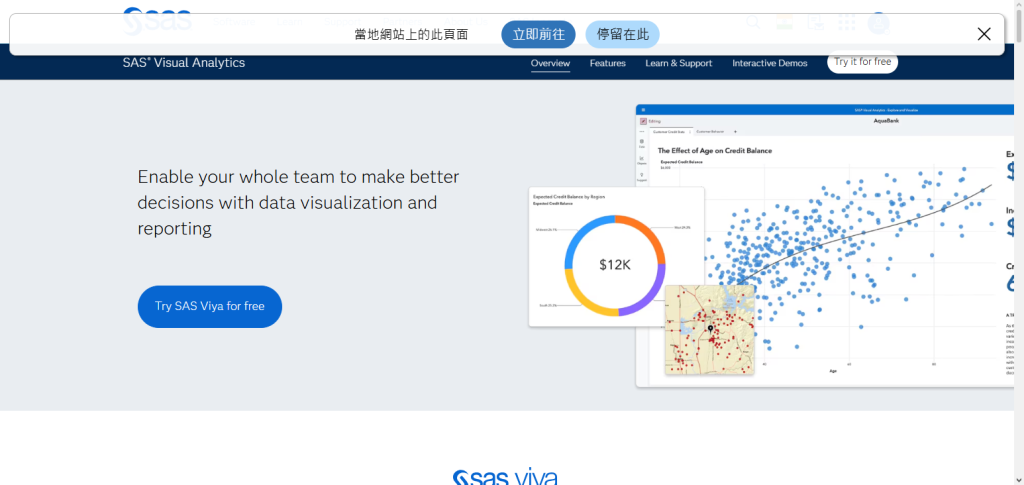
Within the category of Best Financial Data Analytics Platforms, SAS Visual Analytics supports the analysis of (financial) risks, forecasts, fraud, and the measurement of financial performance.
SAS Visual Analytics empowers the finance community with the ability to analyze data, identify trends, and build scenarios for corporate strategy. SAS Visual Analytics is enterprise secure analytics and is leveraged by large corporate entities and financial institutions.
SAS Visual Analytics
Features:
- Machine learning and analytics in the cloud.
- Advanced analytics and modeling.
- Financial Analytics and Predictive Modeling.
- Enterprise Data Management.
- Risk Assessment and Forecasting.
Pros:
- Predictive analytics and modeling.
- Powerful analytics and secure.
- Trusted by large financial institutions.
- Complex data sets are easy to analyze.
Cons:
- Highly expensive to license.
- Needs good amount of technical expertise.
- Steeper learning curve.
Complex deployment process.
Less beginner-friendly interface.
7. TIBCO Spotfire
TIBCO Spotfire is an excellent tool for the focused analysis of business financials, as it provides advanced visualization and interactive dashboards. Real-time, advanced analytics and AI insights are all built-in.
The Best Financial Data Analytics Platforms – TIBCO Spotfire allows financial teams to analyze the current state of the market, track investments, and analyze risk and gaps in forecasting.
Its flexible analytics environment is built to integrate with all types of databases and enterprise solutions. Spotfire really shines in financial firms that need to perform detailed analyses, and generate and communicate complex reports and insights rapidly.
TIBCO Spotfire
Features:
- Data visualizations.
- Predictive analytics.
- Analytics for finances in real-time.
- AI analytics.
- Connects with enterprise systems.
Pros:
- Great for data exploration.
- Predictive analytics are powerful.
- Can handle large datasets.
- Customization is flexible.
- Offers great solutions for industries.
Cons:
- Price is a concern.
- Needs more technical skills.
- Beginner resources are lacking.
- Configuration is complex.
- UI is outdated.
8. Alteryx
Alteryx is a data analytics platform that focuses on the preparation, automation, and analysis of financial data. It allows finance teams to integrate data from multiple channels, clean data, and build analytical models without the need to learn complex coding.
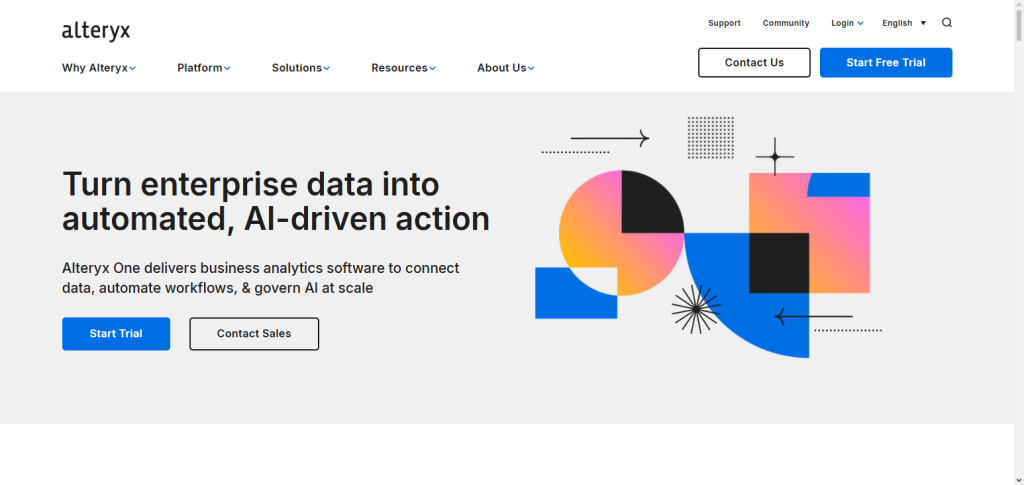
The Best Financial Data Analytics Platforms – Alteryx provides a suite of business process automation, predictive analytics, and reporting and business intelligence tools. Alteryx is especially valuable during the financial forecasting process.
Organizations analyze financial performance with Alteryx and eliminate the need for time-consuming manual data preparation. Alteryx’s automation and a simple interface are key business differentiators in the financial analytics space.
Alteryx
Features:
- Financial data prep automation.
- Analytics automation in a workflow.
- Data from many sources.
- Predictive analytics.
- Low-code and no-code.
Pros:
- Great for automation.
- Less manual data prep.
- Flexible with data types.
- Good for business analysts.
- Analytics are done faster.
Cons:
- Can be expensive.
- Needs a lot of resources.
- Limited data visualization.
- Training is needed for advanced use.
- Not great for simple tasks.
9. ThoughtSpot
ThoughtSpot is an innovative platform that allows for the searching of financial data through natural language. Constructing reports can be an intricate and lengthy process, however, users can now ask questions and receive data information instantly.
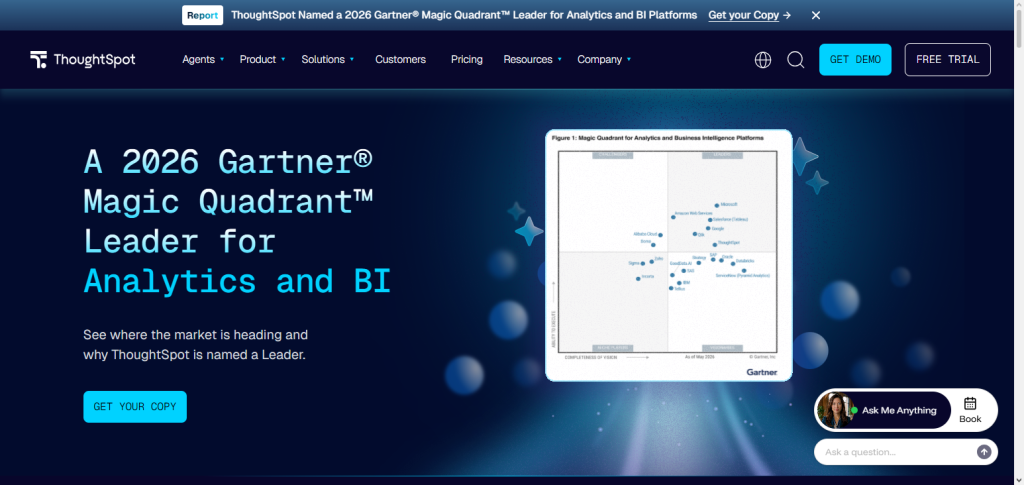
Per the Best Financial Data Analytics Platforms – ThoughtSpot, the tool is designed to help organizations evaluate their income, expenditures, and the financial trends to assess their business model and operations.
ThoughtSpot is an exceptional product for organizations that would benefit from self-service analytics. Self-service analytics allows employees to make well-informed financial decisions without the requirement of coding.
ThoughtSpot
Features:
- Search analytics with AI.
- Natural language queries for data.
- Automated insights.
- Real-time data.
- Cloud based analytics.
Pros:
- Fast queries.
- Great AI.
- Design is simple.
- Helps people do their own analysis.
Cons:
- Less complex visualizations.
- Expensive plans.
- Needs data cleaning.
- Smaller system compared to others.
- Complex tasks require a lot of knowledge.
10. Sigma Computing
Sigma Computing is an analytics tool that is cloud-based and integrates the logic of a spreadsheet with business intelligence.
Financial employees have the ability to analyze a vast amount of data, construct reports, and collaborate towards the financial insights of the company without tedious coding.
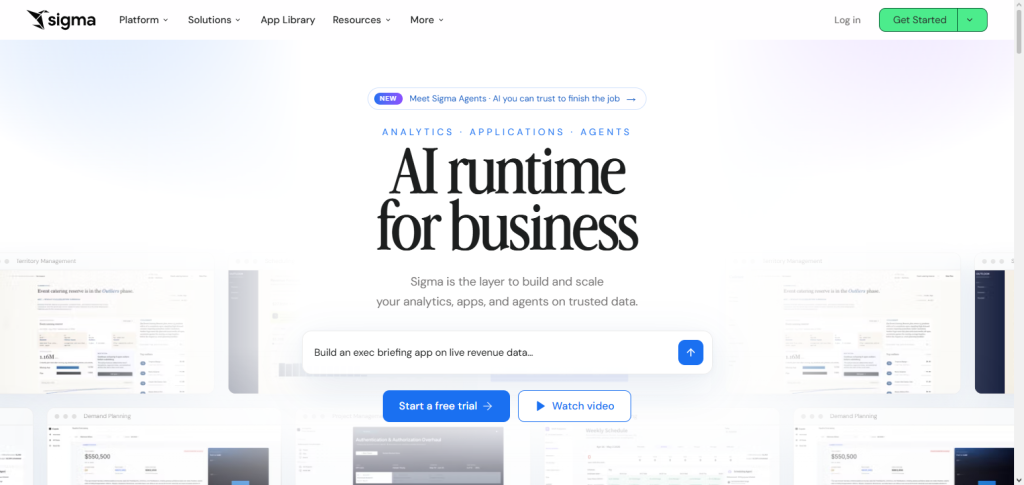
According to the Best Financial Data Analytics Platforms – Sigma Computing, tool aids organizations with data that is real-time, interactive workspaces, cloud analytics, security, and integrates with the data warehouses of the present day.
Most importantly, it allows businesses to enhance their financial reporting and forecasting. Most businesses that incorporate Sigma Computing appreciate the flexibility of the analytics tool and the security it provides.
Sigma Computing
Features:
- Analytics interface like a spreadsheet.
- Cloud-native financial reporting.
- Streamlined Data Warehouse Integration
- Interactive Dashboards
- Enterprise-Level Data Security
Pros:
- Intuitive Spreadsheets
- Fast Adoption
- Dependable Cloud Data Integration
- Scalable Storage
- Collaborative
Cons:
- Basic Analytics
- Must use Data Warehouse
- Expensive
- Limited Data Visualization
- Not for Data Science
Comparison Table – Best Financial Data Analytics Platforms
| Platform | Best For | Key Features | AI & Analytics | Integration | Pricing Level |
|---|---|---|---|---|---|
| Tableau | Advanced financial visualization and reporting | Interactive dashboards, data visualization, real-time reporting, forecasting | AI-powered insights and predictive analytics | ERP, databases, cloud platforms, CRM tools | High |
| Microsoft Power BI | Business intelligence and financial reporting | Dashboards, data modeling, automated reports, KPI tracking | AI insights, forecasting, anomaly detection | Microsoft 365, Azure, Excel, Dynamics 365 | Low to Medium |
| Qlik Sense | Self-service financial analytics | Associative analytics, data discovery, interactive dashboards | AI recommendations and predictive analytics | Multiple databases, cloud services, enterprise systems | Medium to High |
| Looker (Google Cloud) | Cloud-based financial analytics | Data modeling, real-time reporting, customizable dashboards | AI-driven insights through Google Cloud tools | Google Cloud, SQL databases, business applications | High |
| Domo | Real-time business monitoring | Live dashboards, data integration, collaboration tools | Automated insights and analytics | Cloud apps, databases, enterprise systems | Medium to High |
| SAS Visual Analytics | Enterprise financial analysis | Statistical analysis, reporting, risk analysis, forecasting | Advanced machine learning and predictive analytics | Enterprise databases and analytics systems | High |
| TIBCO Spotfire | Advanced data exploration | Data visualization, predictive analytics, real-time analysis | AI-powered analytics and forecasting | Enterprise applications, databases, cloud platforms | High |
| Alteryx | Data preparation and automation | Data blending, workflow automation, analytics automation | Predictive modeling and machine learning | Databases, spreadsheets, cloud applications | Medium to High |
| ThoughtSpot | AI-powered self-service analytics | Natural language search, dashboards, automated insights | Generative AI and smart analytics | Cloud data warehouses and business systems | High |
| Sigma Computing | Cloud-based collaborative analytics | Spreadsheet-style analysis, dashboards, real-time reporting | Automated insights and data exploration | Snowflake, cloud warehouses, enterprise data sources | Medium |
Conclusion
Utilizing the best platforms for financial data analytics enables companies to analyze dense financial data. The ability to leverage these analytics tools allows companies to enhance reporting, forecasting, and financial-based decisions.
Platforms such as Tableau, Microsoft Power BI, Qlik Sense, Looker, and SAS Visual Analytics offer advanced user comprehensive visualization, automation, as well as predictive analytics. Advanced predictive analytics solutions include considerations for the business model and data, as well as how these services will scale and integrate the company’s existing analytics solutions.
The addition of advanced AI, as well as real-time analytics to the various predictive analytics services, allows finance departments to achieve goals of gain better control over finance and optimize performance for the long-term growth of the company.
FAQ
Do Financial Data Analytics Platforms use AI technology?
Yes, modern platforms use AI and machine learning for predictive analytics, automated insights, trend detection, and improved financial forecasting.
What features should businesses look for in financial analytics software?
Key features include data visualization, real-time reporting, automation, predictive analytics, integration capabilities, security, and customizable dashboards.
Can these platforms integrate with accounting and ERP systems?
Yes, most financial analytics platforms integrate with ERP systems, accounting software, databases, cloud platforms, and other business applications.
How do Financial Data Analytics Platforms improve decision-making?
They provide accurate financial insights, identify performance gaps, highlight opportunities, and help businesses make faster and more informed strategic decisions.