



I’ll go over the reasons Fortune 500 firms are purchasing Bitcoin in this post, as well as the factors contributing to this expanding trend.
- About Bitcoin
- Why Fortune 500 Companies Are Buying Bitcoin
- Inflation Hedge
- Diversification of Investment Portfolio
- Higher Returns Potential
- Effective Cash Management
- Signaling Modernity
- Instinct Adoption
- Positioning for the Future
- Tips For Safe Fortune 500 Companies
- Engage Trusted Custodians
- Implement Advanced Security Measures
- Safe Investment Diversification
- Address Regulatory Compliance
- Perform Appropriate Due Diligence
- Implement The Risk Management Strategies
- Seek The Guidance of Seasoned Advisors
- Practice Open Reporting
- Anticipate Volatility
- Prepare Your Staff Educate
- Risks and Challenges
- Fluctuating Prices
- Regulatory Risks
- Security Risks
- Cash Flow and Financial Reporting
- Market Risks
- Liquidity
- Technological Risks
- Tax Risks
- Corporate Governance Risks
- Uncertain Future
- Case Studies of Fortune 500 Companies
- Tesla
- MicroStrategy(Not Fortune 500, Example Often Cited)
- Block, Inc. (Formerly Square)
- Apple/Google (Indirect Exposure)
- More Companies Curious About BTC
- The Future of Corporate Bitcoin Adoption
- Is buying Bitcoin risky for these companies?
- Advantages and disadvantages
- Conclusion
- FAQ
From hedging against inflation to diversifying company treasuries and signaling innovation, leading organizations are progressively adding BTC to their balance sheets. We will cover the benefits, hazards, and real-world instances of corporate Bitcoin use.
About Bitcoin
Introduced in 2009 by an individual or group under the pseudonym Satoshi Nakamoto, Bitcoin is the first-ever cryptocurrency. It introduced the blockchain technology, which is still utilized by thousands of digital currencies today.
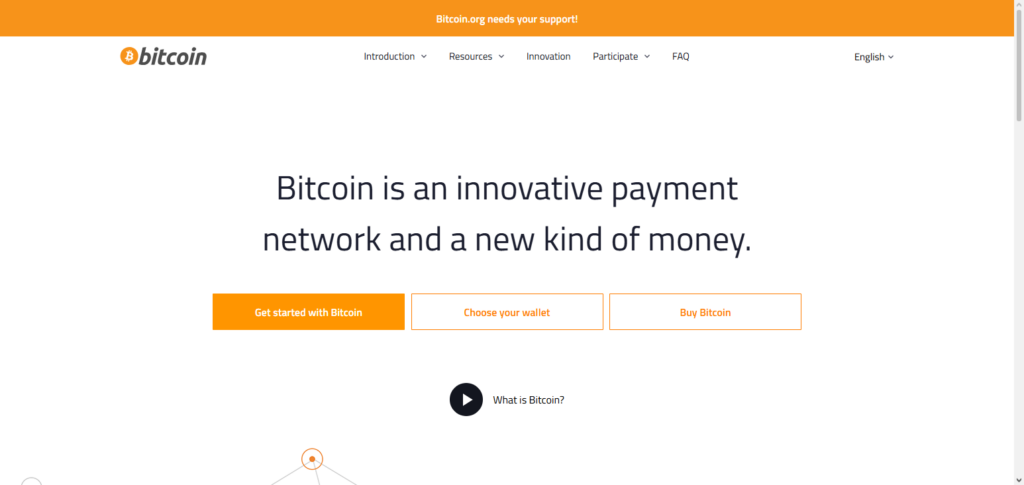
It is designed to be a decentralized currency that no central authority or government can create more of, and in a worst-case scenario, can lead to a complete collapse of the Bitcoin currency. There will only be 21 million Bitcoins, and as it becomes more scarce, it is designed to become more valuable.
Bitcoin allows individuals to transact internationally at a negligible cost per transaction, without the need to involve a third party, such as a bank. Today, it is increasingly being viewed as a store of value to combat the effects of inflation, which is why many institutions, companies, and investors are purchasing them.
Why Fortune 500 Companies Are Buying Bitcoin

Inflation Hedge
- Bitcoin can protect corporate cash from devaluation. It can serve as “digital gold.”
Diversification of Investment Portfolio
- Companies’ investments can be allocated more broadly than just to cash, bonds, and other traditional assets.
Higher Returns Potential
- Investing in Bitcoin is a good long term investment because it has a history of BTC’s growth.
Effective Cash Management
- Companies’ cash can be used to invest in Bitcoin and be more productive.
Signaling Modernity
- Investing in Bitcoin presents an innovative and modern image.
Instinct Adoption
- Following other corporate leaders is reduced risk and builds credibility.
Positioning for the Future
- Companies remain relevant as they take advantage of the developments in the blockchain and digital finance.
Tips For Safe Fortune 500 Companies
Engage Trusted Custodians
- Store Bitcoin with reputable custodians and lose risk of theft.
Implement Advanced Security Measures
- Use multilayered signature cold wallets and stricter access measures.
Safe Investment Diversification
- Keep a balanced reserve with other assets aside from Bitcoin.
Address Regulatory Compliance
- Keep yourself up to speed with the regulations related to crypto, be it foreign or domestic to avoid legal hassles.
Perform Appropriate Due Diligence
- Review volatility, risk and market trends before investing in BTC.
Implement The Risk Management Strategies
- Set boundaries when it comes to your investment, stop-loss, and risk structure of your treasury.
Seek The Guidance of Seasoned Advisors
- Engage with crypto veterans, financial consultants, and attorneys to make your recommendations stand.
Practice Open Reporting
- Make your shareholders know the risks involved in Bitcoin and the company’s position in it.
Anticipate Volatility
- BTC can be a topsy-turvy venture but don’t panic, make a decision, and lose in the process.
Prepare Your Staff Educate
- Educate your treasury and finance staff on best practices in crypto custody and security and management.
Risks and Challenges
Fluctuating Prices
- Bitcoin’s price changes can create issues for a company’s assets and liabilities.
Regulatory Risks
- Companies can be impacted by the changes in how the law is structured in relation to how Bitcoin is owned and how companies value/use/ report it.
Security Risks
- Companies face the risks of hacking, stealing the private keys, losing the keys due to careless and improper procedures.
Cash Flow and Financial Reporting
- With Bitcoin ever changing in price, it can be a challenge to value it and report it on the company’s financial statements everywhere it is disclosed.
Market Risks
- Bitcoin can be seen as speculative and high-risk, which can have negative reactions from the company’s stockholders or investors.
Liquidity
- Selling a large number of Bitcoin (BTC) can change its price and become difficult to do.
Technological Risks
- Firms can be exposed to technical failures by relying on systems or services built on the blockchain and digital currencies.
Tax Risks
- Digital assets can expose companies to the tax systems that can create a tax liability that can be completely unexpected.
Corporate Governance Risks
- Making business decisions that involve covering digital currencies can be complicated and cumbersome. These decisions can require the involvement of the board level.
Uncertain Future
- There is no way to know how Bitcoin will be utilized and accepted in the future, as there is no certainty with it.
Case Studies of Fortune 500 Companies
Tesla
- In 2021, invested $1.5 billion in Bitcoin.
- Purchased BTC as part of its treasury to diversify its holdings.
- Indicated innovation and publicly adopted cryptocurrency.
MicroStrategy(Not Fortune 500, Example Often Cited)
- Treasury invested in Bitcoin, farther than 100,000 BTC.
- Refers to Bitcoin as a primary reserve asset and inflation hedge.
Block, Inc. (Formerly Square)
- Treasury invested $50 million in Bitcoin.
- Supports Bitcoin adoption and uses Bitcoin in its business.
Apple/Google (Indirect Exposure)
- With regard to Bitcoin’s payment systems, investments, and blockchain, still exploring.
- Indicated caution when it comes to adoption of cryptocurrency.
More Companies Curious About BTC
- Companies such as Oracle, Microsoft, and Walmart, are looking into accepting cryptocurrency or blockchain payment systems.
- Adoption of early innovation correlating with the digital financial strategy.
The Future of Corporate Bitcoin Adoption

The future of corporate Bitcoin adoption seems increasingly positive as more Fortune 500 organizations recognize its strategic worth. Bitcoin is likely to become a common component of corporate treasuries, providing a buffer against inflation and a tool for portfolio diversification.
As regulatory frameworks mature, corporations will obtain clearer direction on reporting, compliance, and taxation, eliminating ambiguity. Adoption will be safer and more effective because to technological developments in blockchain infrastructure and secure storage.
Additionally, by communicating innovation and financial foresight to stakeholders and investors, early adopters may obtain a competitive advantage. Overall, corporate Bitcoin use is projected to expand steadily, possibly altering the way organizations handle assets and interact with digital finance internationally.
Is buying Bitcoin risky for these companies?
Yes, buying Bitcoin involves major risks for Fortune 500 organizations. The most notable is price volatility, since the value of Bitcoin can change significantly over brief periods of time, possibly having an effect on company balance sheets.
Regulatory uncertainty adds another layer of risk, with countries globally currently refining bitcoin regulations, reporting standards, and tax treatments.
Security concerns are also critical—without rigorous protections, firms could face theft, hacking, or loss of private keys. Accurately valuing Bitcoin and disclosing holdings to shareholders is also difficult due to accounting and reporting complications.
If stakeholders view Bitcoin investment as speculative, the company’s reputation may also be impacted. To minimize these risks, organizations implement institutional-grade custodians, risk management rules, and professional advisory teams, balancing potential benefits with cautious control.
Advantages and disadvantages
| Advantages | Disadvantages / Risks |
|---|---|
| Hedge Against Inflation – Protects cash reserves from devaluation. | Price Volatility – Bitcoin’s value can fluctuate sharply. |
| Portfolio Diversification – Reduces reliance on traditional assets. | Regulatory Uncertainty – Changing laws can affect holdings and reporting. |
| Potential High Returns – Opportunity for significant long-term gains. | Security Risks – Threat of hacks or loss of private keys. |
| Enhanced Treasury Management – Makes idle cash more productive. | Accounting Complexity – Reporting BTC accurately on financial statements is challenging. |
| Signals Innovation – Shows the company is forward-thinking and tech-savvy. | Market Perception – Shareholders may view BTC investment as risky. |
| Early Mover Advantage – Positions companies ahead of competitors in digital finance. | Liquidity Concerns – Large holdings may be hard to liquidate quickly. |
| Future-Proofing – Prepares for blockchain and digital economy trends. | Tax Implications – Complex taxation rules may create unexpected liabilities. |
Conclusion
In conclusion, Fortune 500 corporations are increasingly turning to Bitcoin as a strategic asset to diversify portfolios, hedge against inflation, and signify innovation. Despite concerns like volatility and regulatory uncertainty, the potential benefits—high yields, increased treasury management, and future-proofing corporate finance—make BTC an enticing choice.
Bitcoin is destined to become a crucial component of corporate financial plans as institutional usage increases and technology and regulations advance, ushering in a new era in which digital assets are crucial to mainstream commercial decision-making.
FAQ
Why are Fortune 500 companies investing in Bitcoin?
They invest to diversify their portfolios, hedge against inflation, and potentially earn high returns while signaling innovation to investors and stakeholders.
Is buying Bitcoin risky for these companies?
Yes, Bitcoin is volatile and regulatory frameworks are evolving. Companies mitigate risk with strong security, treasury strategies, and expert advisors.
How do companies store their Bitcoin safely?
Most use institutional-grade custodians, multi-signature wallets, and cold storage solutions to protect digital assets.
Which Fortune 500 companies have bought Bitcoin?
Notable examples include Tesla and Block, Inc., while others explore crypto payments or blockchain integration.
Will more companies adopt Bitcoin in the future?
Yes, corporate adoption is expected to grow as regulations clarify, technology improves, and Bitcoin becomes a standard treasury asset.