

I will about The Secret World of Dark Pools, and how large institutions secretly buy and sell enormous amounts of assets in the market without public knowledge through mechanisms called dark pools.
- What Are Dark Pools?
- The Secret World of Dark Pools
- Private Trading Venues
- Designed for Big Investors
- Hidden Orders
- Reduced Market Impact
- Anonymous Trading
- Block Trade Execution
- Advanced Algorithms
- Lower Slippage Risk
- Limited Transparency
- Growing Market Influence
- Regulatory Monitoring
- History and Evolution of Dark Pools
- Who Trades in Dark Pools?
- Why Whales Prefer Dark Pools
- Minimal Market Impact
- Trading Anonymity
- Efficient Block Trading
- Reduced Price Slippage
- Protection from High-Frequency Traders
- Better Execution Prices
- Lower Transaction Costs
- Advantages of Dark Pool Trading
- Greater Trading Privacy
- Large Order Execution
- Lower Price Slippage
- Improved Liquidity Access
- Better Pricing Opportunities
- Reduced Transaction Costs
- Protection from Predatory Trading
- Strategic Portfolio Management
- Risks and Controversies
- Lack of Transparency
- Market Fairness Concerns
- Price Discovery Issues
- Potential Market Manipulation
- Information Asymmetry
- Conflict of Interest
- Reduced Public Liquidity
- Regulatory Challenges
- Dark Pools vs Public Exchanges
- Real-World Examples of Dark Pool Activity
- Major Stock Accumulation Strategies
- Corporate Insider Transactions
- Merger and Acquisition Preparations
- Hedge Fund Block Trades
- Index Fund Adjustments
- Post-Earnings Position Changes
- Algorithmic Trade Execution
- Liquidity Matching Between Institutions
- Global Market Events Response
- Impact on Retail Traders
- Hidden Price Movements
- Reduced Market Transparency
- Unexpected Volatility
- Institutional Advantage
- Delayed Price Discovery
- Liquidity Effects
- False Technical Signals
- Retail Traders Smart Asset Opportunities
- Less cost to big traders
- Regulation & Oversight
- Financial Regulatory Supervision
- Registration Requirements
- Trade Reporting Rules
- Best Execution Obligations
- Transparency Reforms
- Market Surveillance Systems
- Conflict of Interest Controls
- Global Regulatory Oversight
- Limitations on Dark Pool Volume
- Types of Dark Pools
- Broker-Dealer-Owned Dark Pools
- Exchange-Owned Dark Pools
- Independent Electronic Dark Pools
- Agency Broker Dark Pools
- Crossing Networks
- Consortium-Owned Dark Pools
- Future of Dark Pool Trading
- Conclusion
- FAQ
You’ll comprehend the reasons whales prefer trading on private venues, how dark pools operate — and how these obscure markets can impact price action, liquidity, and the workings of contemporary financial markets.
What Are Dark Pools?
Large investors purchase and sell financial assets in private trading platforms called “dark pools” without disclosing their orders to the general public. In contrast to conventional stock exchanges, dark pools prevent price fluctuations brought on by big orders by concealing trade details until operations are finished.
They are primarily utilized by investment banks, hedge funds, and institutional investors to carry out large-scale transactions known as “block trades.” Dark pools lessen market influence and slippage by preserving anonymity, enabling whales to trade effectively.
However, discussions concerning fairness, the possibility of market manipulation, and the impact of concealed liquidity on total price discovery have been triggered by their lack of transparency.
The Secret World of Dark Pools
Private Trading Venues
Dark pools are private exchanges or forums for trading securities that operate away from public stock markets.
Designed for Big Investors
Popularly used by institutional investors, hedge funds, asset managers and market whales placing large trades.
Hidden Orders
Buy/sell orders stay hidden from the public order book until executed.
Reduced Market Impact
Minor trades are less likely to drastically change market prices, meaning extreme price shifts can be avoided.
Anonymous Trading
Participants do not disclose their identity or strategy to rival players when they trade.
Block Trade Execution
Perfect choice for processing high volume transactions discreetly and effectively
Advanced Algorithms
Internally, smart routing systems and automated trading technology help to match orders.
Lower Slippage Risk
Market reactions cause bad changes of the price, if a trader avoids them he saves money.
Limited Transparency
Critics say dark pools undermine market transparency and fairness for retail investors.
Growing Market Influence
A large part of contemporary equity trading now occurs in dark pools across the world.
Regulatory Monitoring
Financial regulators have authority over dark pools, regulating them for manipulation and compliance.
History and Evolution of Dark Pools
Dark pools were born in the 1980s, when institutional investors sought methods to execute large stock trades without having their order otherwise move prices in public markets. The early versions were private networks established by investment banks to process block trades quietly.
As electronic trading proliferated in the 1990s and early 2000s, dark pools developed into sophisticated alternative trading systems driven by algorithms and automation.
The rise of high-frequency trading made them even more useful, as institutions wanted to hedge against the risks associated with a highly volatile market and predatory strategies.
Today, dark pools account for a substantial portion of global equity trading — part of the trend toward faster, technology-driven capital markets.
Who Trades in Dark Pools?
Large institutional market participants use dark pools in order to execute large trades without moving the market price. Those traders include pension funds, mutual funds, hedge funds, insurance companies and asset management firms that manage billions of dollars.
Dark pools are often used by investment banks as they operate and use them for client orders and to hedge their own proprietary trading strategies. Some of the dark pools are accessible to high-frequency trading firms that post liquidity or run some algorithmic strategy.
They are sometimes employed by corporate insiders and large shareholders to buy or sell major positions quietly. Known as “market whales,” these participants depend on dark pools to protect their anonymity, mitigate price slippage and execute block trades efficiently with minimal market impact.
Why Whales Prefer Dark Pools
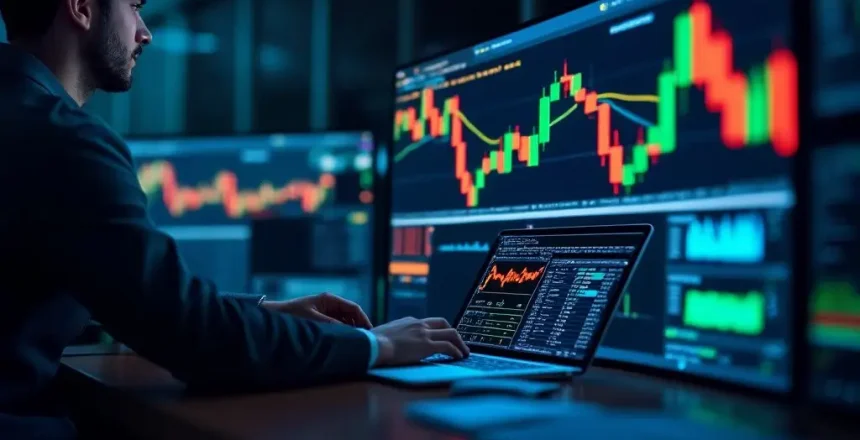
Minimal Market Impact
By obscuring large buy or sell orders, they stop any abrupt price changes in public marketplaces.
Trading Anonymity
More: Investors are able to make trades without revealing their identity or trading strategy to other market participants.
Efficient Block Trading
Dark pools enable large trades to be conducted efficiently in a single execution.
Reduced Price Slippage
During the filling of large orders prices are less likely to change against traders.
Protection from High-Frequency Traders
These hidden orders help to minimize exposure to algorithmic traders who take advantage of publicly visible market data.
Better Execution Prices
Traders generally get prices that are near the midpoint of bid and ask spreads.
Lower Transaction Costs
A lower level of market disruption leads to fewer trading costs.
Advantages of Dark Pool Trading
Greater Trading Privacy
Orders remains concealed until execution, keeping trading strategies out of reach for opponents.
Large Order Execution
They enable institutions to execute block trades and get it done in one go instead of splitting them into smaller orders.
Lower Price Slippage
Visible volumes only do nothing but bring bad prices to traders.
Improved Liquidity Access
Dark pools match up large buy and sell orders, providing a higher probability of executing the order.
Better Pricing Opportunities
Most trades are executed near the midpoint between quote bid and ask.
Reduced Transaction Costs
Lower market disruption can result in cheaper trading costs, and fees.
Protection from Predatory Trading
Lost orders restrict high-frequency trading tactic exposure.
Strategic Portfolio Management
Large portfolios can be rebalanced without causing ripples.
Risks and Controversies
Lack of Transparency
Transactions take place off public exchanges, limiting visibility for the wider market.
Market Fairness Concerns
Retail investors could be at a disadvantage versus heavy institutional traders.
Price Discovery Issues
Discreet transactions can inhibit the formation of accurate prices in public marketplaces.
Potential Market Manipulation
The lack of oversight visibility can lead to abusive trading practices.
Information Asymmetry
Some participants may even benefit from private liquidity data.
Conflict of Interest
Dark pools owned by brokers may favour internal profits over execution quality for clients.
Reduced Public Liquidity
Moving large trades off exchanges is likely to remove liquidity from view in markets.
Regulatory Challenges
Assessing private trading venues is trickier for financial regulators.
Dark Pools vs Public Exchanges
| Feature | Dark Pools | Public Exchanges |
|---|---|---|
| Trading Visibility | Orders remain hidden until executed | Orders are visible in public order books |
| Transparency Level | Low transparency | High transparency |
| Primary Users | Institutional investors and large traders | Retail investors and institutions |
| Market Impact | Minimal price movement during large trades | Large trades can significantly move prices |
| Anonymity | High anonymity for participants | Trader activity is publicly reflected |
| Order Size | Designed for large block trades | Suitable for all trade sizes |
| Price Discovery | Limited contribution to price discovery | Major role in price discovery |
| Execution Speed | Often optimized for discreet execution | High-speed public matching systems |
| Liquidity Type | Hidden liquidity | Visible liquidity |
| Regulatory Oversight | Regulated but less transparent | Highly regulated and monitored |
| Access | Mostly restricted to institutions | Open to retail and institutional traders |
| Risk Exposure | Potential fairness concerns | Greater market transparency and fairness |
Real-World Examples of Dark Pool Activity
Major Stock Accumulation Strategies
To avoid tipping off the market, asset managers may stealthily build their position in a company over weeks — through dark pools.
Corporate Insider Transactions
Executives or large shareholders might sell significant stakes in non-public transactions to avoid fueling panic selling by retail dip-buyers.
Merger and Acquisition Preparations
Sometimes institutions accumulate stakes in target companies quietly ahead of public merger news.
Hedge Fund Block Trades
Hedge funds buy or sell large quantities in a single trade, without spreading trades out across the public exchanges.
Index Fund Adjustments
Dark pools are used by ETFs and index funds to trade large baskets of stocks during index rebalancing to maintain price stability.
Post-Earnings Position Changes
Minimizing market fluctuation next earnings, institutions would rebalancing the holdings.
Algorithmic Trade Execution
High-frequency trading algorithms send large orders to dark pools in order to obtain superior execution prices.
Liquidity Matching Between Institutions
Two big players anonymously cross large orders against each other, without showing them on the public exchange.
Global Market Events Response
Institutional traders use dark pools during volatile market periods when they need to hedge or reposition holdings without moving the markets.
Impact on Retail Traders
Hidden Price Movements
Trades, especially large institutional ones that occur in dark pools, can impact stock prices before they ever hit a public exchange.
Reduced Market Transparency
The fact that pending large buy or sell orders are not visible to retail traders makes predicting market direction more difficult.
Unexpected Volatility
When dark pool trades are later reported in public data, prices may suddenly move.
Institutional Advantage
Whales get to trade with privacy and better execution, retail trades only with limited information.
Delayed Price Discovery
As trades are done on a private basis, true supply and demand may not be immediately represented in market prices.
Liquidity Effects
Dark pools can absorb liquidity from public exchanges, which sometimes widens spreads for smaller traders.
False Technical Signals
In addition, With so much volume being hidden off-exchange, chart patterns and indicators may become less reliable.
Retail Traders Smart Asset Opportunities
This method involves monitoring the volume in dark pools, which are private exchanges where institutional investors buy or sell large orders without publicly revealing their intentions, to spot accumulation (buying) or distribution (selling) of the respective asset.
Less cost to big traders
Institutions are reluctant to aggressively move prices, which can hide early trends retail traders sometimes use as a guide.
Regulation & Oversight
Financial Regulatory Supervision
Regulators such as the U.S. Securities and Exchange Commission oversee dark pool trading to ensure fair market activity.
Registration Requirements
Dark pools are required to register as Alternative Trading Systems (ATS) or equivalent regulated trading venues.
Trade Reporting Rules
Transactions conducted in dark pools must be refiled to public markets eventually, in order to maintain price transparency.
Best Execution Obligations
Even dark pools, brokers are obligated — legally required to execute trades at the best possible price for patrons.
Transparency Reforms
Regulators have also kept coming out with disclosure rules, which aim to chip away at excessive secrecy in off-exchange trading.
Market Surveillance Systems
There is monitoring technology that tracks suspicious trading behavior or potential insider trading and market manipulation.
Conflict of Interest Controls
Rules seek to prevent brokers from giving advantage to institutional clients over retail investors.
Global Regulatory Oversight
International entities like the European Securities and Markets Authority impose caps on dark trading volumes across European markets.
Limitations on Dark Pool Volume
Some areas limit how much of total trading can happen in dark venues in order to safeguard public price discovery.
Types of Dark Pools
Broker-Dealer-Owned Dark Pools
- Dark pools owned by investment banks or brokerage firms.
- Usually serve institutional clients who want to carry out large block trades.
- Use the broker’s internal liquidity before sending orders to other venues.
- Provide the capability for quick trades and large block trades.
- May have potential conflicts of interest if the dark pool owner trades with the clients.
Exchange-Owned Dark Pools
- Dark pools owned and managed by stock exchanges.
- Allow institutional clients to trade with the stock exchange while maintaining their anonymity.
- Provide reliable trade execution and oversight of the regulations.
- Minimize market impact of large trades.
- Help integrate dark pools with public exchanges for post-trade reports.
Independent Electronic Dark Pools
- Dark pools owned by independent electronic systems or financial technology companies.
- Automatically match buy and sell orders with greater emphasis on neutrality.
- Attract a larger client base compared to other dark pools.
- Surplus reliance on brokerage firms is mitigated.
Agency Broker Dark Pools
- Dark pools that are owned and operated by agency brokers.
- Do not add capital to the dark pool and thus, minimize conflicts of interest.
- Provide more order execution transparency than dealer dark pools.
- Frequently used by mutual funds, pension funds, and asset managers.
Crossing Networks
- Dark pools that match buy and sell orders at set times instead of matching continuously.
- Usually transact at a reference price (e.g., the midpoint of the national best bid and offer (NBBO)).
- Help lower trading costs and market impact for large institutional orders.
- Provide anonymity during the matching process.
- Mainly utilized in block trades and portfolio rebalancing.
Consortium-Owned Dark Pools
- Owned collectively by multiple financial institutions or brokerage firms.
- Pool liquidity from multiple participants for better trade fulfillment.
- Decrease dependence on a solitary trading venue.
- Improve competition and fulfillment for institutional investors.
- Built to facilitate large and efficient anonymous trading.
Future of Dark Pool Trading
As these factors continue to develop, the future of trading in dark pools is likely to evolve as well. Dark pools will continue to be useful for executing larger transactions in the market, as their use generally increases with institutional trading volumes — a trend that is here to stay.
These platforms are expected to – become faster and more accurate by exploiting the technology such as artificial intelligence, algorithmic execution and smart order routing. Simultaneously, regulators around the world might implement greater transparency and reporting standards to combat fairness issues.
By integrating with digital assets and tokenized securities, they would also extend their reach beyond traditional equities, contributing to a hybrid trading ecosystem that could protect privacy while enhancing efficiency and maintaining market integrity.
Conclusion
The dark pools have become a powerful component of our modern financial markets that are poorly understood but serve institutional investors with a venue where they can execute massive buy and sell orders without dislocating prices in the public market.
Although they offer benefits such as anonymity, less impact on the market and efficient trading by blocks, they also pose challenges regarding transparency and fairness in the marketplace.
With the progress of technology and the changing landscape of regulatory oversight, dark pools will remain important vehicles in global trading. Knowing how these “dark pools” work gives investors a clearer picture of market technicals and the role major “whale” traders play to mold price action behind the scenes.
FAQ
What is a dark pool in trading?
A dark pool is a private trading venue where large investors buy and sell financial assets without displaying their orders publicly before execution.
Why are dark pools called “dark”?
They are called “dark” because trade orders remain hidden from public market participants until the transaction is completed.
Who mainly uses dark pools?
Institutional investors such as hedge funds, pension funds, asset managers, and investment banks are the primary users.
Are dark pools legal?
Yes, dark pools are legal and regulated alternative trading systems monitored by financial authorities.
How do dark pools benefit large traders?
They allow large block trades to occur without causing major price swings or revealing trading strategies.